





‘The Horse’
*Press the ▷ in the centre of the image to play the video.
*Please be mindful of the volume as music will play.
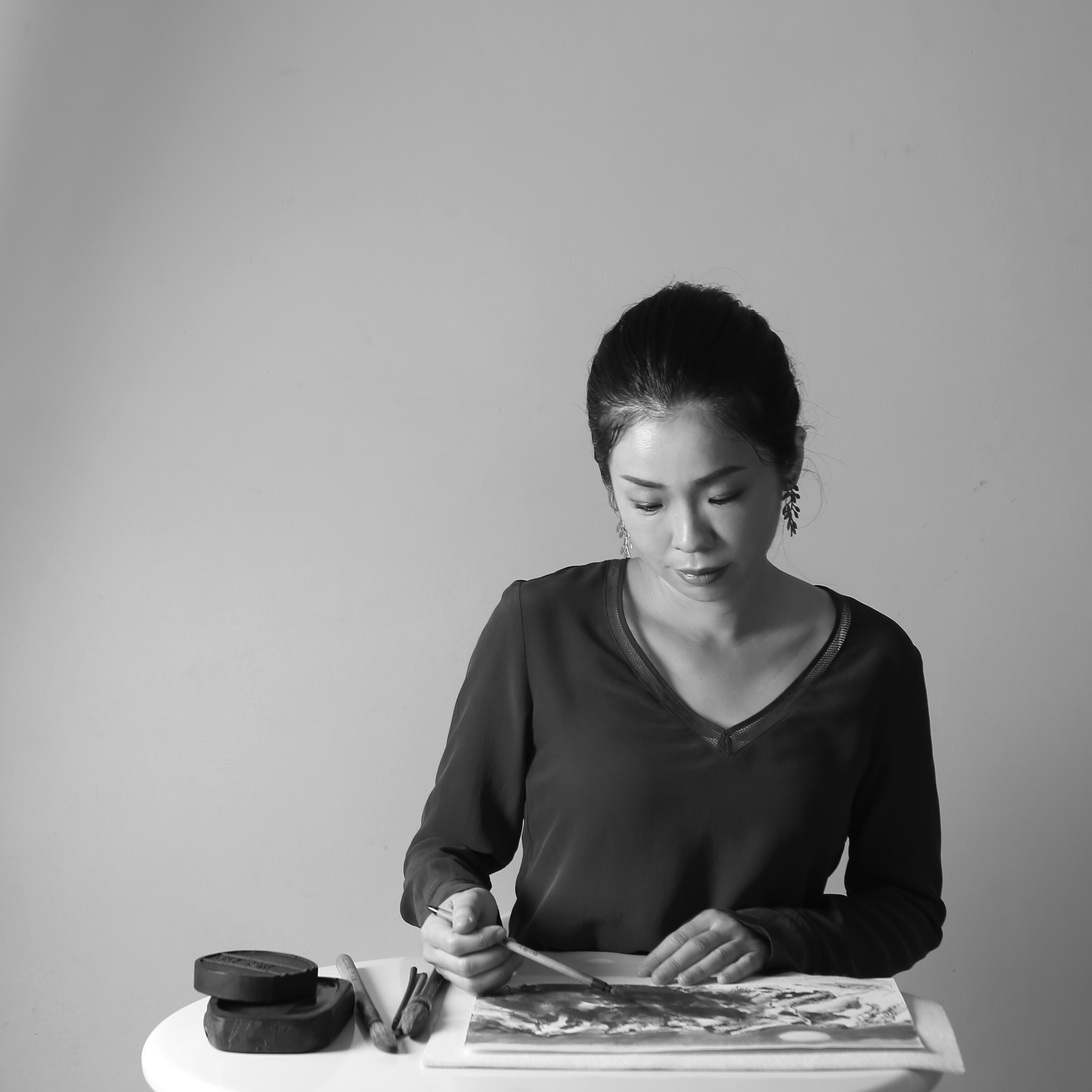
For over a decade, I have been visiting primary schools to teach Suibokuga. In recent years, I often teach how to draw the Chinese zodiac sign for the following year. This year, too, I am preparing horse models, looking forward to seeing the children once again bring their brushes to life with youthful energy.”
When drawing animals, not just horses, I make a point of going to see the subjects in real life. It is vital to experience the movement of the heart by observing their textures and motions, and by hearing their sounds and cries.
A horse’s shoulders and hips protrude from the sides of its body, powered by resilient, rhythmic muscles. They run with manes blowing in the wind, their hooves pounding the ground. Yet, in contrast their eyes are wind and endearing. The bridge of their nose, smooth and graceful.
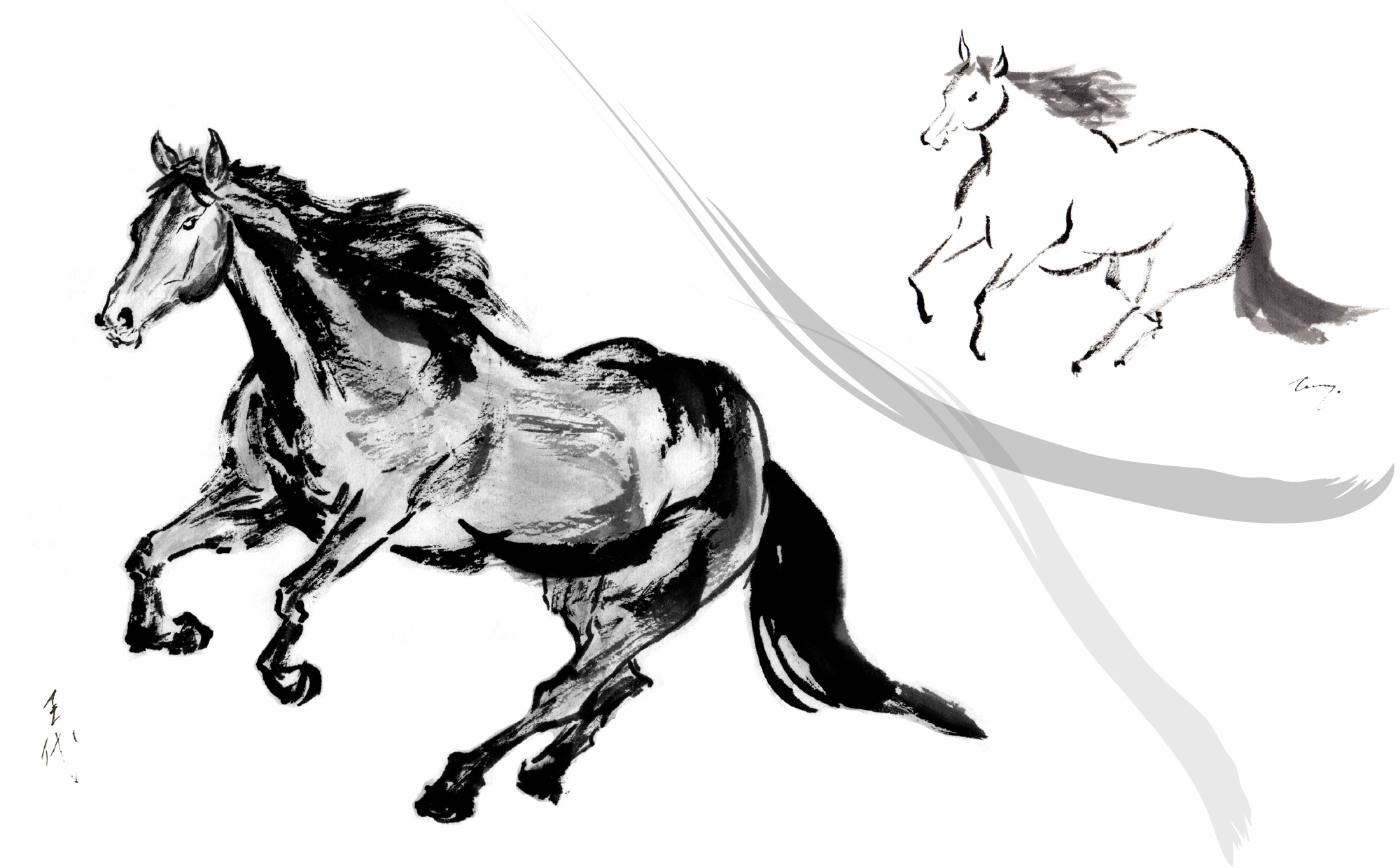
I first depicted the galloping form of a horse with a focus on the beauty of the ink’s tonal gradations and the momentum of the brush. The secret to expressing power lies in the hiso (肥痩; thickness and thinness) of the lines. By tilting or lifting the brush within a single stroke, one changes the line’s width.
Afterward, I drew it with a minimal number of strokes so that even primary school children could enjoy it. This style of drawing is called Shohitsu (省筆; abbreviated brushwork). To express a subject with limited lines, each stroke must capture the essential characteristics of the skeletal structure. Simultaneously, the variation in line thickness and the momentum of the brush are indispensable.
‘Shohitsu’ and ‘Genpitsu’
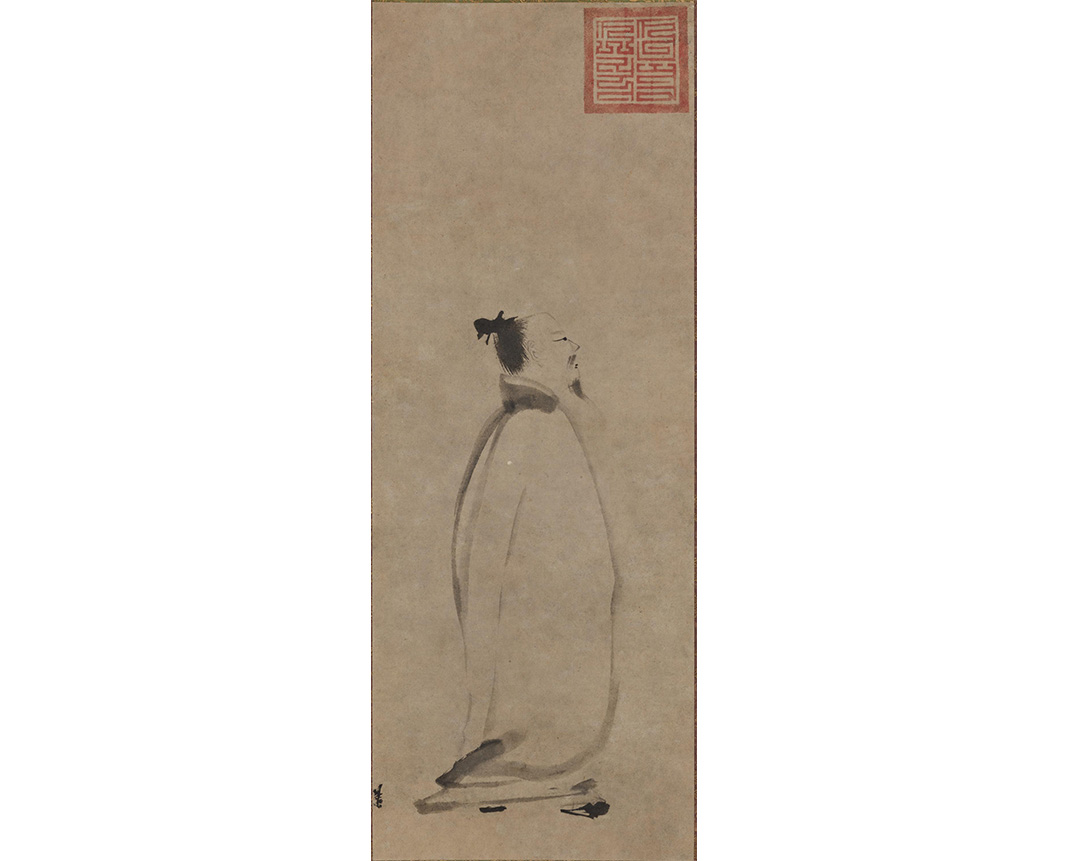
Drawing with even more minimal brush lines is called Genpitsu (減筆; reduced brushwork). While Shohitsu captures the essence of the subject, Genpitsu can be described as an expression that lets spirituality reside within stripped-down forms. A representative work of this style is the Li Bai Strolling (李白吟行図; Important Cultural Property) by Liang Kai (梁楷). One can deeply imagine the state of mind of Li Bai, the Tang Dynasty poet, as he walks through the dusk reciting poetry.
Galloping Horses Depicted in ‘Shohitsu’ by Legendary Painters
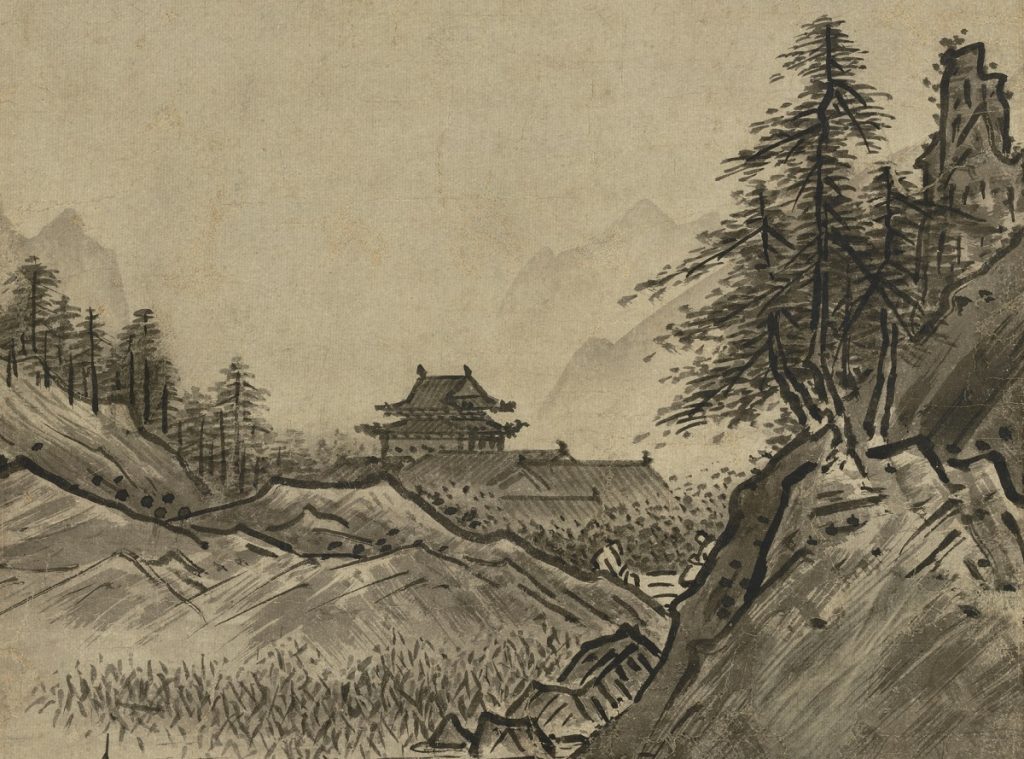
Examples of horses drawn in Shohitsu can be found in the works of popular painters from the Muromachi to the Edo period, such as Sesson (雪村) and Kaiho Yusho (海北友松). Their noble appearance, strength, and sense of dynamism were likely greatly favoured by the Sengoku (戦国; Warring States) daimyo (大名).
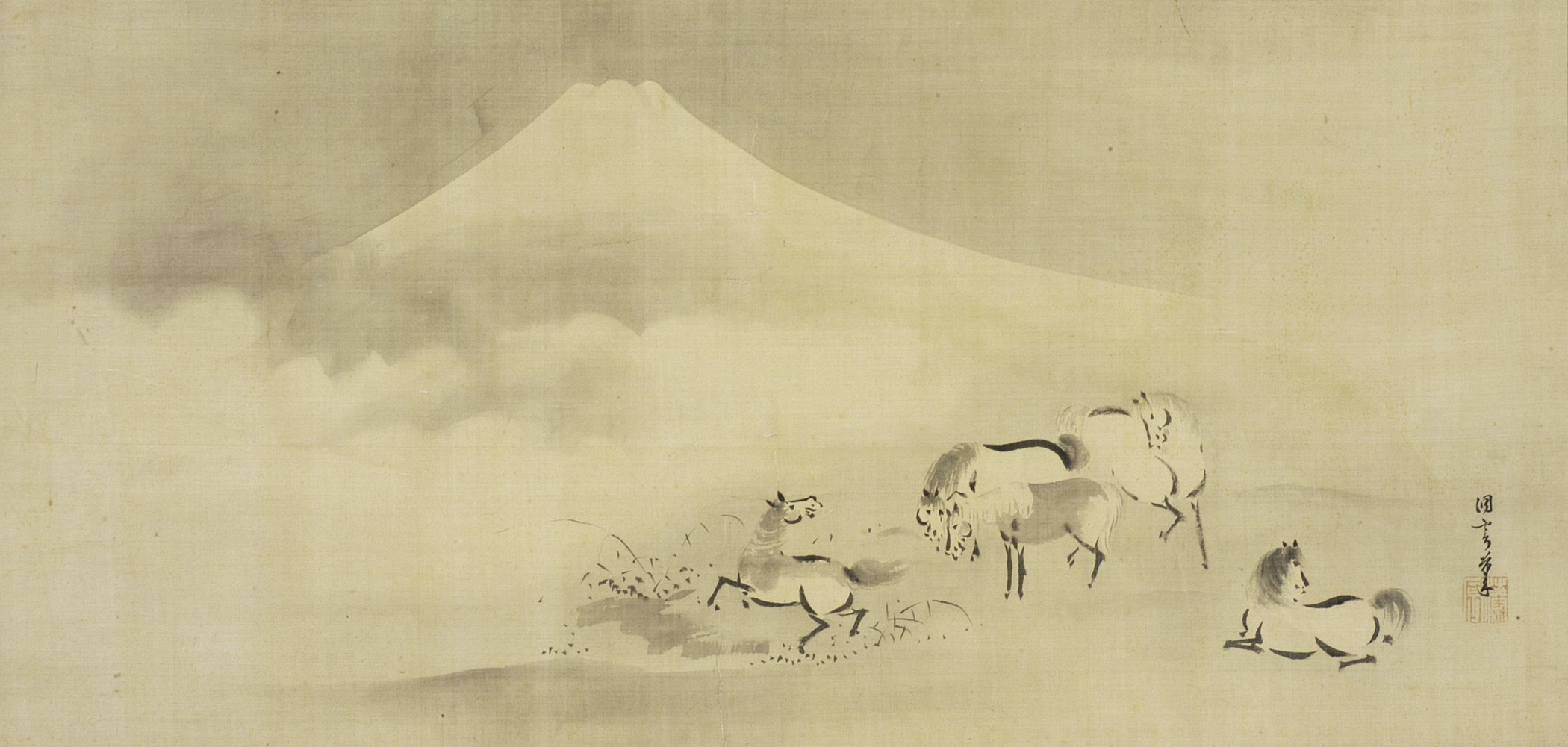
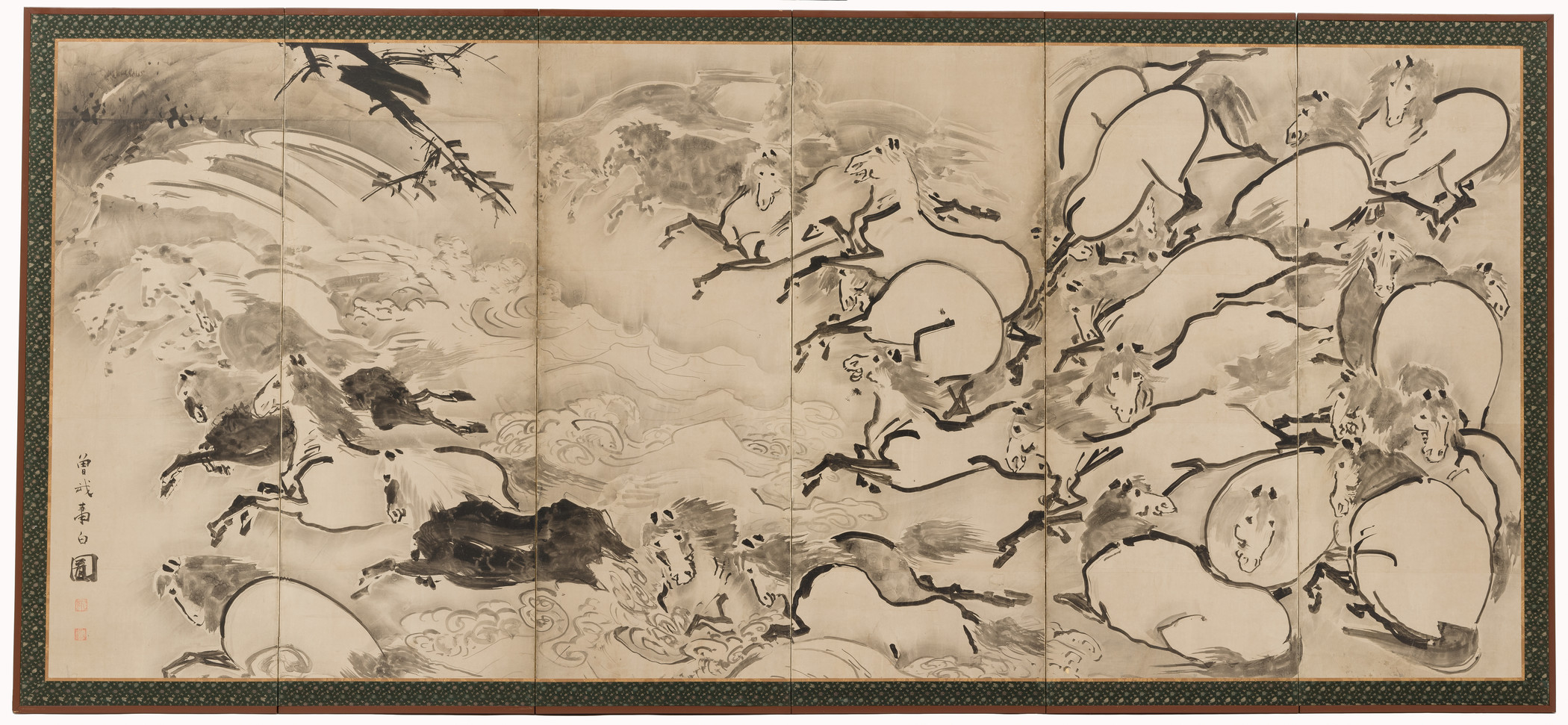
Kano Masunobu (狩野益信), a Kano school painter of the early Edo period, depicted a horse standing in a field overlooking Mount Fuji with gentle Shohitsu. Meanwhile, Soga Shohaku (曾我蕭白), known for his unconventional style, drew a herd of horses racing across the waves with powerful, abbreviated strokes.
‘Ema’ and ‘Shinme’
It is common for people in Japan to write wishes on small wooden plaques called ema(絵馬)at Japanese shrines or temples. The word ema literally means “picture horse,” and the tradition comes from ancient Japan, when horses were considered divine mounts and people would offer live horses to invite the presence of the gods. Over time, offering actual horses gave way to dedicating painted images of horses instead—a practice that became the origin of ema.
Horses dedicated as divine vehicles are called Shinme (神馬; sacred horses). Even today, they can be seen at various sacred sites such as Ise Jingu (伊勢神宮), Kotohira-gu (金刀比羅宮), Nikko Toshogu (日光東照宮), and Miho Jinja (御穂神社) at Miho-no-Matsubara (三保松原), which looks out over Mount Fuji. In the past, wild horses lived in Miho-no-Matsubara and were considered messengers of the gods.
Sacred Horses Imagined by Ancient People
Many people are fond of horses through activities like riding and racing. The history of humans living with horses is extremely ancient, with domestication occurring as far back as 4000 to 3000 BC. Ancient people envisioned ideal horses that could run faster, stronger, and further. In Western Asia, composite beasts with the head of a lion and the wings of an eagle were devised, and before 1000 BC, the flying Tenma (天馬) was born. It is said that by the 8th century BC, Pegasus—the winged horse of Greek mythology—had been conceived.
After a long time, during the Asuka (飛鳥) period, myths of the celestial horse reached Nara, the eastern terminus of the Silk Road. The Shiki Shishikarimon-kin (四騎獅子狩文錦), a textile handed down at Horyu-ji (法隆寺), depicts a king astride a winged horse, turning to shoot an arrow at a lion. Perhaps the most famous horse in Buddhism is Kanthaka, the beloved horse of Shakyamuni (釈迦). The E-Kako Genzai Inga-kyo (絵過去現在因果経) depicts the young Prince Shakyamuni, having resolved to enter the priesthood, leaping over the city gates on the back of the elegant white Kanthaka, surrounded by celestial beings. Neither the horse nor the celestials have wings, but they fly through the air on clouds, or perhaps through the power of the Buddha who created the clouds. Similarly, the beloved horse Kurokoma (黒駒), which carried Shotoku Taishi (聖徳太子) over Mount Fuji, and the white horse that guided Kobo Daishi Kukai (弘法大師空海) to India (Tenjiku), also gallop powerfully through the heavens without wings.
Welcoming New Year’s Day with a drawing of this year’s Chinese zodiac
I am already looking forward to seeing what kind of horses the primary school children will draw. Why not take a brush in hand as you welcome the new year? It is said that luck flies in when you display a picture of the Chinese zodiac sign at your entrance.
Header image: Samejima Tamayo, Horse, 2025.
This article is translated from https://intojapanwaraku.com/art/290474/