





Said to be Emperor Shomu’s Sword
It is hard to believe that ten years have already passed since the launch of the online game ‘Touken Ranbu (刀剣乱舞),’ which has achieved explosive popularity with its anthropomorphised characters based on Japanese swords.
While the Japanese sword (Nihonto; 日本刀) has long been a favourite among enthusiasts, ‘Touken Ranbu’ has sparked widespread interest among game fans, as the diverse characters are constructed around real-life historical swords. At the time, this phenomenon was often described as a ‘sword boom.’ Yet, with the continued prevalence of special exhibitions at museums and temples that house swords, and the ongoing publication of various sword-related materials, its popularity shows no sign of fading. Now, a decade later, it is clear that this was not a temporary craze but rather a fundamental shift towards the popularisation of sword appreciation.
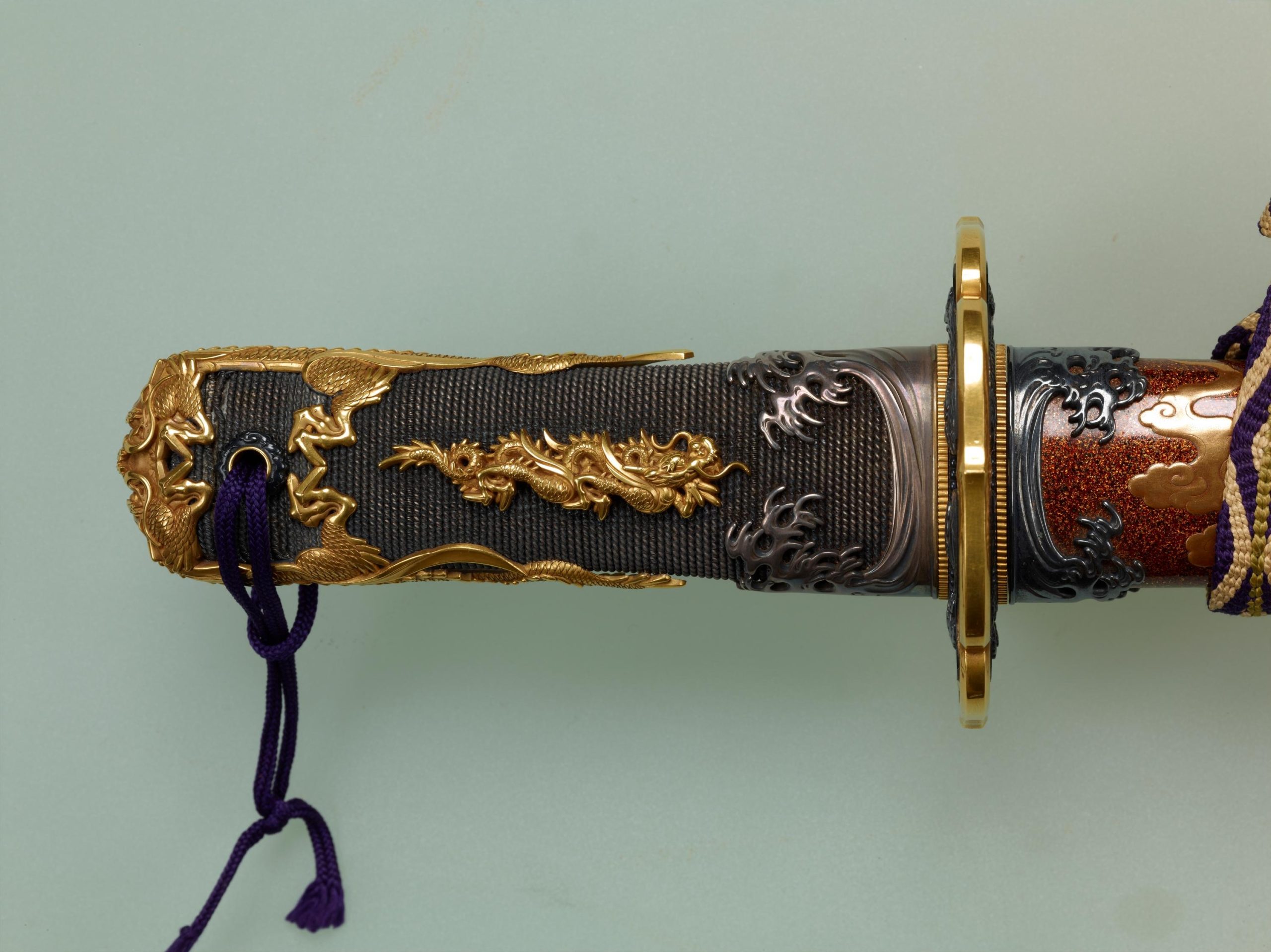
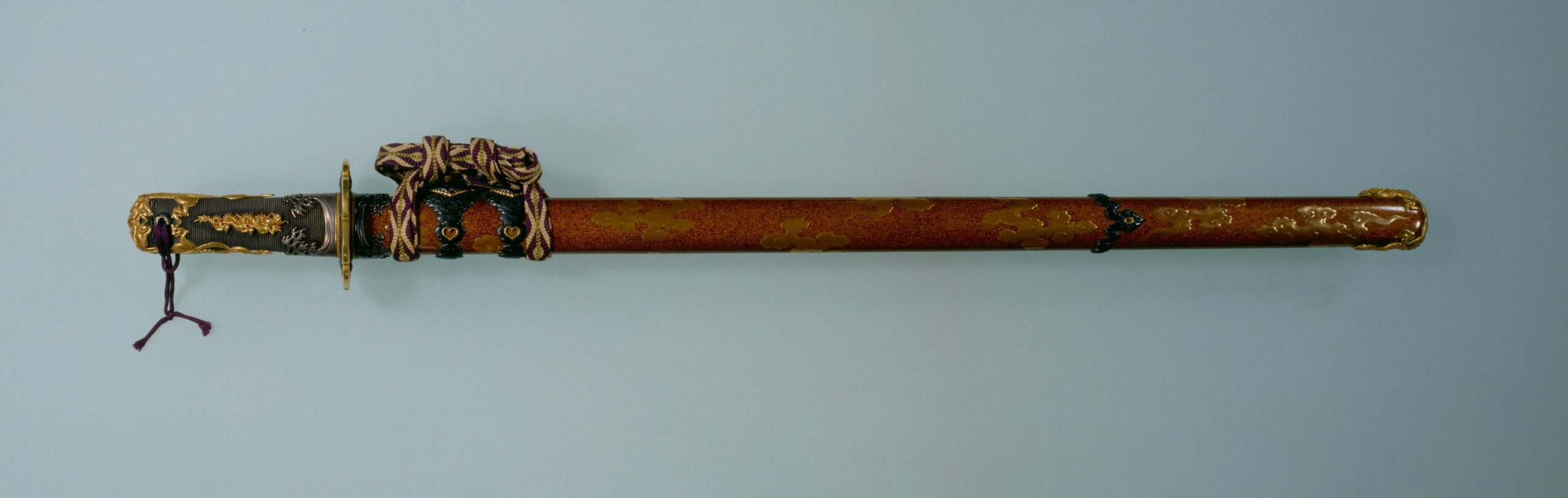
The Japanese sword is fundamentally a weapon designed to kill, but countless people throughout history have admired it for its unique beauty, separate from its practical use. One of the most famous pieces in the history of sword appreciation is the National Treasure, commonly known as the ‘Suiryuken (水龍剣)’ (photograph below), currently housed in the Tokyo National Museum. This Chokuto (直刀; straight single-edged sword), with a blade length of just over 60 centimetres, was passed down through the Shosoin (正倉院) in Nara until 1872.

Following the Meiji Restoration, the new government, determined to join the ranks of modern nations, ambitiously planned to hold numerous expositions as part of its national industrial promotion strategy (Shokusan Kogyo, 殖産事業). However, the rapid pace of modernisation in Japan at the time led to the neglect of ancient artifacts and historical objects, which were being sold off overseas one after another. To protect these cultural properties and prepare them for exhibition, the government initiated its first full-scale cultural property survey in 1872, primarily focused on the Kansai region. During this survey, known as the ‘Jinshin Chosa (壬申調査)’, the Shosoin was opened by imperial messenger, and it was this unsigned straight sword that caught the eye of the Meiji Emperor.
According to tradition, the sword was the personal sword of Emperor Shomu (聖武). Its state of preservation is unusually excellent for a Nara period Chokuto, and some theories suggest it originated on the Asian continent. When it was brought to the Meiji Emperor, however, it was only the blade (Toshin, 刀身), lacking any sword mountings (Tosogu, 刀装具) such as a scabbard, hilt, or decorative metal fittings.
Consequently, the Meiji Emperor commissioned Kano Natsuo (加納夏雄), a metalworker from the Kansai region, to create a complete set of mountings. Kano produced mountings featuring dragons and auspicious clouds scattered across a Nashiji Makie (梨地蒔絵) surface. The previously unsigned sword was thus given the name ‘Suiryuken’ and was cherished and worn by the Meiji Emperor for a long time thereafter. It is a remarkable instance of a blade and mountings, separated by over a thousand years in their creation dates, being united to adorn a new master.
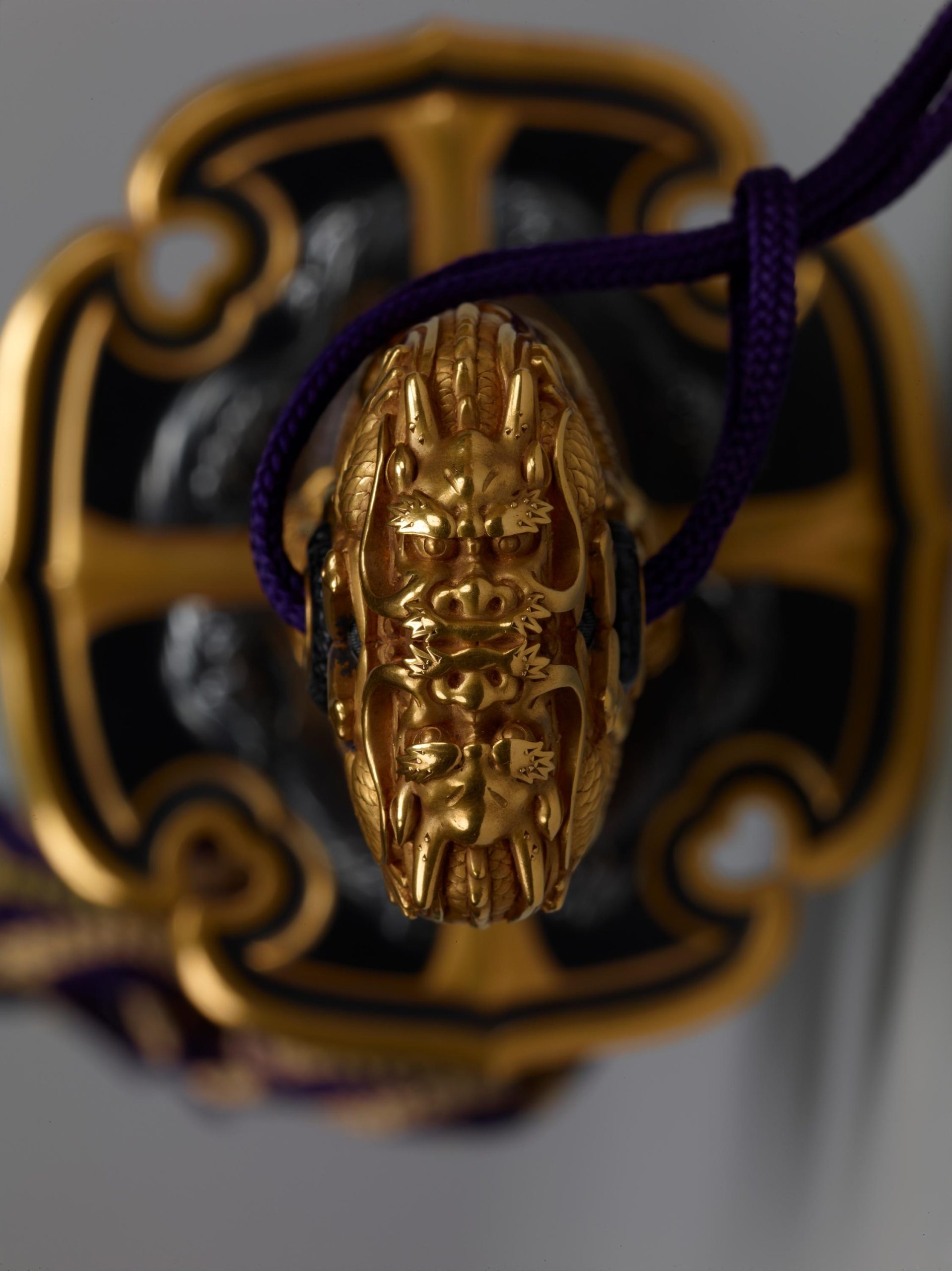
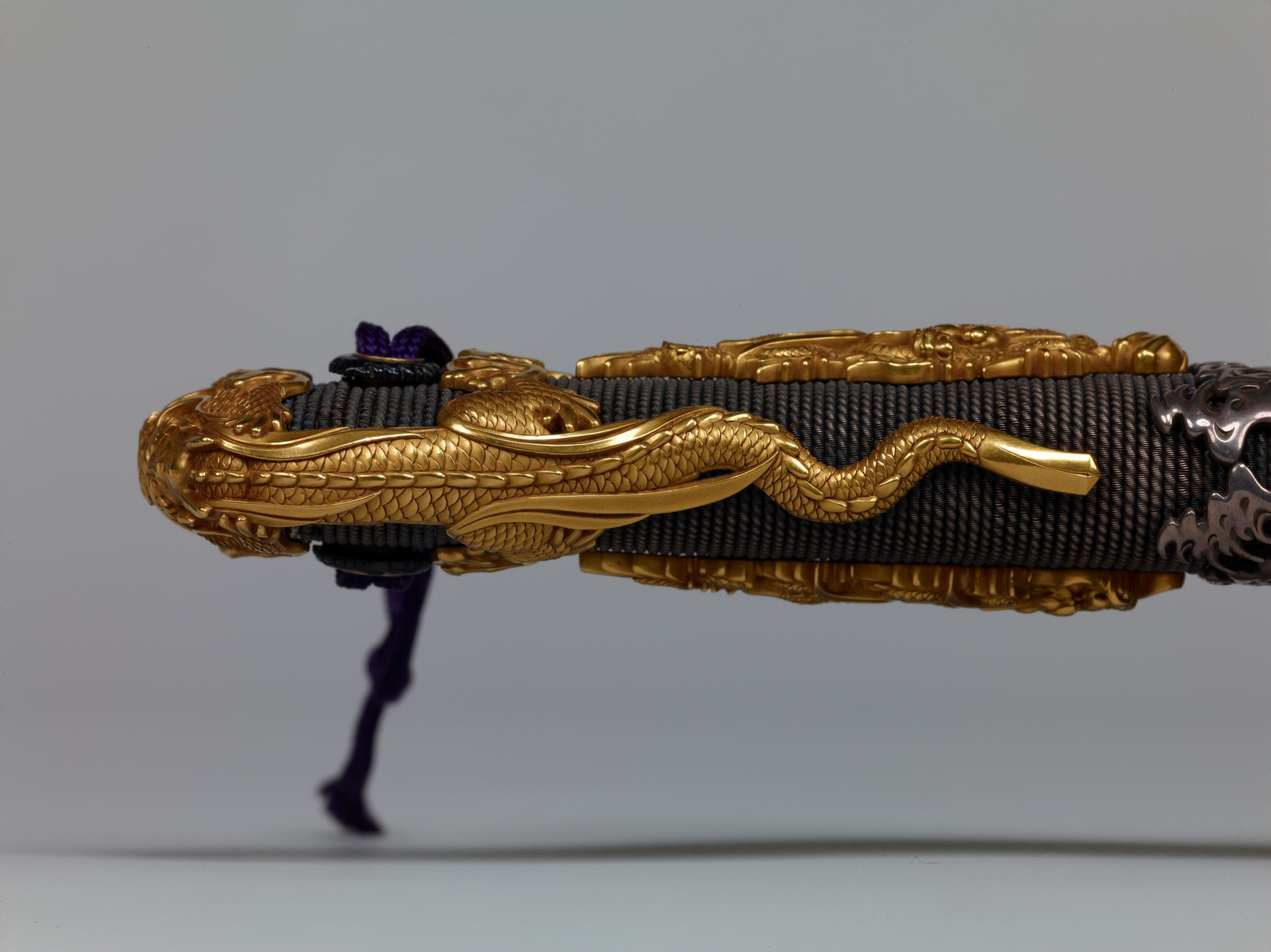
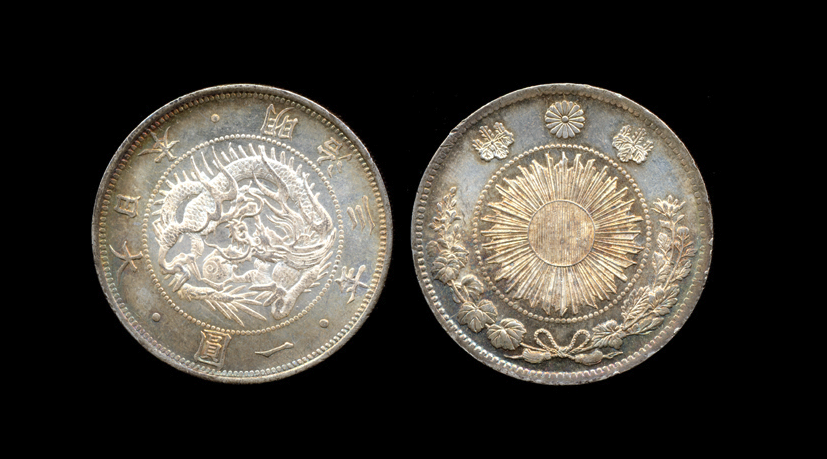
Kano Natsuo, who could be called the father of the ‘Suiryuken,’ was also deeply involved in the new currency production that started around the same time as the mountings project. The new monetary units of ‘Yen (円), Rin (厘), and Sen (銭)’ were established in 1871, replacing the old ‘Ryo (両), Bu (分), and Shu (朱),’ and Kano and his apprentices were entrusted with designing and creating the samples for these new coins. This was a significant honour, considering Kano was raised as the adopted son of a Kyoto sword dealer and had begun his career as a metal craftsman working in the civilian sector.
As recorded in the New Testament Gospels, where Jesus Christ, referring to a coin bearing the image of the ruler Caesar, said, “Render unto Caesar the things that are Caesar’s,” Western currency historically bore the image of the monarch. In Japan, however, the Emperor rarely appeared before the common people. Therefore, the face of the new coins was engraved with a dragon, an emblem representing the Emperor (Tenshi, 天子), which served as a proxy for the monarch’s portrait.
Kano went on to design honours and medals and was accorded the prestigious titles of Professor at the Tokyo Art School and Imperial Court Artist (Teishitsu Gigiin, 帝室技芸員). Yet, despite working on many ‘dragon’ motifs for the currency and the ‘Suiryuken,’ accounts from those close to him suggest that Kano himself did not consider carving the dragon his forte.
Nevertheless, the reason Kano was continually requested to create the ‘dragon’ motif for the latter half of his life must be that Japan, as a newly emerging modern state, required it as a symbol for the Emperor, the nation’s sovereign. In essence, the Meiji society continually draped the Emperor in the ‘dragon.’
However, when the Currency Act was revised in 1897, the dragon design disappeared from the gold and silver coins subsequently minted. This occurred two years after Japan’s victory in the Sino-Japanese War. Perhaps the weakening of China, the dragon’s origin, led to a reluctance to continue using the dragon as a symbol for the Emperor. The new motifs that appeared on the currency were the Rising Sun (Nissho, 日章) and the Eight-Pronged Mirror (Hachiryokyo, 八稜鏡), which would long symbolise Imperial Japan until the end of the Pacific War. Kano, however, died at the age of 71 in February 1898, the year after the dragon vanished from the coinage, and thus did not witness these later developments.
The Meiji era was a period of relentless, rapid transformation as Japan struggled to catch up with the great powers. The sheer complexity of the process is evident even in the various trials and errors concerning what symbol should adorn the Emperor.
This article is translated from https://intojapanwaraku.com/culture/283619/