






Extremely Popular as a ‘Sacred Pilgrimage’ Spot for Kokuho
I arrived at the Izushi Eirakukan Theatre in about 20 minutes by taxi from JR Toyooka Station. While famous theatres like Kyoto’s Minamiza (南座) were also used for the Kabuki scenes in the movie Kokuho, it was the Izushi Eirakukan that became the subject of intense discussion from the moment the film was released, with people asking, “Which theatre is this stage?” The director, Akaura Tsuyoshi, shared, “Initially, core fans of Yoshizawa Ryo started visiting from faraway places. Following that, film fans started coming via word-of-mouth. During one long holiday period, we even had a record high of 1,200 visitors in a single day.”
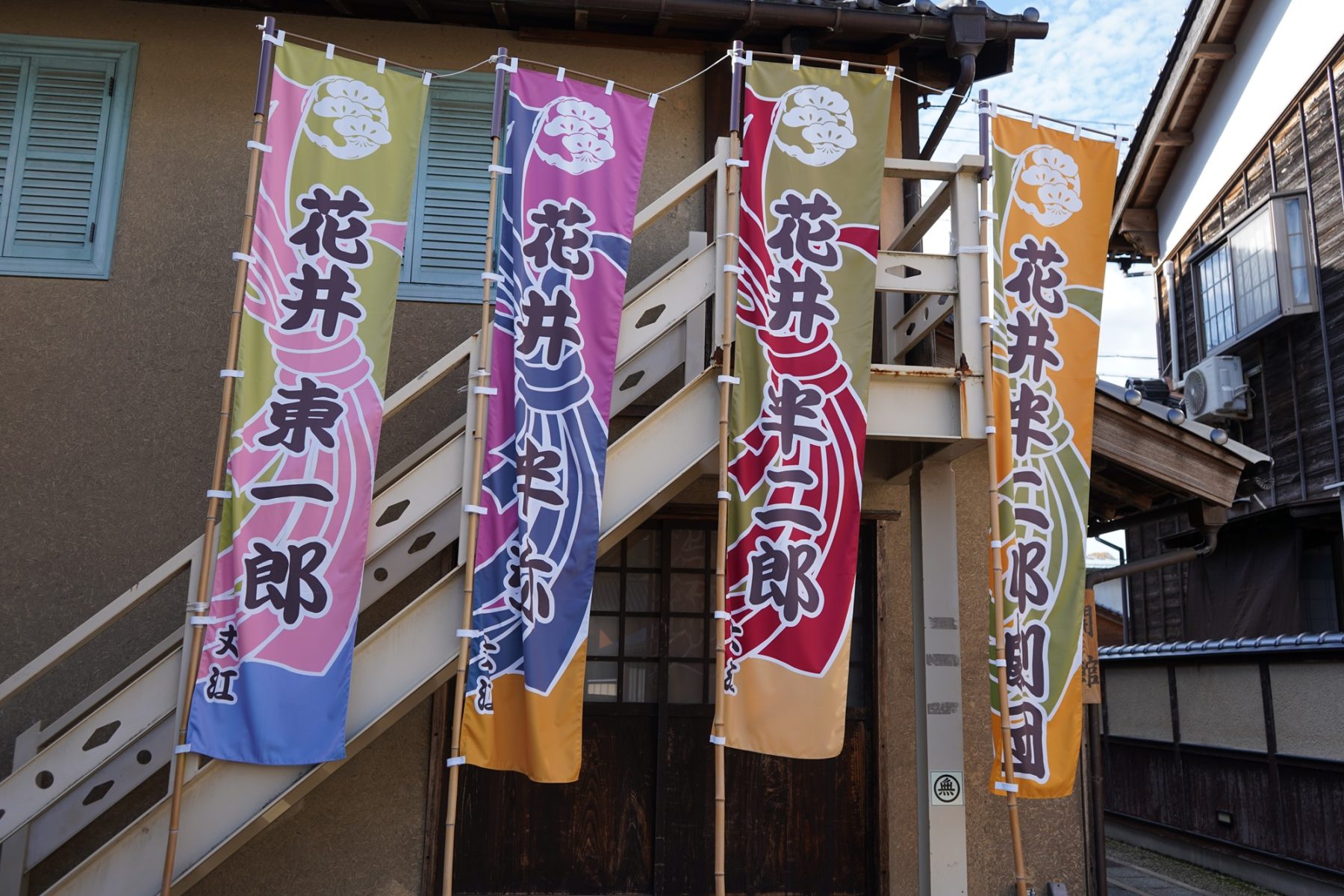
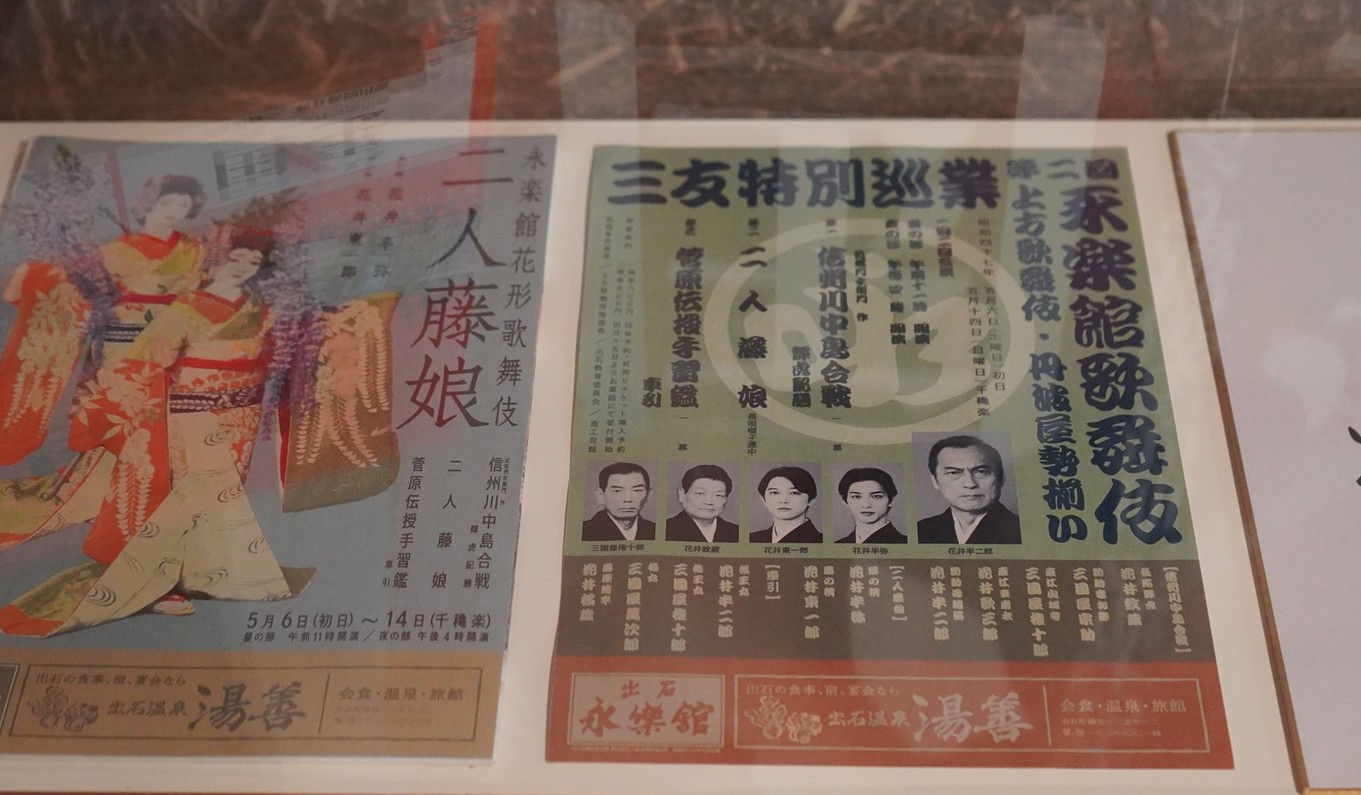
The filming for Yoshizawa Ryo and Yokohama Ryusei’s scenes reportedly kicked off right here at the Izushi Eirakukan. “I was in the office during filming, so I had no idea what scenes were being shot,” Mr. Akaura confessed. “After the movie was released, I was genuinely moved by how many iconic scenes were filmed here at Eirakukan.” Many viewers were captivated by the contrast between the glamorous appearance of the actors gracefully dancing the ‘Futari Fuji Musume (二人藤娘)’ and the retro atmosphere of the playhouse in the background.
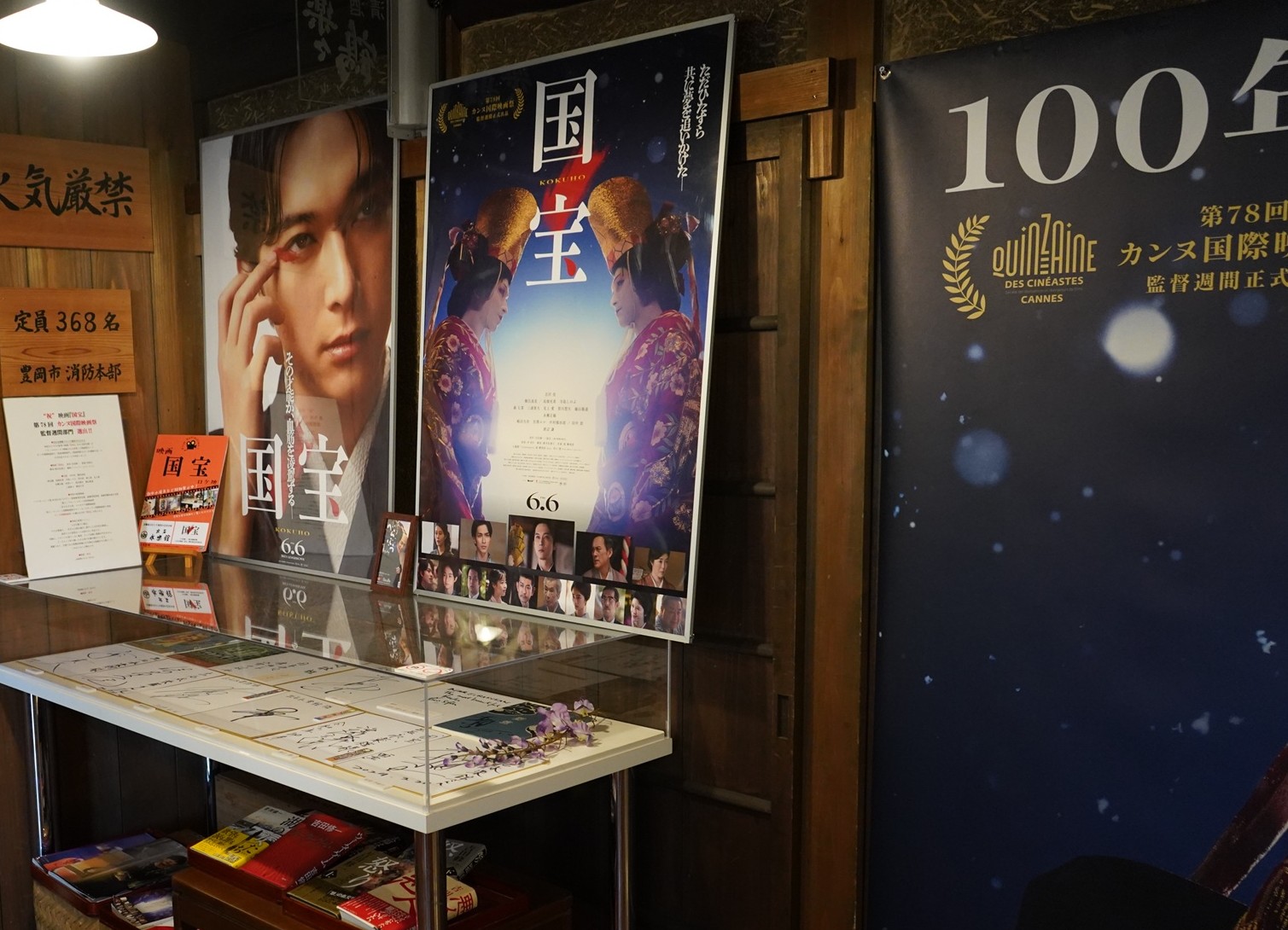
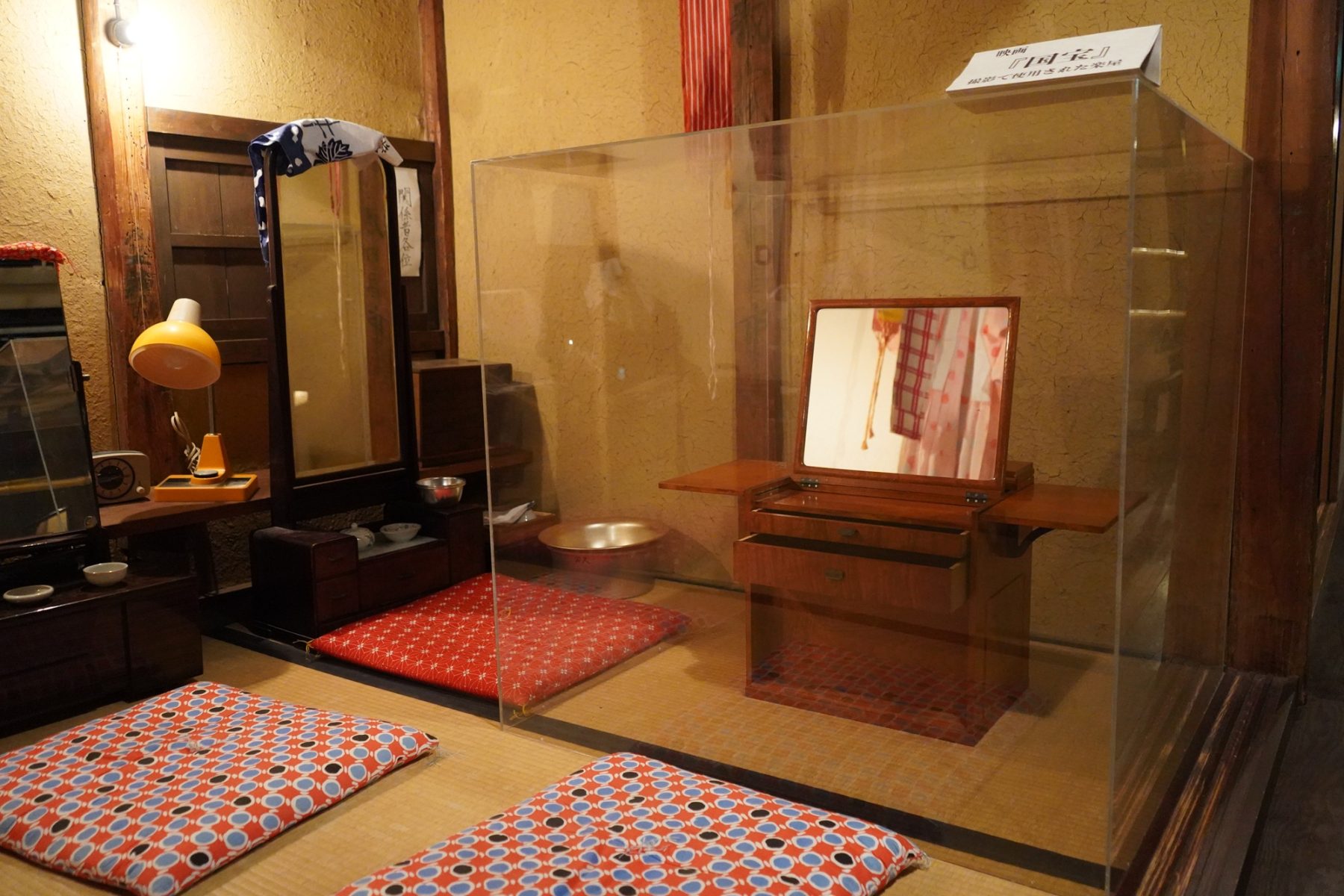
Upon entering the building, there is an exhibition related to Kokuho right at the entrance, a feature designed to capture the hearts of ‘sacred pilgrimage’ visitors. During my visit, there was a constant stream of visitors, allowing me to truly feel the extent of the reaction. It seems to be attracting support from a wide range of age groups.
Inside Ryo Yoshizawa’s Dressing Room: What Makes Its Layout So Unusual?
Izushi is known as the ‘Little Kyoto of Tajima (但馬).’ The preserved, atmospheric old townscape surrounding the Izushi Eirakukan may also be part of the reason for its growing popularity via word-of-mouth. Furthermore, approximately 40 soba shops where you can enjoy the famous Izushi Sara Soba (出石皿そば) are within walking distance.
The Izushi Eirakukan opened in Meiji 34 and reportedly thrived as a venue for Kabuki, shinpa (新派) drama, and yose (寄席; rakugo/storytelling performances). Over time, film screenings became the main focus, and due to the spread of television and the diversification of entertainment, it closed in Showa 39. Subsequently, calls for the revival of the nostalgic Eirakukan emerged, and after a restoration effort spanning about 20 years, it was successfully brought back to life following a major renovation in Heisei 20.
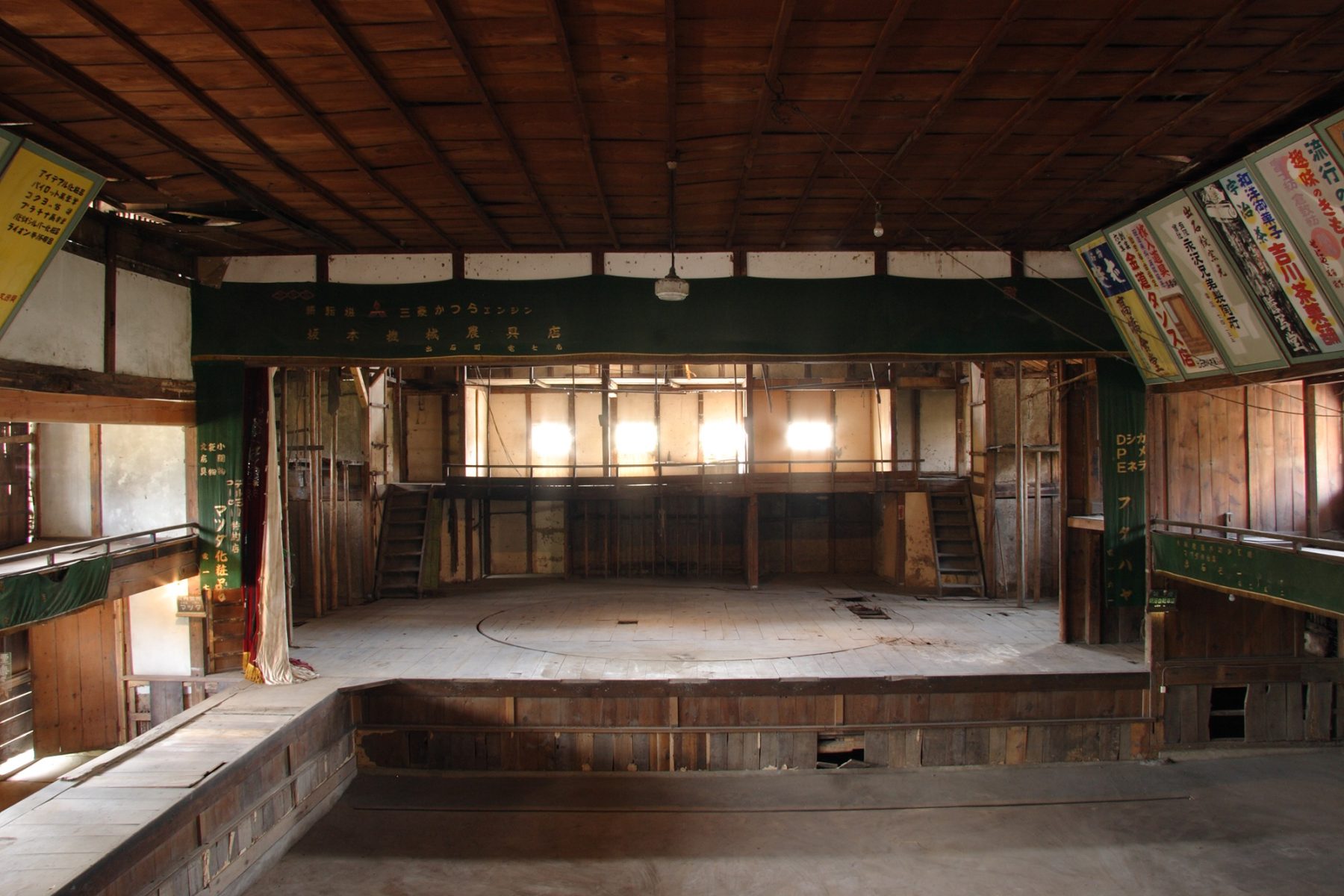
In the film, there is a scene where Kikuo (喜久雄; played by Yoshizawa Ryo) descends from the dressing room to the floor below and subsequently gets into a fight with an employee of the management company (played by Miura Takahiro, 三浦貴大). This scene was personally very memorable for me, but I wondered about the building’s peculiar structure and where it was filmed. The dressing rooms on the second floor looked quite simple, completely exposed without a back wall, and there didn’t seem to be any actual rooms on the first floor beneath them. Why was this? Mr. Akaura’s explanation solved the mystery.
“The space directly behind the stage is a private house, so there was no room to build a proper dressing room. Therefore, the dressing rooms were set up behind the stage. This was part of the original design, seemingly born out of necessity. Usually, dressing rooms are built with a prop storage room in between, but in this playhouse, the second floor is the dressing room and the first floor beneath it is the prop room. This is something you won’t see in other theatres.” Director Lee Sang-il reportedly loved the unique structure, which allowed for a single shot capturing both the Hanamichi (花道; pathway through the audience) and the dressing room at the back of the stage. It truly was a masterpiece scene that could only have been created in this particular playhouse.
From Vintage Shop Buyer to Theatre Director
Mr. Akaura has served as the director of the Izushi Eirakukan since its restoration and opening in Heisei 20. “I previously lived in Kobe City, but as my child was born, I decided to move to Izushi, my wife’s hometown.” He shares that living in this nature-rich area sometimes means encountering scenery so beautiful it brings tears to his eyes. He also speaks passionately about Izushi Town’s charm, saying he notices the kindness of the people around him every day. Upon moving to Izushi and changing careers, he joined the ‘Izushi Town Planning Corporation Co., Ltd.,’ which was recruiting local residents, with the desire to contribute to the town. This timing coincided precisely with the local efforts to restore the Eirakukan and its subsequent reopening.
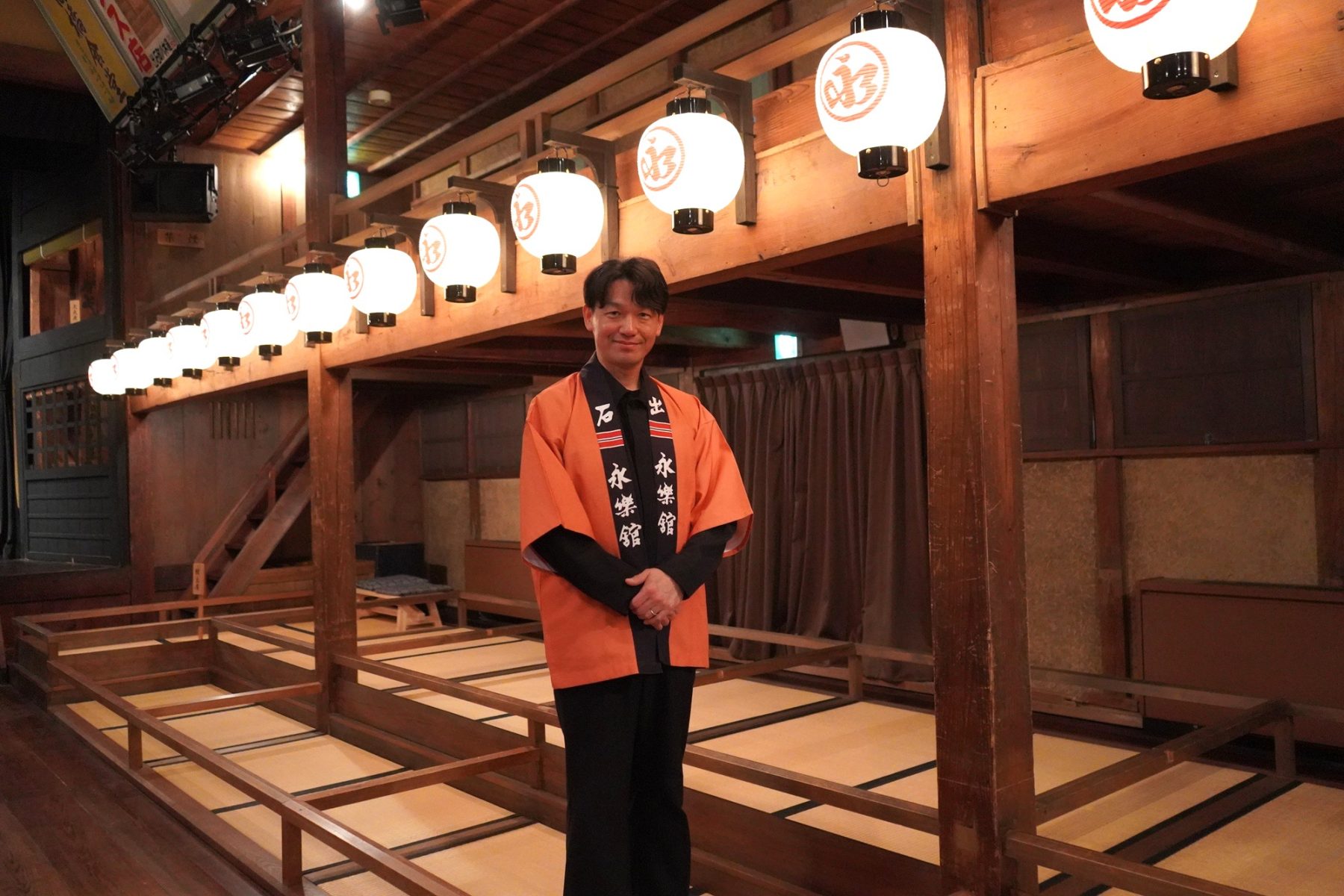
His previous job was as a buyer, travelling the world to source vintage jeans and other items. “I had no connection to playhouses, but the first time I came here, I thought it was incredibly cool. Once I viewed it as a ‘super-vintage’ world, I found I could easily engage with it.” Mr. Akaura explains that he excelled at describing the colour fading and texture changes, known as ‘aging’, in vintage denim. Although the genres are different, he clearly found a common thread in recognising the value accumulated through history.
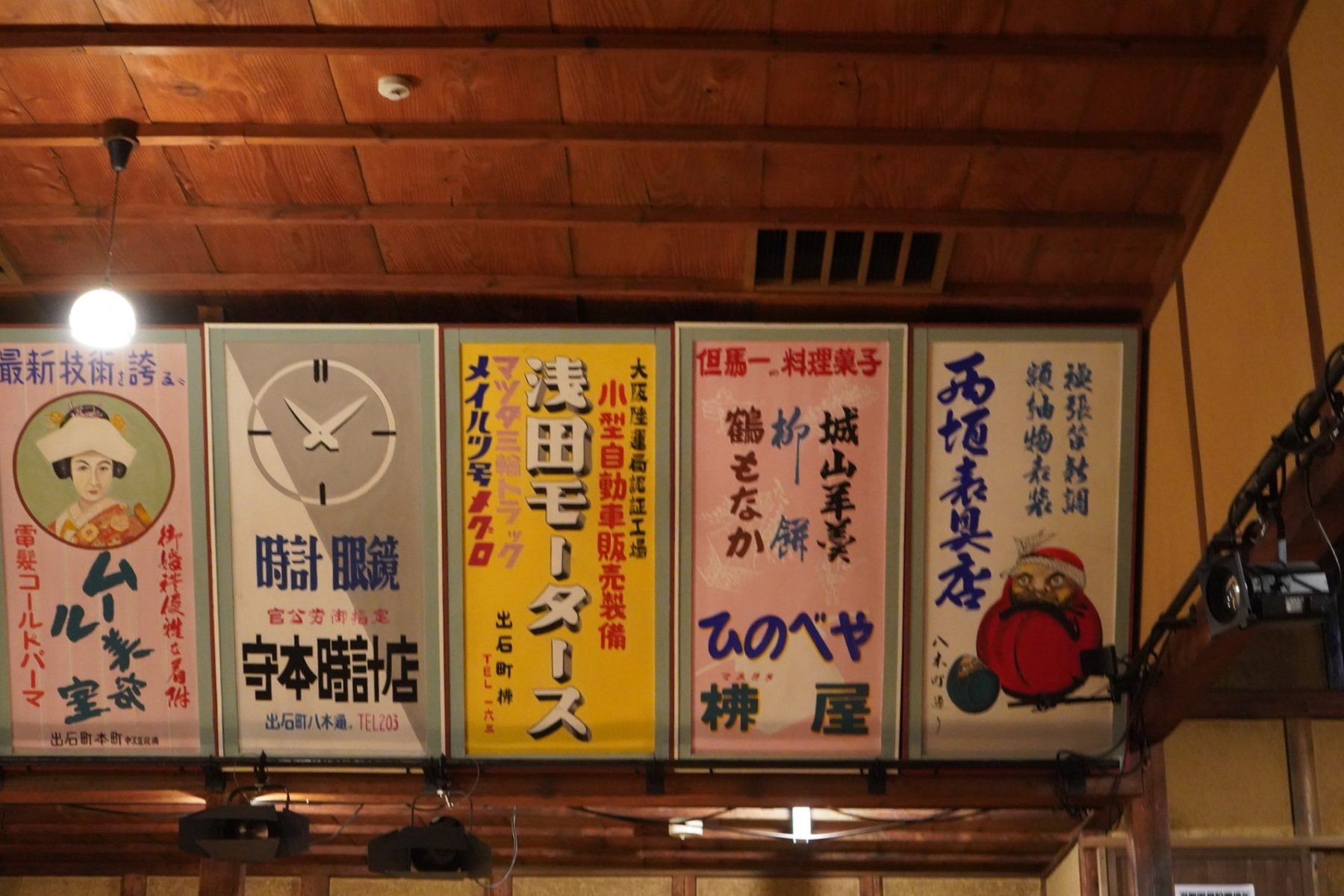
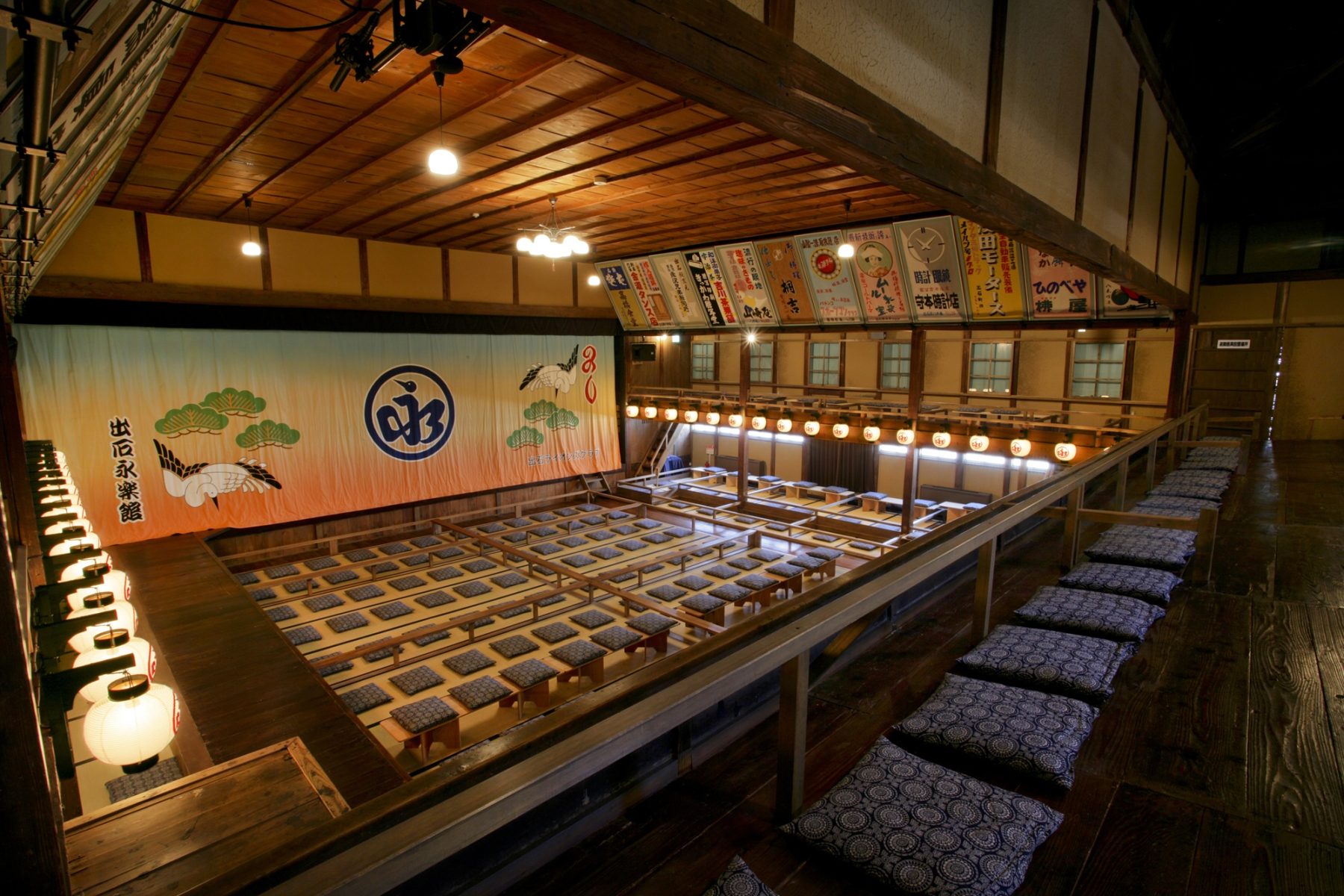
Above the audience seating area in the playhouse, a sight catches the eye: a series of Showa-era, retro hand-painted signboards that have been perfectly preserved. These were painted by a local Izushi sign artist, and all the advertisers are local businesses, several of which are still operating today.
There was a time when the theatre faced financial difficulties, and a proposal was made to remove the existing signboards and replace them with new ones that would generate advertising revenue. Mr. Akaura recalls, “I was hesitant, but a former proprietor of the Nishigaki Mounting Shop told me, ‘It makes me so happy to come here and see the signboard still hanging.’ Even though the shop had closed, hearing that this brought him such joy made me realise that we absolutely had to preserve these signboards.”
The Musicians’ Room, Complete with Preserved Graffiti
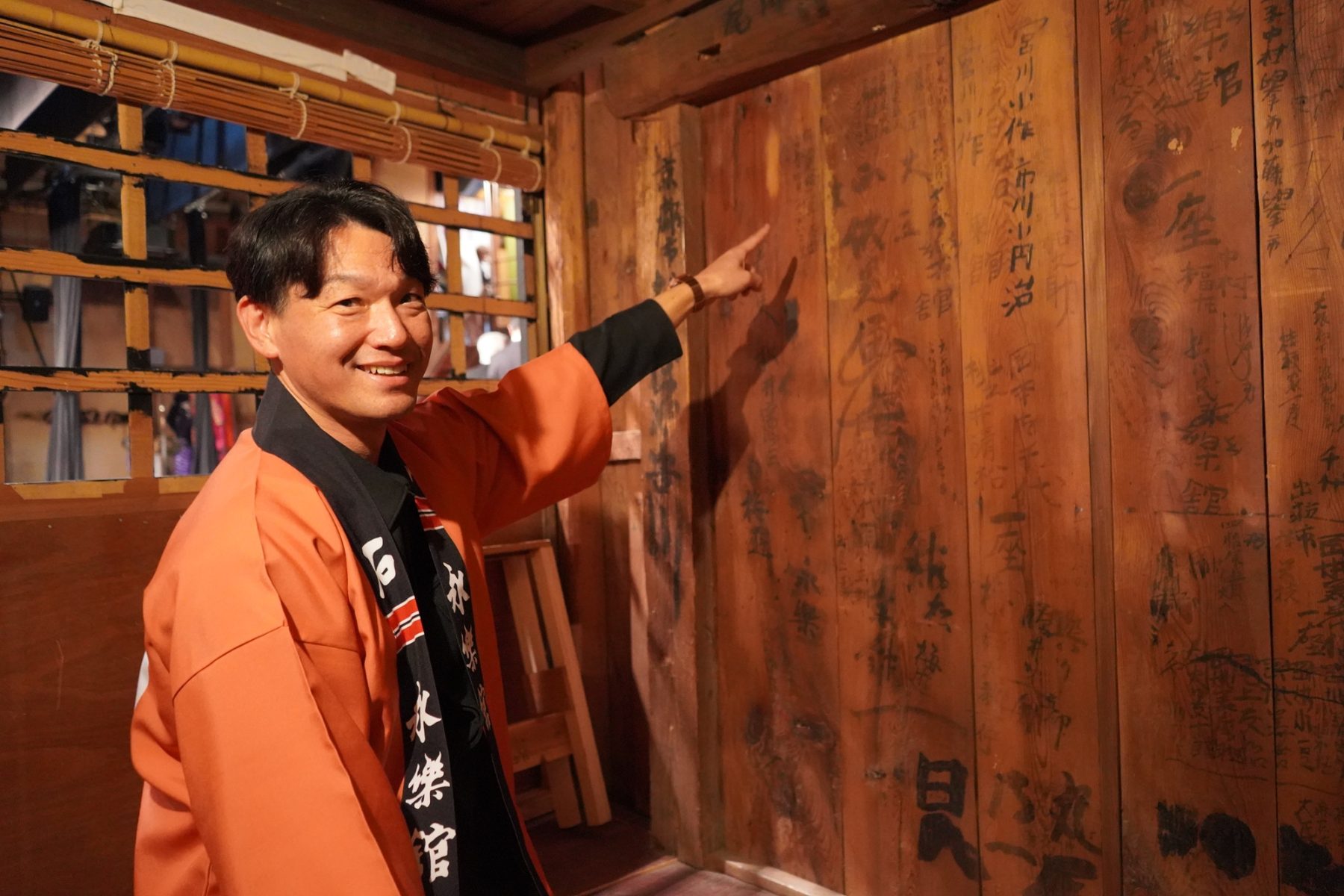
One of the great attractions of the Izushi Eirakukan is that its valuable original theatrical mechanisms remain intact. On the stage’s right side (known as kamite (上手), or upper side), there is a small room called the Hayashiba (囃子場; musicians’ room), which is still used today for playing the shamisen (三味線) and taiko (太鼓). When I was guided inside, I was surprised to see the walls covered in writing in black ink—graffiti! The existence of such markings is also quite fascinating.
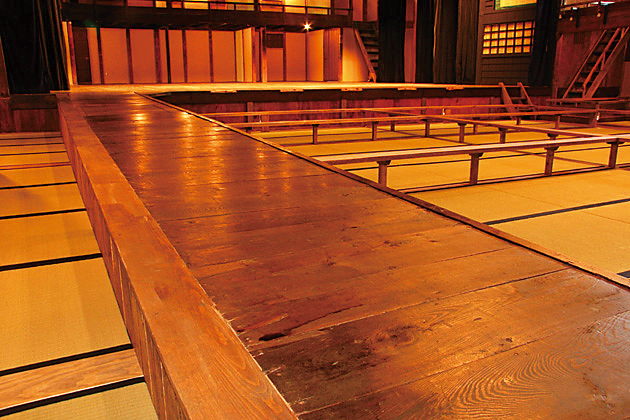
The Hanamichi: Astonishingly Close to the Audience
The scene on the Hanamichi where Futari Fuji Musume appears in the movie also left a vivid impression. Walking on it myself, I was surprised by how close the distance is to the audience seating. Visitors are also allowed to shoulder a wisteria branch and pose on the Hanamichi, with everyone taking commemorative photos. “We also offer kimono (着物) for visitors to try on freely,” he added. “These kimono were donated by local residents.”
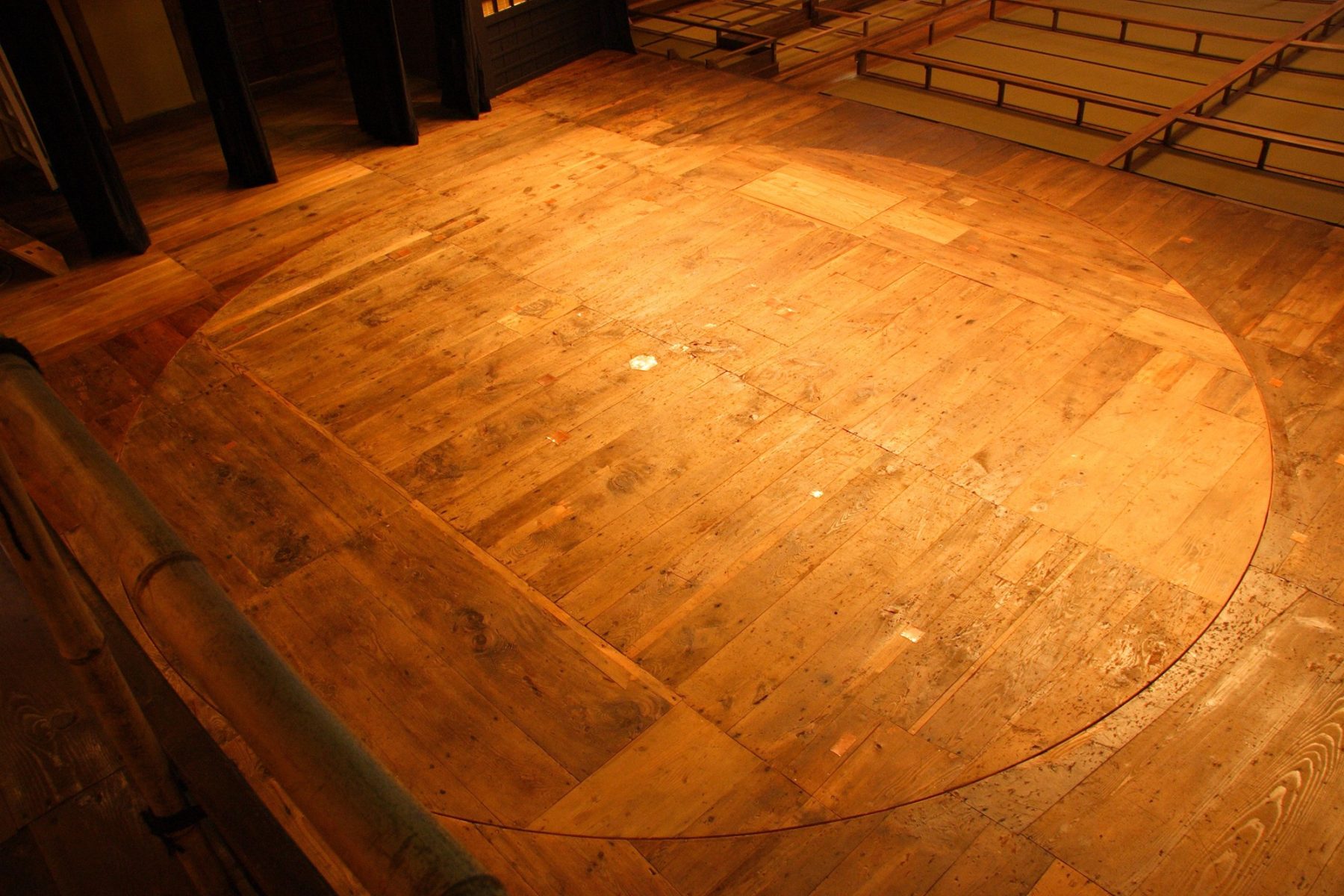
The Revolving Stage That Is Still in Use
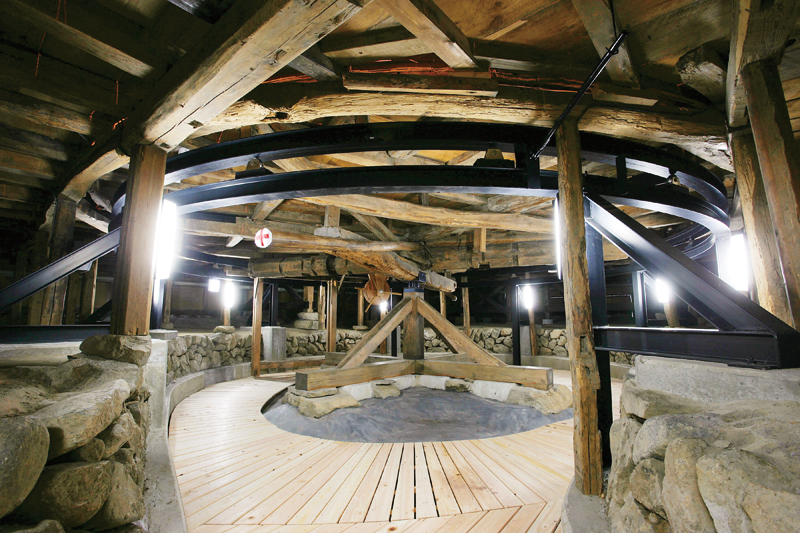
The stage floor is cut out in a circle with a diameter of 6.6 metres, forming a Mawari-Butai (廻り舞台; revolving stage) that can be rotated. Moving beneath the stage reveals the Naraku (Naraku; the trap room), where the manual mechanism used to rotate the stage can be viewed up close.
“This playhouse is used as the venue for the Izushi High School’s drama club performances during their culture festival. They use the revolving stage during those performances.” The term Naraku is derived from the Buddhist term for “hell,” and the expression “to fall into naraku” (to fall into misery) also originated here. “It’s a rare area to see, so I definitely encourage visitors to take a look while they are here,” Mr. Akaura urged.
Encouraging Kokuho Viewers to Experience Live Kabuki
One of the projects Mr. Akaura has focused on since becoming director is the annual Kabuki performance starring Kataoka Ainosuke (片岡愛之助). “He has served as the zagashira (座頭; head actor of the troupe) since the kokera-otoshi (杮落とし; inaugural performance) in 2008. Although it was interrupted by the pandemic, we successfully revived it in 2023. Mr. Ainosuke has repeatedly said in various places that ‘the Kabuki at the Izushi Eirakukan is my life’s work, and I want to continue it as long as I live,’ which we are deeply grateful for.”
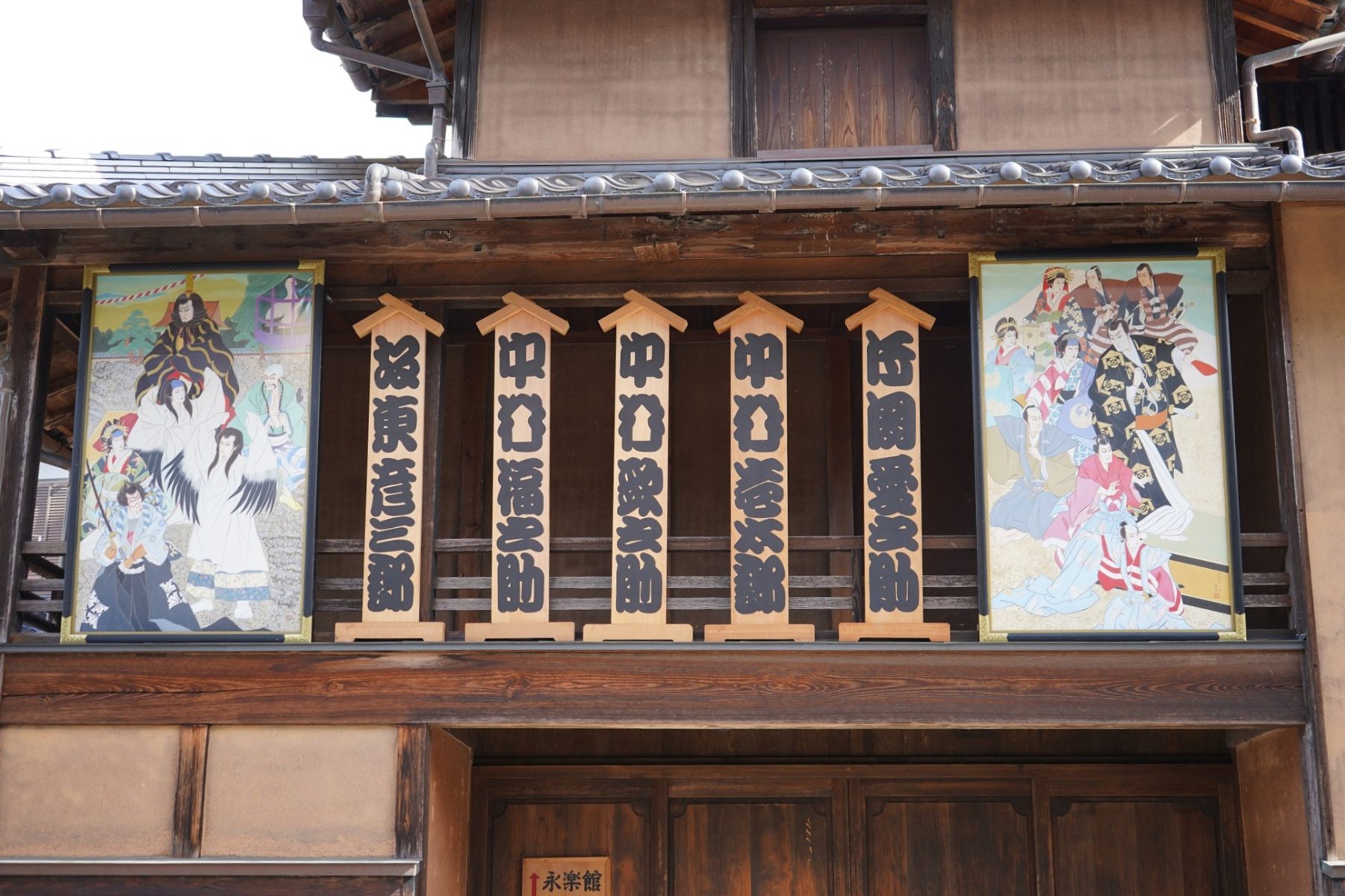
The theatre is currently experiencing a constant flow of visitors—a happy kind of overwhelming demand. “We sincerely hope that people will come and see Kabuki performed live in this very playhouse.” The Eirakukan Kabuki always features a popular Omemie Kojo (お目見得口上; introductory greeting) from the actors on stage, filled with lighthearted banter. Furthermore, because the playhouse has a capacity of just 360 seats, the proximity to the actors is very close, allowing the audience to experience the impact and sense of unity of Kabuki in a way that differs from larger theatres.
Toyooka City has also launched an initiative to support the continuation of this performance through Furusato Nozei (Hometown Tax Donation). The movie may well be the perfect catalyst for a Kabuki debut in this charming, retro playhouse.
Izushi Eirakukan Basic Information
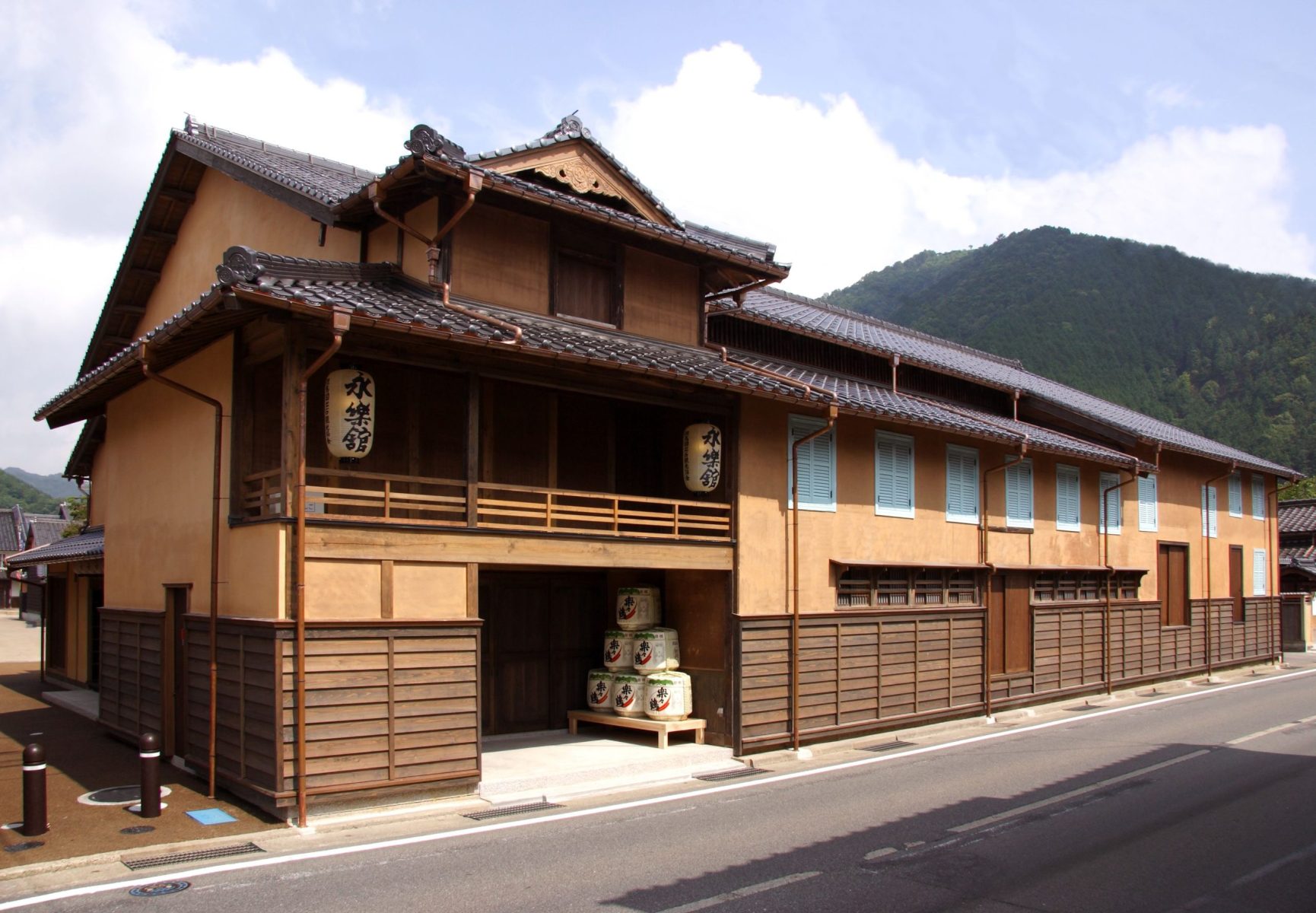
17-2 Yanagi, Izushi-cho, Toyooka City, Hyogo Prefecture
Opening Hours: 9:30 AM to 5:00 PM (Last admission 4:30 PM) Entry is not permitted during performances or facility rentals
Admission Fee: Adults ¥400, Students ¥240, Elementary school age and below free
Closing Days: Every Thursday, 31st December, 1st January
Official Website: http://eirakukan.com/
Special Thanks to: Izushi Eirakukan
Eyecatch: Image provided by Izushi Eirakukan
This article is translated from https://intojapanwaraku.com/culture/289796/