






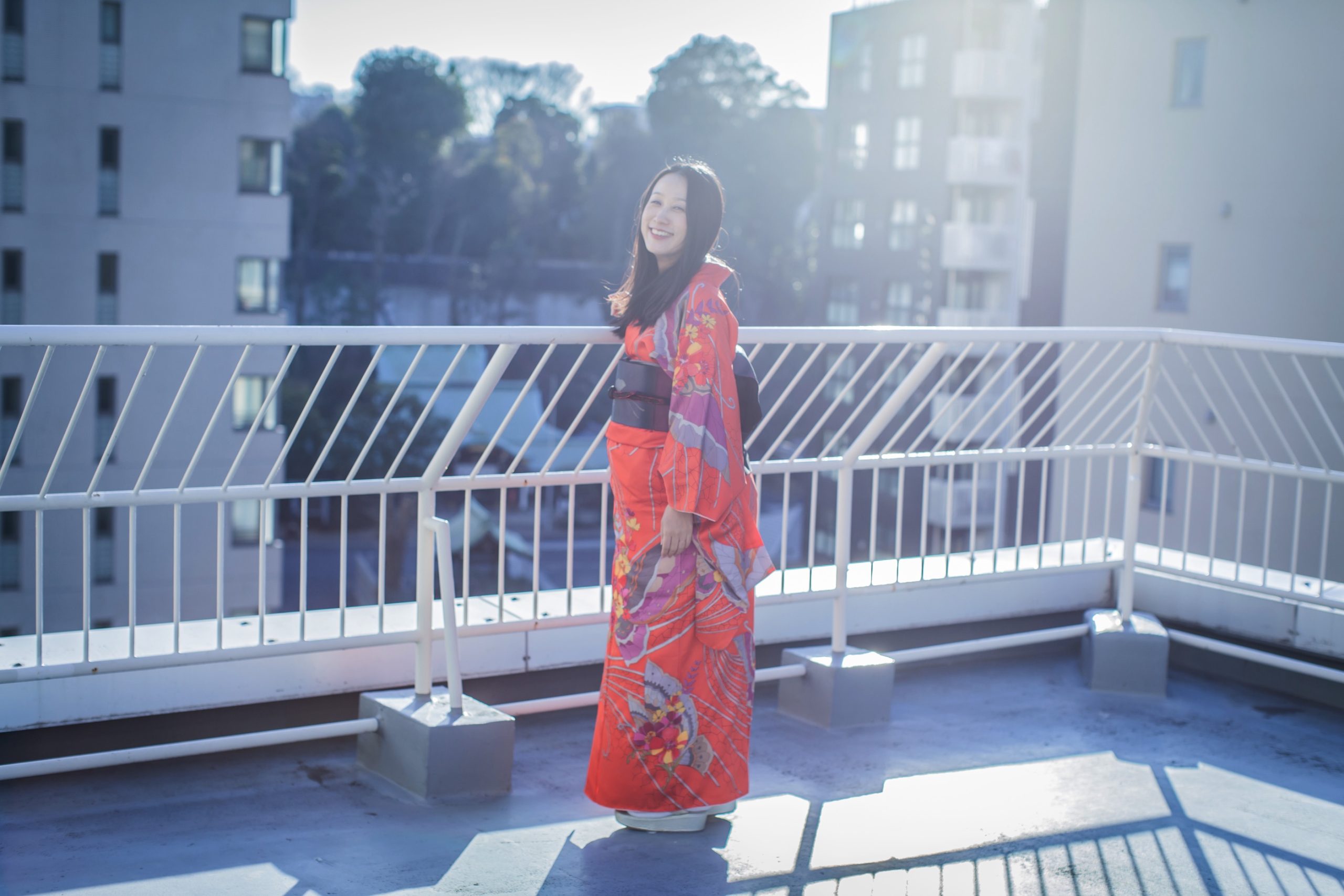
The Brilliance of Kimono: A Garment That Accommodates Any Figure
After moving from my familiar home in Kyoto and settling into a new life in Tokyo, I was fortunate enough to get married. Sometime later, and past the age of 40, I received the wonderful news of my pregnancy.
Since I began wearing kimono as my daily attire in Tokyo, this habit afforded me increasing opportunities to encounter the wisdom of our ancestors, leading to many new discoveries. However, it was the experience of pregnancy that allowed me to truly appreciate the brilliance of the kimono.
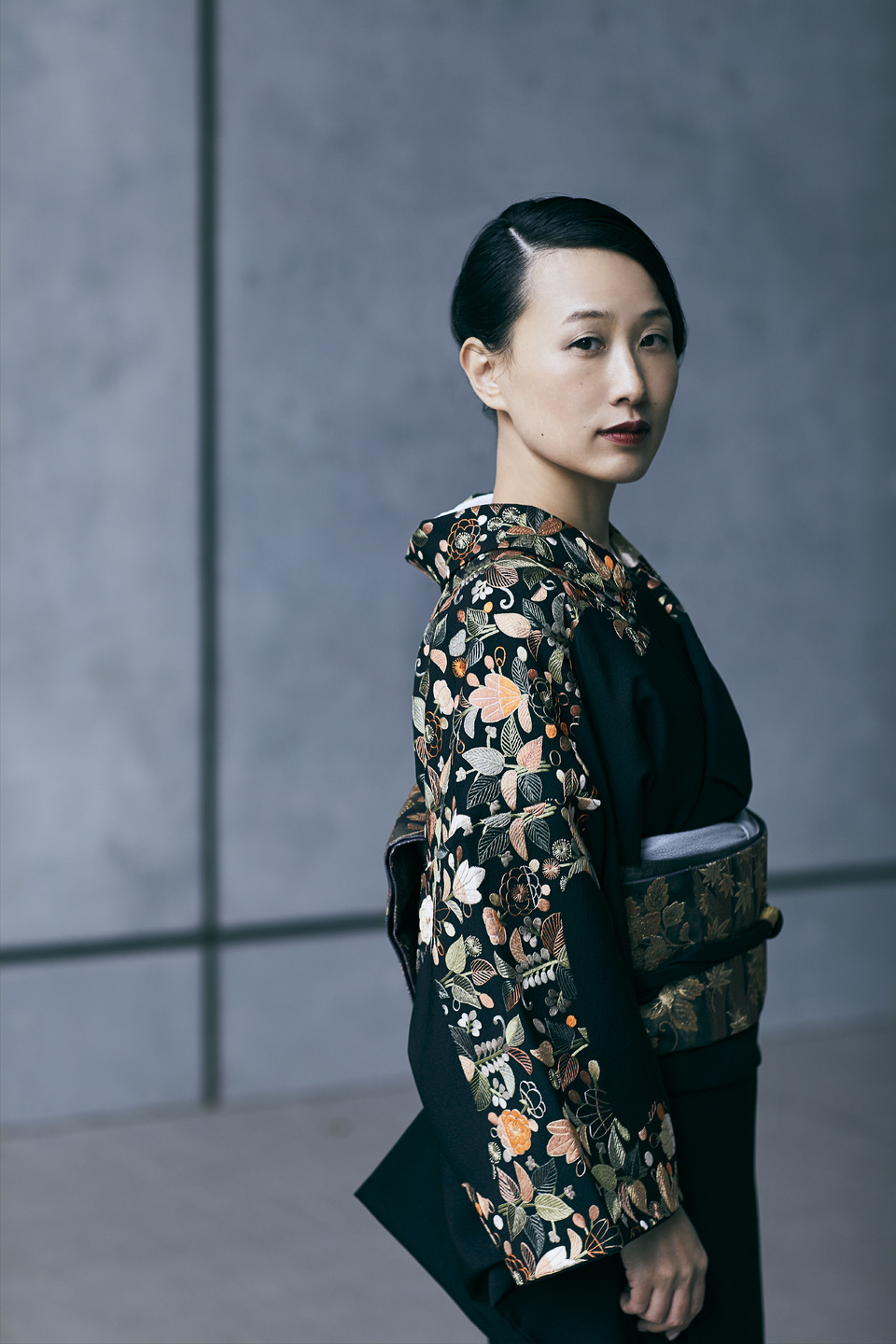
The kimono, which is constructed from straight-cut fabric and worn by wrapping it seamlessly around the three-dimensional body, compels one to confront and engage with one’s own physical form with every dressing.
As my abdomen began to round, the straight Okumi-sen (おくみ線; the vertical seam line visible at the front of the garment below the sash/obi), which should be a straight line, became curved. I immediately understood that my body was preparing for childbirth.
My waistline also began to change, and I could no longer maintain the usual width in the overlap of the front panels (Suso-awase, 裾合わせ) at the hem. With Western clothing, one would consider purchasing maternity wear to accommodate the changing figure. However, with the kimono, by simply adjusting the overlap of the upper and lower front panels at the hem, I could continue to wear it throughout my pregnancy, adapting to my changing shape. The kimono’s versatility allowing a front-closing garment without buttons or zips to be worn merely by adjusting simple cords—speaks for itself.
The capacity of the kimono to adapt to the changes in a woman’s figure is precisely due to its structure. From the manufacturing process—cutting a single bolt of cloth into eight straight pieces with zero waste—to the stage where the user wears it, one can truly grasp how sustainable the kimono culture is.
Furthermore, as my abdomen and waist grew larger, the obi (帯; sash), which previously had ample length, began to feel shorter. The change was particularly evident with a Nagoya Obi (名古屋帯) that had a fixed pattern, as the position of the design shifted noticeably before my eyes. Again, with a belt that has fixed hole positions, one might need to purchase a replacement in such a situation.
Yet, even then, the obi could be wrapped around the body and shaped by folding it neatly. The obi, secured with an Obi-jime (帯締め; decorative cord), always conforms to the body. Even if the obi is too short to form the standard shape, a concealed cord can be tied beneath the lower edge of the obi, hidden by the folded-back end, allowing a beautifully shaped O-taiko (お太鼓) to be formed.
This particular technique was inherited from a master teacher, a veteran in her 80s, under whom I apprenticed for three years in Kyoto. I was told that she devised this method so that obi purchased in a woman’s youth could still be tied beautifully, even as she aged and her figure changed. I was once again struck by the brilliance of the kimono, which, through ingenuity and technique, accommodates every wearer.
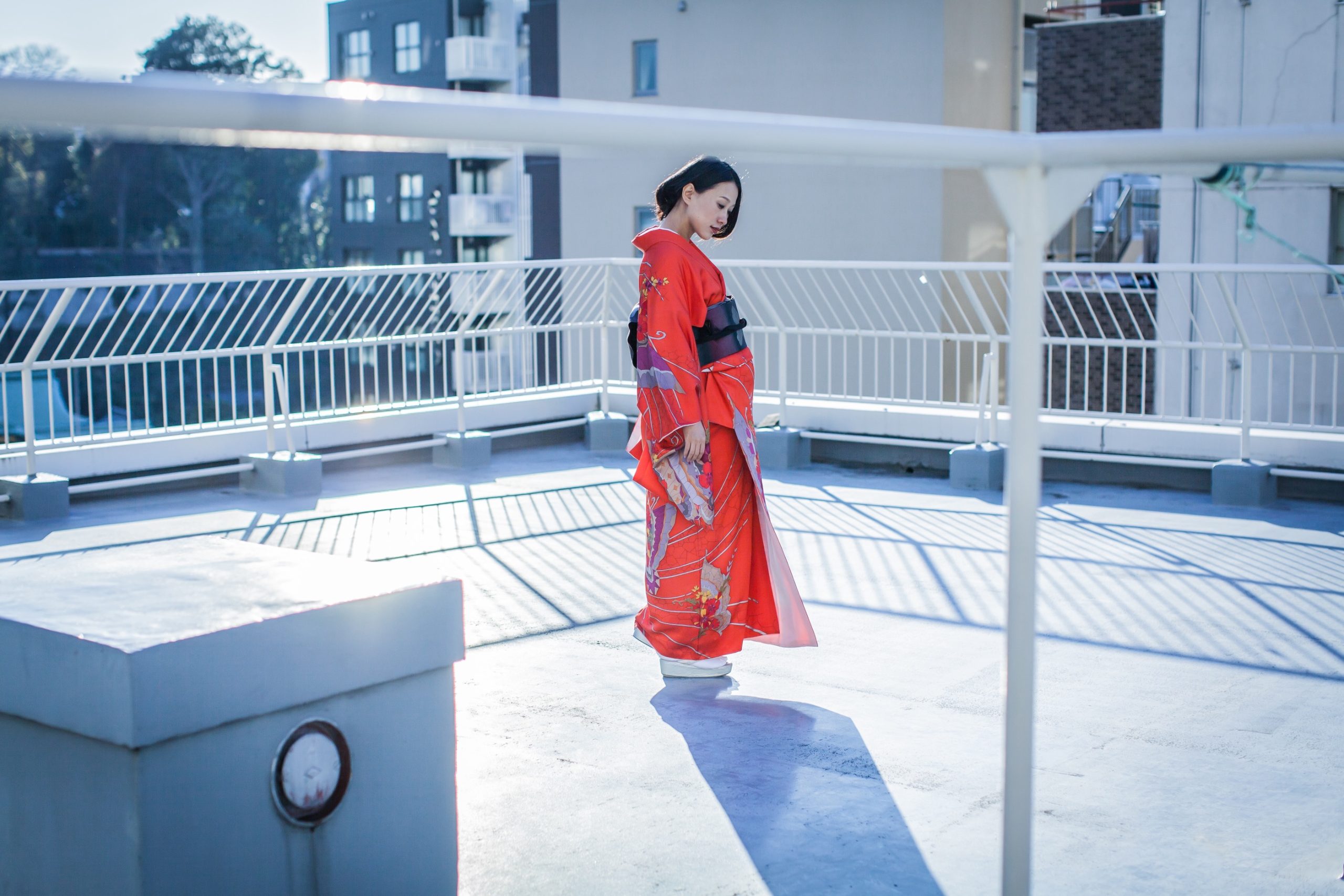
The Shibori no Heko Obi Was Ideal During Pregnancy
Around the time my abdomen had significantly grown, the proprietor of the antique kimono shop I frequented since moving to Tokyo told me an interesting anecdote: “In the past, people would use a Heko Obi (兵児帯; a soft sash typically worn by men) as a makeshift baby carrier. The stretchy shibori fabric was just right for swaddling a baby.”
At that very time, I was starting to feel uncomfortable pressure from my Nagoya Obi and Fukuro Obi (袋帯), and I was only wearing a soft silk Hanhaba Obi (半幅帯; half-width sash), wrapping it gently around my abdomen without tightening it. However, upon hearing this ancient wisdom, I thought, “Perhaps a shibori Heko Obi might be the best option during pregnancy,” and immediately switched to one.
When I carefully wrapped the Heko Obi around myself, ensuring it was supportive but not restrictive, I found it caused no discomfort whatsoever. It stabilised my abdomen, kept me warm, and offered numerous benefits. From then on, a combination of a stretchy shibori kimono and a Heko Obi became my standard style during pregnancy. In hindsight, I believe it served the purpose of the Iwata Obi (岩田帯; a white sash traditionally wrapped around the abdomen on the ‘Day of the Dog’ in the fifth month of pregnancy for warmth, protection, and to maintain the fetus’s position).
While regional practices may vary, Japan has a custom called ‘Obi-Iwai (帯祝い)’, a prayer for safe childbirth on the Day of the Dog in the fifth month of pregnancy, seeking the blessing of the dog, an animal known to deliver their offspring frequently and safely.
The origin has various theories, but it is said to be mentioned in the Kojiki (古事記; Japan’s oldest historical record), and its etymology is said to be the Ihada Obi (斎肌帯; purifying/sacred sash) used to protect the body from element or injury.
In the Heian period, the Ihada Obi was said to be made of silk shibori-dyeing and was longer than today, measuring 1 jo (丈) 2 shaku (尺) (approximately 3.6 meters), but only the upper classes wore this type of Obi. The custom of wearing a belly band spread among the common people from the Edo period, and now, sarashi (bleached cotton cloth) is commonly for modern maternity sashes.
By wearing a kimono, one frequently encounters Japan’s customs and traditions that have continued from ancient times to the present day. In the rituals woven into life’s milestones, one can feel the extent of Japan’s sense for beauty and unique tradition. I believe the root of this is the idea of respecting all things in nature and living in harmony. I hope to pass on this wonderful spirit taught to us by our ancestors—through the kimono and its related customs—to the children who will shape the future.
This article is translated from https://intojapanwaraku.com/fashion-kimono/246149/