





When the mind feels off balance
In the rush of our fleeting daily lives, we sometimes find ourself dwelling on the things we may have misspoken carelessly. Soon, the feeling of regret washes over. Then, follows the anxious thoughts – ‘What if tomorrow I’m unable to bounce back up again?”
When I find myself in this state, there is one particular thing I make a point of doing.
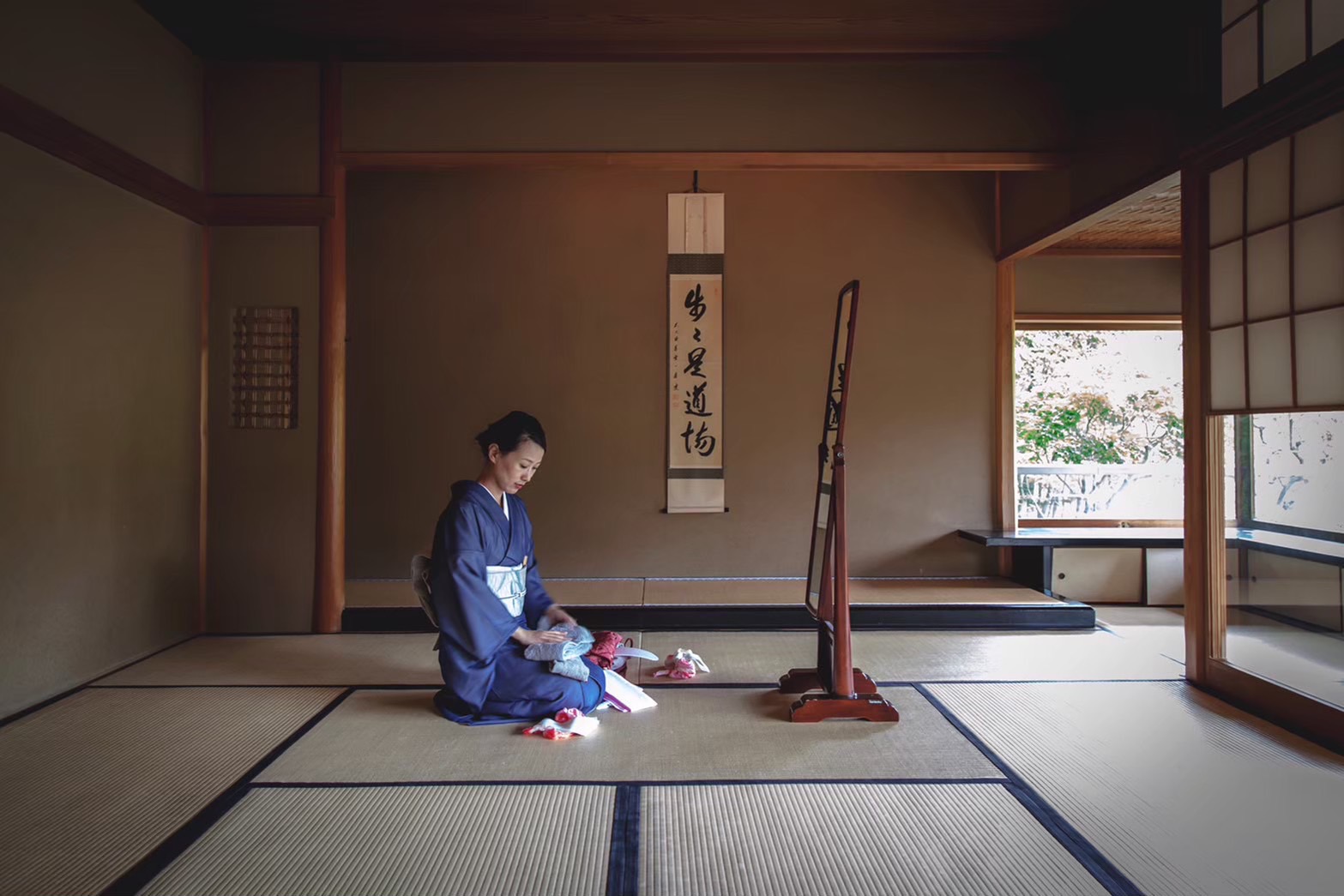
That is to fold my kimono. I then proceed to, with as much care as possible, fold my obi, followed by the other accessories. I use my palms to gently smooth out the wrinkles, ensuring every fold is perfectly aligned.
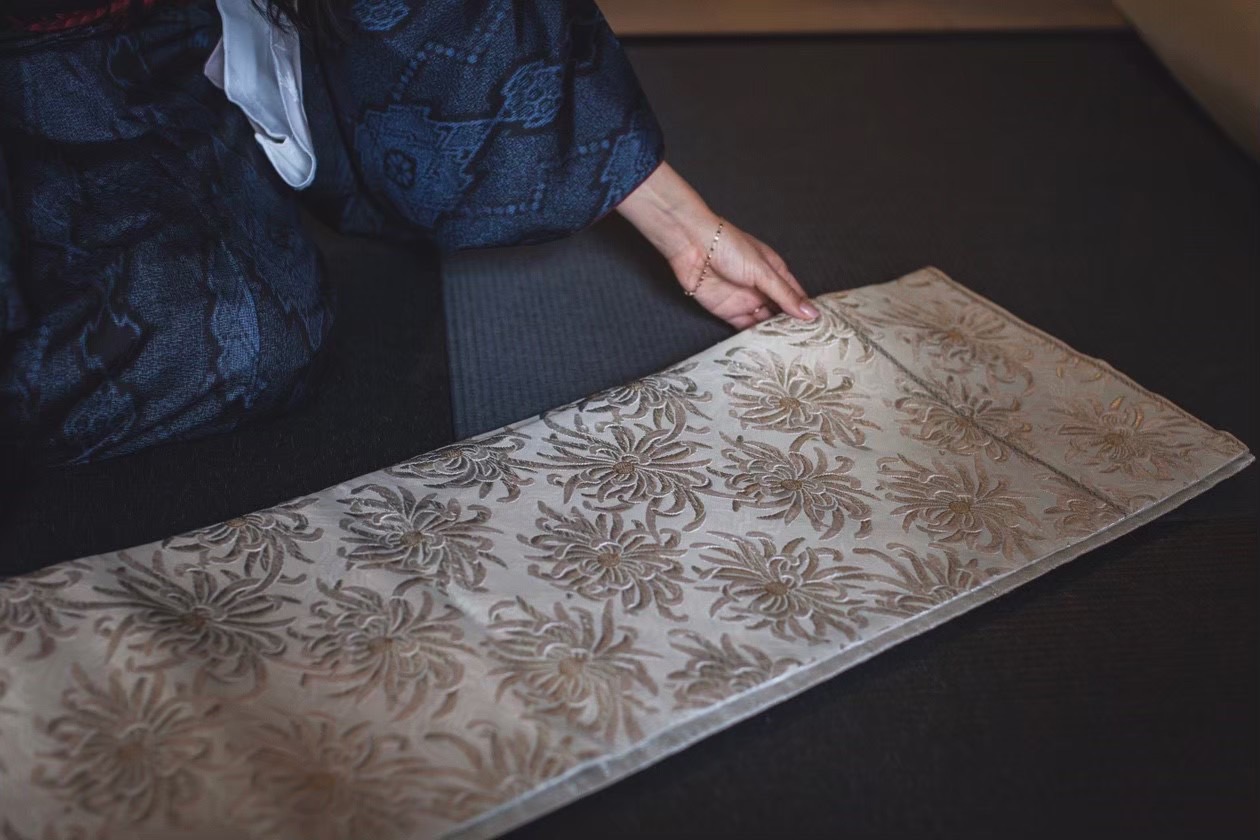
Even where I place the kimono to fold it is always the same and I position the collar to the left, straighten the side seams neatly, and with an awareness of all the lines, I fold along the sewn seams.
The interesting thing is that the smoothest and neatest fold is achieved when I sit in a seiza position (正座; kneeling formally), straighten my back, and focus on deep breathing while folding. This demonstrates that the posture one adopts towards the object is essential for folding it beautifully.
The lines meet perfectly, seam to seam, and when I finally adjust the sleeves, only the sewn lines are neatly folded, and the areas that should remain wrinkle-free stay that way. This unchanging method of folding has been passed down since ancient times. Although the landscape of my own mind may change, the way the kimono is folded is always consistent.
If folded in the correct sequence, a kimono can always be beautifully stored. This is the wonderful wisdom of our ancestors, passed down through the ages. When I see the neatly folded kimono, my feelings of uneasiness vanish. Before I know it, my mind feels composed and settled.
The rustle of clothing is meditative
As I fold the obi, I hear the ‘shush-shush’ sound of the silk fabric rustling. Listening to this sound brings a feeling akin to being lightly tapped on the shoulder with the keisaku* (警策) used to keep ones focus during a zen meditation. I then proceed to neatly fold the cords (ohimo, お紐) into a pentagon shape.
Folding the cords into a pentagon smooths out wrinkles, keeps the drawers or storage box tidy, and makes them easy to retrieve when needed. I consider this a ‘reward’ for my future self, when I next come to use it.
Like this, when I’m feeling a little down, I choose to prepare a gift for my future self. This doesn’t require money; it’s simply folding the kimono neatly or folding the accessories. I believe these small gifts contribute to a sense of inner composure and peace.
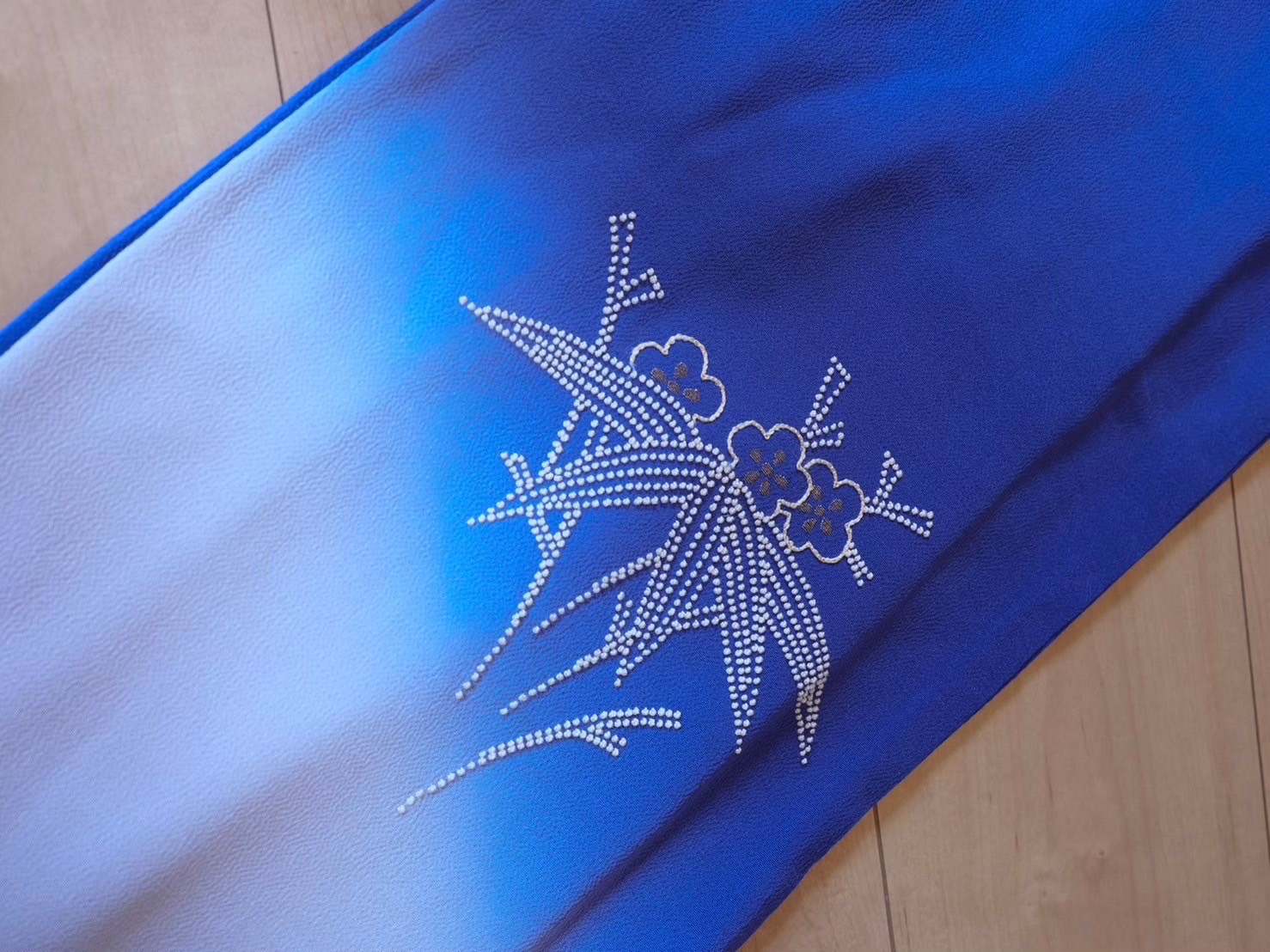
“Acting as a Guidepost”
The method for folding the kimono is the same one my mother and grandmother used. It is by no means a difficult task, and it is something I can always do. Because it never changes, no matter how off balance my mind may feel, or how long a series of misfortunes may last, I can always finish the folding process. Even if my current state of mind is reflected in how I complete the task, the act itself acts as my guidepost, always illuminating the path ahead.
In a society where changes occur at a dizzying speed every day, the act of folding the kimono brings my mind to rest. While this is one of the methods I use to compose myself, such actions are unique to each person. For example, it could be cleaning the floor or taking a walk; these moments are surely hidden within the ordinary routines of life.
By immersing yourself in something as if in meditation, you slip from who you were yesterday into who you are today, opening a new, clean page. By continuing to do the things which have stayed the same way, in the same way, unwaveringly, these become your quiet guideposts whenever you lose your way.
This article is translated from https://intojapanwaraku.com/fashion-kimono/285814/