











In the old and new reprinted edition "Yachimun", meet with the charm of Ryukyu Kotobuki like now
An Okinawan pottery believed to have been started by a Korean potter in the 17th century. Called "Yachimun", this pottery is filled with beautiful and generous charm that has transferred the nature and climate of Okinawa.
The Ryukyu Kingdom has been inspired by foreign countries since ancient times, and has developed various crafts, but one of the pottery cultures that began in the 17th century. The potters, under the protection of the dynasty, created a number of pottery to color their lives and traditional ceremonies.
It is eight Okinawa potters who reprinted such a wonderful "Yachimun". What is the beauty of the pottery of the series named "Wen Chion"! Let's introduce the birth story of Ryukyu Kotobuki and the works (which can be used!).
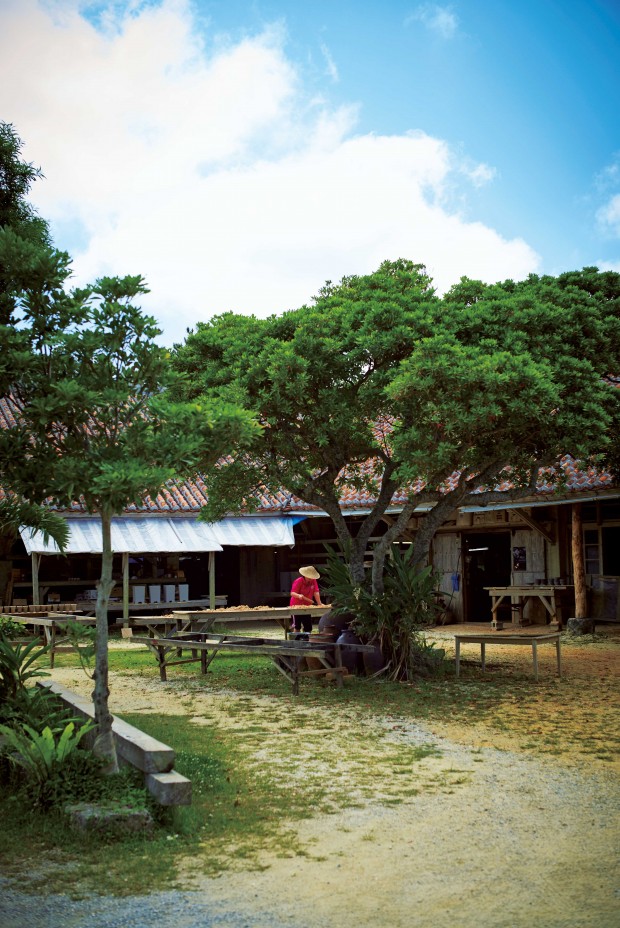
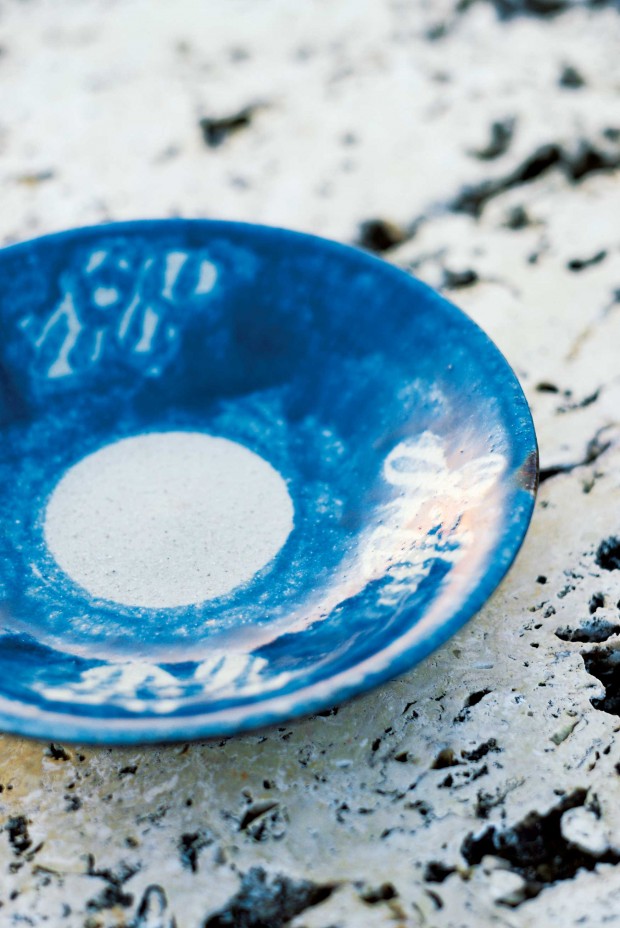
Photo: “Hokuto” is a joint group opened by four potters including Mr. Matsuda in 1990. Under the big tree, a potter silently works pottery. Usuwa by Miyagi Masato (Gusyu Hanae also good luck) Yusu Ruri flower picture Bunka. The mark of the brush which I ran powerfully is beautiful in the solid form which is thick firmly. 23.4 cm in diameter, 5,400 yen
Now, Ryukyu ancient pottery "Wen old Chishin" was completed in this way
I want to properly preserve the traditional shape and work of Okinawan pottery. Ryukyu ancient pottery reprint series by the potter gathered with such a feeling "Wen old Chishin". The project started two years ago. The members are Yomitan Village "Shisei Ogi" (Yomitan Son "Shige O Gama"), Shigeo Ueoe (Ueshi Shigeo), and Kitakami (Kitagata) Miyakyo Masataka (Miyagi Masataka), Matsuda Yonji (Matsuda Yonshi) / Matsuda Koji (Kyoshi), Ogimi Village "Ceramics Tamashiro" (Ogimi Mura "Togei Tamaki") 's Tamaki Nozomu, Wakako and his wife, Honbucho (Motobucho) Mr. Eguchi Akira of "Sakai Eguchi" climbs up, and Mr. Kaori Nakazato of "A pottery studio Fukahara" (Fukabaru), which became independent last year from Yone Matsuda Studio. It seems that each worked on reprint in his own studio and chopsticks.
From the selection of soil to the method of burning, the materials were examined, researched, and about 120 kinds of pottery were born after 8 people were born after repeated trials and failures. It was finally unveiled in February 2016.
"I had a desire to reproduce old pottery from my 20s. The book" Okinawa's pottery "(an ancient pottery book edited by Shibata ed.) Which I watched without getting bored as the page broke, but my youth"
Laughing is Yone Matsuda who has reached the 60th anniversary. In order to shape and respect the ancient pottery we saw at the museum and the Japanese folk museum in Tokyo, we first face Chinese and Southeast Asian pottery said to have influenced Ryukyuan ancient pottery.
Life changes with the passage of time.
It is the same as before and now
"To make things, you have to know the background. To know is to put yourself in the environment. Otherwise, your work will be shallow."
And to Taiwan and Vietnam. Visit the local pottery, learn about the technology and culture, and experience the connection with Ryukyu ancient pottery. After that, I continued researching how to draw old pottery and how to apply glaze.
"I think I could grasp the atmosphere of old pottery, but I think it is much better to cook with Makai (bowls) and bowls. Life changes with it. It's the same as it used to be."
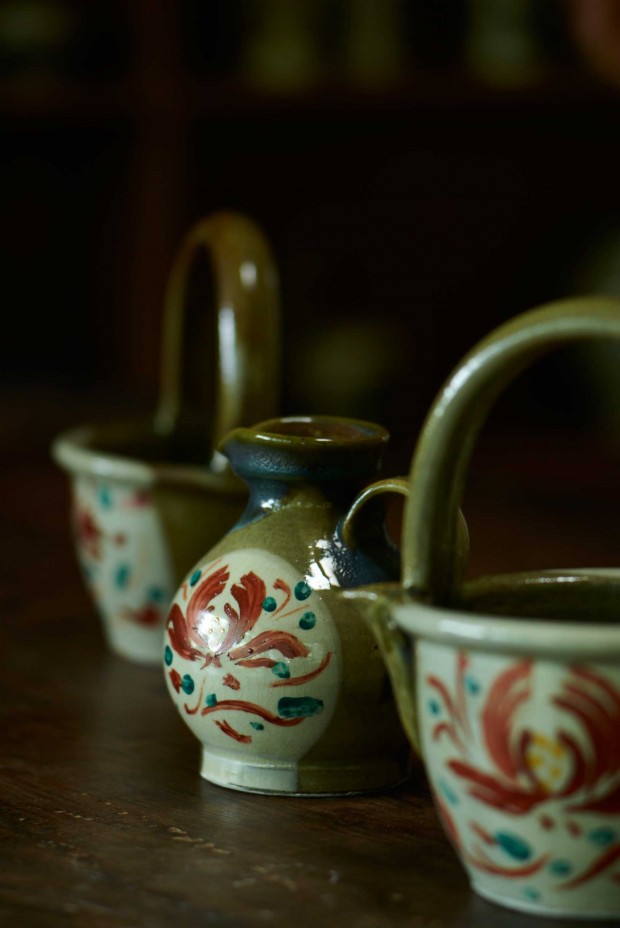
On the other hand, Shigeo Kamie is the only one in the country who burns red paintings with a kite. Produces a red painting with dignity in a glamorous, such as an Awamori liquor bowl. After the war, Ms. Kamie, who studied under Kobayashi Kawaishi, a potter who made efforts to restore the red picture in Okinawa, said he had been interrupting the red picture for the last ten years. The chopsticks that began from the re-creation of chopsticks for "warming wisdom", what a drum can!
"Unlike a gas bottle, there is no thermometer, and it is inefficient because it burns only a little at a time. There are times when it has not been all done four times. Still, the red glaze is different from a gas bottle. It's good to not get too shiny, and I'm not doing anything too much, as the old potter should have been.
It is difficult to make the old handle your own. I say that I will continue to draw again and again.
"It's only a moment if you're just making money, but it takes three years to make it your own. So you're always drawing notes in your pocket, and sketching. If you keep drawing, it's easy to get your work forward even if you get stuck "
Looking at other members who face the old pottery, all the veterans and young people are serious, saying that it is Kamie Atsushi.
"Even if it's reprinted, the pottery makes the character of the maker. It's interesting."
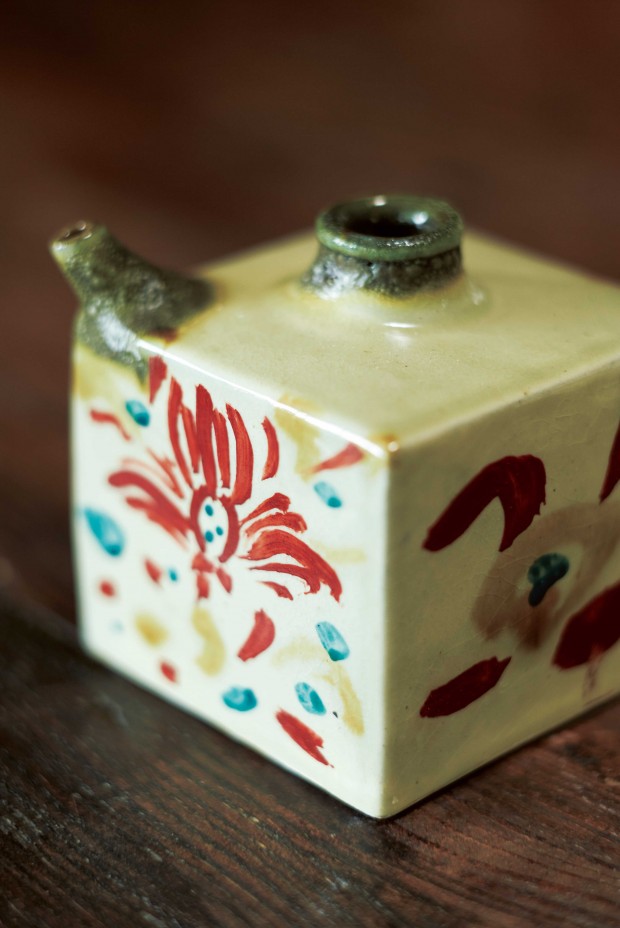
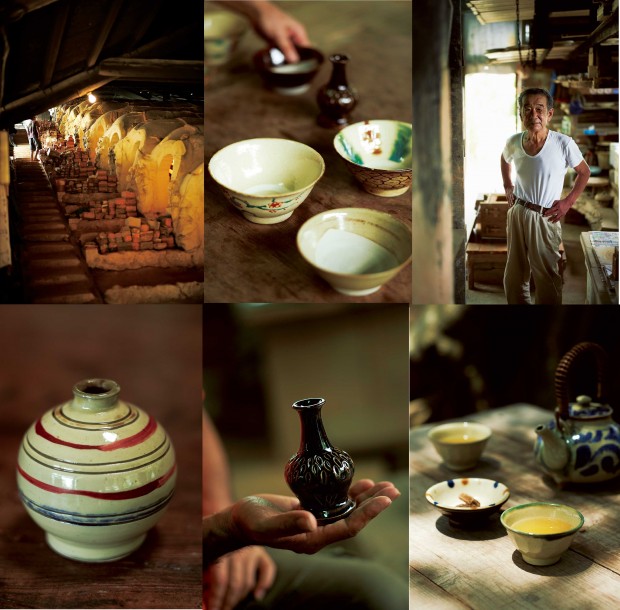 Clockwise from the upper left corner of the photo / Climb of “Hokuto”. It boasts the largest scale of 13 consecutive cells in the prefecture as a joint bond. / Mr. Yone Matsuda's Makai (mochi) and bowl. "There is an unbelievable beauty in the old pottery of Okinawa. I want to reproduce it." / Mr. Shigeo Ueshima, who was born in 1949, wants to reproduce it. The most veteran of the “Warming Chishin” team / The youngest member of the team, Kaori Nakazato's pretty Katori hot pot (front) is ¥ 3,240 / Yoshiji Matsuda's Kuroko carved picture bottle (Kuro Yuori Erin Shi) 10,800 yen. A reproduction of a 19th-century Ashiya-yaki (a pottery) that has been drowned for over 20 years. 10 cm in height, 5,400 yen
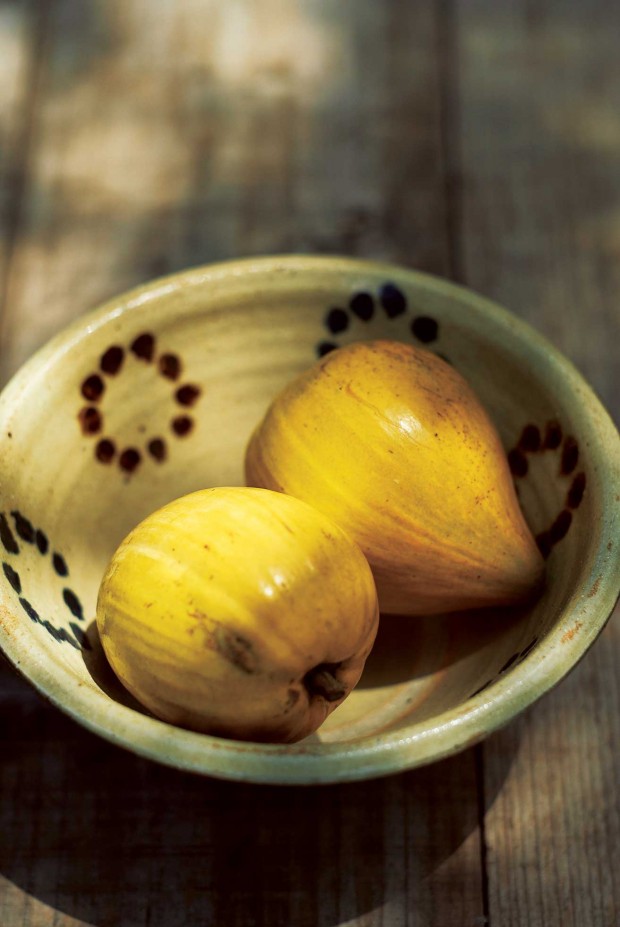 Photo: Mr. Miyagi's pot. Connect the grass to make a seal, put on a glaze and paint. 23 cm in diameter, 5,400 yen
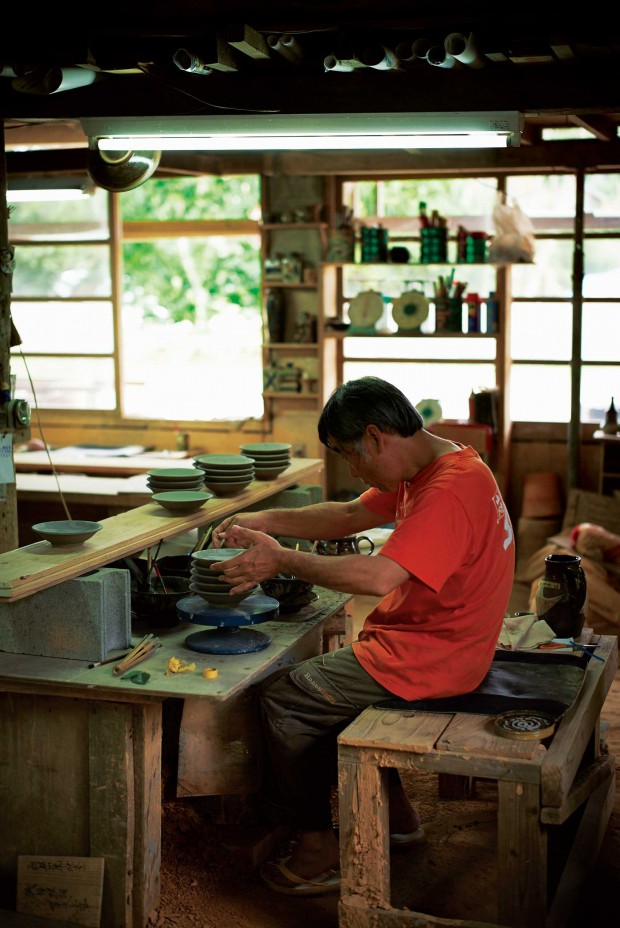
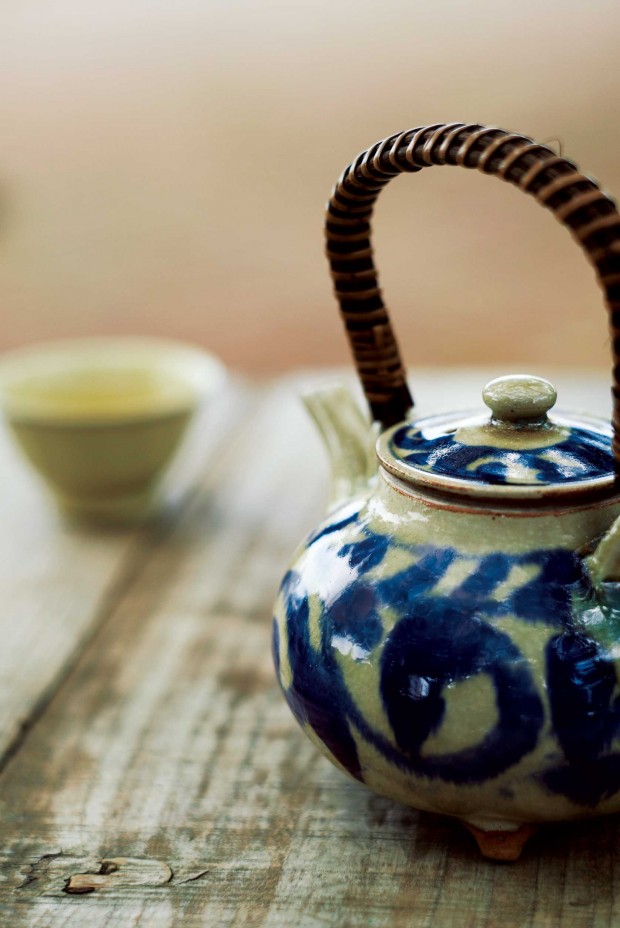
Photo / "Shrimp words of fine pottery?" I often say "San Chun Jur" or "San C C J lan Cen." The meaning of feeling beauty (Chura) in firmness and health like standing firmly on the ground That's right, ”said Mr. Yone Matsuda. Tuker (Tsu) is the work of Yuji's twin brother, Kyoji. 13 cm in height, 17,280 yen
The so-called Ryukyu Kotoan is so attractive!
"Wen old Chishin" where eight potters tried to reprint old pottery. Some faithfully reproduce the Ryukyu ancient pottery made in the Ryukyu Kingdom era, and based on the form of the Taisho period Ryukyu classic grilled, and the shape of the tradition, which has been arranged to suit modern life There is also. Here, old pottery reprinted by modern potters is classified into categories. Let us introduce how it is used and its meaning.
Iijima and flat bowls and other "everyday things"
Speaking of Okinawa's original story, Makai (upper left, lower right). It means "沖 縄" in Okinawan language. It is characterized by its low height relative to the caliber, but the width and thickness of the coffins also change depending on the age of creation. The daily dishes made in large quantities, such as bowls (upper right and lower left) and plates are seen inside with eyebrows of a snake that has been glazed with glaze. When you burn in the ascent, you will need to scrape the top of the hill in advance to pile up many pieces of paper. The eyebrows of the snake also change to a calm texture when used for a long time.
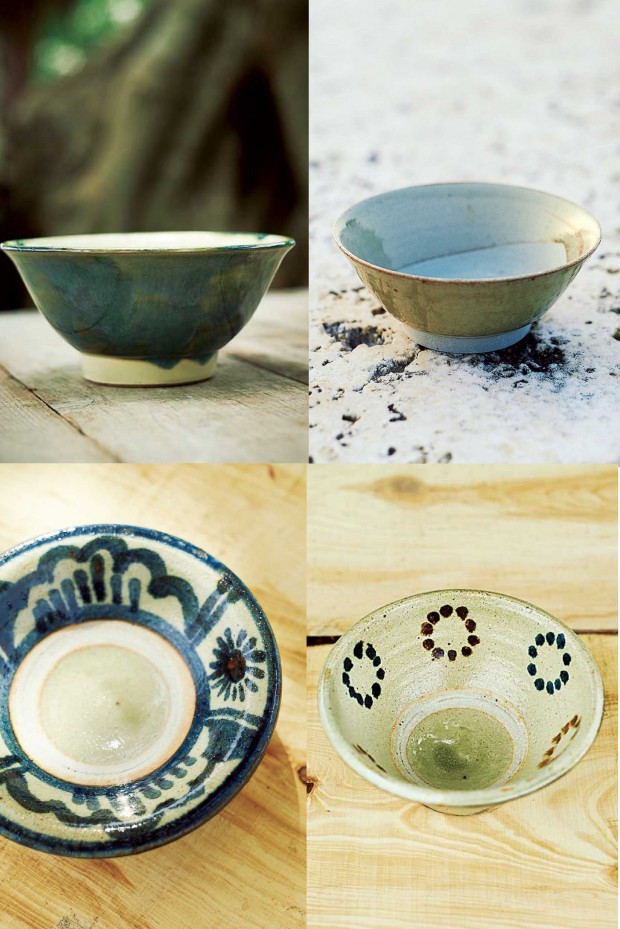 The upper left of the photo / Kaori Nakasato's Org Suyamakakai (Green). A work by a young man who has created many Makai at Matsuda Yoji Studio. Diameter 19 cm, 6,920 yen Upper right photo: Figa Ke Makai (sprinkled rattan) of Yone Matsuda. Depression of the Shibata period. It is shaped thin following the old Makai. Caliber 14.4 cm, 3,240 yen Lower left / Masayoshi Miyagi's Shiso Azalea chrysanthemum flower bunka (Gusyu Kiku Kamo Mambachi). A rare white soil that has been used since ancient times is used as a make-up soil to produce a white skin unique to ancient pottery. Aperture 17.4 cm, 3,240 yen Bottom right of the photo / Masagi Masato's 呉 呉 ご ご ご (あ ご ゆ う は ん ば ん ば ん ば). 23 cm in diameter, 5,400 yen
"Teaware" essential to everyday garbage
Sanpin tea (= jasmine tea) is often consumed in Okinawa. An jar (red bottle) is a pottery made as a jug during the dynasty, but in recent years more and more people are using it as a pouring pot of sanpin tea. Smaller than a glass bottle, a pot made of porcelain, Tuker (pictured lower right). There are char juicers for tea and Saki juicers for liquor. It used to be useful for awamori, but now it is mainly for tea. Hot water only (the upper right corner of the picture) is derived from the form of Makai, a mochi of Okinawa. 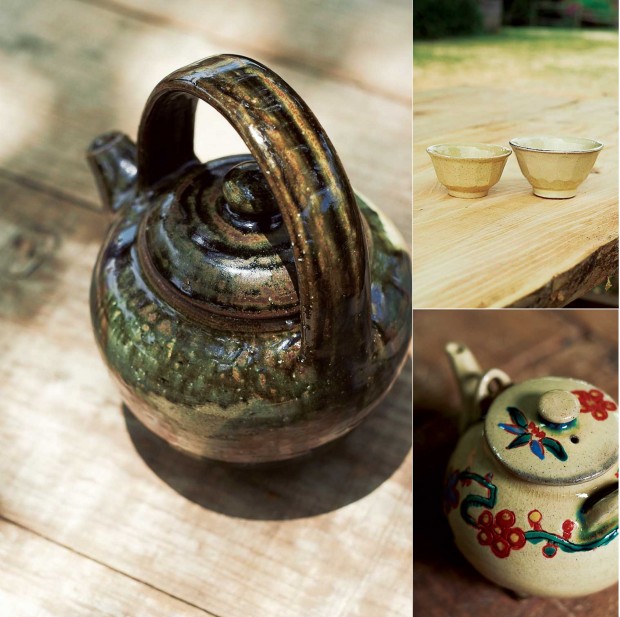 Photo left: A bottle of Akira Eguchi. The handle is also made of pottery and is integrated with the body. Height 21 cm, 22,470 yen Top right: Kaori Nakazato's surface bowl (noodle bowl). 9 cm in diameter, 3,240 yen, left, clay soil surface hot water bath bowl of Yone Matsuda (Shirotsuchinmen Toriyu only). I drew the pot using only precious white earth. Caliber 8 cm, 3,240 yen Picture lower right / Akae Umetakebon (Yuka Matsuda) tuker of Yone Matsuda is the depression of the old pottery in Okinawa Prefectural Museum. 28,080 yen
"Sakeware" for sake and awamori in Okinawa
There are many varieties and types of vessels for the soul liquor awamori of Okinawa. Kaho (Yushinbo / right) is a bottle of awamori that is used as a gift. Tona-ki (Tonaki bottle / left) is for putting Awamori in front of the altar and tombs. It is a bottle (bottle) that uses the same way. The slender spit carakara (upper in the photo) is an awamori pot. It seems that many people have neither a lid nor a handle. It is Tawakashi (photograph in the lower) that has the alias of "arm of demon". It is said to be packed with Awamori and transported to China and the mainland. 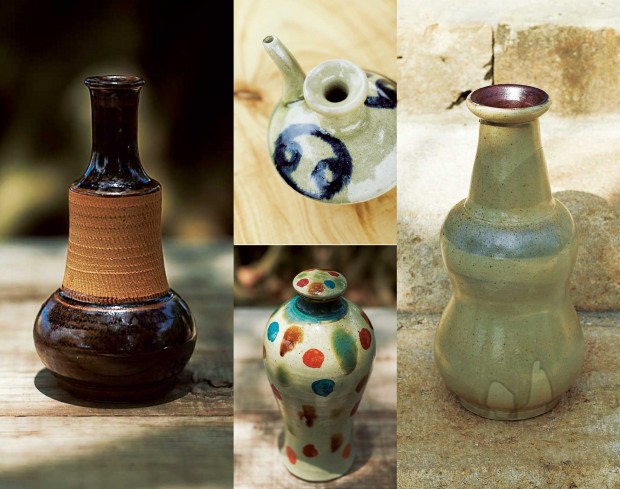 Photo left: Koji Tona of Yone Matsuda. A reprint of the form of the Hakata-gama era, which is older than Ashiya-yaki. A pattern is applied to the torso with the technique of "flying canna". Height 15.5 cm, 12,960 yen Photograph Nakagami / Koji Matsuda's Gosu Yu Marumon Caracara. 11 cm in height, 10,800 yen.
Photograph of Nakashita / Shigeru Uezu red painting Tawakashi. With a lid. Height 35.5 cm, 20,000 yen Right photo / Jojo nozomu's white rose 瓶. The glaze was dropped twice because the transparent glaze was hung twice on the white makeup soil. 36.5 cm in height, 49,680 yen
"The form of tradition" inheriting the dynasty era
In ancient pottery, there are many ways to convey Okinawa's unique culture and food culture. The plate with nine petals (pictured left) is a dish used for dynasty cuisine. The influence of the Chinese culture which makes "9" a top-ranked good number is seen. The double letter furnace (chojiburo / lower right in the photo) is an incense burner that has been built since the dynasty. We put hot water and clove (clove) in the upper part and warmed and used hot water with charcoal put in below. In addition, palm-sized oil bottle (the upper right corner of the photo) is for use with the oil on the hair. It is a vessel where you can feel the loveliness that leads to the perfume bottle. 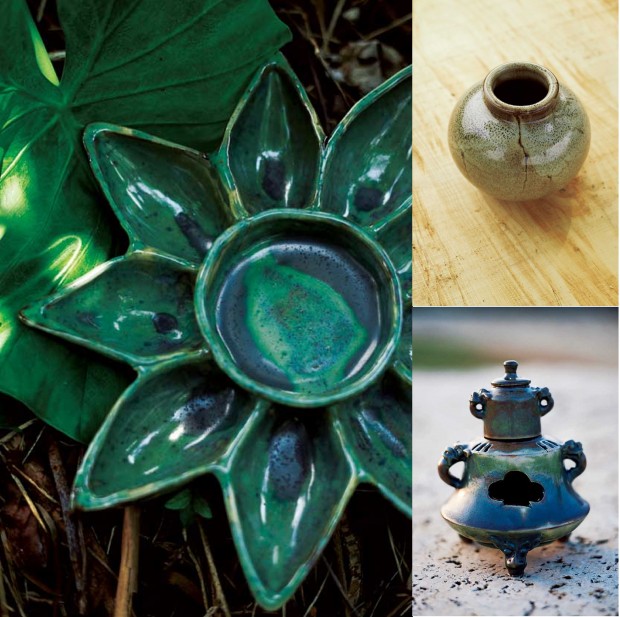 Photo left: Tamaki Wakako's green rose flower shaped platter (Ryoku Yu Hanagata Morizara). Nine petals were made one at a time with a roller, and it was made in a time-consuming method to cut and attach. Length: 25 cm, 15,000 yen Upper right: Koji Matsuda's Ayu 壺 壺 壺 あ (つ あ つ あ あ あ). Ash glaze is poured from the top of the ebony. Height 9.5 cm, 6,000 yen Bottom right of the picture: Tamaki We reduced the size so that we could enjoy it in a modern home. Height 14.8 cm, 20,000 yen
You can buy Ryukyu ancient pottery "Wen Chi Chishin" here
"Fukuya"
A select shop dealing with handicrafts of Okinawa. We also produce "Wen Chi Chishin". The "Yachimun" introduced this time can be purchased here. If there is no stock, there are also items that can be ordered.
Makishi Naha, Okinawa Prefecture 3-6-10 Within the Sakurazaka Theater 10am-8pm
Shooting / Hiroaki Kuwahara