






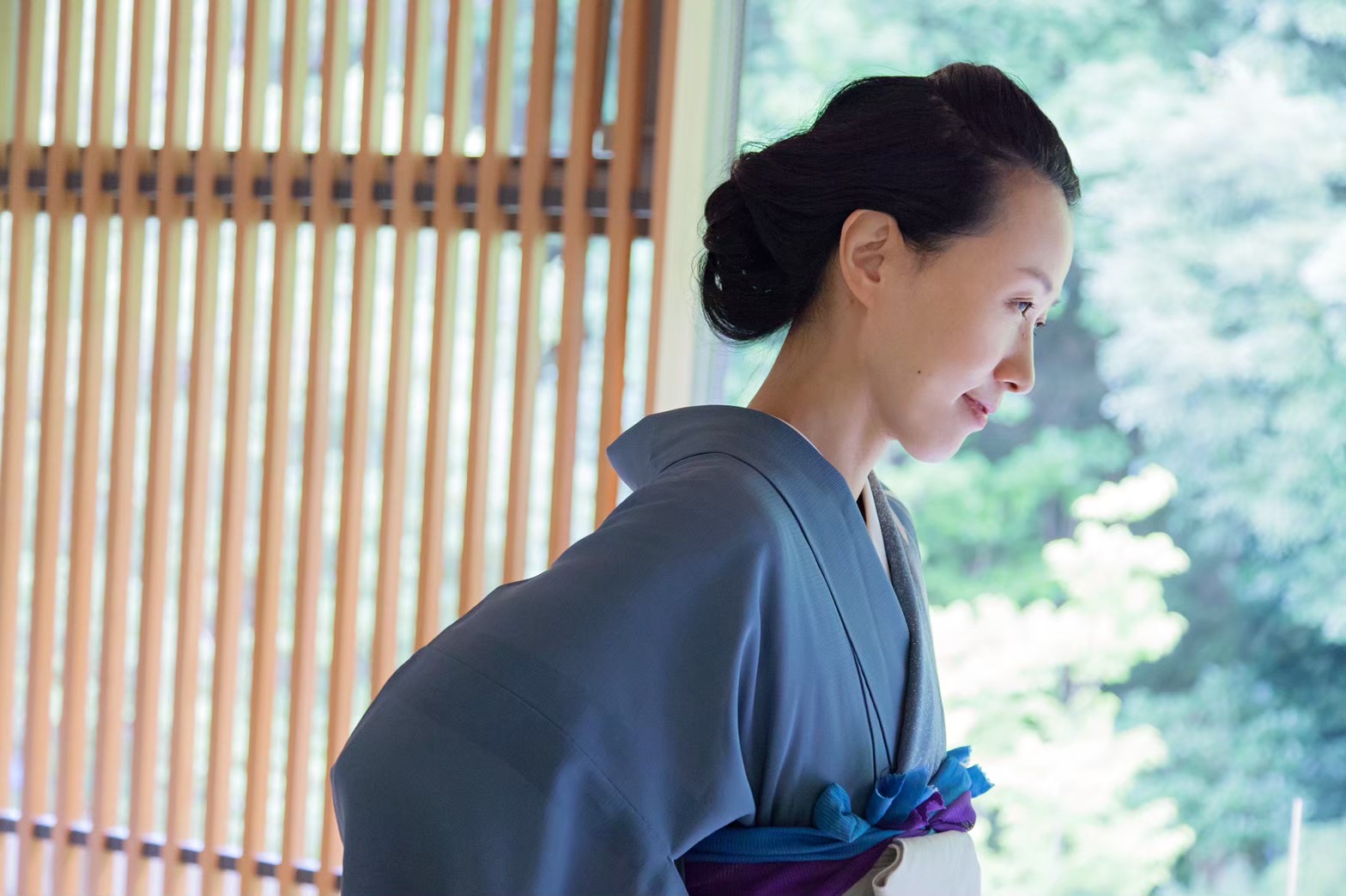
Natural and Graceful Kimono Attire
Today, I would like to talk about my time in training.
In my late twenties, when I opened the drawers in my family home and was captivated by the beauty of the kimono, I questioned why I couldn’t wear one myself. Determined to master the art of wearing a kimono, I decided to enrol in a kimono-dressing school.
Initially, I attended the Nishijin Waso Gakuin (西陣和装学院), a kimono school in Kyoto, where I studied the basics for about four years. From there, to learn more advanced techniques and knowledge, I was introduced to a particular teacher.
It is no exaggeration to say that meeting this teacher was a fateful encounter, one that shaped the person I am today.
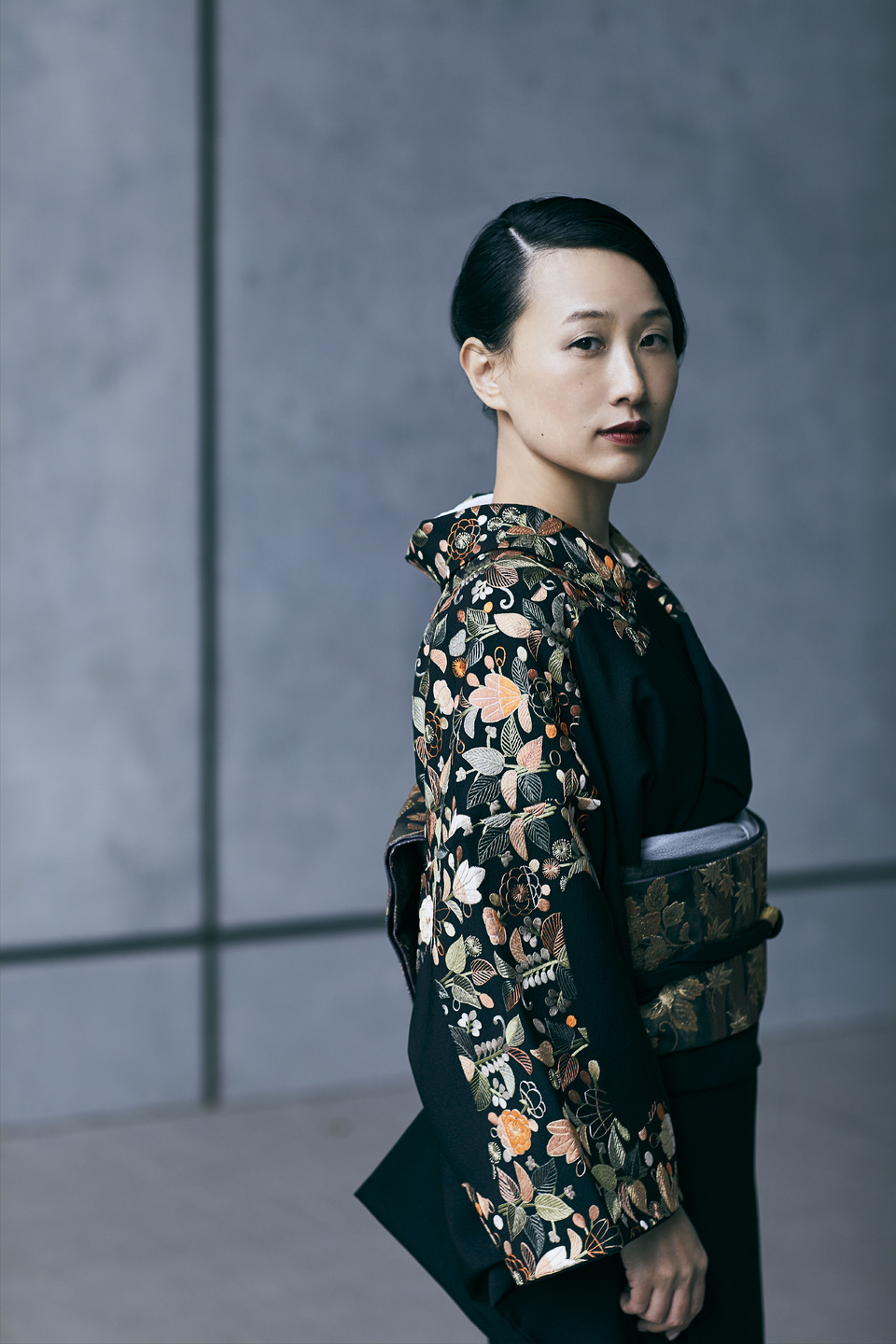
The moment I opened the classroom door, the teacher was sitting formally in the back of the room. She then stood up swiftly and came towards me, a sight that appeared to me as if she were enveloped in a halo. Her kimono attire was one of a beauty I had never seen—natural and graceful. Yet, her eyes were slightly sharp, her skin fair, her lipstick a striking red, and the beauty of her black hair is still vividly etched in my memory.
“I want to learn by this teacher’s side.” I felt an intense desire not only to learn about the kimono but also to be exposed to this teacher’s way of life and aesthetic sensibility.
The teacher wore a kimono and a Japanese traditional Nihongami (日本髪; hairstyle) 365 days a year. The classroom allowed students to stay from morning till night, and I continued to attend three to four times a week for four years. Even occasionally when we were all having a meal together, I never once saw her kimono or hair out of place.
Every lesson lasted about seven hours, including sharing a meal with the teacher, and she always spent the entire day giving us thorough, intensive training. Though she was already in her eighties, she embodied the elegance and demeanor of a true woman.
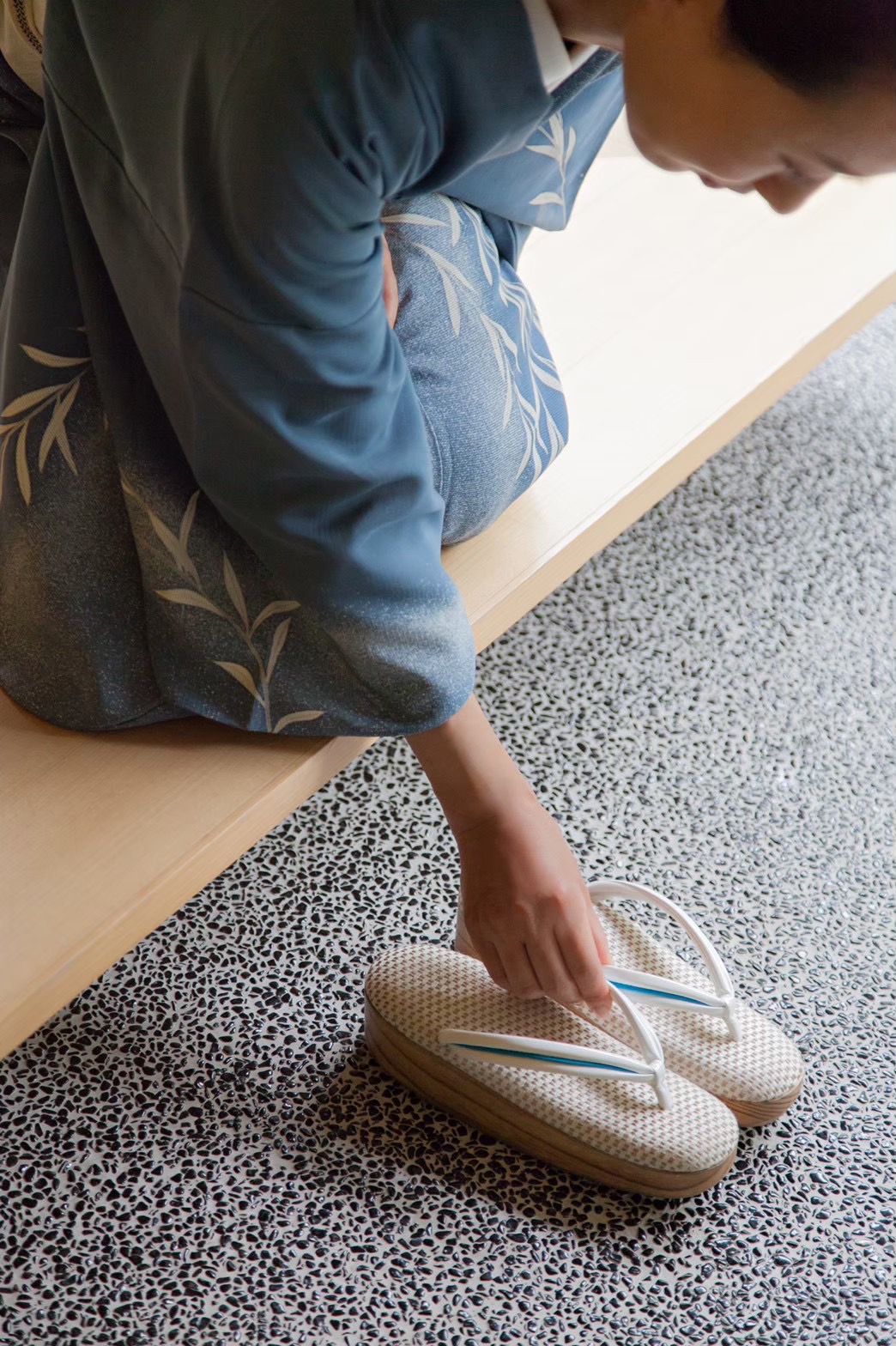
“Flawless, Yet…”
The lessons I learned from the teacher are countless, but one event stands out. After studying kimono dressing to a certain standard, we had an ‘examination.’ As the culmination of everything we had learned, we were required to dress a model within a set time, and I applied every technique I had mastered.
I finished exactly on time, the kimono was perfectly symmetrical, and I truly felt I had dressed the model beautifully, so I confidently said, “Sensei, please inspect.”
The teacher then said, “This is a flawless dressing.” But she continued, “However, although it is beautiful, your kimono style lacks any interest.” Having been so full of confidence, I felt a shock as if I had been struck on the head.
The teacher went on to say, “You have dressed her truly beautifully, without a single wrinkle and perfectly symmetrically, but did you look closely at the person you were dressing?”
“Look more closely. Learn to bring out the model’s own individual beauty, unique to them.
That is the fascination of kimono dressing,” she explained.
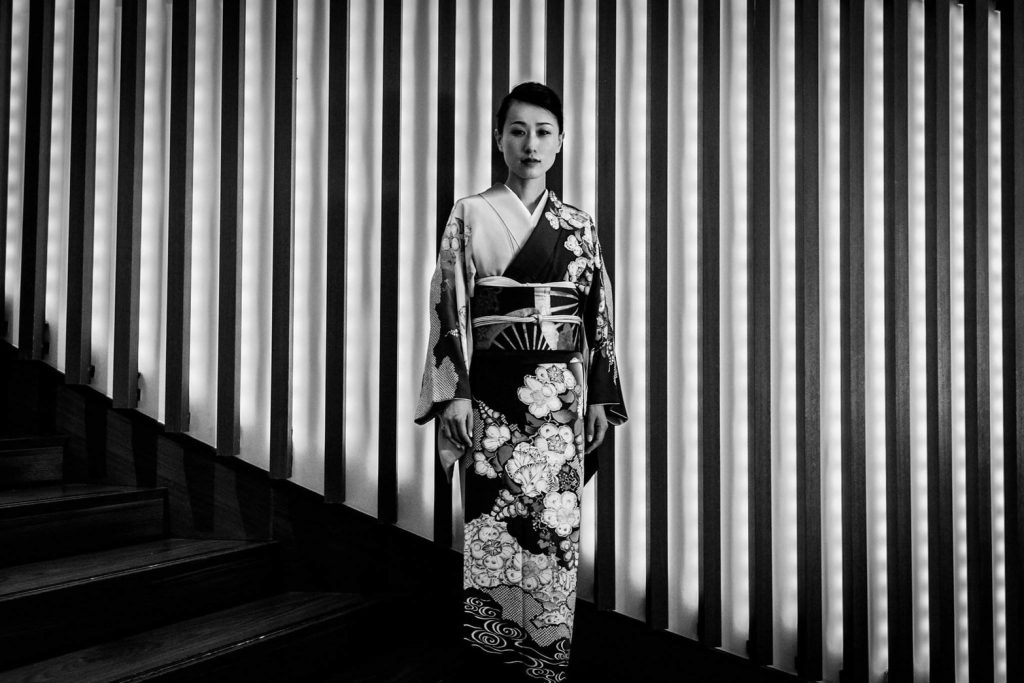
That remark, I believe, changed my ‘standard of beauty.’ It was no longer about dressing someone symmetrically, as if from a textbook, but about looking closely at the person and considering what unique beauty they possessed. It was about using the angle of the flat fabric and the amount of tension to express that beauty. It was about using my own skill to dress them, finding a balance between curves and straight lines. When I started approaching it with this mindset, kimono dressing became infinitely more interesting than before.
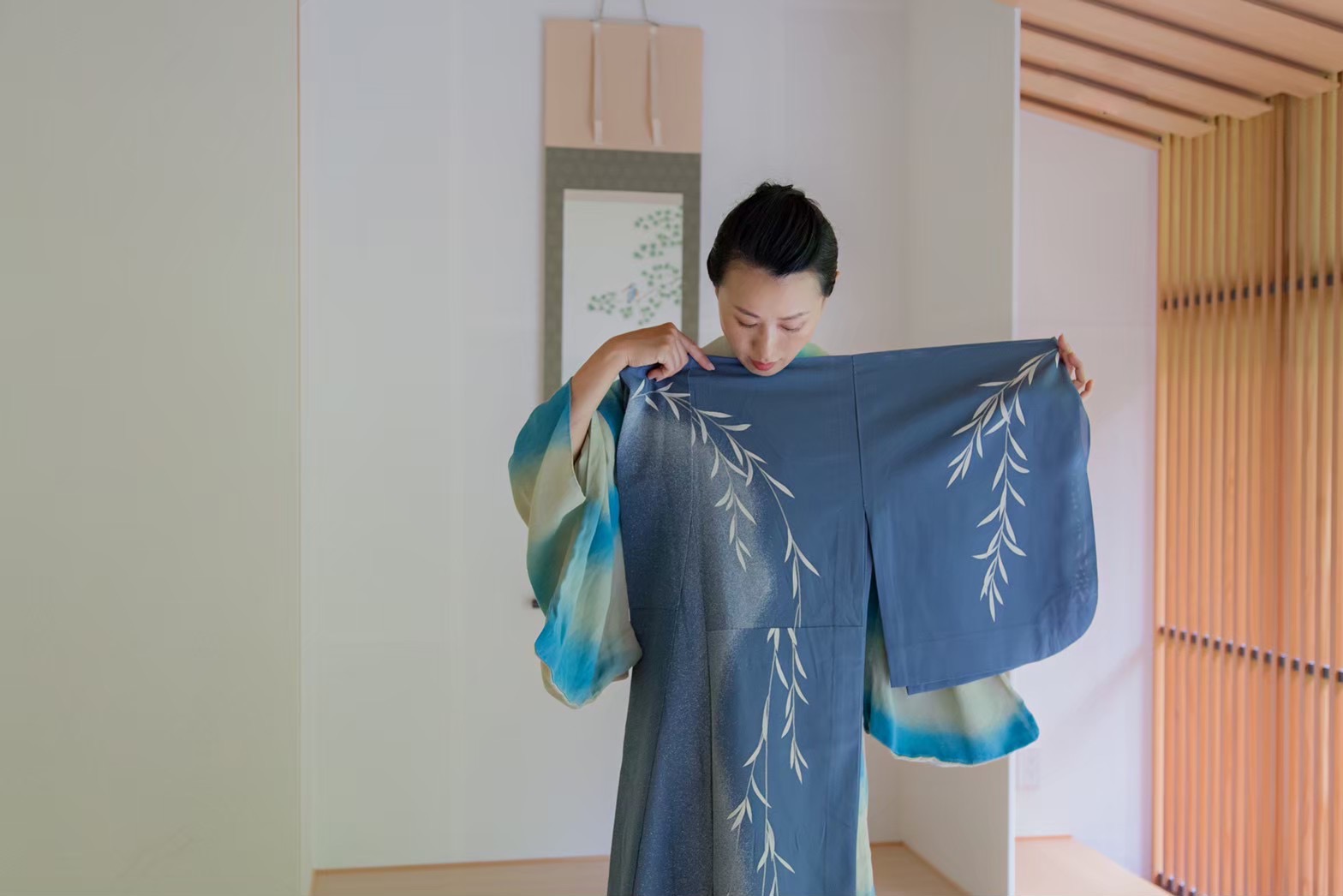
An Event That Made Me Feel Grateful for This Work
Sometime later, while continuing to refine my skills under the teacher’s guidance, an an opportunity arose to put her teachings into practice.
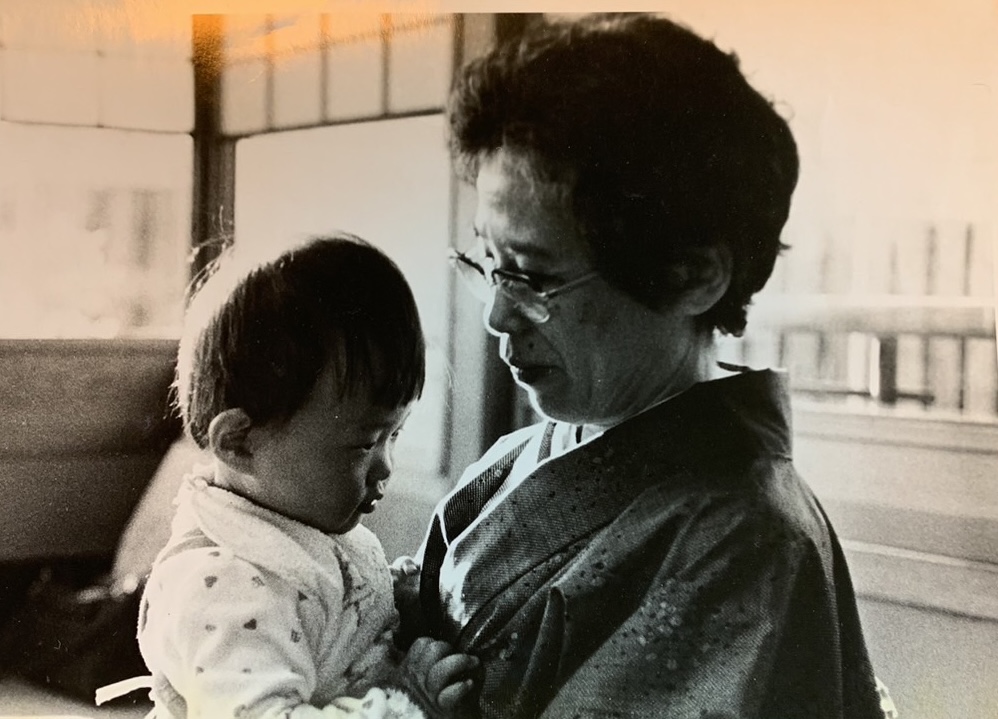
At the time, I was working at a wedding venue, dressing around 20 people in tomesode (留袖; formal kimonos for married women) each time. On one occasion, an elderly woman in a wheelchair came in. She was a grandmother whose back was curved. With very sad eyes, she said, “My back is so bent now, and although I asked for dressing, I suppose I won’t be able to wear one.”
“No, you will be fine. Please leave it to me,” I replied instantly. “I will need help from a relative, but I promise you will be dressed in a tomesode and be able to attend your grandchild’s wedding.”
The woman looked surprised, saying, “You can do that?” As her relative held her, I gently slid the undergarments, nagajuban (長襦袢; under-kimono), and the kimono itself underneath her, passing them under her hips. The obi (帯; sash) was tied while she remained seated in her wheelchair.
“Please stay in your usual posture.” She was naturally leaning forward with a curved back. If I had dressed her in a perfectly straight posture just for the dressing, she would have felt uncomfortable, and it would have led to the kimono becoming disarranged when she returned to her natural posture. Therefore, I draped the fabric and ties to follow her natural shape exactly.
The obi, too, was tied small, loose, and comfortable, following the curve of her back. After I finished, the woman said tearfully, “I can wear this, even me,” and “Now I can go to my grandchild’s wedding. Thank you so much.” Hearing her say that she had never felt such happiness, I genuinely felt grateful for this job. I will never forget the beauty of that grandmother.
‘Yanagi wa midori, hana wa kurenai’ (柳緑花紅). This phrase, which means that the willow is beautiful because it is green and the flower is beautiful because it is crimson—that each plant has its own beauty—was one I always heard in the home where I grew up.
I strive never to forget what my teacher taught me and this experience, dressing a person precisely in their ‘natural form.’ When people dress themselves, I encourage them to aim for a dressing that expresses their own authentic self. I believe this leads to a one-of-a-kind beauty.
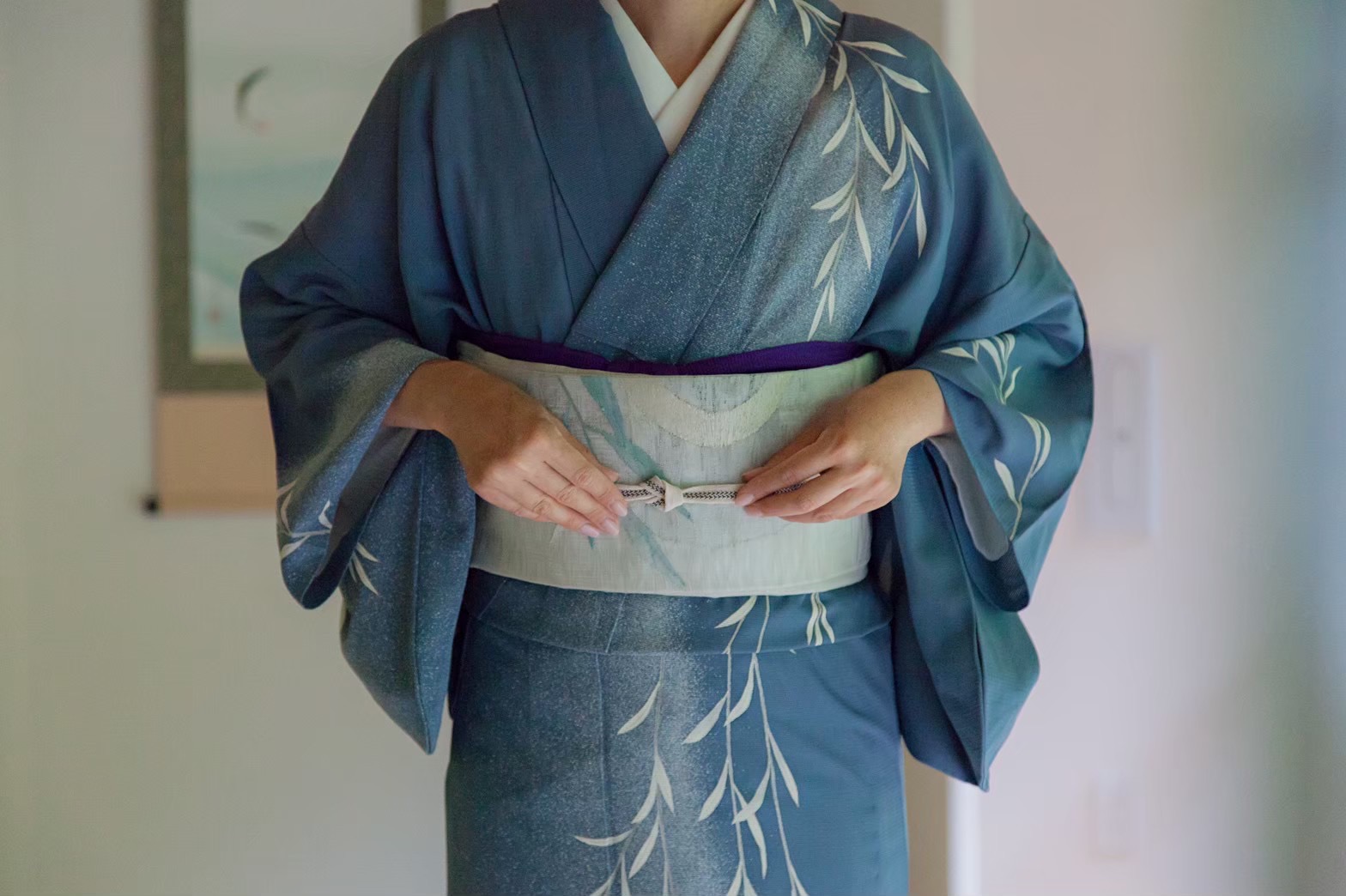
The Teacher Who Sent Me Off with Her Back Turned
After the four years of study under the teacher, I decided to become independent. “Sensei, I am truly grateful for everything you have taught me. But may I please leave, as I wish to become independent?”
When I told her this, the teacher, who was always smiling when she interacted with me, quickly turned her back to me and simply said, “Go now,” and “Do your best.” The teacher who always waved her hand at the entrance until I was out of sight, parted with me this final time with her back turned in the corner of the room.
At the time, I could not stop crying, but now I understand that was her immense kindness. If the teacher had spoken to me with her usual smile, I might have decided to stay with her for a little longer. That is why I believe she sent me off with her back turned.
I want to pursue activities that I can proudly report to my teacher. Her beauty and aesthetic sensibility continue to flow strongly and unbroken within me to this day.
This article is translated from https://intojapanwaraku.com/fashion-kimono/279319/