






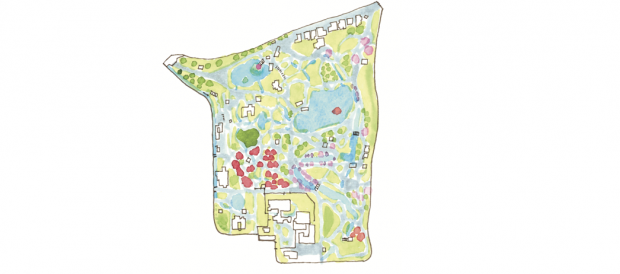
Kenrokuen (兼六園) is famous as a tourist spot in Kanazawa (金沢). In this guide, we explore the hidden wonders of this living masterpiece.
The History of Kenrokuen
The history of Kenrokuen, a renowned example of a Daimyo Garden (a grand-scale garden designed for feudal lords), dates back to 1676. It began when Maeda Tsunanori (前田綱紀), the fifth lord of the Kagahan (加賀藩), built a villa and created a garden within Kanazawa castle. Successive lords after Tsunanori also poured their resources and efforts into the landscape, and in 1851, the 13th lord, Maeda Nariyasu (前田斉泰), redesigned the existing structures, excavated a massive central pond, and diverted flowing water through a sophisticated network of streams and lush plantings. By integrating it with the pre-existing Renchitei (蓮池庭), the garden was completed in almost its current form. Since it was opened to the public in 1874, it has become widely known as a famous garden that remains virtually unrivaled in the world of Japanese gardening.
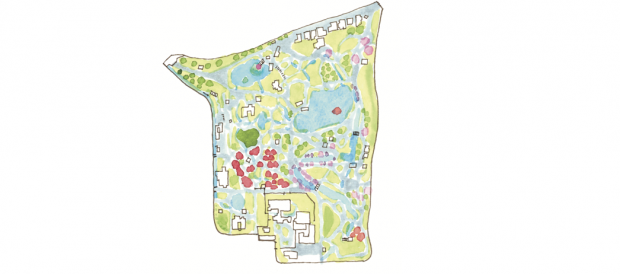
Although the garden was formed over a long period of approximately 180 years, the fundamental principle of its creation was consistently guided by Shinsenshiso (神仙思想). Conveying this Shinsenshiso—the admiration for immortal hermits and the desire to become one—to the present day are the three Shinsenjima (神仙島) built by Tsunanori in Hisagoike (瓢池), and Horaijima (蓬莱島) which Nariyasu set afloat in Kasumigaike (霞ヶ池). For the successive lords of the Kagahan, creating this garden was also a projection of their prayers for longevity and prosperity for all eternity.
The Origin of the Name
The naming of this famous garden as Kenrokuen dates back to 1822. The origin was the Rakuyo Meienki (洛陽名園記), a text resembling an introduction to famous gardens written during the Song dynasty in China. It contained a passage stating that while it is impossible for a garden to possess six excellent landscapes simultaneously, only Koen (湖園) manages to encompass them all. However, as this garden also possesses these six landscapes and is in no way inferior to Koen, it is said to have been named Kenrokuen.
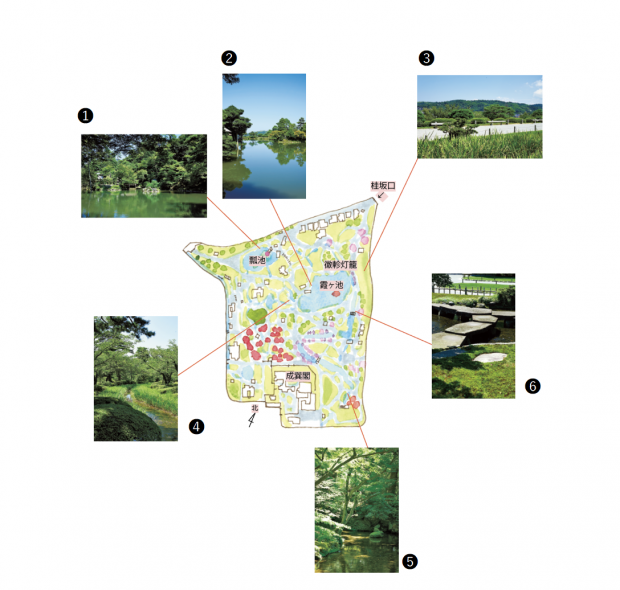
The six landscapes are Kodai (宏大) denoting a spacious appearance, Yusui (幽邃) expressing tranquillity and profundity, Jinriki (人力) referring to human-made elements such as bridges, Soko (蒼古) giving off an antique charm, Suisen (水泉) such as waterfalls and ponds, and Chobo (眺望) for wide-ranging views.
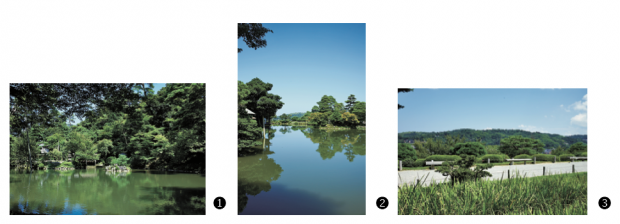
Highlights of the Six Landscapes of Kenrokuen
1.Hisago-ike Pond: The Mystery of Shadows expressing Yusui
Hisago-ike pond, which, contrary to grand open pond like Kasumiga-ike, is filled with tranquillity and profundity. This contrast gives the garden its deep character.
2.Kasumigaike, the largest body of water in the Garden, expressing spaciousness
The grand scale of Kasumigaike, modelled after a vast ocean, is one of the signature features of Kenrokuen. Its contrast with Hisagoike is fascinating.
3.The Borrowed Scenery of Mt. Utatsu expressing Chobo
When you shift your gaze from the observation deck to outside the garden, you will find magnificent borrowed scenery painted by mountains, including Mt. Utatsu.
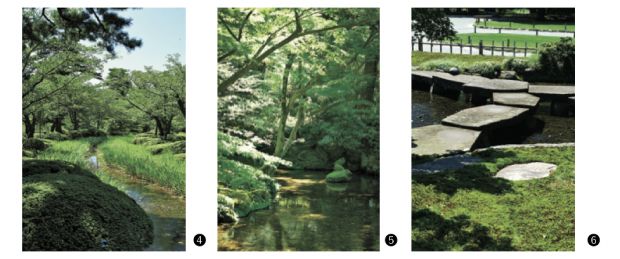
4.The Poetry of Meandering Streams expressing Suisen
It is often considered impossible to simultaneously enjoy the Suisen flowing in lowlands and the distant Chobo, but the fact that this can be done is one of the charms of Kenrokuen.
5.The Appearance of Soko Representing Untouched Nature
By the mountain stream near Mt. Yamazaki (山崎山) located in the southeast of the garden, you can enjoy a landscape that has been cultivated over a long period of time.
6.The Jinriki of Gankobashi bridge (雁行橋) Adding Colour to the Landscape
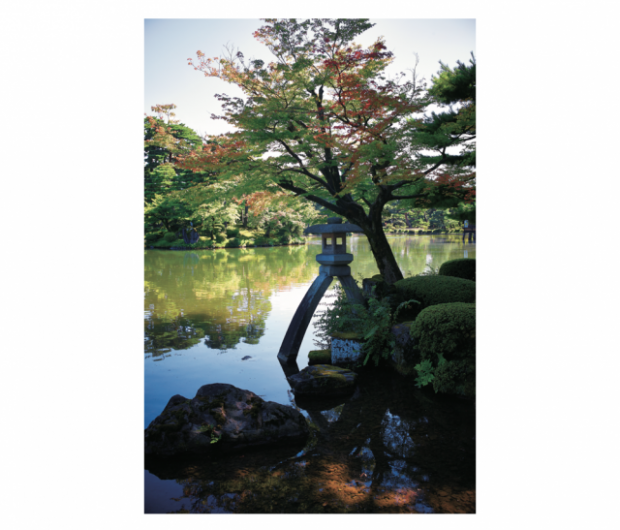
In a garden that replicates nature, human-made designs are effectively arranged. Gankobashi and Kotojitoro (徽軫灯篭) are excellent examples.
Kenrokuen, which features large ponds and tsukiyama (築山) arranged over a spacious site, is not a garden meant to be viewed from a hojo (方丈) or a shoin (書院). This is a kaiyushiki (回遊式; strolling-style) garden where one wanders whilst stopping by scattered Ochin (御亭) and teahouses. The garden, comprehensively created whilst mixing gardening techniques from various eras, is full of highlights such as numerous ponds, kyokusui (曲水) connecting them, tsukiyama, and diverse plantings.
Amongst these, the greatest charm lies in the six landscapes, such as those shown in the photographs on the map above. They consist of combinations of three opposing pairs, and one should wish to appreciate the effective techniques of garden making and the differences in their beauty whilst comparing them.
Basic Information on Kenrokuen
Official Website(Kenrokuen)
A chisen-kaiyushiki (池泉回遊式) daimyo garden
Created in 1676 by Maeda Tsunanori
Address: 1-4 Kenrokucho, Kanazawa-shi, Ishikawa Prefecture Map
Opening Hours: 7:00 to 18:00
Admission Fee: 320 yen
Access: Approximately 10 minutes by taxi from Kanazawa Station. Kenrokuen Shuttle Bus, Retro Bus Jokamachi Kanazawa Shuyu (城下まち金沢周遊), etc.
This article is translated from https://intojapanwaraku.com/rock/travel-rock/1118/