






A Reputation for Lacquerware Made with Local Timber! A Visit to the Workshop of Mokushikkou Tokeshi
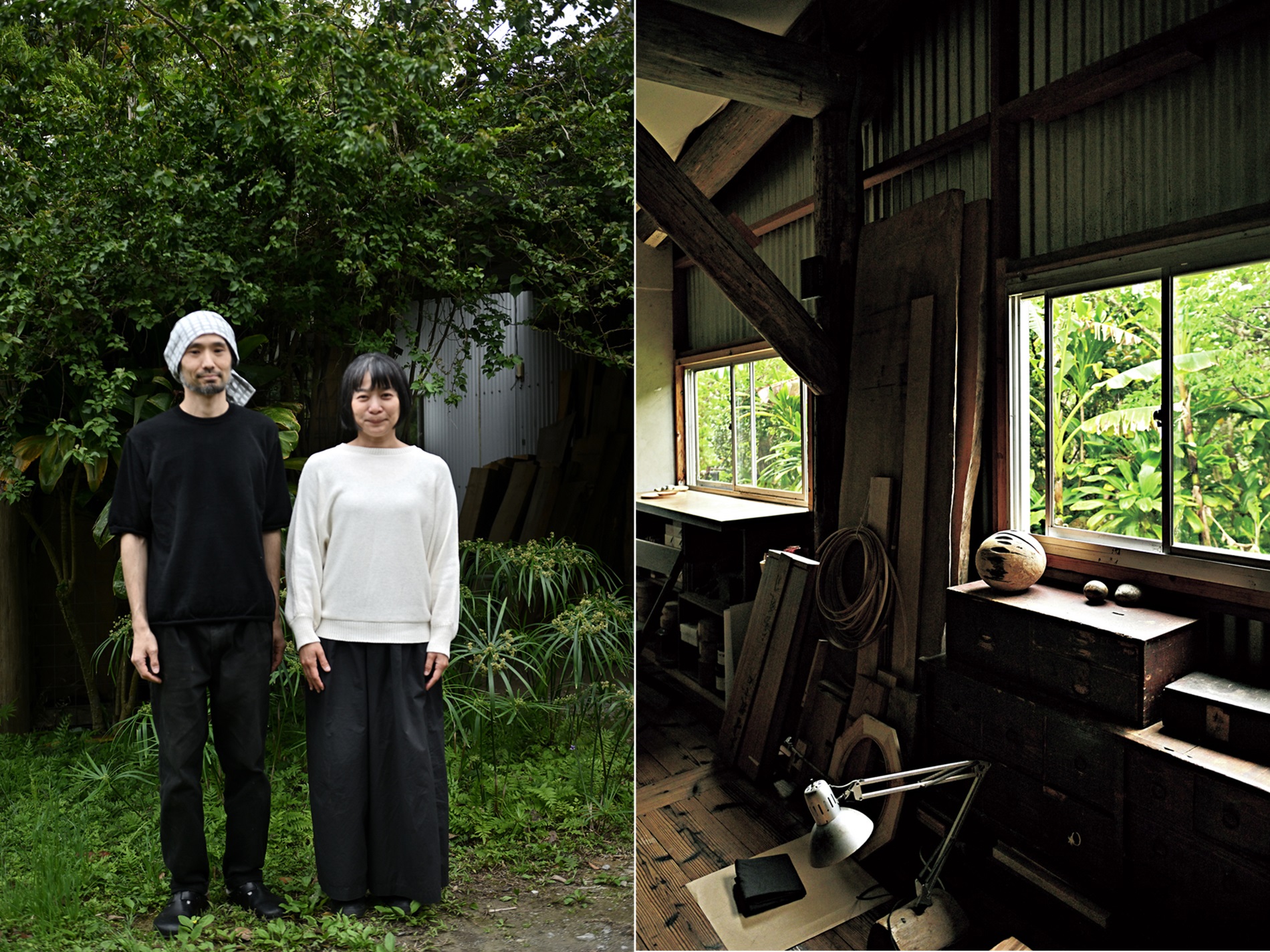
Honing Their Craft In a Workspace Filled With Greenery And Bathed In Light
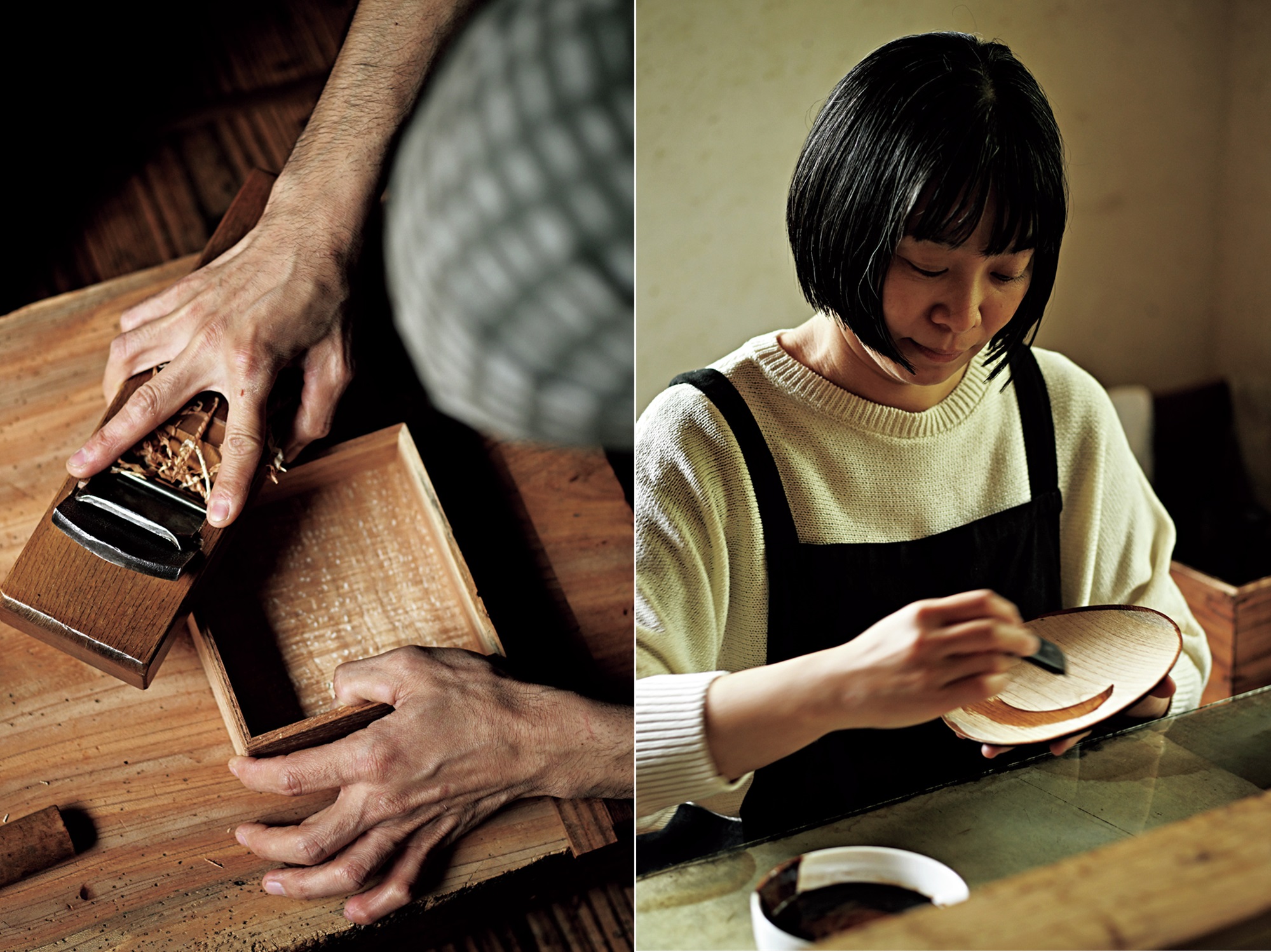
The husband-and-wife team of kijishi (木地師) Tokeshi Hiroyuki and nushi (塗師) Ai studied at a local craft training centre in Okinawa before respectively training under their masters in Wajima (輪島), Ishikawa (石川) Prefecture.
When they first returned to their hometown and became independent, they ordered timber from Wajima and produced lacquerware using the Wajima-nuri (輪島塗) technique, but feeling a sense of incongruity was their first turning point, they say.
“I was troubled because the island scenery spreading out the window and the Wajimanuri on the dining table simply did not match. Lacquerware with neatly applied uwanuri (上塗り) felt quite heavy here,” says Hiroyuki.
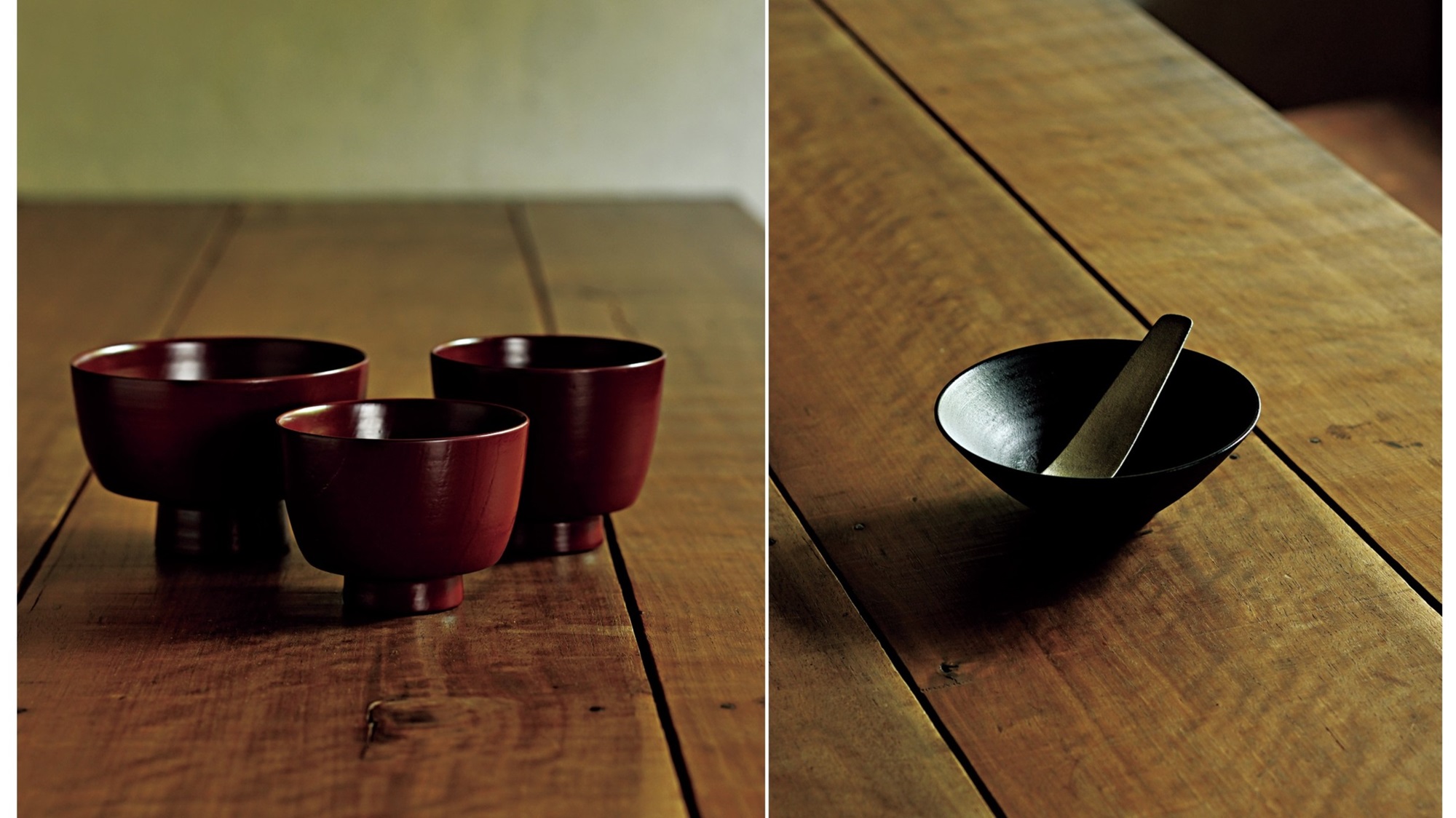
Therefore, as a result of trial and error to create lacquerware that suits the strong light of Okinawa using local timber, it seems they arrived at the ‘Takebachi’ (岳鉢).
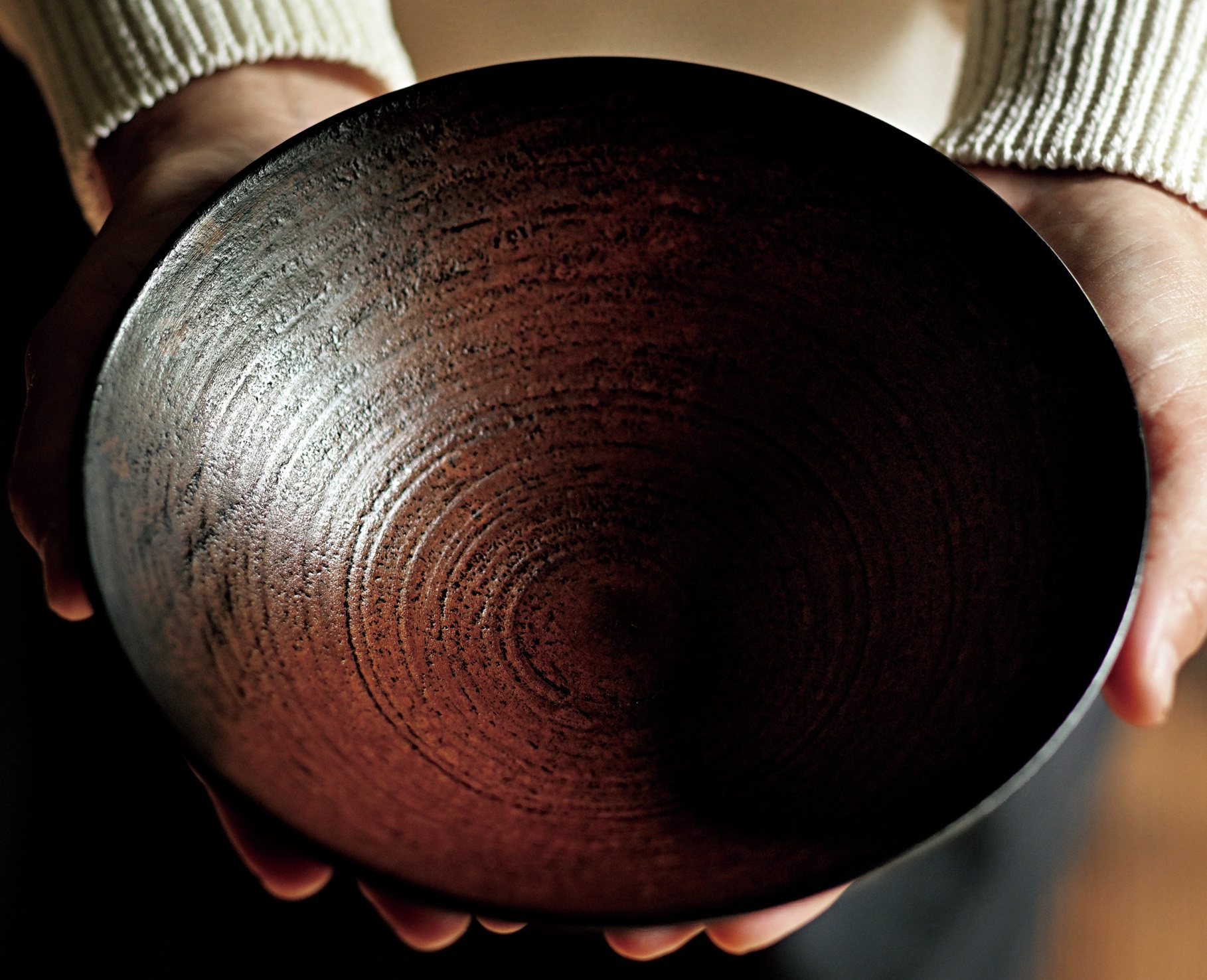
The timber used is sendan (センダン). In the high temperatures of Okinawa, trees grow quickly, making the wood grain coarse. To make the most of that grain, Hiroyuki applied a finish to the bare wood that leaves the turning marks intact.
Following this, Ai applied an undercoat of lacquer, and using the makiji (蒔地) technique—where jinoko (地の粉) is sprinkled on and lacquer is layered over it—she finished it with a matte texture.
What truly showcases their brilliant artistic sense is that, to bring the makiji finish to life, they mixed the foundation lacquer to create a rustic patina-like texture.
The aged feel of the lacquer harmonises exquisitely with the grain of the sendan wood.
“I wonder if we have managed to create something that can truly be called lacquerware made in Okinawa. It blends in perfectly even when placed next to yachimun (やちむん),” says Ai.
Applying Learnings from Wajima in Okinawa. Wanting to Pass Down the Techniques of Ryukyu Lacquerware to the Next Generation
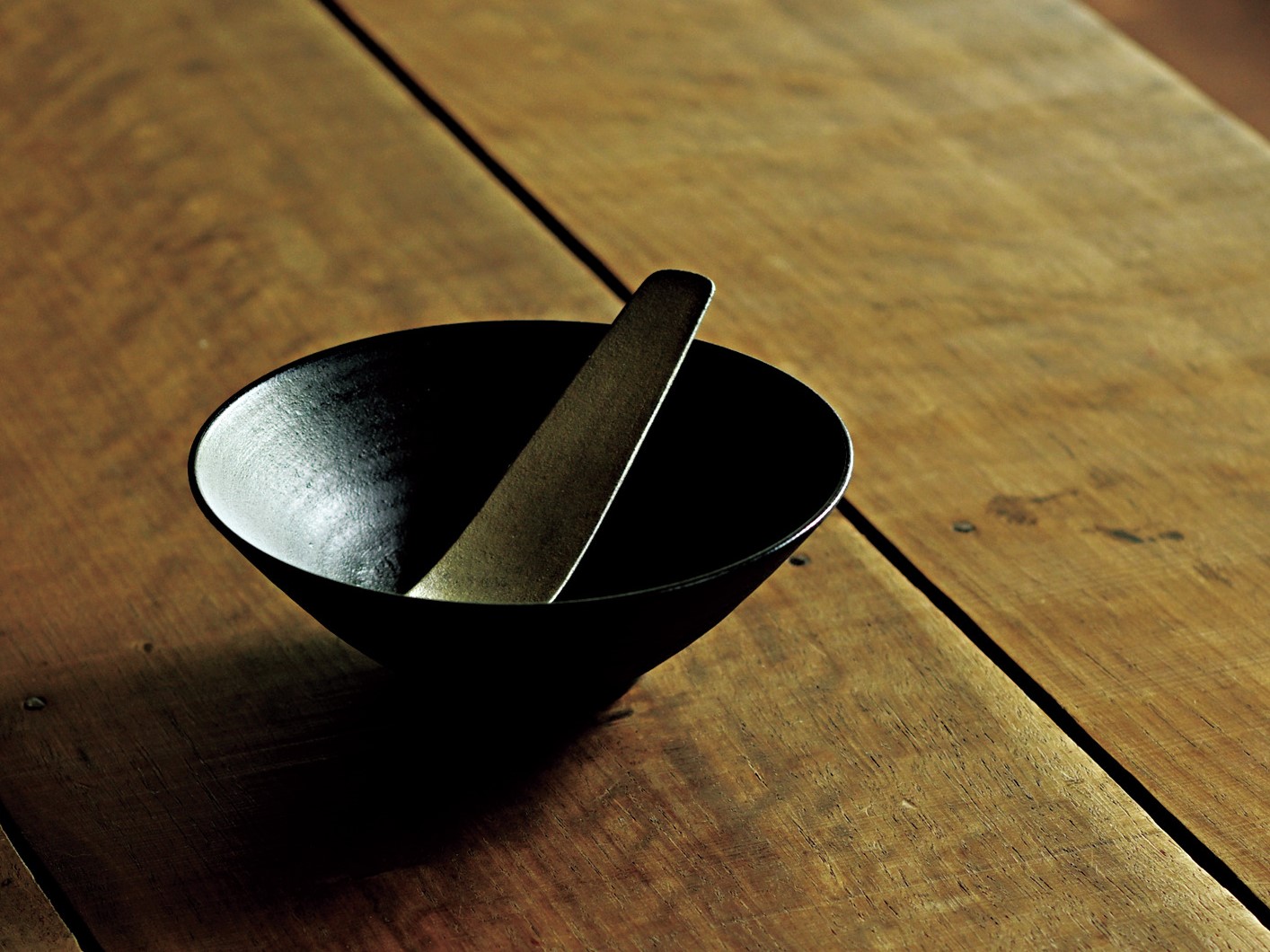
The duo shot into the limelight as their makiji finish series—celebrated for its tactile matte surfaces and rich tones like patina, pewter, gold, and black—gained immense popularity. Yet, right at this turning point, they decided to pause and reflect.
“We felt somewhat uneasy about our lacquerware being described as modern (wry smile). For instance, the combination of black and suzu is modelled after lacquerware from the Ryukyu era. As we wish to create lacquerware that blends into Okinawan daily life, we thought we should return to basics and pursue uwanuri lacquerware in our own way,” (Hiroyuki).
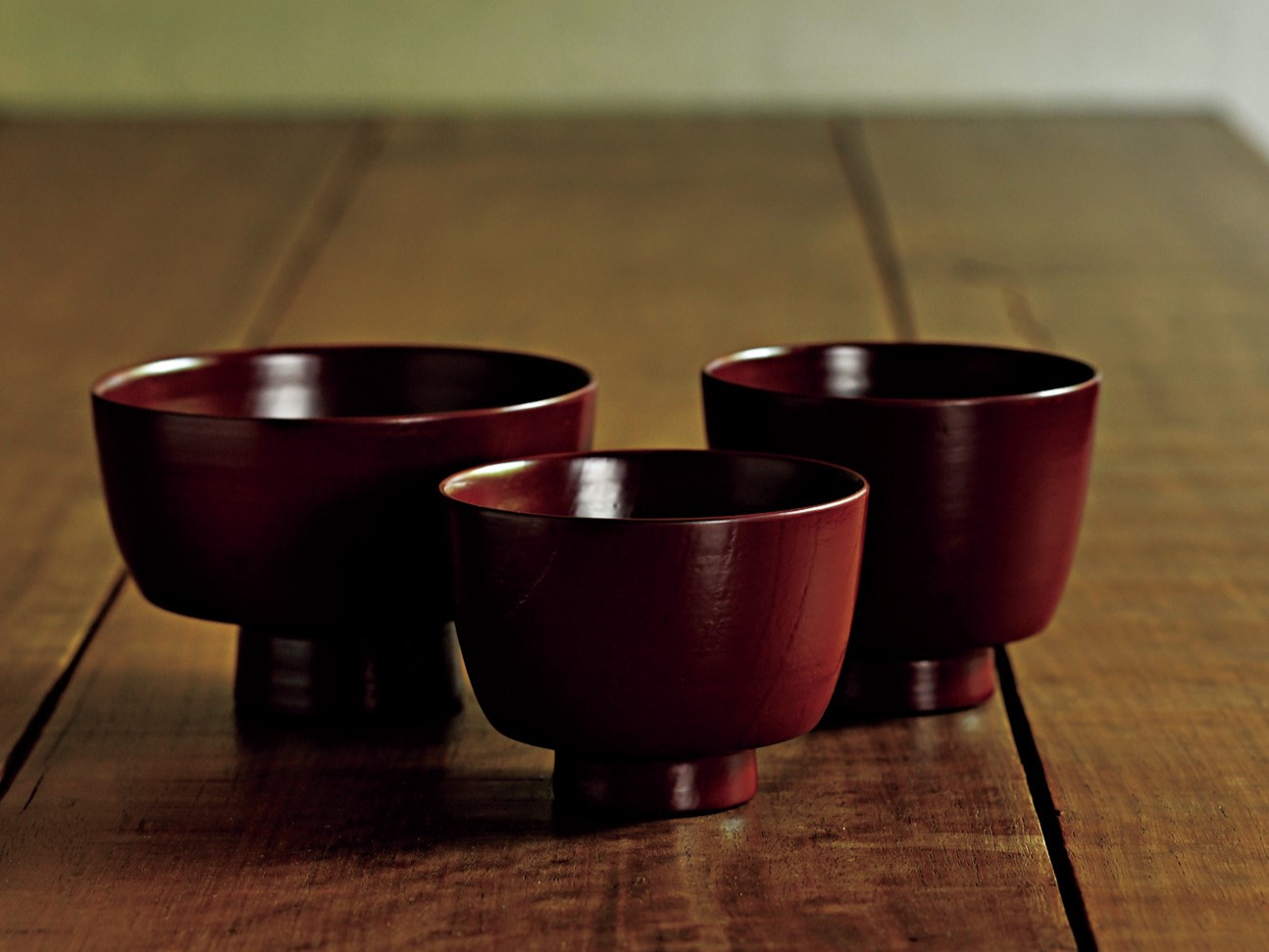
What was completed from this was an uwanuri bowl that is “not overly coated”.
“It has been about 15 years since we moved our base to Okinawa. At our solo exhibition three years ago, we were delighted that local people purchased our uwanuri bowls. I felt that the pleasant mouthfeel unique to uwanuri had been conveyed,” Hiroyuki reflects deeply, as Ai nods beside him.
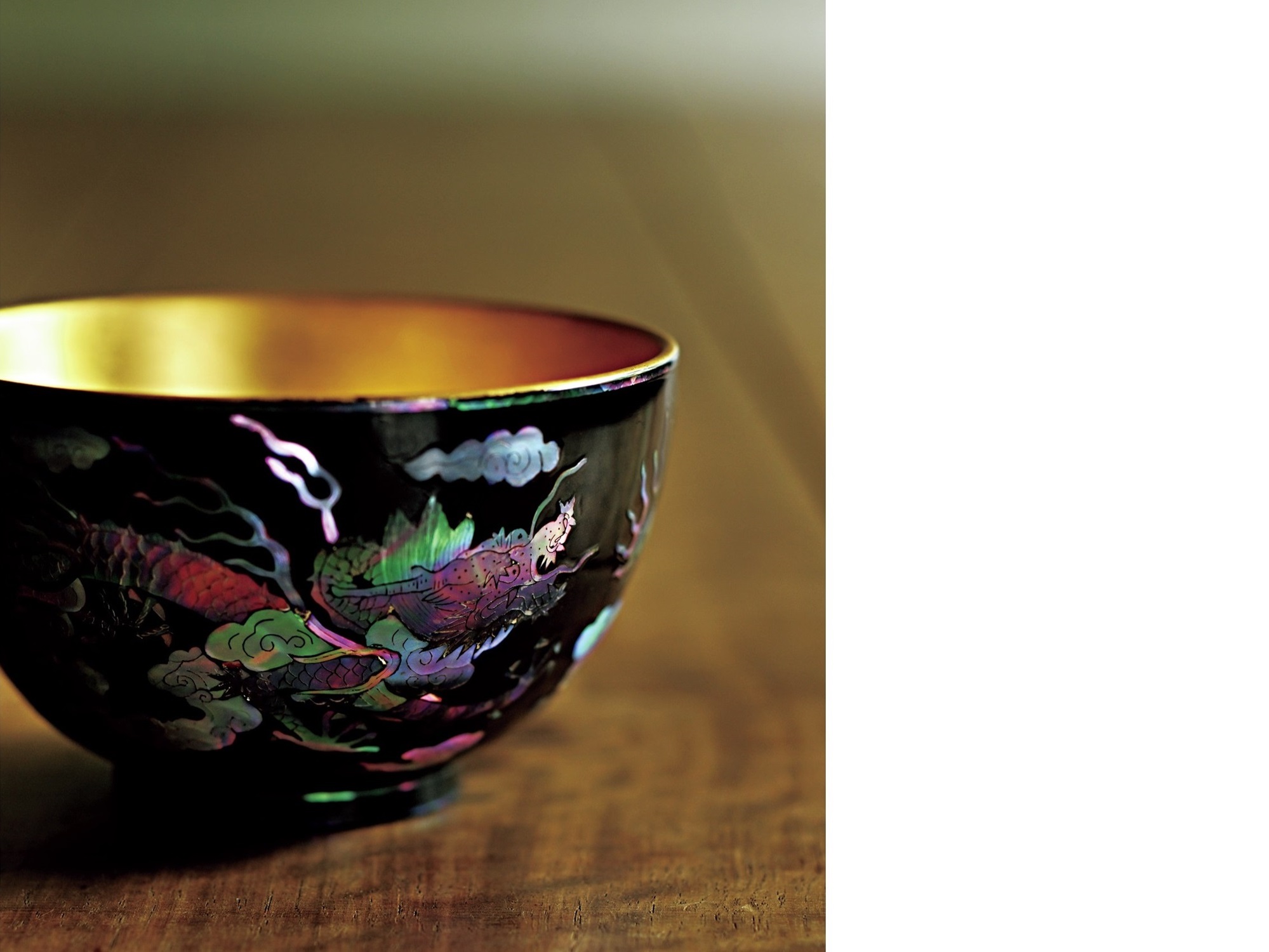
What they are currently working on is the reproduction of Ryukyu style lacquerware (琉球漆器).
They wish to reconstruct the Ryukyu lacquerware that was once highly prized as tribute goods into contemporary Ryukyu lacquerware.
Believing that passing down the handcraft techniques inherited in Ryukyu lacquerware to the next generation is also their role, the two are walking a new path.
●Lacquerware by Mokushikkou Tokeshi is currently available at Garb Domingo (ガーブ ドミンゴ) in Naha (那覇) https://garb-online.com/ and Luft Shop (ルフト ショップ) https://luftworks.jp/shop/.
Solo Exhibitions Scheduled for 2026
September (Dates undecided) Kyoto (京都) CIRCLE THE GALLERY https://ctg-kyoto.com/
1st–5th October Okinawa Luft Shop https://luftworks.jp/shop/
6th–15th November Fukuoka (福岡) Kogei Fuko (工藝風向) https://foucault.tumblr.com/
*All prices listed include tax.
This article is translated from https://intojapanwaraku.com/craftsmanship/309207/