






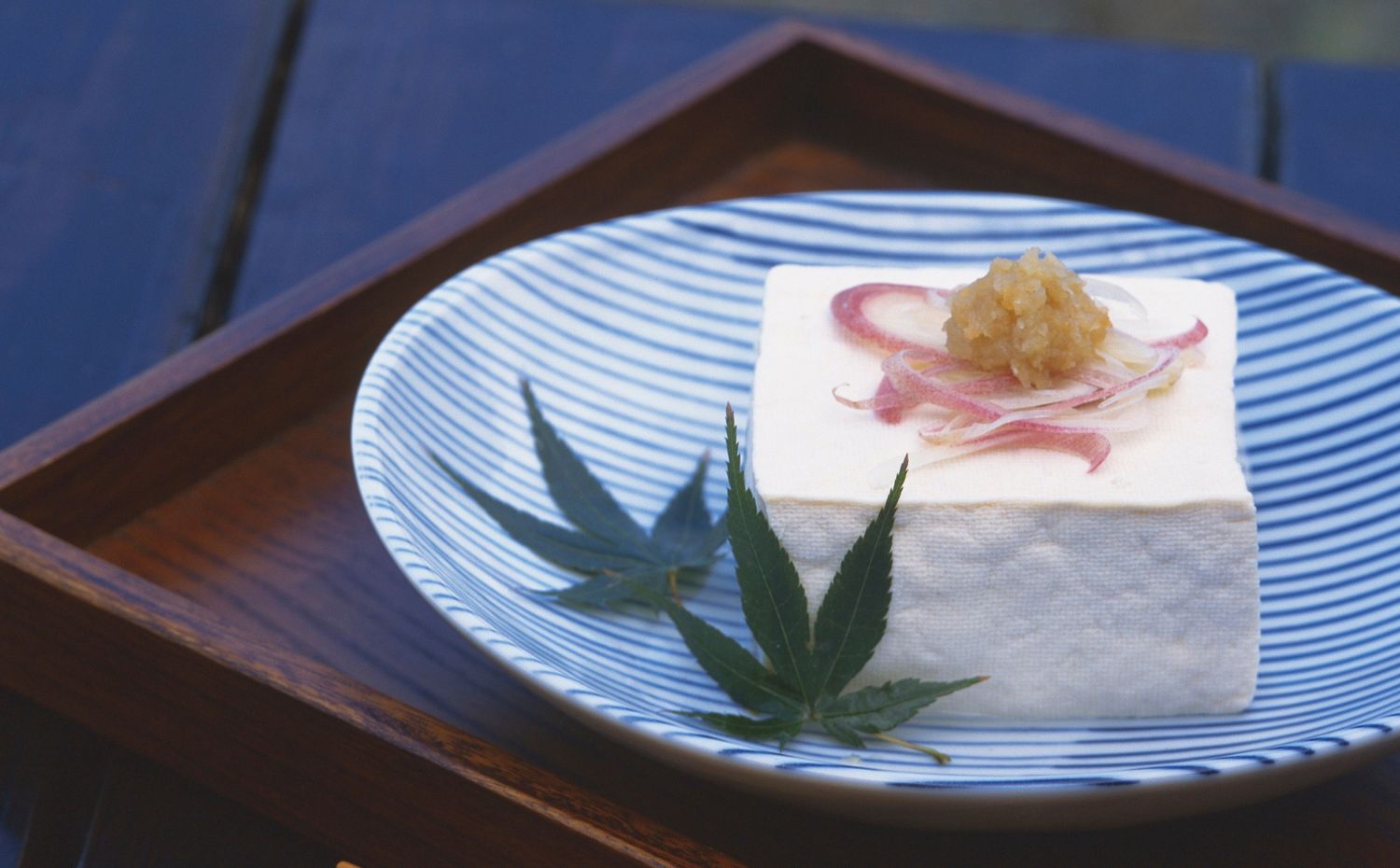
The humble Hiyayakko. While it literally means ‘cold tofu,’ this dish is surprisingly mysterious given how simple and refreshing it tastes. Hot tofu is called yudofu, (literally hot-water tofu) which raises no eyebrows. Yet the instant the dish goes cold, the character for a ‘fellow’ or ‘guy’ pops up in the name, turning it into a literal ‘cool chap.’ Why the sudden appearance of this nice guy?
The Etymology of ‘Hiyayakko’
Upon opening the dictionary immediately I make a new discovery. The definition of Hiyayakko states it is “chilled tofu eaten with soy sauce and condiments”. In our household, rather than soy sauce and condiments, we often enjoy it with Tsukudani pickles, Kimchi, or lightly pickled cucumbers and aubergines. However, websites of seasoning manufacturers and tofu shops also introduce many alternative recipes without soy sauce and condiments as ‘Hiyayakko’, and in ‘Nihon no saijiki‘ (a traditional Japanese almanac of seasonal poetic terms) it is simply described as “chilled tofu that has just been cut”. Besides, we’re getting off topic here, so let’s get back to it’s etymology.
Firstly, it seems the word Hiyayakko was coined during the Edo (江戸) period. It is also referred to as yakko-dōfu (奴豆腐), hiya-dōfu (冷豆腐—literally “chilled tofu”), or mizu-dōfu (水豆腐—”water tofu”).
In dictionaries and encyclopedias (see references), four etymological theories were listed.
・Because its shape resembled the square crest on the kimono of low-ranking servants called Chugen (中間) (who served samurai and handled odd jobs), who were referred to as Yakko (奴).
・A portmanteau of Yakkodofu and Hiyadofu.
・Because people of lower status ate it unboiled (whilst still cold).
・The word for cold, ‘Hiyakkoi’ (冷やっこい), transformed into ‘Hiyayakadofu’ (ヒヤヤカ豆腐) and then ‘Hiyayakko’ (though counterarguments were also noted alongside this).
・Excerpted from the relevant sections under the entries for ‘Hiyayakko’ and ‘Yakkodofu’.
Hmm, I see. And surprisingly, I found that an antonym, Atsuyakko (熱奴), also exists. It means the same as Yudofu, but wow, so Atsuyakko actually existed.
Having said that, in modern times, it is common to call the cold one ‘Hiyayakko’ and the warm one ‘Yudofu’. Although it is unknown why these terms survived, they each seem to have a strangely evocative ring that makes one feel the seasonal breeze.
Recently, many fusion recipes with Western cuisine have been devised, such as an Italian style topped with tomatoes and olive oil, and as a devoted fan, I sincerely wish for every success and prosperity in it’s ongoing evolution.
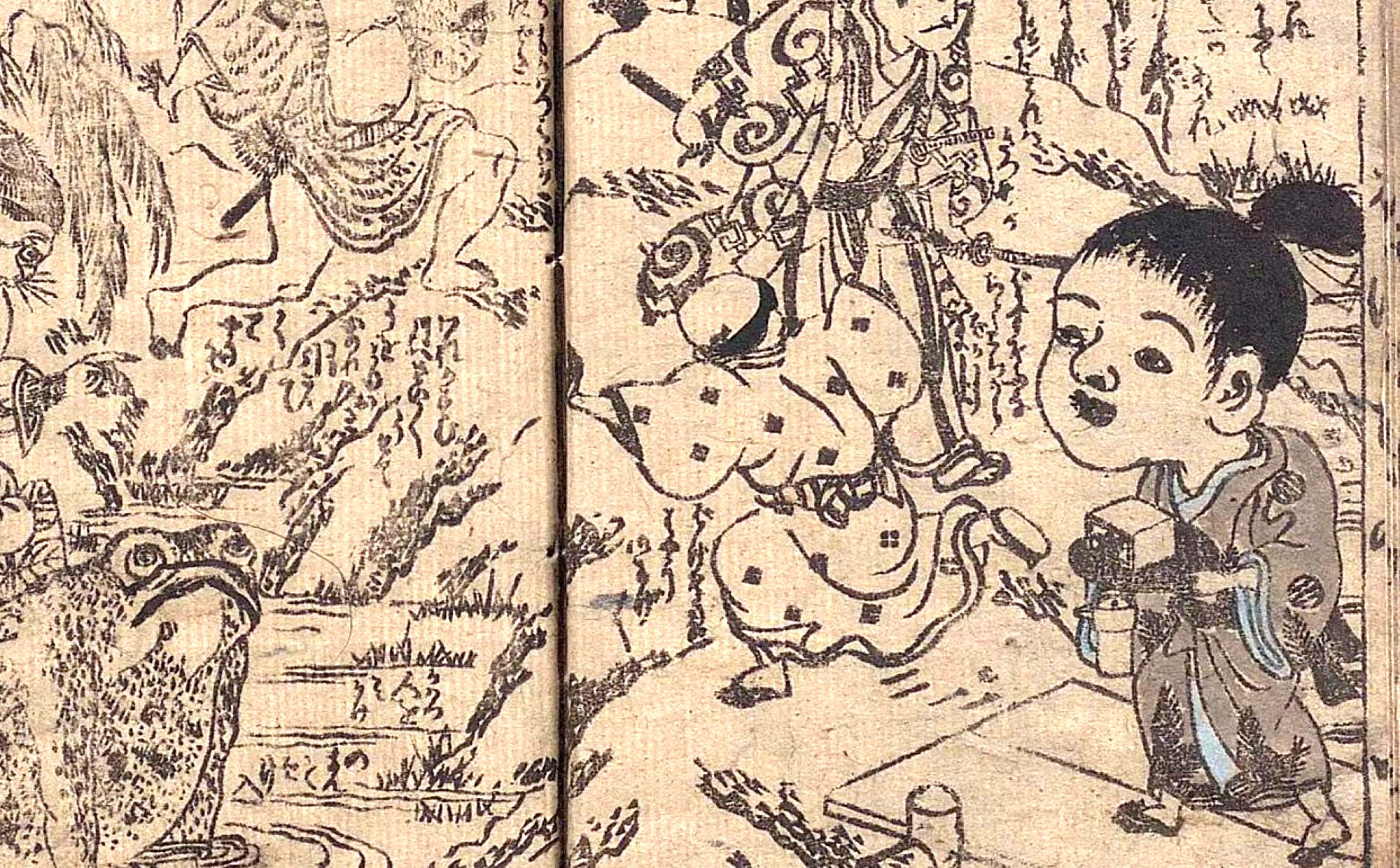
Header image: Enlarged section of Tofukozo (豆腐小僧) from ‘Hakemono‘ (はけもの) illustrated by Nishimura Shigenobu (西村重信), processed and used from the Kokuritsukokkaitoshokan Dijitaru Korekushon (国立国会図書館デジタルコレクション)(https://dl.ndl.go.jp/pid/14208812)
References:
‘Dejitarudaijisen‘ (デジタル大辞泉) by Shogakukan (小学館)
‘Nihonkokugodaijiten‘ (日本国語大辞典) by Shogakukan
‘Nihonnosaijiki‘ (日本の歳時記) by Shogakukan
‘Sekaidaihyakkajiten‘ (世界大百科事典) by Heibonsha (平凡社)
‘Puroguresshibuwaeichujiten‘ (プログレッシブ和英中辞典) by Shogakukan
This article is translated from https://intojapanwaraku.com/culture/305580/