














Until May 27, 2018, the Prado Museum Exhibition "Berrakesh and the Glory of Painting" is being held at the National Museum of Western Art. Art journalist Erimi Fujiwara commented on the highlights.
A secret of art to be understood
Marus is a god of battle and farming in Roman mythology, identified with the mythical god Ares of Greek mythology. In Greek mythology, despite being a son of Zeus and Hera's son and one of the pillars of Olympus 12 God, unlike the battles of half sisters and the goddess Athena of wisdom, God and the symbol of destruction by war, human cruelty, ferociousness It was thought. It seems that my father Zeus also hated a son who likes to fight.
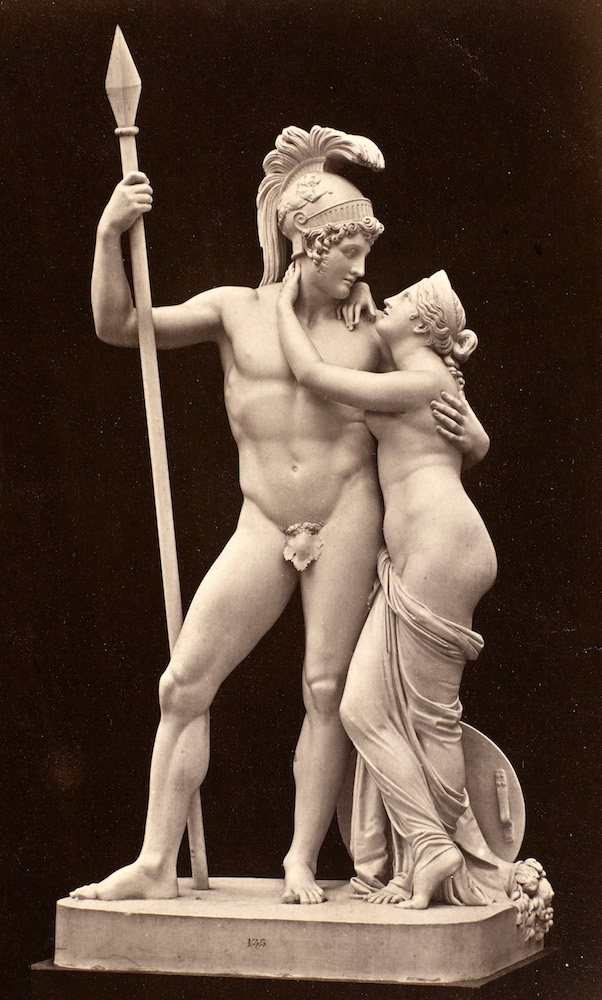 Antonio Canova "Mars and Venus" © MUSEO NACIONAL DEL PRADO
However, this son, quite handsome, will be loved by the goddess of love and beauty Aphrodite (English name Venus) (even though she had a husband named Hephaistos, the god of fire and blacksmith ......). So, in the case of a man with a certain age or a young man without a habit, Ares is given the appearance of being a man of strength, especially in the scene of Ayase with Aphrodite, a force that gives way to the power of love (violence) The sweet theme of that has been repeated.
However……. How about Marus drawing Velazquez. A tired middle-aged man who sits down at the end of the bed and sinks into something. For some reason I am wearing only a rattan, but there are even scabs on the loose chest and abdomen, and I can not think that it is the body of a very deceiving warrior. It has been so shocking to see the image of Ares as a beauty man and beauty couple. It's too real to be too real (or maybe it looks like somewhere) middle-aged men's nude. It has been considered a resting Mars, but is it disarmamentd by love, admitting his defeat, and wondering when he comes? 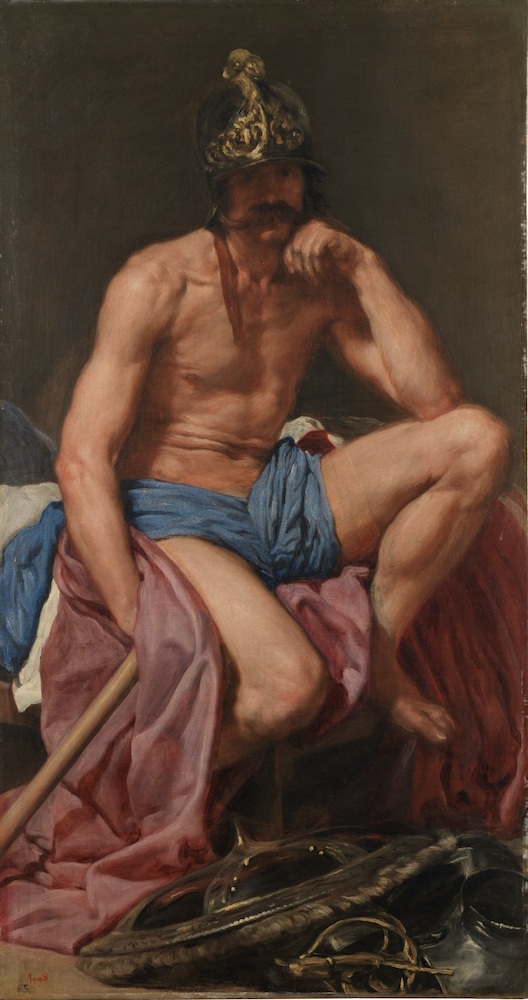 Diego Velázquez "Mars" Around 1638 Madrid, Museum of the Prado Museum © Museo Nacional del Prado
Even so, there is no one 'joy of love' here. Contrary to the brilliance of bright blue and pink cloths and armors, it is a melancholy dark atmosphere that drifts. Although the intention of Velázquez is not clear, it seems that there is also an interpretation that it implies Spain at the time when the national power was declining substantially. Certainly, the Spanish Habsburgs of Felipe IV, served by Velázquez, cut off after about 60 years of this painting. The French Bourbon family is deprived of the royal right. A painter Velazquez who drew not only the portrait of the queen but also the everyday life and portraits of the common people. Did he see the end of Spain?

My motto is "I'm serious about being stupid", and I am having fun and having fun every day.