













In mid-December, it was almost over in the middle of December, and we left another 20 weeks in 2018. As Christmas illuminations color the city, when the year-end party season becomes full, you will feel that the year-end is approaching. Well, speaking of the end of the year, just as classical music enthusiasts want to hear Beethoven's "Ninth", there are exhibitions that avid Japanese art enthusiasts look forward to at the end of the year. One of them is the Mitsui Memorial Museum of Art "National Treasure Snow Matsu Figure and Animal Art" introduced in this paper.
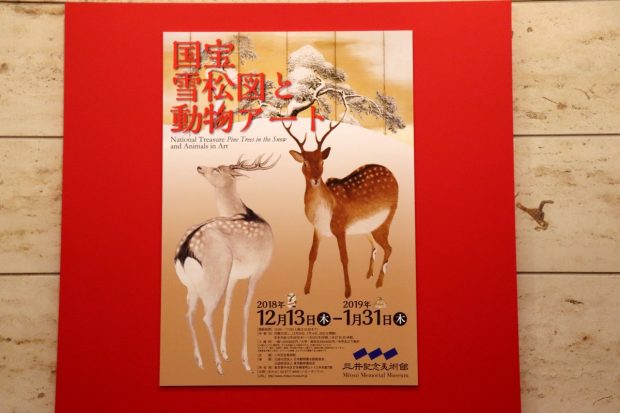
At Mitsui Memorial Museum of Art, an exhibition centered on the exhibition of the national masterpiece "National Treasure-Snowmatsu-Kotobuki" at the end of the year-end New Year exhibition almost every year since 2005 when the art museum opened in the present Nihonbashi Muromachi The meeting has been held. That's why, among the enthusiastic art enthusiasts, a routine has been created that enjoys the "Snowmatsu-style folding screen" that will be released at the Mitsui Memorial Museum of Art every year at the end of the year.
The flow continues this year. In this exhibition, "National Treasure Snowmatsu Figure and Animal Art", it is the root of the Mitsui family as well as the Snowmatsu style screen as a sequel of "National Treasure Snowmatsu Figure and Flower Bird-Art Bird Watching at the Art Museum" held at the same time last year. The museum works of a wide variety of genres such as paintings and crafts on the theme of all kinds of animals, centering on the gods and deers, are being exhibited. As we did coverage immediately, I would like to introduce the attraction and the highlights of the exhibition!
Highlights 1 The best masterpiece of the offer! National treasure "Snow and pine map style"
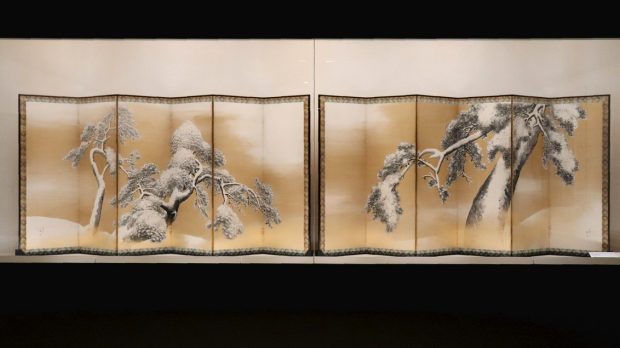
Maruyama Otoken "Snowmatsu Tokubutsu"
The "Snowmatsu-style folding screen" is displayed as the leading role of the exhibition in the "fixed position" in the front of the fourth exhibition room. This work is said to have been sent directly by Mitsui family to Maruyama Ookeki and made to order, and it is one of the most popular works among the more than 1,000 Japanese national treasures as of 2018.
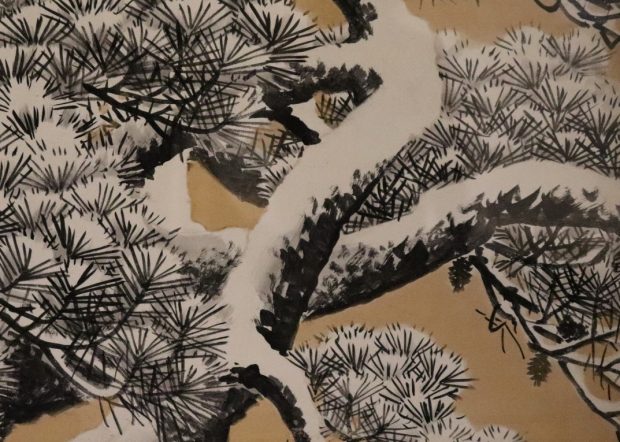
Maruyama Oyori "Snow-matsu-to-gurafu" partial enlargement
In the Edo period, the Edo period realized the visual effects that old pines and wakamatsu shining in the snow landscape approached the appreciator by making full use of “newly shaped” and “one-sided blur”, which are revolutionary new techniques in the middle of Edo period. The "genuine 3D" folding screen is wonderful, no matter how many times you look! If you are looking for the first time this time, I want you to watch this work carefully by all means!
Highlight 2 Return from the Nezu Museum of Art! National treasure "Sino tea bowl Mein flower basket"
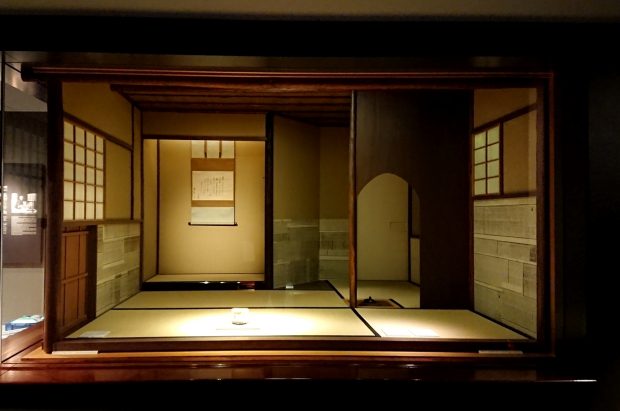
Next, it is the treasure of the Mitsui Memorial Museum of Art, "National Treasure-Shino Cha-don (Meifu Hanagara)", to be seated on the tatami mat in the display room, which reproduces the national treasure tea room "Ryokan" once owned by the Kita Mitsui family. . Until recently, the Nezu Museum of Art's special exhibition, "The new Momoyama tea pottery" (held from December 16th, 2018), was exhibited as a leading role, but now I could meet at the main house.
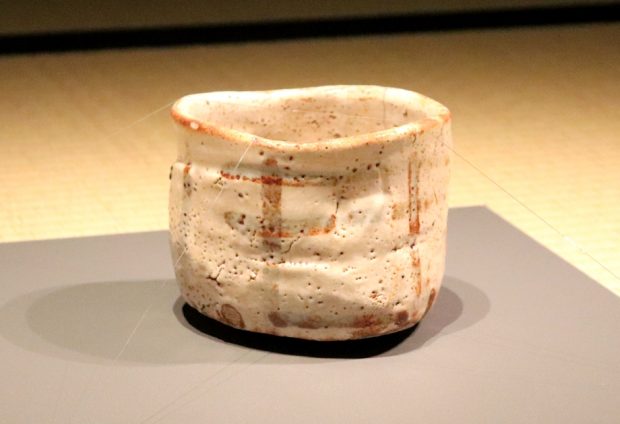
"Shino tea bowl mein flower bud"
About 400 years ago, Shino, a semi-transparent feldspar with white soil that can be harvested in the Mino region, is considered to be the first Japanese painter to be painted in Japan. The best masterpiece is "Saika Ruri". The abstract fence pattern painted with iron painting, which is asymmetrical to the right and left in a triangle, has been highly acclaimed by successive tea people.
The "Momoyama tea pottery show" was an exhibition with a clear glass case that can be viewed 360 degrees, but this exhibition will be an exhibition in a tea room that should be true, and it will be interesting to see how it will change if the place is changed. You can taste It will be an exhibition of unique pottery that is resistant to deterioration, but one of the best masterpieces of the Momoyama era, in which the left-right asymmetry of the aesthetics goes through, is not to be missed at any time.
Highlight 3 Domestic first exhibition! Another "white elephant black cow folding screen"
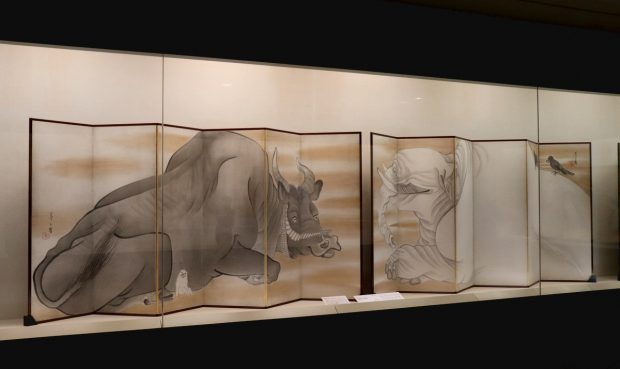
Yuki Nagasawa "White Elephant Black Bullfinch" / Personal Collection
At this exhibition, attention was paid to the most discerning art fan, and this exhibition is Japan's first exhibition in Japan. It is a unique work drawn with Dokhan using the big screen of six songs and one line to every corner.
As you go close to it, you can also see traces of the sketch. In this work, which is said to have drawn the sketch in advance and then drawn up with a thick brush to make it easy, I felt that the weight of elephants and cows was so heavy due to the roughness of the brushstrokes. The
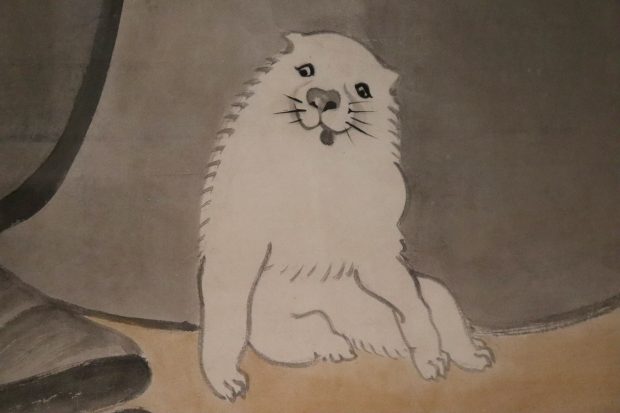
In addition, there are other highlights in addition to the protagonist "Elephant" and "Cow". The puppy with a lovely expression drawn on the lower left side is the cuteness of the teacher, Yuyama Maruyama!
This work is identical to the title work owned by Joe Price, a famous collector from overseas, such as a large collection of Ito Wakatsuki. Due to the popularity, were several pieces produced? Just in time, another version held by Mr. Price will be on display at the “Edo Painting Miracle World”, which will be held from February 9, 2019 at the Tokyo Metropolitan Art Museum. It may be interesting to see and compare.
Highlight 4 Tea utensils and crafts that you want to treat animals
In this exhibition, tea pots and pottery with various animals are drawn in one by one. Although animals are said, not only small animals such as "cats" and "dogs" but also legendary phantom beasts such as dragons and moths appear. For example, this work is decorating the opening of the exhibition.
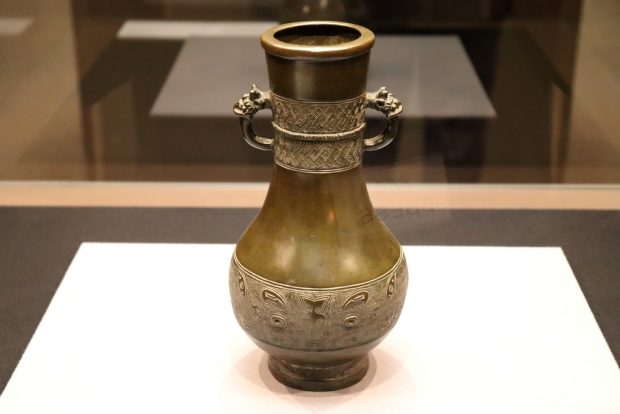
Old copper dragon ear flower
It is a copper vase made in China and the Ming Dynasty, but it is attracted to the design. Although it is a rare pattern, I thought that it was a pattern that I had seen somewhere, I treated the famous "Amaake" Goddess (Tetetsu) as the bronze pattern of the Ancient Chinese Zhou Zhou period It was a traditional testimony. Looking at the traditional patterns of the "God Beast", which has been handed down in China for over 3000 years, I felt like I could get a special power at the end of the year.
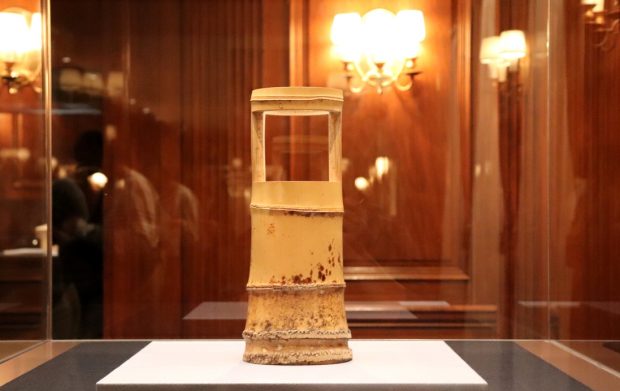
Kinsai "Take set flower" entering white elephant
The bottom of the bamboo tube resembles an elephant's foot, and it is a flower named "Take set cylinder flower filled with white elephant". You can feel the fun of the "look up" culture.
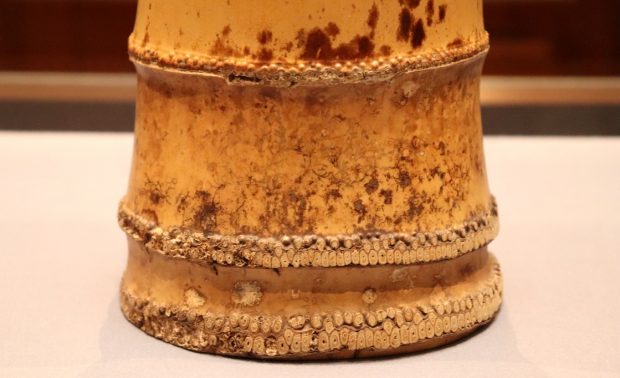
A part of the Zensai "Take set flower"
Actually I tried to shoot quite close. How about that? Have you seen it as an elephant's foot?
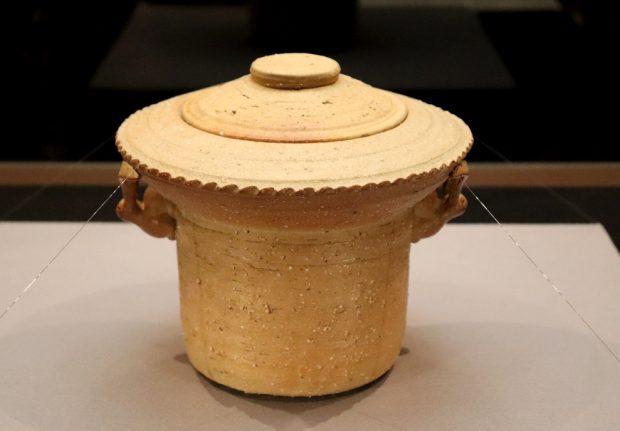
Hitoshi Nonomura "Shinakage Samurai Eared Water Finger"
This is a Shigaraki-yaki that Nonomura Hitoshi worked on. It looks like an ordinary Shigaraki pottery, but the seemingly sobery pottery hides rich details when you look closely.
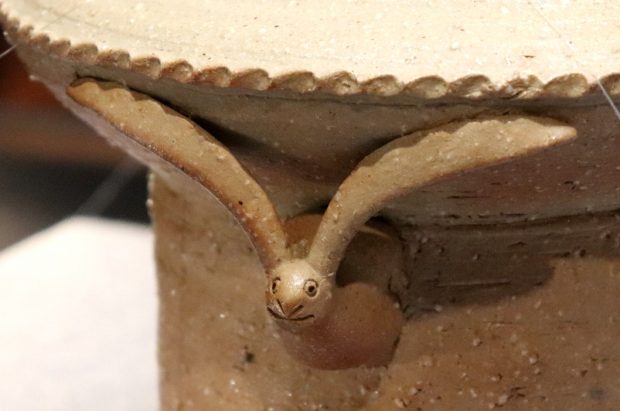
Nonomura Hitoshi "Shinakage Sakai water finger with ear" partial enlargement
If you look closely at this work, you will notice that a small ornament (= ear) shaped like a rabbit is worn on the shoulder. The comical loveliness of this rabbit is an exquisite accent, and I think it is finished in a work with a taste of genuineness.
Highlights 5 Real animals too! Super-skilled competition

Takase Yoshiyama "Insect free figurine"
At this exhibition, a large number of "super-abstract" craft works are displayed, where the craftsmanship of the artists is felt. The representative figure is a figurine of Takase Yoshiyama with insect and shrimp motifs. The insects that are so realistic that they are about to move now are actually designed to move the joints of their limbs. Is there anything like "high-class figures" that you can play by touching? The children of Mitsui family may have played with such super high class toys in various ways.
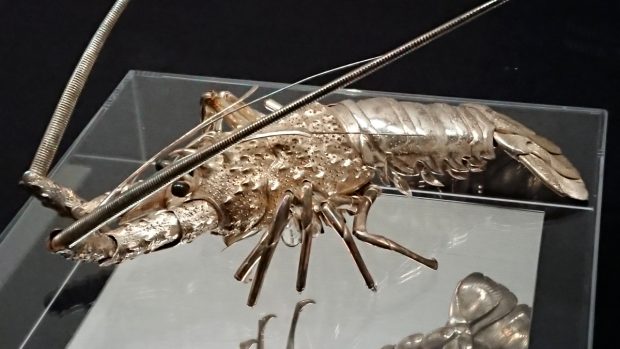
Takase Yoshiyama "Ise Shrimp Free Figurine"
And, a free-bodied figure of flashy Ise Shrimp, made of full-size silver, which glows to the whole body silver, appears. You can feel the fullness of New Year.
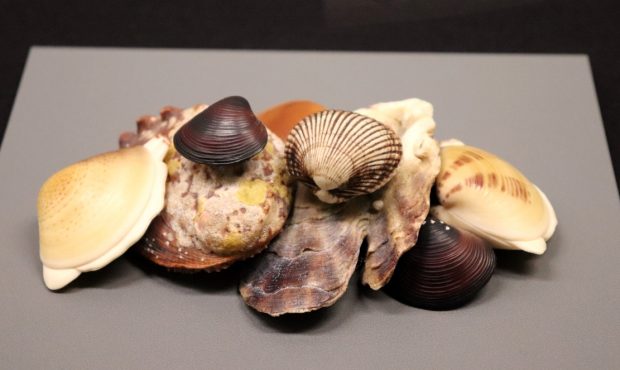
Ando Midoriyama "stained ivory shellfish figurine"
Also, I rolled my tongue on the marvelous accomplishments of various "shells" that Ikui Ando Midoriyama, a Meiji genius craftsman, who had been engulfed until recently, created it with ivory. It looks only real if you look at it from anywhere, and it may be said that it is the ultimate food sample.
Highlight 6 Rare stamp collection in the museum
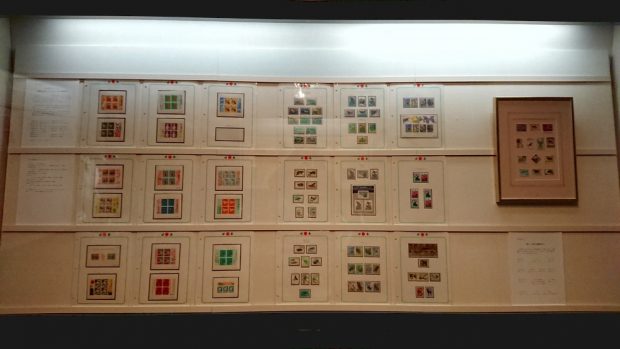
The surprising collection of the Mitsui Memorial Museum of Art is a collection of stamps collected by Minami Mitsui family's 10th generation owner, Takaharu Mitsui (old) and former Daicel Chemical president and Tadashi Masaya. The number, together about how about 130,000 pieces and a tremendous fulfillment first!
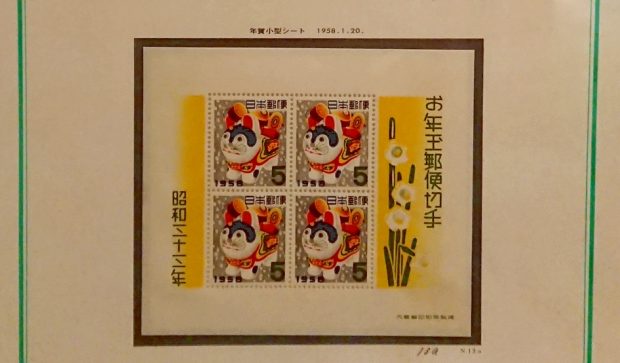
Tadashi Masaya collection "Showa Japan animal stamp"
This time, a large number of unused stamps with "animals" as motifs from among them in Japan and overseas will be released. In Japan, the “Postal Museum” and “The Museum of Bills and Stamps” are famous, but it was surprising to see the “Stamp” collection at the museum as it was the first time. It is different from the present day in price and design, and it is an exhibition that you can feel the history of Japanese stamps over 150 years. It's an interesting exhibition as it takes a short break before proceeding to the final room.
Highlight 7 A cute picture scroll in which animals move
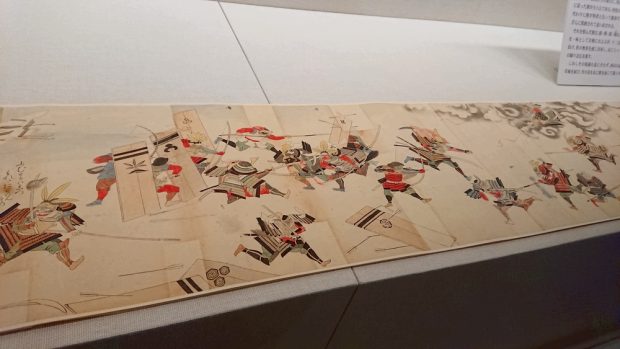
"Twelveth class battle picture winding" partial view
In the final exhibition room, I drew an eye-roll on which the animals were anthropomorphized and drawn like "Bird and beast figures". Cute and comical animals are active, such as a scene in which the animals discuss, a battle scene after the discussion ends, and a scene in which the hero of the battle loses a fight.
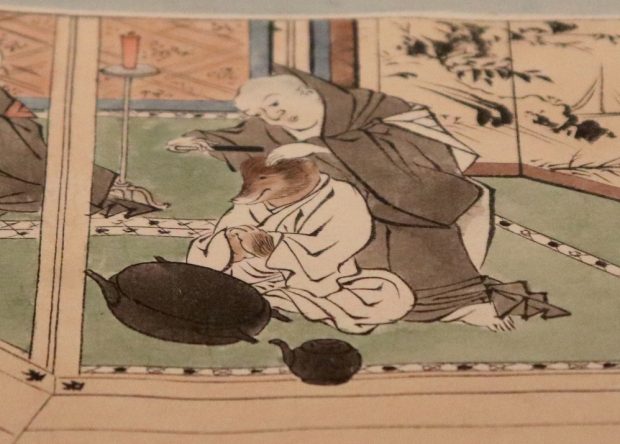
"Twelveth class battle picture winding" partial view
If you look at it, the faces of the animals are cute, but the battle scenes etc. have bloodshed scenes drawn without a hand, and it may be a highlight with strangely realistic depictions.
An exhibition recommended for Japanese art beginners
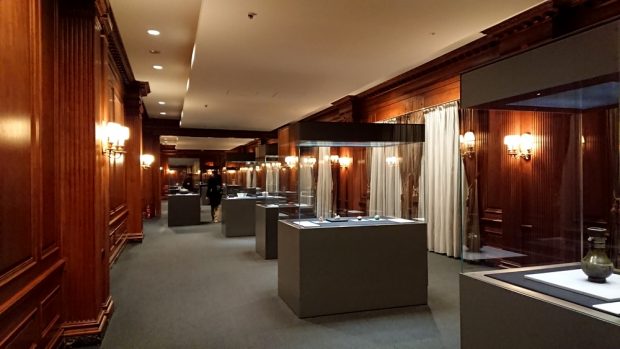
This exhibition consists of almost 100% of the museum's collections, but looking at the exhibition, looking at the top two major national treasures representing Japan, the thickness of the Mitsui Memorial Museum of Art collection thickness again I realized. While focusing on the theme of "Animals", the exhibition draws a high-level work from a wide range of genres, with Japanese paintings at the head, such as picture scrolls, tea utensils, sake ware, Noh mask, dolls, flexible figurines, etc. It can be held as an art fan.
In addition, it is an exhibition that can be recommended to beginners of art appreciation with confidence because it is possible to enjoy the exquisite works across categories. While watching carefully, it may be a chance to meet your unexpected taste. Please enjoy the cute and comic animals in the work at the Mitsui Memorial Museum of Art at the end of the year.
Sentence / photography / Saito Hisaya
My motto is "I'm serious about being stupid", and I am having fun and having fun every day.