And the most sharp-sighted had discovered in their searches some images of ravishing effect. They were collected in made-up albums representing fantastic scenes, in a new style of coloring which fascinated.
——Siegfried Bing, Catalogue of Japanese Engravings: An Important Collection of Old Prints in Color Belonging to Mr. S. Bing, Paris. The American Art Association, Managers, New York, 1894, p. 9.
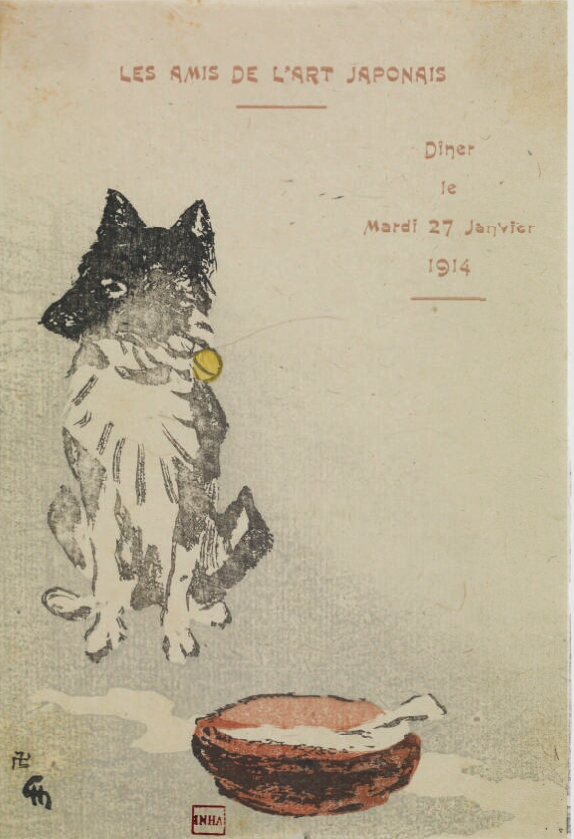
Jules Chadel (artist) and Prosper Alphonse Isaac (carver), “Les Amis de L’art Japonais. le mardi 27 janvier 1914”, woodblock print, 1914. Collection of Institut national d’histoire de l’art
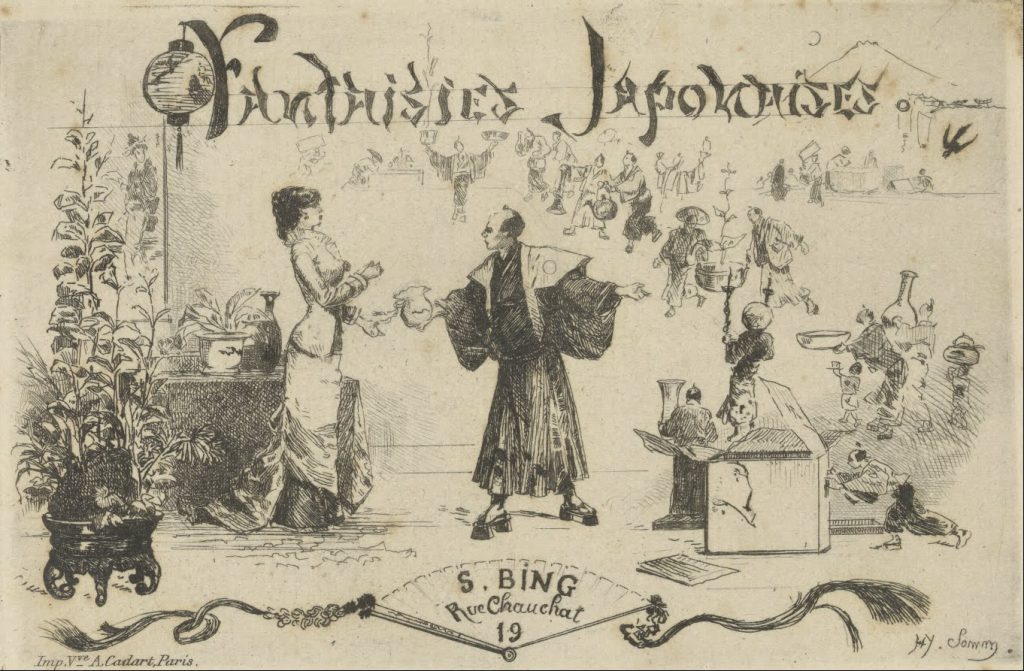
The admiration for the ‘exotic’ Japanese woodblock prints (ukiyo-e) was centred around an avant-garde group of Paris-based art dealers, collectors, critics and artists. A key figure was Siegfried Bing (1838-1905), the art dealer and connoisseur, who also published the journal Le Japon Artistique (1888-91) that became a source for inspiration among many artists and designers in Europe with its’ full-page colour reproductions of Japanese art (see also article from April 2024).
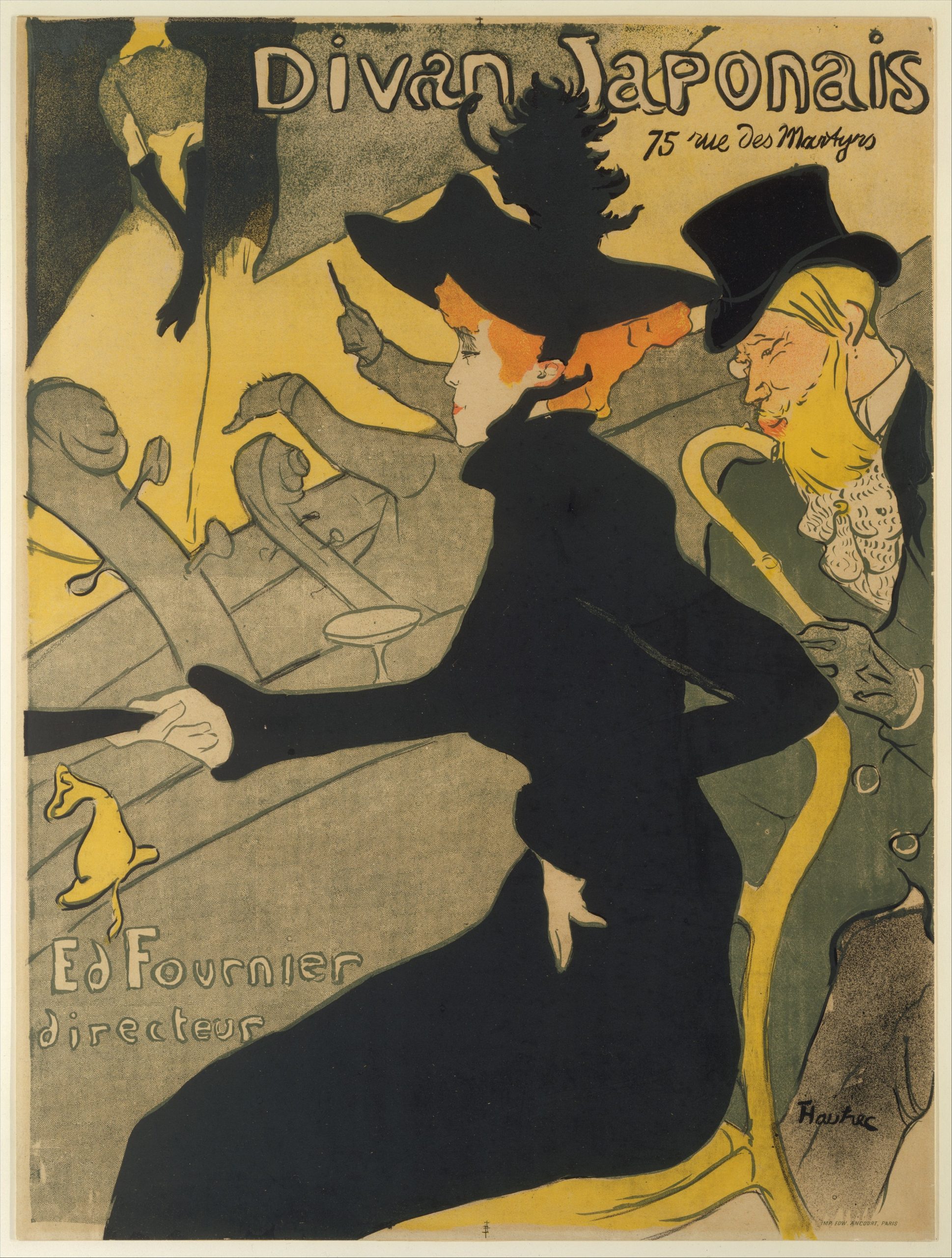
Henri de Toulouse-Lautrec, “Divan Japonais”, lithograph, 1892.
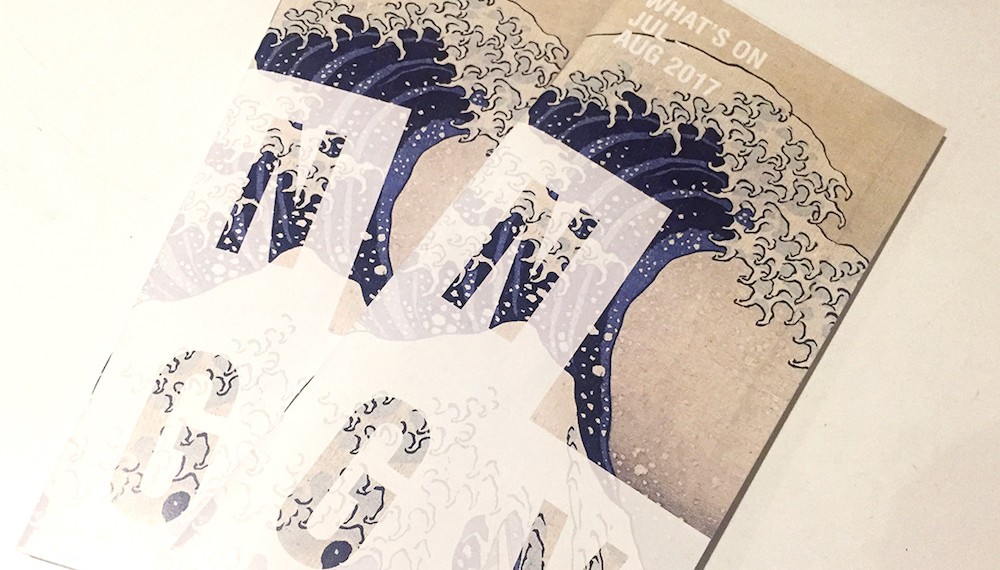
In his shops in 19 rue Chauchat and 23 rue Provence, Bing would receive visits from enthusiastic collectors, eager to see his latest stuck freshly arrived from Japan. Among his clients were the famous actress Sarah Bernhardt (1844-1923), the writer and connoisseur Edmond de Goncourt (1822-1896), artists Claude Monet (1840-1926) – who owned an edition of Hokusai’s Kanagawa oki nami ura –, Paul Gauguin (1848-1903), Henri de Toulouse-Lautrec and Vincent van Gogh (1853-1890). These artists not only collected but took inspiration, or at times even copied, from the Japanese woodblock prints in terms of motifs, colours, compositions and atmosphere.
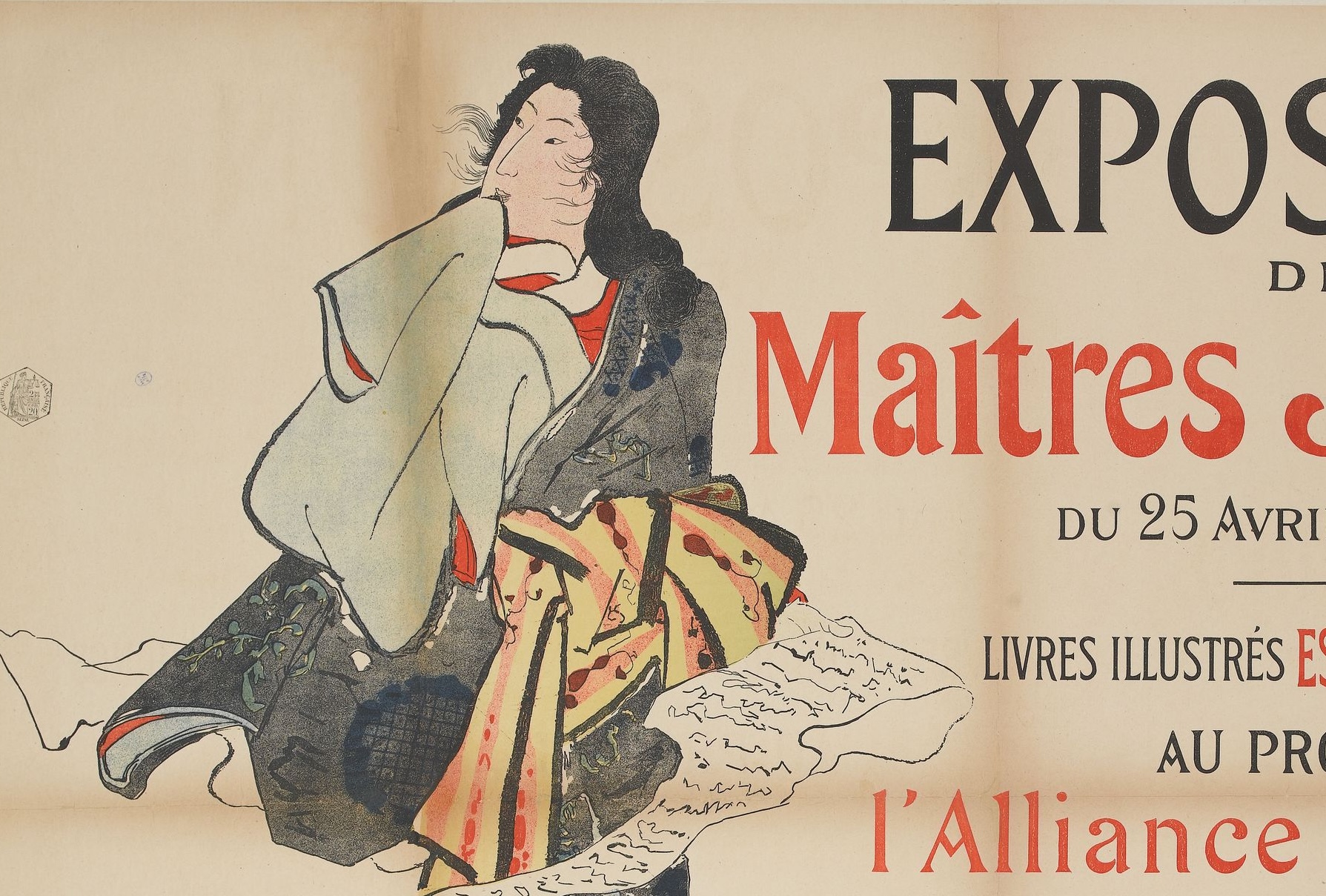
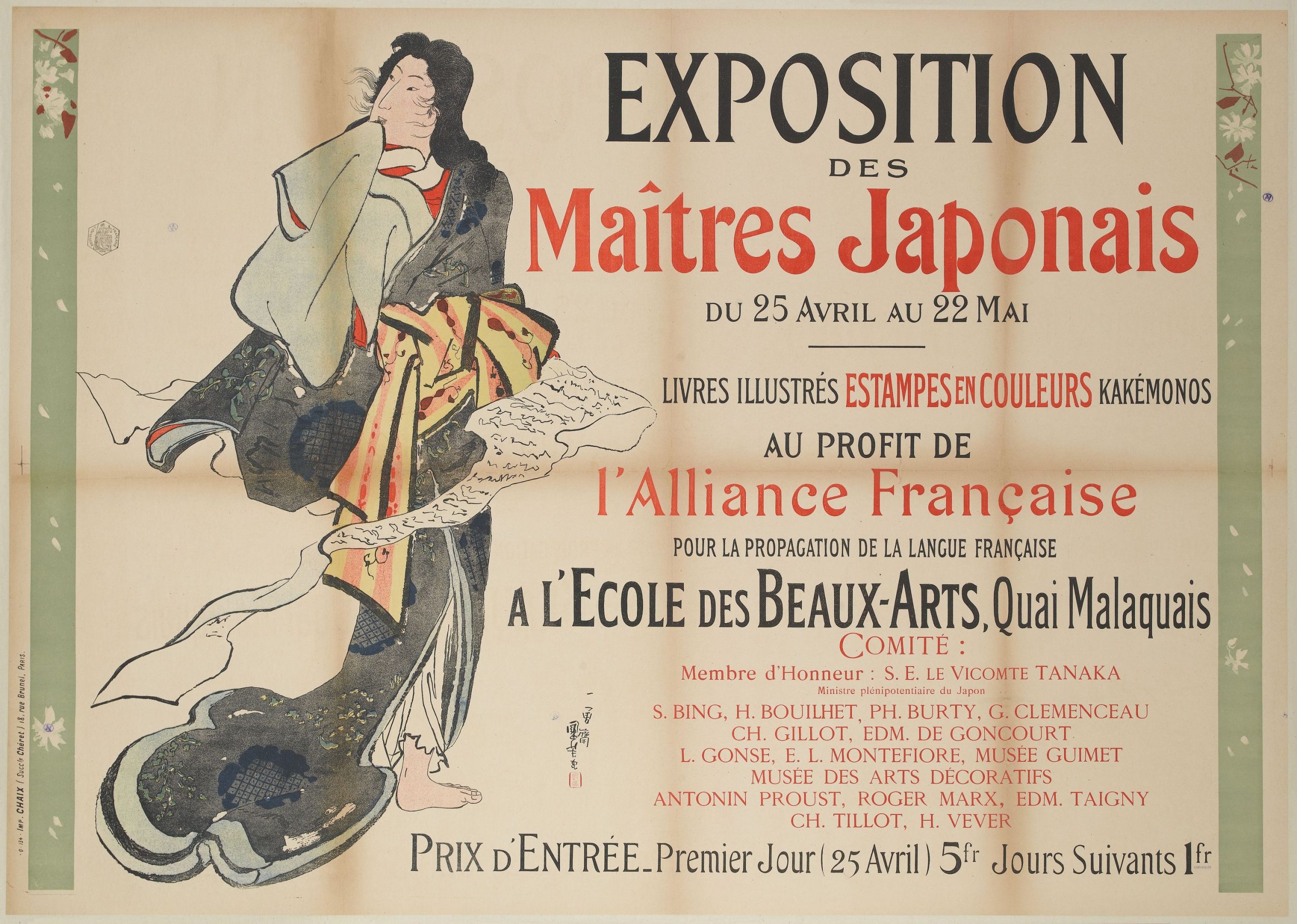
Jules Chéret, Poster for ‘Exposition de la gravure japonaise du 25 avril au 22 mai… A l’Ecole des Beaux Arts…, lithograph, Imp. Chaix (Succ. Chéret), Paris, 1890. Collection of Musée Carnavalet, Histoire de Paris.
Since the first Exposition Universelle in Paris held in 1867, there had been many opportunities for a Western audience to experience displays of Japanese objects and artifacts, including ukiyo-e. But the first major exhibition focusing on Japanese prints was Exposition de la gravure japonaise which Bing organised in 1890. The exhibition presented works from the early ukiyo-e masters of the Torii School in the early 17th century to one of the last great masters, Kawanabe Kyōsai (1831-1889). Apart from Bing’s own impressive ukiyo-e collection, which included Kanagawa oki nami ura (c. 1830-32), loans came from his clients and fellow Japan-enthusiasts, including Charles Gillot (1853-1903), writer Philippe Burty, jeweller Henri Vever (1854-1942) and not least leading ukiyo-e expert Hayashi Tadamasa (1856-1906).
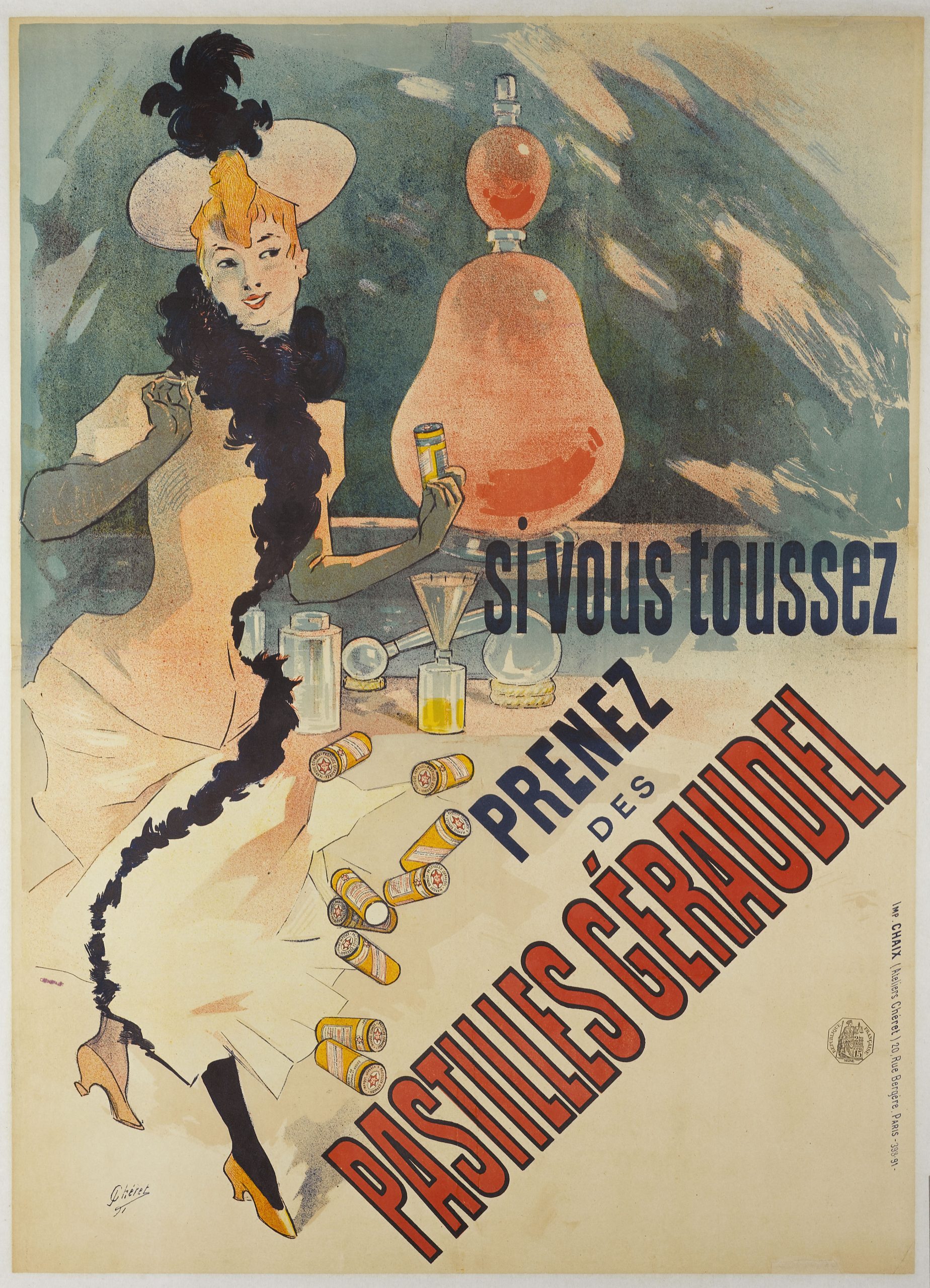
The poster for the exhibition was designed by none other than the French Belle Époque lithographer Jules Chéret (1836-1932), who became known as the ‘father of the modern poster’.
Jules Chéret, ” Si vous toussez/PRENEZ/DES/ PASTILLES GERAUDEL “, lithograph, 1891. Collection of Musée Carnavalet, Histoire de Paris.
Two years later, in 1892, Bing initiated the establishment of the Société des Amis de l’Art Japonais (‘The Society of Friends of Japanese Art’), consisting of the collectors as mentioned above, as well as artists such as Félix Régamey (1844-1907), Prosper-Alphonse Isaac (1858-1924) and Henri Rivière.
From 1906, the year after Bing’s death, the group started a tradition of making handprinted invitation cards to their monthly dinners hosted at Restaurant du Cardinal at 1 Boulevard des Italiens, which still exists today.
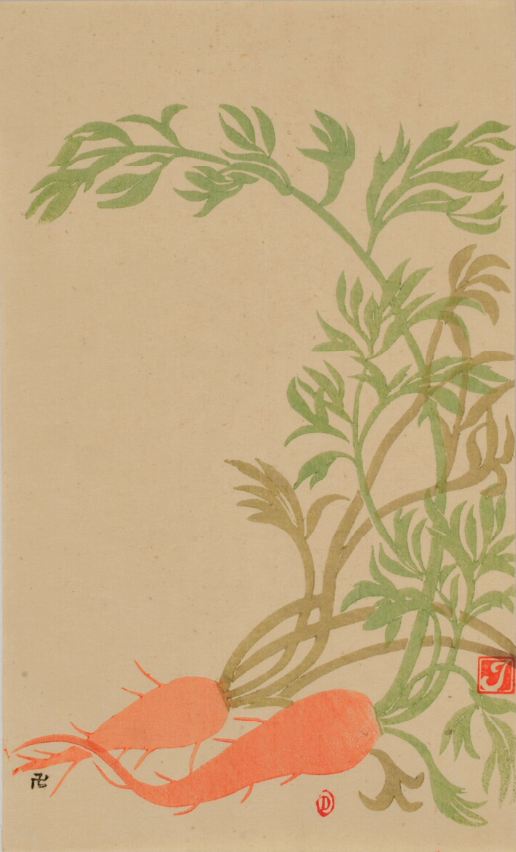
Prosper Alphonse Isaac, “Carrots”, woodblock print, c. 1912-19. Collection of Institut national d’histoire de l’art
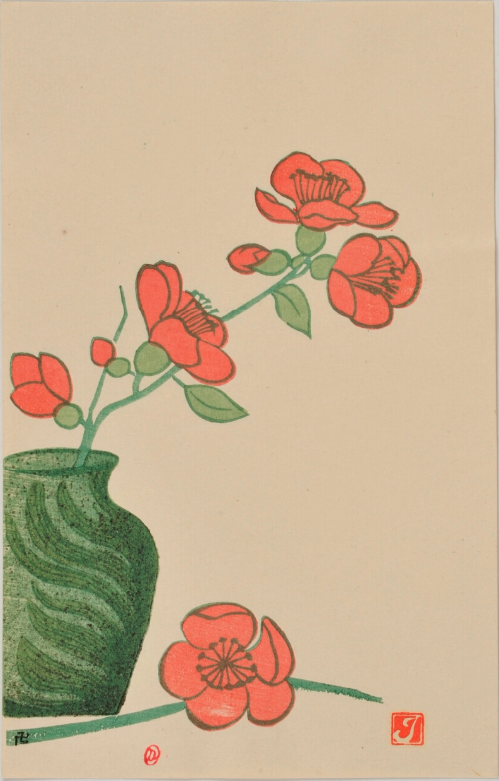
The invites were small engravings made by woodblock, with Japanese motifs and designed by the members themselves, testifying to the enthusiasm for the print medium in French avant-garde circles at the time. An invitation from 14 December 1912 carries the monogram of a Japanese artist, Urushibara Yoshijirō (1889-1953), a London-based artisan turned artist based.
Urushibara was trained as a printmaker and worked for the Tokyo publisher of Japanese old master reproductions Shimbi Shoin Ltd. which had led him to London in 1910 to demonstrate the technique of woodblock printing at the major Japan-British Exhibition held at White City in West London.
Here Urushibara met Prosper-Alphonse Isaac who wanted to learn the traditional Japanese technique of moku hanga and invited Urushibara to Paris in 1911, where he stayed several months. Through Isaac, Urushibara was introduced to the Société des Amis de l’art japonais, and Urushibara designed and collaborated with Isaac on a number of the invitation cards for their monthly dinners.
Prosper Alphonse Isaac, “Camellia japonica in a vase”, woodblock print, c. 1912-19. Collection of Institut national d’histoire de l’art
Urushibara collaborated on a considerable number of prints as carver and printer with other artists, such as fellow Japanese expatriate Yoshio Markino (1869–-1956) and the Welsh artist Frank Brangwyn (1867–-1956). A former apprentice to leader of the English Arts and Crafts Movement, William Morris (1834–-1896), Brangwyn witnessed the first wave of Japonisme. In 1895, Brangwyn was commissioned by none other than Siegfried Bing to decorate the exterior of his new gallery, the Galerie Maison de l’’Art Nouveau, that which would give its name to the following art movement of the same name.
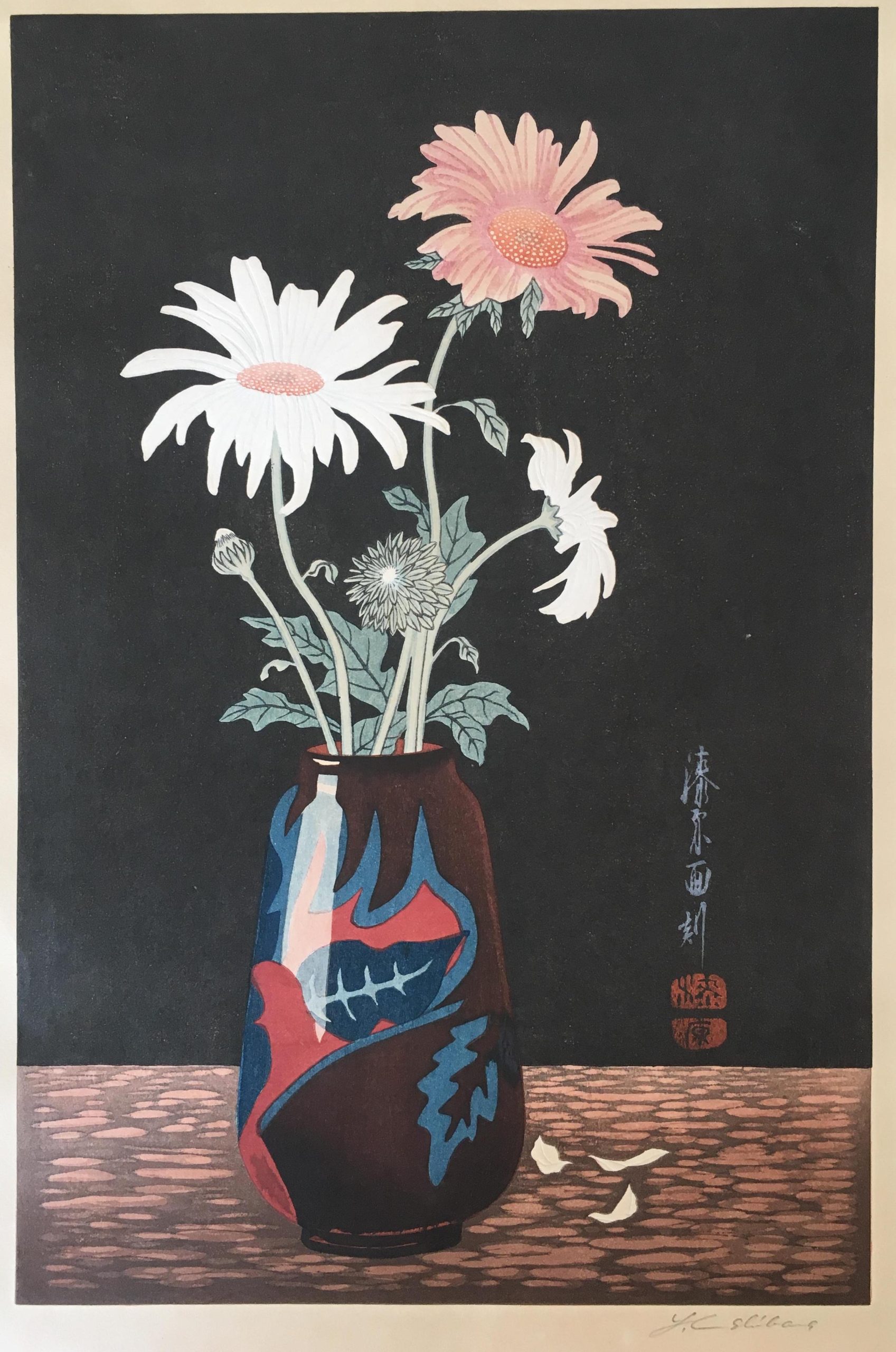
Urushibara also made his own designs, creating numerous still-lifes, arrangements of flowers and European cityscapes- and landscapes; later his subject became horses in simple black and white.
During his thirty years in Europe, most of those spent in London, Urushibara was significant in encouraging the production and appreciation of the Japanese woodblock print by also taking on students like Isaac as well as Jules Chadel (1870-1941) and painter Walter J. Phillip (1884-1963), thereby playing a pioneering role in the revival of the colour woodblock print in Europe.
Urushibara Yoshijiro, Daisies 2, woodblock print, not dated (c. 1920s). Collection of Malene Wagner.
Curator, art director and founder of Tiger Tanuki: Japanese Art & Aesthetics. After completing an MA in Japanese art history, she worked in the publishing and auction industry and now writes, curates and art directs on Japanese art from a variety of perspectives. She specialises in Japanese prints and the cultural exchange between Japan and the West in the 19th and 20th centuries. https://www.tiger-tanuki.com/