





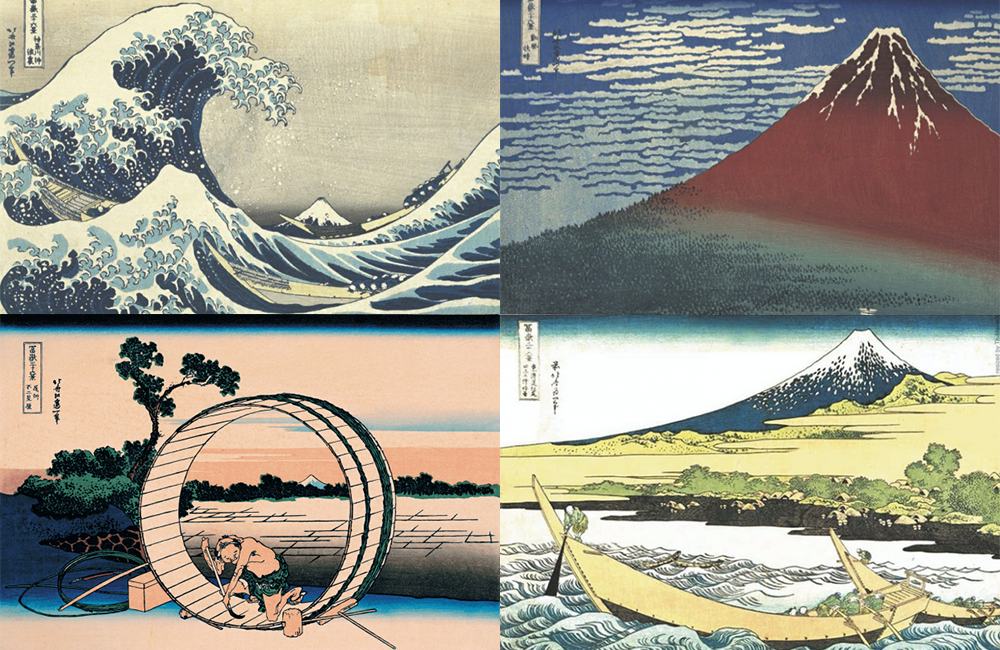
When we think of Mount Fuji in ukiyo-e, this is the image that immediately comes to mind. Katsushika Hokusai (葛飾北斎), a woodblock print artist of the Edo period, created the iconic series Thirty-six Views of Mount Fuji — his most celebrated work, and one which was even featured on Japanese passports issued in 2020. Here, we take a closer look at what makes this series so remarkable.
What kind of piece is ‘Thirty-six Views of Mount Fuji’?
‘Thirty-six Views of Mount Fuji’ is considered Hokusai’s magnum opus — a vivid woodblock print series depicting Mount Fuji from various regions and angles. Despite its name, the complete set actually consists of 46 prints.
Amazingly, Hokusai was 72 years old when he began this series.
Through extraordinary imagination and masterful composition, he captured the ever-changing face of Mount Fuji as influenced by location, season, and weather conditions. While the series appears to show real landscapes, not every scene was drawn from direct observation. Hokusai skillfully reconstructed motifs and compositions from traditional painting themes and famous-view illustrations of the time to depict 46 imagined or idealised landscapes where Mount Fuji can be seen.
Though created as woodblock prints, the series is noted for its vivid colours and striking, varied compositions. Thanks to the wave of Japonisme in the 19th century, Thirty-six Views of Mount Fuji gained international recognition. It is said to have greatly influenced Western artists such as Van Gogh and Debussy, as well as leaving a lasting impact on the global art scene.
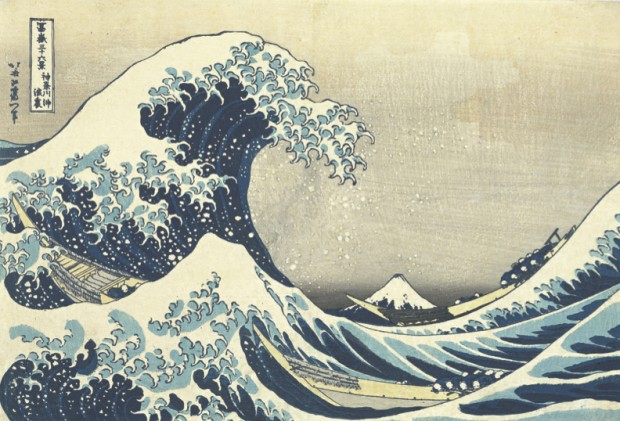
A closer look at eight iconic prints
1.Edo Nihonbashi from Thirty-six Views of Mount Fuji
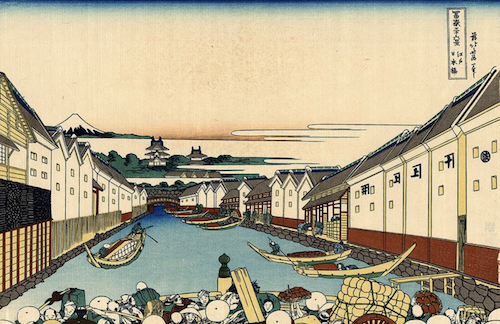 ‘Edo Nihonbashi (江戸日本橋)’
Nihonbashi (日本橋) was the heart of Edo (now Tokyo). Hokusai places the bridge prominently in the foreground, with Edo Castle visible across the river. This print is a superb example of his use of perspective.
2. The Great Wave off Kanagawa from Thirty-six Views of Mount Fuji
‘The Great Wave off Kanagawa (Kanagawa oki nami ura, 神奈川沖浪裏)’
The ‘Kanagawa (神奈川)’ in the title refers to the area around present-day Kanagawa Ward in Yokohama, once a post town. The boats depicted are oshiokuribune (押送船), fast cargo vessels that transported fresh fish from the Boso (房総) Peninsula to Edo. The scene is thought to be set near the area now known as Umihotaru (海ほたる, the artificial island on Tokyo Bay).
3. Enoshima in Sagami Province from Thirty-six Views of Mount Fuji
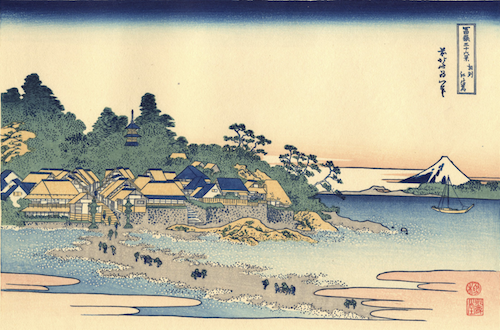 ‘Enoshima in Sagami Province (Soshu Enoshima, 相州江の島)’
Enoshima was a popular pleasure spot in the Edo period, as well as a sacred site for worshippers of Benzaiten (弁財天). Hokusai gently portrays people waiting for low tide to cross over to the island, evoking a peaceful, leisurely atmosphere.
4. Mishima Pass in Kai Province from Thirty-six Views of Mount Fuji
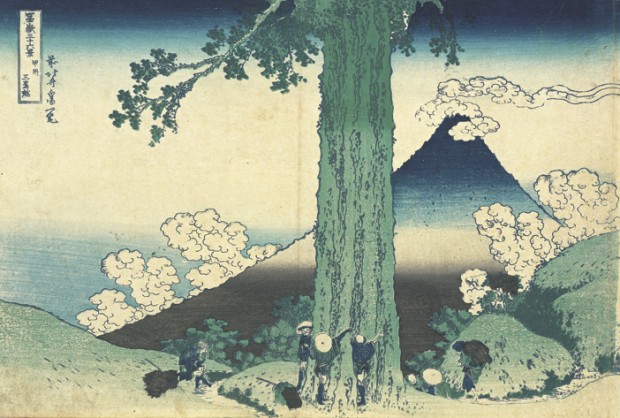 ‘Mishima Pass in Kai Province (Koshu Mishimagoe, 甲州三嶌越)’
Mishima Pass (三嶌越) was a route connecting Kofu (甲府), through the Kagosaka (籠坂) Pass, and on to Mishima via Gotemba (御殿場). A large tree, once found near the pass, is depicted symbolically in the foreground, drawing the viewer deeply into the composition.
5. Tagonoura Bay near Ejiri on the Tokaido Road from Thirty-six Views of Mount Fuji
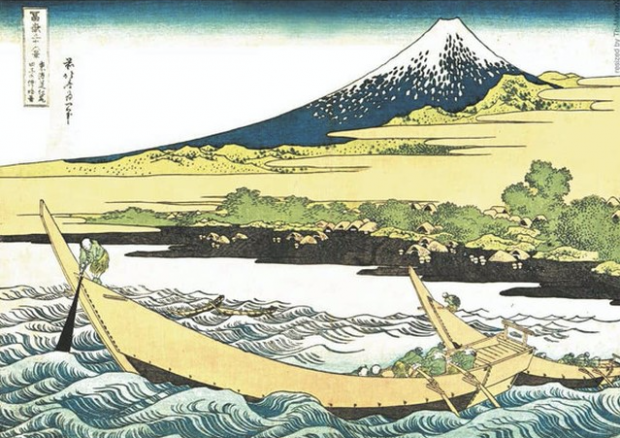 ‘View of Tagonoura near Ejiri on the Tokaido Road (Tokaido Ejiri Tagonoura ryakuzu, 東海道江尻田子の浦略図)’
Mount Fuji seen from Tagonoura (田子ノ浦), a view made famous by the celebrated waka poem of Yamabe no Akahito (山部赤人, a waka poet of the Nara period from the Manyoshu). Although today the scenery includes factories, this location was once renowned for its scenic beauty. The print depicts people along the shore producing salt.
6. Climbing Mount Fuji from Thirty-six Views of Mount Fuji
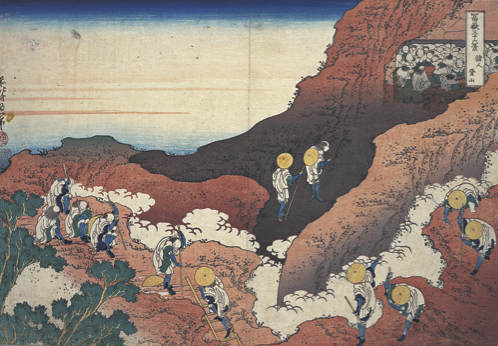 ‘Climbing Mount Fuji (Shonin tozan, 諸人登山)’
This print symbolises the popular trend of climbing Mount Fuji during the Edo period. Pilgrims of the Fuji cult (Fujiko, 富士講) can be seen gathered in a rocky shelter near the summit. Notably, this is the only print in the series that does not depict the peak itself.
7. Lakeside View from Misaka in Kai Province from Thirty-six Views of Mount Fuji
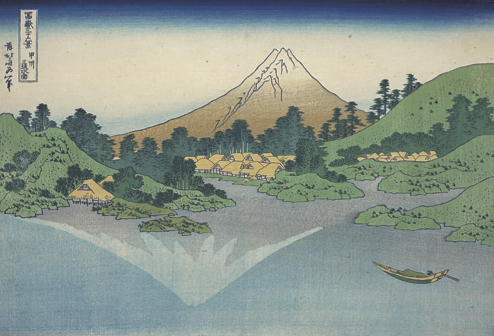 ‘Lakeside View from Misaka in Kai Province (Koshu Misaka suimen, 甲州三坂水面)’
This view from present-day Misaka (御坂) Pass shows Lake Kawaguchi (河口湖) with Mount Fuji behind it. Curiously, while the mountain itself appears in its bare summer form, its reflection in the water shows a snow-capped Fuji — perhaps born from Hokusai’s deliberate artistic playfulness.
8. South Wind, Clear Sky from Thirty-six Views of Mount Fuji
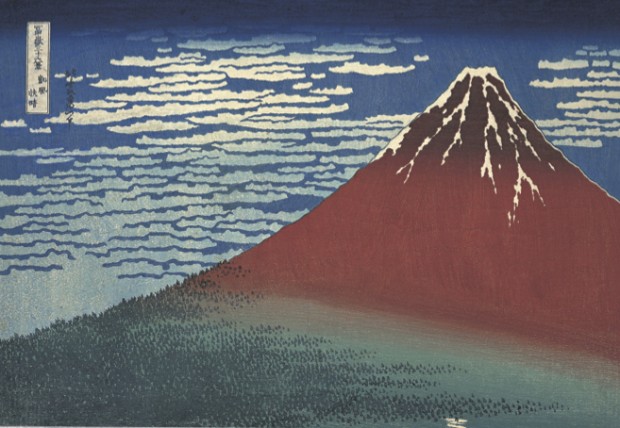 ‘South Wind, Clear Sky (Gaifu kaisei, 凱風快晴)’
One of the most celebrated prints of the series, known popularly as ‘Red Fuji (赤富士).’ While the exact vantage point is uncertain, it is believed to have been drawn from somewhere near Lake Kawaguchi.
This article is translated from https://intojapanwaraku.com/rock/art-rock/1093/