


CATEGORY

最新号紹介

12,1月号2025.10.31発売

今こそ知りたい!千利休の『茶』と『美』

閉じる

Culture

2025.09.28

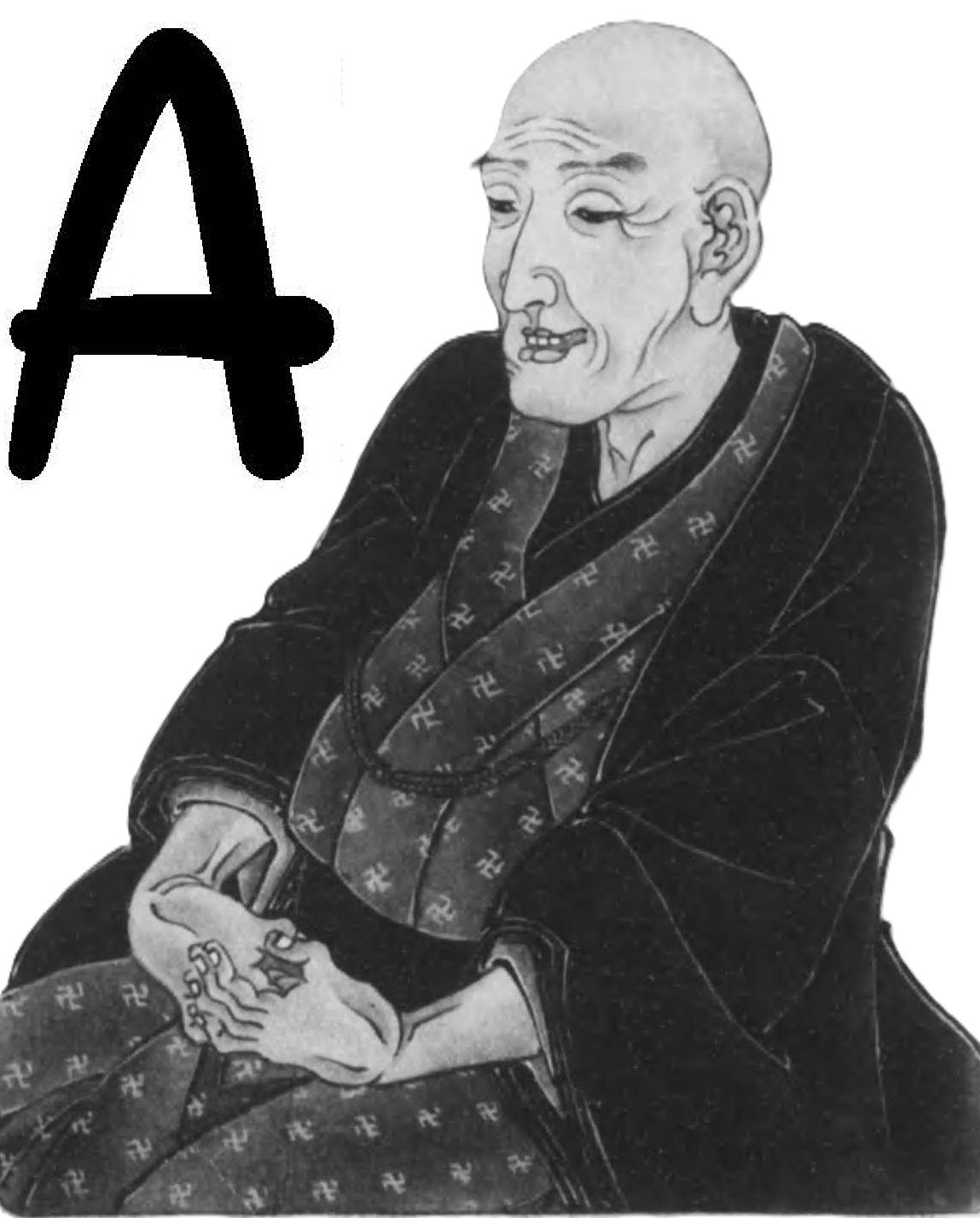
How the masterpiece capturing an instant of beauty, “Red Fuji,” was born! An A to Z guide to the ukiyo-e artist Katsushika Hokusai: [A]

Katsushika Hokusai (葛飾北斎), the ukiyo-e artist, was born in Edo in 1760 and was active for roughly 70 years until his death in 1849. His life, marked by constant dedication to his art, was as turbulent as it was eccentric. He took it upon himself to master all kinds of artistic genres, and his many masterpieces shocked not only Japan but the entire world. Even in his old age, he never stopped striving for improvement. We introduce the life of this rebellious artist, Hokusai, through 26 words from A to Z.

Hokusai from A to Z
A = Red Fuji: He took the world by storm with the great wave and Mount Fuji from his Thirty-six Views of Mount Fuji series!
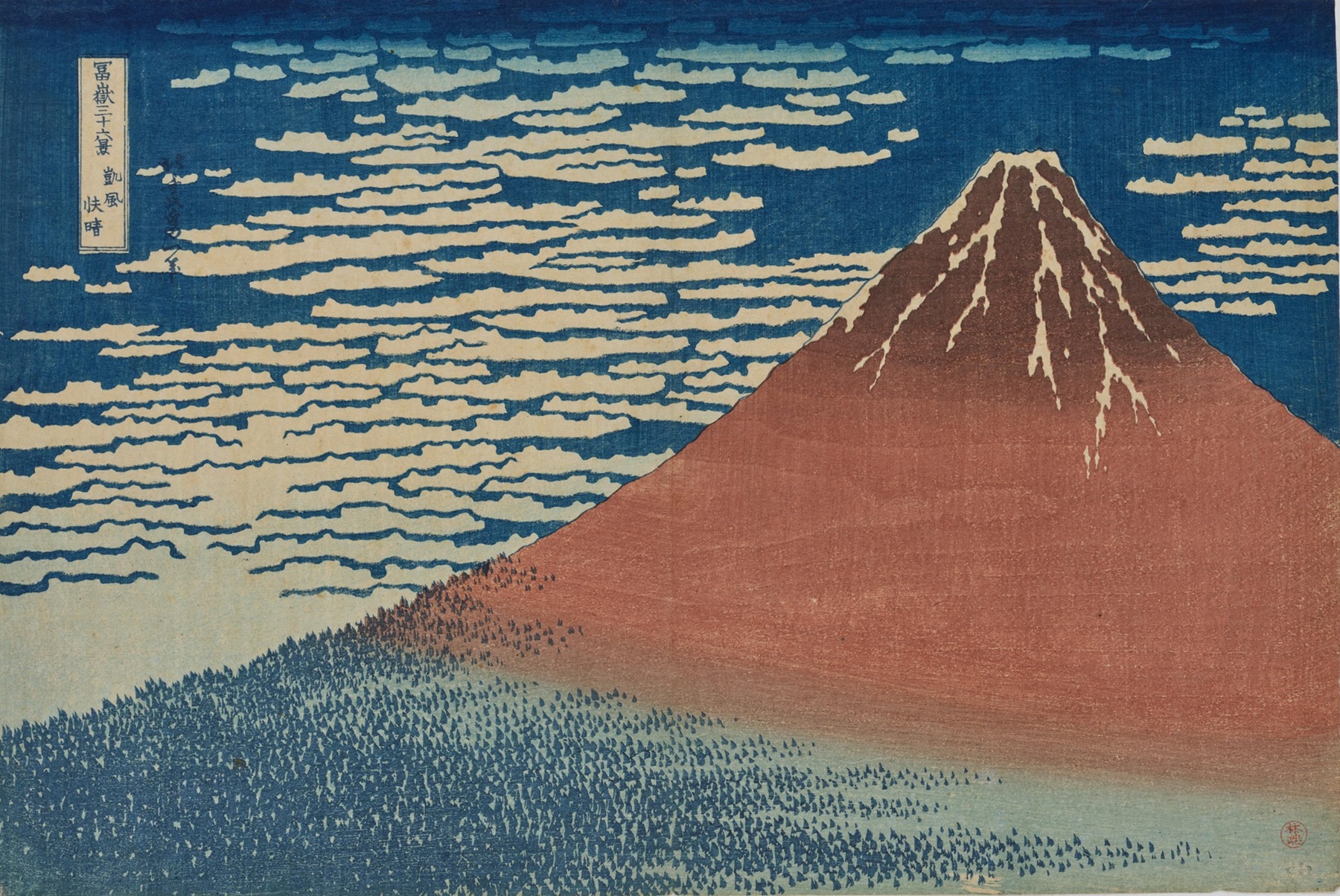
Hokusai’s most famous works are the ‘Great Wave (大波)’ and ‘Red Fuji (赤富士).’ Both are part of his Thirty-six Views of Mount Fuji (冨嶽三十六景) series. The Great Wave is the popular ‘The Great Wave off Kanagawa (神奈川沖浪裏),’ which is well known abroad. Red Fuji is also famous as ‘Fine Wind, Clear Morning (凱風快晴).’ It gets its name, ‘Red Fuji,’ from the reddish colour of Mount Fuji bathed in the morning sun.

The ‘Great Wave’: Hokusai’s Iconic Masterpiece
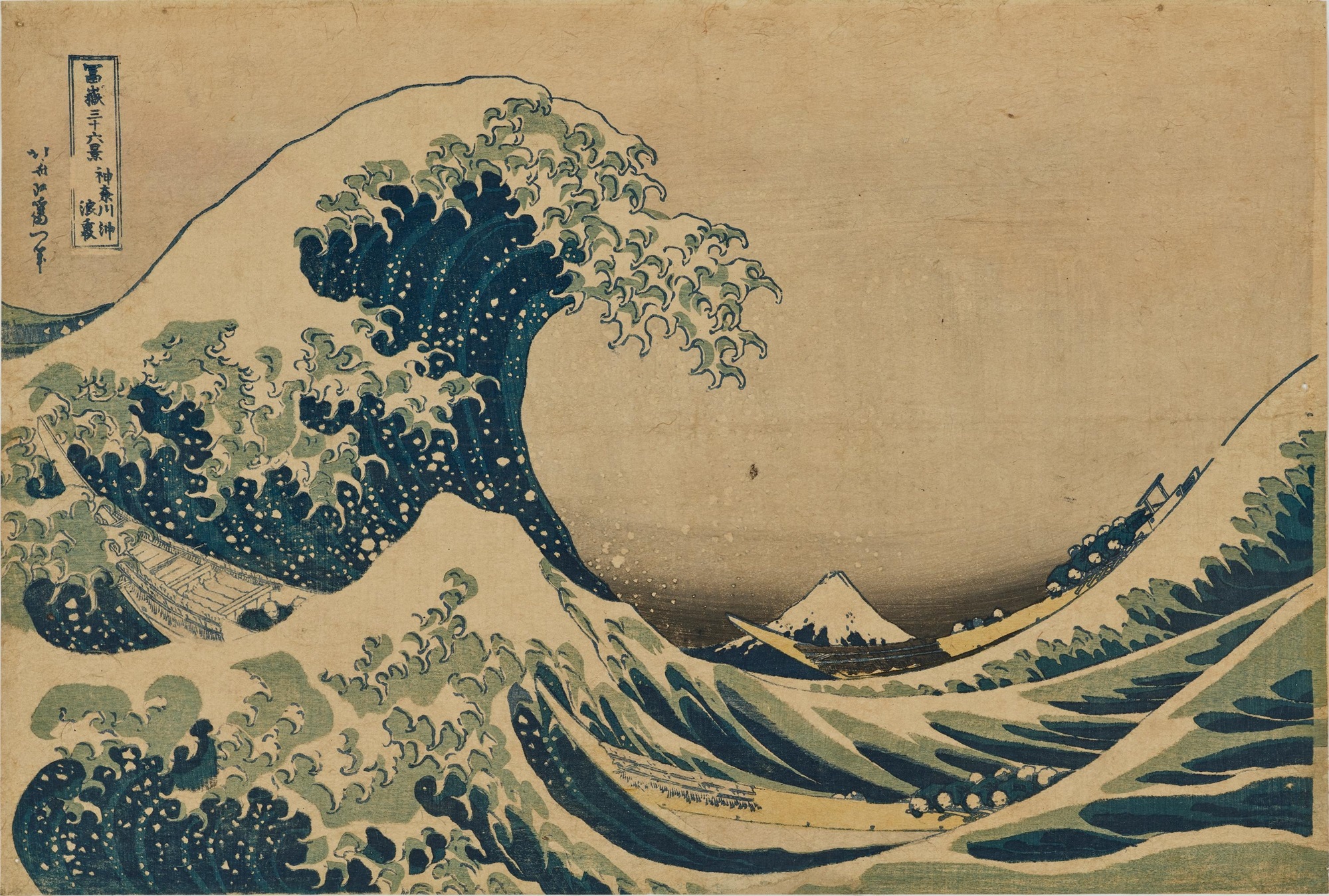
The Great Wave off Kanagawa, from Thirty-six Views of Mount Fuji, by Katsushika Hokusai, Edo period, 19th century, Tokyo National Museum. Source: ColBase (https://colbase.nich.go.jp)

Thirty-six Views of Mount Fuji is a series of 46 prints on the theme of Mount Fuji that Hokusai worked on when he was 72. Of all the works, only ‘Thunderstorm Beneath the Summit (山下白雨)’ and this piece feature Mount Fuji so prominently in the composition.
With its bold composition and the interesting colours of the mountain’s surface, Red Fuji became particularly popular.

Another masterpiece featuring Mount Fuji prominently: ‘Thunderstorm Beneath the Summit’
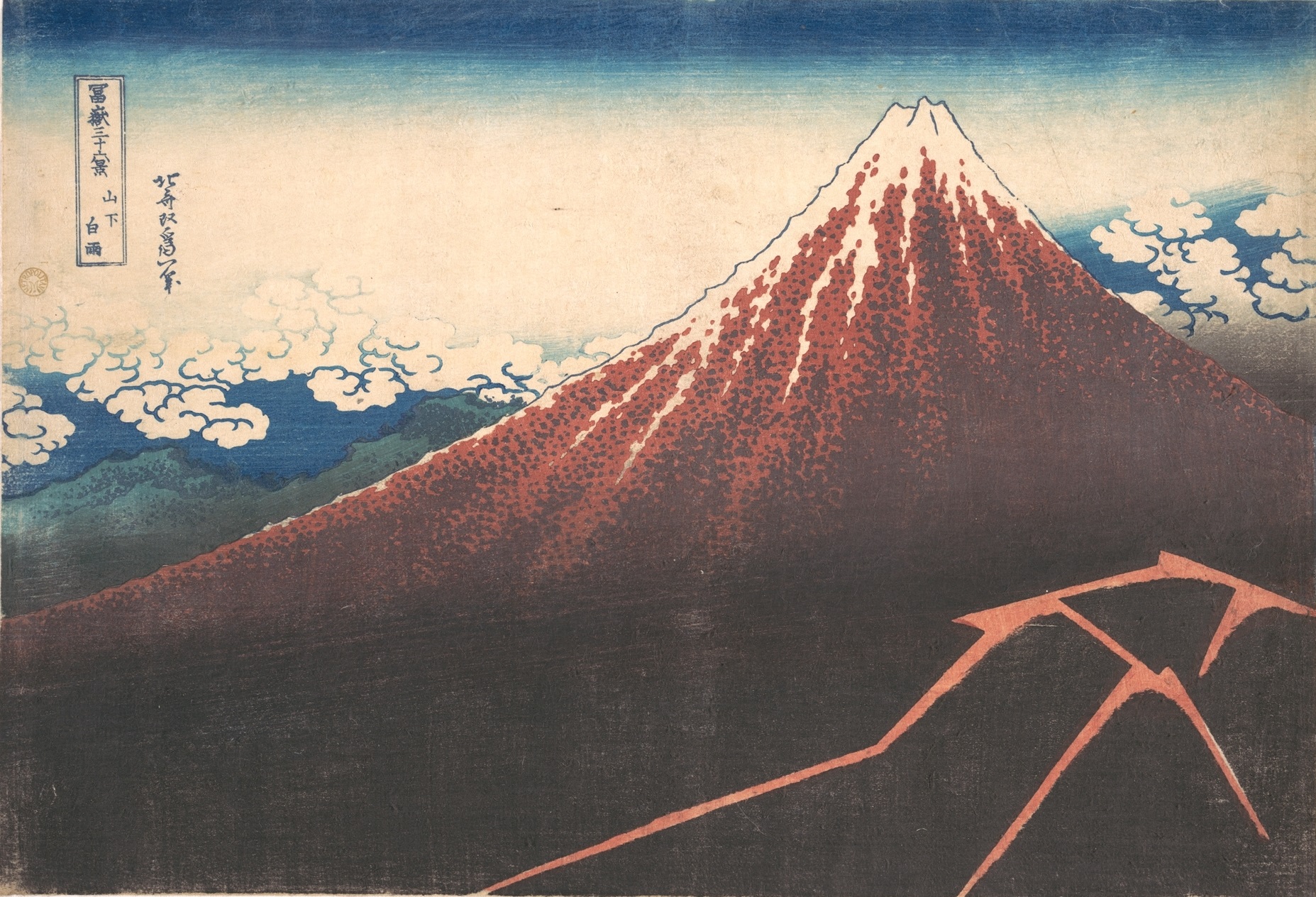
Thunderstorm Beneath the Summit, from Thirty-six Views of Mount Fuji, by Katsushika Hokusai, Edo period, 19th century, The Metropolitan Museum of Art, Rogers Fund, 1914

Hokusai’s first encounter with Mount Fuji was in his early 50s. He made sketches of the mountain from various locations as he travelled to places like Koshu (甲州) and Nagoya (名古屋).
Approximately 20 years later, he used these accumulated sketches to create Thirty-six Views of Mount Fuji. The series was a massive hit, thanks to its interesting compositions, powerful impact, and beautiful printing, all of which coincided with a travel boom at the time.

This is ‘Red Fuji’ in the title
Hokusai’s tour de force, where he brings the ridge lines of Mount Fuji, which he was so good at depicting, to the forefront and uses printing to capture the colours of the morning sun. The contrast with the sky full of clouds is also beautiful, and a fleeting moment of beauty is condensed into one image. Fine Wind, Clear Morning, from Thirty-six Views of Mount Fuji, by Katsushika Hokusai, Edo period, 19th century, Tokyo National Museum. Source: ColBase (https://colbase.nich.go.jp)

In fact, before this, ukiyo-e primarily featured portraits. The reason Hokusai chose to depict landscapes, which had previously only served as backgrounds for people, has an interesting backstory.
In his late 30s, Hokusai received a request for paintings from a Dutch person. It was then that he saw Dutch landscape paintings and realised that landscapes could be a subject in their own right.

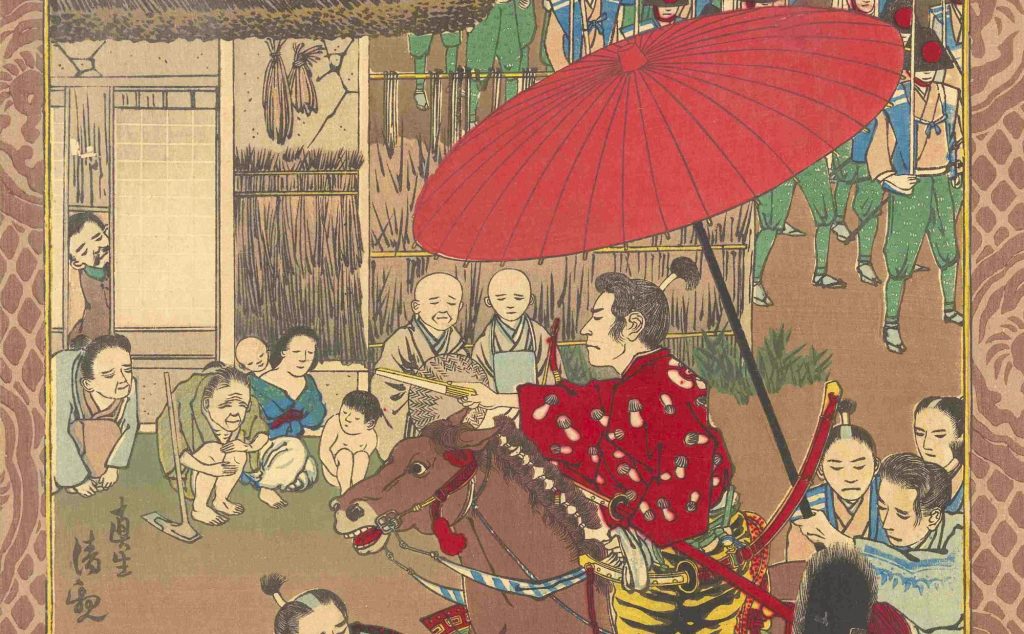
Early in his career, Hokusai also painted theatrical scenes
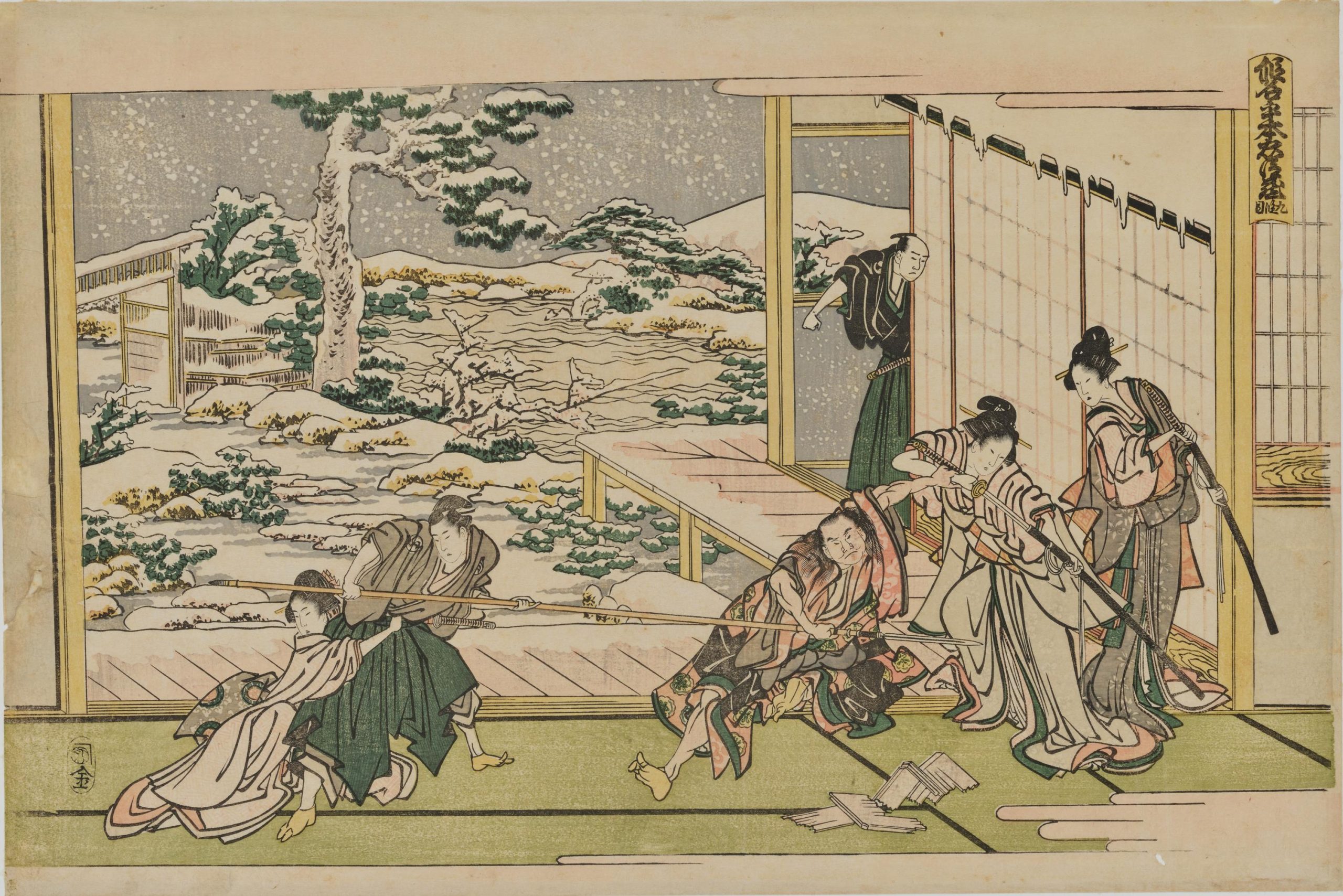
The skill in the painting is evident, but it looks conventional compared to his later work, Thirty-six Views of Mount Fuji. ‘kanadehon chushingura・kudamme (假名手本忠臣蔵・九段目), by Katsushika Hokusai, 1806, Tokyo National Museum. Source: ColBase (https://colbase.nich.go.jp)

Because of his unique approach, many of the scenes in Thirty-six Views of Mount Fuji are difficult to identify.
Red Fuji is one of them; it’s unclear whether the view is from the Shizuoka (静岡) or Yamanashi (山梨) side.

A genius who manipulated composition with ease!

The reason for this is that Hokusai didn’t just paint what he saw.
Hokusai’s greatest landscape masterpieces were compositions carefully constructed from his sketches, designed to create more unusual compositions and visual effects. They were landscapes that Hokusai had envisioned in his mind.

Tag
Share

和樂web編集部


Composition: Yamamoto Takeshi (山本 毅). This article is a reproduction and re-edit of an article from the magazine WARAKU (October/November 2017 issue). The Katsushika Hokusai paintings used in the alphabetical list are from Gizakusha-ko Hoi (戯作者考補遺; part), by Kimura Mokuro (木村黙老), published by Kunimoto Shuppansha (国本出版社), 1935, and are available from the National Diet Library Digital Collection (https://dl.ndl.go.jp/pid/1874790) (viewed on 4 June 2025).
おすすめの記事

Coffee shops and Japanese sweets shops to visit on your trip to Kyoto! A compilation of nine of the best shops in Kyoto that the locals are raving about

和樂web編集部

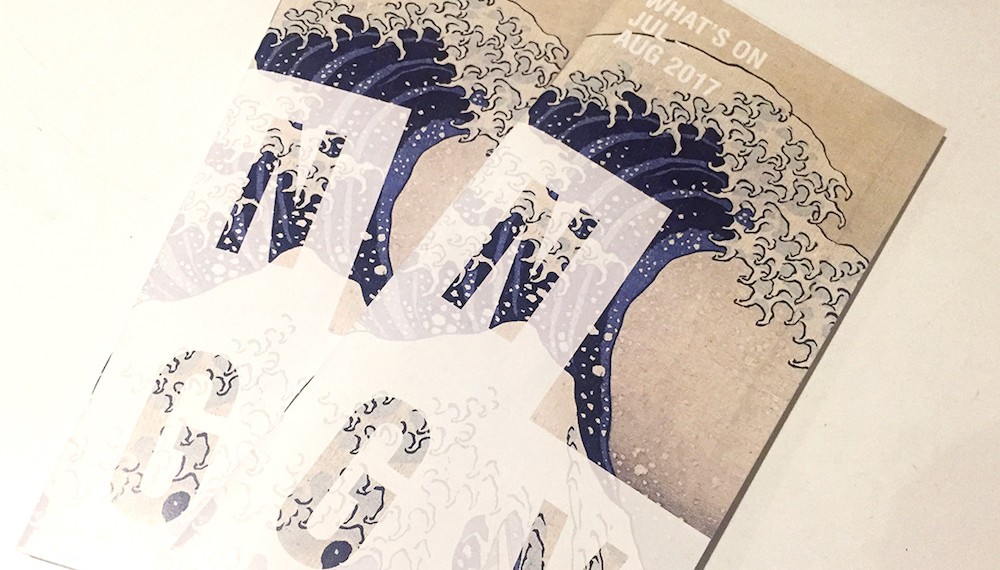
A Hokusai Wave Sweeps Through the World…Again!

和樂web編集部

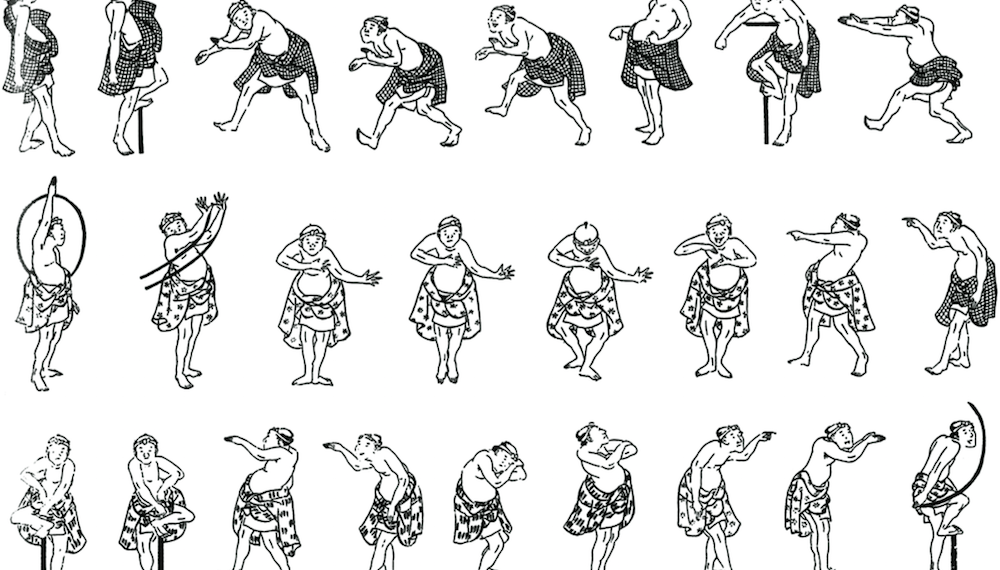
Before Walt Disney was Katsushika Hokusai, a Japanese Pioneer of Animation!

和樂web編集部

A brief introduction to Japanese prints from a Danish perspective

Malene Wagner

人気記事ランキング

最新号紹介

12,1月号2025.10.31発売

今こそ知りたい!千利休の『茶』と『美』

※和樂本誌ならびに和樂webに関するお問い合わせはこちら
※小学館が雑誌『和樂』およびWEBサイト『和樂web』にて運営しているInstagramの公式アカウントは「@warakumagazine」のみになります。
和樂webのロゴや名称、公式アカウントの投稿を無断使用しプレゼント企画などを行っている類似アカウントがございますが、弊社とは一切関係ないのでご注意ください。
類似アカウントから不審なDM(プレゼント当選告知)などを受け取った際は、記載されたURLにはアクセスせずDM自体を削除していただくようお願いいたします。
また被害防止のため、同アカウントのブロックをお願いいたします。

関連メディア