







The Shimanto: ‘Japan’s last seiryu’
The Shimanto River flows through western Kochi Prefecture. At 196 kilometers in length, it is the longest river on Shikoku. Often referred to as “Japan’s last clear river,” it frequently features in Japanese media, so many readers may already be familiar with it.
The Shimanto winds in wide loops through the mountains. It is home to ayu, or sweetfish, and a wealth of other wildlife, and a traditional river-fishing culture is still alive along its banks. Its real appeal lies in the way rich nature and human life have survived side by side.
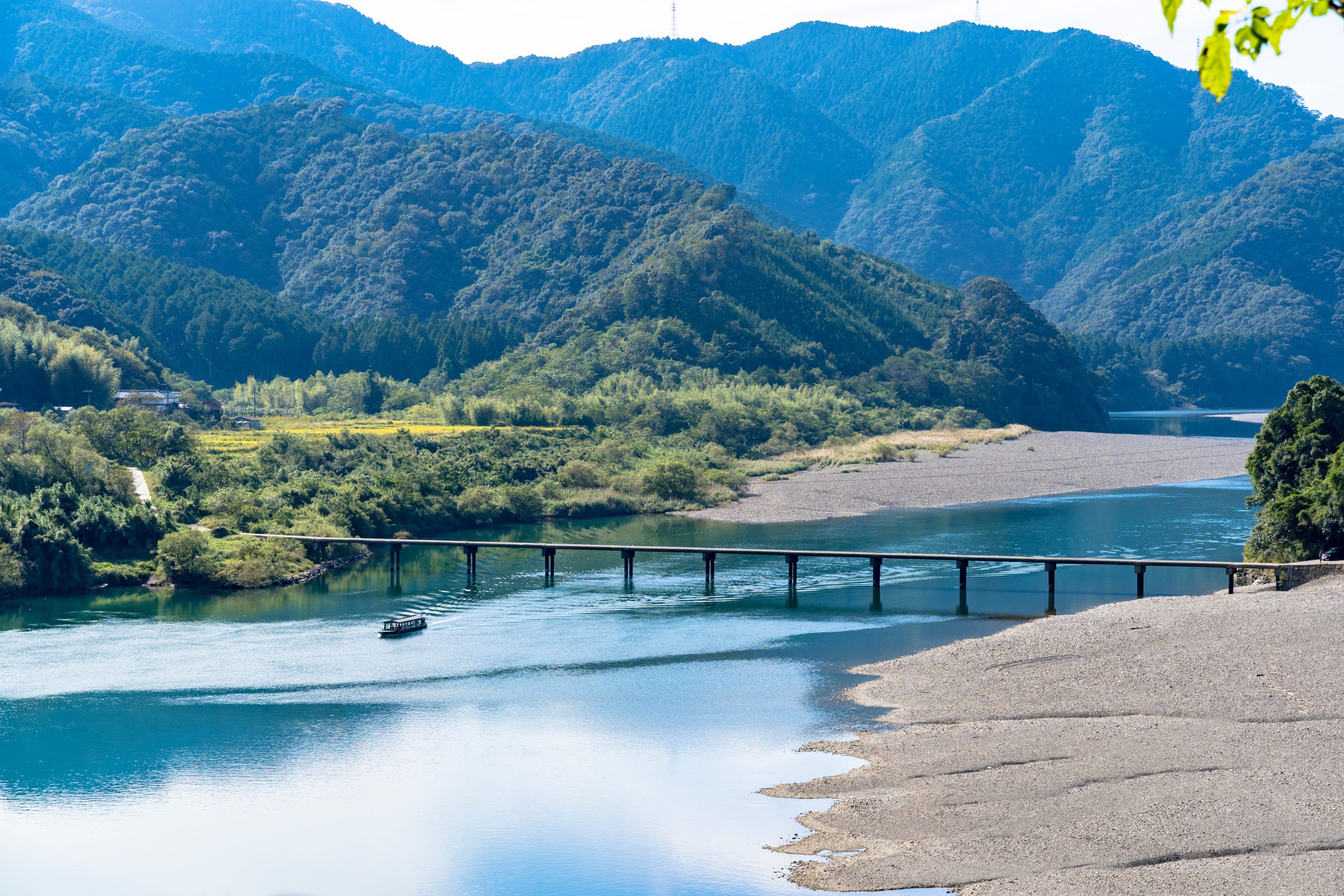
For a classic Shimanto view, head to one of the chinkabashi (沈下橋), or ‘submersible bridges’. These bridges have no railings and are built to sit under the water when the river is high. Many of them remain along the river. (Take great care if you cross one by car or bicycle!)
The best known is the Sada Chinkabashi (佐田沈下橋), which is 291.6 m long. With no railings to block the view, you can take in the full sweep of the Shimanto from the bridge.
Access: The Sada Chinkabashi submersible bridge is about 15 minutes’ drive from Nakamura Station (中村駅) on the Tosa Kuroshio Railway (土佐くろしお鉄道).
The Nagara River, Where You Can Enjoy Both the Clear River and Gifu Castle
The Nagara River in Gifu Prefecture is 166 km long. It rises near Mount Dainichi (大日ヶ岳) in Gujo, passes through the city of Gifu and flows into Ise Bay. Its middle reaches, between Mino and Gifu, have been named one of the Ministry of the Environment’s ‘100 Exquisite Waters of Japan’.
If you visit the Nagara River, don’t miss Nagaragawa ukai, the river’s traditional cormorant fishing with a history spanning over 1,300 years. At night, boats lit by blazing bonfires glide along the water as cormorant masters (usho) maneuver their birds to catch sweetfish.
By day, a stroll around Nagarabashi Bridge is well worth it. Across the river rises Mount Kinka, with Gifu Castle on its summit, a castle closely linked with Oda Nobunaga (織田信長). Few places other than the Nagara fit a river, a mountain and an old castle town into a single view.
Access: About 15 minutes by Gifu Bus from JR Gifu Station or Meitetsu Gifu Station. Get off at Nagarabashi Minami / Kawaramachi.
The Kakita: a river born from the waters of Mount Fuji
Of the three, the most unusual is the Kakita River in the town of Shimizu, Shizuoka Prefecture. It may be a little less famous than the other two. What sets it apart is its length. At only about 1.2 km, it is known as Japan’s shortest Class A river. Even so, around one million tonnes of water well up from its springs every day, making it one of Japan’s finest seiryu.
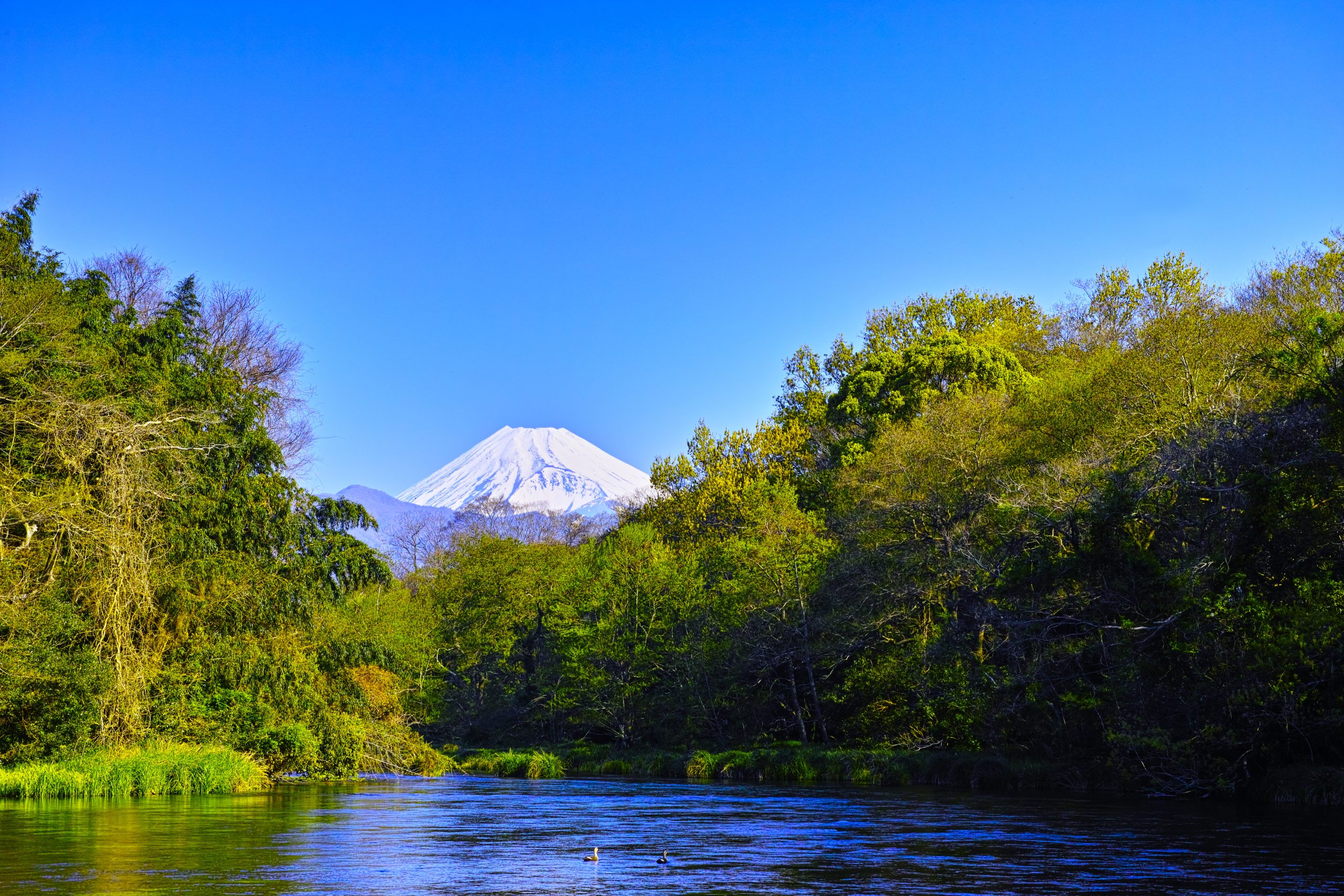
The water starts as rain and snow that fall around Mount Fuji. It soaks into the ground and travels underground for many years before bursting to the surface here all at once.
Kakitagawa Park is the place to see this up close. From the viewing platform, you can look down into the wakima (わき間), the springs where groundwater bubbles up endlessly and stirs the sand on the riverbed. Gazing at the clear blue water, it seems almost strange that a whole river begins right here.
Access: About 20 minutes by bus from JR Mishima Station. Get off at Kakitagawa Yusui Koen Mae.
Beyond the big three: more of Japan’s beautiful rivers
Of course, these three are not Japan’s only beautiful rivers.
In Kochi Prefecture, the Niyodo River is famous for its ‘Niyodo Blue’ (仁淀ブルー). Nikobuchi (にこ淵), a pool on one of its tributaries, is a popular beauty spot whose water shifts between blue and green depending on the light.
The Takatsu Rive in Shimane Prefecture is known as a clear river with no dams on its main stream, and it is popular for sweetfish angling. In Nagano Prefecture, the Atera River runs through the Atera Valley, where emerald-green water known as ‘Atera Blue’ (阿寺ブルー) appears in the depths of the forest.
The submersible bridges of the Shimanto, the cormorant fishing and Gifu Castle on the Nagara, and the Kakita, fed by groundwater from Mount Fuji: they are all “clear rivers”, yet their landscapes are strikingly different. Beyond the beauty of the water itself, part of the pleasure of travelling to these rivers is discovering the culture and way of life of each place.
This article is translated from https://intojapanwaraku.com/travel/319107/