












There are various types of beauty pictures, actor pictures, landscape pictures, toy pictures, and so on, and ukiyoe pictures, but do you know ukiyoe pictures in the genre "Yokohama Ukiyoe"? From the late Bakumatsu to the early Meiji period, it refers to various Ukiyo-e works produced with the theme of "Yokohama" literally.
Once again, 2019 marks the year of the 160th anniversary of the opening of Yokohama Port. In commemoration of this, "Yokohama Ukiyoe Exhibition" is currently well-received at Kanagawa Prefectural History Museum. At the venue, Ukiyoe's paintings by Ukiyo-e, who played an active part in the late Bakumatsu Meiji period, were lined with Zurari, and it was an exhibition that you can enjoy the scenery of Yokohama full of exotic emotions about 150 years ago .
As we did coverage immediately, I would like to comment on the attractiveness and the highlight of the exhibition in full!
At first we arrange basic knowledge. What is "Yokohama Ukiyoe"?

Kaminagawa Yokohama Hankakunoshima Scenery Maniwagen (1860) Kawasaki, Sanko no Sato Museum / State of Yokohama just opened. Yu-Gu is large in the lower right, and foreign residence wards are drawn in the upper right.
Yokohama is one of the cities that opened "Open Port" earlier than any other port in Japan by the "Japan-US Treaty of Commerce Treaty" signed in 1858. The impact of the “Opening country”, which officially began to interact with foreigners outside Nagasaki Dejima after about 250 years, is awful and there is an idyllic fishing village, Yokohama has been an exotic city in a few years after its opening. The transformation has been accomplished. Of course, ukiyo-e masters of those days are not sure to miss such delicious news items. As they competed, they drew rare scenery with new Yokohama landmarks and foreigners.
A series of Ukiyo-e works drawn during the Bakumatsu Restoration period on the theme of Yokohama like this has not yet been standardized as a genre in the art history, for example, so far, "Yokohama picture", "Kaikae picture", etc. It has been classified by name. So how do you call it at the Kanagawa Prefectural History Museum, which hosts this exhibition?
You already know. Yes, as the title of this exhibition, in this museum, the works are classified as "Yokohama Ukiyoe" by calling Ukiyoe about "Yokohama" drawn after the opening of Yokohama Port in June 1859.
Yokohama Ukiyo-e is currently about 840 of the Ukiyo-e works stored at art museums and museums around the country. In this exhibition, the contents are particularly good, focusing on the "Fujio Saito Collection" and the "Tanba Collection", which can be said to be the two largest domestic collections of "Yokohama Ukiyoe", and about 330 "Yokohama Ukiyoe" in good condition are carefully selected. About 40% of the extant members of this world will be gathered at Kanagawa Memorial Hall, making it the largest and most complete exhibition in the history of "Yokohama Ukiyoe".
Thoroughly introduce the exhibition with five highlights!
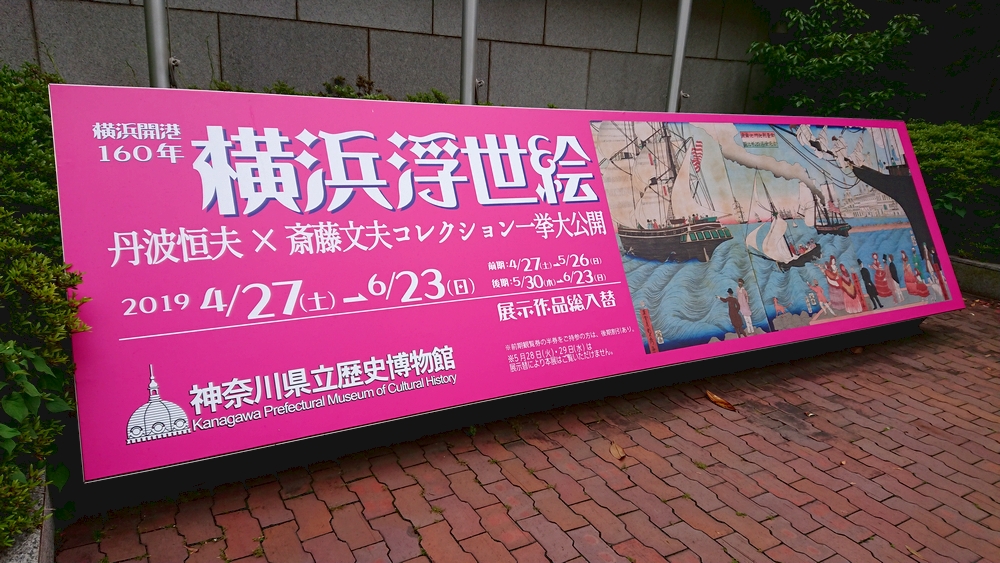
The exhibition has a great deal of attraction and attention, including the number of exhibits, the variety of types, the number of Ukiyo-e artists covered, and the unique subjects. So, in this paper, I would like to focus on the five highlights that I would like to pay particular attention to, in order to convey the fun of the exhibition.
Attention point 1: Ukiyoe depicting the whole image of Yokohama that changed dramatically at the opening of the port
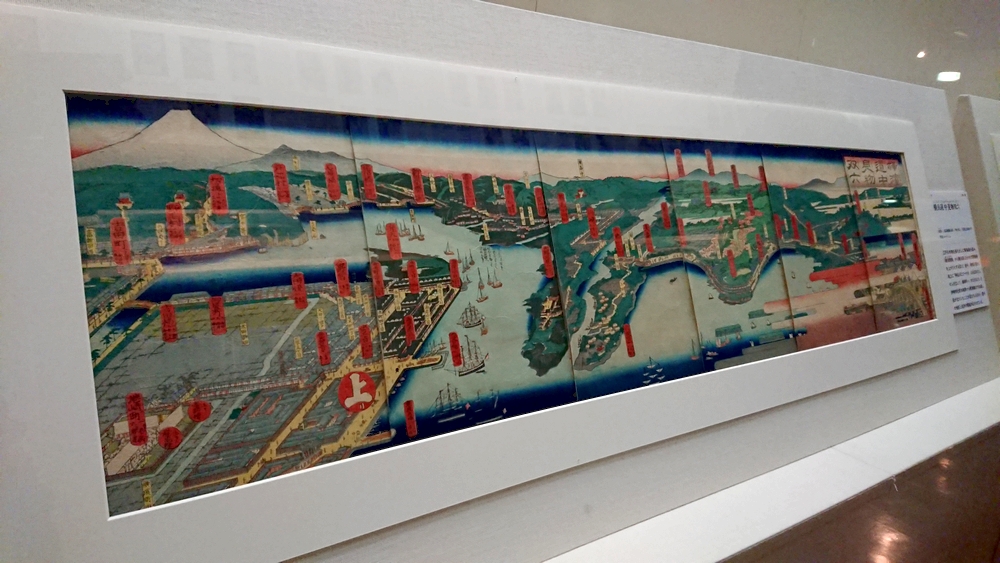
Yokohama Road Nakabori Shuang Rui Shu Mann Yuan (1860) Tamba Collection
First of all, when you enter the hall, you will see a few sights such as a bird's-eye view or a sorrow depicting a three-dimensional view of the city of Yokohama after opening. Yokohama was opened in 1859, and the state of the city changed significantly in a short time. Such a rare scene of Yokohama was an attractive subject for Ukiyo-e, as the subject of a "spot picture" to be bought as souvenirs by Edo people and warriors who come to Tokyo from various places of work.
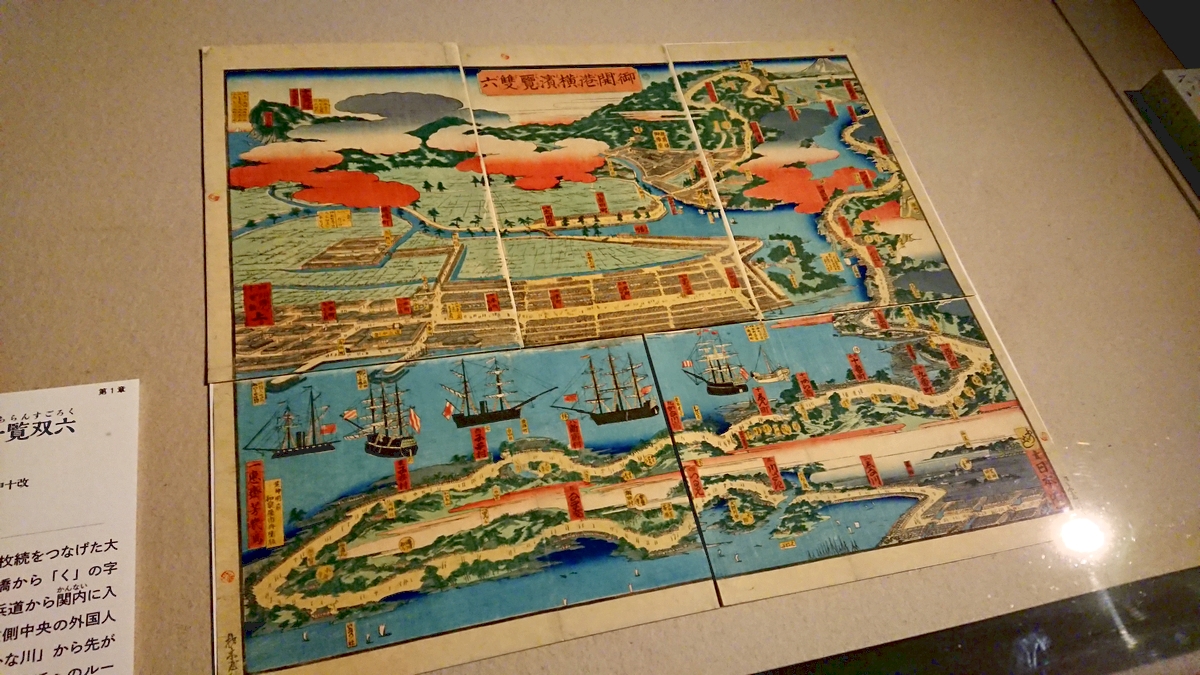
List of Okai Port Yokohama List Sutoroku Fireng Mangen (1860) Tamba Collection
Therefore, the first thing I would like to pay attention to first is the overall image of Yokohama, which was rapidly urbanizing . Although it is interesting to see individual landmarks, etc., first take a step and look at the overall view of the city drawn by Utagawa Yoshihide and Nishiro Utagawa with great power. Then, if you have spare time, try searching for the idyllic rural scenery of Kanagawa that Hokusai drew in "Tsu Thirty-six Views" and Hiroshige in "Takaido Mayan" with a smartphone at hand. It is a great country. If you look carefully at the bird's-eye view, you can clearly see that the city of Yokohama has changed rapidly in just 20 to 30 years.
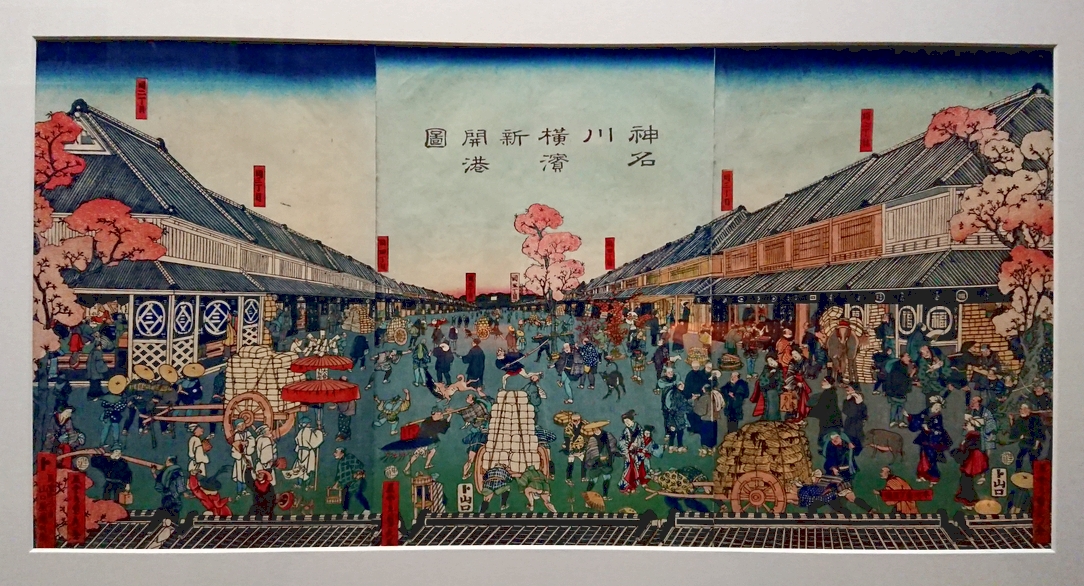
Kannakawa Yokohama Shinkai Port Map Takumi Mannyuan (1860) Tamba Collection / A work depicting the city of Yokohama that has just opened. It is bustling with lots of people coming and going, but we still can not see foreigners. No exoticism is felt yet, but rather it has an atmosphere similar to Nihonbashi in Edo.
Attention point 2: Works depicting Yokohama's famous places
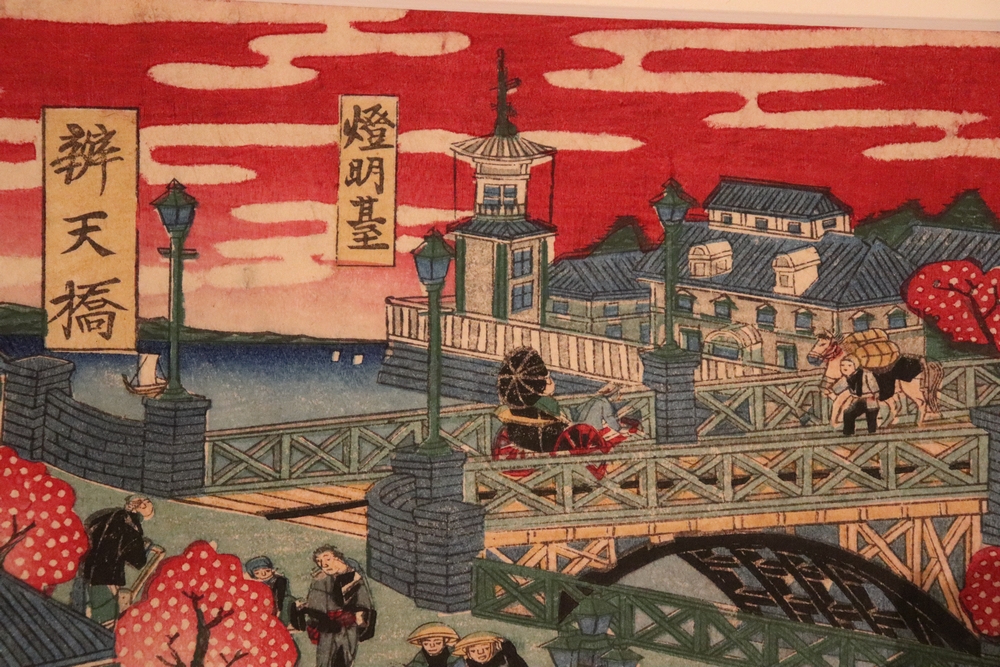
Yokohama Station Hanazono part partial drawing Kokuzuru (the first generation) Meiji 8 (1875) Tamba Collection / Test lighthouse of the lighthouse station completed in 1887 by the design of British Blanton and Bentenbashi completed in 1868 of the previous year Is drawn.
When a large number of foreigners came to Japan with the opening of the port, with the help of a foreign civil engineer, a structure of Japanese-Western eclectic was built in the foreign settlement. In addition, large buildings such as lighthouses and bridges, to which Western architectural techniques have been introduced, will also become a symbol of the city. The landscape that would become a landmark of such a new city was also a good subject for Ukiyo-e masters.
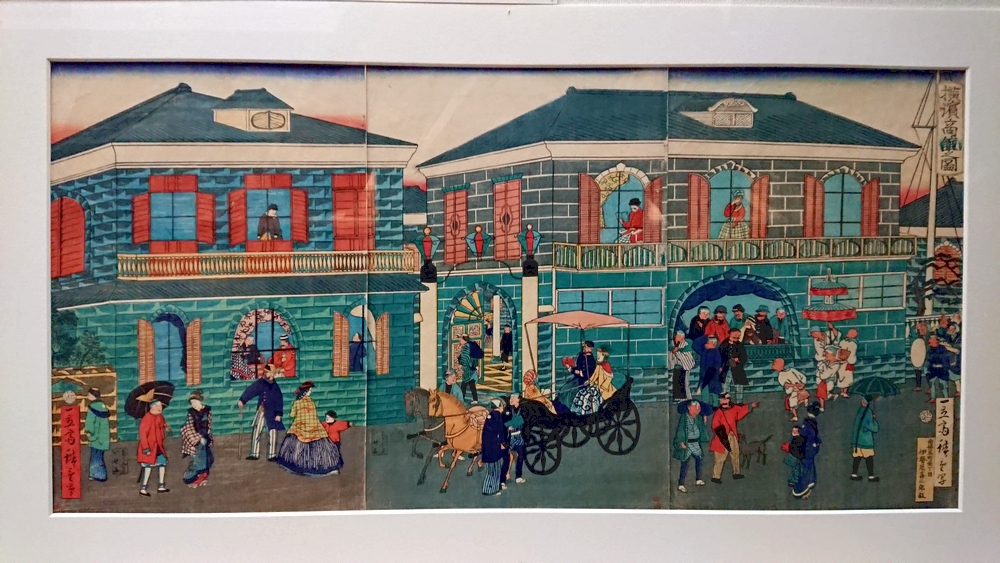
Yokohama Chamber of Commerce building Hiroshige (3 generations) Keio 3 (1867) Yearly Tamba Collection / Foreigners reading books elegantly on the second floor of the building, Japanese who do street performances towards foreigners in the building, rich foreigners riding a carriage The figures of the people are drawn in detail.
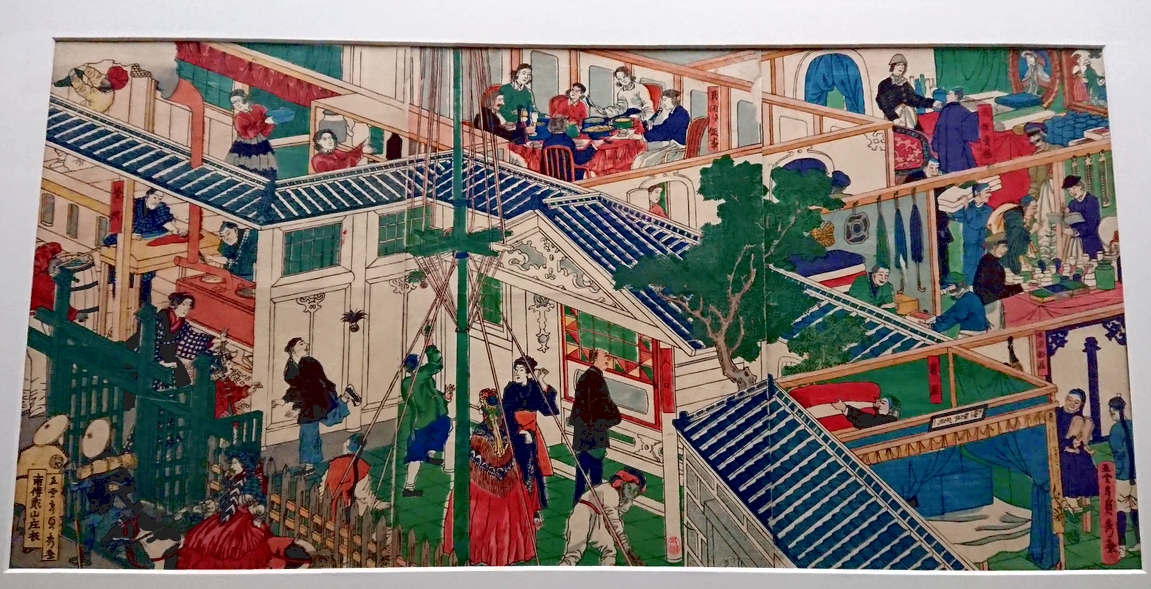
(Figure of foreigner's house interior part) Keio original (1865) Tamba collection / A work depicting the interior of the fan room in detail in the form of a "bukitsu-ya stand" in the form of a mountain that was seen from above. Two Japanese who look into the state in the lower left of the screen so as to be envious look impressive.
In addition, I would like to focus on Ukiyo-e as a surprising “new landmark” drawn from Minatozaki Kuo, which was completed a little later than the opening of the Yokohama port in 1859. In particular, “Iwakime-ro” (gankirou), which is run by Iwakiya Sakichi, was taken up by leading Ukiyo-e artists from around the world. With luxurious interiors such as luxurious gas chandeliers and a courtyard with a pond, the luxury playground is said to have flourished with many Japanese and foreigners alike.
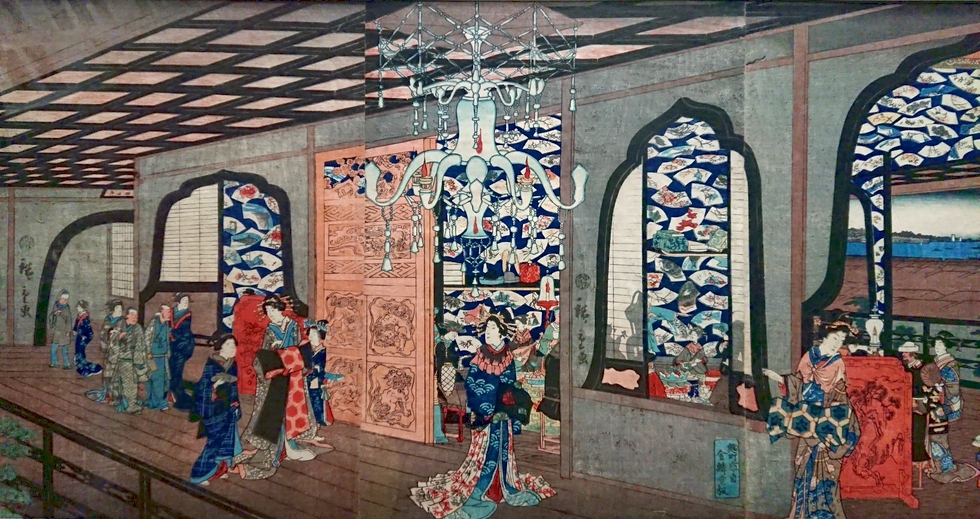
Yokohama Gimmekaku part partial view Hiroshige (second generation) Wanren Yuan (1860) year Tamba collection
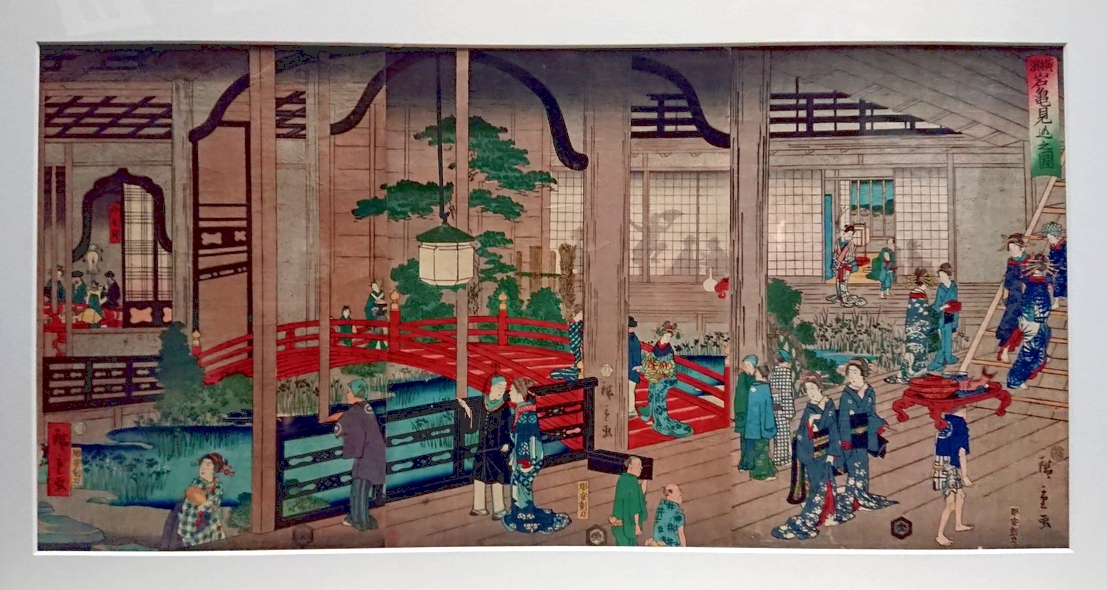
Yokohama Iwatome prospect map Hiroshi (two generations) Banyangen (1860) year Tamba collection
Attention point 3: Ukiyo-e masters who made work of anything unusual from foreigners
Ukiyo-e masters drew not only the new sights of Yokohama but also portraits of foreigners and their living scenes as the theme of Ukiyo-e. In this exhibition, in addition to the United States, the United Kingdom, France, Russia, and the Netherlands, which have signed the Treaty of Commerce Treaty in succession, and foreigners in different countries from the six countries, including the Chinese they brought as servants, A beautiful set of five pieces is displayed.
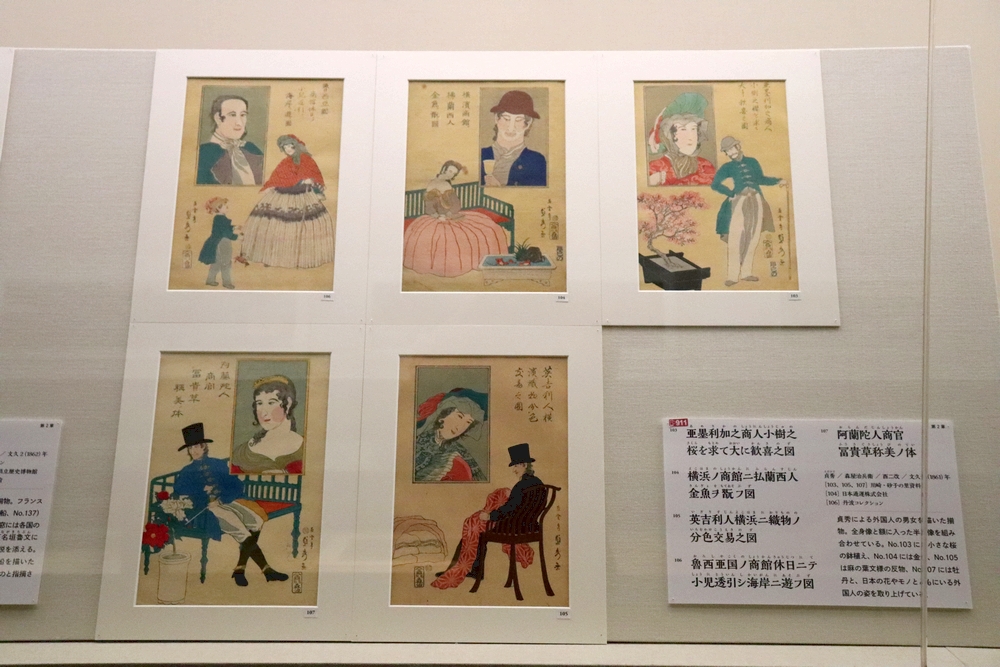
Aside from Chinese people with long hair, people in the other five countries are not drawn properly, but some foreigners have struggled or are too strong to have a gorilla-like face. Also human image ...
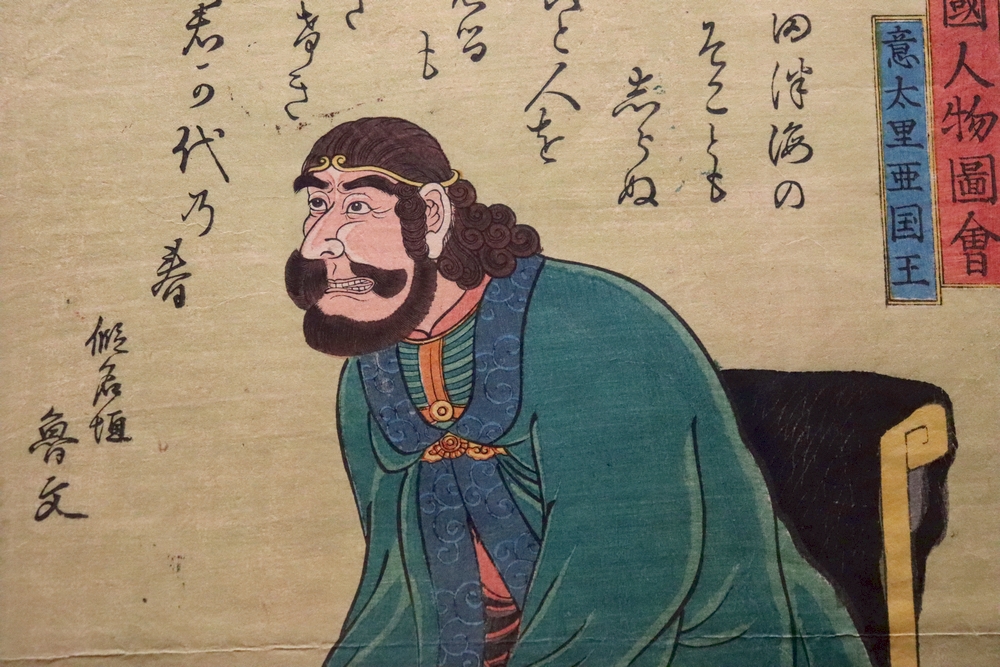
人物 図 意 利 艶 艶 図 久 (1861) Nippon Express Co., Ltd.
Also, curiosity, or whether it is a commercial spirit, Ukiyo-e masters carefully examine the foreigner's daily life in Yokohama and activities in the city, and greedly finish it into Ukiyo-e work.
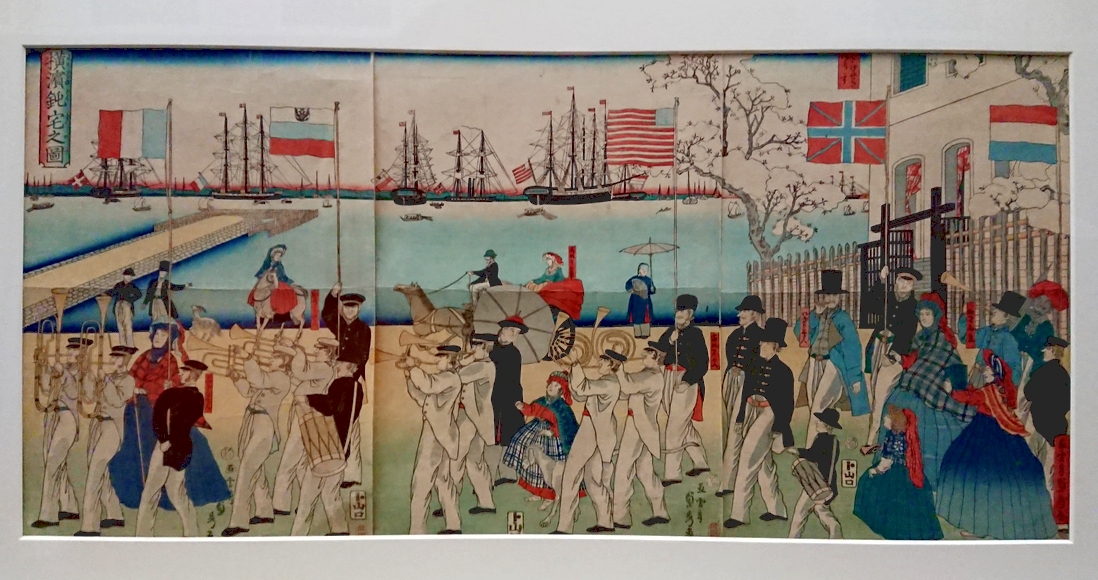
Yokohama Blunt Takumi 貞 文 久 (1861) Tamba Collection
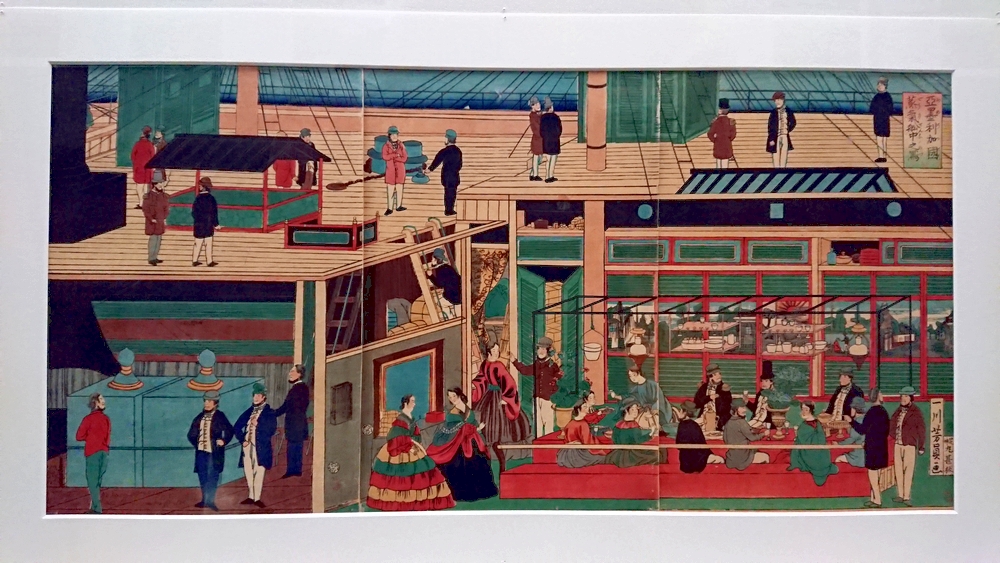
墨 加 墨 船 中 之 員 186 (1861) 波 Tamba Collection / Ukiyoe illustrating the interior of a US steamship. It is one of the end of the Ekaku mecha nerd feeling tears that I want to know the mechanism of the vehicle.
Furthermore, Ukiyo-e painters draw up overseas "spots of interest" with maximum imagination, based on reference materials obtained from foreigners. I guess I was desperately drawing up literature and materials, drawing with pain.
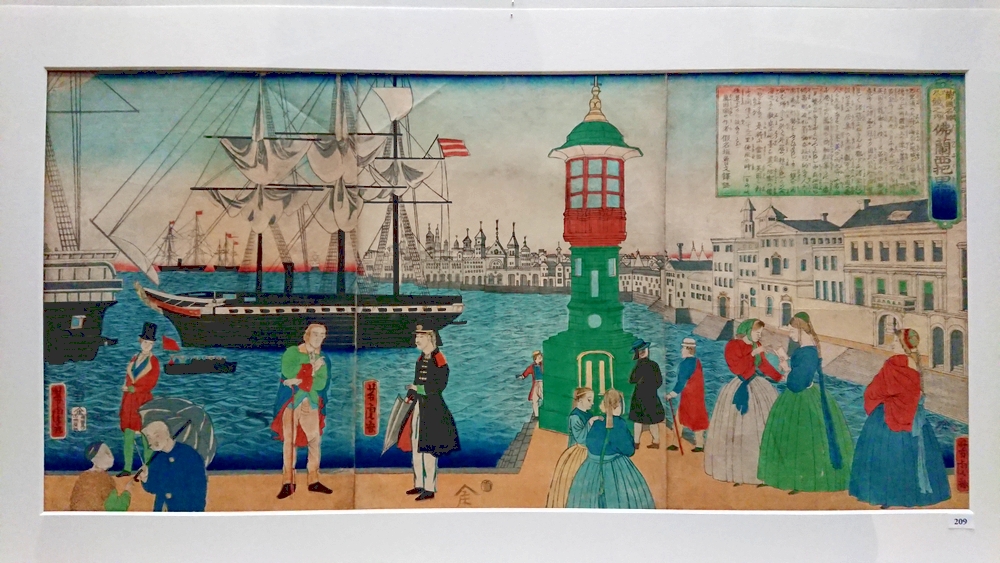
勝 勝 佛 虎 虎 虎 2 (1862) Kawasaki · Sanko no Sato Museum / A piece depicting the landscape of Paris based on materials and imagination. It may not be a bad finish (?) If it was drawn in the time when a photograph can not be obtained, either.
What was interesting was that the appearance of the "new play" of foreign countries brought by foreigners was well drawn in the Ukiyo-e. Ukiyo-e masters of those days never miss such unusual things. However , I guess I'm not familiar with drawing, billiards, horse racing, tennis, etc. Is it something like Ehime that the depiction is something strange ?
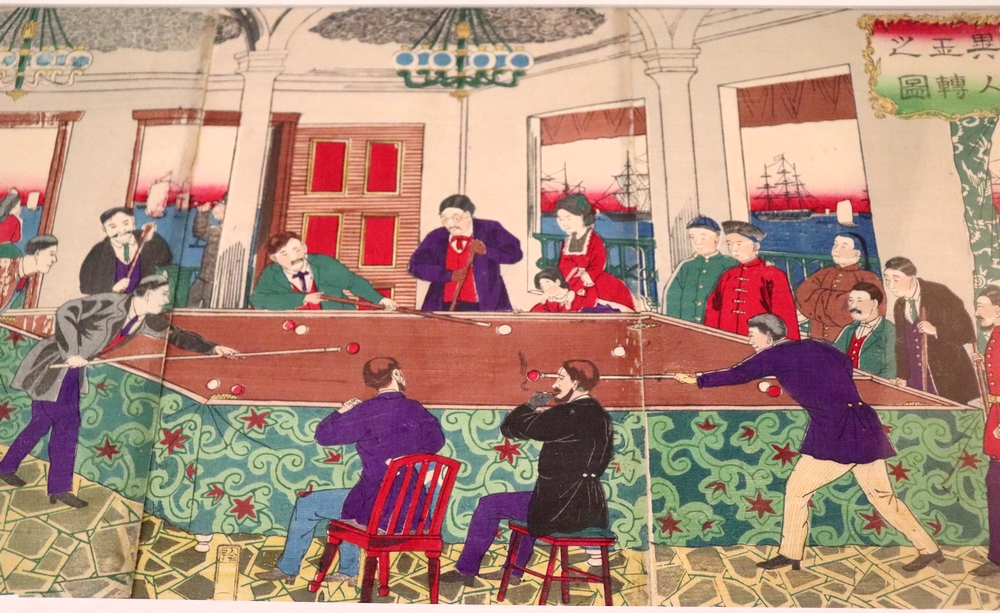
A foreigner 玉 転 広 (3 初期) A work that depicts people who are engaged in billiards at the Kanagawa Prefectural Museum of History / Early Meiji Period. If you look closely, it is not foreigners, but Japanese people who have gone through the Meiji Restoration and are no longer wearing are playing. It seems that the rules are quite different from the present.
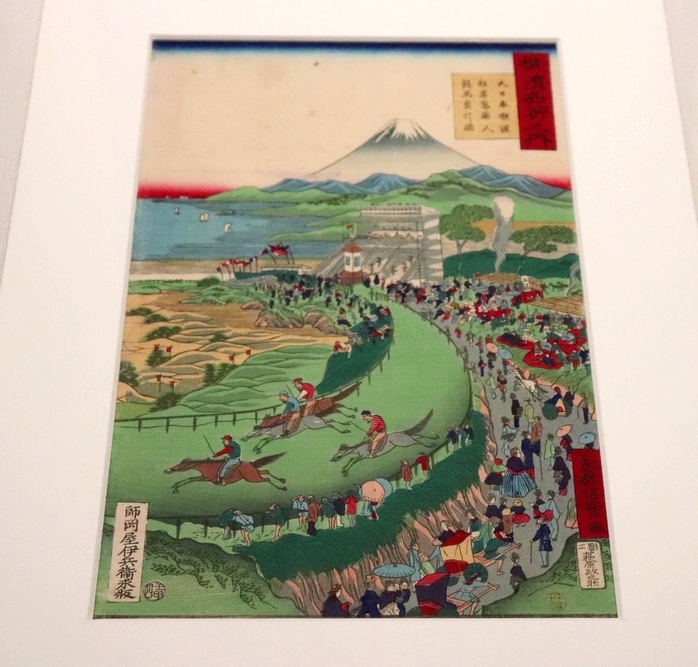
Yokohama famous spot Uchida Daikon Negishi universal horse racing entertainment map Nagabayashi Meiji 5 (1872) Tamba Collection / 1866 A racetrack built as an entertainment facility exclusively for foreigners. It is full of perspectives, scale, how to ride a jockey, etc.
Attention point 4: Yokohama that swells with a locomotive
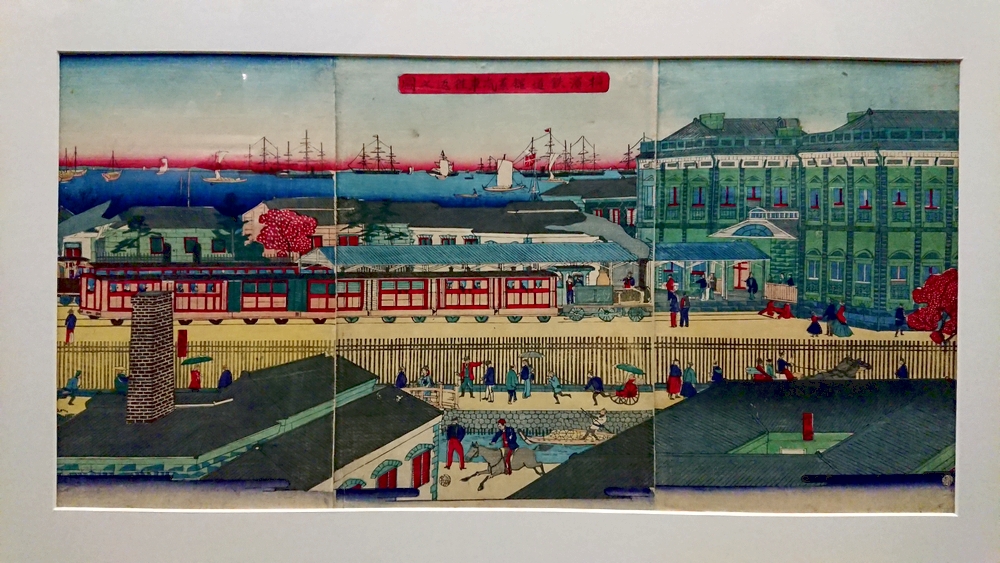
Yokohama Railroad Museum steam train round trip map Hiroshige (third generation) Meiji 5 (1872) year
It is a Yokohama Ukiyo-e that has been made at a high pace from curiosity for several years from 1860, but the boom calms down soon. Once the pace of publication fell. However, when Japan's first railway was officially opened between Shinbashi and Yokohama in September 1872 , ukiyo-e masters will draw the scenery of Yokohama with the motif of "railway" to compete again.
In Yokohama Ukiyo-e, there are many works depicting a locomotive stationed at Yokohama Station, which is just the terminal station, and works depicting a locomotive passing near landmarks near Yokohama.
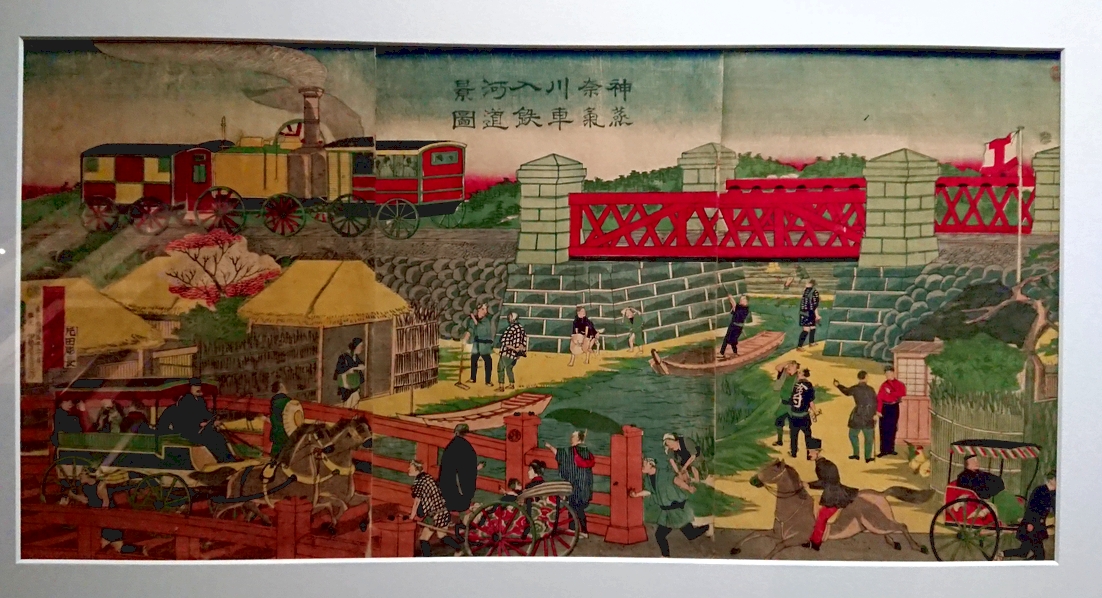
Kanagawa Irigakei steam train railway diagram Hiroshige (third generation) Meiji 4 (1871) Tamba collection
If you look closely at this, a locomotive is connected between the passenger car and the passenger car. I have not seen so much. It is too mysterious whether the painters have drawn with fun or have been really operating at this time with such an organization.
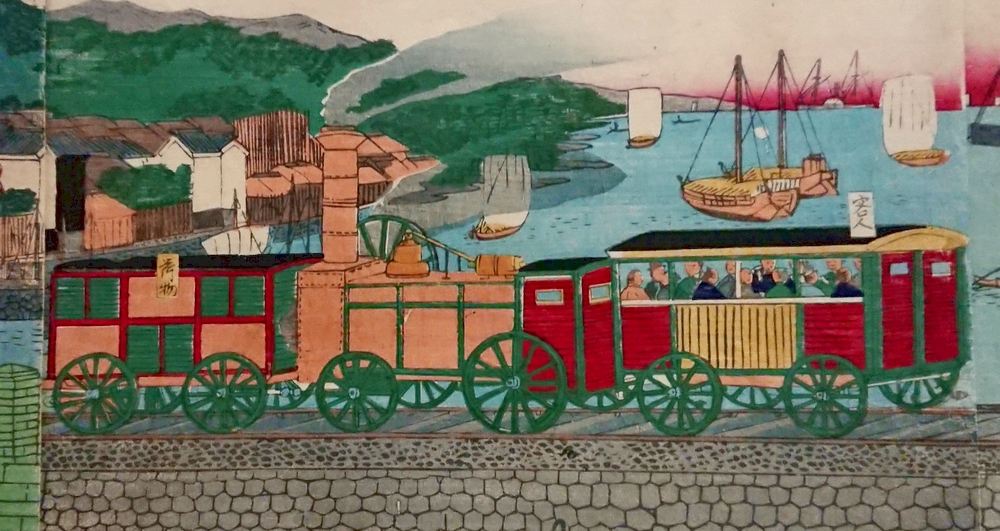
Yokohama Shinchi steam train railway Shinage Partial view Hiroshige (third generation) Meiji 5 (1872) Tamba collection
What's more interesting is that if you draw so hard ... There will be a display of several works of composition that were put together in a frame together with other vehicles, such as rickshaws and coaches that were generally popular at the time. It was done. Is it a nori like the "Lobe special feature" that is common in children's pictorial books? If this is brought home as a souvenir, children will be delighted.
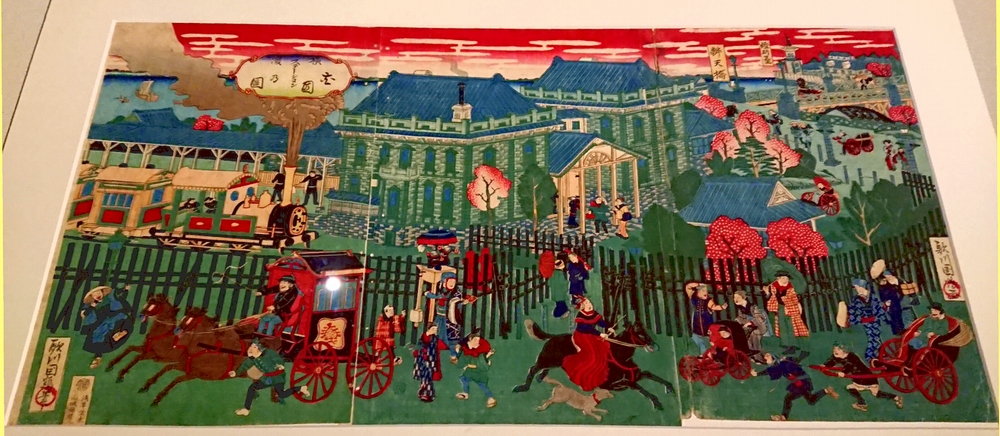
Yokohama Station Hanazono map Kunizuru (the first generation) Meiji 8 (1875) Tamba collection
And last but not least. It was Japan's first railway route that was quickly opened up to its opening after the Restoration, but at that time there were various opposition movements that made land acquisition difficult. After all, about 10km section running around Shinagawa out of a total of 29km planned is a jetty built on the sea in a form that cuts Tokyo Bay, and it is settled by considerable rough work of passing a track on it . It is a surprise because it was completed in rush construction and only two years from the start of construction to the opening of business . You shouldn't be able to do this with such a short construction period now.
In fact, it is drawn on the map that the track is running on the sea, so please do not miss it.
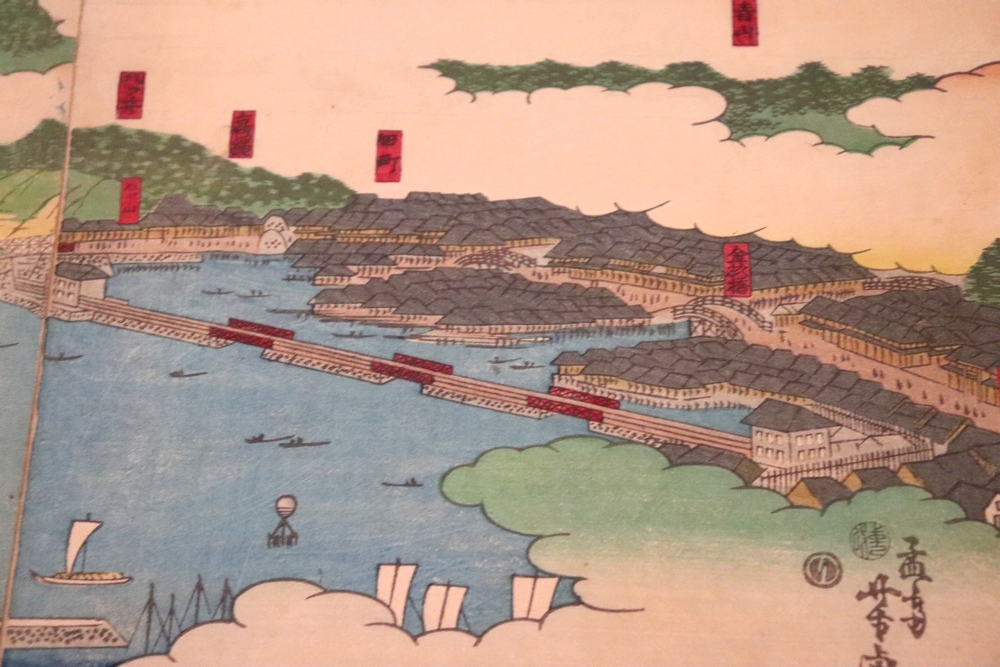
List of Tokyo steam train railways Partial view Yoshitora Meiji 4 (1871) Kawasaki-Sanko no Sato Museum / A railway track created by cutting through the sea.
Attention point 5: "Utagawa school" who played an active part in the late Bakumatsu-Meiji era appearance. And also a surprising Yurukawa painter ...
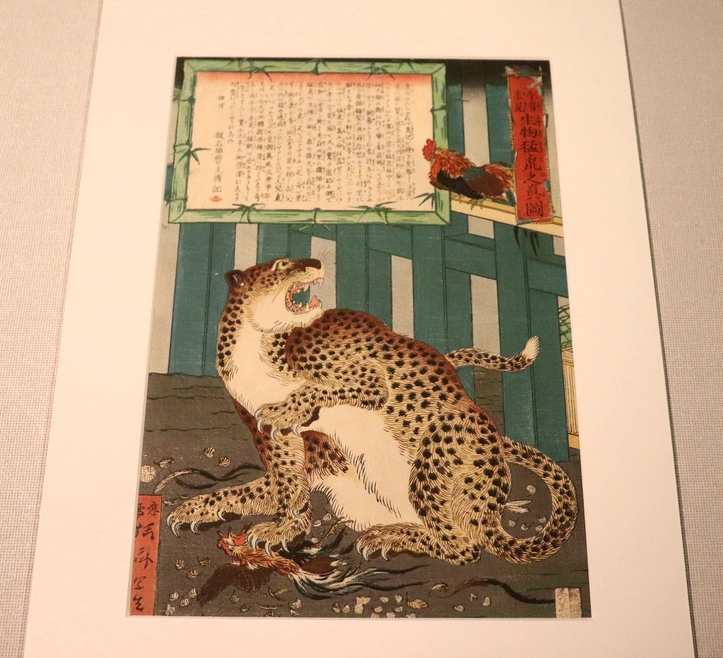
In the same period as Nippon Express Co., Ltd. / Nippon Express Co., Ltd. / Carnival Painting, a work by Kawanabe Zensai who left many sensational works as a Ukiyo-e artist is also exhibited. A work that depicts the situation when "leopard" first came to Japan in Yokohama as a ukiyo-e. I feel that the chicken being stowed is a bit poor ...
What I would like to pay attention to as a Ukiyo-e fan is that in "Yokohama Ukiyo-e", the Ukiyo-e masters of the late Bakumatsu-Meiji era will appear almost entirely . I have not made Katsushika Hokusai and Utagawa Hiroshige any longer, but Utagawa Kunisaku, whose name was beautifully drawn with beauty paintings and actors' paintings, has left collaborations with Yuko and his disciples. In addition, in the best pupil of Kunisada, Sadahide Utagawa was good at Uki-e techniques and detailed depiction, Hiroshige II was active in the landscape as a disciple of Hiroshige, Sandye Hiroshige, further Utagawa Yoshitora, Yoshifuji, Yoshiin, Kaoru The Utakikawa All-Stars, such as Glosso Uchikawa Kuniyoshi's disciples, Toyohara Kunisuke, Ochiai Hoki, Tsukioka Hoshi, Ukane Kosai et al.
However, what I would like to recommend to ukiyoe fans this time is the work of a mysterious ukiyoe artist, "Yeirin," whose details are completely unknown, such as the year of birth and history. The perspective and the mess are seemingly embarrassing and seemingly bad at first glance (laughs), but the screen is weirdly refreshing, and it is gradually drawn in a jurly, easy-to-understand style. There was such a mysterious addiction as you see the landscape painting of Henri Rousseau.

Yokohama Railway dormitory map Nagabayashi Meiji 5 (1872) Tamba collection
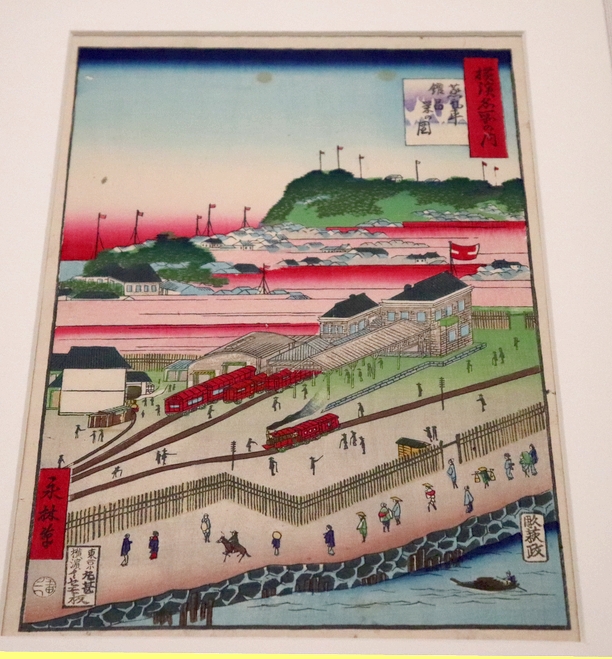
The Yokohama Museum of Fine Arts Nouchi Steam Car Museum Shoei Nagabayashi Meiji 5 (1872) Kawasaki-Sanko no Sato Museum
Until the other day the Fuchu Museum of Art had an art exhibition called "Hosemari Japanese Art", but if it had been exhibited it might have become popular because of "Yuru too Yokohama Ukiyoe"? ! Seeing is believing. If it confronts the actual thing, the exquisite climax should fall into a trap. Please check with your naked eye!
We also recommend original goods and pictorial records!
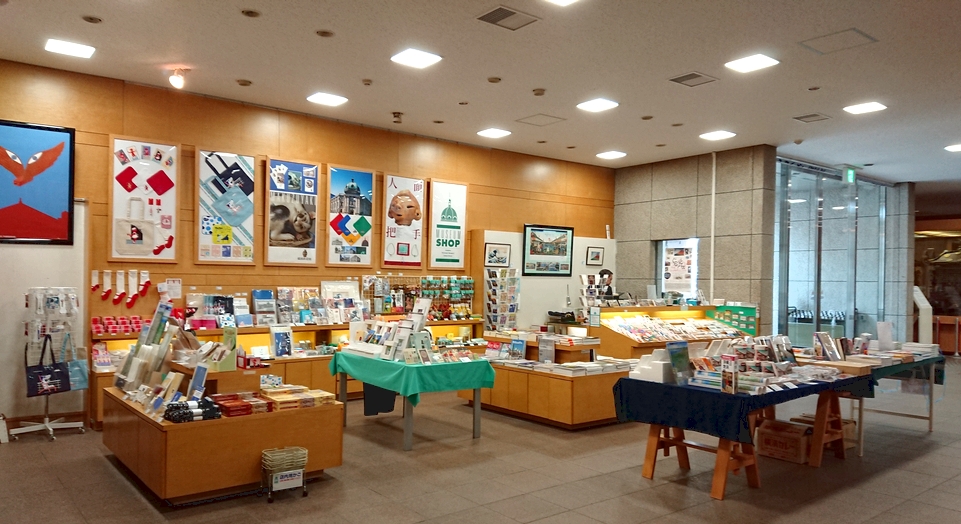
Well, let's stop by the museum shop after watching the exhibition. There are many goods such as food related to Yokohama, postcards printed with collections, etc. What I would like to recommend this time is the official pictorial record of "Yokohama Ukiyo-e Exhibition" .
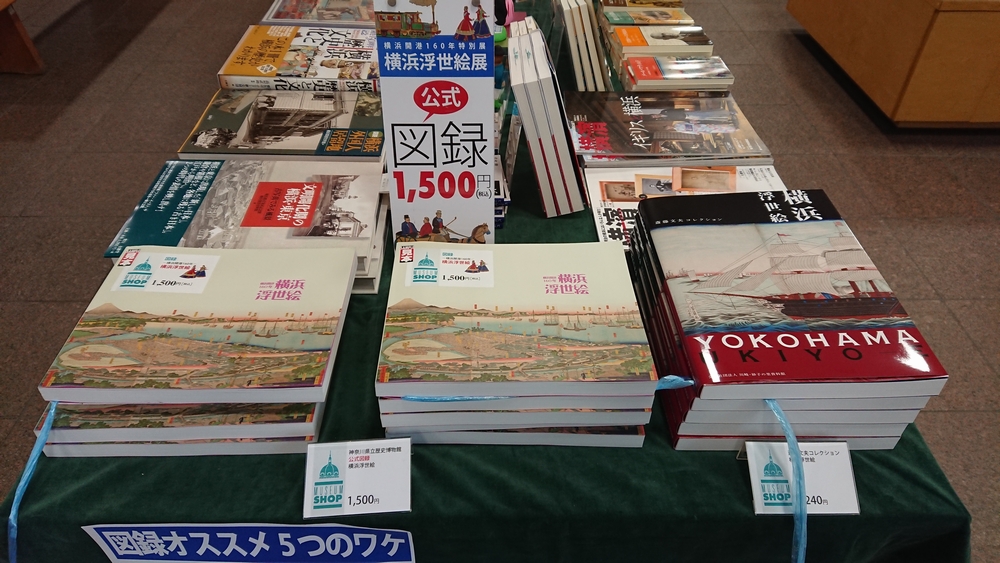
A long interview with Fumio Saito, a large Ukiyo-e collector of Yokohama Ukiyo-e, a transcription of a lyric book drawn in the Ukiyo-e, a detailed commentary for each work, and a large number of about 330 illustrations are posted. It is the contents. However, the price is 1,500 yen, which is considerably cheaper than the market price. This is a great deal! ! It was said that the curator, who did most of the work for himself, did not place orders from outside vendors, and was able to reduce the selling price.
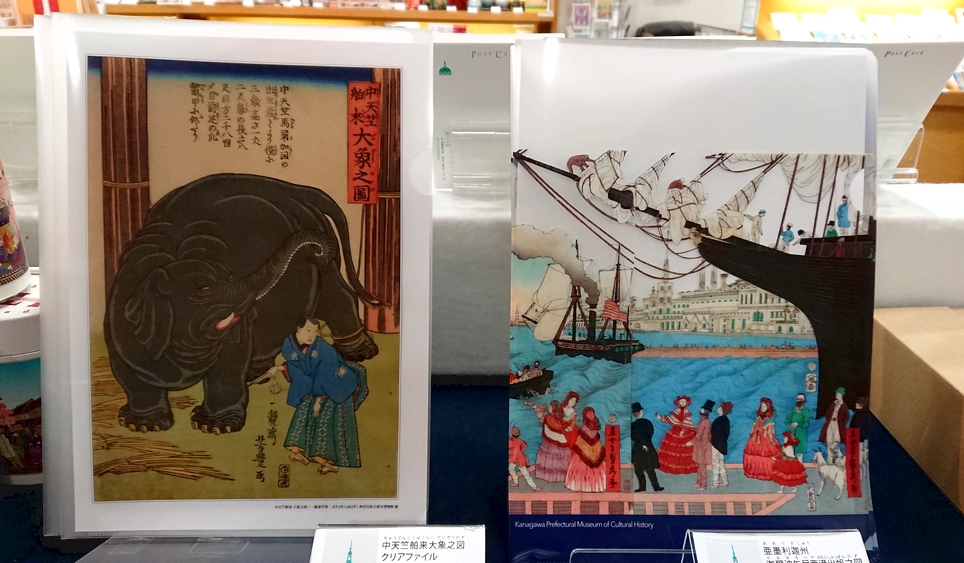
There are also original goods prepared for this exhibition. Ikkoishi is an exhibition-limited clear file prepared from two of the works exhibited at this exhibition.
The world of "Yokohama Ukiyoe" that you can enjoy well without being a Ukiyoe fan
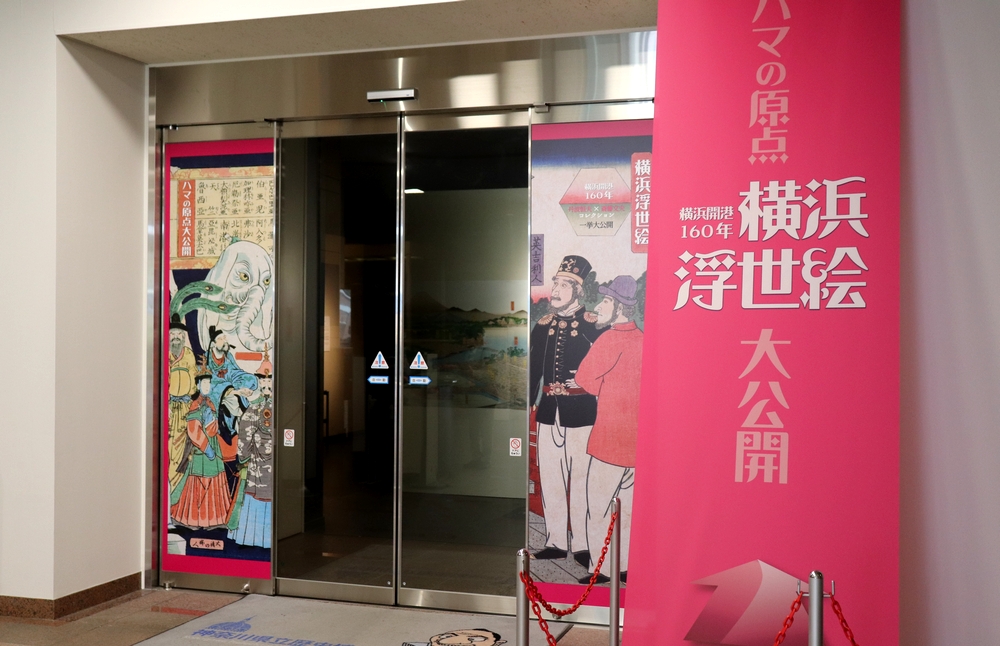
Large-scale exhibition of "Yokohama Ukiyoe" which was held again about 10 years after the special feature exhibition at Yokohama Takashimaya, which marked the 150th anniversary of the port opening. After watching the exhibition, I felt strongly that it was a Ukiyo-e exhibition that is easy for beginners, in that it can be enjoyed well with little prior knowledge . When you look at the works in order, you can feel the fresh surprises and expectations that people at the time felt for the city of Yokohama, which continues to change, and there are also many works that have a fair amount of misrepresentation. It was a really exciting experience. If you are looking at a series of works that are drawn in detail on a wide screen, such as a series of three, five, etc., you may feel like you had a time trip to the world at the end of the Edo period.
Of course, if you are a person familiar with Yokohama, it is all at once to focus on the "difference" with the present Yokohama, and the luxurious lineup of Utagawa school in the end of the Edo The exhibition content of
The way of enjoying is each person, but it is a highly satisfying exhibition. If you miss this aircraft, you may not be able to enjoy such a large exhibition for the time being until the "170th Anniversary of the Port Opening". I recommend you to visit by all means!
Exhibition information
Exhibition Name "Yokohama 160 Port Yokohama Ukiyoe"
Venue Kanagawa Prefectural Museum of History, April 27th 2019 (Saturday)-June 23rd (Sunday)
[First half: 4/27 to 5/26 Second half: 5/30 to 6/23]
Official site

I am tired of my office life and suddenly retire from the company at the age of 40. Taking advantage of the ability to create a long sentence that was trained in the daily end-of-life submission, three years thinking of trying to live on a single blog. Beside the husband and wife business, I am addicted to the interest of art museums and museums, and with the help of children all over the country, I have been gratefully distributing articles that have over 10,000 words over. http://blog.imalive7799.com/