













Bon Boniere is a small confectionery container distributed during the ceremonies and feasts of the Imperial Family and the Imperial Family. In Europe, sugar candy (Bonbon) is distributed at the time of a celebration, and it is said that it was followed in Japan from calling that the confectionery container Bonboniere (Bonboniere). Japan's imperial Bonbonnaire has developed in a unique way since it emerged in the Meiji 20s. Let's explore the story of a silver miniature pot containing gold confection and its various forms.
History of the imperial small pastry container "Bon Boniere"
Bonboniere, a small candy container on the palm of your hand. In Japan since the Meiji era, the Imperial Family distributed Bon Boniere as a dinner party and other events, and eventually the practice gradually became established, and elaborate ideas came to be created.
Bon Boniere ordered by the Imperial Family for the first time
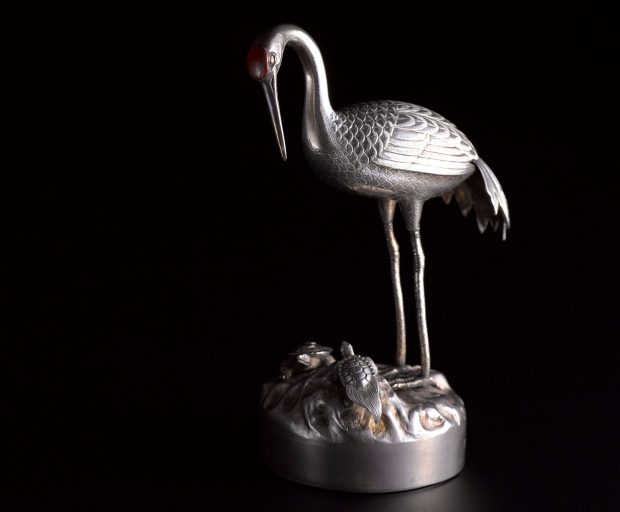 "Tsurukame-shaped Bon Boniere" The celebration of the 25th anniversary of the Meiji emperor's 25th anniversary March 27 (1894) March 9, silver diameter 5.0 cm, maximum width 7.3 cm, height 11.4 cm private storehouse (Gakushuin, Izumiya / full term)
On March 9, 1894, at the dinner party for the 25th anniversary of the silver wedding and grandfathering of Emperor Emperor Meiji, it was given to 612 people who had a seat at the end of the ceremony. Confectionery bowl ". Actually, this Bon Bonniere was the original design originally ordered by the imperial family.
The entire silver sculpture of Tsurutome is covered, and when the pedestal is opened, sweets will enter in the cavity. It is said in the document "Fuzokugaho" of that time that "I added something like small five-colored beans." Was it put to the people of the guest who put five colors of kanpei sugar .... Even so, it is a fine craftsmanship.
The swordsman who lost his job was making
"Probably a metalworking knife manufacturer of swords in the Edo period was created. The abolition order was issued in 1876 and the swordsmen lost their jobs. The metalians, metalworkers, lacquer artisans, etc. in Japan The craftsmen who have taken on traditional crafts were also forged by the same fate, and in such circumstances, the imperial family might have somehow tried to preserve the traditional craftsmanship of Japan. " Minako Nagasako, curator of Gakushuin University Archives Museum.
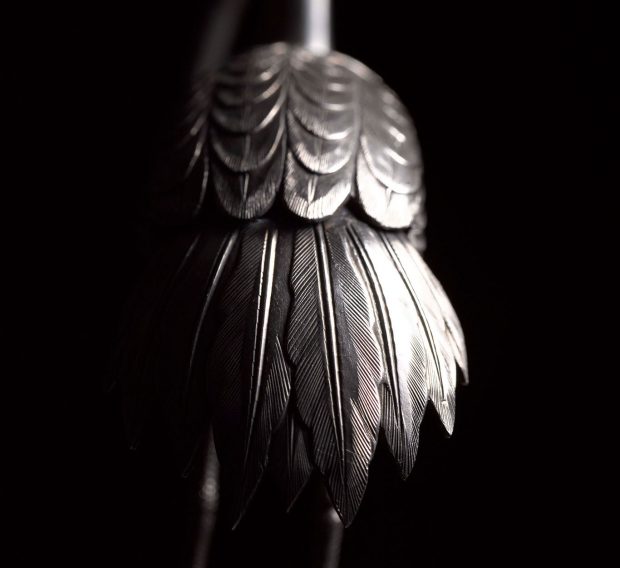
Silver Bonboniere made of precise work. The part of the crane's tail is a super-skilled technique that combines fresh sterling silver and silver silver. Silver on the legs, put red in the head with lacquer, put gold in the eyes ... and craftsmanship is used.
"For example, for the first time in the New Year greetings in 1887, the Empress had first dressed in a dress with a large dress in a Western dress. So far I wore a so-called twelve-one dress in a formal dress, but in changing to a Western dress, the Empress actually Because it is the same as the old-fashioned clothes and samurai (as shown in the mural paintings of Takamatsuzuka Tombs), isn't it better to return there ... And it is easier to walk in Western clothes for standing ceremonies. "It's made using domestic embroidery and silk, which is useful for the domestic industry and can inherit Japanese traditional culture. It expresses such feelings," said Mr. Nagasako.
Appeal the beauty and skill of Japan to the world
By the way, the Meiji emperor silver wedding ceremony of 1877 was a ceremony that appealed to the world that Japan became a country that could have a similar ceremony to the West. In 1900, six years after this, a Japanese pavilion was created at the Paris World Expo, and it is the timing when the goodness of Japanese crafts is explosively spread toward the world.
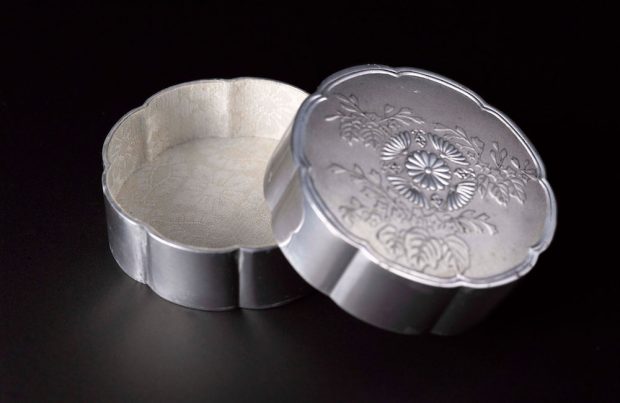 "Ryuhana Bunki Bonbo Niere" Takahito Sanjogu and Yuuri Takagi Wedding Showa 16 (1941)
"It is a matter of course now that the Emperor and Empress riding on the same carriage was unthinkable in the Japanese imperial family until that time. And we served foreign customers as Western food, and distributed Bonbonieres that have made good use of metalworking technology since the Edo period. "Inside, it contains even sweets, and it will also appeal to Japanese products," said Mr. Nagasako.
Design related to Japanese traditional culture
At the Shokaikai, which hosts envoys from around the world, a form that was associated with traditional Japanese culture was distributed. It takes time and money to order a design one by one and to hand over such things today, so the imperial side designs in advance the design of a oxcar (Ginsha), a Japanese-style boat, a basket (carton), a basket etc. It seems that you decided and ordered, and put them together. It is a Japanese-style Kobako, which contains the sugar cane if you open the lid. Bonboniere was born with various intentions and roles, such as being able to disseminate Japan's technology and tradition to foreign countries when he was very pleased with the diplomats and brought it back, and it became a rage between Taisho and the early Showa era.
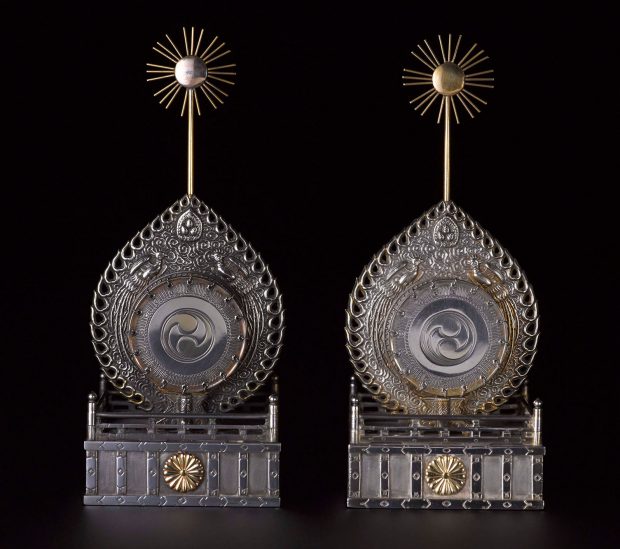 "Dance-like drum-shaped Bonboniere which imitates a large-scale drum of dance-like music" Showa-Daitei Daisuke Showa Daisuke 3 (1928) November 17 Family crest, Emperor House vertical 4.4 x width 4.4 cm, height 11.1 cm Gakushuin University library Full year)
Especially when you are in a position, many customers from home and abroad will be invited, and feasts will take place for many days. The Bon Bonniere in Taisho Taisho was designed as a form of a jinja, a lantern for the Daijokyu in the Showa Daikei, and a dance music drum performed at the end of the feast. It is likely that Bonboniere will be presented to the guests of the banquet, also at the scheduled Grand Regards in 2019. What kind of Japanese beauty is expressed there?
Want to go see an exhibition to enjoy more Bon Boniere?
During the Meiji period, the imperial family adopted Western-style clothing for foreign diplomacy with foreign countries, and treated foreign agents with Western-style food. The stage changes to Enryokan, Rokumeikan and Meiji Palace. In addition, in order to introduce Japanese culture overseas, we will create a system called "Tekko Technicians" to protect and nurture arts and crafts that have continued since the Edo period. With the opening of a new era, the “Meiji 150th Anniversary Flower Culture 皇 文化 技 技 技 技 宮 宮 宮-」 」” introduces the colorful court culture such as tableware and Bon Boniere of the Miyanaka banquet, and the Meiji Imperial Family We introduce Japanese technique and beauty that we tried to protect and communicate.
The ceremonial culture of the fragrant imperial culture commemorating the Meiji 150-Techniques and beauty that colors the Meiji Court-
◆ Gakushuin University Archives Period March 20-May 18, 2019 Opening hours 10:00-17:00
Closed on Sundays and Public Holidays May 1st Address 1-5-1 Mejiro Toshima Ward, Tokyo
TEL 03-5992-1173 (related lectures)
Official site
◆ Izumiya Hakokokan Branch Period March 16-May 10, 2019 Opening hours 10:00-17:00
Closed on Monday (April 29th, May 6th opened, April 30th, May 7th closed), April 16th replaced the exhibition
Address 1-5-1 Roppongi, Minato-ku, Tokyo
TEL 03-5777-8600
Official site
Composition: Noriko Niira, Photography: Mitsuya Karasawa
I want to read together
・The imperial tradition of “Bon Boniere” that Queen Reiko sees
My motto is "I'm serious about being stupid", and I am having fun and having fun every day.