













"Kazurabashi" is one of the three strange bridges in Japan.
As a bridge lover, I can't help but cross!
Iya, where Kazurabashi is located, is one of Japan's three most unexplored areas.
I'm an unexplored lover and I can't help going!
Furthermore, this trip to Oku-Iya, which is a mysterious area, is a rough road! A rough road! A rough road! In succession.
However, when I came to know the legend of the Heike's landslide after I arrived there, it makes sense that the road to reach this land is a terrible road, and it may be a harsh road. I am.
In this article, we will introduce the charm of "Iya" in Miyoshi City, Tokushima Prefecture, along with the legend of the Heike clan.
Iya, one of Japan's three most unexplored areas
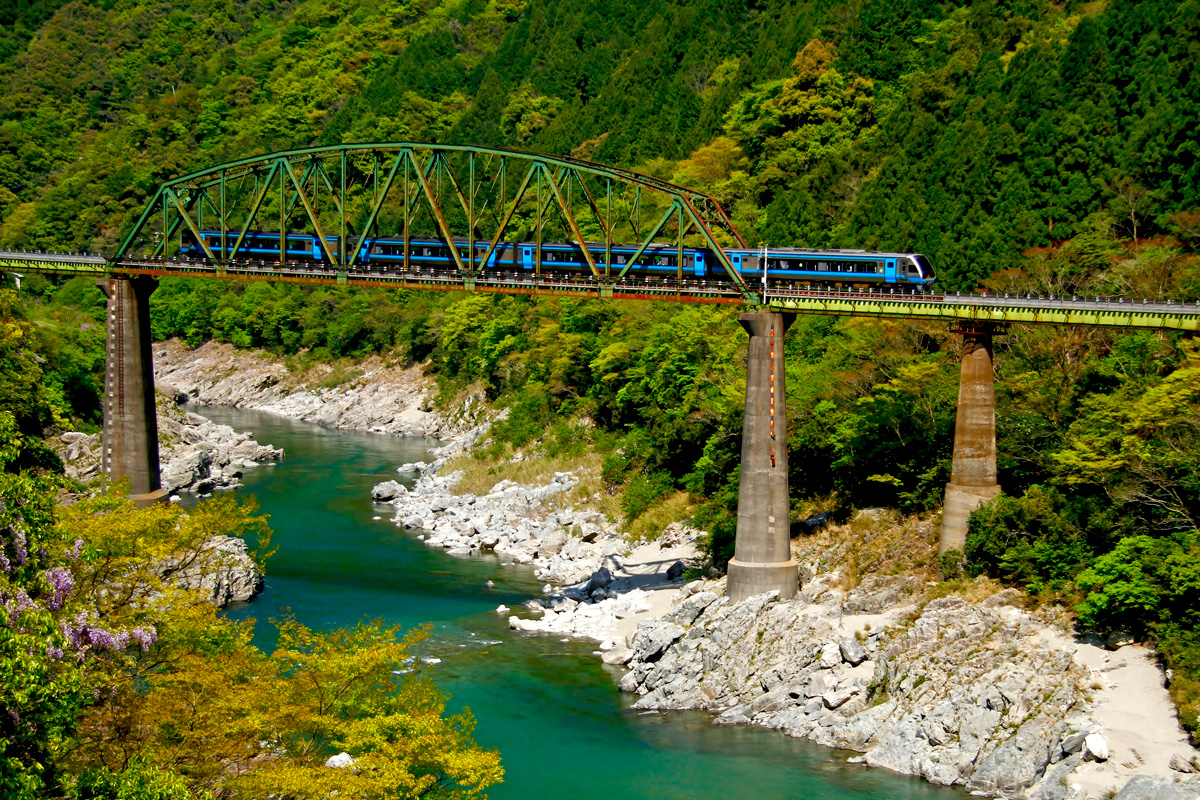
In the area called "Iya" in Miyoshi City, Tokushima Prefecture, which is one of the three most unexplored areas in Japan, along with "Shirakawa-go" in Ono-gun, Gifu Prefecture and "Shiiba-mura" in Higashiusuki-gun, Miyazaki Prefecture Since the legend of people remains, there are many tourist destinations related to this legend.
Nishi-Iya is an unexplored area that is easy for general tourists to visit
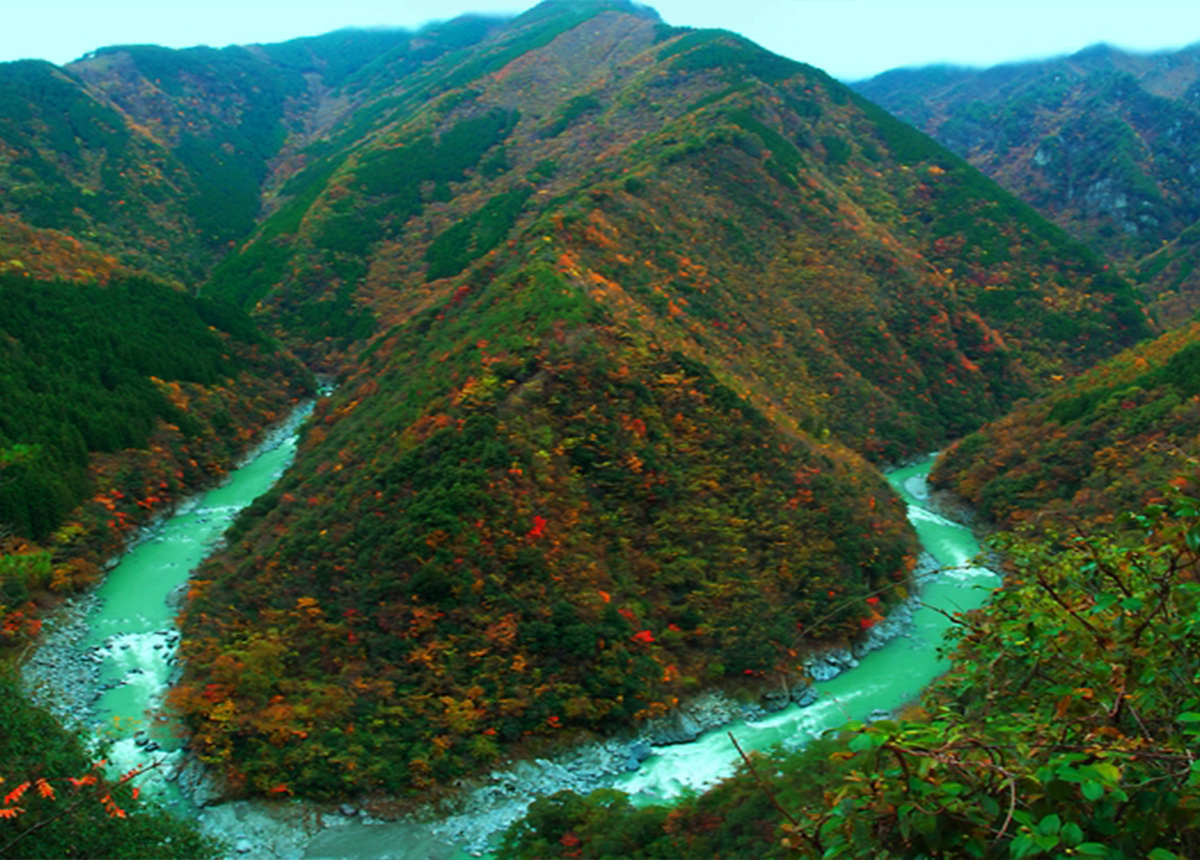
Looking at the area of Iya divided into Nishi-Iya and Higashi-Iya, Nishi-Iya, which is a secluded area and easy to access by car, is a popular area for sightseeing. In this area, you can see the beautiful valley "Oboke Koboke" and "Iyakei", which are famous as a famous place for autumn colors. There is one such as "Iya no Kazura Bridge".
"Oku-Iya", an unexplored area in front of "Bakudo Yosaku"
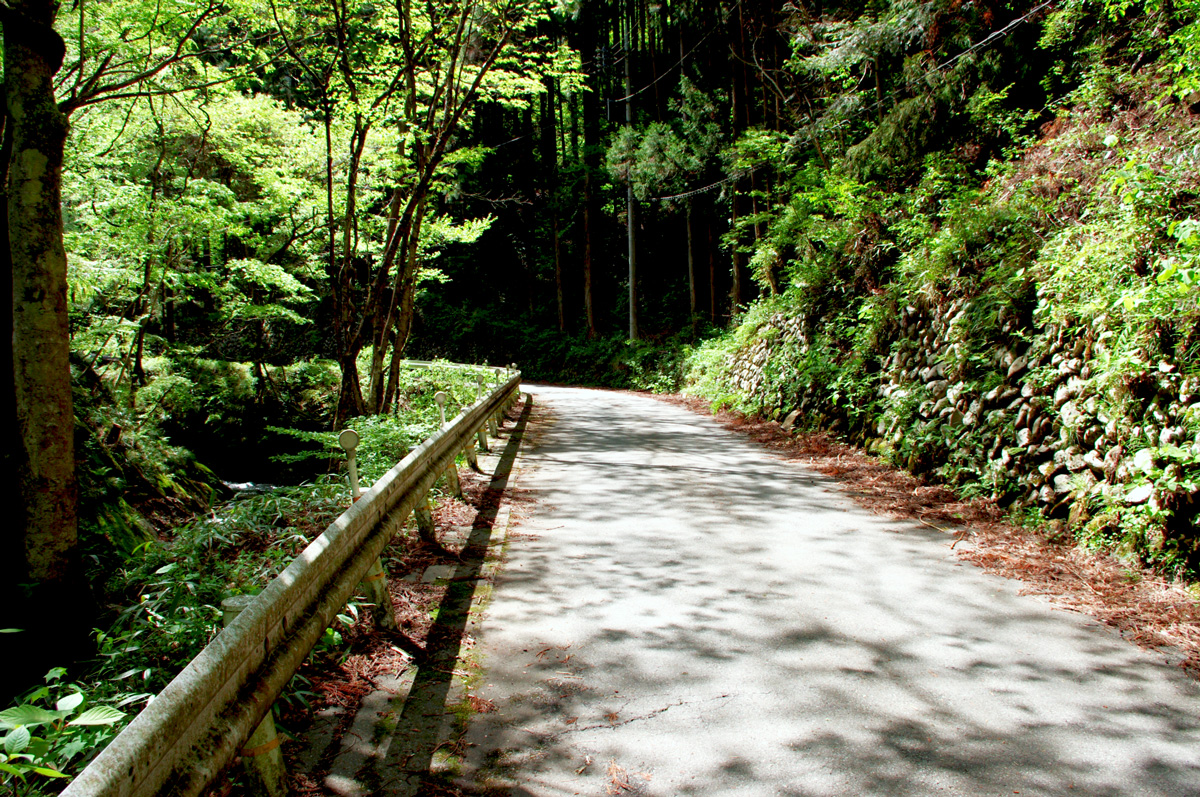
On the other hand, Higashi-Iya is located in the mountains where access is worse than Nishi-Iya because it is called "Oku-Iya".
Kunekune road, which is unique to a mountain road in the country so that one car can be managed, will continue endlessly, so if you come oncoming, the cold sweat will not stop ... It's a terrible road that can't be reached without proper driving techniques, because the mountain roads that continue to pass such cars are very difficult.
Yes, this road is National Route 439, which is famous as one of Japan's top-class heavy roads!
It is said that it is commonly known as "Kyodo Yosaku" among unexplored enthusiasts and road enthusiasts.
For that reason, it seems that the number of tourists visiting Oku-Iya is smaller than in Nishi-Iya.
However, there are many sightseeing spots and extraordinary scenery in Okuya, such as "Ozuya no Kazura Bridge" and "Kenzan."
Recently, a "Sightseeing Taxi" that allows tourists to enjoy Okuiya sightseeing even if they are not confident to drive by themselves has also appeared and is popular.
What is the Iya Heike legend?
In Iya, which is famous as an unexplored area, such a legend remains.
The Heike clan, who lost the battle in Yashima in 1184 (Shouei 3), was chased down by Dannoura the following year. He was a warlord of the Heike, Taira no Ritsune, and Emperor Antoku, who was only six years old. Heike is said to have died when he entered the sea.
However, it was the shadow warrior who actually died, and Heikyo was given the name of his first name, Hirakuni Mori, to hide from Genji's pursuer, and escaped to the Iya district while secretly protecting Emperor Ande with nearly 100 subordinates. The legend that it came has remained in this area.
As evidence, there are many spots in the Iya area that are related to the legend of the Heike family.
Land related to the legend of the Heike clan's fallen village in "Iya"
There are only 3 in Japan! What is Kazurabashi?
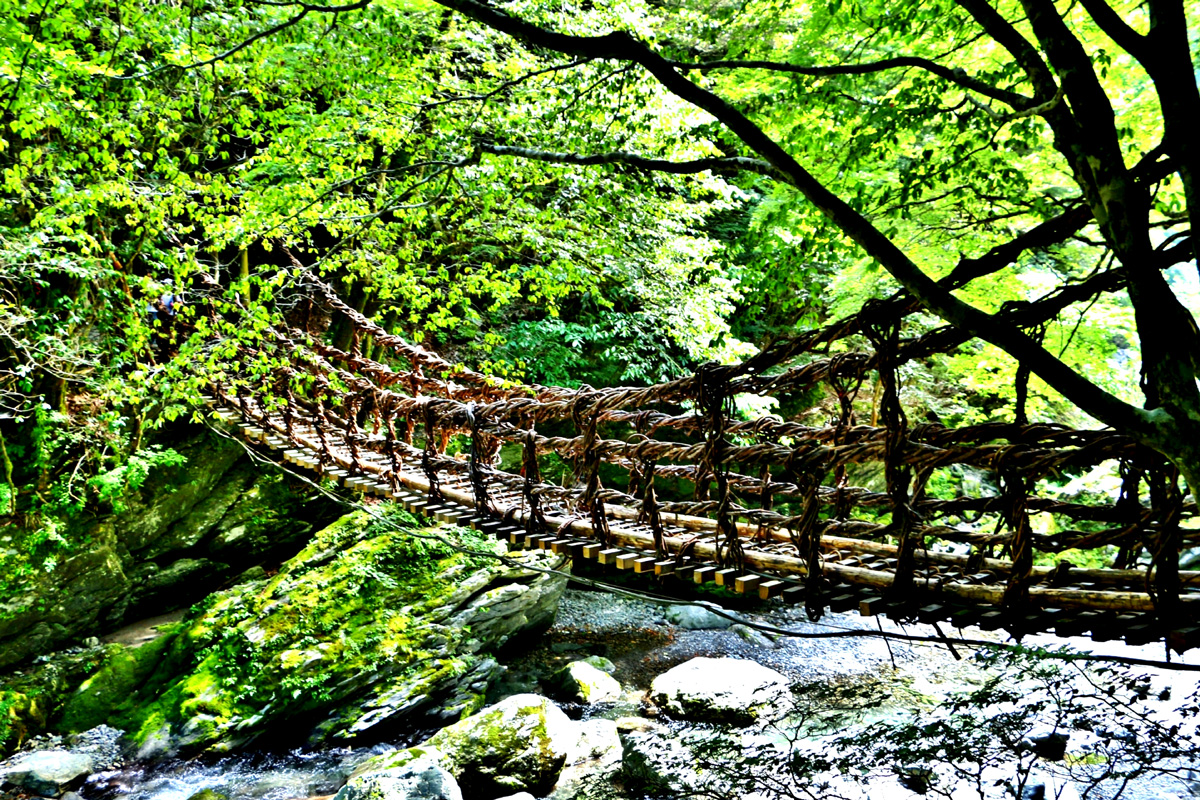
One of the most popular sightseeing spots related to the Heike's legend of villainy is "Kazura Bridge."
The Kazura Bridge is a suspension bridge made by Heike's fallen people to prevent Genji's pursuers from invading, and it is possible to cut off the bridge as soon as you detect the enemy's invasion in your area. The main feature is that it is woven with (Sarnashi) ivy.
There are about seven to thirteen Kazurabashi bridges in the Iya area back in the old documents, but only three exist in Japan! That.
Currently, there is one in "Iya no Kazura Bridge" in Nishi-Iya and two in "Oku Iya Double Kazura Bridge" in Higashi-Iya.
Kazurabashi has been replaced every three years for safety reasons.
However, the amount of syringa vine (sarnashi) ivy required for one change is quite close to 6 tons!
It seems to be a big issue that securing this material is becoming difficult year by year.
"Iya no Kazura Bridge", an important tangible folk cultural property of Japan
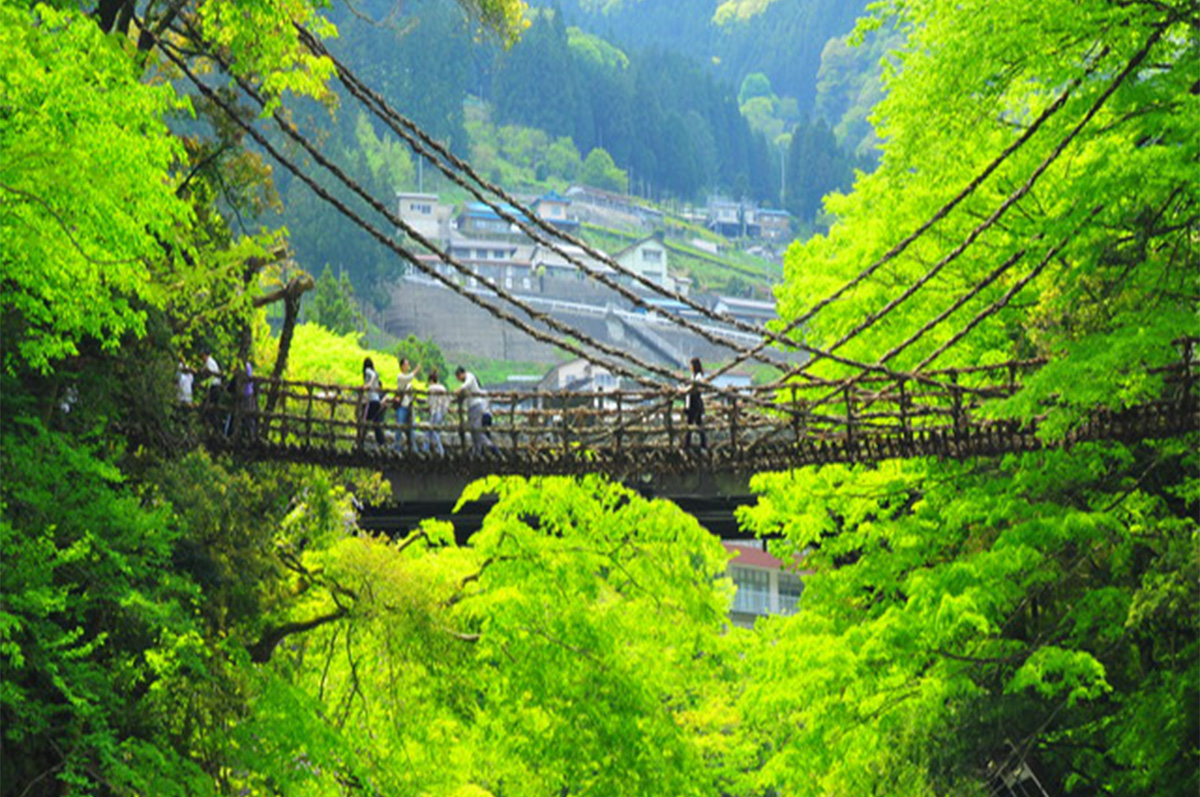
"Iya no Kazura Bridge", which is very popular with tourists in the Nishi-Iya area, has a total length of 45 m, a width of 2 m, and a height of 14 m from the river surface.
This bridge, which is rare in Japan, is the largest of the three existing bridges and has been designated as a National Important Tangible Folk Cultural Property.
Due to its rarity and rarity, it is also one of the "Japan's Three Strange Bridges" along with "Kintai Bridge" in Yamaguchi Prefecture and "Saruhashi" in Yamanashi Prefecture.
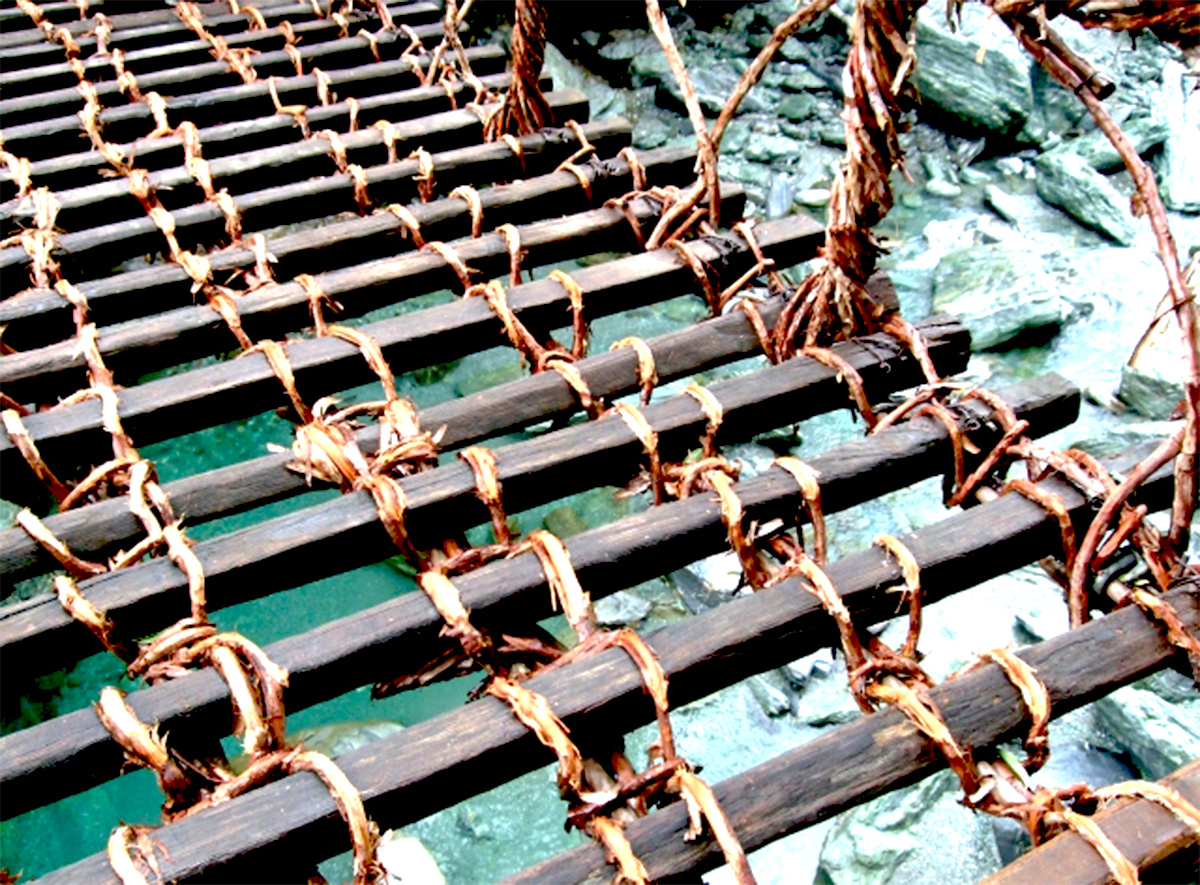
There are quite a few gaps between the crossbars that make up this suspension bridge. There are many people who shrink.
And because it shakes quite a bit, if you feel scared, the point is to walk forward without looking down.
However, the view from the bridge is so wonderful that you should look far from your feet and enjoy the unique view from this bridge.
Also popular as a famous place for autumn colors
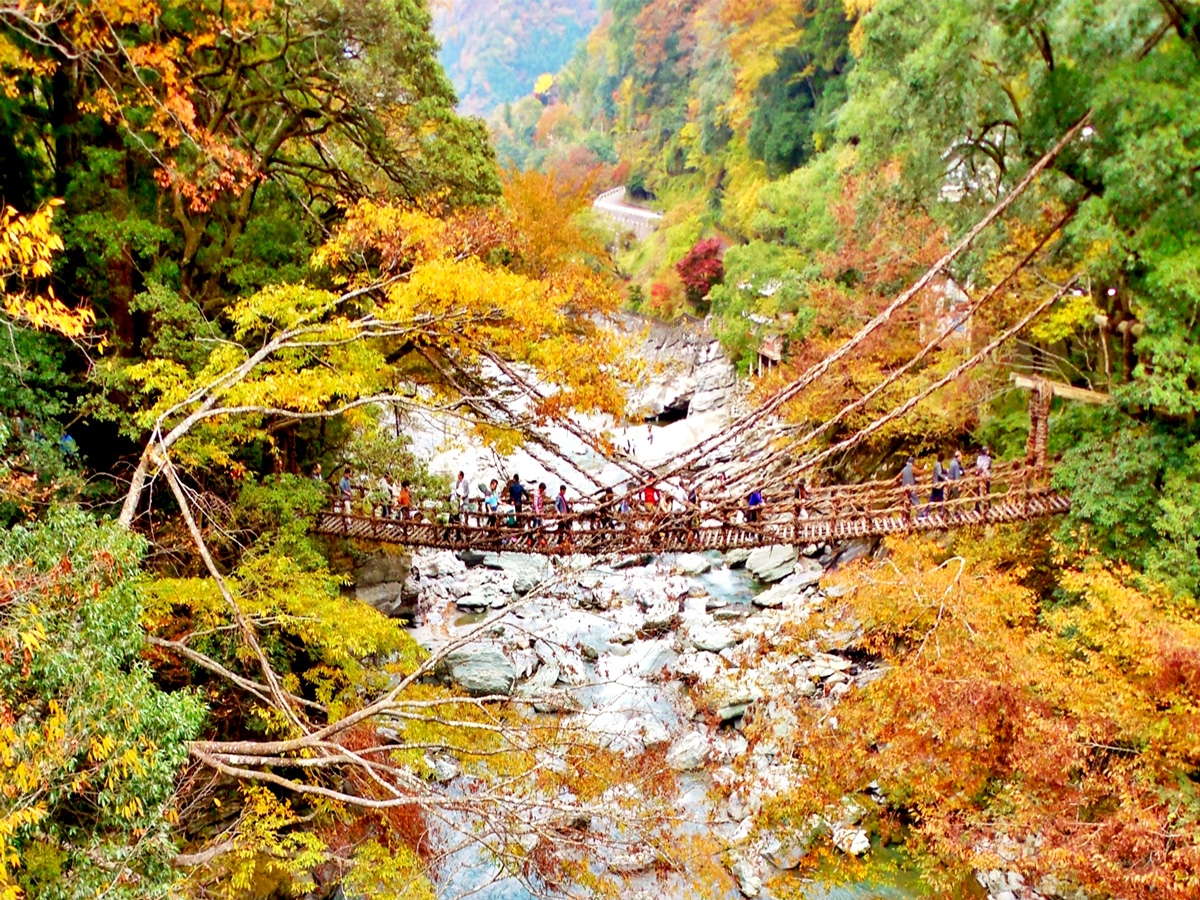
"Iya no Kazura Bridge" is a popular spot for viewing autumn colors.
The beauty of autumn colors seen from this bridge is also the best, as there are many famous spots for autumn colors in the surrounding area.
The best time to see the autumn leaves is from early to mid-November, but it is said that the best time to see the leaves is gradually falling behind due to the effects of global warming.
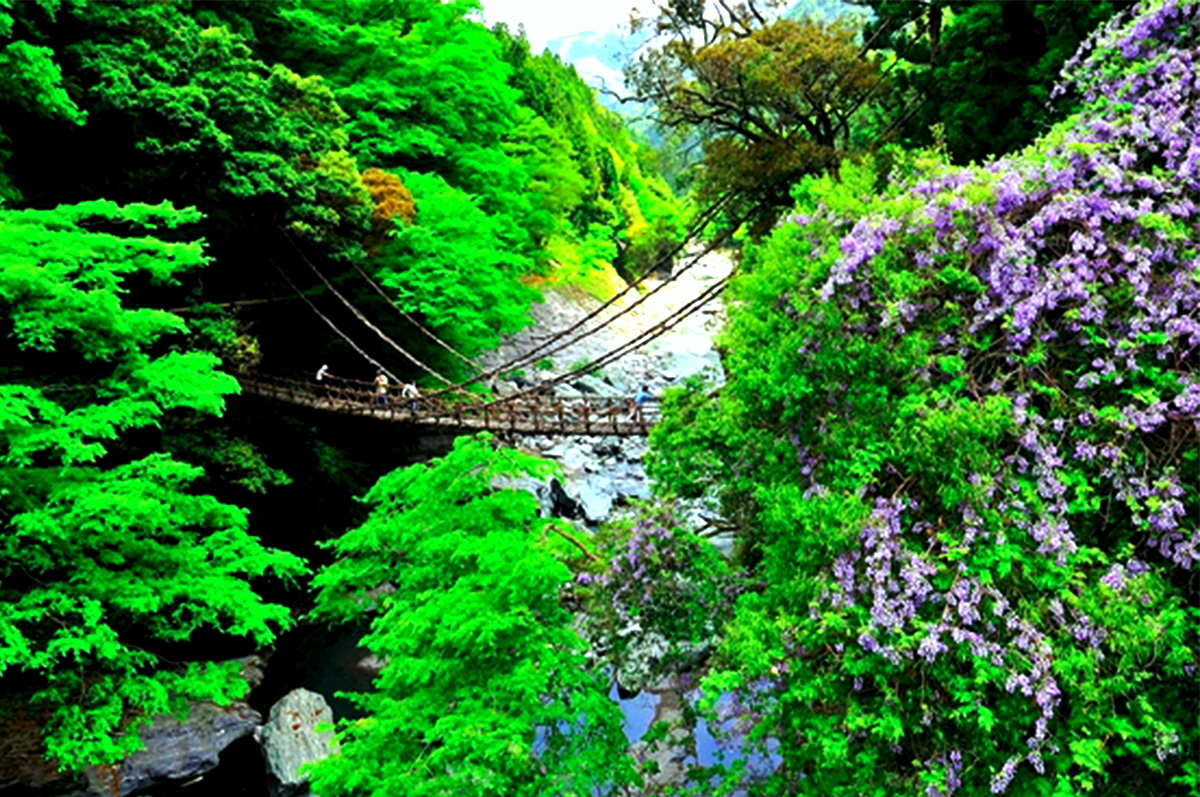
Also, unlike "Okuya Valley's Double Kazura Bridge", it is open in winter, so you can enjoy the magnificent views of the four seasons in addition to autumn.
You can enjoy wisteria flowers in spring, beautiful fresh greenery in summer, and snow scenes in winter. 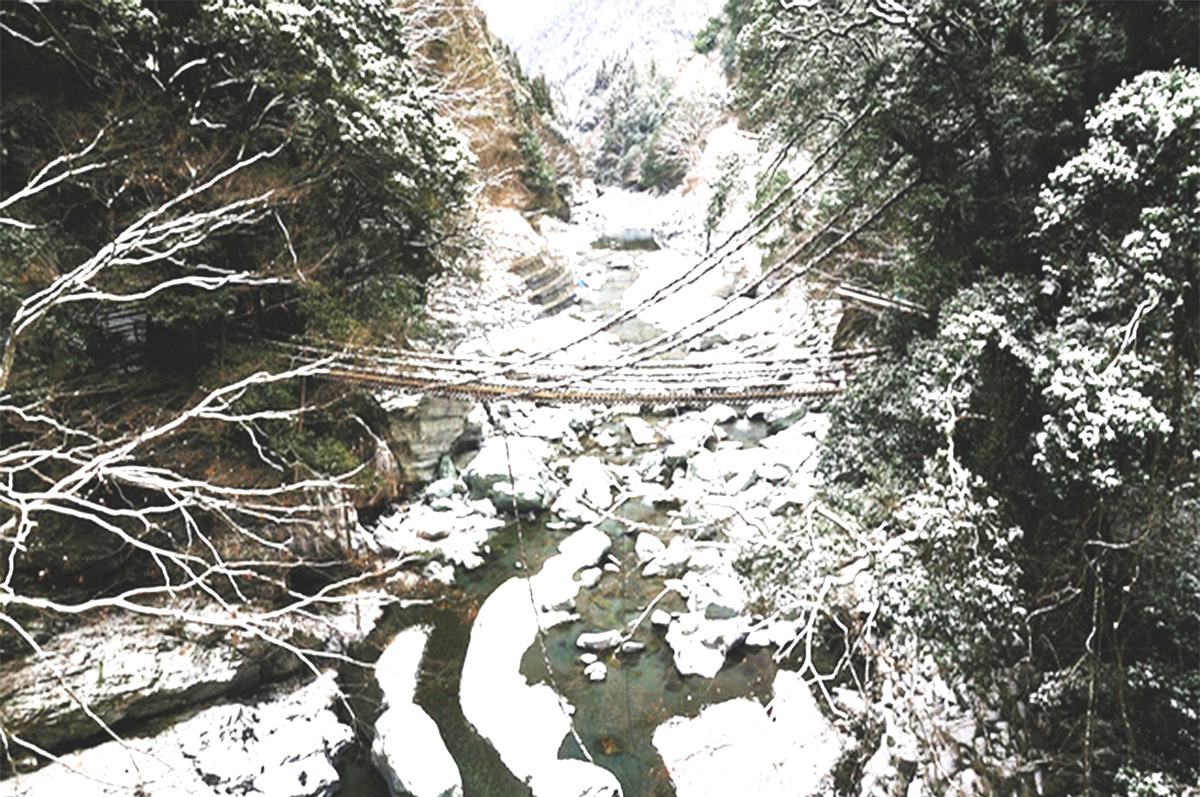
Don't miss the light up at night
The Kazura Bridge is illuminated every night from 7 pm to 9 pm. It is not possible to cross the bridge during this time, but unlike the daytime, the sight of the fantastic Kazurabashi that emerges in the darkness is also popular. 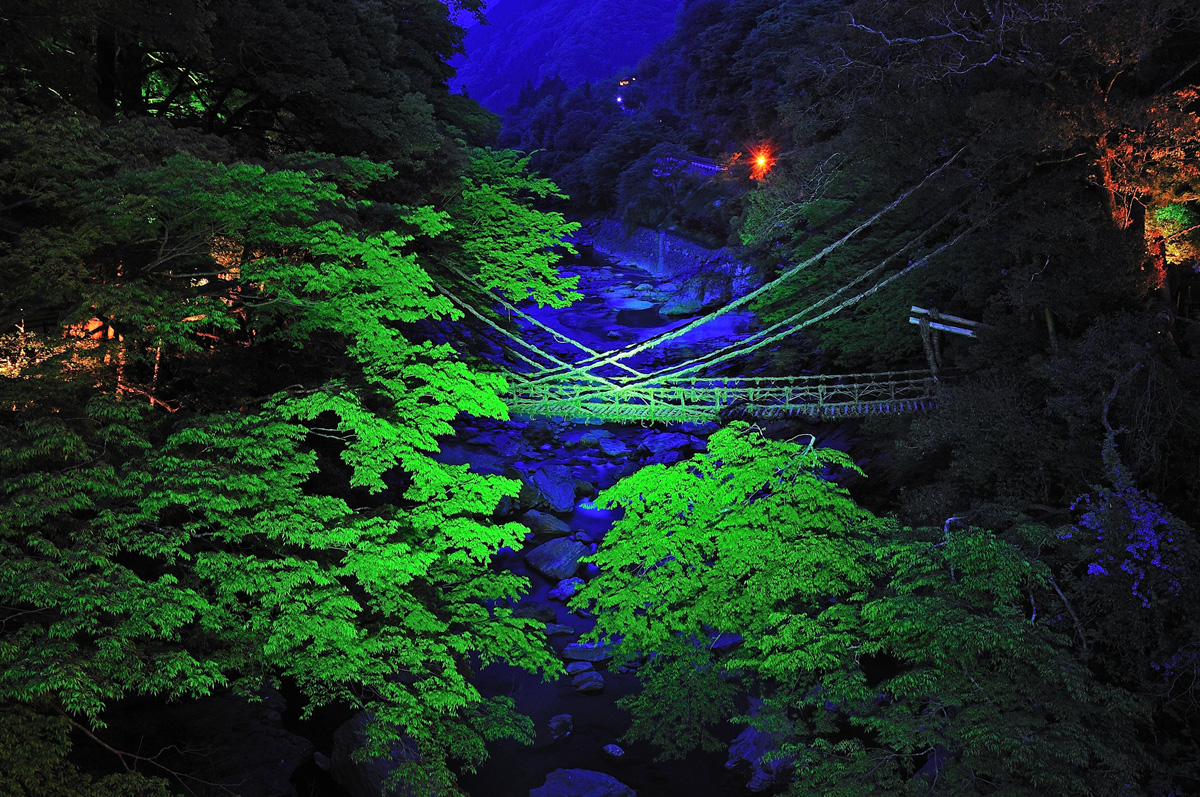
Iya no Kazura Bridge Basic Information
Address: 162-2 Zentoku, Nishiya Valley Yamamura, Tokushima Prefecture
Phone number: 0120-404-344 (Miyoshi City Tourist Information Center)
Opening Hours: From sunrise to sunset (Open all year round)
Price: Adults 550 yen Children 350 yen Parking: Kazurabashi Yumebutai Municipal Parking (capacity of 300 ordinary cars)
Normal car 500 yen, motorcycle 210 yen
The legend of Heike's fallen man at "Biwa no Taki"
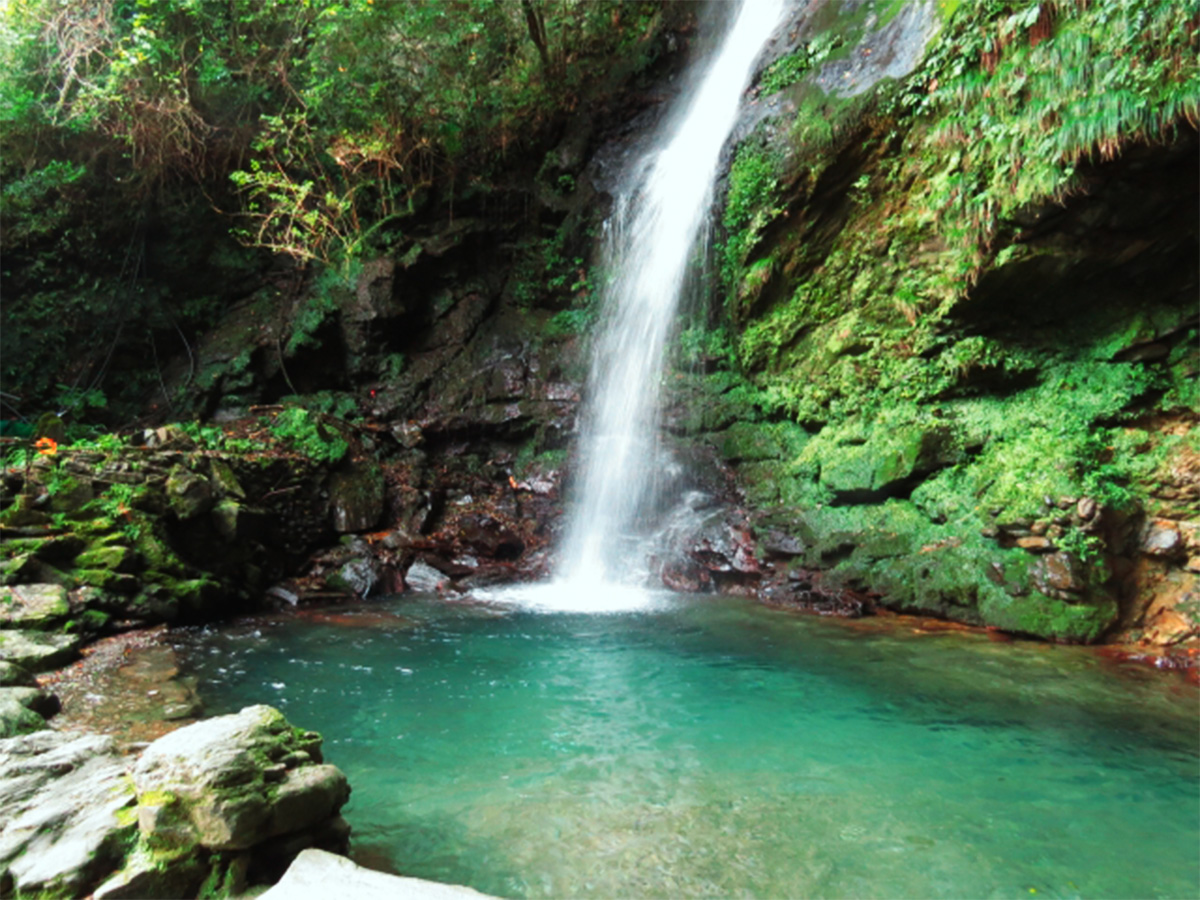
Just a short walk (about 50m away) from "Iya no Kazura Bridge", there is a beautiful "Biwa Falls" with a drop of 50m.
At the time, there was a legend that the hidden family of the Heike family, playing with the biwa under this waterfall, comforted each other in the hard days of hiding in Iya, while feeling good memories of the life of the ancient city. I will.
The waterfall itself is very beautiful, but the water in the basin is so transparent that you will be healed by its beauty. While imagining that there was the sound of the biwa, please drop in here as well.
The spectacular view from the rough road to the “Kenzan” area is unique
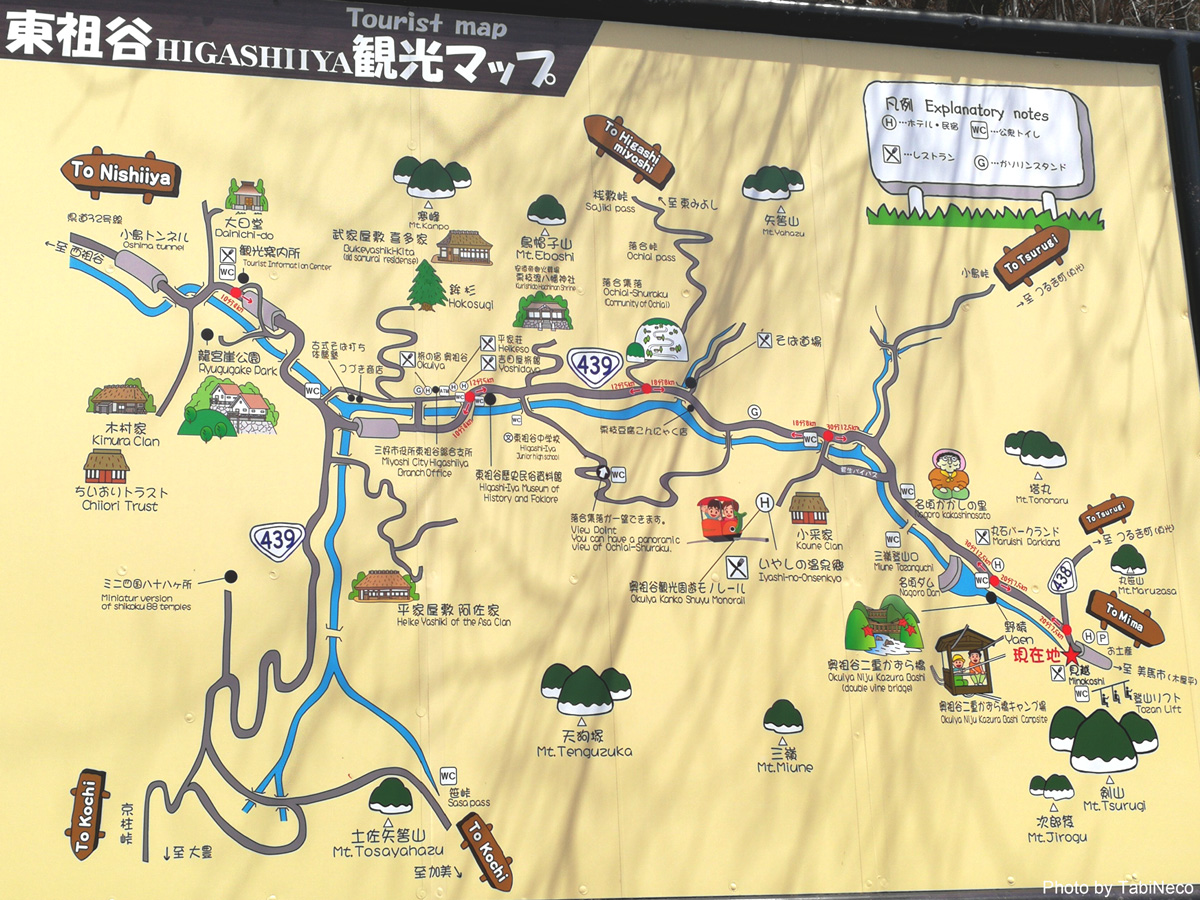
It is a terrible road from "Iya no Kazura Bridge", while struggling on National Route 439, while continuing to drive to "Oku Iya Double Kazura Bridge" for more than 1 hour, when going to the "Kenzan" area I will enter the mountain path. I'm tired of just the rough roads, but a series of amazing hairpin curves that I have never experienced in my life! Was mercilessly ambushing me! !!
The color of Nikko is not the slope!
However, thankfully, there was no other car on the way after entering this mountain path, so I drove while enjoying the scenery at my own pace. 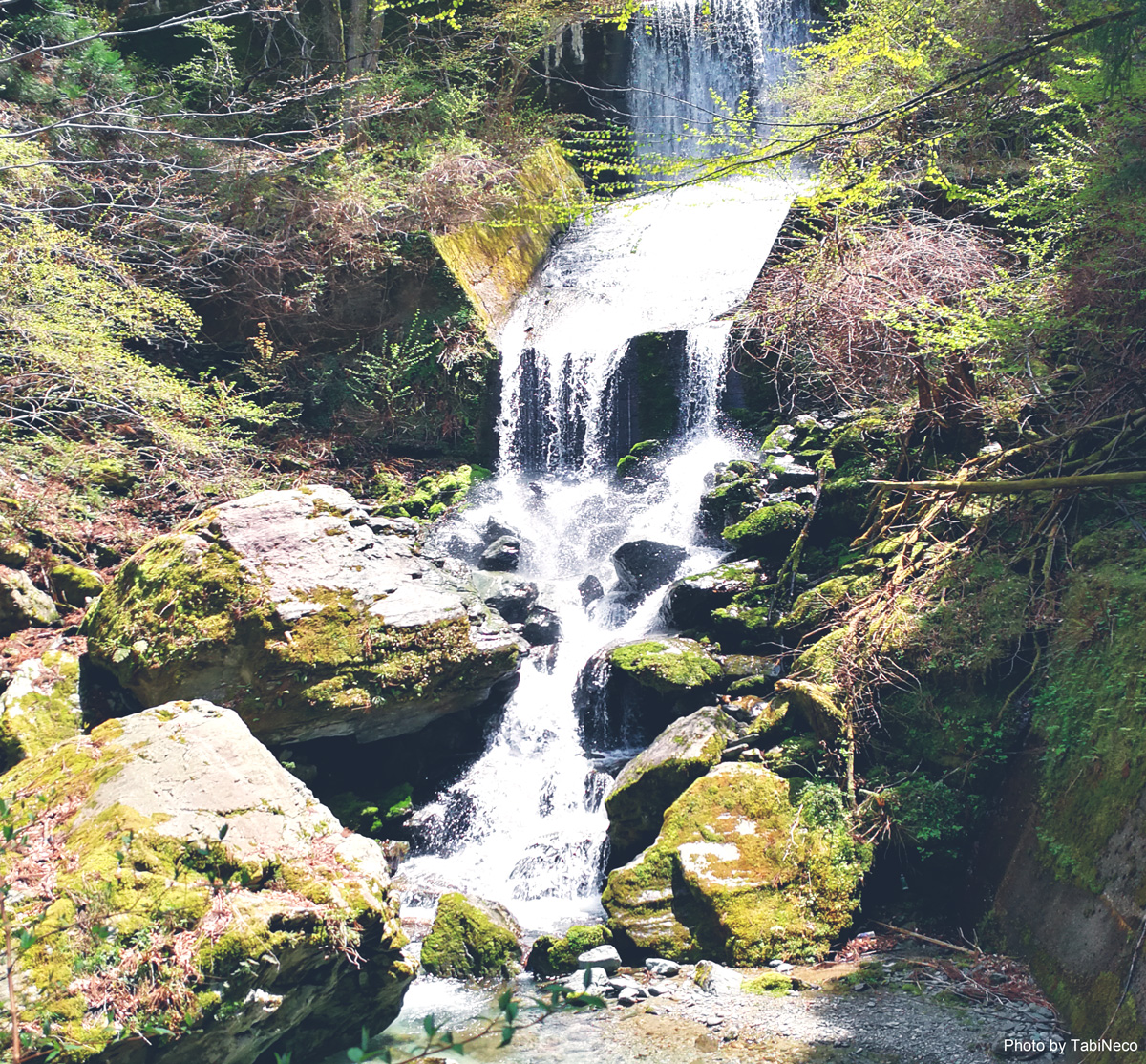
This area is filled with more beautiful nature, and there are many beautiful waterfalls without a name.
When I parked my car many times, I took pictures and enjoyed nature, and I was able to enjoy the luxurious time that is unique to the unexplored region.
The legend of Heike's fallen in "Kenzan"
Speaking of "Kenzan," Hirakuni Mori and Emperor Ande put the treasure sword Tenmu Unsword, which is one of the three sacred treasures, in the mountains of this mountain in the hope of the revival of Taira. There is also a legend that it was called.
At the summit of this mountain, there was the Heike's Baba, where horse riding and martial arts training were held in preparation for the battle, aiming for the day when we can fight again with Genji and win the revival of Taira.
"Oku Iya Double Kazura Bridge" quietly standing in Oku Iya
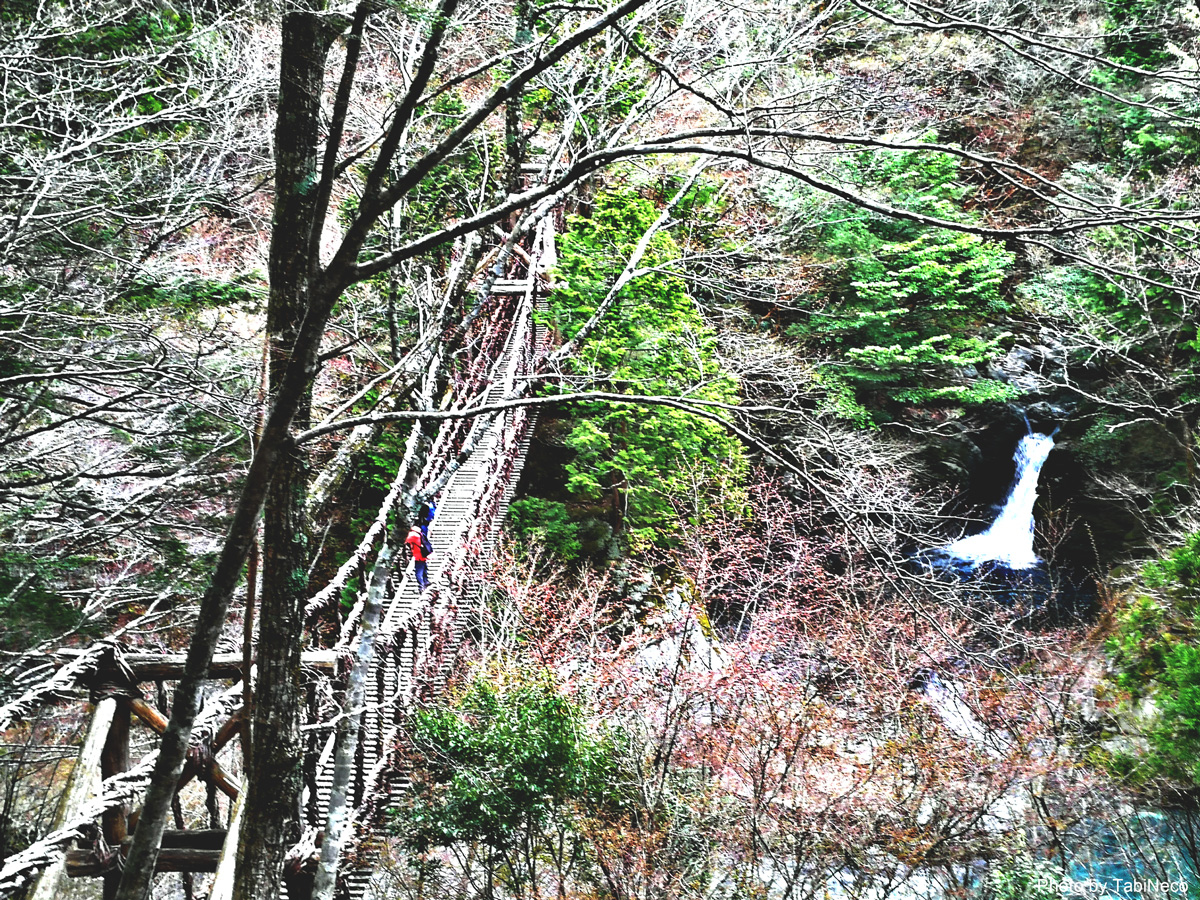
About 800 years ago, in the Kamakura era, the bridge that was built to go to training at the Heike's Baba at the summit of "Kenzan" is "Okuya Niju Kazura Bridge."
As you can see from the name "Double Kazura Bridge", this spot, which is quietly hidden in the deep valley bottom at a height of 1000 m above sea level, has two Kazura bridges, "Otohashi" and "Nohashi." There is a bridge
"Oku Iya Double Kazura Bridge" where you can experience the Kazura Bridge closer to that time
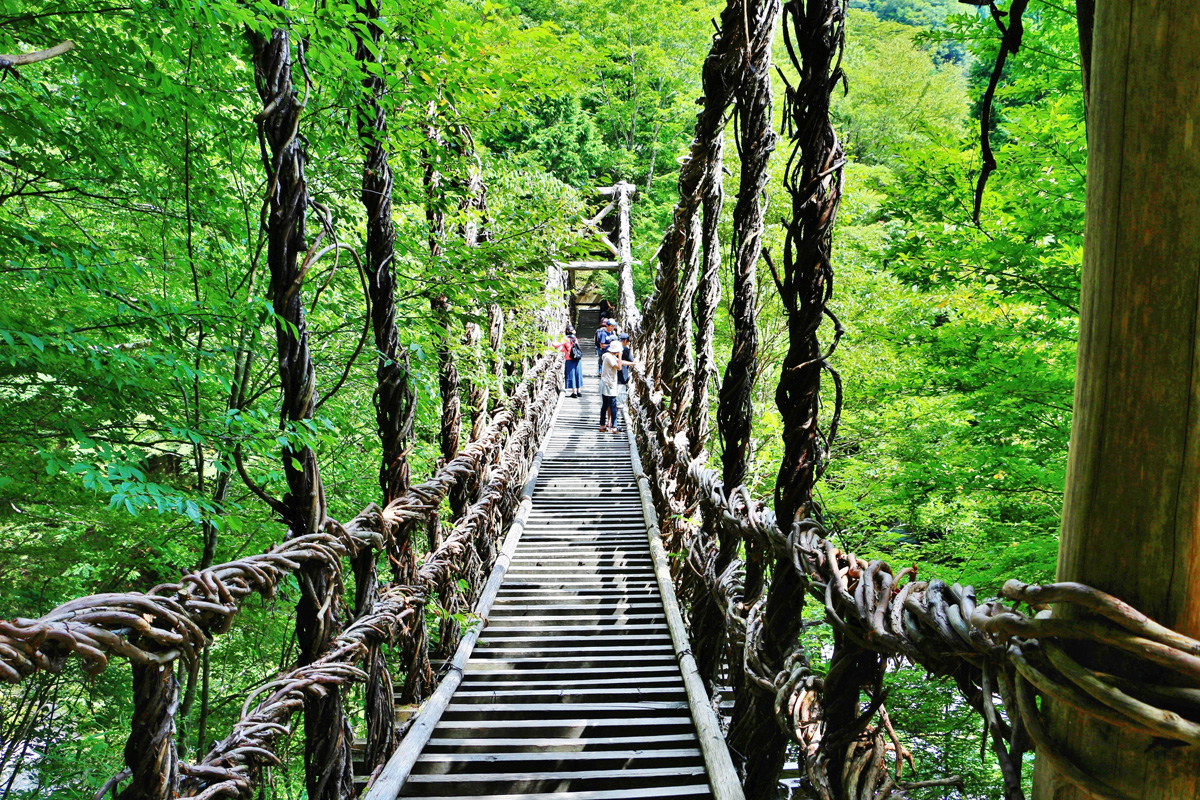
At "Okuya Valley Kazurabashi", the first one to appear is "Otohashi," which is 42m long, 2m wide, and 12m high from the river. After crossing this bridge and following the road on the left, "Mehashi" will appear. This bridge is 22m long, 1.5m wide, and 5m high from the river surface, so people with height phobia should be able to take on challenges easily. 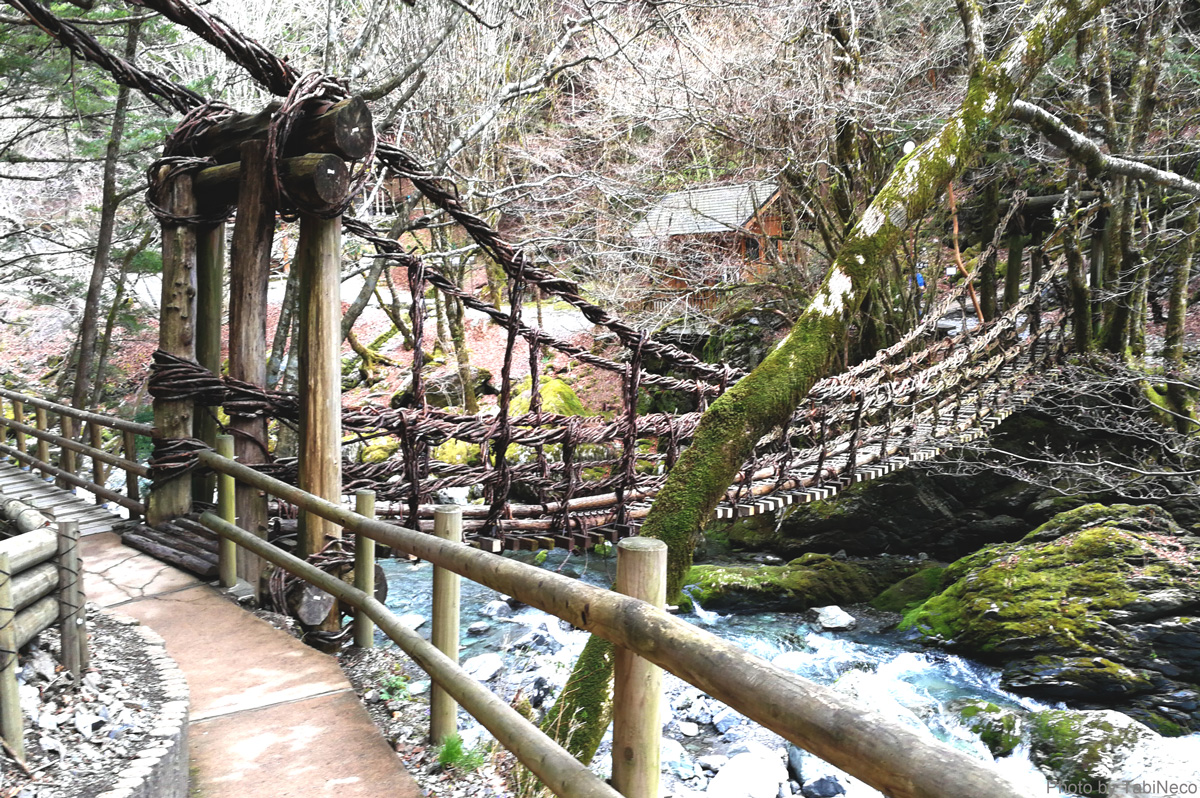
Since the number of tourists to the two Kazura Bridges here is limited due to the difficulty of access to Oku-Iya, the reinforcement with wires is limited to the minimum, so it is closer to the real thing at the time. It is also attractive to be able to experience the Kazura Bridge.
Also, Izaya's Kazurabashi can only cross once, and after crossing it will cross another bridge to return, so you can not make a round trip, but this Kazurabashi is just like Otohashi and Mehashi Unlimited trips back and forth! You can enjoy it. 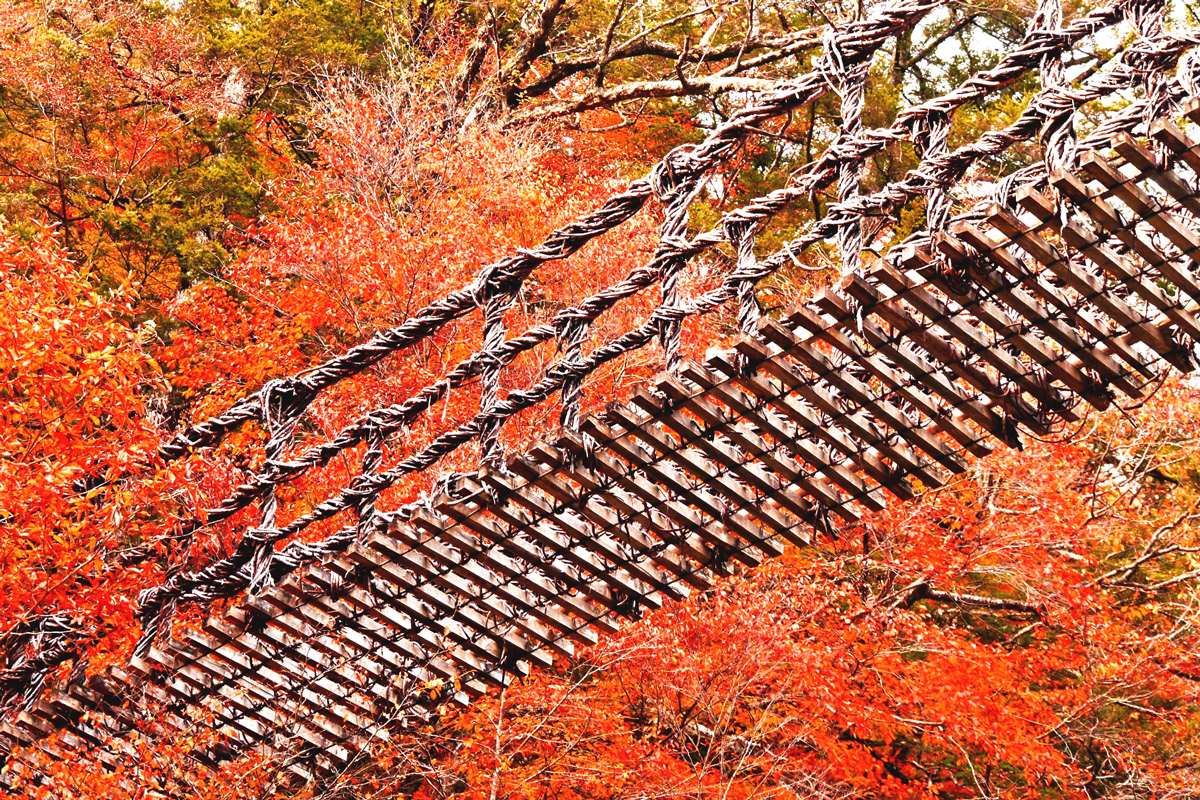
Furthermore, because it is located in a valley that is a deep valley bottom at a height of 1000 m, both Otohashi and Mehashi are surrounded by beautiful primeval forest, so it is also recommended during the beautiful autumn season.
The Iya River runs under the bridge like the Izu Kazura Bridge, but since it is close to the source, the water is very transparent and very beautiful. 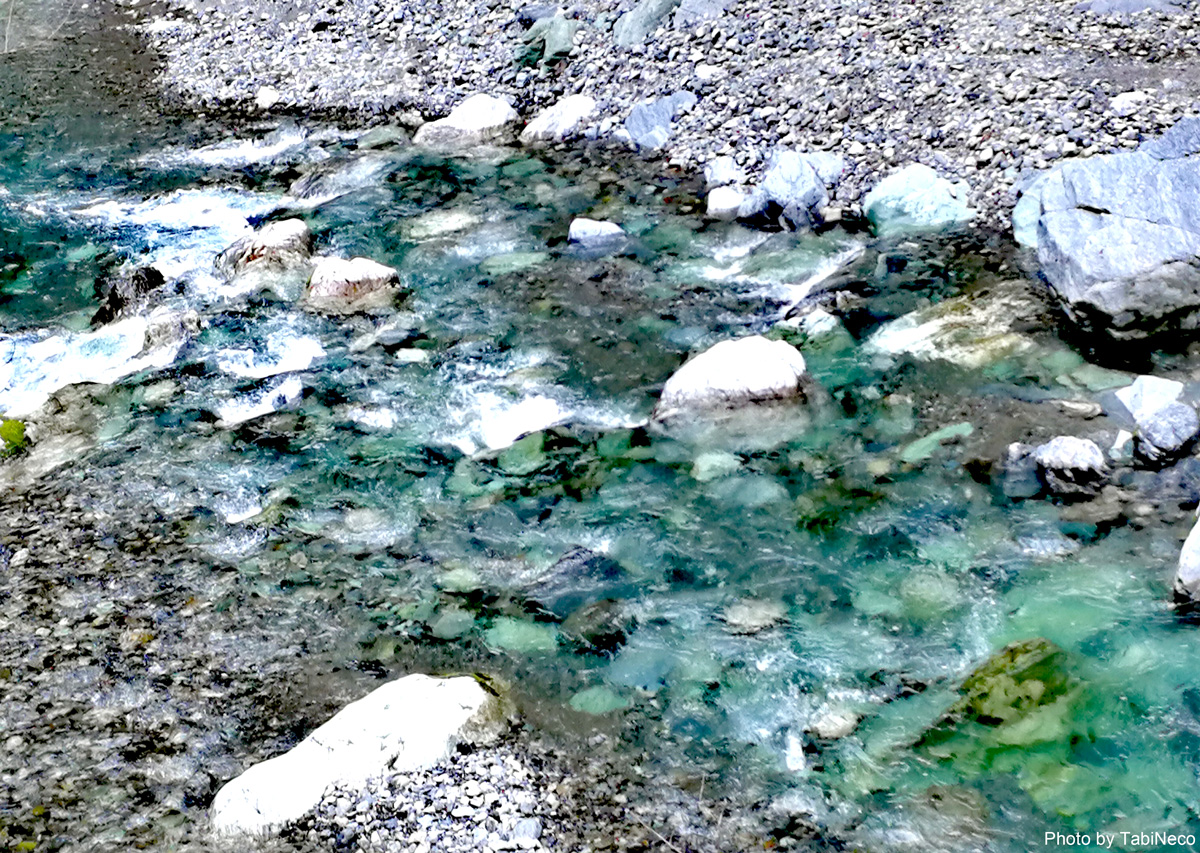
Challenge the human power ropeway "wild monkey"!
Just a short walk from "Mehashi" is "Human Ropeway", the "wild monkey".
You can cross the Iya River on the opposite bank by pulling the rope in your hand called "yakata". 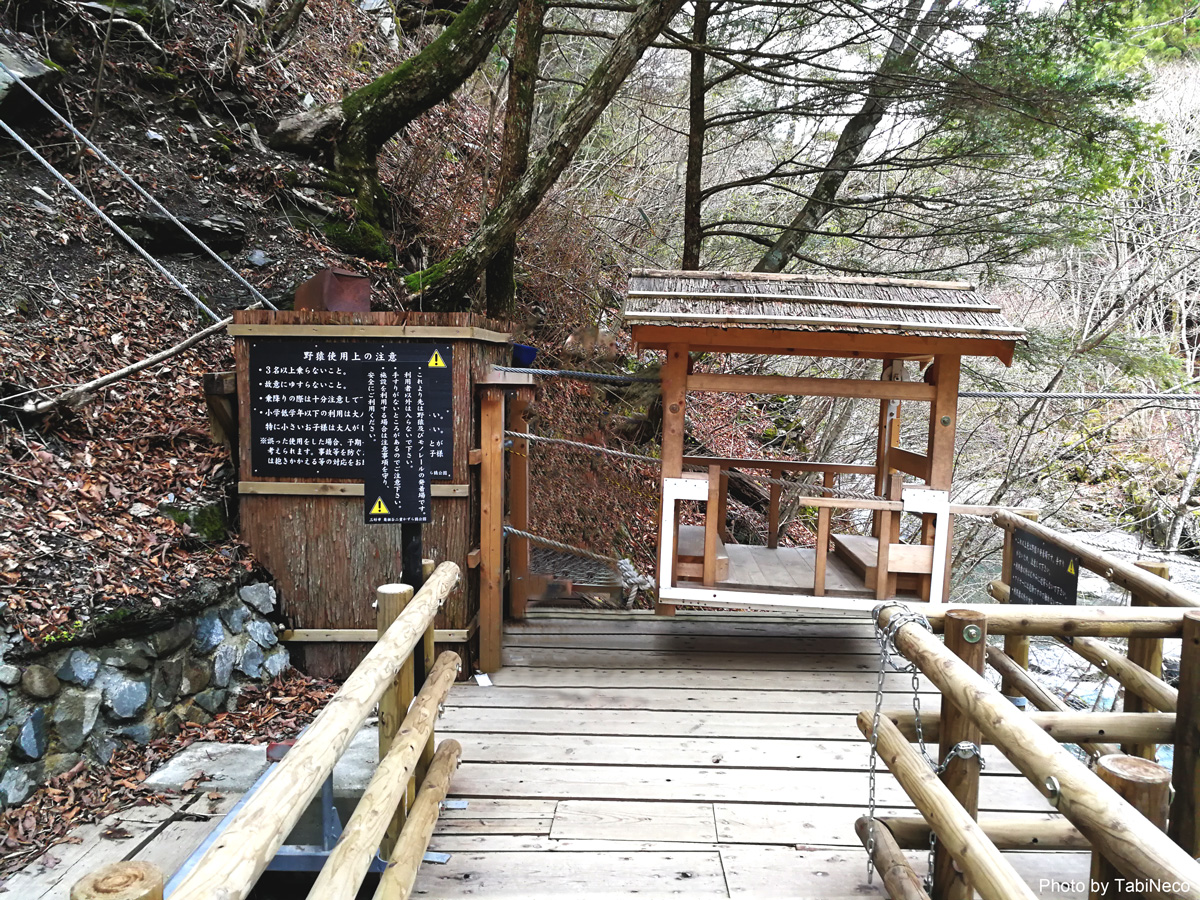
Wild monkeys were one of the oldest means of transportation across the river for the people of Iya.
You can go naturally up to half without pulling by hand, but since the other half is human power, you also use your strength.
However, since a pulley that slides well is used, you can fully enjoy even the average physical strength of women.
Please try the wild monkeys! 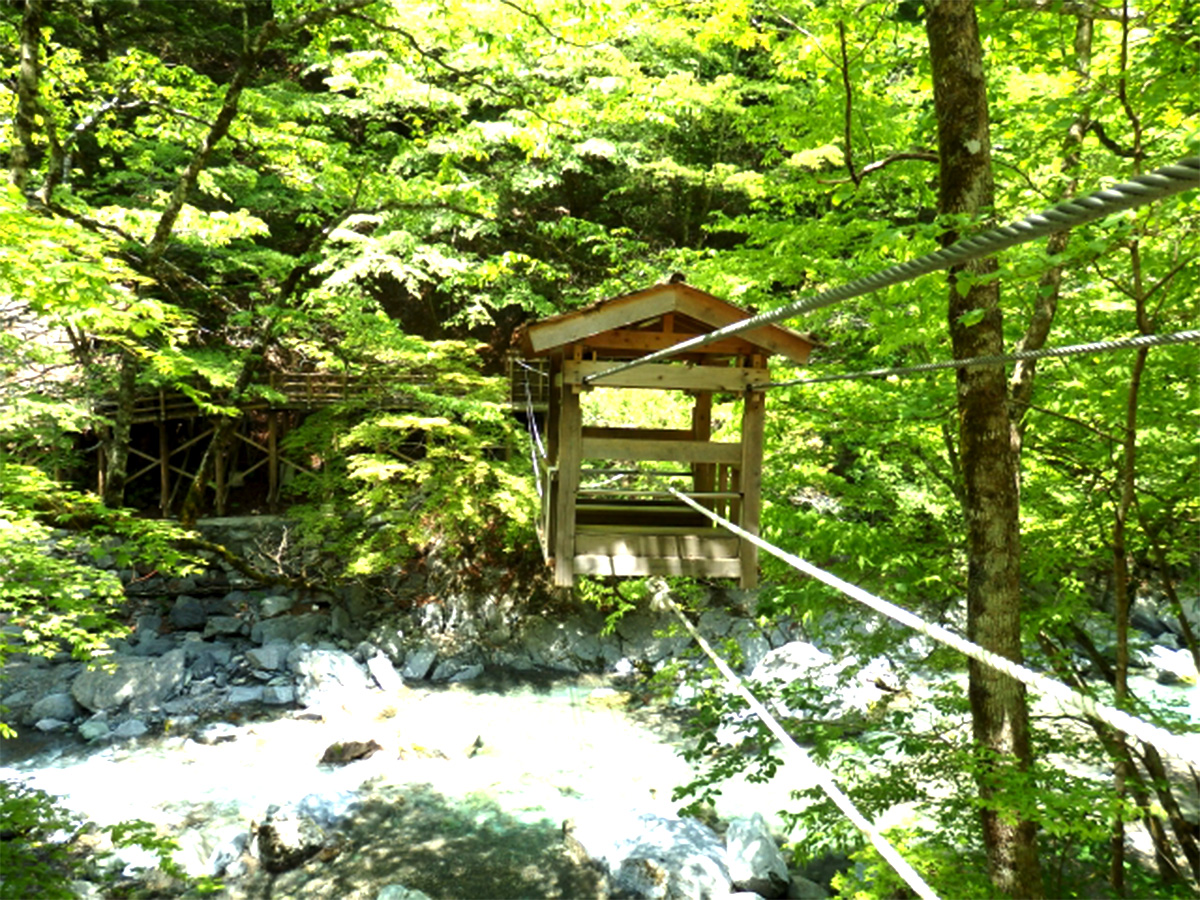
Okuiya Double Kazura Bridge Basic Information
Address: 620 Higashi-Iya Sugo, Miyoshi City, Tokushima Prefecture
Telephone: 0120-404-344 (Miyoshi City Tourist Information Center)
Price: Adults 550 yen Children 350 yen Business hours: From sunrise to sunset (However, it will be completely closed during the winter season from December 1st to March 31st of the following year.)
Parking: Free (capacity of 300 regular cars)
The legend of the deceased of the Heike family from "Hokosugi"
The Hoko Shrine is located in the Higashi-Iya area where "Oku-Iya Double Kazura Bridge" is located.
"Hoko Shrine" was built by Mori Taira to enshrine the Hoko, the guardian deity of the Heike family.
Inside this shrine, there is a huge Japanese cedar tree called “Hokosugi (Kunimori cedar)” that is over 800 years old and has a height of 50m and a circumference of 11m. 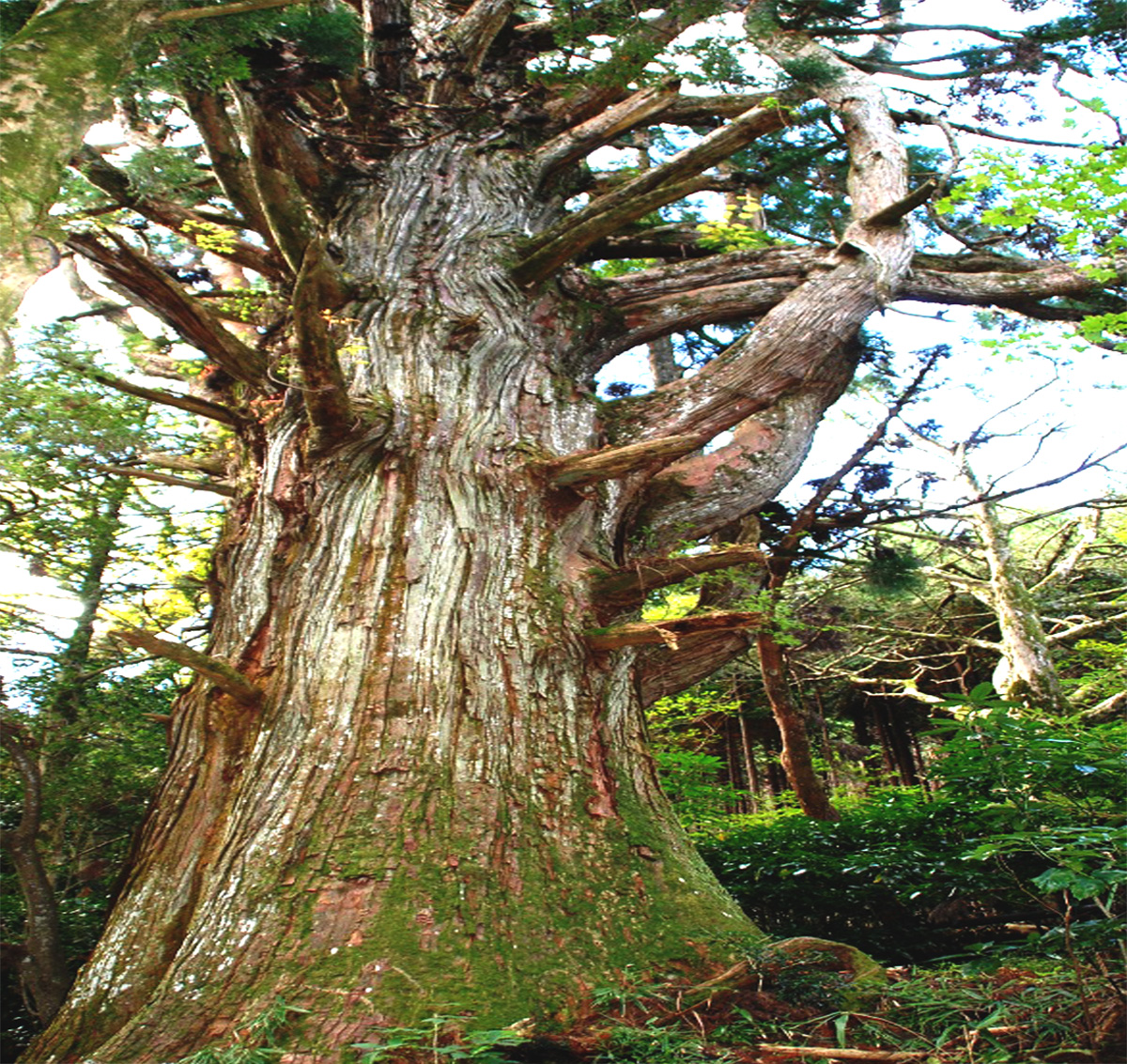
"Hokosugi (Kunimori cedar)" has such a legend.
Hirokuni Mori had fled to the Iya region while secretly protecting the young Emperor Ande with nearly 100 subordinates, but Emperor Ande died at the age of 8 due to high fever.
Dejected to this, Hei-Kunimori steals the fight against the Emperor Ande, who lost his life in the size and emptiness of what was lost in the fight, and all the Heike family who lost their lives by entering the West Sea. Determined to stop. He prayed for peace and planted one cedar seedling at Hoko Shrine with his own hands. By planting this cedar, I think that he decided to continue to establish roots like this cedar in Iya and live as a flat country.
According to this legend, this Hokosugi came to be called Kunimori Cedar, and the current appearance 800 years after that is this giant tree. This tree is also designated as a prefecture's natural monument.
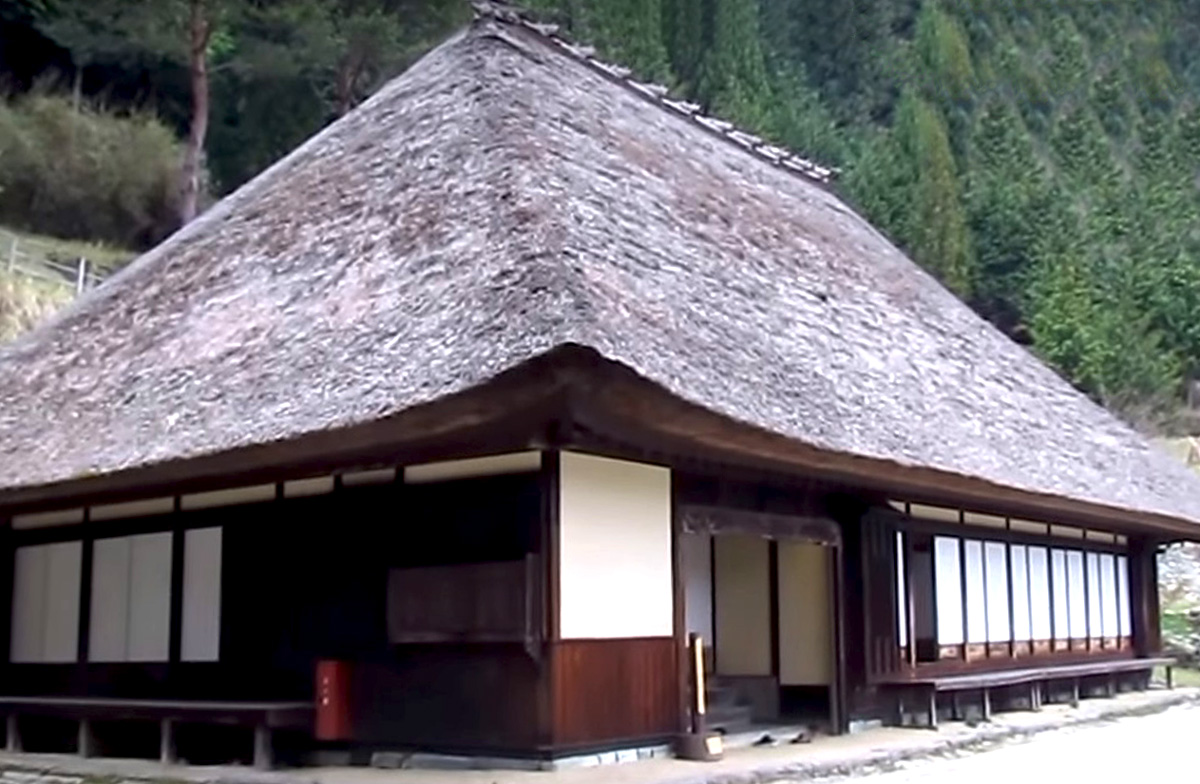
Also nearby is the Kita Family Residence, the largest samurai residence in Iya, the descendant of the Heike, which is also a tourist attraction for visitors.
The dream of the Heike's revival of the Heike has not come true, but even now, more than 800 years ago, the fact that the Heike's deceased legend continues to live in such a hidden place is that I noticed the unease of conflict and stupidity, I think it is because his thoughts of "praying for peace" quietly after making a tough decision and continuing to live as life beyond time and space.
The legend of the fallen Heike family who has survived for more than 800 years is truly the legend of Heirokuni.
I prayed for world peace and space peace.
Hoko Shrine basic information
Address: 43 Higashi-Iya Oeda, Miyoshi City, Tokushima Prefecture
Phone number: 0883-72-3910
Parking: Free (can accommodate 10 regular cars)