






As the autumn breeze sets in, September carries a certain melancholic air. The 14th is known as ‘September Valentine’s Day’, a day when women can hand-deliver breakup letters written in green ink to formally end relationships. But did you know that the following day, the 15th, marks the anniversary of a battle that forever changed Japanese history? Do you know its name…?
Tokugawa Ieyasu vs Ishida Mitsunari – The ultimate showdown
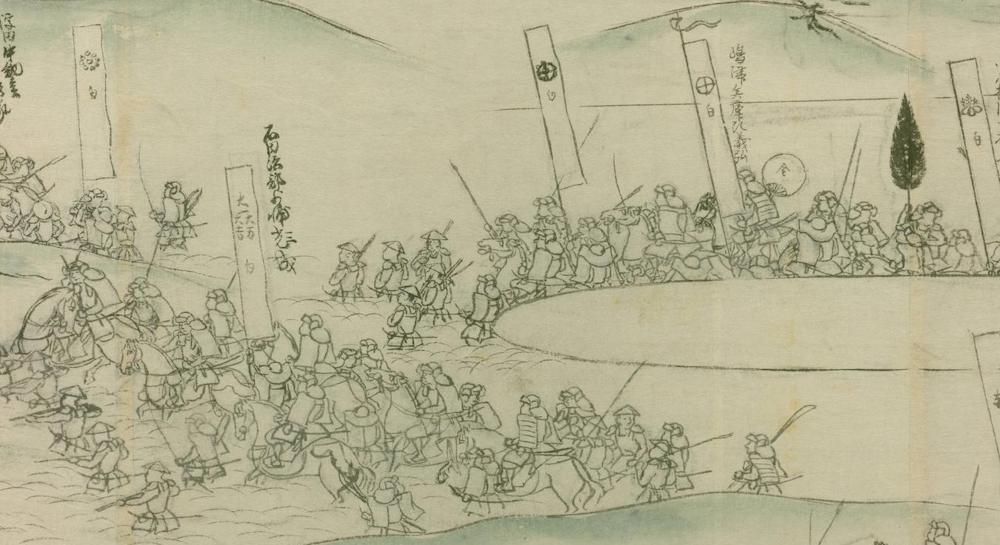
On 15 September, 1600, the armies of Tokugawa Ieyasu (徳川家康) and Ishida Mitsunari (石田三成) clashed at Sekigahara (関ヶ原), in what is now Gifu Prefecture. That’s right—15 September is the anniversary of the Battle of Sekigahara.
Around 150,000 soldiers from both the Eastern Army (led by Tokugawa) and the Western Army (led by Ishida) gathered from all across Japan. The battle began around 7 AM, with both sides locked in a fierce struggle.
The tide of war shifted dramatically at around 2 PM when Kobayakawa Hideaki (小早川秀秋), originally aligned with the Western Army, defected to the Eastern Army.
Tokugawa Ieyasu, growing impatient with Kobayakawa’s hesitation, pressured him to make a decision by firing muskets in his direction. This prompted Kobayakawa to finally commit to switching sides, sealing the fate of the battle.
As history tells us, the Eastern Army emerged victorious, and Tokugawa Ieyasu ultimately seized control of Japan.
The real reason behind the defeat
The scene of Kobayakawa’s defection is often depicted in films and TV dramas. However, in recent years, many researchers have questioned various episodes of the Battle of Sekigahara, including Kobayakawa’s betrayal, which have traditionally been told in a certain way. As a result, the overall picture of the battle is beginning to change significantly.
Kobayakawa’s betrayal may seem like a dramatic turning point, but it turns out that, in reality, it was a far more ruthless development for the Western Army commanders, such as Ishida Mitsunari.
Ieyasu’s son arrives far too late!?
While betrayal played a role, there was also a significant delay by one figure who ended up being labelled ‘useless’ even after generations: Tokugawa Ieyasu’s son, Tokugawa Hidetada (徳川秀忠).
Despite being entrusted with a massive army of 30,000 men, Hidetada arrived late to the Battle of Sekigahara, Ieyasu’s life-or-death struggle. Although Tokugawa’s army ultimately won, Ieyasu, furious with his son, reportedly refused to meet him when he finally arrived.
However, this infamous delay may not have been entirely due to Hidetada’s incompetence. In fact, it seems that Hidetada faced a series of unfortunate and unjust circumstances before he managed to arrive at the battlefield.
The Battle of Sekigahara is a topic that most japanese people have heard of at least once in history classes, but the events, movements of key figures, and political background surrounding it may not be as well known. At Waraku Web, we feature many stories about the battle and the warlords involved. We invite you to read them!
Header image : National Diet Library Digital Collection
This article is translated from https://intojapanwaraku.com/rock/culture-rock/122309/