






So, why were they born so small? Let's explore the mystery of Japan's tiny heroes.
Small heroes, Big legends
Many Japanese folktales feature small heroes. Let’s start by introducing a few of the most famous. As you read about their exploits, try to remember just how tiny they were.
Issun-boshi
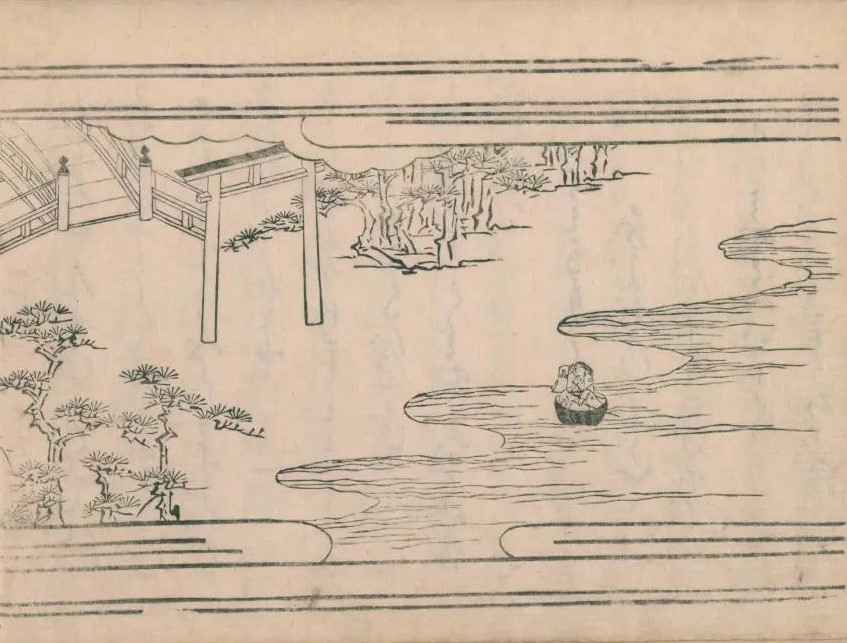
When it comes to Japan’s most famous small protagonist, it has to be Issun-boshi. His size is evident from the very start of the story, as his name literally means ‘one inch’ (about 3 cm).
Raised by an elderly couple who were unable to have children, Issun-boshi was a clever and dutiful son, but he never grew any bigger. Still, he never became bitter or fell in with a bad crowd. Instead, he declared, “I want to see the wider world, and I promise to return as a great man,” before heading to the capital.
He set off down the river, his sword a sewing needle, his boat a bowl, and his oars chopsticks. He was eventually hired as a retainer for the daughter of the most prominent family in the capital.
Perhaps his encounter with the young lady made him brave, but one day, Issun-boshi found himself in a fight with an Oni (ogre-like demon).
It happened on the way back from a trip to the temple with the lady. When an oni suddenly appeared, Issun-boshi drew his sword and bravely faced it. However, because of his small size, the oni swallowed him in a single gulp. Yet, he refused to give up. He used his small stature to his advantage and ran wild inside the ogre’s stomach.
The story takes a dramatic turn after this. The oni, upon leaving, dropped a magical mallet. When Issun-boshi swung it, he immediately grew into a fine adult. He married the lady and even brought his parents to the capital, fulfilling his promise to be a good son.
Momotaro

The idea of a child being born from a peach makes no logical sense. But that’s the kind of thing an adult might say. A child, on the other hand, can simply accept the story of a “big peach floating down the river, bobbing along” and be genuinely amazed by his birth.
As he was nestled perfectly inside a peach that had drifted down the river, it felt like Momotaro was destined for great things from the moment he was born.
Raised by an elderly couple who led a peaceful life, Momotaro one day heard that the oni on Oni-ga-shima island (鬼ヶ島), were causing trouble and decided to go and defeat them. Along the way, he acquired a dog, a monkey, and a pheasant as his retainers in exchange for some kibidango (きび団子) dumplings. They all went to the oni island together, where he successfully defeated the oni and returned with their treasure.
Kaguya-hime
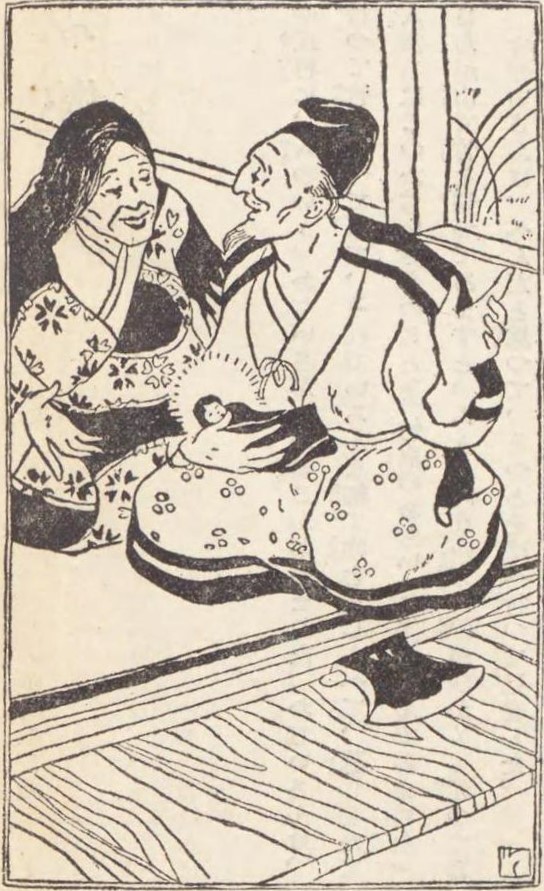
Kaguya-hime is the beautiful, tiny heroine of another folktale. Written around the beginning of the Heian period, The Tale of the Bamboo Cutter is a story rich in sentiment, starting with the phrase, “Long, long ago…”
Long, long ago, there was an old man known as the Bamboo Cutter. One spring, he found a tiny girl inside a glowing stalk of bamboo. The girl was named Kaguya-hime and was raised with great love.
Amazingly, Kaguya-hime quickly grew into a beautiful woman. Her beauty became famous, and many noblemen came to ask for her hand in marriage. However, the princess would give them each a difficult task and refused to marry anyone. She even turned down a marriage proposal from the emperor himself. Eventually, Kaguya-hime was welcomed back by messengers from the moon and returned to her home.
Japan’s oldest tiny hero
In addition to these, Japan has other figures who, despite their size, achieved remarkable things. One of them is the country’s oldest small god, Sukunahikona no Mikoto.
Sukunahikona no Mikoto is a god said to have crossed the sea after falling from between the fingers of Kamimusubi no Mikoto in Takamagahara (高天原), (because of his tiny size) and arrived in the province of Izumo (出雲).
Despite his small stature, Sukunahikona no Mikoto is said to have travelled across the country with Okuninushi no Mikoto, building the nation. He also possessed great wisdom and skill, and saved people from illness. It was Sukunahikona no Mikoto who passed on the knowledge of medicinal remedies. He was a truly great god.
The name ‘Sukunahikona’ itself is said to be derived from ‘sukuna,’ which means ‘small in stature.’ There are even charming stories of how, even though his voice could be heard, he couldn’t be seen (because he was so small), or how he bit the cheek of Okuninushi no Mikoto when they first met, and had to be picked up with a finger and placed on the palm of his hand.
Tiny but unstoppable
So, why are the heroes in these folktales so small? Was there a reason they were born that way?
These small heroes almost always appear in stories as special children, not ordinary ones. Their size is often abnormal, whether they are only three centimetres tall (Issun-boshi), born from a peach (Momotaro), or found inside a glowing stalk of bamboo (Kaguya-hime).
You might expect them to be small and weak, but they later undergo astonishing transformations. They either grow up in a flash, stay small forever, or become stunningly beautiful.
Looking back, the time the Bamboo Cutter and Kaguya-hime spent together as parent and child was so short. It almost makes you wonder if her refusal to marry was because of a daughter’s desire to spend as much time as possible with the old man and woman who had raised her with such love.
After all, she was a girl found inside a bamboo stalk. She must have seemed so small and fragile. It’s not hard to imagine the doting old couple gently carrying her home, cradling the palm-sized girl as if she were a little bird.
Interestingly, once Momotaro and Kaguya-hime grow up, their former size is forgotten, and no one brings it up. Only the reader remembers how surprisingly small they once were. Even the characters themselves don’t seem to give it a second thought.
A reason for their size
In most cases, these small heroes come to elderly couples who are childless. The fact that they were granted through prayer to a god makes them even more special. They were all longed-for children, blessed by the gods.
The new-born children and the elderly couple, who are close to the end of their lives, represent two extremes. The one thing they have in common is that they are both seen as being closest to the divine.
The fact that these small heroes appeared in the world by using natural vessels like peaches or bamboo is also significant.
Their rapid, astonishing growth reminds us of plants in nature, whose branches become heavy with fruit. It’s possible that these folktales were born from the awe and reverence the people of long ago felt for the vitality and life cycles of such plants.
Closing remarks
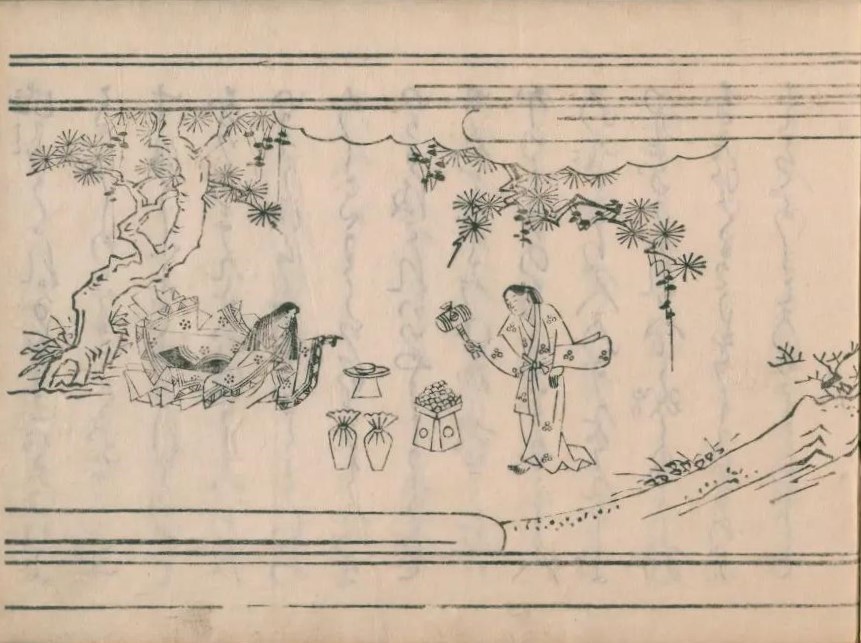
The small heroes of these folktales may have a human form, but their birth and upbringing are different from ordinary people. The elderly couples who raise them never complain that these children are “strange” or “different.” Instead, they cherish them as if they were their own. Perhaps to repay this kindness, the small heroes pave their own way, find success, and show their love for the old couples right to the end.
To an adult, their smallness is illogical. But perhaps these folktales, featuring small heroes, are a symbolic way of telling children that the lives they will encounter as adults are not always so straightforward. There seems to be much to learn from these tiny heroes, for both young and old readers alike.
References
Maki Sachiko (槇佐知子), Nihon Mukashibanashi to Kodai Ijutsu (日本昔話と古代医術), Tokyo Shoseki (東京書籍), 1989
This article is translated from https://intojapanwaraku.com/culture/280660/