









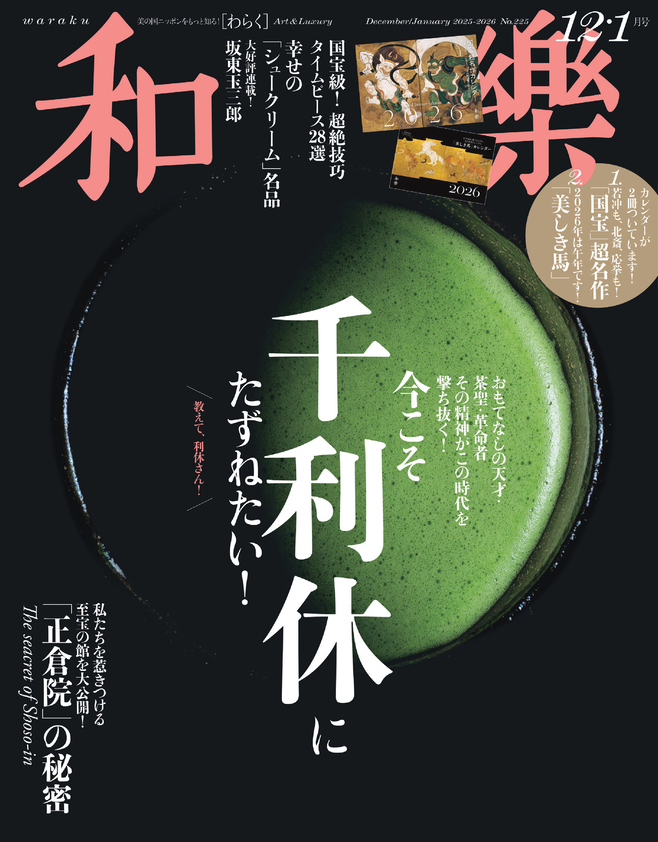




Youkai are familiar with games and manga, and anime such as "Yokai Watch". As the entrance to the youkai science, I will comment on its history and typical youkai.
What is a monster?
A monster is a fictionalized fictional phenomenon that transcends human knowledge, the mysterious power that causes it, and an extraordinary event. It is also known as "Yakashi" or "Monosuke". In ancient times, it was believed that all living things, whether living or inanimate, had spirits. The role of the youkai and the god may also have been convinced that the misfortunes that no one can blame could be blamed for being beyond humanity.
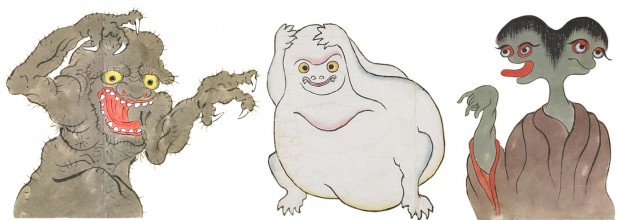
Hokusai Suechika "Ride-En Emaki" (part) The late Edo period International Research Center for Japanese Studies, Kura
The history of youkai
Appeared in works such as medieval history books from ancient times
The history of youkai dates back to ancient times. In the history books such as "Kojiki" and "Nippon Shoki", descriptions of demons, large snakes, and weird phenomena have already been seen, and in the Heian period, there are also several narratives in which mysterious narratives such as "Now a long time tale collection" appear It was compiled. However, in this era, there are books with mysterious appearances, but there is still nothing depicting the form of the monsters.
Eventually, in the Middle Ages, picture scrolls and paperboards made it appear as monsters with figures. When you look at the Hyakunin 夜 line picture scroll drawn in the Muromachi period, the monsters that appear appear just like a pet. Youkai were drawn as being in contact with a weak person from your own side.
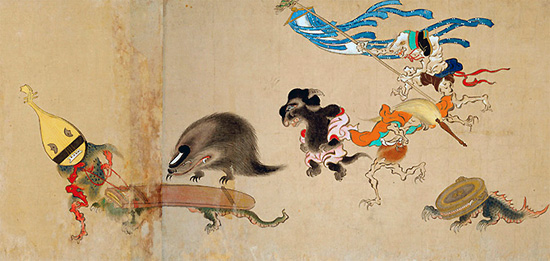 Dento Mitsutoshi "Hyakuten Night Line Emaki"
Appeared in the Udo period Edo period
When you enter the Edo period, monster talks such as "Hyakunen Monogatari" based on the transmission of monsters are very popular. Adapting Chinese novels, mixing traditions and stories took place, and the creation of books increased. In addition, it became a motif of toys such as Sugoroku and Carta, and monsters have come to be drawn as more specific images by famous Ukiyo-e artists such as Katsushika Hokusai and Utagawa Kuniyoshi.
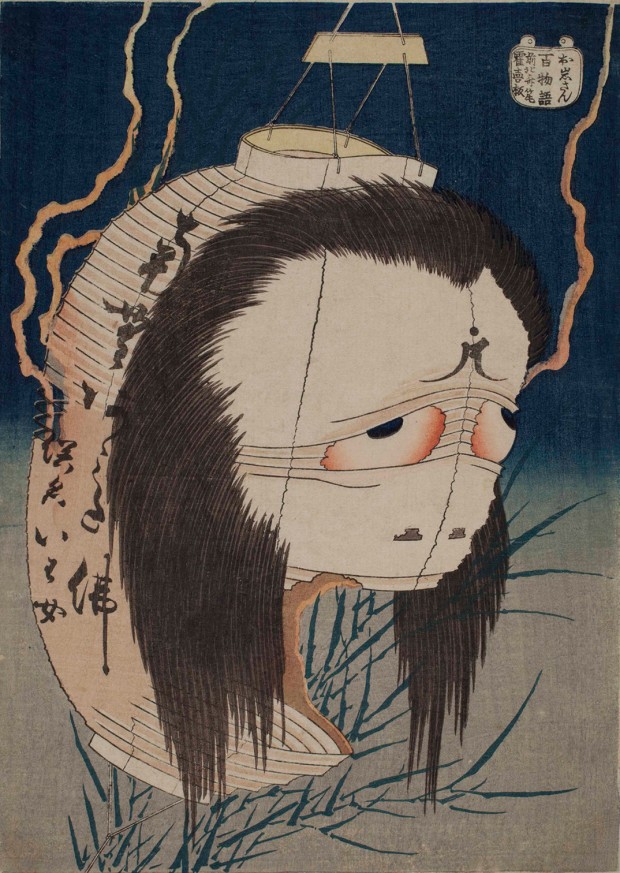
Katsushika Hokusai "One Hundred Story Oiwasan" Medium size picture Tenpo (1830-1844) early in the year Chugai Sangyo Co., Ltd. (Hara Yasuzaburo Collection) storehouse
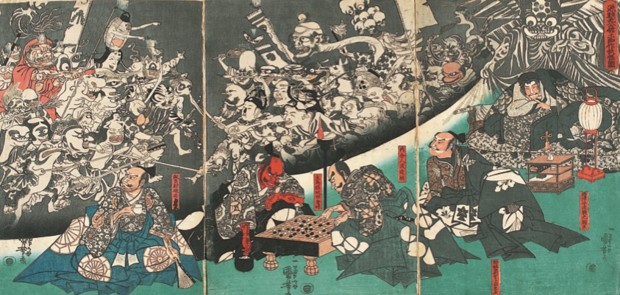 Utagawa Kuniyoshi "Gyoto Yorimitsu Kokan Dosakusaku Yokai map (Mitsumoto no Yatsumitsu Tatsuchigumo Yokai)", Waseda University Library. A legendary one scene where the late Heian warlords and source Yorimitsu defeat monsters. It is said that the strange monsters in the upper left have been rumored to be the victims of the famous Tenpo Reform, and sold to the Shogunate as a satire. There is a feeling that the version of the version has a lot of echoes and that this picture has been collected independently.
From modern to modern characters, games and manga
While monsters are influenced by foreign countries, their appearance has been fixed and characterized, and their longing has changed to a target of relaxing entertainment. Just as youkai were once drawn in various media, they are depicted in the manga “Gegege no Kitaro” and the anime “Yokai Watch”, movies and novels as well. Also in today's world, new monsters such as "Hanako Hanako" and "Winging Woman" have been born, beginning with rumors and talks.
Japan's Three Big Monsters (Tribes) are Demons, Kappas, Tengu
Youkai researcher and writer Katsumi Tada defined the trio of demons, kappas (Kappas) and tengu (tengu) as " three major Japanese monsters ". These monsters are a kind of lore widely spread throughout Japan, and there is also a theory called "the Japan's Five Great Monsters", which is the addition of whales and whales.
Demon
A monster who looks like a person with horns and fangs. The demons in Japan began with the hidden demon of the “Kotoki” Hyosen Otome (Omotsushikome) and changed with the times and the flow of thought.
Kappa
A monster that is supposed to live in the water. There is a plate with water on the head in the form of a child, and it has a poop head. It is believed that the water god or the family or servant of the water god, or that it has fallen out.
Tengu
In ancient times, legends such as Chinese old book "Sankaikaikai" and Yasha Tenshu of "Jizokeishi" are considered to have been created by learning Japanese faith. After the Middle Ages, it has a red face with a mountainous appearance and a high nose, and the mouth is depicted as a beak of a bird and has a fanci.
Japan's three major evil monsters are demons, nine o'clock, ten's bowl
Among the monsters that have appeared in Japanese folklore and legends, the monsters that are said to have caused great damage, especially in a way, are called "Japan's Three Great Evil Monsters." The three monsters are the demon sake-don't, the nine-tailed alga, and the Emperor Tenku who has become a tengu.
Susumu Doji (Shuten Doji)
During the Heian period, a weird phenomenon occurred in which young people and princesses living in Kyoto encountered one after another. Therefore, when the Yin-yang teacher made a fortune, it was understood that it was the work of the demon (Sakai Doko) who lives in Oeyama, and the emperor made the conquest of the family. When Iagari visited the demon's castle and heard the story, he began to talk about personal stories such as being called "Sakai Dojiko" because he likes to drink. There, they acted as a poison liquor called "God weird sake" (God's sake), and succeeded in getting rid of the sleeping place of the sake bottle child. The mountain where we live seems to have various theories.
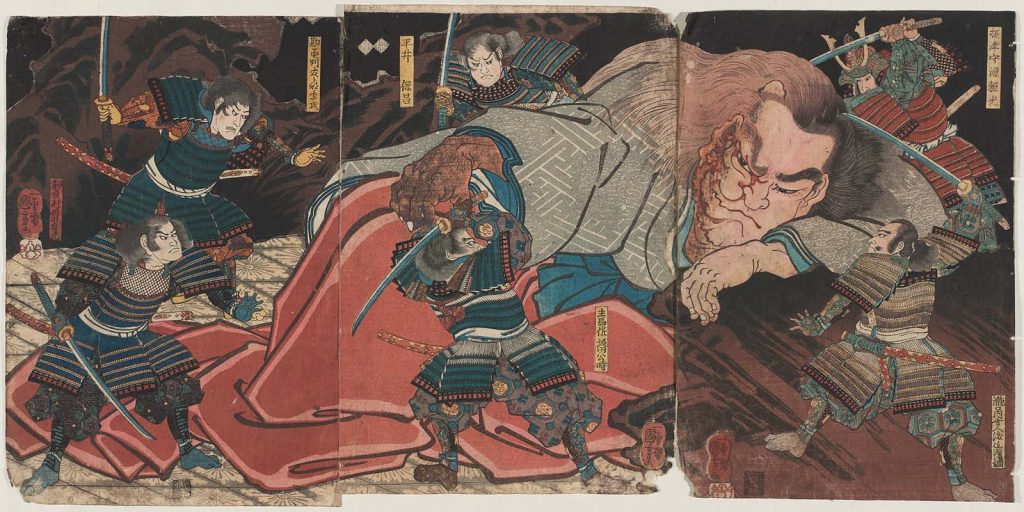
Utagawa Kuniyoshi "Oeyama sake bowl child"
Tamamo-mae (Tamamono-mae)
A woman who has been loved by Toba the Emperor during the Heian period. It was loved by the beauty and wisdom, but its true character was the nine-tailed moth. Soon after, they were spotted by the Yin-Yang master, and in front of the Tamamo algae, they disappeared in the form of nine-tailed bales of white-faced gold hair. The nine-tailed moth took the lives of approaching humans and animals and made them fear, but was later discovered in Nasuno (Tochigi Prefecture) and was ruled out by a warrior. It is believed that the formation of this legendary Tamamo-era is before the first half of the Muromachi period, and it has been depicted in ancient times in the "Shin-meiko" and the "Azamo-no-sako" of Ogasawara.
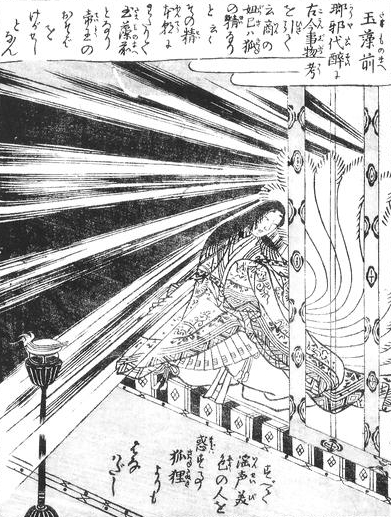
Toriyama Ishizuke "now-and-old-painted-after-the-next-generation drawings"
Emperor Shutoku (Sutokutenno)
Emperor Sakuto, who was born in 1119. At the age of 3 years old, he was appointed as the 75th Emperor of Japan. After that, I will follow my unfortunate life, and I will be guilty to the Sanuki (Kagawa prefecture) by the defeat of the Hakomoto revolt. The emperor Gotoku, based on Buddhism in the Sanuki country, wrote manuscripts to represent the offerings of the victims and his reflection, but was not received from the suspicion that "the curse had not been dealt". From the anger he bites off his tongue, with his blood, "Becomes the great demon of Japan, takes the emperor and makes the people the prince and the people." It is said that I wrote. It is said that it is a horrible figure like Yasha, and it has been alive as a Tengu. By the way, "Sakai-don's child" and "Tama-mo-mae" were eliminated in the story, but Emperor Takutoku who has become a Tenshu has not been eliminated yet.
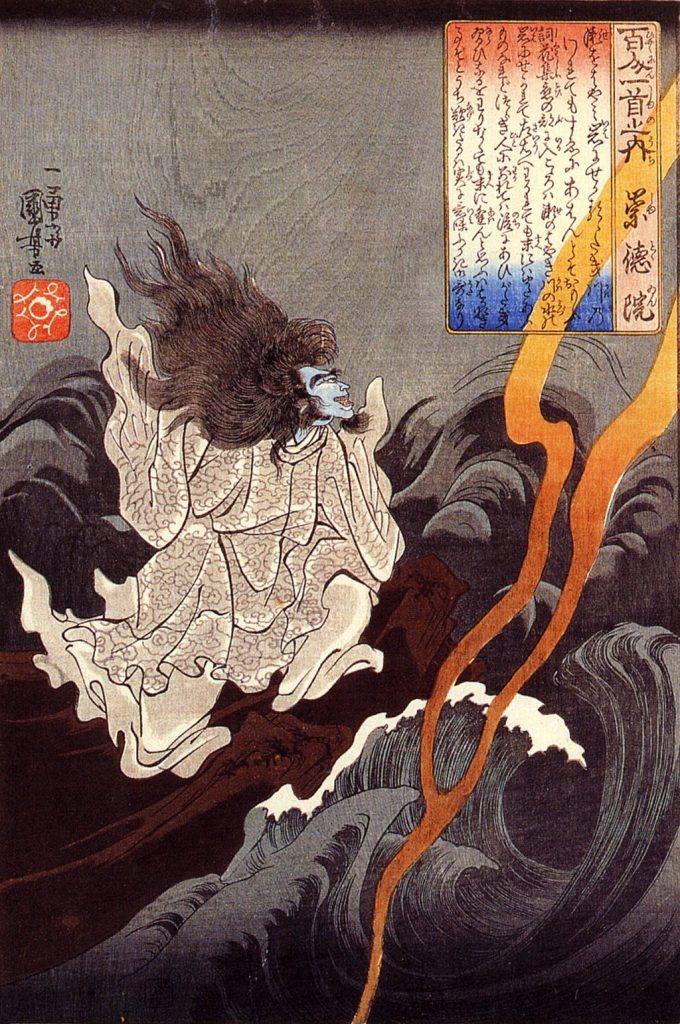
From Utagawa Kuniyoshi "Hyakunin Isshunouchi" "Sorokutoin"
What is the difference between youkai and ghosts?
Ghost refers to " the spirit of a dead person " or " the figure of a soul that could not be adult Buddha ." The ghosts of Japan have been depicted in a terrifying and creepy appearance compared to the somewhat cute and humorous monsters. It is considered to be an image that was born out of a disastrous impression, as ghosts have been defined as " those who appear in order to clear up the world's impotence (revenge, obsession, obsession) ".
Four conditions of ghost
1. Go to a specific person
A ghost is a ghost of a person who died while remaining unsettled in this world. Therefore, it only appears in front of the person who made it and the people involved. He listens to his wishes and needs properly, and disappears when the problem is resolved.
2. I have no legs
The reason why there are no ghost's feet, such as "A human being who has become a spirit can float in the air and fly", "From a drawing of a Buddha picture (from a lion's wheel)" and "The dead (others) are cut off in hell" Variety. What is clear is that the elimination of the lower body has made the category of the spirit more vivid and succeeded in differentiating between the present and the present world.
3. Appears in life
In a completely different appearance from that in life, the effect of fear is halved, so it is also important that the hairstyle and face that make you feel horror in the costume when you died. Glittering hair and swelling of the eyes can improve visual effects.
4. Decide pose is "Kose"
The Snow Woman of the Hundred Monsters of the Edo Period has his right hand on the lower belly. The theory is that it implies that the child between human beings is in the stomach. It is said that Maruyama Hioki has begun to draw ghost images with the right hand in the pocket.
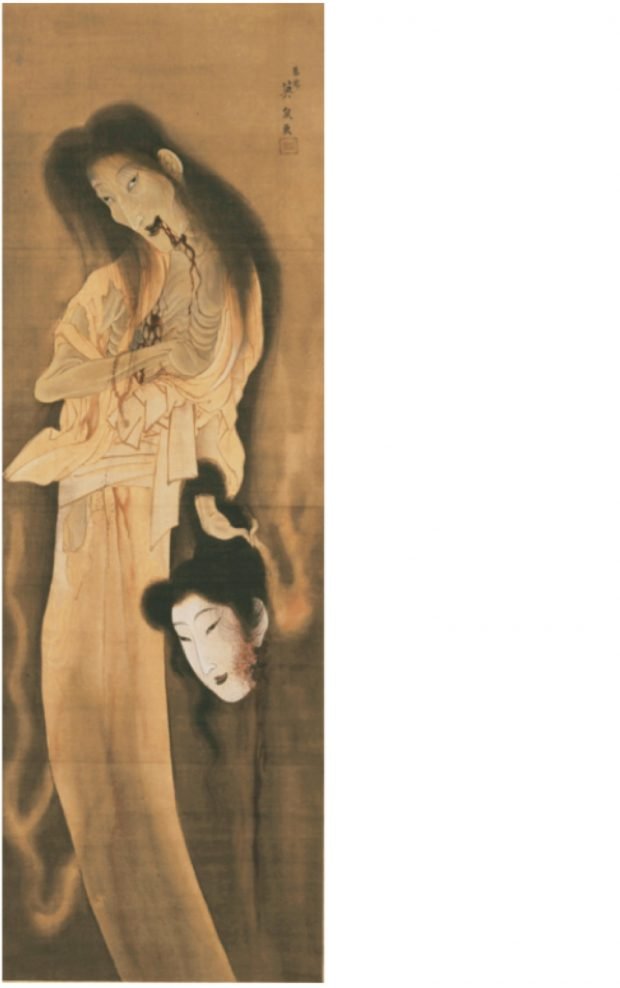 Kiyoi Eisen “Haunty map” Fukuoka City Museum Collection Image courtesy Fukuoka City Museum DNPartcom
10 famous Japanese monsters
1. Azuki wash (red azuki)
Haunted all over the country. Youkai makes a noise and you wash red beans in the river. The characteristic of Azuki wash, which is depicted in the Edo Period Bizarre "Picture Book Hyakunen Monogatari", is the appearance of a child with a physical disability, who is good at counting the number of things It is said that it can be said without saying.
2. Sitting on the floor
A spiritual monster that has been transmitted around Iwate Prefecture. They are in the form of children and live in the residences and warehouses of the house, and there is a tradition such as bringing wealth to the house. It is a youkai that appears in Kuno Yanagida's Tono Story.
3. Umibouzu
A monster living in the sea. It is also called the sea entrance, and it appears in the form of a large entrance, and it is said that it will become larger as you look up, but it will disappear as you look down. In the essay "Kinpanji's own language" of the Kansei period, there is also a description that the sea-boar had been up from the sea and was on the earth for about 3 days, and he was told that the child was not to go outside until he returned to the sea .
4. One-toned cotton
A monster from Kagoshima Prefecture. The figure described in Nomura Denshi and Yanagida Kunio's “Osumi Hajime County Dialects” states: “A piece like cotton (about 10 m long and about 30 cm wide) attacking a spotter at dusk ".
5. Tree spirit (Kodama)
Yamabiko, a phenomenon in which voices are reflected and delayed in the mountains and valleys, has once been regarded as the work of the tree ghost “tree spirit”. In the old days, the god of trees in Kojiki was interpreted as tree spirit, or the dictionary of the Heian period, “Japanese name class 聚」, ”describes“ Kodama (Kodama) ”as the Japanese name of the tree god There is.
6. Cat's Cat
Youkai in the form of cats that appear in folklore and classic ghost stories. There are two types of patterns: a beast-like thing in the mountains and a cat kept alive in a house with aging and rejuvenation.
7. Naruga
A monster whose head is a cauldron depicted in the collection of monster paintings of Toriyama Ishigaki "Hyakujutsu Tsukure Bag". It is thought that it is one of the origin of naming that fortune-telling is performed by the shrine which judges a fortune from the sound when cooking a pot with fire, and the pot sounds an unexpected sound.
8. Nurarihyon
Mysterious monster. You can see many of them in the monster picture scroll drawn in the Edo period, but the details are unknown. Many of them are in the form of old people, and in the literature related to monsters since the Showa era, you enter the house from nowhere, such as the evening when the house is busy, youkai drinking or acting like your own house It is explained that.
9. Nue
It has a monkey face and torso torso, tiger limbs, and a tail that appears in "Heike Monogatari", etc. The tail is a snake monster. Appeared in the late Heian period.
10. Nurikabe
Youkai being conveyed to northern Kyushu. In Fukuoka's tradition, when you walk the night path, an invisible wall suddenly appears in front of you and you can not move forward. In Oita prefecture, it seems that similar stories are being transmitted to the private sector as monsters that animals cause.
For introductory articles such as ukiyo-e and exhibitions related to youkai, click here
■ What is a cat? Commentary on Japanese cat monsters
■ What is a monster or nue? Commenting on crying voices, figures, and legends
■ You can purchase everything from the monster figure of Mt. Aoyama to the monster goods of the three major Ukiyo-e painters! Produce cool in hot summer!
Reference: Shigeru Mizuki "Illustration Japan Yokai Daikan", Katsumi Tada "Residents of the Fantastic World IV <Japan Edition", Britannica International Encyclopedia
※ The image in the article is a re-edited article in the past "Kazui".
My motto is "I'm serious about being stupid", and I am having fun and having fun every day.