












"Tatami" is an integral part of Japanese culture. And, what forms the basis of Japanese culture that "does" such as tea ceremony, flower arrangement, judo, etc. forms a kimono and corrects the habit of sitting. It can not be told without the existence of tatami mats. However, with the influx of foreign cultures and contemporary housing conditions, the life with tatami has become a shadow. Do you not think about the long and long relationship between tatami and Japanese culture again now?
Japanese culture was with "Tatami"
A tatami mat was finely represented in the oldest picture scroll "Genji Monogatari Emaki". From here, it can be seen that tatami has already been partially laid in the court life of the Heian period. As you look at the “Toya,” the upper edge of the room where the high-ranked person is located is the edge of the room (Tatamiberi), and the edge of the room in the front is the lower edge of the room. It is depicted that the handle differs depending on the position and the position.
Representative of Japanese culture "Tatami" is also Kyoto Imperial Palace and National Treasure!
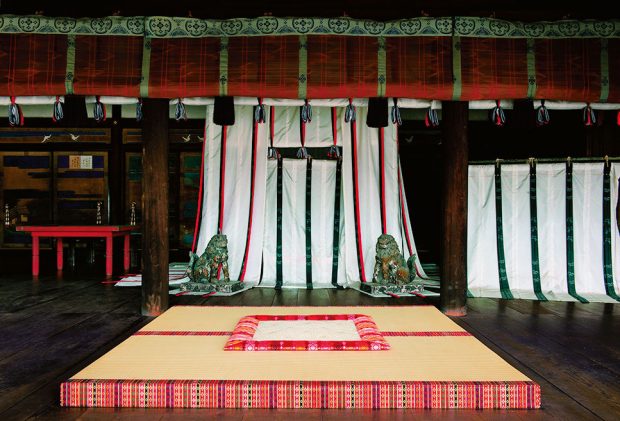
The best place to leave the history of tatami culture in the Kyoto Imperial Palace is "Hi no oshi". You can see the tatami mats where the emperor was throne during ceremonies. A valuable resource from the days when tatami was still used in rooms, and only used in upper class society. The tatami edge is the highest order edge.
The only tea room that is said to have been involved in the design of the tea ceremony people, Senri Rikyu National Treasure "Taian". The existence of tatami mats stands out because of the simplicity of the tatami mat space, without the fancy decoration. It is not a luxury but rich. Such "wabi" heart seems to be put in this tea room.
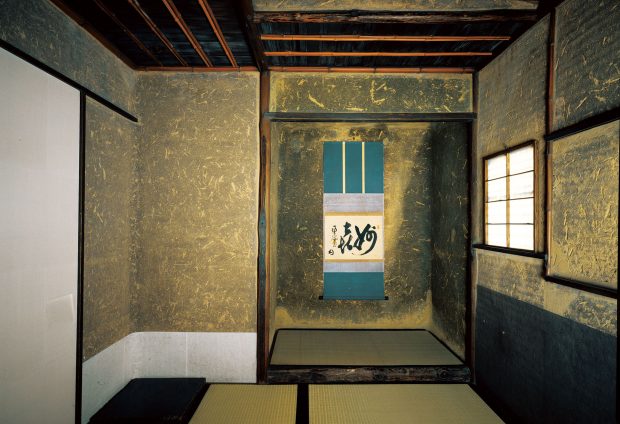 Photograph / Okamoto photo studio (Shige Okamoto)
Appeared in the world-class "Ukiyoe"
Ukiyoe artist Tsukioka Yoshitoshi, who played an active part from the end of the Bakumatsu period to the Meiji period, has a tatami mat painted on his masterpiece "Month 100". By reflecting the shadow of a pine tree on a tatami mat, “The shadow of pine trees on Natsuki and tatami mats” has a bold composition that lets you imagine moonlight without drawing a moon.
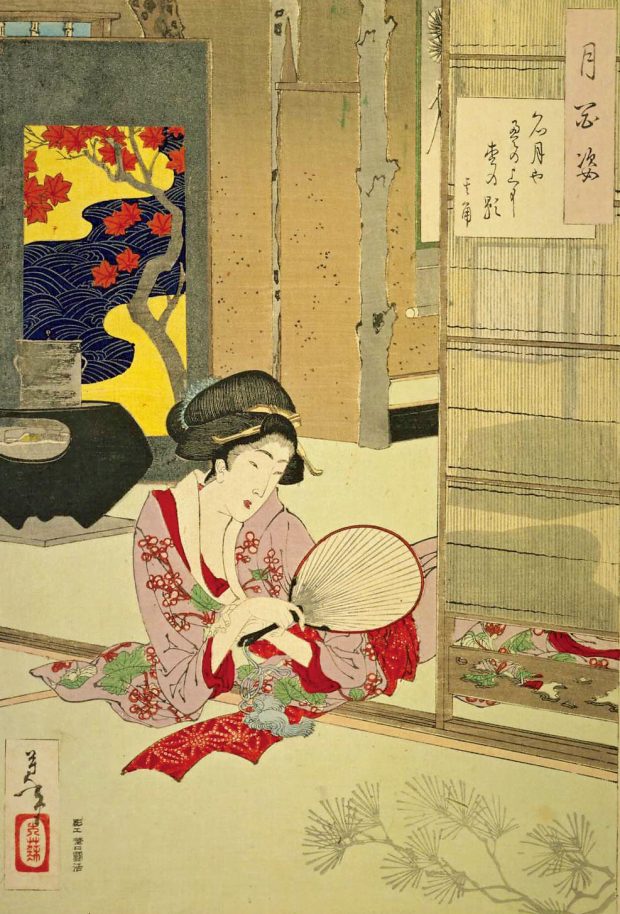 Yoshioka Tsukioka "One Hundred Figure" NDL
Sports is also Japanese culture. The moment of impression is on the tatami
The men's judo final of the '84 Ross Olympics. The whole world tears down at the fair play of Yasuhiro Yamashita who hurt his right leg and the opponent who did not aim there. Nowadays sportsmanship is a hot topic, I'd like to rethink Yamato on the tatami! By the way, strictly speaking, what is currently used in Judo is a mat that simulates a tatami mat.
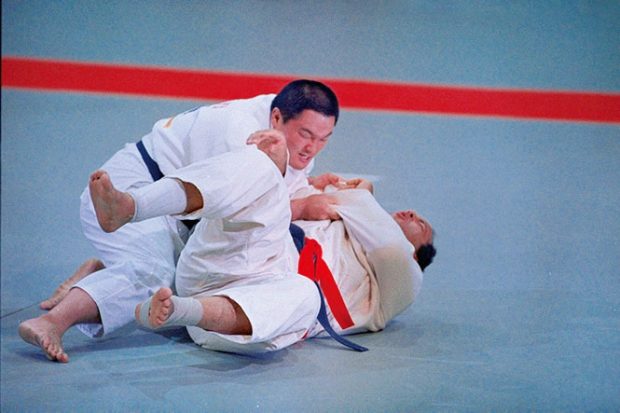 Asahi Shimbun / PPS communication company
History of "Tatami" developed in Japanese culture
Tatami is a unique culture that has been developed and developed in Japan. There is a description of tatami in "Kojiki" of the Nara period, and the tatami culture has been inherited until today.
At first, things like yours were repeated and used as bedding, but in the Heian period, tatami became a symbol of power in the upper class. It seems that things like "placement mats" were put in the necessary places, and part of the room was covered with tatami mats. Tatami rims were also defined by materials and patterns that could be used depending on the order.
After that, with the development of tea ceremony from the Muromachi period to the Azuchi Momoyama period, Japanese architecture changed significantly. The concept of a tea room and a four-and-a-half tatami is born, and the tatami is laid in the whole room. At the same time, the Japanese came to sit straight. In other words, Tatami has established the sitting method of "Saiza". In addition to tea ceremony, calligraphy, flower arrangement, judo, etc. are all related to tatami mats, and all things that come from Japan are rooted in Japan. It is thought that tatami is the foundation that created the spirit of the Japanese.
But again in recent years, tatami has become far from Japanese life. Living like a foreign country is convenient, but Japanese people do not want to forget the calm time spent on tatami. The lush aroma of grass, the gentle texture when you put your feet on. Is the kind of nostalgic feeling that everyone feels like Japaneseness? The shape and style have changed over time, but it is always the "Nippon Heart" that is spreading.
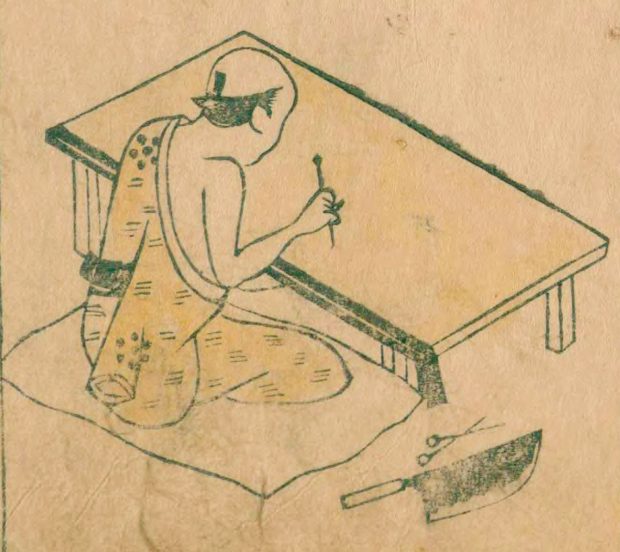 "Personality training dictionary" (part) National Diet Library / A tatami teacher who appears in the genre dictionary "Humanities training dictionary" which illustrates the life of the early Edo period. You can see that the tatami edge is attached by holding the needle.
Bring Japanese traditional culture closer to you. Japanese music original "placement mat"
Please feel free to use "Tatami" in your daily life. The Japanese-style original tatami mat “Coi tatami mat” is made with such thought. Although the name says "little", the specifications are in full swing. The size is perfect for a single person living. Please check it!
My motto is "I'm serious about being stupid", and I am having fun and having fun every day.