













Works with bold designs but feel familiarity. What kind of person was human national treasure of type picture dye, Keisuke Serizawa (Seriza Risuke), who put out works that still feel newness 35 years after his death? It untie with many works such as nature, scenery, characters, figures of craftsmen. 色差しする芹沢銈介②(1980年3月14日 望月康撮影 モノクロ).jpg)
History of Yusuke Serizawa
Yusuke Serizawa was born in 1895 in 1895 when he was a samurai in Shizuoka Prefecture, Shizuoka Prefecture. His remarkable talent has attracted attention from an early age, but his family is unhappy and the painter's path is abandoned. After graduating from the Tokyo High School of Engineering School's design department, he worked in the field of commercial design, doing sketches on a daily basis in his 20s. 
Yusuke Serizawa "Fuji and Kumon Noren's" around 1967 Cotton, dyed stains Shizuoka City Keisuke Serizawa Museum of Fine Art Among the many works of Fuji, one of the most simplified designs. Mt. Fuji was a special existence for Serizawa, who was born in Shizuoka City.
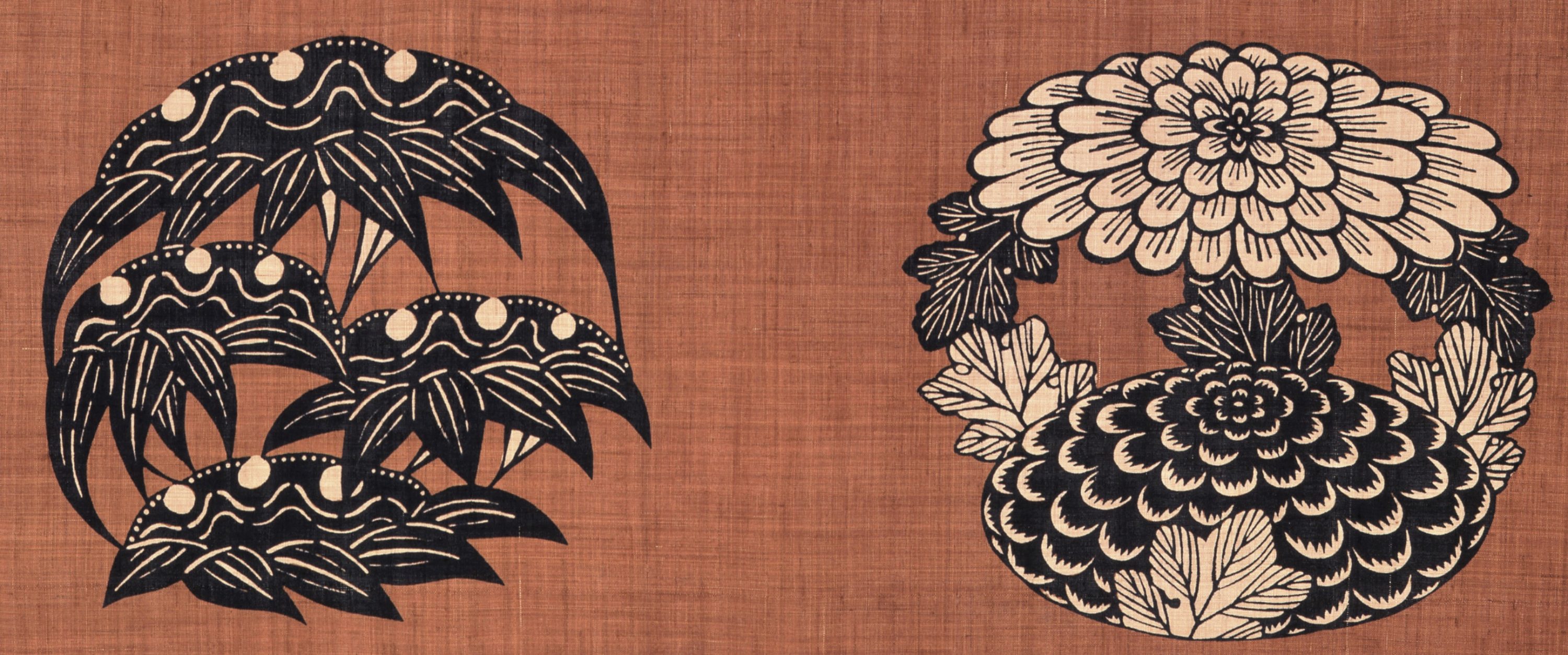 Yusuke Serizawa "The Shiki Bunka-don Pre-Wind Wind" 1936. Hemp, type dyeing Shizuoka City Keisuke Serizawa Museum of Art storehouse
When I was in my twenties, I used to sketch many trees and flowers.
Encounter with a folk song
That was a major turning point for Serizawa when he was in his thirties. Impressed by reading Yanagimune's work, Serizawa will stop at the first Japanese folk art exhibition held at Ginza Hatoi-do.
Serizawa who touched the folk song for the first time was struck by the heart, and was also shocked by Okinawa's red pattern (Binga) at the "Mitsumeikan" of the Tokyo Ueno Park Grand Remembrance Memorial Domestic Promotion Expo. I will disciple with the Koya in Shizuoka City. Therefore, I learned the technique of type dyeing (Kazame) and began to walk on the road as a dyeing house. ⑥杓子菜文間仕切-e1558505453573.jpg) Yusuke Serizawa "Shushinamon Majimari Partition" (1928) Cotton, type dyeing The debut work as a Shizusawa Shosuke Museum of Art museum library dyeing designer was to design vegetables that are familiar
Yusuke Serizawa "Shushinamon Majimari Partition" (1928) Cotton, type dyeing The debut work as a Shizusawa Shosuke Museum of Art museum library dyeing designer was to design vegetables that are familiar ④柳文間仕切-e1558502051726.jpg) Yusuke Serizawa "The Yanagi Bunma Partition" 1960 Hemp-type stain Shizuoka City Keisuke Serizawa Museum of Art and Library Lifetime teacher and called "Teacher" is only Yanagi. Because of that, I made a lot of works of willow motif
Yusuke Serizawa "The Yanagi Bunma Partition" 1960 Hemp-type stain Shizuoka City Keisuke Serizawa Museum of Art and Library Lifetime teacher and called "Teacher" is only Yanagi. Because of that, I made a lot of works of willow motif
Flowering as a vintage dyer
Serizawa, who eventually came to participate in a full-fledged folk song movement of willows, established a dyeing studio in 1934 and became independent. After that, Serizawa who visited as a member of Okinawa research of the folk song movement in 1939, learned the technique of the red type that was shocked once, and adopted it in my own dyeing crafts.
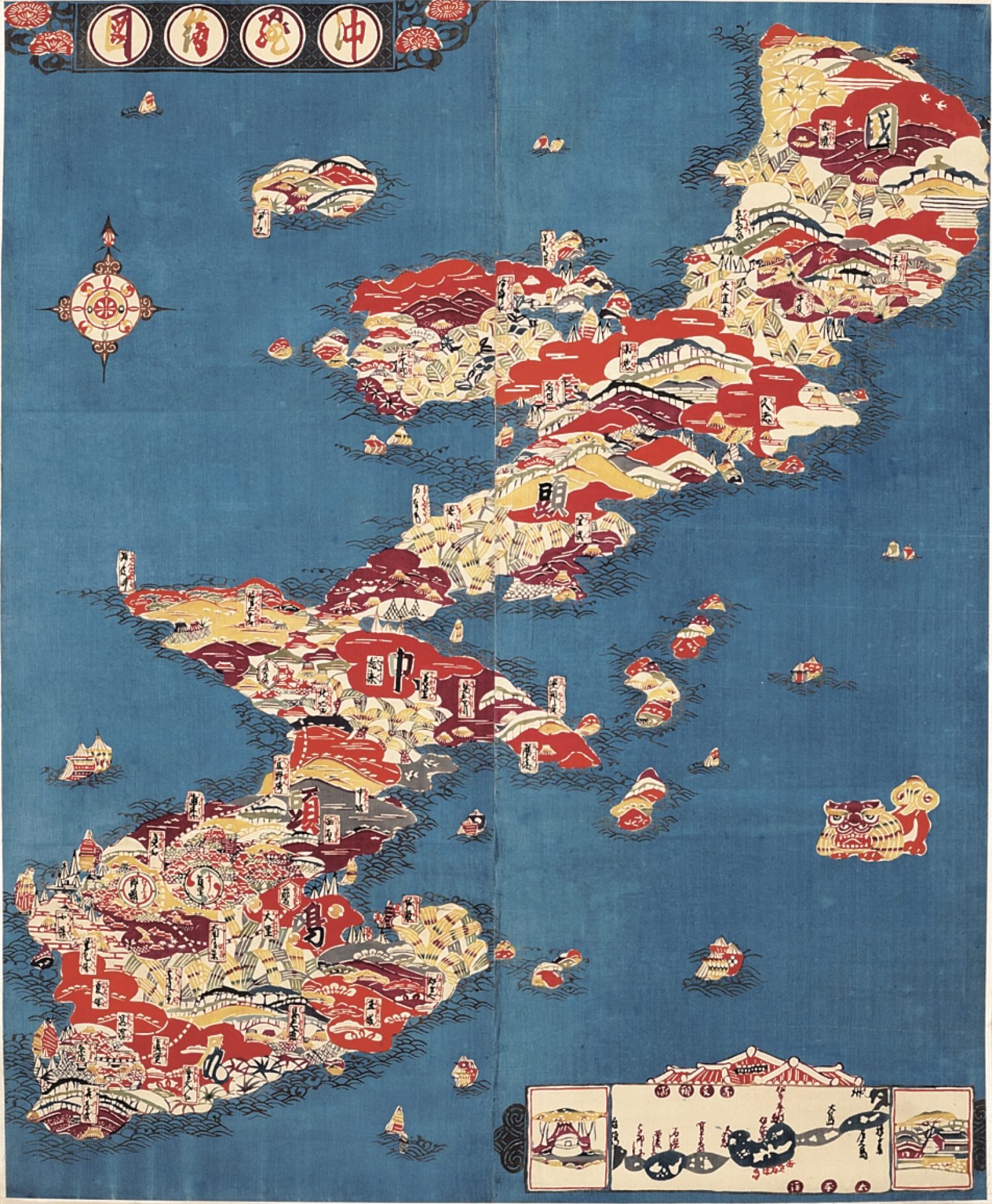 Yusuke Serizawa "Okinawa pictorial" 1939 Silk / Tone dyeing Made after returning from the Japanese folk culture storehouse Okinawa. Crimson technique is greatly adopted, and a sense of respect for Chun Sawa's crimson is transmitted
The creatively designed Serizawa works, which boldly design motifs obtained from landscapes and nature, have excellent drawing power, design power to make them unique patterns, and applications such as goodwill and matchboxes are decided. It has been highly evaluated for its outstanding originality, with its composition and imagination embedded in things.
In addition, it is clear that Serizawa seems to have worked as a craftsman's skin, as he carved out his pattern paper, put glue on a layer of cloth, put on the glue and put on the color himself.
 Yusuke Serizawa "Iroha Letter Buntai" 1958 Cotton, dyed stain One of the representative works of the Shizuoka City Keisuke Serizawa Museum of Art. Serizawa was influenced by his father who was apprentice to the calligrapher, and he has been familiar with the book since his youth
 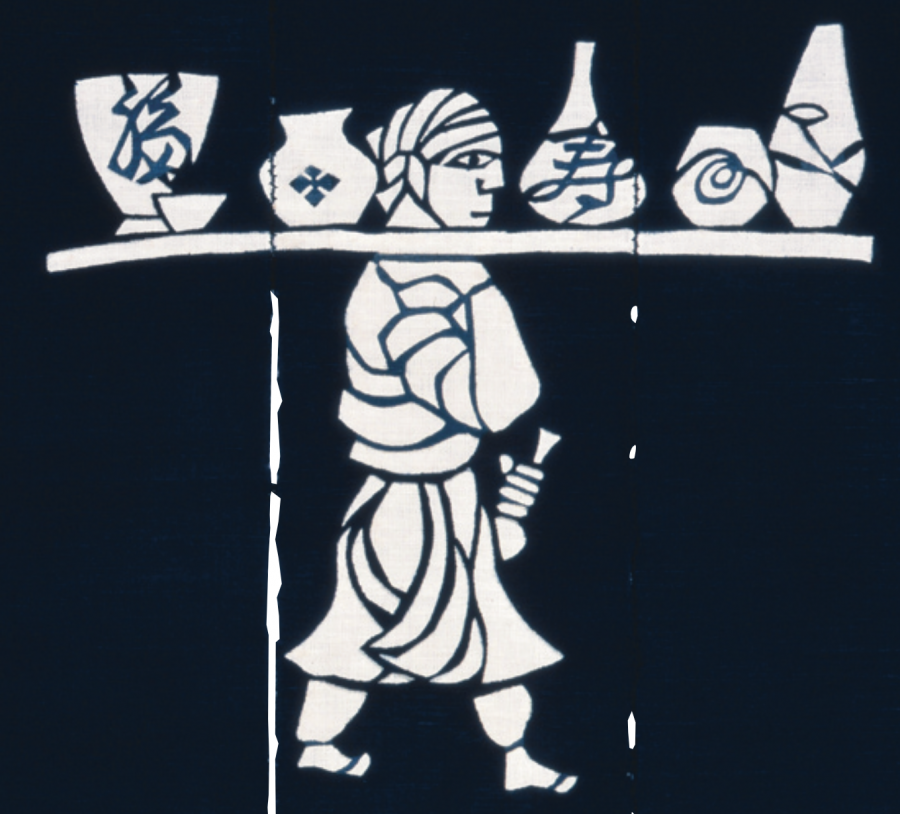 Yusuke Serizawa "Kama (Bad) Bunten Goodwill" 1970 Cotton and pattern dyeing A scene from the work of the Shizuoka City Keisuke Serizawa Museum of Fine Arts (Sakuto). In the later years, people were asked about their favorite people, and the more they answered "Craftsman", the craftsman was a longing existence for Serizawa, and left many of his figures in his work
He was a lifetime energetic writer!
Serizawa, who was active as an artist in Showa, worked not only as a dyeing house, but also worked on a wide range of works such as making books, making maps, and lettering. In particular, articles such as the magazine "Koen" edited by Yanagi became an indispensable item for Yanagi who sought beauty as a craft in his book.
Serizawa continued his creative activities freely, without being bound by anything, such as painters, calligraphers, designers, etc., in a time when modern Japan was changing dramatically.
I spent my last years in Tsumura in Kamakura and closed my life in 1984 in 1984, but I am filled with humor and loveliness, yet I feel the high dignity of the works of I do not fade even when the times change Keep on making
 Yusuke Serizawa "Tsumura Shoan Bunji Land" (Tsura Shoan Obiji) 1967 Shrimps (shrimp) and type stains Many works depicting Kamakura and Tsumura, who spent the last years of the Shizuoka City Keisuke Art Museum Museum The
You can see the works of Yusuke Serizawa here!
Shizuoka City Kuwasawa Keisuke Art Museum Address: 5-10-5 Toro, Shizuoka City, Shizuoka Prefecture (closed on Monday)
Opening hours: 9:00 to 16:30
Official site
Tohoku University of Welfare Serizawa Keisuke Art and Craft Museum Address: Sasaoka 2-chome 5-26 Miyagi-no-ku, Sendai City, Miyagi Prefecture
Tohoku welfare university Sendai Station east exit campus (Monday closed)
Opening hours: 10 am to 5 pm (until 16:30)
Official site
Re-editing the articles of "Waifu" December 2014 issue, July 2015 issue
My motto is "I'm serious about being stupid", and I am having fun and having fun every day.