













In Japanese art history, there is a book that overturns the view of Japanese art history since the early modern times and decisively creates a new flow of Japanese art history. The title of the book is "The Genealogy of Wonders". Since being released in 1970, it is an amazing long seller that has been read for about 50 years, with multiple variations including new edition, paperback edition, and overseas edition .
The author is Mr. Tatsuo who is the oldest in the history of Japanese art, who is 86 this year. Momoyama-Edo Edo painters who have left cutting-edge and original works, focusing on early-modern Japanese art, since presenting groundbreaking research results on Iwasa Matabei in his graduation dissertation as a student. Over the period, he has continued to lead the history of Japanese art through the study of unique perspectives, such as the world of brilliant decorative art "Kazari", which developed uniquely in Japan.
It is no exaggeration to say that it is just a living legend. As a compilation of the great research results, “The Genealogy of Wonders” will be held from February 2019 at the Tokyo Metropolitan Art Museum from February 2019, along with the hard-coded hardcover edition “The Genealogy of New Wonders” by Shogakukan. Was released.
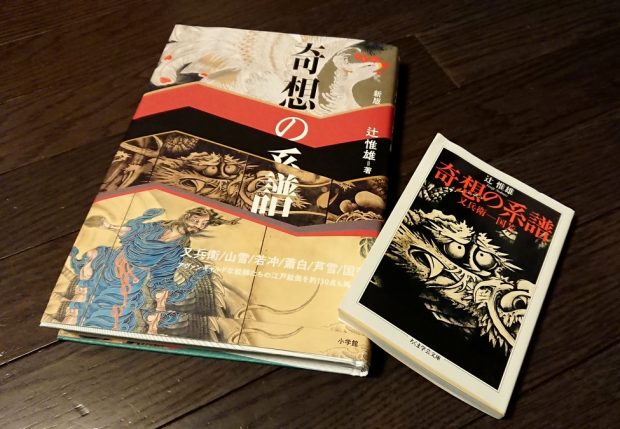
I immediately tried to read this "new edition weird genealogy", but I kept the youthful brush strokes of 37 years old who was still an up-and-coming scholar at that time as much as possible, and the latest in each chapter The content is also very complete, with corrections being made based on research results.
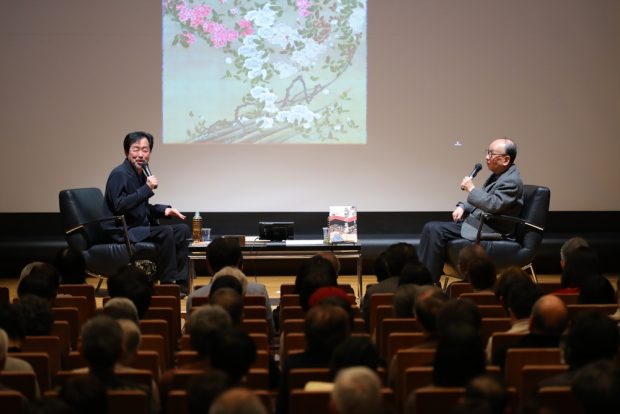
So, just talk Lecture "Jakuchu of the exhibition supervision person Yuji Yamashita was held at the Tokyo National Museum on February 10, to celebrate the new version of" genealogy of Capriccio "released in this paper (Meiji Gakuin University) No , I would like to explore the highlights and attractions of this book based on the contents of "Rereading the Genealogy of Wonders" .
What is the best-selling "fable lineage" that has been read for 50 years?
The art book, The Genealogy of Wonders, was compiled from July to December 1968, based on an article manuscript serialized over six months in the art publisher's magazine "Art handbook", and as a book in 1970 Published In the 1960s, painters with strong personalities such as Ito Wakasu and Soga Baku, and unique styles that greatly deviated from traditional schools such as the Kano school and Tosa school received a fair evaluation in the study of art history. It was not possible to be forgotten from people's memories.
In the series of "Art Teijo", Mr. Tatsumi redefined these buried individualist painters as an avant-garde avant-garde artist who represents the forefront of the era of "new beauty" and Together with the picture, they positively evaluated their novelty and advancedity.
The six artists mentioned were Iwasa Matabei, Kanoyama Yuki, Soga Yushiro, Ito Wakasu, Nagasawa Yuyuki and Utagawa Kuniyoshi. We introduce the life and works of each artist, and while referring to the plates, we will introduce the features of the painting and the points to be appreciated of each work by brushing over the paintings while also stepping into the life and humanity of the painter.
What is the attraction of the "fable lineage" that is drawn back many times?
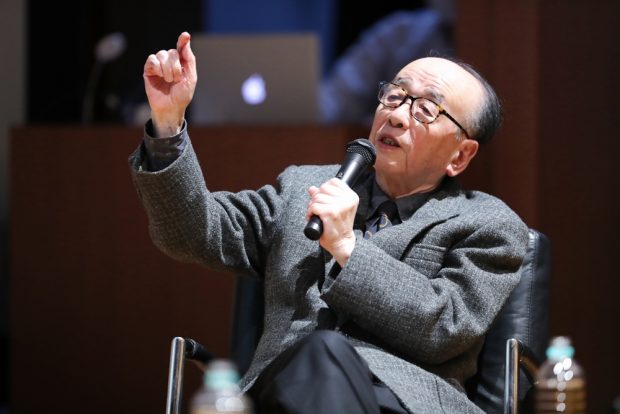
The author of "The Genealogy of Wonders", Dr. Tatsuo. Even in the lecture, when I talked about my favorite works, the way of getting into the story was different.
With thousands of publications in the market every year, since being released in 1970, it has been read around the world for 50 years with a focus on art history learners and art fans. Regardless of the field where there are a large number of fixed fans such as literary novels and manga, it is quite unusual to have repeatedly sold editions in very minor genres such as art books. In addition, it is said that some of the large-scale active artists, such as Takashi Murakami and Tadanori Yokoo, have a passionate "fancy lineage" fan .
So, why did only "the lineage of weirdness" reach so much generation and earn enthusiastic support from readers?
I think that the biggest cause is the overwhelming "readiness" . First of all, it is wonderful that the pressure of the love of each artist and work by Mr. Roh will be handed down to readers. From the way the artist's brush runs when he talks about the interestingness of his works by taking each piece, he feels more as an avid art fan rather than an art historian. With the rich vocabulary of novelists, while being appealed for the greatness of the work like a wave attack, the reader himself can not stop the hand turning pages as if it had been in the heat It is
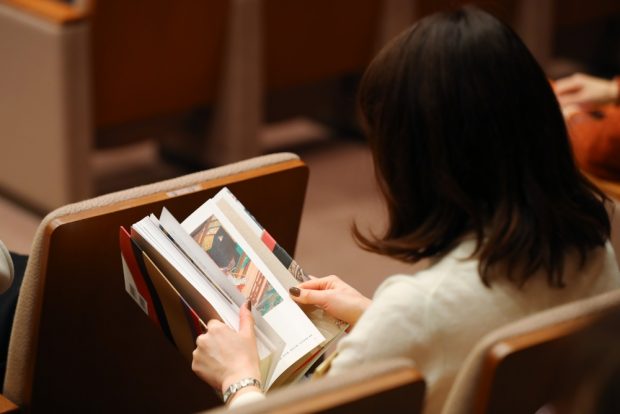
A woman eager to read the "New Edition Fantastic Genealogy" she just purchased at the venue. Yes, it's a very addictive book.
At the same time, the building ability as a "scholar" who carries out analysis in a cold manner by accumulating facts and logic is well-received. In addition to simply tracing the uniqueness and novelty of the works created by the imaginative artists, it is possible to compare the facts accumulated through fieldwork and comparison with other works. It is explained logically . In particular, the thrilling and multi-layered logic development in Chapter 1 that mentions Iwasa Matei, which condenses the results of many years of research as life work, will make you feel as if you are reading a little detective novel.
Why do you recommend the new edition "Generic Genealogy" published this time?
Since I was deeply addicted to Japanese art, I have read back regularly about the lineage of the miracle book “The Genealogy of Wonders” released about 15 years ago, such as the new edition, on a bedside bedside basis. I am going to go to the exhibition about the six strange painters who were taken up in the book, and I think that I have tasted the first time of the "wonderfulness".
When I first heard that the "new edition" will be released in a luxury binding, I thought, "It will be quite expensive, and what will it be?" However, if you make a bold purchase and read it, the negative idea is completely different. Certainly the price was reasonable, but I was convinced that if you like Japanese art, it is definitely one book to buy .
Why can you say that "the lineage of the new edition" is "buying"? That is because the "new edition: lineage of miracle" has a ground-breaking attraction that was not found in the previous paperback edition / old edition.
What are the three charms of only the new edition 'Generic Genealogy'?
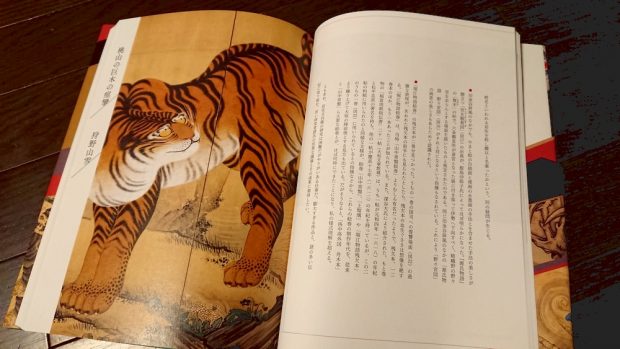
Attractive 1 Large-scale 130-point color plate
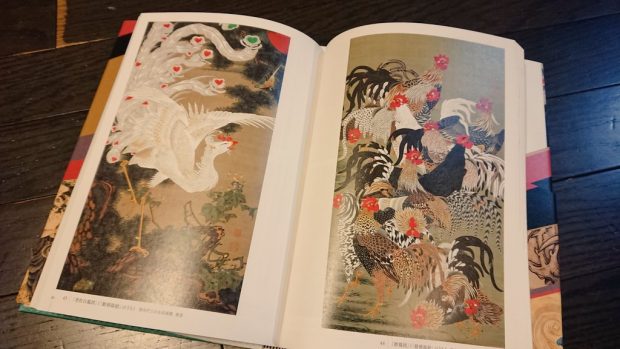
One of the interesting things about reading "the lineage of imaginative" is the highlight commentary of the work by Michio. With a keen eye, we will explain the points that general art fans do not notice. For example, a representation of round spots or hollows placed in each motif of the Ito Wakatsuki work. He analyzes this as an "eye" looking at the viewer, but if you look carefully at each piece of Wakatsuki, innumerable "◯" shaped figures are placed in every place You will notice that
In the old edition and the paperback edition, there were many black-and-white images where the illustration published for Mr. Akira's work commentary was unclear, and there were many places where the publication was omitted and there was also a digestive disorder. Such frustration is solved at once. Compared with the old edition, the number of images on the plate has been greatly enhanced to 130, and it is a very big attraction that all the plates are shown in clear color images . It is no exaggeration to say that the degree of satisfaction and understanding when reading forward is completely different.
Charm 2 Taste the "After" of the research added to each chapter
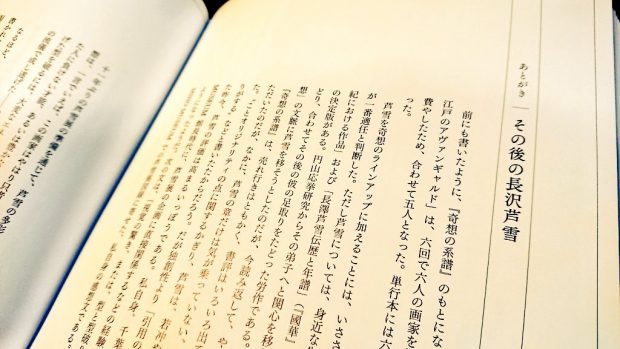
One of the charms of "the genealogy of wonders" is the brushstrokes that Mr. Tatsumi overcame. At the time of serialization of the original manuscript, the style full of romanticism that the late 30's and an up-and-coming art historian, who was an up-and-coming art history scholar, thoroughly talks about each writer and work, is full of romanticism. .
In "New line of weird genealogy", while making the most of the goodness of the original text that felt the youth and momentum in 1968 as much as possible, new discoveries and factual relations found during about 50 years from the time of publication, for their own works and writers A change of the opinion, each in the form of "afterword" in each chapter, add about 10 pages on average in essay style. (In other words, about 60 pages of corrections have been made over the original version as a whole.)
This "afterword" is really interesting. Unlike the other chapters in Chapter 3 "Imaginary History Magazine Ito Wakatsuki", and in Chapter 5 "Bird Mischief Misaki Nagasawa" about the long-awaited funny episodes in the relationship with Joe Price and Mr. Joe Price. The reason for the vague discussion and the feelings of the time of 1970 are expressed, and you can taste Mr. Tung's unexpected human odor.
The most impressive part is the story about the appraisal of "洛 中 洛 外 外屏 舟 本本", which is described in Chapter 1 "Asei and Ukiyo Iwasa Matabei", including his own inner conflict. With respect to "洛 洛 外屏 舟 舟 本 本 大 大 recognized by many in the art history world as a handwriting by the Iwasa Matabei himself, for many years stick to his own theory that it is a work by the" pre-Meibei school " Mr. Satoshi who did not recognize it as a work. However, about 15 years ago, repeated verification based on the surrounding points, and finally "Tochigimoto" is also a Shinei of Biei and as a result of "commuting" is reached, so many times in the exhibition "Niwasa Matei" and so on From the captions introduced, the word "伝" disappeared and the work itself was upgraded from an important cultural property to a national treasure. It was a very interesting additional episode where you could read the size of his influence on the art history world and the trends and circumstances unique to the old art world where the opinion of the art historian greatly affects the value of the work .
Charm 3 It is likely to be overlooked unexpectedly, but fulfilling a very important "Yomiana"
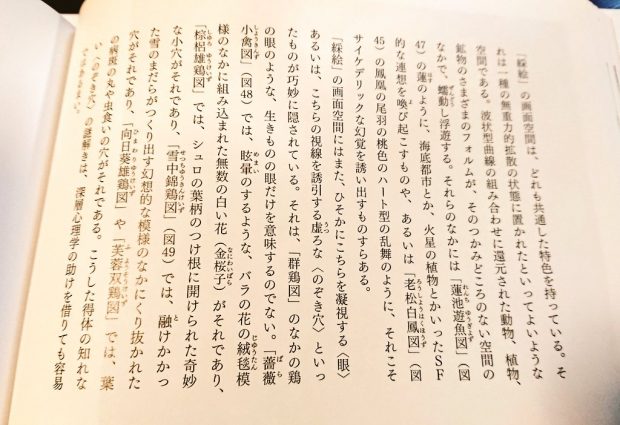
Reading art books and feeling stress unexpectedly is when "Yomigana" is not swayed in the names of works or writers that use esoteric kanji. Of course, in terms of grasping the overall meaning of the content written in the book, there is no impact on the majority. However, that you can not remember that you can not read correctly because you do not understand the pronunciation of the characters. It may be that the works and artist names that the kanji is difficult and skipped are often not remembered later in the day.
In this book, The New Edition: A Genealogy of Wonders, this “Yomigana” problem is almost completely solved. Veteran editors who have been involved in the production of books for beginners in the field of Japanese art, have been thoroughly working on proofreading with a focus on "intelligibility of sentences" and it is really easy to read !
Read along with the exhibition to enjoy the pleasure of tasting Edo paintings
Mr. Tatsuo who became 86 years old as of February 2019. In the postscript of his autobiographical book, "The Discovery of Wonders-A Memoir of a Certain Art Historian" (Shinshisha), he was accused of being obsessed with the old world and recently forgetting things more and more. The narrative when discussing "the weird writer" who is also the origin of his own research life on the stage of the lecture, is still an active art historian itself. I was able to feel the same passion from the time of serialization.
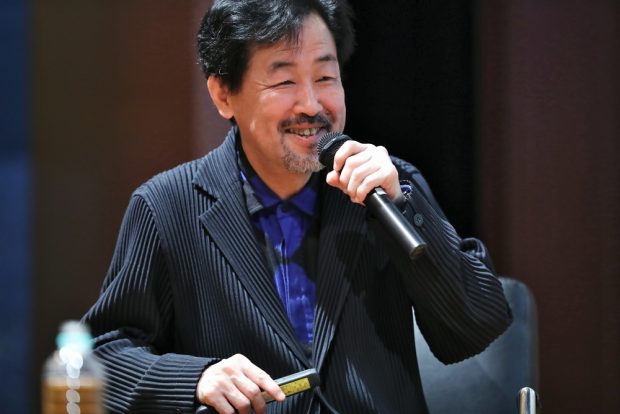
Mr. Yuji Yamashita who served as a talk partner of Mr. Tatsuo at the lecture. It is a student of Mr. Tatsumi's university.
Mr. Yamashita said, "This makes me live longer than Wakatsuki. Teacher, let's next aim for Hokusai surpassing," Mr. Tatsumi who was being hacked. I will continue to be active in the future, and look forward to the day when I can read a new vision that exceeds "the lineage of imaginable" in my new book, and I would like to read "the lineage of paradox of new edition" again.
Sentence / Saito Hisaya photo / Kuroishi Ami (Shogakukan)
I want to read together
[Exhibition Report] We will introduce six highlights and recommended congestion measures that you can not miss by all means at the “Generic Genealogy Exhibition”!

I am tired of my office life and suddenly retire from the company at the age of 40. Taking advantage of the ability to create a long sentence that was trained in the daily end-of-life submission, three years thinking of trying to live on a single blog. Beside the husband and wife business, I am addicted to the interest of art museums and museums, and with the help of children all over the country, I have been gratefully distributing articles that have over 10,000 words over. http://blog.imalive7799.com/