












Fermented seasonings such as miso and soy sauce are essential for Japanese cuisine. Nowadays more and more cooks are using even abroad. However, unfortunately, it is also a reality that the number of manufacturers protecting traditional manufacturing methods is decreasing.
Manufacturing method unchanged from the Edo period
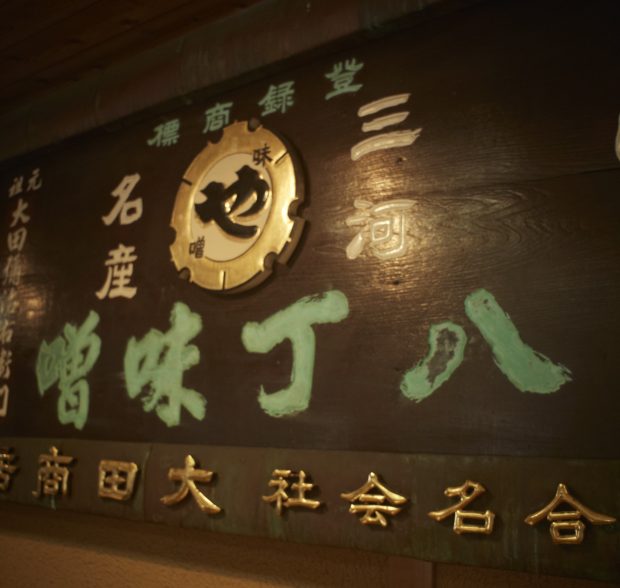
Hatcho Miso is a favorite miso in Aichi Prefecture, and is located in Haccho (about 870 m) from Okazaki Castle, the home of Ieyasu Tokugawa. "Maruya Hatcho Miso" is located along the former Tokaido, and "Kaku Ku" on the opposite side, and two houses, has protected how to make unchanged from the Edo period.
Charge with as little water as possible and weigh with stone so that the water in the kiln is uniform. Up to 60 kg, the number is about 300, and it is half of the weight of miso, or about 3 t.
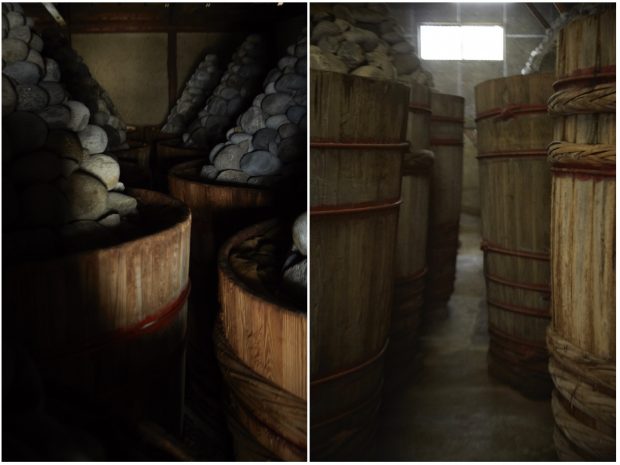
"It's convenient to carry as a military resource. The umami of soybeans also condenses," said Shintaro Asai, president. "Because children's fists make big miso balls, aging proceeds slowly. We are aged in Oiso for over 2 years."
Yasho River has supported Hatcho miso. Bamboo, trees and stones used for the bushes flowed from the upper stream, and salt from the salty river came up the river from Kira town by the sea. Underflowing water was also an essential condition. The activities of enzymes and bacteria differ depending on the seasons. Japan's climate also makes it taste.
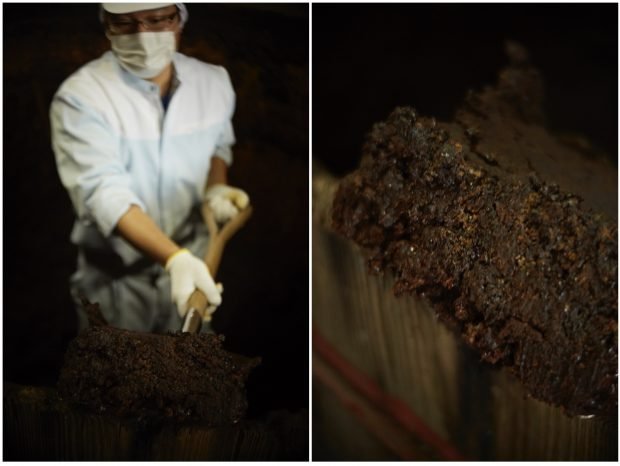
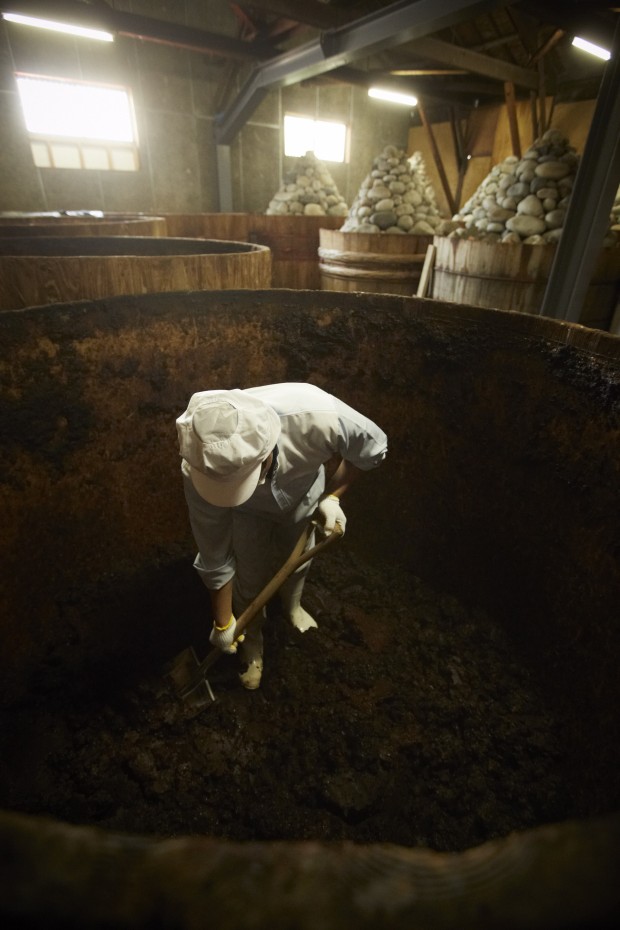 Enter the 6-m2 bowl with a diameter of 2 m and a height of 2 m, and dig a hacho miso. The matured miso becomes so hard that it does not sink even if a person gets on it. An old ax made in the year 1864 at the end of the Edo period is also active. The digging tool is a scoop.
Maruya Hatcho Miso

Wadon web editorial department. My motto is "I'm seriously stupid", and I am having fun with all sorts of dread and fun every day. https://note.mu/warakumagazine