













An exhibition where you can see the mysterious fermented culture is being held at "d47 MUSEUM" in Shibuya Hikarie. This time, we will report the Museum Tour Participation Report, which was held on April 26, 2019 (Friday), the first day of " Fermentation Tourism Nippon-Japan's Journey to Rediscover from Fermentation ".
What is Fermentation Tourism Nippon?
From the viewpoint of microbes, an exhibition that rediscovers the dynamic history of Japan and the livelihoods of people rooted in the culture, " Fermentation Tourism Nippon (Fermentation Tourism Nippon)-Japan's Journey to Rediscover from Fermentation ~ . Hiraku Ogura, the curator of this exhibition, is a fermentation designer . With the aim of making the functions of invisible fermented bacteria visible through design, we have developed projects on the theme of fermentation and microorganisms with breweries and researchers all over the country.
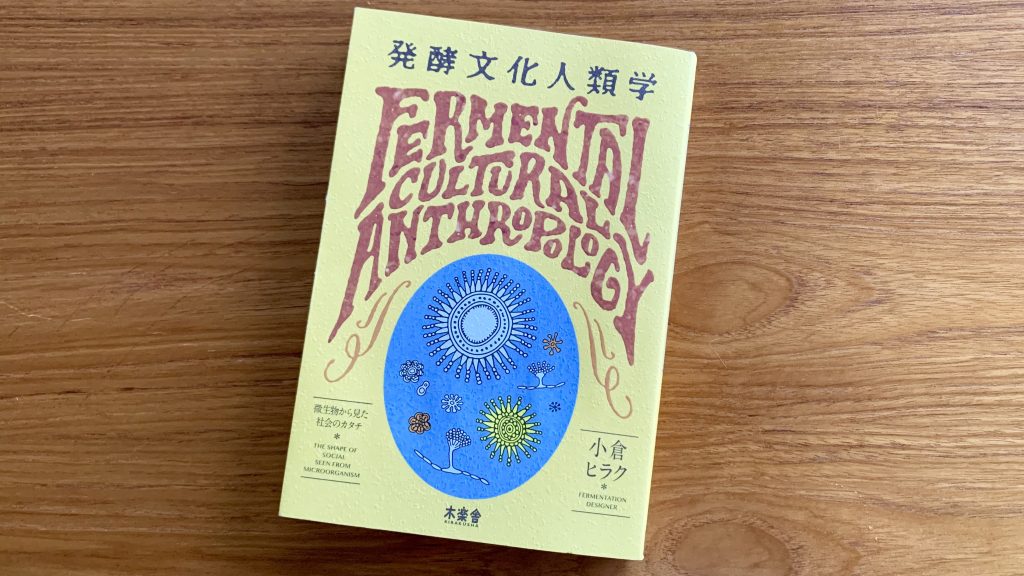
Mr. Ogura's book, “Fermentation Culture Anthropology (Korakusha),” is a great way to draw the “fermentation” felt somewhere far away.
A total of 51 exhibits (47 prefectures + 4 extras) have been introduced at this exhibition. By traveling around the venue, you can experience the fermented culture of all over Japan.
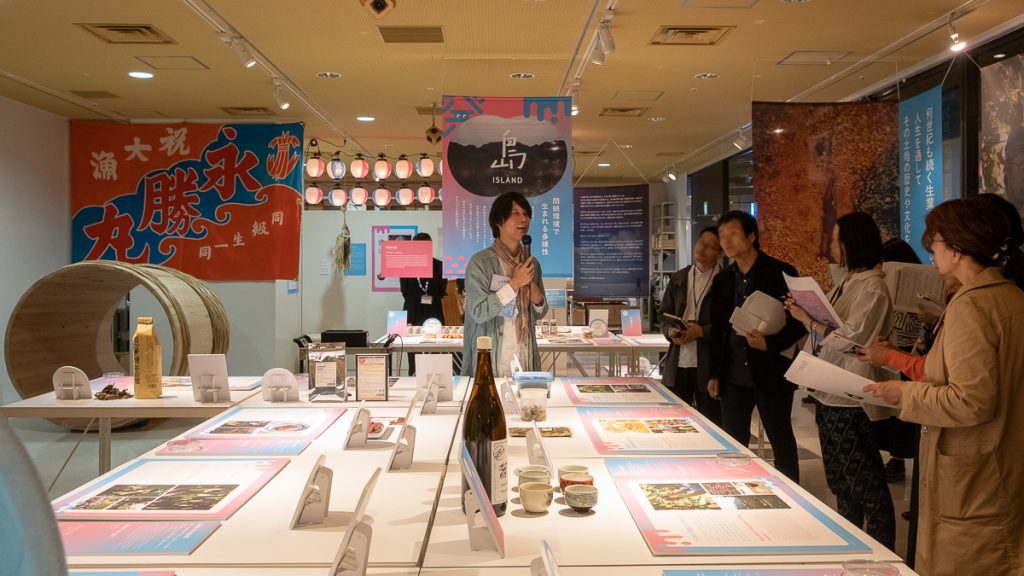
Hiraku Ogura is the person holding the microphone in the center.
"There are three rules for selecting fermented foods to be displayed," said Ogura. The rules are as follows.
1. Do not use different types of fermented food
Liquor, soy sauce, miso, etc., which are located in 47 prefectures, are exhibited only one by one. Some of the exhibits are rare foods that are only inherited by hundreds of communities and that we have never seen or heard before.
2. Be faithful to the roots
Why was the fermented food born in the place? Each of them is inevitable and the food that has been passed on for over three generations is selected. For example, some people have recently made interesting fermented foods individually, but since they can not be said to be "culture" if they are not related to the history of the land, they have not been selected this time.
3. Focus on scenery and people
Mr. Ogura, who is a curator, visits the manufacturing site and listens to the people who make it, and investigates how they are being eaten one by one. In order to delve into the cultural background, it is important to deliver Japanese fermented culture from the perspective of Mr. Ogura.
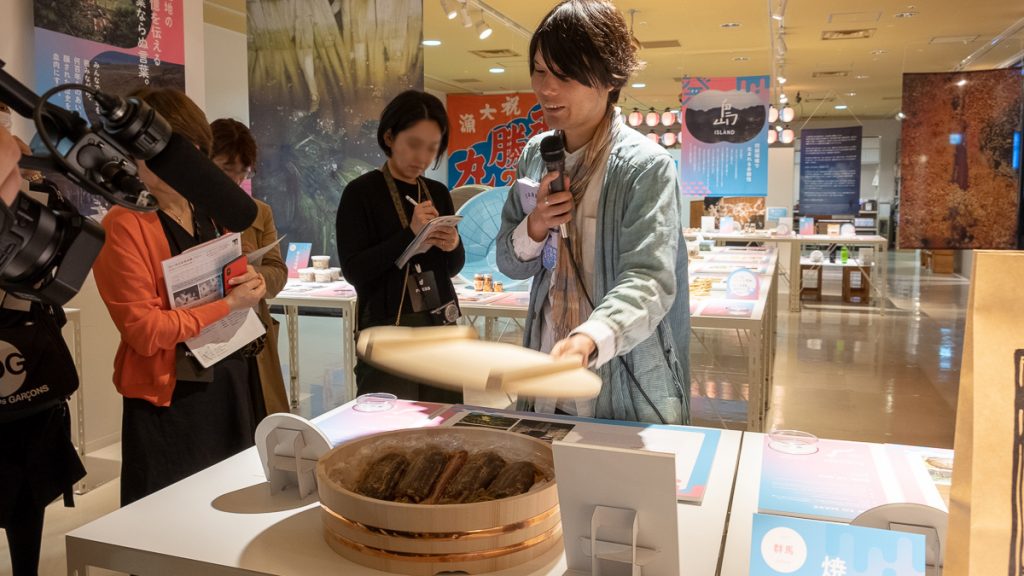
At the venue, there are many opportunities to experience the fermentation culture using the five senses, as when Mr. Ogura actually visited each place. One of them is a food display where you can smell it. This is Narazuke.
Four categories that make up the exhibition
This is a d47 exhibition space usually configured in a grid format, but this exhibition has a layout that is almost like a river. The exhibition is divided into four major categories: " Sea, Mountain, Town, Island ".
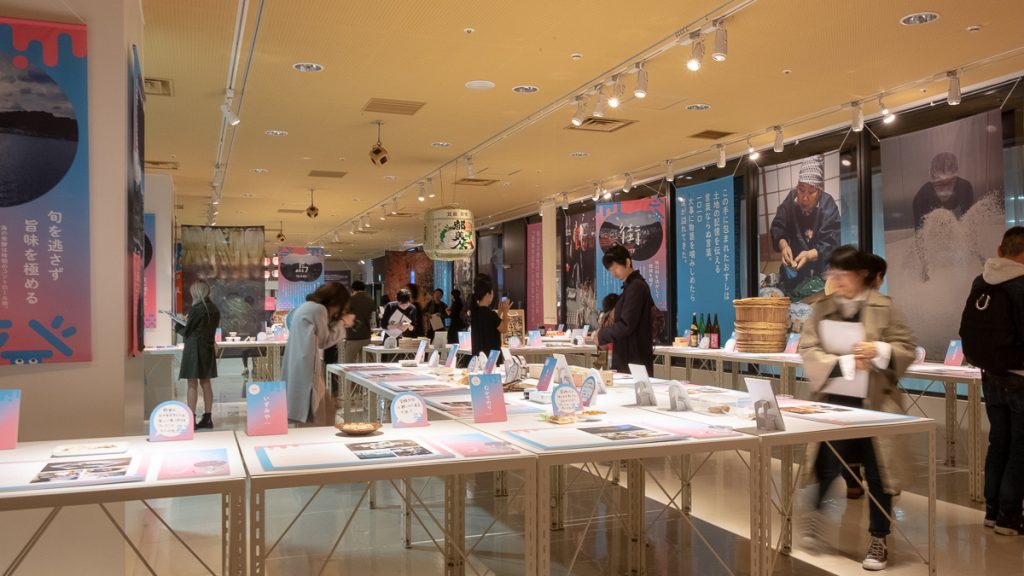
Fermentation of the sea ~ Taste the taste without missing the season ~
Entering the hall, the first exhibition to be seen is the " sea " category. While there are a few things that has been popular as Akita Prefecture "sandfish" and Fukuoka Prefecture "roe" such as specialty products of the land, I saw most of the food that is in the first category this ...! I feel like I stepped into a deep world.
Mr. Ogura "The characteristic of Japanese-style fermentation is in the sea . Why is it that one of the reasons is that Japan is surrounded by the sea in the island country, but since Japan has made Buddhism a national religion since about the sixth century, It was forbidden to eat energy because efficient meat eating was banned, so we had to replace it with energy, so we made effective use of seafood that can be caught in large quantities during the immediate fishing season. In order to do that, the variation of the way of eating has increased, and something to ferment to such a thing has appeared!
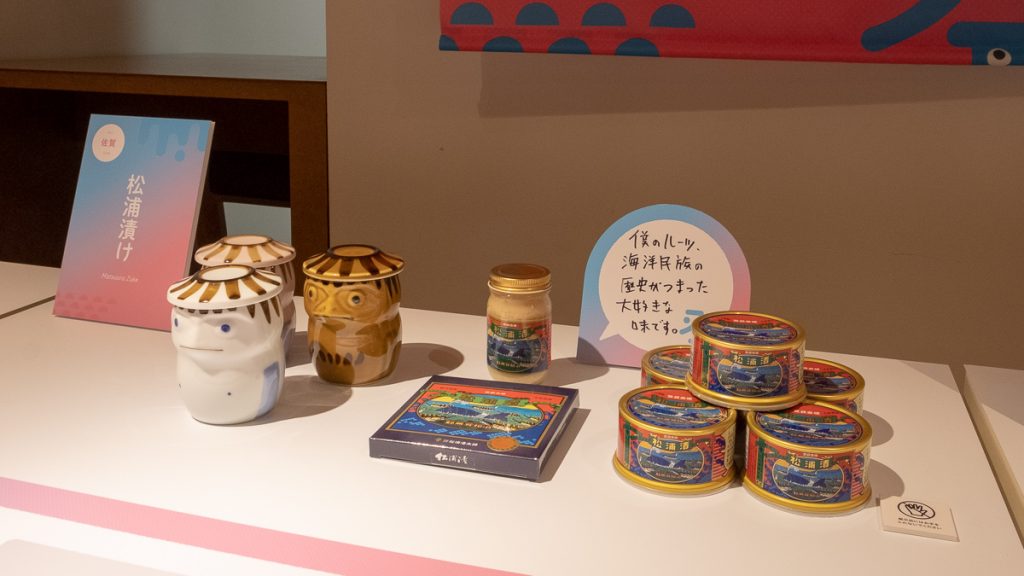
" Matsuura pickle " in the northern part of Karatsu, Saga Prefecture, which is also my mother's hometown, is made by fermenting the cartilage of the upper jaw of a rattan. At that time, the hardest part was the cartilage left after squeezing the oil, which was tens of kilograms alone, and the remaining cartilage was processed to make it impossible to eat. It was so tasteful that it was pickled in sake lees, and I was very fond of it when I was a child, so it was a very Japanese idea to ferment the upper jaw of a leash, isn't it?
Fermentation of the city-Bringing value by utilizing the advantages of the ground-
The category of " town " appears next. This is a turnaround from the sea category, and there are many major seasonings and foods such as “ Hachicho miso ” in Aichi Prefecture and “ Tamari soy sauce ” in “ Mito Natto ” Mie in Ibaraki Prefecture.
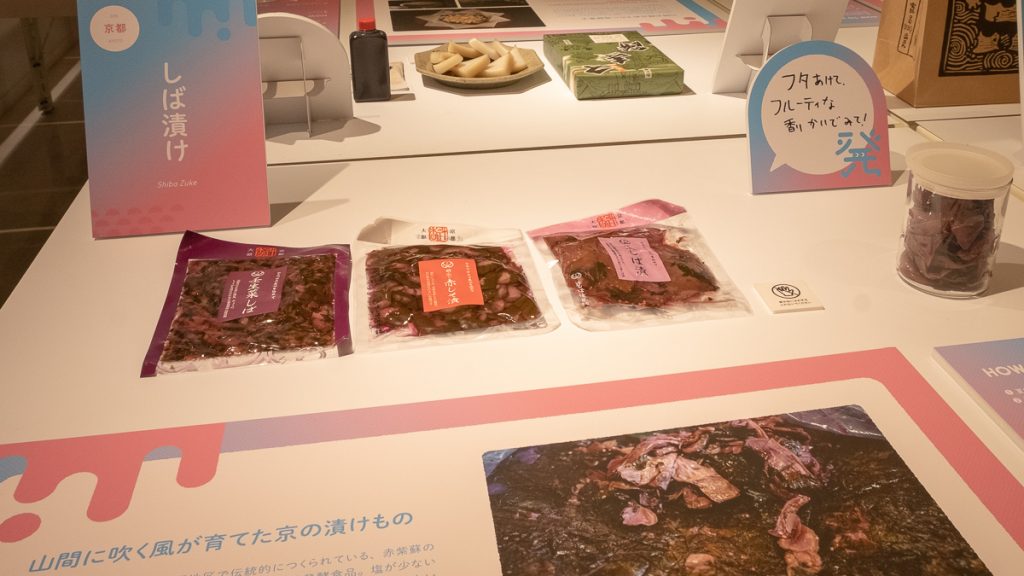
Mr. Ogura "Fermented foods in the city benefit from carrying soy sauce, miso, vinegar, sake, etc. ... In other words, there are many things that made the economy as a trade. The value-added brewery product was the backbone of Japan's economy.By the way, Kyoto's “ Shiba-zuke ” in this place can smell the smell. So the smell of shiso and lactobacilli comes in direct.
Fermentation of mountains ~ A treasure trove of devices rooted in mountains ~
The " mountain " category is located in the center of the exhibition hall. The things that caught my eye here were beverages such as tea and wine.
Mr. Ogura: "Yama no Fermentation is a category in which Japan's locality often comes in. It's because Japan's mountain village is isolated from the outside world and there is no food to bring in from outside. Because it is a natural history exhibition of the area how to preserve the traditional food in the area, the rest can not use plenty of salt unlike the beach, so the antibacterial effect of plants and alcohol of sake lees It is also a feature to pursue preservation technology by fully utilizing the sour taste of lactic acid bacteria and the like.
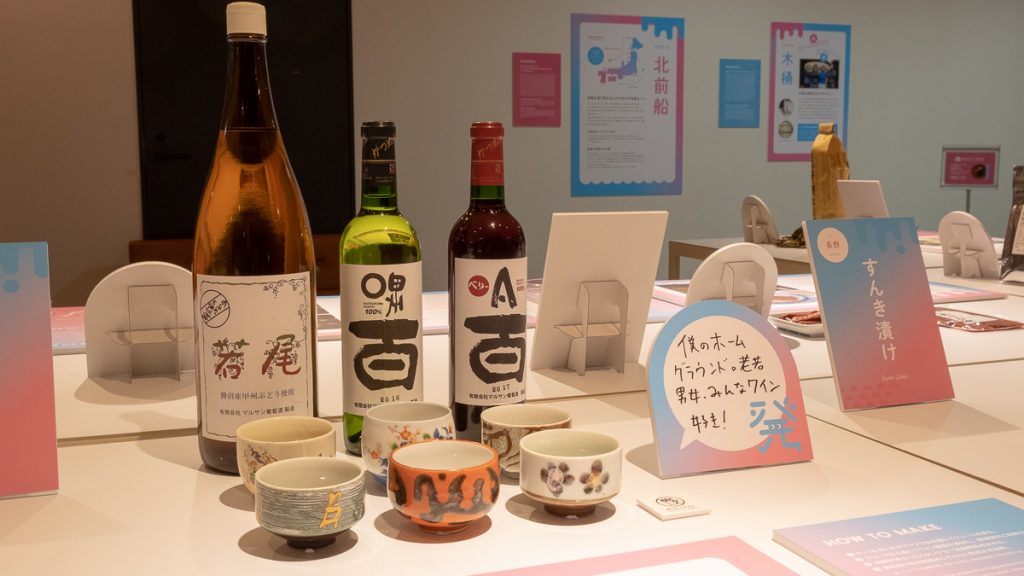
"For example, in Kofu where I live now, there is a ground that has taken root for about 1300 years, and using it," Koshu wine "has been made for 150 years. I used to put wine in a bottle and put it in hot water, and watched it as a night game broadcast of baseball, etc. Because such a scene is common, wine is one of the local sakes for people of Kofu. It's an outpatient culture, but after 100 years it turns out that it changes shape to that kind of culture. "
Island Fermentation-Diversity in a Closed Environment-
The last category behind the venue is " island ". A food that Okinawa Prefecture " Tofuyou " and Tokyo Izu Islands " Kusaya " know at the last minute, and most of the others have never seen or heard. Above all, "Dango" in Nagasaki Prefecture was shocking.
Ogura-san "Island Fermentation is a crystal of Japanese survival wisdom. Because the island is the ultimate closed environment, strange fermented foods have been produced. For example, Nagasaki's ' shrimp dumpling ' has sweet potato It is fermented for about 6 processes and fermented and taken out starch using the power of microorganisms to prevent it from decaying in winter.It is a very unique thing.It is a treasure house of Galapagos fermented with many mystery even with modern science. "
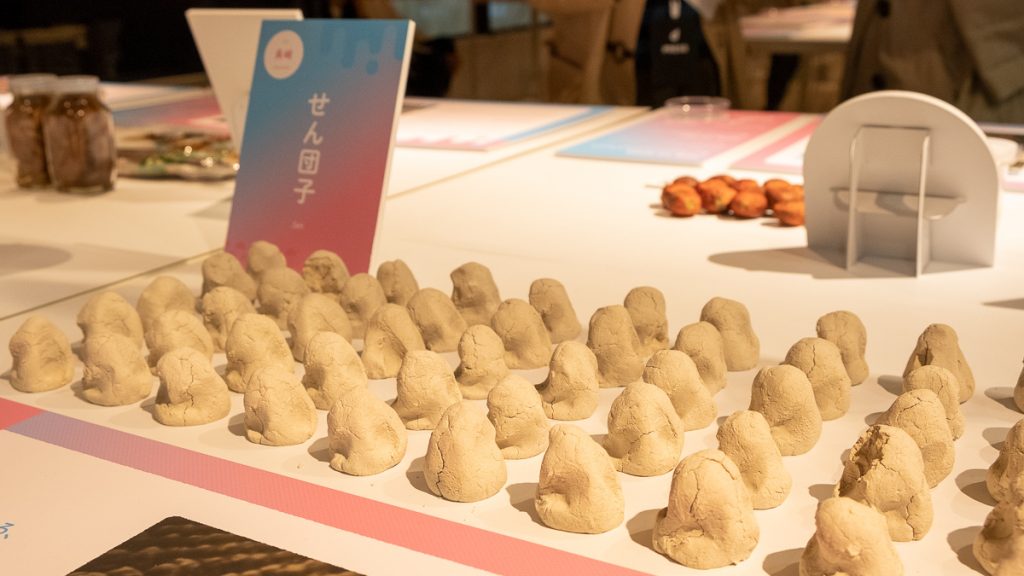
This is "Den dumpling". At first glance it looks like a doll. Wash and sweeten the sweet potato by exposing it to water and draining the first fermentation. Fermentation when exposed to water for 1 month. If it becomes soft, place it in the form of dumplings outdoors and further ferment it. It will be exposed to water again ... and it will take more than 4 months to complete.
Fermented foods that the editorial department became interested ...
Japanese food editorial department ・ The food that became of the white is " Mukade Nori " of Miyazaki Prefecture which was near the entrance of the venue.
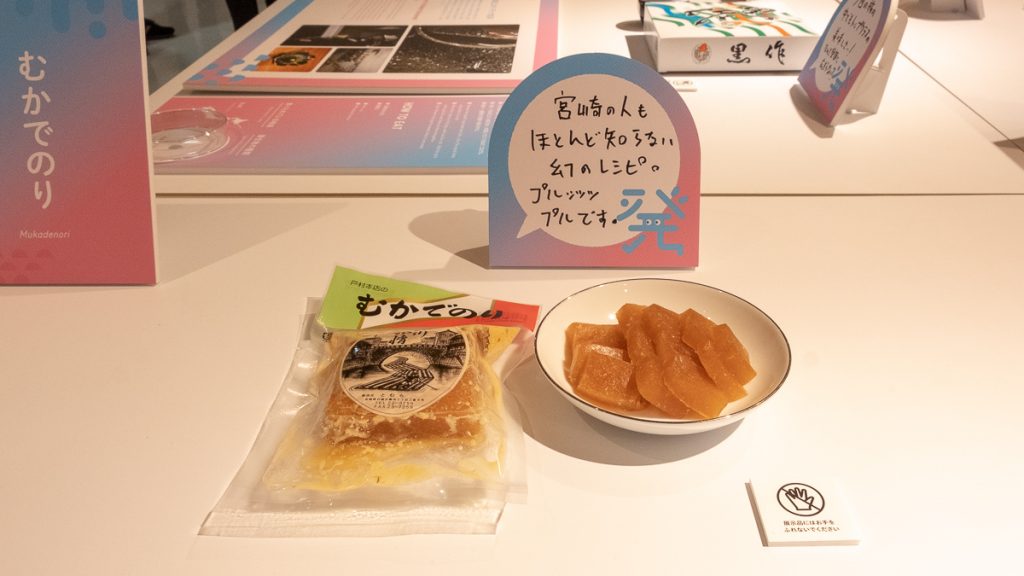
It looks like a plump rose. The seaweed that grows on the Nichinan coast is sun-dried and then boiled and made into agar, which is made into miso pickles. If you listen to Mr. Ogura's commentary, it is said that it is "the one used for offering of the god at the time of the Bon Festival", but there is no written document describing the detailed thing and you do not understand the origin ... I attracted to the mystery It was turned on.
Another thing I was interested in was " Shiba pickles " in Kyoto Prefecture. It seems that you can eat as much as you like with just sour and juicy smell. Purchased at the "Fermentation Department", a product sales corner next to the exhibition hall for all three types displayed. We are already very active at home for eating and putting on rice, cooking with pasta and cooking.
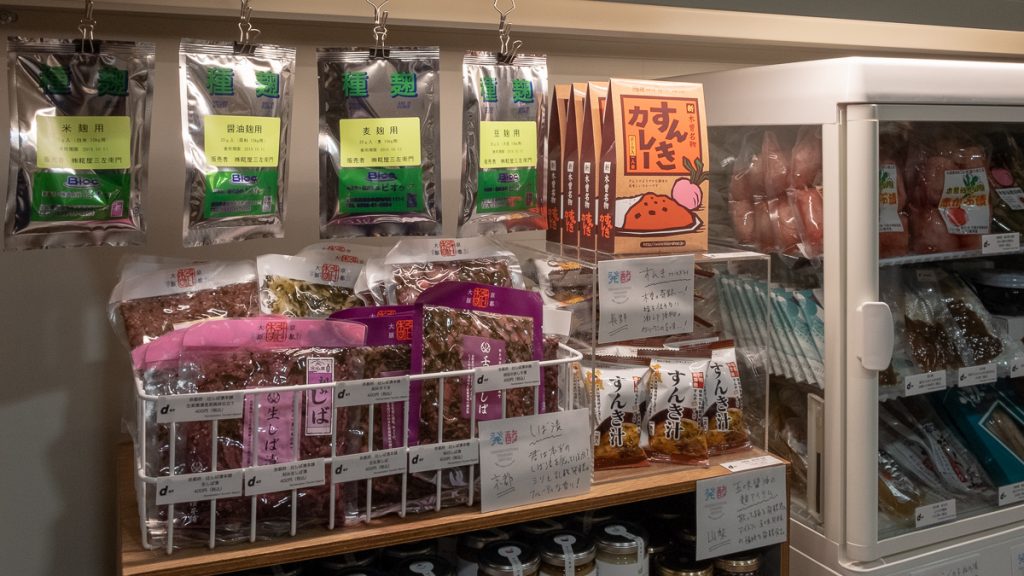
In the product sales corner, we sell food and seasonings we have never seen before, as well as rice porridge and fermented deodorant.
In this product sales corner, prior to the nationwide release on Friday, May 24th, 2019, the official book of this exhibition, " Nippon Fermentation Report " is pre-sold. From the north to the south of the Japanese archipelago while unraveling the local fermented food more deeply. It is a travel note that you can relive the "National Fermentation Coverage Tour" by Hiraku Ogura.
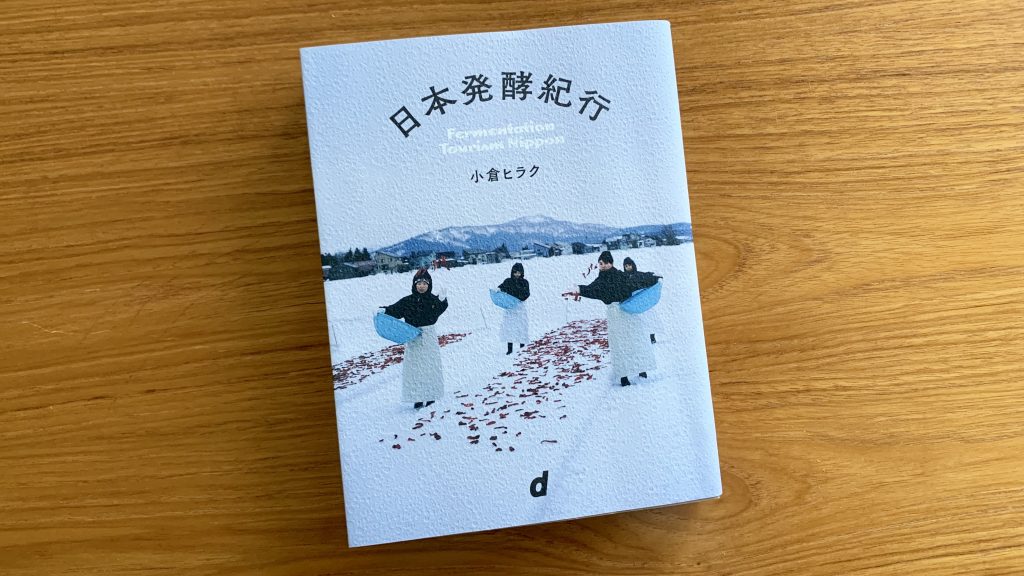
Here, I also purchased. One book where you can experience each land from Ogura's perspective even more than an exhibition. I feel like I'm reading folklore.
【お ま】 Photospot & Limited Fermented Set Meal
I really want to eat! It is nice information for those who are said to be with children. Although this exhibition is a structure that can be enjoyed with the children as a whole using the five senses, there are two photo spots that children can enjoy at the back of the venue.
One is "a huge wooden mallet ". Mr. Ogura says that Japanese fermented culture has been developed thanks to the huge xylophone. Even in the foreign countries where metal was tightened with metal, in the case of Japan, it was tightened with a bamboo tag, so it has a structure that can withstand huge size by expansion and contraction by breathing. This technology has made it possible for sake and soy sauce to develop and put fermented foods on the Kitazen Pass and carry it to all over Japan, so a huge wooden mallet has created Japan's pre-modern industry. I am also a leading figure.
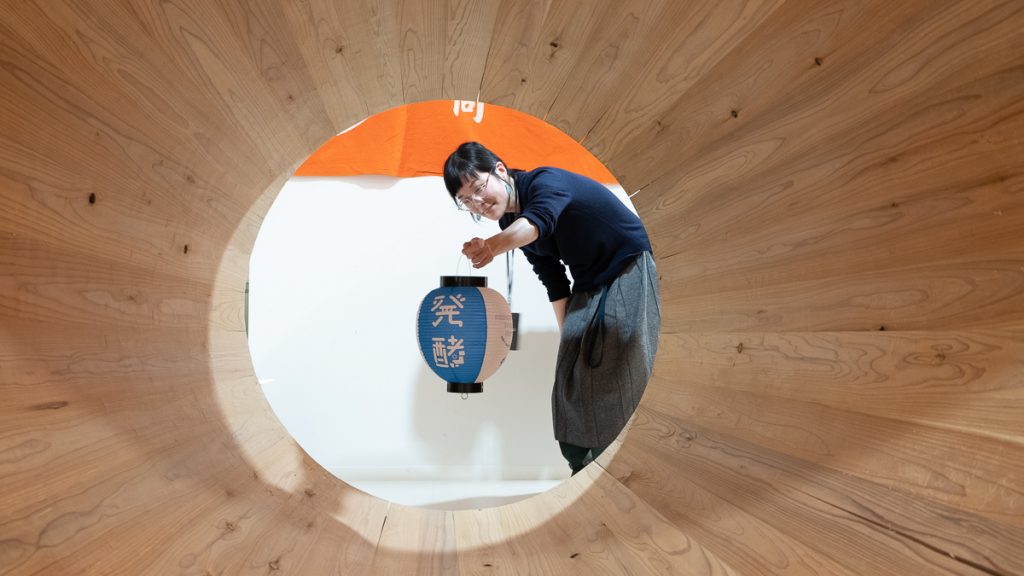
Commemorative photo with such a valuable wooden mallet. (In commemoration of the friend who visited together)
Another photo spot is "face fuck". This is not a manufacturing process of food, but a panel that cuts off " skuhatsu watering ", which is a part of the printing process. When it is fermented by making the leaf of leaf into a mulch soil and composting, it seems that the heat is given and it is cooled with water to promote the fermentation. This is a valuable photograph taken of the situation. I was surprised not to know that fermentation was originally involved in the process of dyeing. (And, it's amazing to see such a maniac moment in the face panel.)
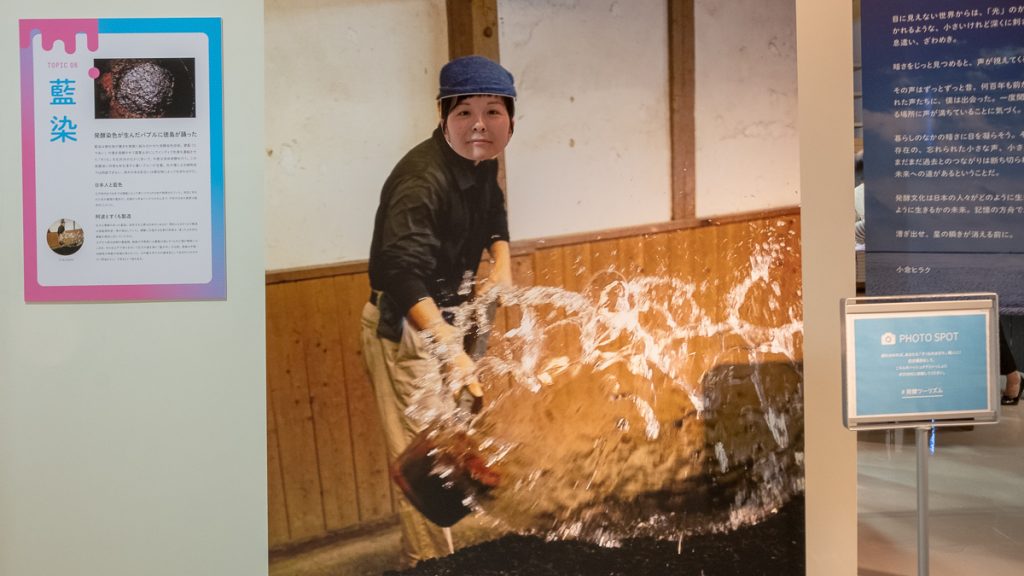
Then, at the “d47 Shokudo” located next to the exhibition hall, the original set meal using fermented food at the exhibition will appear in a relay format during the exhibition period. You can actually eat it!
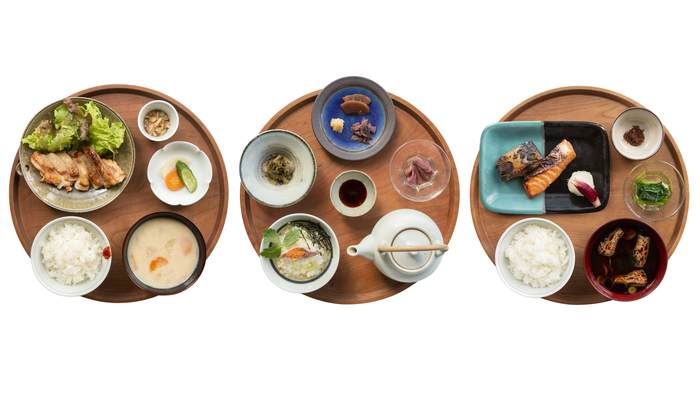
From the left (1) Stir-fried set meal (2) Delicacy-dinner set meal (3) Umami-taste continued set meal All 1,680 yen (tax included).
This time, after visiting the exhibition, I had a " Set meal ". Luxurious set meal with five items of "Godo", "Sanpuka-zuke", "White miso soup", "Tomato-soup in chicken" and "Kanzuri". Above all, it was a big hit personally, fermented food "Godo" of Aomori resembling natto. I smelled the smell at the exhibition hall and I was concerned about the taste, but the texture was sweeter with a more nasty texture than natto. It was an article that I wanted for a snack of sake.
A project where you can experience the fermentation journey simulated by actually tasting it. It is nice to be able to eat the food you care about at the exhibition hall in this way. If you visit the exhibition, you can also have a meal at d47 Shokudo.
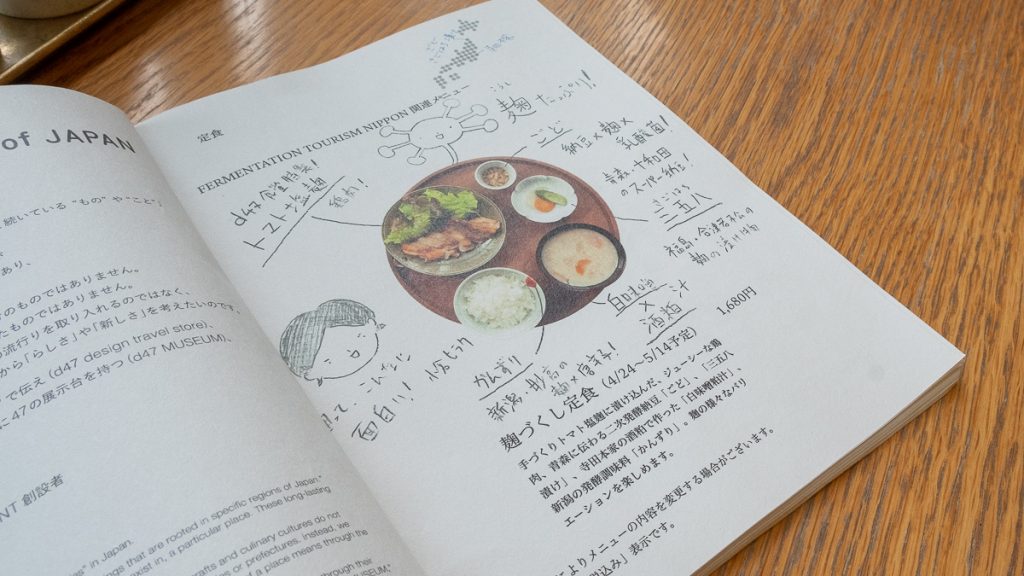
There is also a mini commentary by Mr. Ogura on the menu.
The exhibition is until Monday, July 8, 2019. During weekends, there will also be talk events, so check out the official site for more details.
Exhibition summary
Fermentation Tourism Nippon ~ A Japanese Trip to Rediscover Fermentation ~ supported by Carpis <br /> Hosted by: D & DEPARTMENT PROJECT
Sponsorship: "Carpis" (Asahi Beverage Co., Ltd.), Environment Daizen Co., Ltd., Bioc Co., Ltd., and Ashiya Sanzaemon Co., Ltd. Cooperation: ALL YOURS
Period: April 26, 2019-Friday, July 8, 2019
Time: 11:00 to 20:00 (final entry 19:30)
Location: d47 MUSEUM
Fees: Admission Free Official website: http://www.hikarie8.com/d47museum/2018/11/fermentation-tourism-nippon.shtml
Born in Saitama in 1988. The nickname is "Dove". After graduating from the university, he flew in the IT industry such as advertising and EC business. The editor-in-chief picks up the place where it became free and goes to the Japanese-style web site. I believe that the wasteful thing that overflows in the world is actually the most important thing. Drink beer on 365 days. Every year I go to Kochi.