






Rakugo (落語) is a form of traditional Japanese popular entertainment, a storytelling art where the performer makes the audience laugh with amusing tales and concludes with an “ochi” (落ち) —also called a sage (サゲ)—a distinctive closing twist or resolution that ties the story together and delivers its final humorous or clever effect.
The Rakugo storyteller uses only a sensu (扇子; fan) and a tenugui (手ぬぐい) hand towel as props, developing the story solely through conversation and gestures. It requires extremely high skill and narrative technique to invite the audience into the world of the story using words alone. To become a fully-fledged storyteller (called a shinuchi (真打ち) in Edo Rakugo), one must apprentice under a master and undergo many years of training and service.
Although Rakugo is said to be a traditional performing art that Japan boasts to the world, how exactly did it come into existence? Here is a quick breakdown from one of our staff members at Waraku web, who loves Rakugo so much that they allegedly listen to it every night.
Did early Rakugo begin as storytelling to stave off sleep in the Sengoku period?
Originally, Rakugo was called names such as otoshibanashi (落とし咄, literally “drop-ending stories,” meaning stories that end with a sudden humorous twist) and it is said that the term ‘Rakugo’ began to be used around 1887.
(While ‘hanashi’ can be written as 噺 or 咄 in Japanese, we generally use the standard kanji character here.)
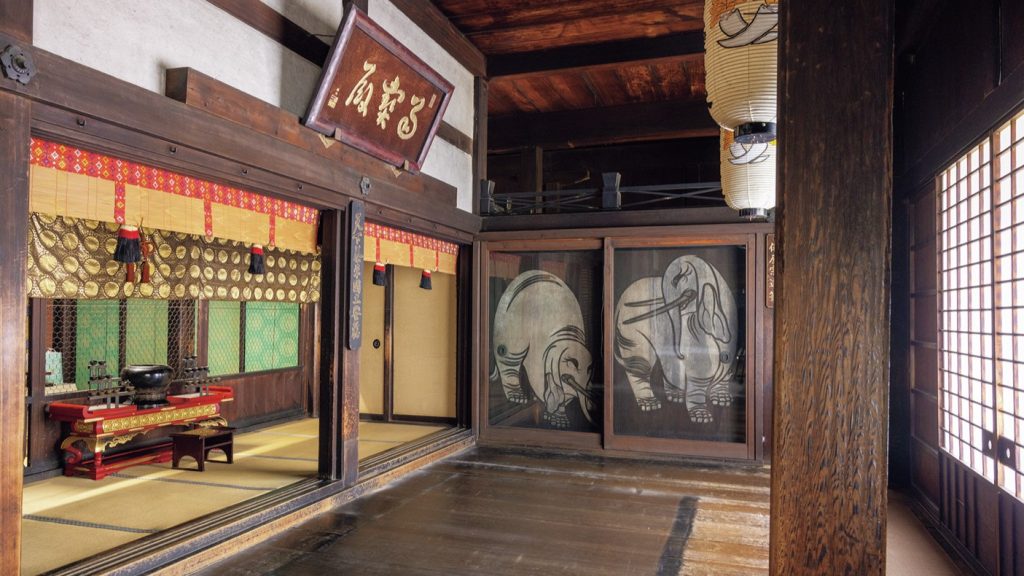
There are various theories regarding its origins, but according to Okitsu Kaname, a researcher of early modern literature and Rakugo and Professor Emeritus at Waseda University, it is thought to originate from the yawa (夜話), or nighttime storytelling of the otogishu (御伽衆) during the Azuchi-Momoyama (安土桃山) period (late 16th century), who served as conversation partners and aides to military commanders.
The otogishu usually acted as advisors on political and military matters for the commanders, as well as instructors in martial arts and hobbies. They accompanied the commanders even during war, and those who were particularly skilled at talking would tell various stories to the friendly troops throughout the night. As the officers and men needed to stay awake all night to prepare for enemy night raids, the otogishu would tell heroic tales and stories of military exploits to boost morale and keep them awake.
Even so, sleepiness would inevitably creep in. Thus, some among the otogishu devised the method of adding an amusing ‘ochi’ (twist) to make listeners laugh unintentionally. It is believed that these funny stories are the origin of Rakugo.
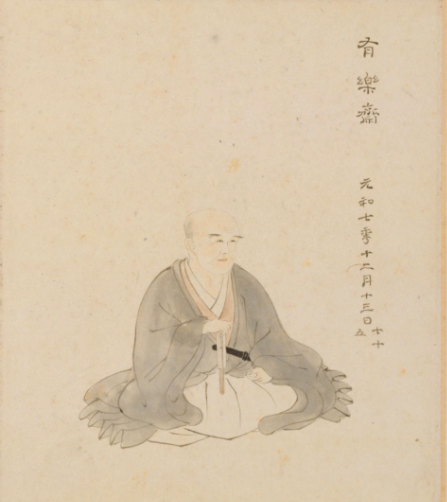
Decades later, in the Edo period, these comic tales of the otogishu were compiled into a book called Seisuisho (醒睡笑) by the Kyoto monk Anrakuan Sakuden (安楽案策伝). As the title of the book suggests (literally “Laugh to Wake from Sleep”), it is clear that these otoshibanashi were intended to ward off drowsiness. This book can still be read today, and it contains stories considered to be the early forms of popular programmes in modern Rakugo.
Incidentally, it is said that monk, Sakuden himself was one of the otogishu for Toyotomi Hideyoshi.
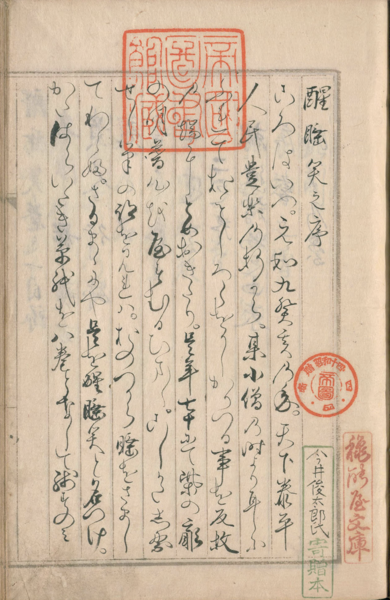
‘Professional Rakugo Storytellers’ born in the early Edo period
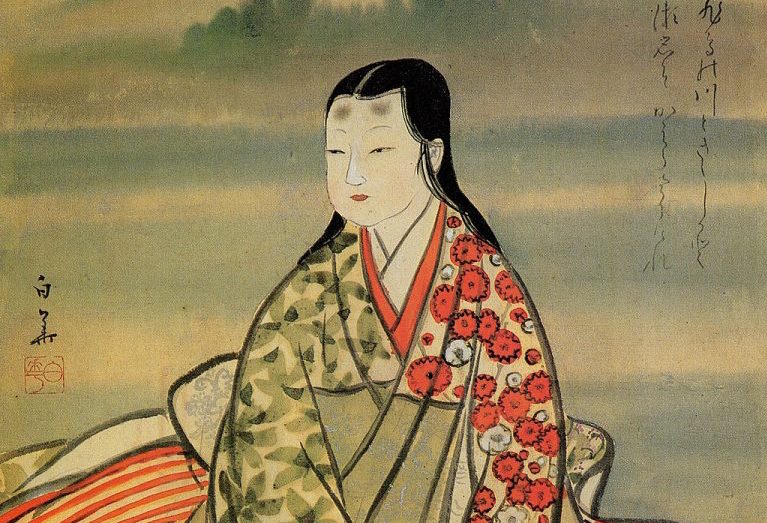
Meanwhile, the aristocrats in Kyoto also had figures similar to the otogishu, and although the author is unknown, a book collecting their humorous stories titled Kino wa Kyo no Monogatari (昨日は今日の物語) (circa 1615, published in the Genna era) gained popularity among them.
Thus, even after the Sengoku period ended, funny stories spread in various places, and by the mid-Edo period, ‘professional Rakugo storyteller-like figures’ emerged.
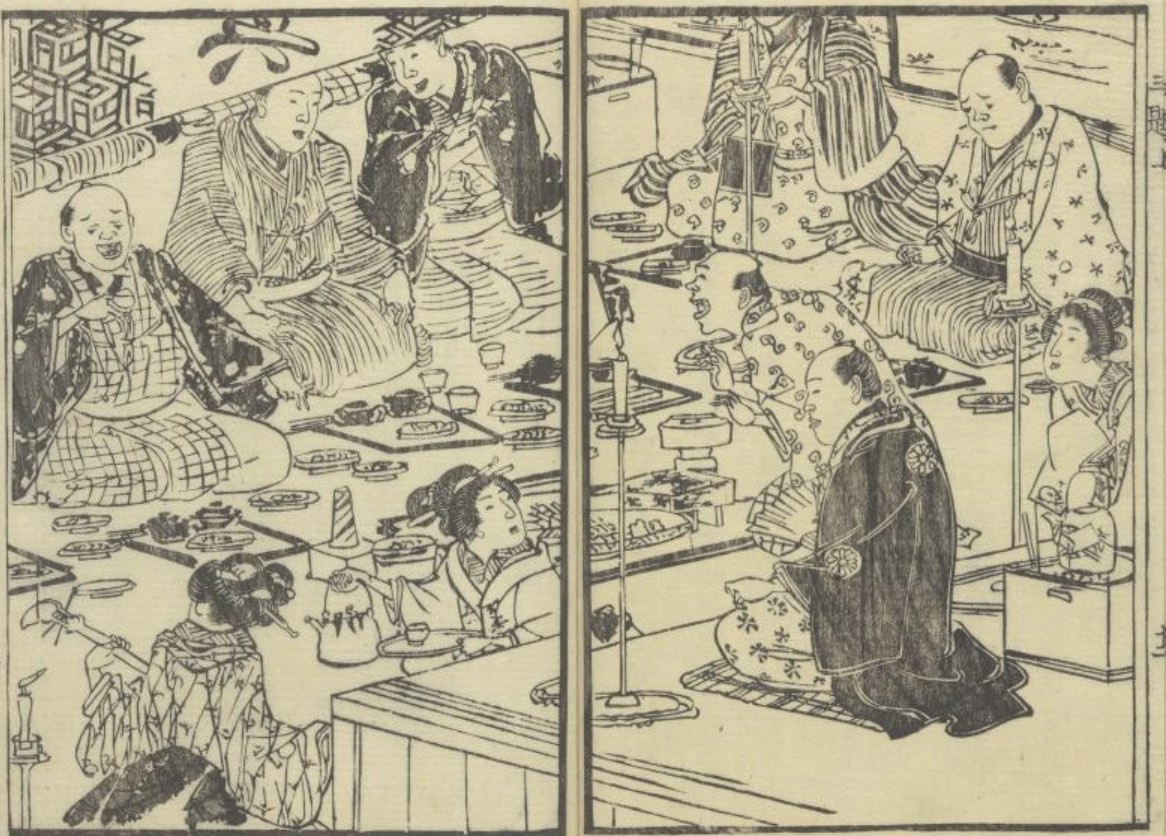
These included Tsuyu no Gorobei (露の五郎兵衛) in Kyoto, Yonezawa Hikohachi (米沢彦八) in Osaka, and Shikano Buzaemon (鹿野武左衛門) in Edo. Tsuyu no Gorobei gathered passers-by outdoors to listen to his stories, whilst Shikano Buzaemon was mainly invited to samurai residences to tell stories in zashiki (座敷; tatami rooms); each style gained popularity. As they were already collecting fees from an unspecified large number of customers for their performances in this era, they are called the ‘ancestors of Rakugo storytellers’.
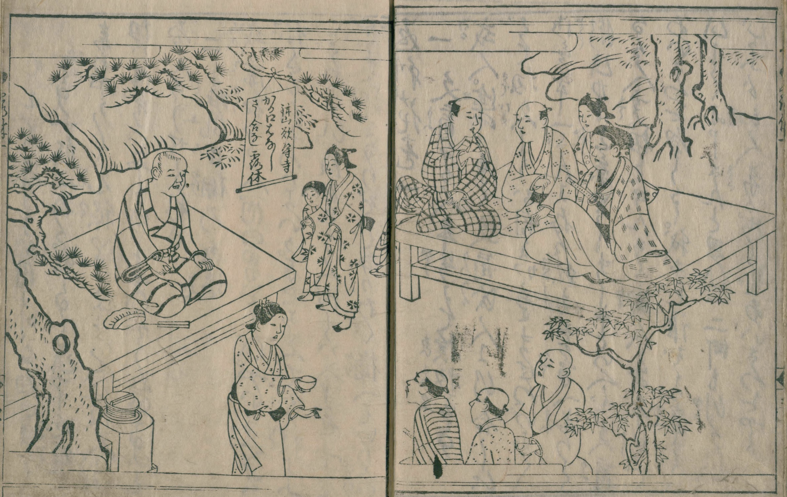
For example, Tsuyu no Gorobei’s style was called tsujibanashi (辻咄, crossroads tales). According to Okitsu Kaname in the Encyclopedia Nipponica, “It was a popular form of entertainment where a hut with reed screens was set up in the city’s busy quarters or festival sites. The performer would recite stories in front of a desk on a wide bench (hiro-shogi, 広床几), and the audience would sit on benches to listen. They performed in fine weather to stop passers-by, and when the story reached its climax, they would go around collecting money.”
More customers = The birth of the Yose theatres
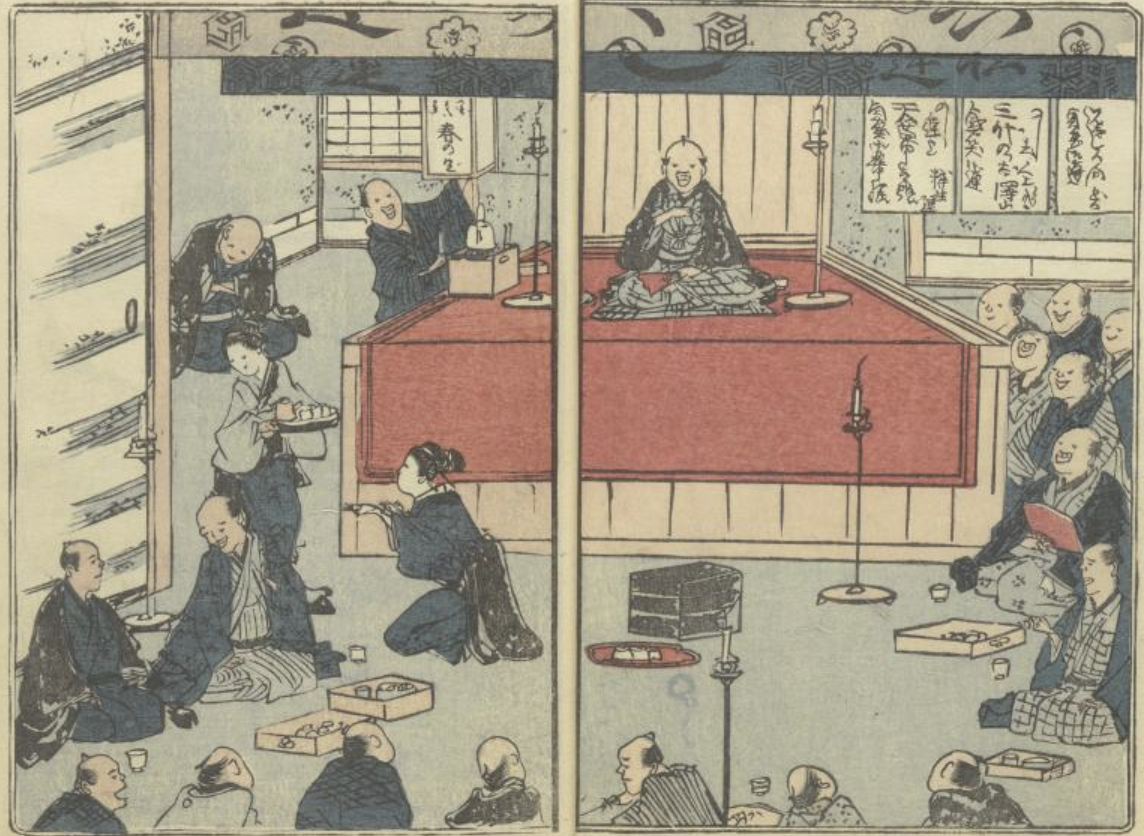
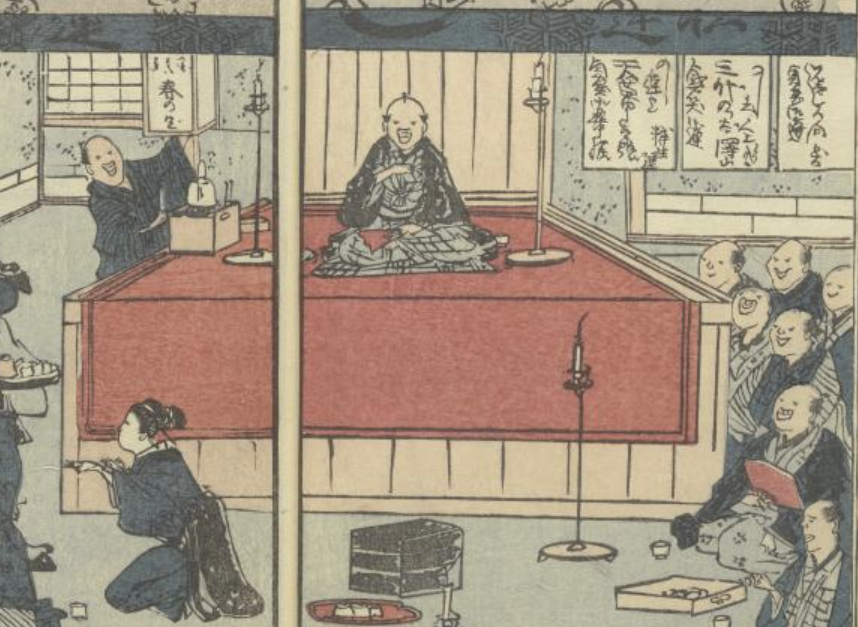
As time passed and the Kansei era (1790 onwards) began, the popularity of otoshibanashi led to the birth of the yose (寄席), which spread rapidly as a place of entertainment for the common people.
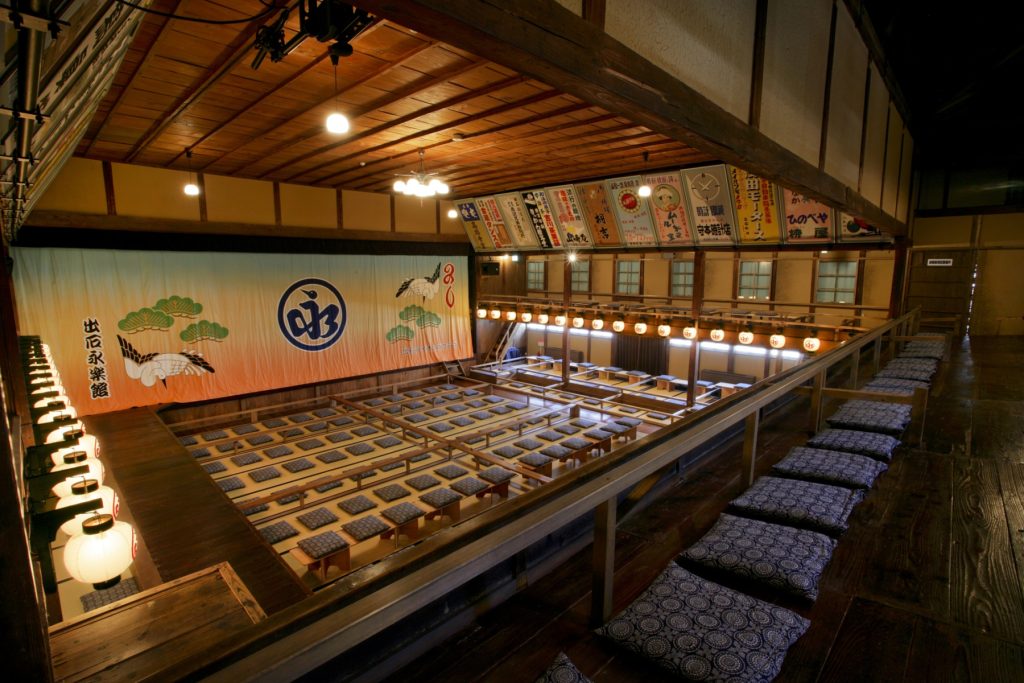
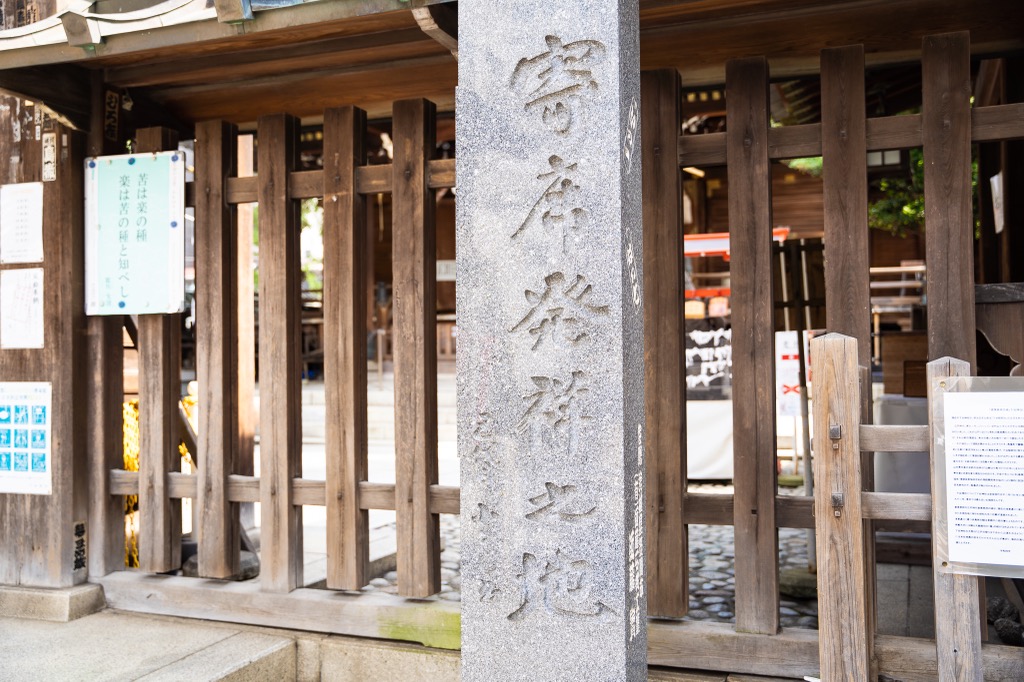
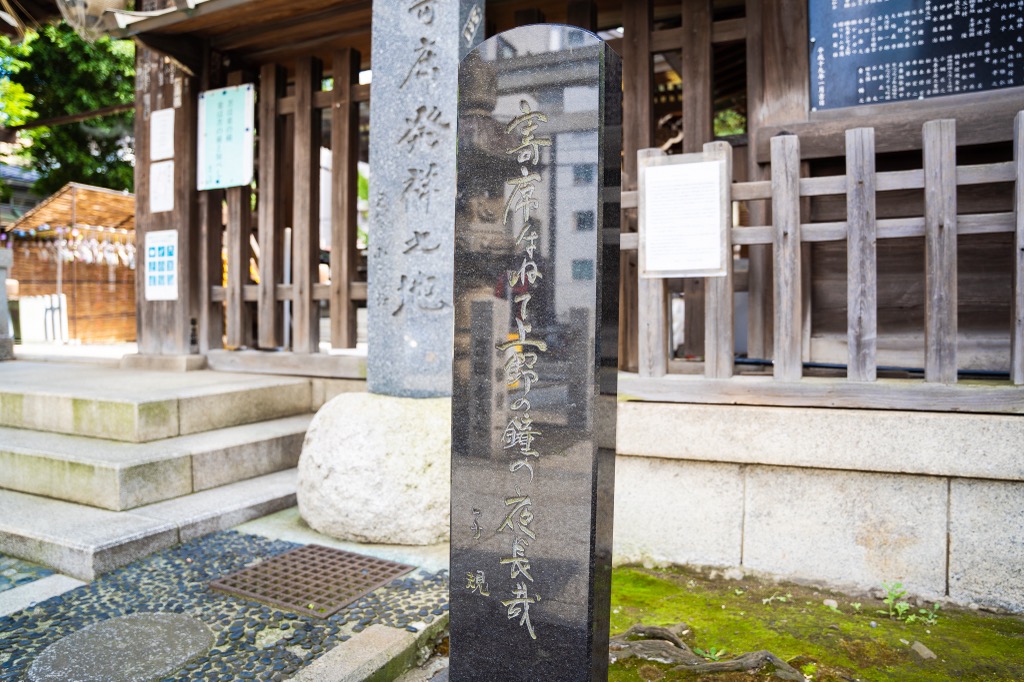
A yose is a performance hall that shows arts (entertainment) such as Rakugo, Kodan (講談; storytelling), and Rokyoku (浪曲; narrative singing) to an audience. In Edo, there is a record of the performer, Sanshotei Karaku (山生亭 花楽, later the first generation Sanshotei Karaku [三笑亭 可楽]) charging the audience kido-sen (木戸銭; admission fee) for his otoshibanashi at the Shitaya Inari (下谷稲荷) Shrine in East Ueno (currently Shitaya Shrine); this is considered the origin of the yose. Today, a monument marking the ‘Birthplace of Yose’ stands at Shitaya Shrine.
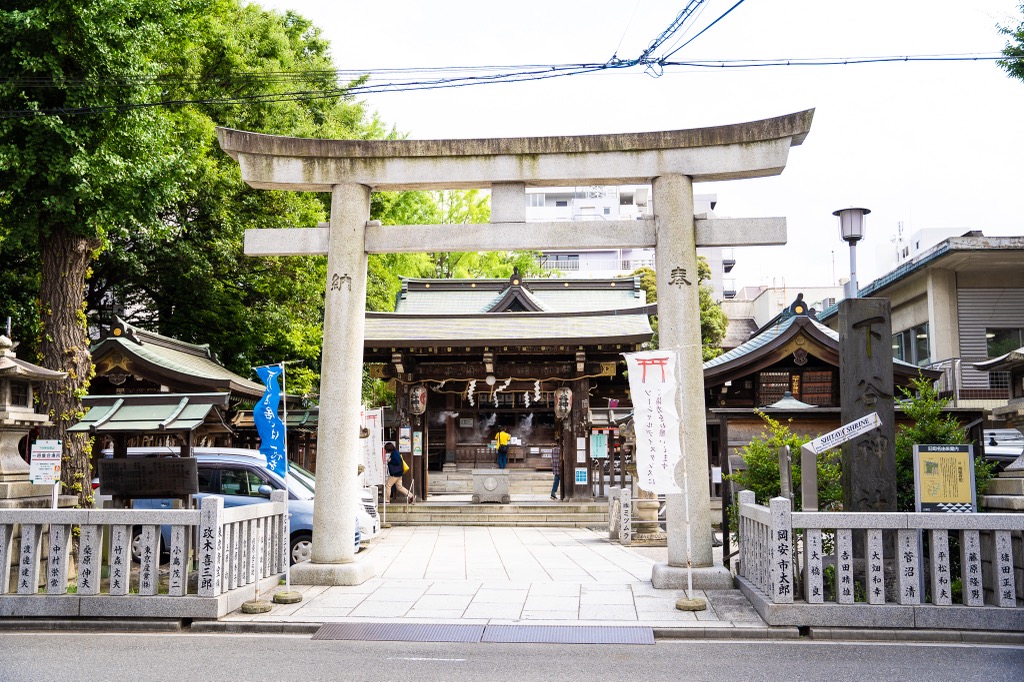
The first Sanshotei Karaku began an experiment called sandai-banashi (三題噺), where he would ask the audience for three topics and create a story on the spot based on them; this gained him popularity. Later, although yose temporarily declined due to the Tenpo Reforms by the senior councillor Mizuno Tadakuni (水野忠邦), they revived after Mizuno’s downfall. Various types of stories emerged, including ninjo-banashi (人情話; human interest stories) that moved people to tears, ghost stories, ongyoku-banashi (音曲話) incorporating musical accompaniment, and theatrical stories. Many storytellers specialising in each of these genres were born.
Meanwhile, around the same time in Osaka, the first Katsura Bunji (桂 文治) held yose performances. Although Katsura Bunji is considered the ‘restorer of Kamigata (Osaka/Kyoto) Rakugo’, compared to the popularity in Edo at the time, it is said that “the inferiority of Kamigata could not be concealed” (from the aforementioned Encyclopedia Nipponica).
The genius who elevated Rakugo to an ‘Art’
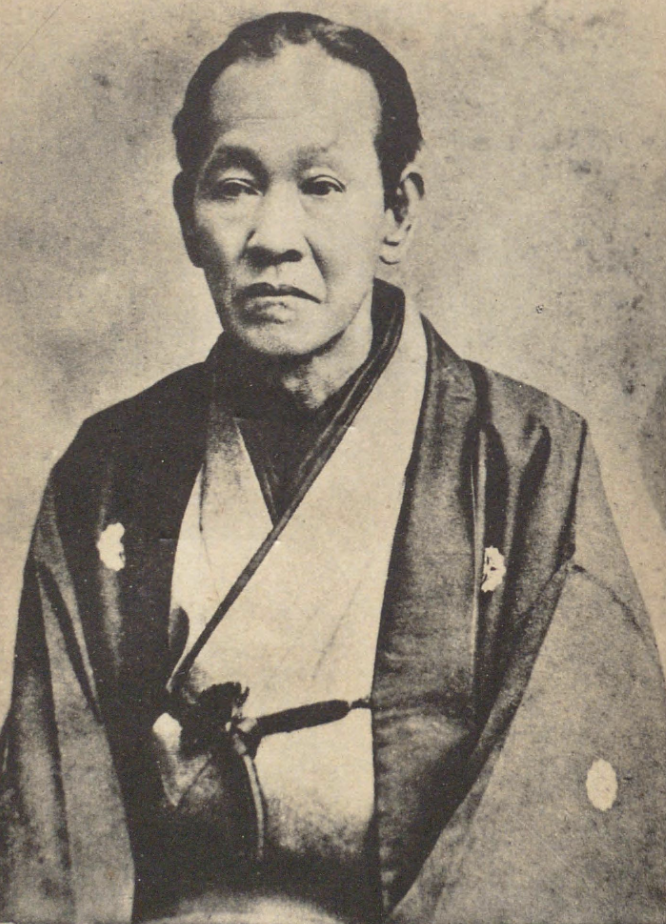
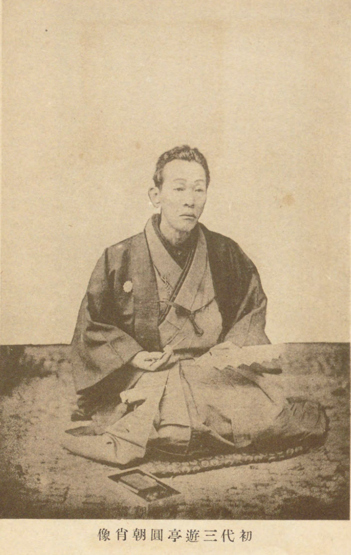
Entering the Meiji era, a figure appeared who led Rakugo from mass entertainment to a higher level of ‘performing arts’, or indeed ‘art’. That person was Sanyutei Encho (三遊亭 圓朝)
In 1869, the Meiji government issued a ban on performances similar to theatre. To prevent the corruption of public morals, they prohibited flamboyant programmes involving musical accompaniment or backing music and banned theatrical-style productions.
In response, Encho specialised in subanashi (素噺), using only a single fan, and mastered that narrative art. Depicting the subtleties of the human heart with only his tongue… Encho, who was particularly skilled at ninjo-banashi, created many programmes from sandai-banashi and other sources that are still considered masterpieces today.
Works attributed to Encho, such as ‘Kajikazawa‘ (鰍沢), ‘Bunshichi Mottoi‘ (文七元結), ‘Shibahama‘ (芝浜), and ‘Shinigami‘ (死神), still boast unwavering popularity, shaking the hearts of audiences—and making them laugh. It was undeniably Encho who elevated Rakugo to what could be called the pinnacle of storytelling arts.
Also, in the Japanese literary circles of the time, the Genbun Itchi (言文一致; unification of spoken and written language) movement was unfolding. The writer Futabatei Shimei (二葉亭四迷), who stood at the forefront of this movement, developed it by transcribing Encho’s Rakugo exactly as he spoke it. Encho’s Rakugo had a significant influence on the dawn of modern Japanese literature.
Popularity continues to rise even now
Later, entering the Taisho and Showa periods, Rakugo declined due to the popularity of moving pictures (later cinema) and the subsequent Manzai (漫才) boom.
Kamigata Rakugo, in particular, followed a path of decline from the Taisho to the Showa era. In the Kamigata Rakugo world, which was in danger of extinction with no one left to perform, the third generation Katsura Beicho (桂 米朝) gathered programmes from the few remaining elderly storytellers, preserving and passing on many stories whilst personally sparking a Kamigata Rakugo boom. Due to his masterful storytelling and achievements, he was designated as a Living National Treasure (Important Intangible Cultural Property), the second in the Rakugo world to receive this honour (the first was the fifth generation Yanagiya Kosan [柳家小さん]).
Meanwhile, in Tokyo, figures called ‘Masters’ appeared one after another during the reconstruction period after World War II. The fifth generation Kokontei Shinsho (古今亭志ん生), the sixth generation Sanyutei Ensho (三遊亭圓生), and the eighth generation Katsura Bunraku (桂文楽) were called the ‘Three Masters’ and built a golden age.
Furthermore, as the next generation to these masters, talented young storytellers emerged: the third generation Kokontei Shincho (古今亭志ん朝), the seventh (also known as fifth) generation Tatekawa Danshi (立川談志), the fifth generation Sanyutei Enraku (三遊亭円楽), and the fifth generation Shunputei Ryucho (春風亭柳朝). These four were called the ‘Four Heavenly Kings of Tokyo Rakugo’ and enjoyed immense popularity.
Around the same time, the four called the ‘Four Heavenly Kings’ in Kamigata Rakugo were the aforementioned third generation Katsura Beicho, the fifth generation Katsura Bunshi (桂文枝), the sixth generation Shofukutei Shokaku (笑福亭松鶴), and the third generation Katsura Harudanji (桂春團治).
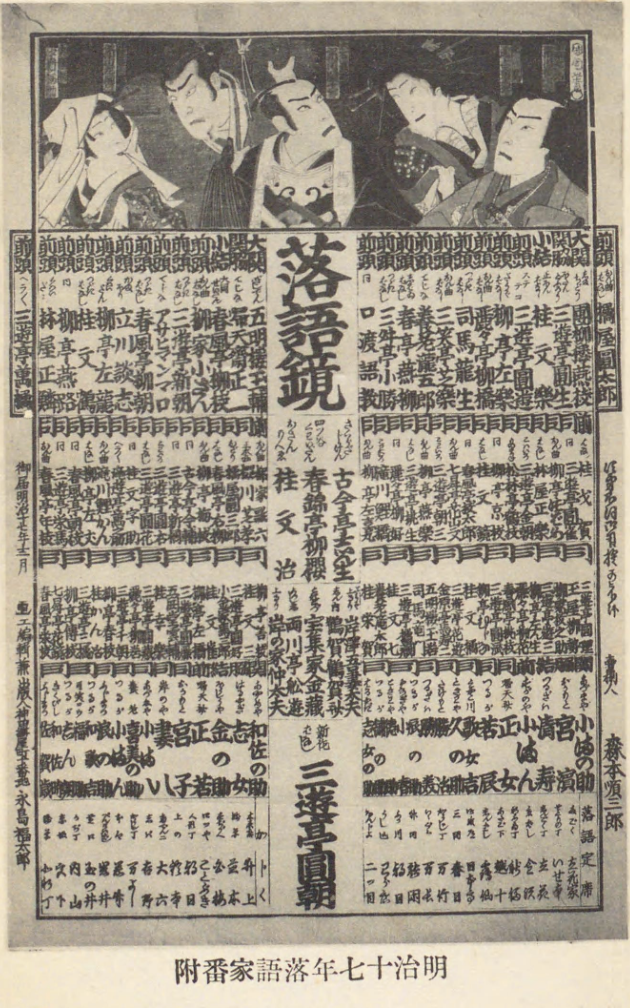
We can still enjoy their Rakugo today through media such as CDs. Generally, Rakugo programmes created up to the Taisho era are called Koten Rakugo (古典落語; Classical Rakugo), while those created in the Showa era and onwards are called Shinsaku Rakugo (新作落語; New Rakugo) or Sosaku Rakugo (創作落語; Creative Rakugo). For those who feel that “old stories are hard to get into,” it might be good to listen to Shinsaku Rakugo set in the modern day (we recommend Tatekawa Shinosuke (立川志の輔) in Tokyo and the sixth generation Katsura Bunshi in Kamigata).
Even today, many storytellers, from young talents to veterans, take to the koza (高座) (the stage is called a koza in Rakugo) at yose every day. Although many entertainment halls and yose were forced to resort to online streaming due to the COVID-19 pandemic, they are now regaining their bustle.
If you trace the tradition of their storytelling art, you can go back to the Meiji era and even further to the Edo period. If you visit with knowledge of such history (though of course, you can enjoy it more than enough without knowing it), you might be able to enjoy Rakugo in a slightly different way.
References:
・Encyclopedia Nipponica(Nippon Hoso Shuppan Kyokai)
・Rakugo by Yamamoto Susumu et al. (Yamakawa Shuppansha, 2016)
・Zukai Rakugo Nyumon (Illustrated Introduction to Rakugo) by Inada Kazuhiro (Sekai Bunka Sha, 2018)
・Encho Zenshu (The Complete Works of Encho) by Sanyutei Encho (Iwanami Shoten, 2012)
This article is translated from https://intojapanwaraku.com/rock/culture-rock/206111/