













Introductory fantasies 1st
Plum blossoming February ... Well, speaking of plum blossoms, if you are a Japanese art fan, you would like the masterpiece in that fancy masterpiece, "Red White Plum Drawing Screen" by Kogata Ogata! I think. The Atami MOA Art Museum, which has the finest masterpieces in Japanese art history, is also popular every year at this time of the exhibition of this precious national treasure painting. Furthermore, this year, when the MOA Museum has completely remodeled and reopened for the first time in about a year, it has attracted much more attention. Moreover! If the current artist, Hiroshi Sugimoto, was the one who worked on the renewal, he expected 100% MAX!
I went to that, to the commemorative opening of the renewal opening!
The special preview and reception were held on February 3 this year. In Atami, Yugawara, the time when plum blossoms from plum groves were about to reach full bloom. It was a great success for the party to be visited by Japanese art officials.
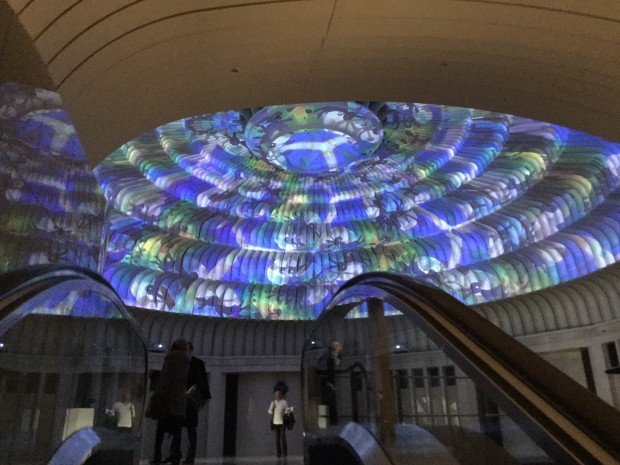
The MOA Museum is famous for its large escalators which continue from the entrance in front of the bus stop to the main building located on the mountain. It was a very big topic when it was opened in the 1980's, as if it was a device that was invited to the heavenly world. First of all in this renewal, the circular hall of this "Tenkai world" is very good! The world of the illusion that turns from one to the next using projection mapping unfolds on the dome-shaped ceiling of a circular hole and you will be able to see it ... But I can not say that. Above all, Mr. Hiroshi Sugimoto worked on the design, I have to rush to the main building!
The door of root-painted by Mr. Kazumi Murose will invite you to the Hall of Fame!
Normally, the escalator continues from this circular hall to the main building entrance floor, but at the private tour of this day, once, it goes out to the moor square that is famous for the sculpture of Henry Moore, and goes up the dramatic large stairs. I will head to the entrance. It's a tough upstairs for the older people, but the reason became clear when entering the entrance.
What met me was the huge 4-meter lacquered door installed at the main building entrance! It looks beautiful and glossy black lacquered when it sees from the table. And when I turned into the hall, I turned around this time Le Rouge et le Noir! No, it is just overwhelmed by its presence in the black and red, lacquered door like the one-sided lacquer tray. 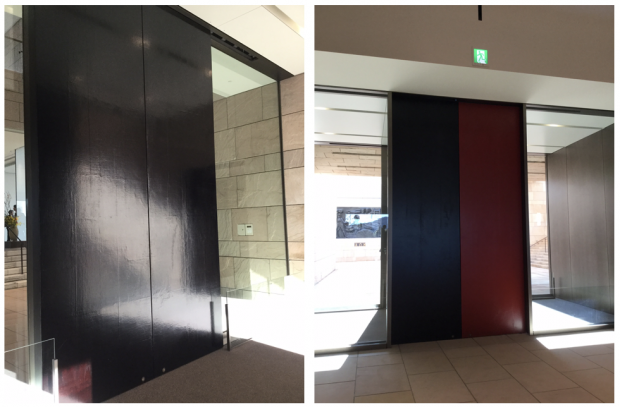
The door of this lacquer is the management body of the museum = created by Prof. Kazuyoshi Murose of the National National Treasure, who is the representative director of the Okachi Art Culture Foundation. Rooted beauty, godliness! The door created by the leading Japanese craftsmen is the gateway to the Hall of Fame that will unfold from now on to welcome us.
Well, I was taken for this production.
Great catastrophe ever! We are surprised at much modern exhibition space!
Well, enter the front entrance and go to the main lobby on the right! From here, you can look over the hot spring town of Atami to the Sagami Pass, and the mind will be fine and sunny. So, go through the main lobby and finally to the exhibition room designed by Hiroshi Sugimoto! First of all, the approach corridor that leads to the door that enters the exhibition space: The high-pitched noises have not been kept from this stage before encountering art works. Unlike the usual museum floor, it's a lattice floor that seems to have been mixed into the famous name of the wolf! And a beautiful shoji door like door. Rather than entering the art museum, you are caught in the illusion of visiting a famous temple. 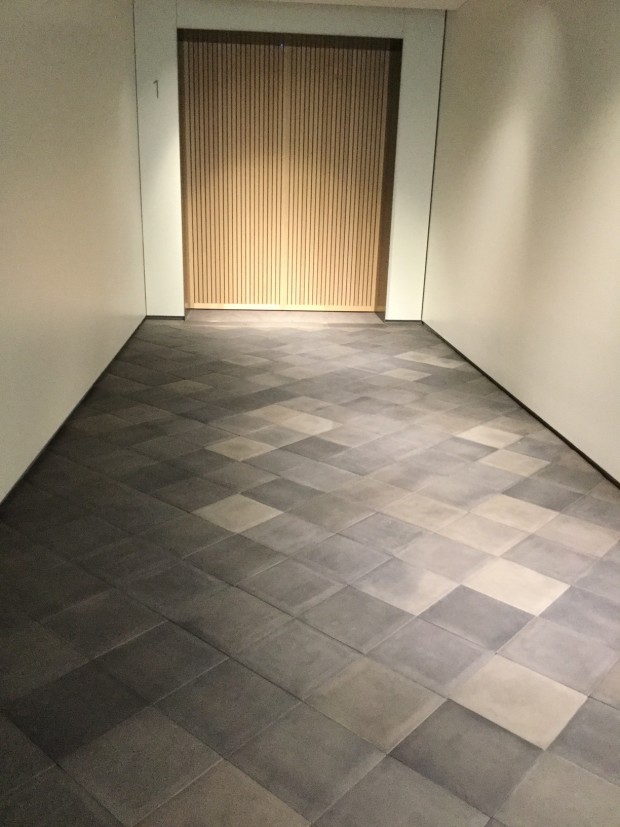
If you go one step, you will have to look into a very modern space that is completely different from the previous exhibition room. The exhibition room is divided by large black plaster walls, as if it were itself contemporary art. The artwork in the display case will shine even more with a light intensity that is a bit dim and strangely settled compared to a regular art museum. Even more surprising is that the display case is covered with tatami or cedar veneers! All works of art are displayed on a tatami mat or a single plate.
In the light of the Muromachi era! Appreciate the artwork on the large floor!
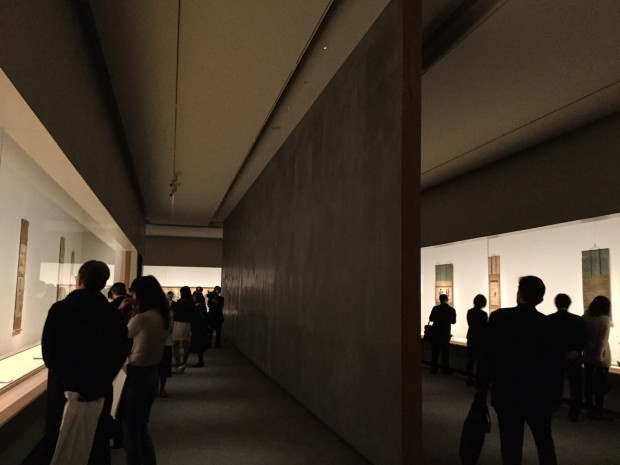
Mr. Hiroshi Sugimoto, who gave a greeting at the reception of the Renewal Opening, talked about the concept of this renewal, "to appreciate the works of art in the light of the Muromachi period".
A light that goes to the Shisho-ji Temple Tokyodo. Look at the works of Japanese art in the same shade as the light that Yoshimasa Ashikaga would also see!
What a wonderful concept! Furthermore, the meaning of the display case also explained that a large floor is made in the modern art museum, and the works of art are displayed and admired between the floors.
I see!
In an interview with Kazutomi once, architect Yoshio Taniguchi explained about the meaning of the space between floors in Japanese houses, "(Japanese) has a small art gallery in the space of his house," but The floor space reminds us that Japanese people since the Muromachi period are the most important places to decorate works of art. If you realize that as it is in a museum, that is, in a contemporary architecture, you can not but feel the dynamism of ideas, which can be said to be "Kopeten (old wording!)".
An exhibition case using Yakusugi's single board and Goja cedar. In the contemporary space, the sense that this unique material of Japan looks so beautiful was fresh. 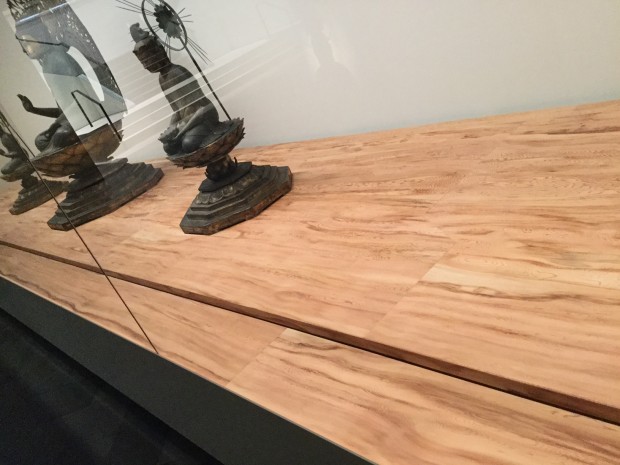
On the other hand, people with display cases using tatami mats ...
It is an exhibition case that appeared to display works of art on a tatami mat, but it is actually a "pseudo tatami mat" made of paper resembling a tatami mat. If you put a real tatami mat made of rush into a display case, it means that there is a possibility that the works of art may be degraded by the insects attached to it and that the permission from the Agency for Cultural Affairs has not been granted. (Well, then, I would like to do something like barrier paintings in the temples ... In the first place, it seems that the old museum's storage is not tatami mats ... but that is what ...
Anyway, this exhibition method is very cool. This will probably create a new trend in future museum exhibition methods and museum design. ... I felt such a premonition. 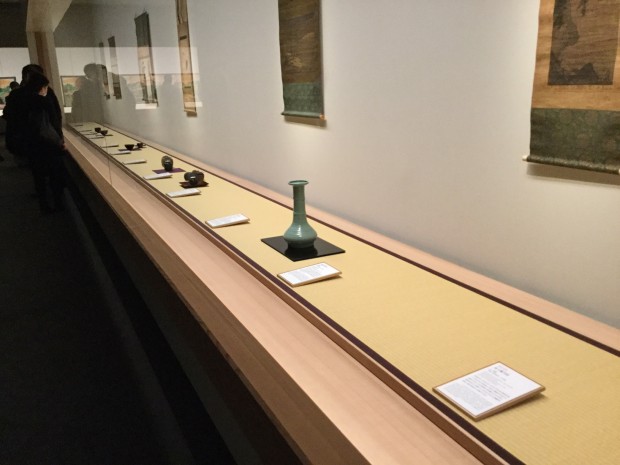
Huh? Is there no glass in the display case? Use glass with high transparency so you think so
Renewal has had another big change. It is a glass of the display case. There is a sense of transparency so that the glass does not appear to be contained, and there is only a sense of reality when it comes to works of art! With so much transparency, I witnessed that many people brought their faces close to the glass display case. Gotsun, gotsun ... and therefore some nose fats ....
I saw the National Treasure "Shiroi Hakumei-kan" (Kosuke Ogata), which is the highlight of the commemorative exhibition of this renewal and opening, in a new display case, but it looks like it was completely different from what I saw before . There is a sense of reality that if you breathe gently, it will reach the screen, and techniques of red plum blossoms, white plum blossoms branches and trunks, and even lines of flowing water crinkles and delicate plum blossoms. How to draw petal, you can appreciate it as if all the creation that genius Kosuke arrived in the last years of his work.
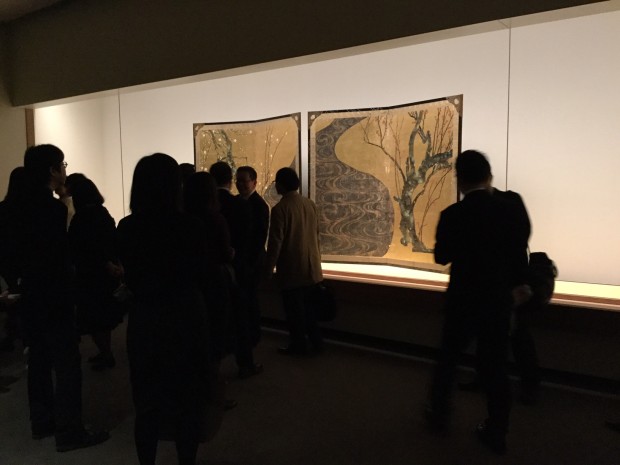
Art museum exhibition techniques are now evolving rapidly. Earthquake resistance, installation of seismic isolation equipment, management of humidity that is a major enemy of Japanese art. Furthermore, lighting that is kind to art using LED. And, the latest display case glass that realizes "high transmission and reflection".
Under the condition that the library limits the range of personal enjoyment and does not use a flash or a tripod, and for the works in the library (no art works loaned from other art museums), permission is also given to photography It seems that there is also a place where that fat belly is nice.
The renewal of the MOA Museum of Art is a kind of art, and at the same time "visitors first", thanks to the amazing design of Hiroshi Sugimoto and the latest technology. Well, due to the coolness of the design of the exhibition room too much, only the explanation has become long, but the contents of the "Renewal Commemorative Exhibition" held at the time of this renewal is also amazing So, before that, I will explain a little bit about the history and attraction of this MOA Museum of Art. (Continued on next issue)
MOA Museum of Art
Address / 26-2 Momoyamacho, Atami, Shizuoka Prefecture Map
Opening hours: 9:30 to 16:30 (last entry until 16:00)
Closed day / Thursday (open for holiday), display replacement day, New Year viewing fee / General 1,600 yen (1,300 yen) Senior university student 1,000 yen (700 yen) Senior discount 1,400 yen Disability discount 800 yen
Homepage / http://www.moaart.or.jp
[Puroral Concerto (MOA Art Museum)]
2nd Ninsei to Korin! Atami World Museum of Art with 3 National Treasures and 66 Heavy Letters
Finalist Hokusai and Kayo also appear! The Renewal Commemorative Exhibition is amazing!

My motto is "I'm serious about being stupid", and I am having fun and having fun every day.