








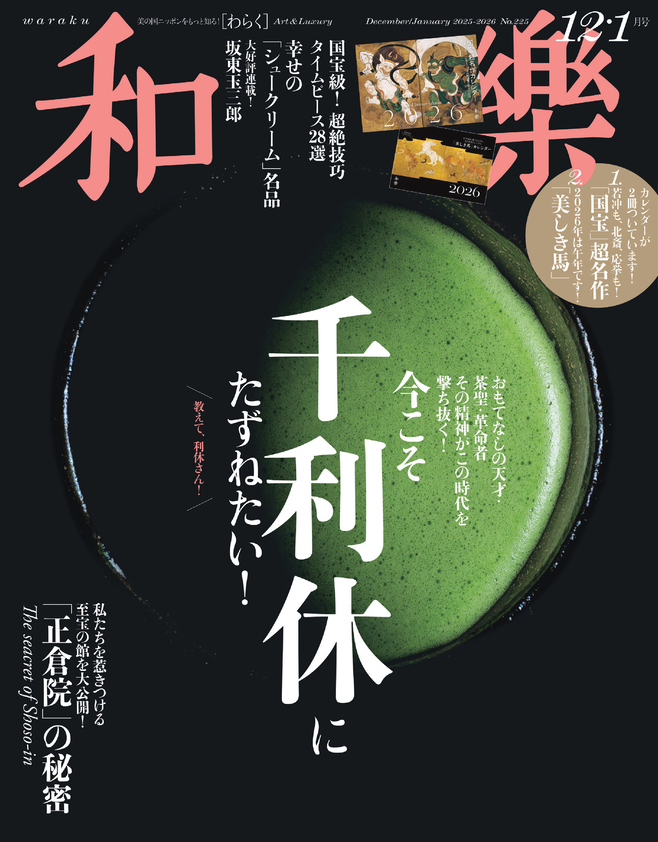




"National treasure" which can be said to be the highest achievement point of Japanese art. At Shogakkan, "Weekly published Nippon National Treasure 100" rediscovers its hidden beauty and cultural history On sale.
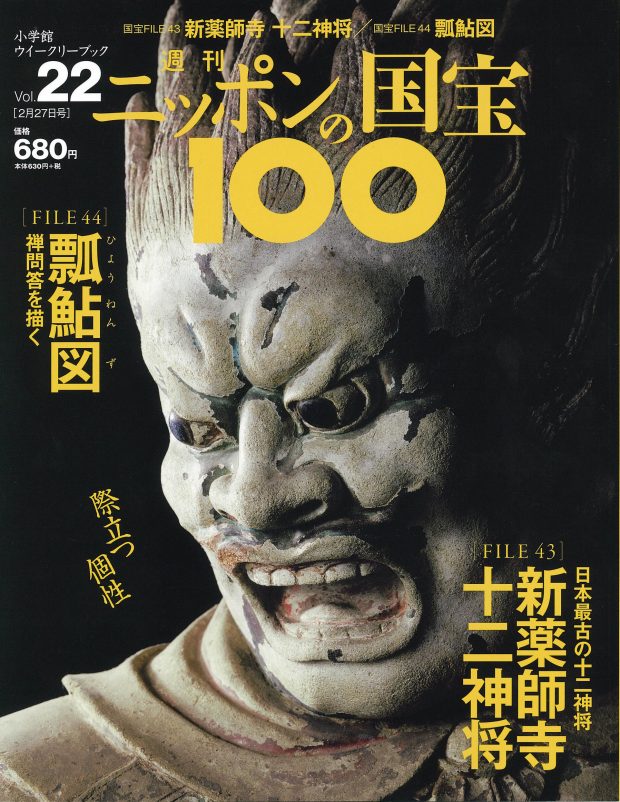
As digest of each issue, we introduce profile of famous treasure.
This time, it is a masterpiece of Tenhira plastic statue, "Shinyakushiji twelve jin general" and an intellectual mystery of a mochi, "Samurai".
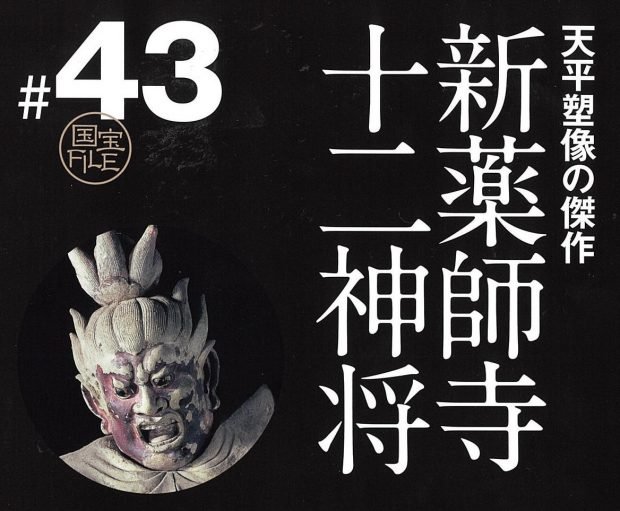
Japan's oldest twelve god general "Shinyakushiji twelve god general"
Shin Yakushi-ji Temple, located in Takahata-cho, Nara City, is reported to have been founded by Empress Empress, praying for the healing of the ill health of Emperor Seitake in Tenhei 19 (747). It is a magnificent scale temple where the main temple is almost completed in 3 years of treasure turtles (772), and 7 pairs of Yakushi Sanson statue and 33 shrines of the 12th General are enshrined in Jindo. However, there were frequent disasters, such as the collapse of the temple and the statue of the Buddha in the year 2 (92) due to a typhoon, and the temple area shrunk.
In the center of the main hall of the present day, a wooden pavilion statue (National Treasure) built from the end of the Nara period to the beginning of the Heian period is enshrined on the circular pavilion in the center of the main hall. It is surrounded by a statue of the twelve gods. Twelve Generals with a variety of poses and powerful expressions are masterpieces representing the Japanese Twelve Generals. It is also said that it is characterized by its contrasting shapes, such as postures that pair in a pair of two bodies, and stillness and movement.
Twelve god generals are Yakushi-nari-no-su-no-su (集 め る) who gather their faith as Buddha to cure disease. It is 12 Tenbe (good deity) who protects those who believe in Yakushi and protects 12 orientations. The expression of anger intimidates the enemy of the Buddha, hardens in the armor, and is expressed in the form holding the weapon and the arm in hand. According to the Edo period record, this Twelve God Generals statue was transferred from nearby Iwatsuji Temple to Shinyakushi Temple, but there is still the possibility that it is a statue that had been in Shinyakushi Temple since its inception.
During the repair of the Taisho era, it was found that the base of the statue of Inadara (madoura) statue was the year of Tenping and the inscription "made for the 7th Century parents and 6 relatives", and 12 ships were in Tenping Year (729- It turned out that it was built in 749). It is built with the same technique as the temple statue of Tokinji Temple Hokado (March Hall), which is a masterpiece of plastic works of the same period, and the Four Heavenly Statues (both national treasures) of the temple temple temple hall. Compared with the statue of Todai-ji Temple, the statue of the twelve gods, believed to have been built for private prayers, feels rough energy and a somewhat humorous friendliness.
One is a supplementary work in the early Showa era, while the other eleven are masterpieces of Tenpira plastic sculptures and, at the same time, they are extremely valuable group statues, even as Japan's oldest statue of Twelve.
National Treasure Profile
Twelve God General Statue
Mid-eighth century plasticwork lacquer foil coloring 11 pieces Image height 153.6-170.1 cm Shin Yakushiji Temple Nara
A statue of the Teijin general, enshrined in the main hall as a kin of Shin Yakushi-ji Temple's Honden and Yakushi-nuri sitting statue. Among them, the statue of Miya-dara (Hana-dara) was a supplement to Showa 6 because it was damaged by the great earthquake of 1884 at the end of the Edo period. Eleven pieces of the Tenping Year (729-749) works, and is the oldest statue of the twelve gods in Japan.
"瓢 鮎" to draw the question of torture
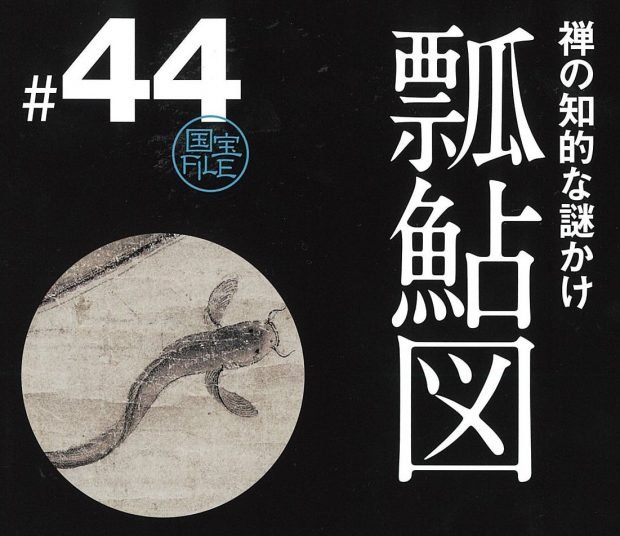
There is a man standing by the water that smokes in the coffin. The point is at the tip of the two arms stretched forward. At the foot of the stream a figure of one catfish swimming is drawn, and the upper part of the picture is completely filled with letters. This "瓢 鮎" is drawn by drawing a question asking, "Can I hold down a slimy rattan with a slippery rattan?", And the answers to it are written in Chinese poems by 31 nuns. By the way, the word “鮎” refers to the catfish in China.
Muromachi Shogunate's 4th Shogun Ashikaga Yoshimichi was drawn. He was born as the third General Shogun Yoshiman, and among the successive Ashikaga Shoguns who valued Zen Buddhism, he was a person who was particularly devoted to Zen culture. Yoshimochi visits Zen temples and performs poems after sitting down, and he gathers the nuns of Kyoto Gozan (6 temples of Nanzenji, Tenryuji, Aikokuji, Kenninji, Tofukuji, Manjuji) in his own house Made an intellectual culture salon with the nuns, such as making Chinese poems while
It is said that the title of the "Samurai-zu" is given with the "Konpaku" of Yoshimochi in mind. A public proposal is a question given by a teacher to a Zen trainer.
Mr. Yoshimochi created "瓢 鮎" as a new home for the newly built Sanjo Bomon (currently Chukyo-ku, Kyoto-shi) residence. The nuns who gathered in the salon made a difficult question according to the draft, and enjoyed making them compete for how to answer.
The ink painting was drawn by the monk, Ry 拙, who was an illustrator of the Shogunate (august year unknown). Ink paintings were transmitted from China during the Kamakura period, but in the Muromachi period, the heyday comes with the prosperity of the whale culture. In particular, the Zen temples and Aikoku-ji Temples of Rinzai-shu, which were created by Yoshimitsu, contributed to the development of the ink painting as the center of the Muromachi Art Garden, such as producing a painter. Rikuo is a monk at Aikoku-ji Temple, one of the painters who led the conversion from the early ink paintings, which were often religious figures, to the new ink paintings centered on the Sansui map.
The “瓢 鮎” was an unique sumi painting designed by himself as an intelligent game played by Yoshimochi, and created by Rugao incorporating the Chinese new style of painting. As a work with a deep mystery that can be interpreted in various ways, she emits a unique light in the history of Japanese painting.
National Treasure Profile
拙 瓢 鮎
Otake Shukora et al. 31 priests 22 years ago (1415) Paper book sumi painting paleo 1 width 111.5 × 75.8 cm
An ink painting depicting the question of whether Muromachi Shogunate 4th Shogun Ashikaga Yoshinari can hold a bribe with a whistle as a painting monk Ryouan at Aikoku-ji. There is a Chinese poem in which 31 nuns wrote the answer on the figure. It was originally a small boat (screen), but it has been remodeled into a hanging shaft for later generations.