













Craftsmanship and craftsmanship that you can not usually see very much. The idea that comes to mind when you hear the craftsman is the image that you are working silently and it's hard to talk to you, it looks a bit scary ...?
It is the hardware maker, Mr. Kawai, who lives in the select shop "ten" of Kiyosumi Shirakawa (Kiyosumi Shirakawa) that overturns the image of such craftsmen. At the factory attached to the shop, Mr. Kawai taught me the world of unknown craftsmen!
Mr. Kawai, a hardware maker who runs an interior business next to a shop
While ten handles the products of Japanese craftsmen and writers, it has a factory next door. It is an environment where you can see the manufacturing site.
Before, I was interviewed by the shop introduction article of Kiyosumi Shirakawa area, but this is the first time to enter the factory side.
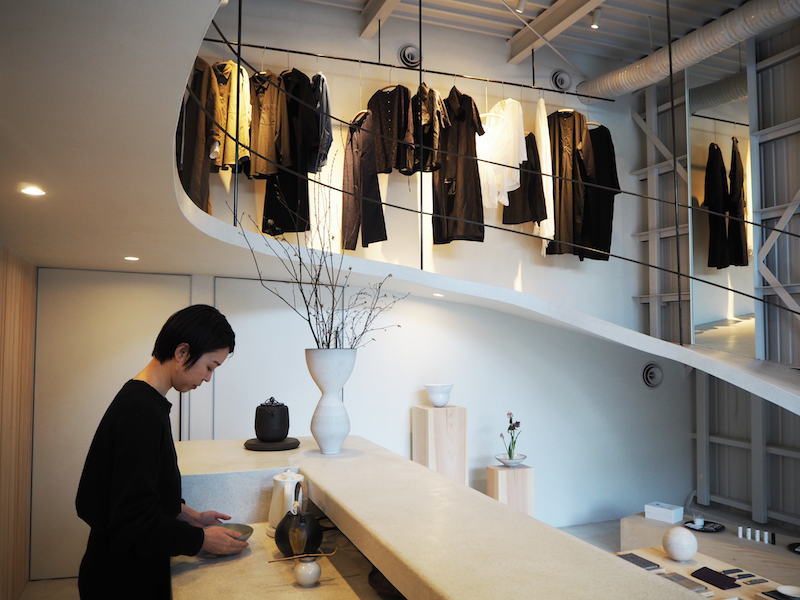 This is a ten store. The shop owner, Sae Yamamoto, stands at the counter.
(An interview article of Mr. Yamamoto is here )
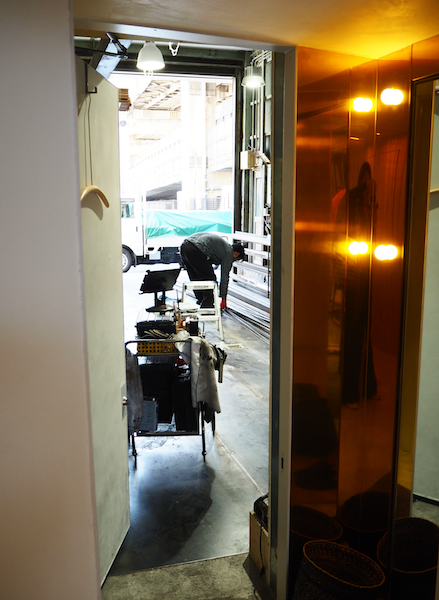 Opening the door at the back of the shop ... The world of craftsmen you can not usually see is expanding.
When you open the factory door, you will see Mr. Kawai. What are you doing now?
I am cleaning the river . I think that I have to clean it because it is not clean in the work continuation these days.
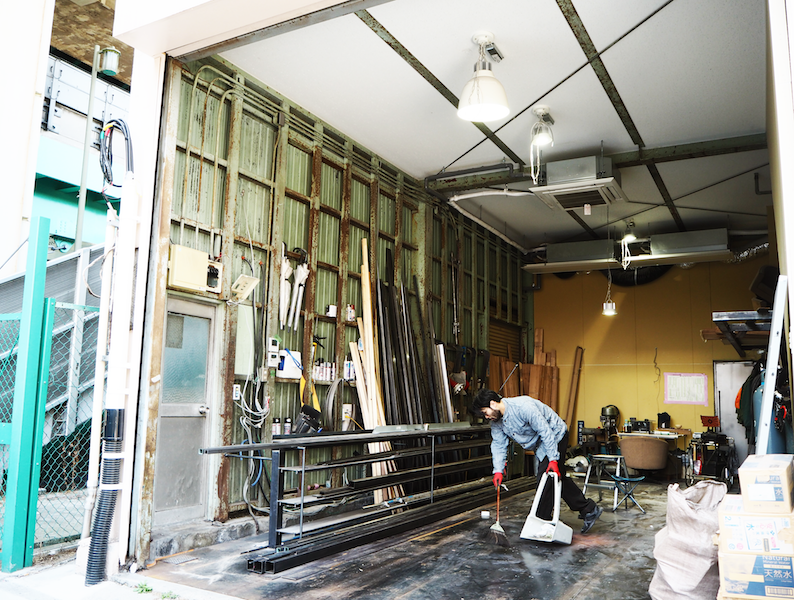
Sassy ....
If you are making a river routinely, it will get dirty right away.
Once you start once, you are a very craftsman. Well, I think I've finished cleaning, so I would like to hear from you soon. What kind of thing are you doing here?
I work in the interior business for the river lord. We make fixtures, stairs, doors, etc. asked by designers and architects. What I will create is the office counter, which has materials such as iron, so I cut and weld it.
 The materials needed to make the counter are in place.
When you look at the materials, you seem to be making something huge.
The ones I made here are transported by truck to the scene, but there are some that are not large enough to get on the truck. There are times when large stairs etc. are divided and made here, and it is put together like a puzzle on the spot, or it is created from the beginning on the spot.
Mr. Kawai conducts large-scale restaurants such as Sheikh and Shack, airbnb's private accommodation facilities, offices, shops, cafes and other interior construction and fixtures production regardless of companies and individuals. The furniture, stairs and doors of Masiko's popular furniture store "pejite Aoyama" and the furniture, stairs and doors of the complex "CASICA" of the shop, cafe and gallery in Shin Kiba are also produced. Many designers and architects also take on work directly.
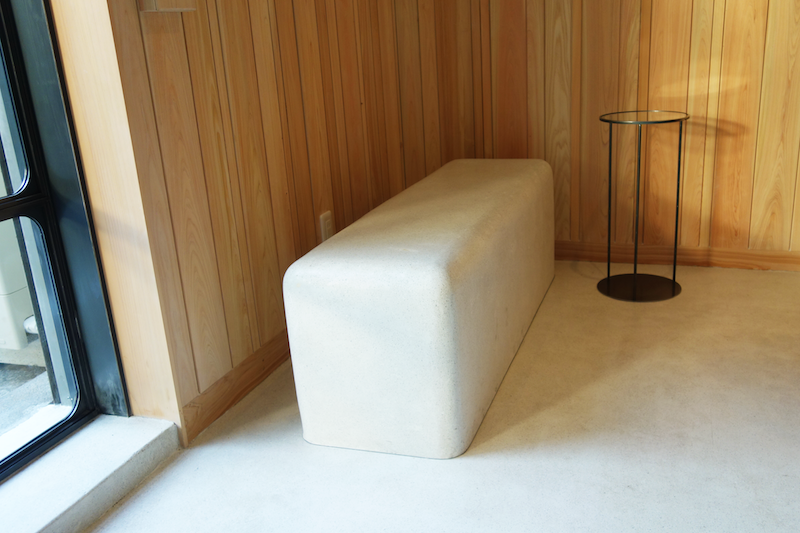 Kawai's work on slopes, windows and doors in ten shops.
I was shown how you are actually working!
I think there are many things that are made using iron, but what process are you using?
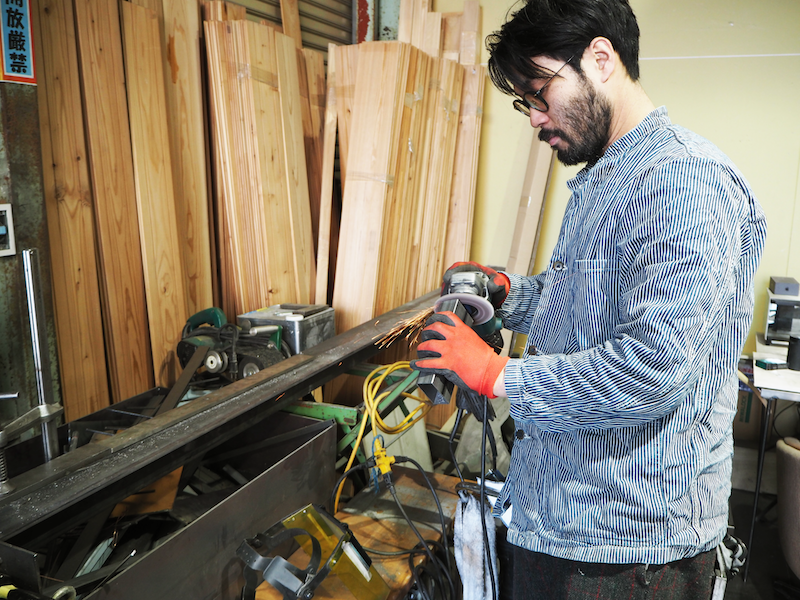
The most common thing is the work of cutting iron and welding it. I will try it from now.
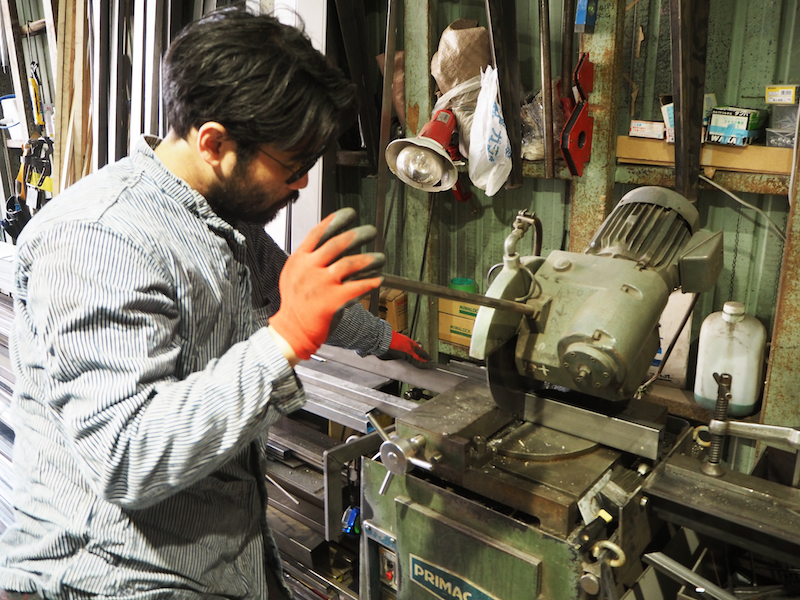 Use a cutting machine to cut the iron.
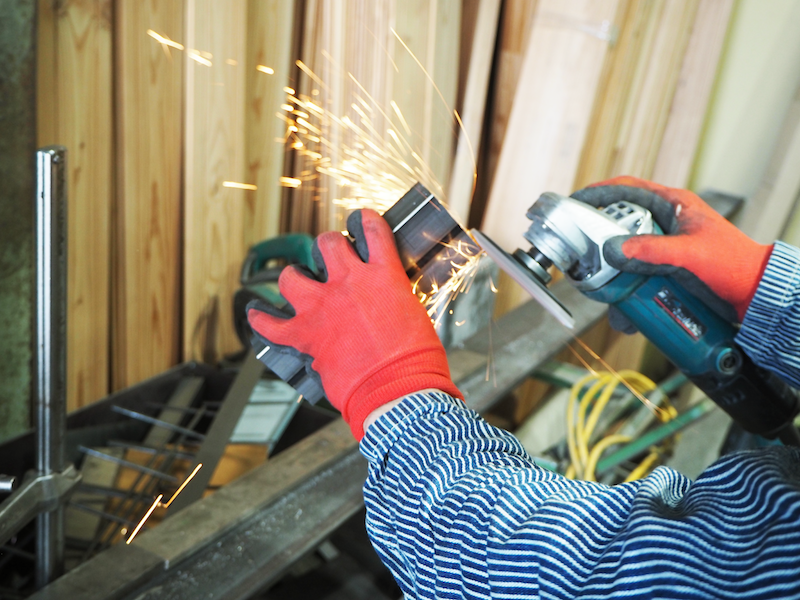 Since the cross section of the cut part is rough (this is called "Bali"), it is polished with a machine called a sander.
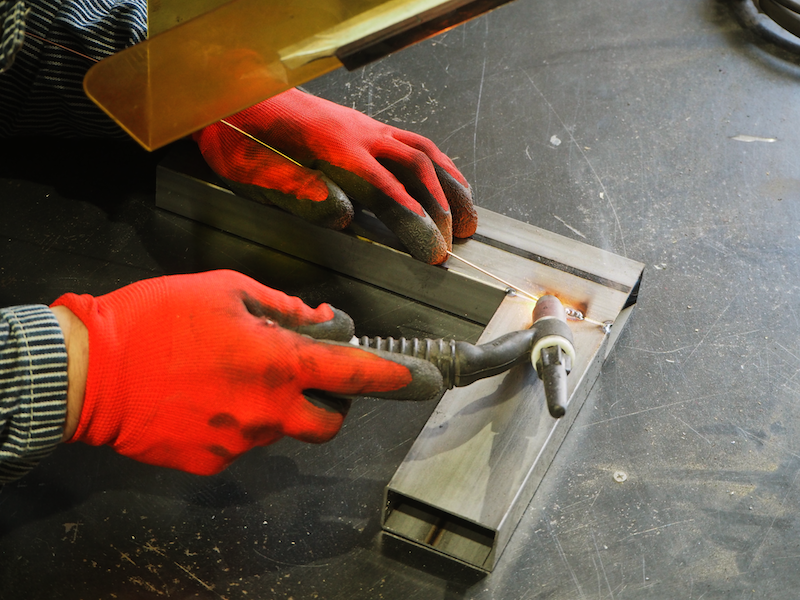 The welder emits a laser that can not be seen directly. While injecting Alcon gas, it emits laser and melts iron. Using welding rods, we will unite while melting.
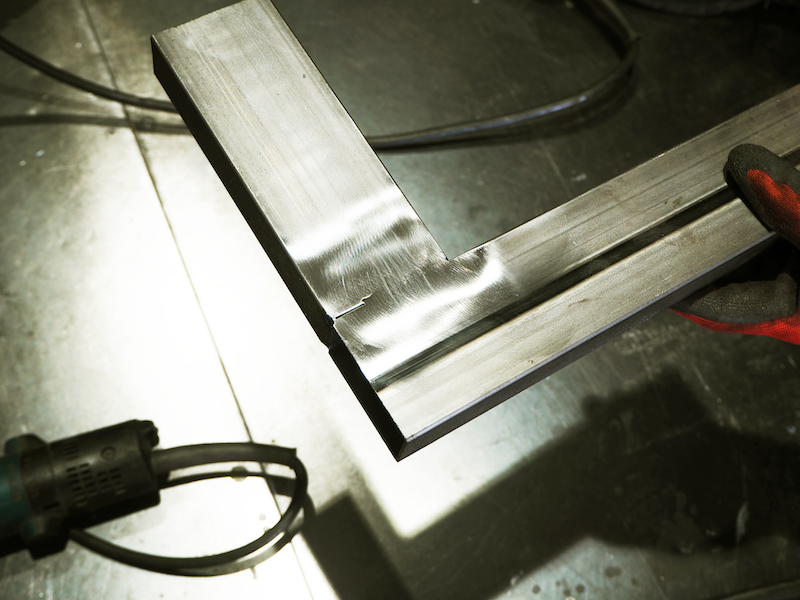 There are welding burns at the place where it is attached, so use a fine sander to clean it.
Kawa: In this way, iron is combined like a puzzle, and various products such as doors and fixtures are made.
I saw for the first time, sparks flying!
I want to change the image of a craftsman from the perspective of the craftsman
Before becoming a craftsman, Kawai said that he worked in real estate for three years. Then, from the influence of the father who is wholesaler of hardware, after working at the factory in sheet metal store, I became a hardwaremaker.
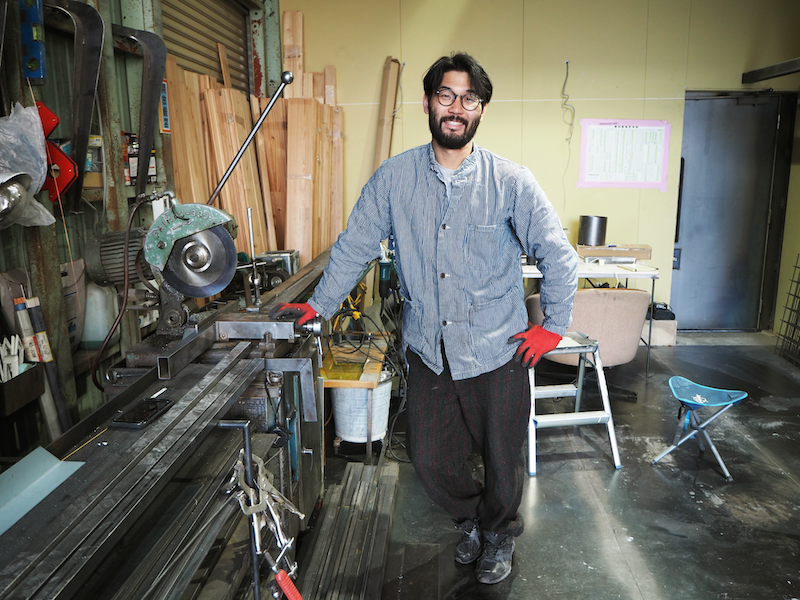
When I was in the sales position of Kawa , I was involved in a company that had a lot of momentum at that time, such as the office mediation of an IT company doing app development. As I became a craftsman from a salaryman who wears a suit every day, it is strange that the craftsman's routine of taking a break at 10 o'clock, 12 o'clock and 15 o'clock. . The gap was great, but there were questions about what I noticed after I became a craftsman and about my work.
What kind of awareness or question is that?
Kawai First, I thought that there was an image of working in a factory with oil-stained clothes, or an image of "3K" that people say to the work of "craftsman", in the world. As a result, it is rare for young people to be interested in the world of craftsmen, and even if they enter, they stop without continuing for quite a long time. I wanted to change the image of such a craftsman and the image of the actual work environment from the perspective of the craftsman. Also, since the craftsman has been working in the factory all the time, the factory and the site return. I would like to make the closed environment a little more open.
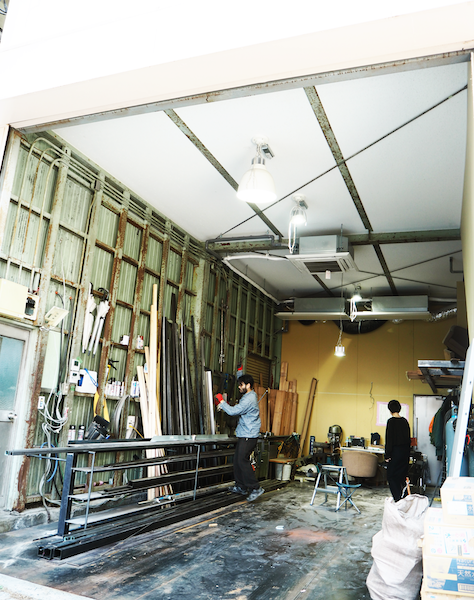 The factory side is closed by the shutter, but in the future, we will manufacture the glass door so that the inside can be seen.
Kawai-san, who has been a craftsman from the real estate business and has been working for ten years, continues to wonder if he can not manage the industry-specific environment. A craftsman meets an unspecified number of people, and the factory and the craftsman are felt as being close to each other, ten is a place that embodies that thought.
Manufacturing that expands through encounters with people
Mr. Kawai had previously teamed up with members such as a construction company, an interior construction management company, and a flower shop in an open factory called "kikkake" in Adachi-ku, and conveyed the attractiveness of craftsmen and manufacturing through workshops etc. Is it?
As the river craftsmen are in a closed environment, they will not go outside unless the company broadens the craftsman's path, for example, making offices in different places, making factories abroad. So, as a craftsman I began to wonder if I could do something new.
Mr. Kawai uses his spare time to widen the scope of personal development while continuing his work. Where on earth did work come from?
From the time of working as a river factory, I opened products in scrape and other products in flea market and received an order from a friend, but as a major change, I participated in the launch of private residence management agency company "zens" It was about 2 years of making accommodation room and moving around as operation support. That was a new business as a craftsman. After that, we came to receive requests from people who recognized through SNS etc., and lead to today after connecting with various people.
I think that it is also the friendly personality of Mr. Kawai that the work was born more and more from the things I created and the people I met there.
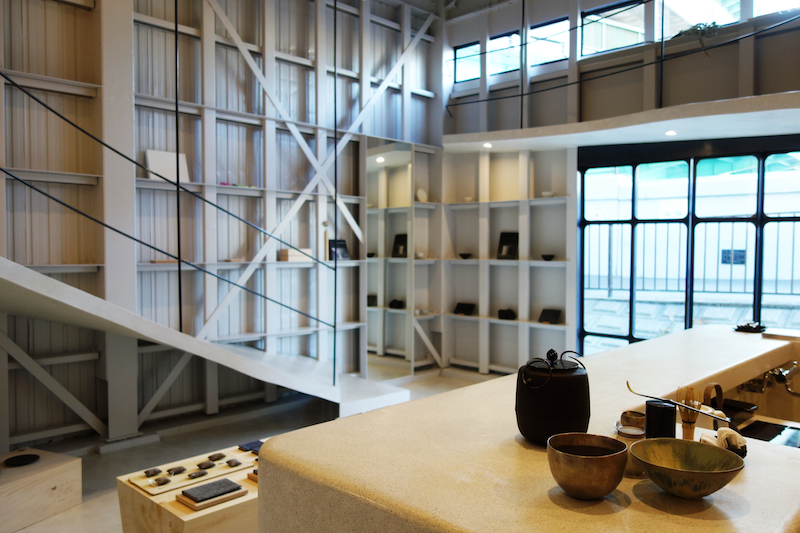
Kawa: The breadth of manufacturing has expanded in this way, thanks to the connection with people. Do your best and do some fun with the people you meet there. That's exactly what I think, if you don't meet Mr. Yamamoto, you won't find this shop. It is a very important place in this shop to connect the world with craftsmen who seem to be bothered at first glance.
Has the environment changed since the shop opened?
Those who come to the river shop are more interested in the plant and come to see the plant side. There are a lot of visits such as architects, and the encounter here is beginning to lead to work.
Manufacturing takes you to your favorite world
I heard that there is an industry-specific problem that young people don't grow very well, but what message do you want to deliver at the end?
Metals that are only river materials change to stores, fixtures and parts of the house by adding hand. I feel worthwhile to be able to make things that remain and to be part of someone's life.
However, the aging of craftsmen who can process metal is accelerating. With fewer young people, the balance between supply and demand has been broken. It is a small force, but I think that if I can create a little by myself from an environment where young generations are highly motivated and can be active in this industry.
Manufacturing is also diverse. If you want, you will be taken to your favorite world, so I think if you make various things and try it, it will open the way.
Kawai-san, who has been interviewing this time and who is active in his favorite world, looked very bright. You can experience the world of craftsmen who can not usually taste the ten where you can experience its charm. Like a hairdresser or an actor, the craftsman may eventually become a yearning profession.
Taken / Tomako Kitamoto ・ Haruka White
"Ten" DATA
Opening hours: 13 am to 19 am / Regular holidays (Open day at Instagram @ 10_tokyo )
Address: 2-1-17 Saga, Koto-ku, Tokyo
Access: Tokyo Metro Hanzomon Line A 5-minute walk from Sutenmiyamae Station Exit 2, Tokyo Metro Hanzomon Line A 14-minute walk from Kiyosumi Shirakawa Station Exit A3 * The entrance is in front of the factory. To store, please go back through the factory horizontal passage.
Official site

Born in Saitama Prefecture in 1995. It was forced to be named "Tomako" because the local specialty is tomato, but I like it fairly. It is harvested by the day chief editor who was working part-time at the Japanese-style editorial department. In the MBTI personality diagnosis INFP type. It is hard to live in a suggestion when it searches, and it comes out with a social non-compliant person. I like sleeping and sweet things.