






Synopsis of ‘Tendo-san’s Golden Chain’
Once upon a time, there lived a family of four: a mother, Taro, Jiro, and Saburo. One day, the mother went to the mountains to gather firewood. A Yamamba appeared and promptly devoured her. The Yamamba then disguised herself as the mother and returned home. She said, “Children, it’s your mother. Please open the door.”
Taro said, “That’s not Mum’s voice. Show me your hand through the gap in the door.”
The Yamamba slipped her hand in for them to see. Taro said, “Mum’s hands aren’t this rough.”
The Yamamba smeared her hands with wild yam leaves and said in a gentle voice, “Children, it’s your mother. Please open the door.”
When Jiro looked, he saw smooth, clean hands, so he opened the door.
That night, the ‘mother’ slept with the youngest son, Saburo. In the middle of the night, they heard a munching sound. Taro and Jiro woke up and asked, “Mum, what are you eating?”
The mother threw them what she was eating. It was Saburo’s finger.
Taro, the eldest son, exclaimed, “That’s not Mum! It’s the Yamamba!”
Jiro, the second son, cried, “We need to run, or she’ll eat us too!”
The two boys quietly slipped out of the house, but the Yamamba chased after them. They ran as fast as they could, but being children, their legs were no match for her. It seemed she would catch them. Furthermore, a large swamp appeared before them, blocking their escape.
The two boys found a tree at the edge of the swamp. They climbed the tree and hid among its branches and leaves. Below, the Yamamba searched for the runaway brothers. Just then, a leaf fell, and the brothers were spotted by the Yamamba. The Yamamba tried to climb the tree, but she couldn’t manage it.
The Yamamba shouted, “How did you climb up?”
Taro replied, “We smeared our hands and feet with oil and climbed.”
The Yamamba fetched a pot of oil from the house, slathered it all over her hands and feet, and clung to the tree, but she just slipped and couldn’t climb.
The enraged Yamamba yelled, “How did you climb up? Tell me the truth, or I’ll eat you alive!”
Terrified, the brothers answered, “We made cuts with a hatchet to climb.”
The Yamamba used the hatchet marks on the tree as footholds and began to climb up.
The two boys involuntarily whispered, “Oh, Tendo-sama (天道さま, the heavens), please help us!”
Then, a golden chain descended from the heavens. The two boys grabbed onto the chain, and it lifted them into the sky.
The Yamamba also pleaded with Tendo-sama, “Give me a chain too!”
Then, a rotten rope descended from the heavens. The Yamamba leaped onto the rope, but it snapped midway. The Yamamba plunged headfirst from the sky and died. Taro and Jiro, who ascended to the heavens, became stars.
A “Red Riding Hood” like tale, yet an unhappy story
“Tendo-san’s Golden Chain” bears a striking resemblance to ‘Red Riding Hood’ in its depiction of the mother being swallowed whole, the antagonist disguising itself as the mother (or grandmother in ‘Red Riding Hood’), and the detail of checking the hands.
However, in ‘Tendo-san’s Golden Chain,’ the mother and the youngest of the siblings are completely devoured by the Yamamba (leaving only a finger in the case of the child; the mother, no trace left at all) and are never revived. The surviving siblings (sometimes depicted as an elder sister and brother) climb a tree, seemingly saved, only to ascend to the heavens and never return.
It’s as if the story unequivocally states that every single family member perished. It remains unclear whether Tendo-sama intended to save the siblings or to cause their demise. Compared to ‘Red Riding Hood,’ where the wolf who ate the grandmother is punished, this Japanese folk tale leaves a rather bitter taste.
Japan’s yamamba and western fairies
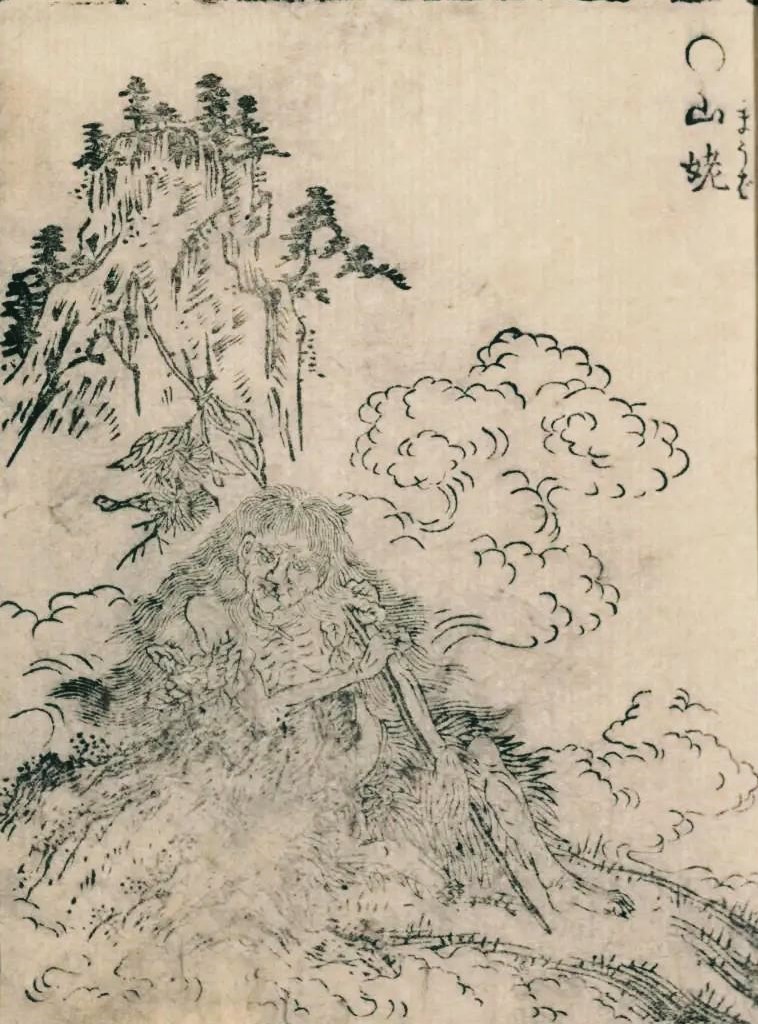
In this narrative, the Yamamba stands out as a prominent figure.
In Japan, the Yamamba has a deep connection with the mountain deities that have been worshipped since ancient times. The renowned folklorist Yanagita Kunio (柳田國男) states, “There is a theory that the Yamamba roamed the mountains and visited villages, assisting the people who lived in the mountains, and like the fairies of Northern Europe, they were not mere products of imagination.”
While their appearance and behaviour might seem more akin to witches than fairies, Yanagita explains that Yamamba, like their Western counterparts, are supernatural beings deeply rooted in regional culture. And in some respects, there are indeed similarities between the two.
Firstly, both Yamamba and fairies possess a monstrous aspect that instills fear in humans, as well as a divine aspect that bestows blessings. Secondly, the traditions surrounding both can be traced back to the hunter-gatherer cultural era.
Although often associated with the image of a grotesque old woman, Yamamba actually come in various forms. Let us introduce some lesser-known, peculiar Yamamba.
Japan’s peculiar yamamba
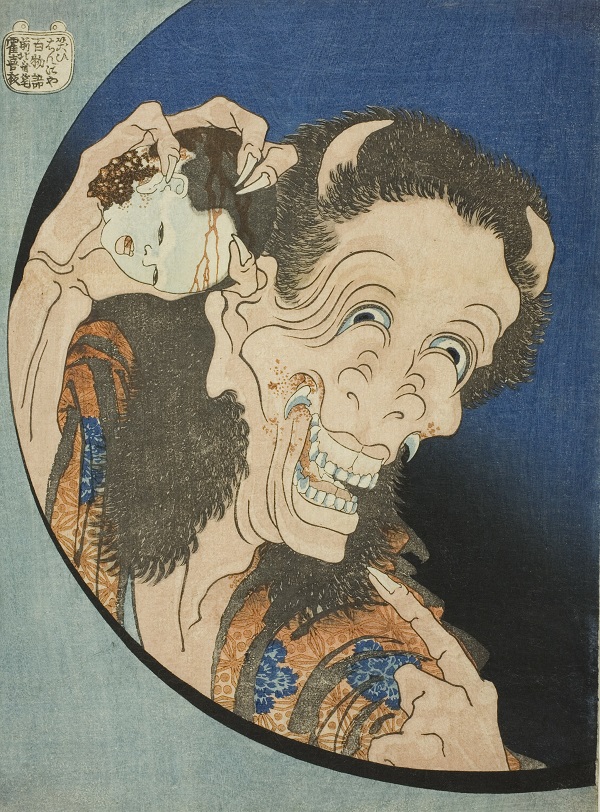
The vampire woman
While Yamamba are generally said to have a fondness for humans, particularly children, some traditions describe them as vampire-like women, known as “Kyuketsu Onna (吸血女, Vampire Woman)”. These Yamamba are said to appear young and beautiful.
According to one legend, in the depths of Mitate (見立), there is a mountain called Himeyama (姫山), where some people have seen a young woman with long hair accompanied by mountain dogs. It is said that when those working in the mountains were sleeping in their hut, this woman would enter and proceed to suck the blood of everyone present.
This young woman is sometimes seen with beautiful, glossy hair, freshly washed, trailing down to her heels, with ferns wrapped around her waist, or she may be dressed in a twelve-layered crimson hakama (ハカマ). She might play the shamisen (三味線) and sing, or even carry a baby.
She generally only shows her back. Should she ever turn around and smile at you, you must never smile back. If you return her smile, your blood will be drained in an instant.
The Woman Who Feeds on Life Force
Among the Yamamba, there are those who feeds on life force. In ‘Tono Monogatari (遠野物語),’ there is a story of a man who died simply from having witnessed one in the mountains. To have one’s life taken just by seeing something is unbearable. By the time you are complaining, that it’s not like you wanted to see it in the first place, it’s too late.
A man named Kichibe (吉兵衛) entered the mountains, and just as he stood up to shoulder a bundle of cut bamboo grass, he saw a young woman approaching him from the depths of the forest. She was a beautiful woman with long black hair, carrying a baby. Her clothing was tattered at the hem, adorned with various tree leaves. Her feet seemed not to touch the ground. The woman approached him nonchalantly, passing directly in front of the man. From that day, the man’s health deteriorated, and he eventually died.
It is unclear whether the woman was directly responsible for the man’s death. However, given that he died as if his life force had been drained, it is likely that what he witnessed was indeed a type of yokai (妖怪).
Although Yamamba are believed to dwell in the mountains, they sometimes interact with villagers. Some legends even tell of them possessing villagers.
Is the Yamamba a Deity or a Yokai?
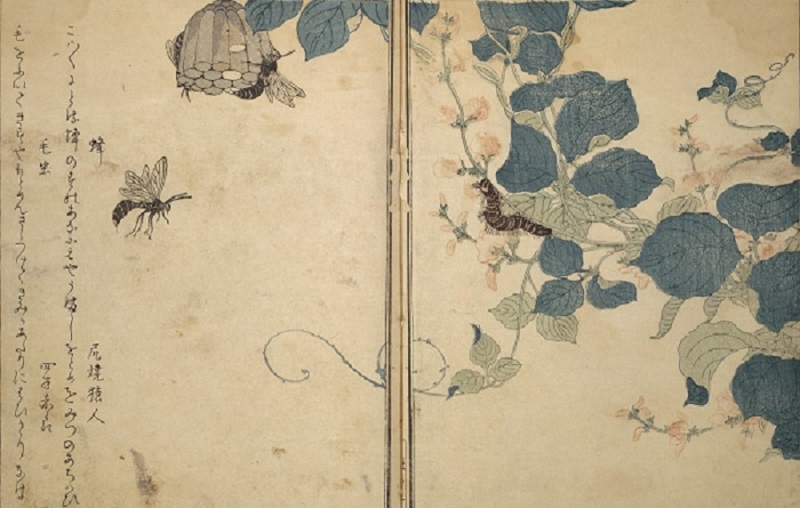
In ancient times, people believed that something unfathomable resided deep within the mountains. Entering the mountains evoked the premonition that one might encounter such an entity. The Yamamba was one such being.
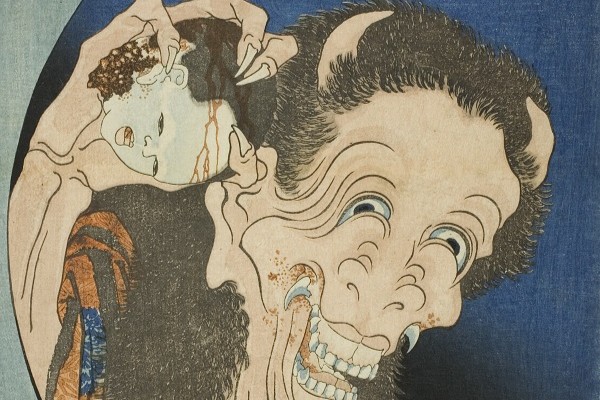
Yamamba are said to dwell in the mountains, most often appearing as old women with grotesque appearances. They are tall, with long hair and sharp eyes. Sometimes they appear as young and beautiful women, in which case they are exceptionally stunning. They possess the ability to shapeshift, devour children, suck blood, drain life force, and even possess people.
Yet, they are not the embodiment of absolute evil. Yamamba can also be benevolent beings, sometimes assisting humans and bringing abundant harvests and good fortune.
For example, in the Japanese folk tale ‘Komefuku (米福), Awarefuku (粟福),’ Awarefuku (the protagonist) receives a box full of treasures and kimonos as a reward for delousing Yamamba in the mountains. Incidentally, Komefuku (the other protagonist), who refused the old woman’s request, was given a box filled with insects and other unpleasant things.
In this story, the Yamamba imposes a trial on the two protagonists, rewarding the one who acts kindly and punishing the one who refuses, behaving almost like a deity. The terrifying ogre-like appearance is only a small part of the Yamamba’s nature.
The Yamamba is both a yokai and a deity. If so, the Yamamba in “Tendō-san’s Golden Chain” may also not be merely regarded as a man-eater.
The features of a classic Japanese folktale
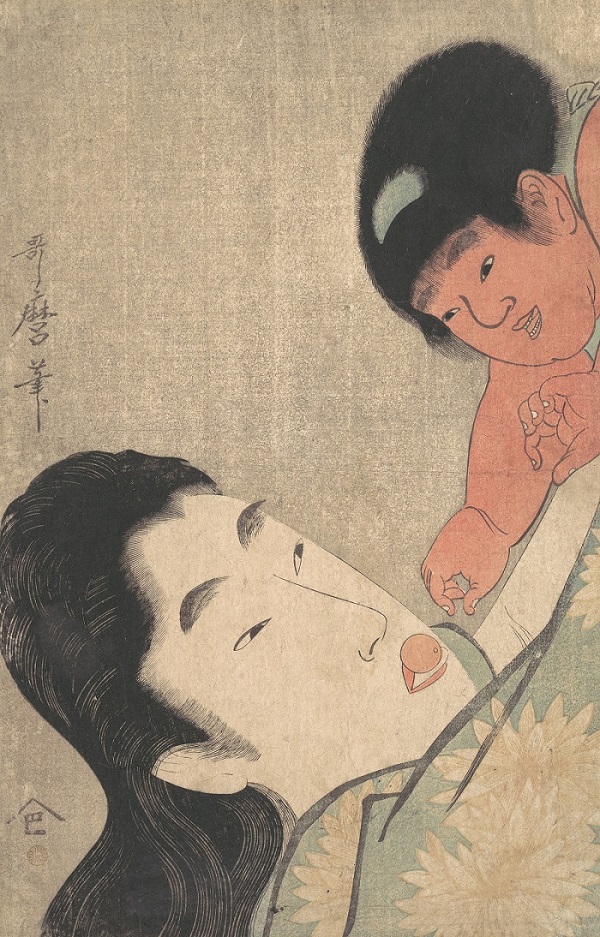
There is more to the ‘Tendo-san’s golden chain’ tale.
The Yamamba, attempting to climb the rotten rope that descended from the heavens, falls from a great height, hits her head on a stone in a buckwheat field, and dies. The buckwheat stems were stained with the Yamamba’s blood, turning crimson from that moment onward.
This is the end of the tale.
In fact, there is a theory that the Yamamba in ‘Tendo-san’s Golden Chain’ is connected to myths about the origin of crops.
If “the red colour of buckwheat stems comes from being stained by the Yamamba’s blood,’ then ‘Tendo-san’s Golden Chain’ holds a meaning beyond that of a mere fairy tale.
While no wolf or huntsman appears, and it doesn’t end with a “happily ever after,” the Japanese version of ‘Red Riding Hood,’ featuring the Yamamba, can truly be called a story born from Japan’s unique culture, combining myth, folklore, and gruesome elements. This is precisely how Japanese folk tales should be.
Yanagita Kunio (柳田国男) Collection, Vol. 6, Chikuma Shobo (筑摩書房), 1963
Chiba Tokuji (千葉徳爾), ‘Research on Hunting Traditions,’ Kazama Shobo (風間書房), 1969
Machida Soo (町田宗鴬), ‘The Spiritual Power of Mountains: What Did the Japanese See There?’, Kodansha Sensho Mechie (講談社選書メチエ), 2003
This article is translated from https://intojapanwaraku.com/culture/278208/