






Savouring a Moment in a Chashitsu Flowing with a Tranquil Atmosphere
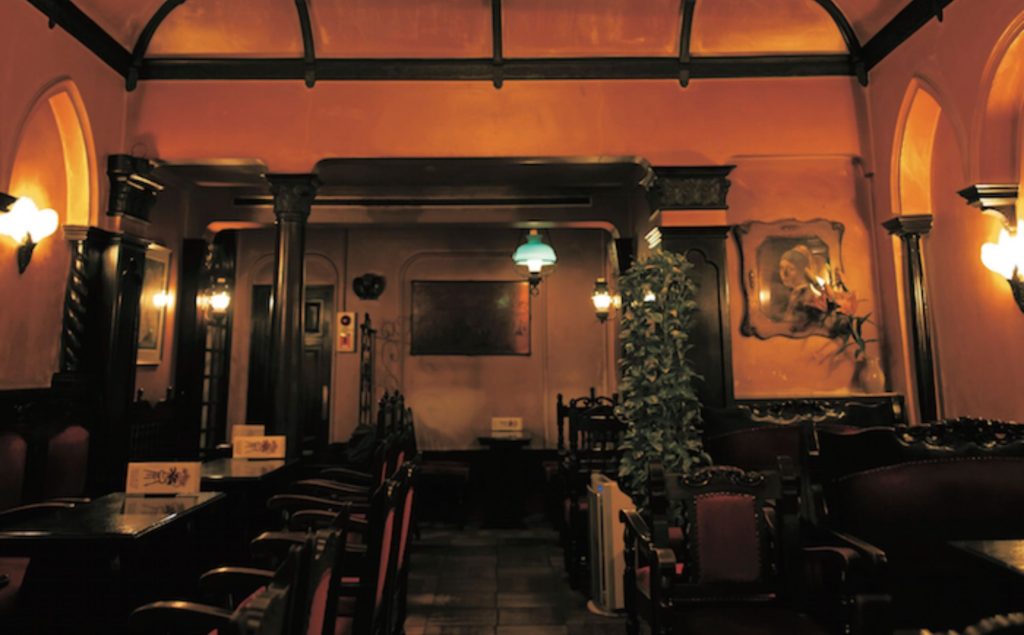
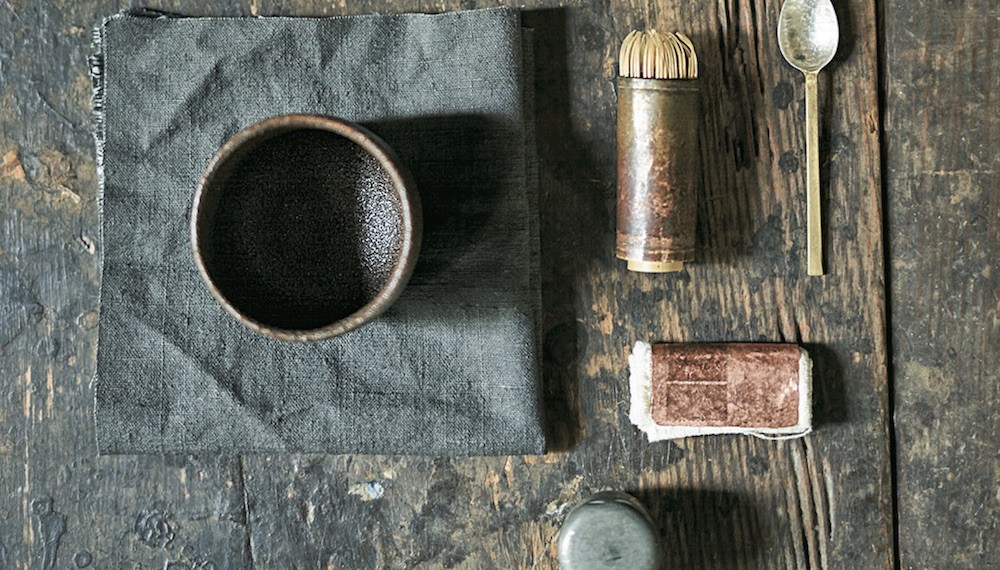
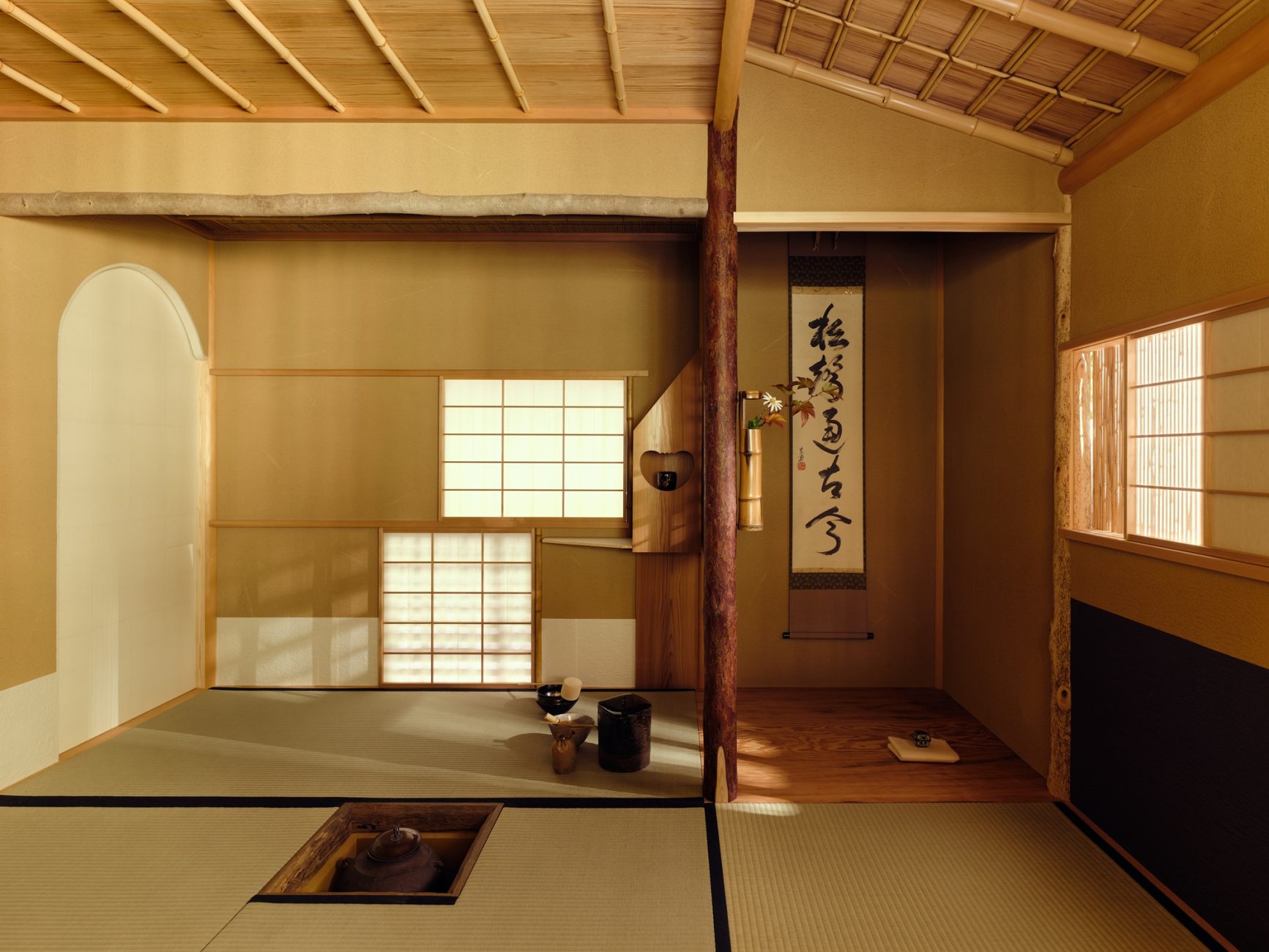
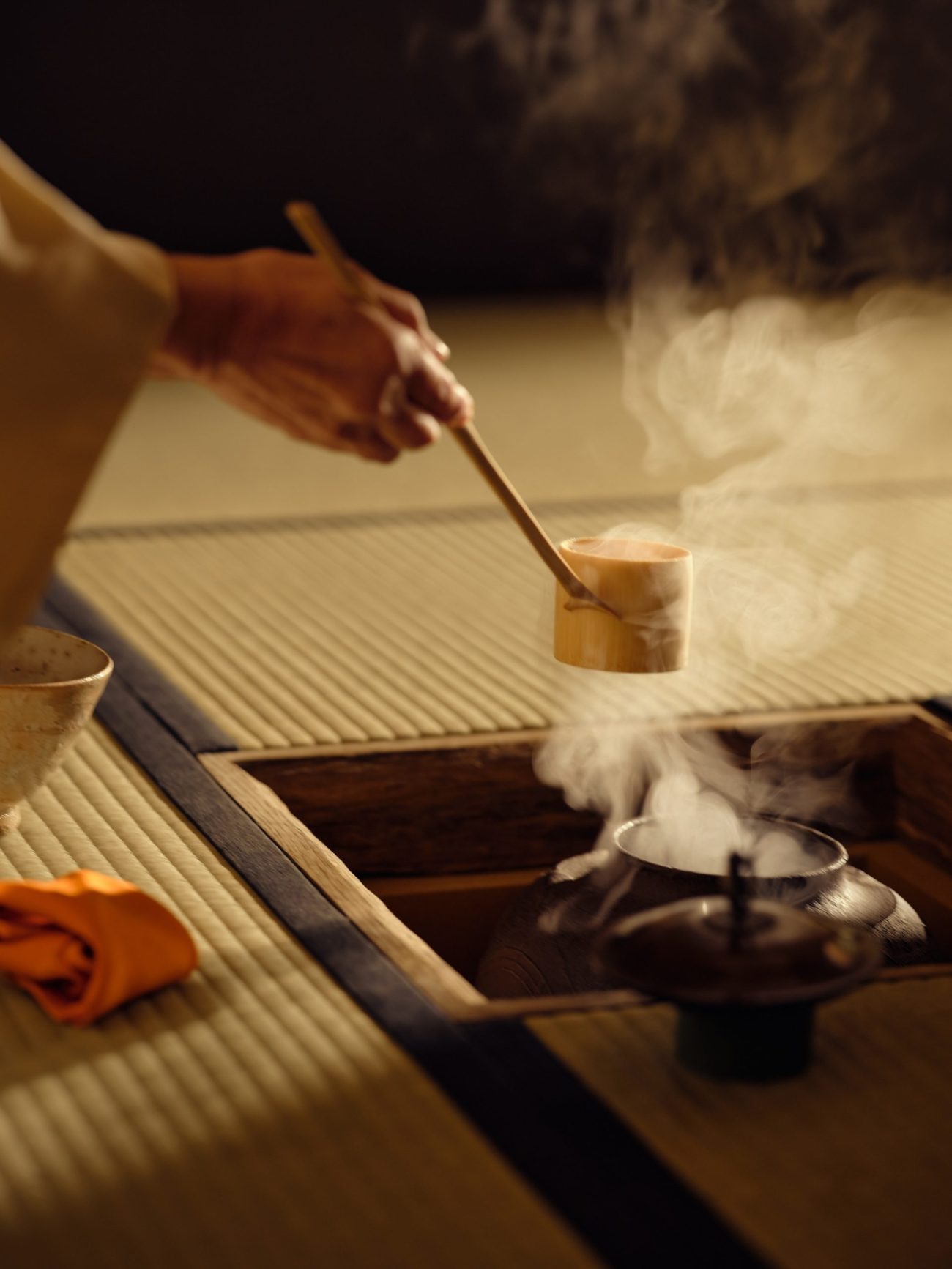
‘Senkutsu’ consists of a traditional small tea room (Koma, 小間) featuring a four-and-a-half-mat layout with a built-in alcove (Yojomasudoko, 四畳桝床), a spacious table-and-chair seating area (Ryureiseki, 立礼席), and a preparation room (Mizuya, 水屋) connecting the two spaces. Bending down to enter the small tea room through the crawl-in entrance (Nijiriguchi, にじり口), what unfolds before you is a tranquil and profound world often referred to as a ‘microcosm’. The hanging scroll and flowers in the decorative alcove (Tokonoma, 床の間) heralding the season, the steam rising from the iron kettle (Kama, 釜), the scent of grass wafting from the woven mats (Tatami, 畳), and the soft light and shadows flickering through the paper screens (Shoji, 障子). In this intimate room, you can experience an authentic tea ceremony (Chanoyu, 茶の湯) hosted by a tea master (Chajin, 茶人). You will surely be able to spend an extraordinary moment that awakens the five senses.
(*2) A style of tea ceremony where tea is prepared and enjoyed using chairs and tables, rather than sitting in the Seiza (正座) position on Tatami.
(*3) The guests’ entrance to a Chashitsu. It gets its name from the fact that one must crawl (Nijiru) to enter.
The Thoughts Imbued in Carefully Selected Materials
The design was undertaken by Sen Ato Sutajio (仙アートスタヂオ), which has worked on numerous Chashitsu both domestically and internationally, including the Urasenke Konnichian (裏千家今日庵). Construction was carried out by Nakamura Sotoji Komuten (中村外二工務店), a master of Sukiyakenchiku. Using carefully selected materials, such as Kitayamasugi (北山杉) cedar and earthen walls made with soil from Takagamine (鷹峯)*4, one can immerse oneself in the refined world of Sukiyakenchiku that harmonises with the surrounding nature.
Toyama Norio of Sen Ato Sutajio speaks about the design as follows: “In conceptualising the Chashitsu, we faced the spirit of Chanoyu head-on, and whilst respecting the tranquil beauty of a traditional Chashitsu, we envisioned an appearance that blends into the nature of Aman Kyoto. We look forward to watching how this space, filled with the beauty of Chanoyu and created together with outstanding craftsmen including Nakamura Sotoji Komuten, will be nurtured in the future.”
An Open Ryureiseki Surrounded by Greenery
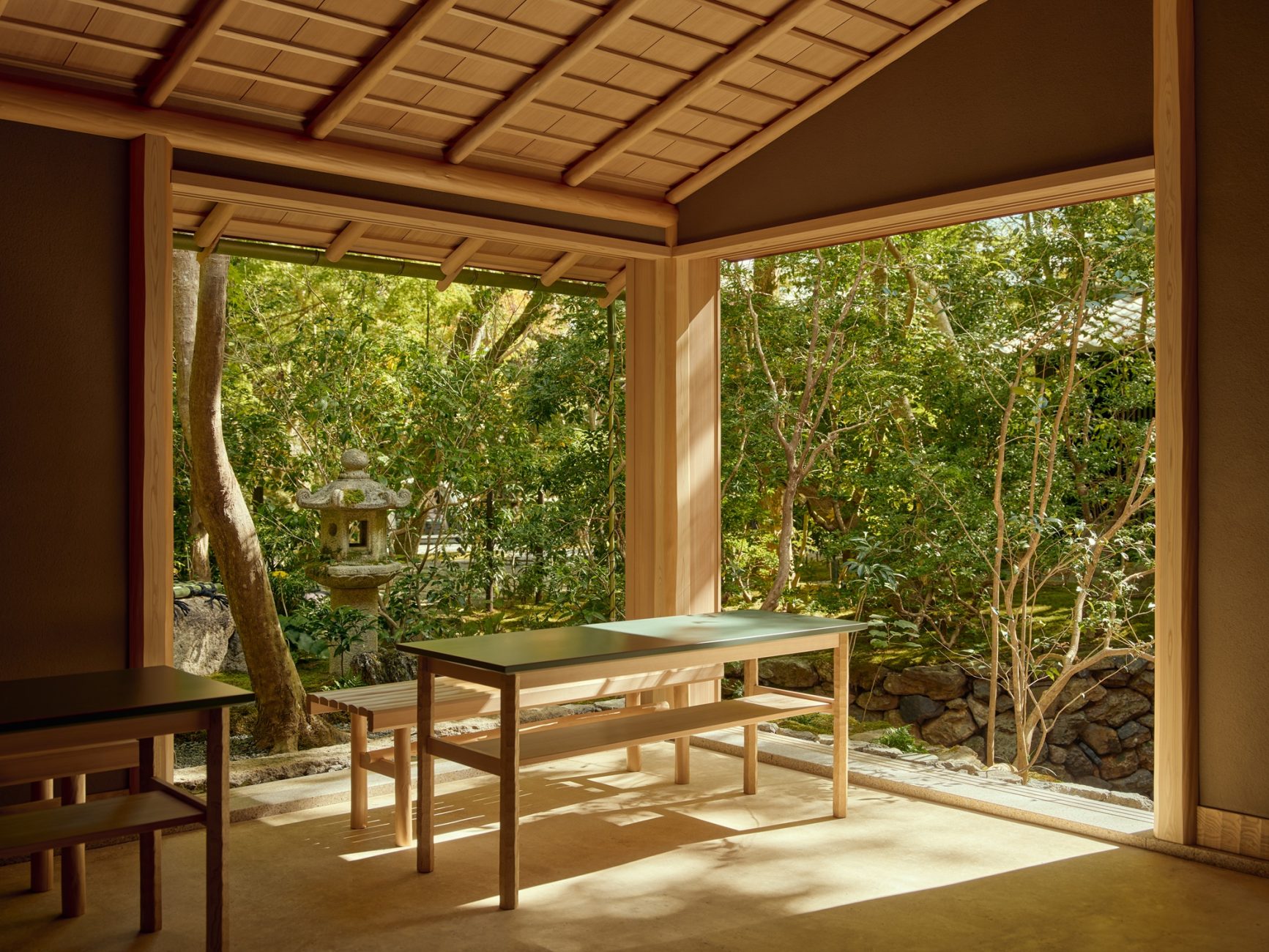
By the edge of a deep pond and surrounded by lush greenery, the seated Chashitsu features a design that inherits tradition whilst harmonising with the architecture of Aman Kyoto. The impression changes from that of the Koma; when the Shoji doors are fully opened, you can gaze out at the green Roji niwa (露地庭), and its charm lies in the sense of openness that gently invites the wind and light inside.
As the Ryureiseki allows guests to enter with their shoes on, it seems both domestic and international guests will be able to feel the culture of Chanoyu closer to them. In the future, there are plans to develop it as a cultural hub and a multi-purpose space, hosting activities such as Wagashi (和菓子) making and art sessions with Japanese style painters.
“Aman has always paid deep respect to the traditional culture, history, environment, and lifestyle inherent to the land, placing importance on deepening understanding through experience. We sincerely hope that in ‘Senkutsu’, enveloped in the beauty of Sukiyakenchiku, you will be able to touch upon the Chanoyu that reflects the spirit of hospitality, and spend a mindful moment,” says Mizobuchi Yasuo, the General Manager of Aman Kyoto.
While the teahouse is currently reserved only for overnight guests, seasonal tea ceremonies will be introduced starting in 2026. Why not treat yourself to an extraordinary experience at “Senkutsu”? A teahouse that feels like an otherworldly sanctuary tucked deep within the mountains.
Basic Information
Aman Kyoto
10 kitayamatakagaminecho, Kitaku, Kyoto
Official Website
https://www.aman.com/ja-jp/resorts/aman-kyoto
This article is translated from https://intojapanwaraku.com/travel/293121/