





What should you do when shown into a guest room?
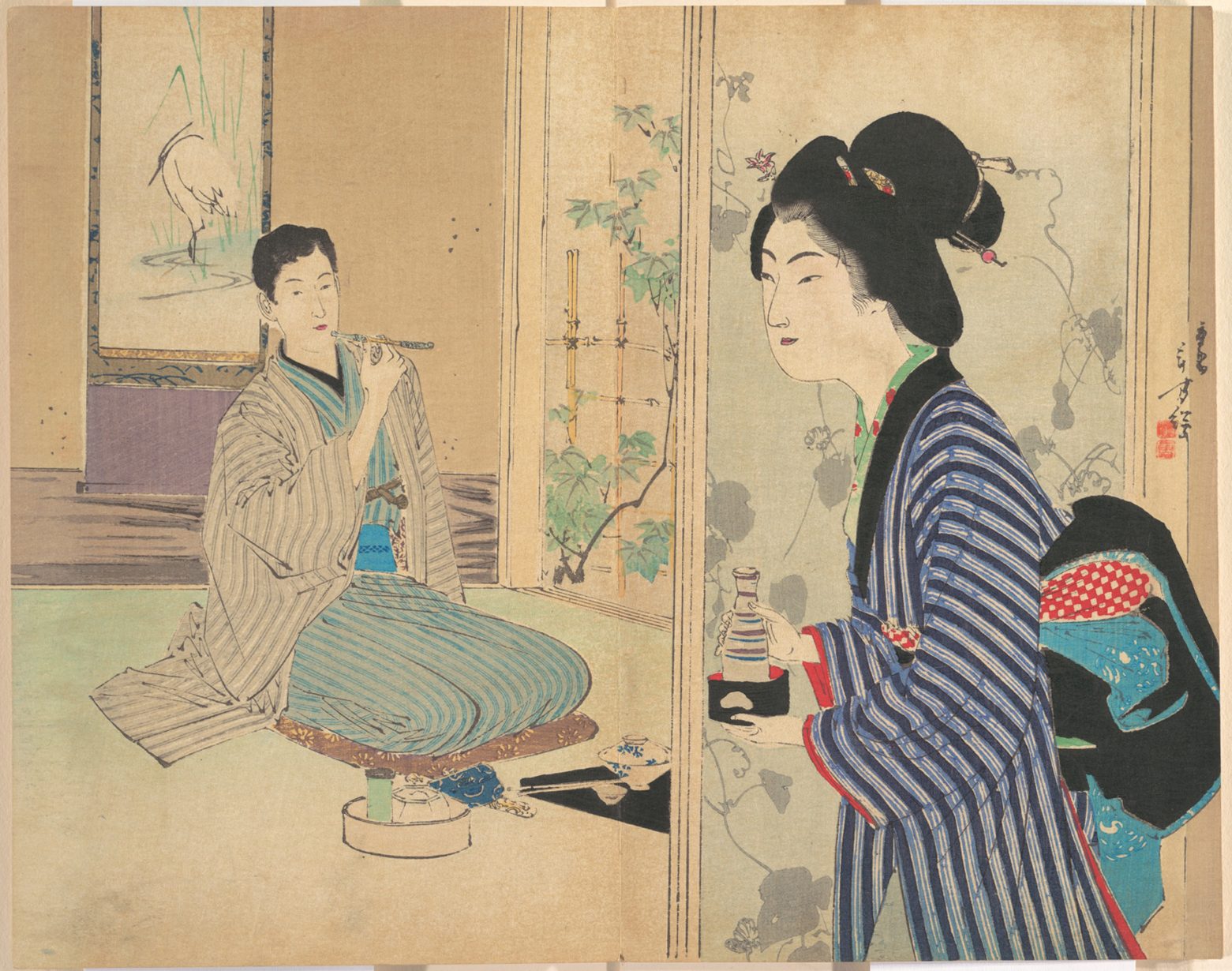
Even if you rarely find yourself going out for drinks in Japan, you may still have opportunities to visit acquaintances or relativesthere. Here is a quick guide of the ‘kamiza’ and ‘shimoza’ of a guest room. In a traditional Japanese style room, the seat of honor or ‘kamiza’ is positioned directly in front of the tokonoma—the decorative alcove for artwork and flowers—while the seats closest to the entrance are for those lower in hierarchy, also known as the ‘shimoza’. For instance, suppose a low table is placed in the centre and four people sit around it. In this case, the position with one’s back to the tokonoma is the primary kamiza. The position directly opposite the kamiza and closest to the entrance is the shimoza. The position on the left as you face the entrance from the tokonoma is the second kamiza. The position on the right is the third kamiza. In the case of a Western-style room, the seat closer to the door is the shimoza. When visiting as a guest, sitting in the shimoza first while waiting for the host is considered polite etiquette.
In the past, seats near the entrance/exit were vulnerable to attacks from outside and easily exposed to cold draughts, so the safe, warm seats further inside became the seats for people of high status. Furthermore, the traditional etiquette of sajo-uge (左上右下)—where the left side is superior and the right side is inferior—still remains today. It is said that this was introduced from China during the Asuka period.
What are the roots of the tokonoma?
The tokonoma is said to have evolved from the oshiita—a low display shelf popular in the shoin-zukuri architectural style during the Muromachi period. It originated from rooms where Buddhist monks studied scriptures, which was then adopted into the homes of samurai. Raised one step above the floor, it held a set of altar fittings called mitsugusoku (三具足)—an incense burner, a flower vase, and a candlestick offered before the Buddha—and a Buddhist painting was hung.
So, why did the area near the tokonoma become the kamiza? Because the area furthest from the entrance, deep inside the room, held a sacred significance for hanging Buddhist paintings, it is believed that important people of high status came to be seated there.
Once you master the principles, you can adapt with confidence
Even if a Japanese-style room in a restaurant has a tokonoma, if there is a window offering a view outside, it is desirable to offer the spot with the best view to your superiors. Since kamiza and shimoza were born from a spirit of hospitality towards others, it is best to be able to adapt flexibly to each situation.
This article is translated from https://intojapanwaraku.com/lifestyle/313288/