













Do you know what is the only Studio Ghibli work in the Museum of Modern Art in the United States? In fact, it is "Yamada-kun next to Hohokekyo" directed by Isao Takahata.
The "Isao Takahata Exhibition-What I Left in Japanese Animation" currently being held at the National Museum of Modern Art, Tokyo is a retrospective exhibition that traces the achievements of director Isao Takahata, who died in 2018. Storyboards, creative notes, image boards, setting materials, etc., including many unpublished materials, from the first feature film production "The Great Adventure of Horus, Prince of the Sun" to the last work "The Tale of Princess Kaguya" Through, the director's work world and its influence on Japanese animation are exhibited.
Actually, I played the role of "Nonoko" in "My Neighbors Yamada-kun" and was directly directed by Isao Takahata. Director Isao Takahata was very quiet and uncompromising. I'm sure I've only touched on the beginning, so I want to know more. I went to the National Museum of Modern Art, Tokyo to be attracted to how the cute Heidi and Panda Copanda were born.
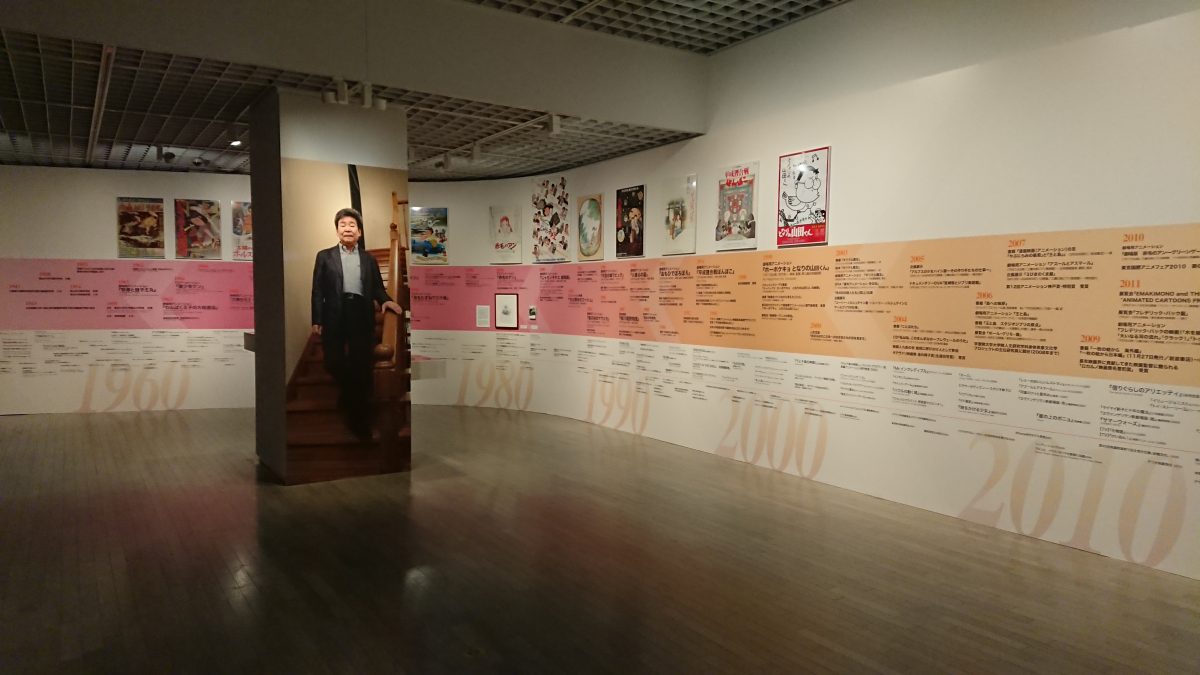
At the entrance is a photo of the director and a chronological table!
First in history? A special exhibition where you can fully enjoy the works of director Isao Takahata
The venue is full of valuable materials! From "The Great Adventure of Horus, Prince of the Sun," which he worked on for the first time as a feature-length movie, "Panda! The rooms are divided according to the main works, such as "Only Yesterday", "Grave of the Firefly", "Heidi Poko", "Hohokekyo Neighboring Yamada-kun", and "The Tale of Princess Kaguya". You can take a closer look at how the production of director Isao Takahata's work progressed with the development of.
Energy "creates" culture-craftsmanship that supported anime until it became Japanese culture
The first "work room" deals with the times when he worked for Toei Animation (currently Toei Animation), and in particular, many valuable materials about the first feature-length production "The Great Adventure of Horus, Prince of the Sun" are exhibited. .. Even though it is a work about 50 years ago, I am surprised that the production diary, setting notes, storyboards and final drafts are still there!
A part of the preview animation and the work was playing on the monitor and screen of the venue. I can feel the history, but I don't feel it is old-fashioned at all. Also on display are memos that made dances to express the exchanges of fictional villages, and sheet music that was composed from scratch with folk music. I was overwhelmed by the tremendous amount of heat that the staff said, "Let's create the real thing," in an era when the name "manga movie" still remained. It was also seen that the composition, character design, and staff members exchanged opinions.
Reiko Okuyama participated in this movie as a drawing, and it is a valuable exhibition for animation fans!
Director Isao Takahata and Hayao Miyazaki have a strong impression of animated films, but "Heidi, Girl of the Alps" is an animation of the TV series. In other words, it was aired almost every week for a year. Under such circumstances, the method called "layout" was devised by both directors. In the room where the pandas and pandas look into, such a layout is also exhibited.
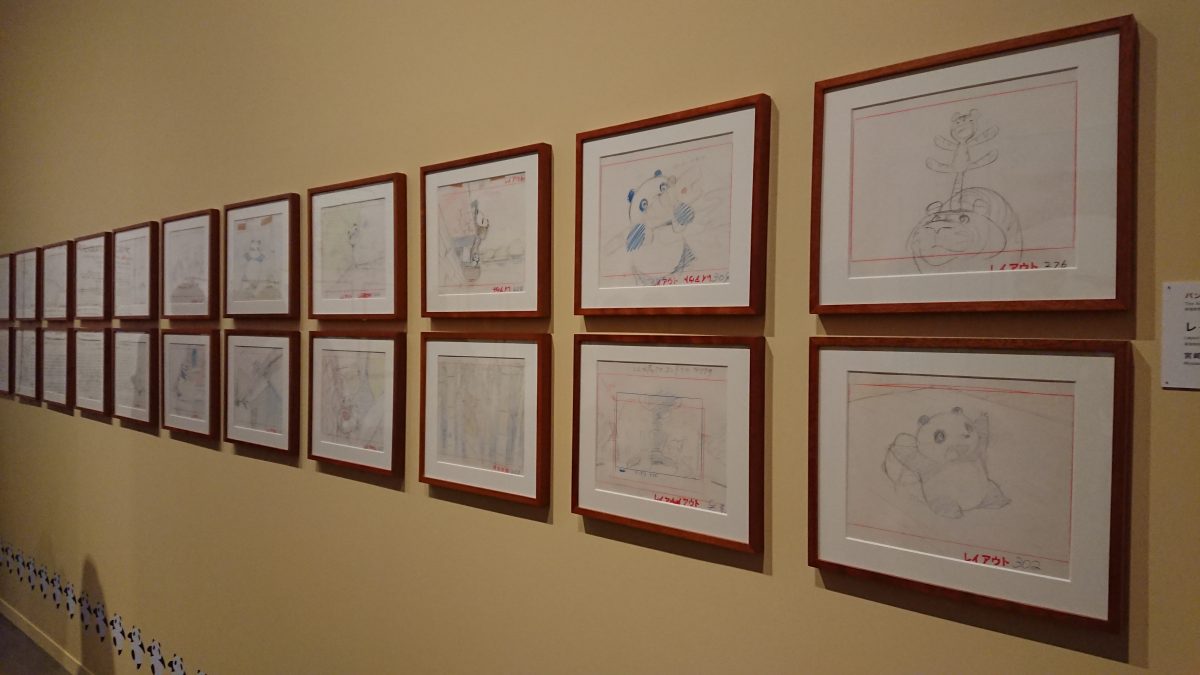
Panda Co Panda 🄫 TMS
"Layout" is a blueprint of the original drawing to draw the layout. It is specified so that the "character" and "background" drawn separately fit into a single picture.
At Pandaco Panda, an attempt was made that "Director Hayao Miyazaki draws all the scenes", and "Heidi" was introduced in earnest in order not to produce useless original drawings. It seems that this method created by the two people is used in many animation studios. I feel the strong influence that both directors Takahata and Miyazaki have had on the animation.
Furthermore, in each room, you can see the obsession with art, such as the background that colors the world of the work and daily necessities. The beauty of the background of "Marcus in Search of Mother" depicting the streets of Italy and Argentina is no longer the painting itself!
On the other hand, in the "Tomb of the Firefly", which depicts Japan vividly after the war, the appearance of the injured country, such as the cityscape that was hit by the air raid, is clearly scooped out.
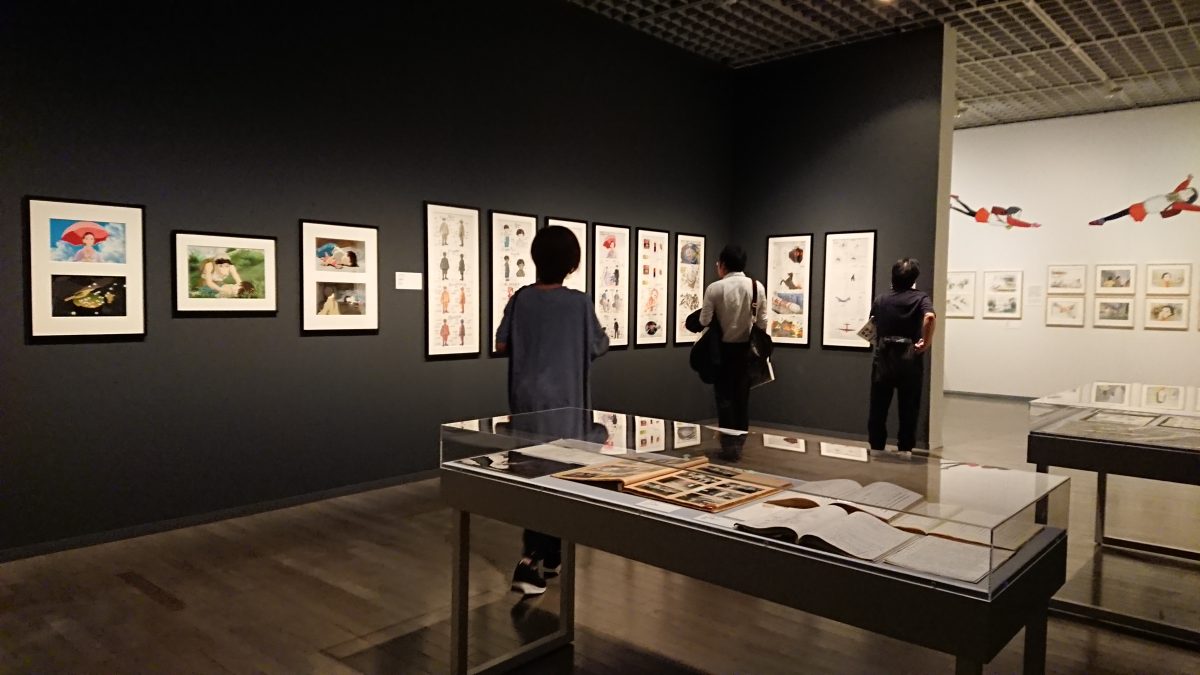
Various ideas have been devised to suit each work, such as oil painting touch, ink painting style, things drawn to the limit, and dare to blur the four corners to show that it is in memory. If you compare them, you will be surprised at the difference.
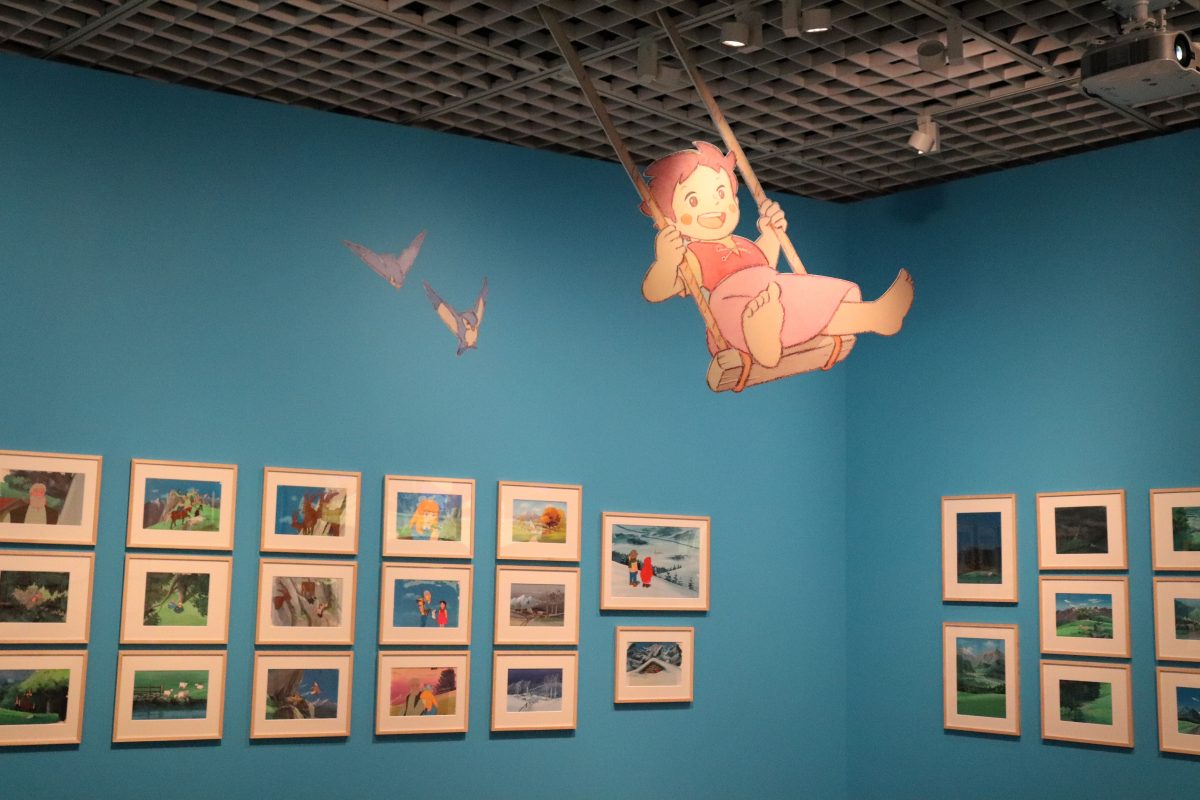
Heidi on a swing! It is unknown where it is connected as usual Heidi, Girl of the Alps 🄫 ZUIYO "Heidi, Girl of the Alps" Official Homepage http://www.heidi.ne.jp/
I couldn't say how detailed, vivid, and beautiful the background paintings were lined up. The attitude of working as an unsung hero to help create the world of work is exactly a craftsman. I remembered the ukiyo-e that was made by the division of labor.
In the last two rooms of the second half, "Yamada-kun next to Hohokekyo" and "The Tale of Princess Kaguya", we will shift to digital animation. However, Director Takahata was particular about the texture of the "sketch". I tried to create individuality rather than digital uniformity. Each process is explained carefully, but it seems that the research presentation is too high level.
For example, a scene where Princess Kaguya runs through. If you take only one original picture and extract it, it is unclear what is drawn as a picture. By overlapping the finely drawn pictures, you can see that it is the first dynamic running scene! Even if it becomes digital, the craftsmanship will not change. A silent exhibition speaks eloquently that it is impossible to produce beautiful works without each technique and patience.
Nowadays, there are many young people from overseas who give animation as an opportunity to get to know the country of "Japan". It was a lot of work of craftsmen who supported the "culture" that Japan can be proud of in terms of high technology, precise design, message while being an entertainment work, and reality.
I want to create good things- "proof of effort" accumulated by a solitary genius
Director Isao Takahata is often described as a "genius" or a "lonely genius." We will continue to work on new methods one after another and continue to create novel and unparalleled works with uncompromising stubbornness. At the root of that work attitude was always "thorough analysis."
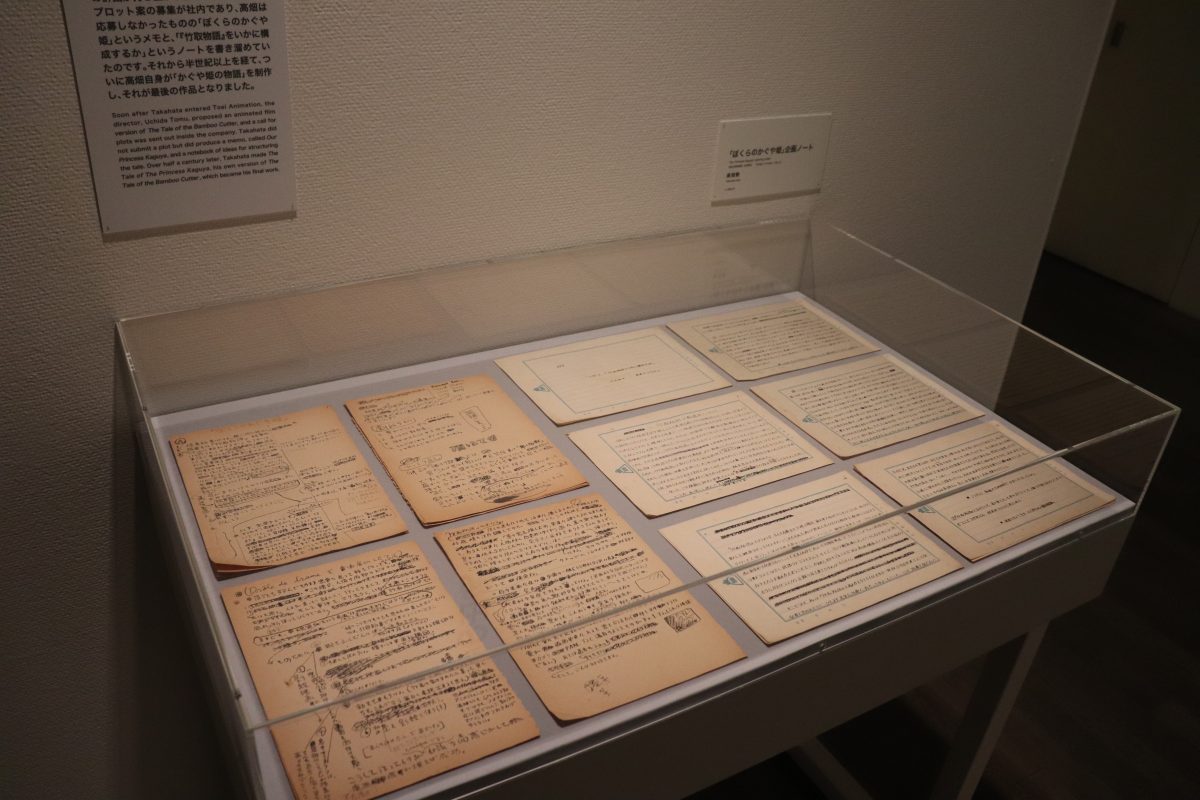
The energy of handwritten materials is amazing! "Bokura no Kaguya Hime" Planning Note 1960-1961
Immediately after entering the venue, a script plot report called "Bokura no Kaguya Hime", which was submitted to Toei Animation by Director Takahata about 50 years ago, is on display. It was a polite character that should be expressed as a unique "Isao Takahata font", and the work analysis and ideas were written in the notebook. The splendid interpretation, which should be called the prototype of the story of Princess Kaguya, makes me feel fresh even now.
In the following "Adventure of the Prince of the Sun, Horus", handwritten materials that were thoroughly examined were exhibited one after another in order to build a world view in a fictitious village and to advance the story without compromise. .. You can also see a scented table that lists the characters' turns, a "tension chart" that visualizes the ups and downs of emotions along the time axis, and a table that summarizes the relationships between each character.
Also, in the room of "Anne of Green Gables", director Takahata read the original and exhibited a notebook that studied the whole story. There was another notebook in which the original English words were written in cursive and how to translate them into Japanese. It's like a Canadian literature scholar. There was also a notebook that was reconstructed for reviewing the script of the movie, by cutting and pasting the copied novel in the room of "Grave of the Firefly" and color-coding the place, time, and person with markers.
Handwritten characters eloquently say that everything in the work has been elaborated as a single work, backed by the knowledge, logic, and research of the person. There is no doubt that these efforts, which can be called obsession, have created a historical flow in which animation develops as Japanese culture. "Efforts do not mean success, but everyone who succeeds does." This word came back to my mind many times.
Katsushika Hokusai said that he could become a true painter in five years just before he died. The history of the creator, who is not content with the current situation, looks at the past, scoops up, and always strives to devote himself to creating the future. Director Takahata's desire to pursue what it means for Japanese people to make Japanese animation and what animation can do is pervading every corner of the exhibition. Perhaps it would be more appropriate to describe it as karma.
Held until October 6, 2019. Feel the heat and energy directly.