









 2025.03.25 Update



Art and Ukiyoe representing Japan. I will summarize the history and representative painters and works such as Sharaku, Hokusai and Kuniyoshi.
With Ukiyo-e
Ukiyo-e is one of the painting styles established during the Edo period. The history began with the beginning of the Edo period, and the paintings on the theme of life and fashion, prostitutes, actors, etc. showed a surge, centered on the populace. By the way, Ukiyoe's "Ukiyoe" is derived from "Yusei", and people who liked to live in the trend of enjoying Edo era are said to have applied "Ukiyoe" character You are
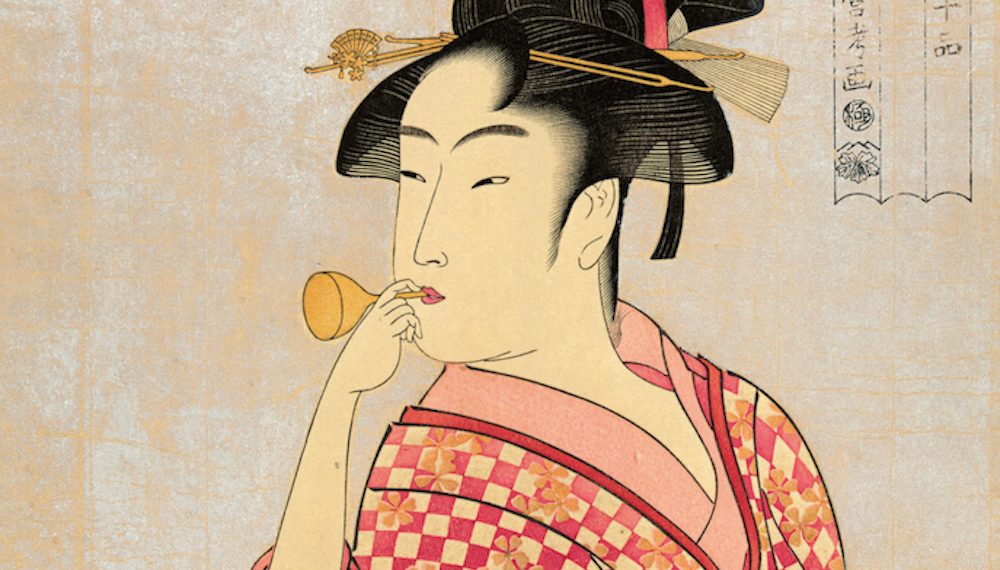 Kitakawa Kayo "Woman woman 十 娘 吹 く poppin 娘 娘 大 大 江 戸 Edo period (18th century) Photo courtesy / PPS news agency (Alamy)
Expression techniques are carp and woodcuts
Ukiyo-e's expression techniques are roughly divided into two types: carp and woodcuts. Ukiyo-e began with the paintings of Hishikawa Yoshinobu, and was greatly developed by a technique called “ Nishie ” * by Harunobu Suzuki et al.
※ Makie ... A vivid multi-color print using wood board, which will probably come to mind first of all.
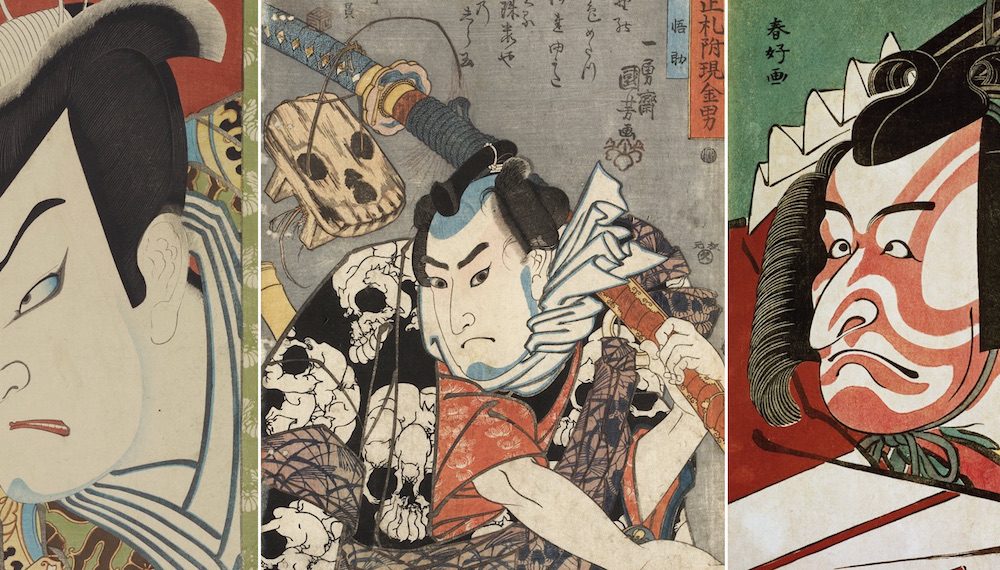
Ukiyoe history
1. Ukiyoe and the beginning of the Edo period
After the Warring States period from the Azuchi and Momoyama times, Ieyasu Tokugawa, who succeeded in unification under the world, opened the Shogunate in Edo in Keicho 8 (1603).
As a peaceful world visits, the lifestyles of ordinary people become better, and in Edo, townspeople are active and townsman's culture develops. The people of Edo towns were not getting bored with the cultural heritage of Kyoto, which was once the center of culture, and they created a groundwork that spreads the arts culture to the common people, such as making a copy of the book.
Until then, it was the privileged and ruling classes that had the art culture. For the first time in the history of Japan in the Edo period , the townspeople are the leaders of culture .
2. Ukiyo-e masters appear one after another
Early in the Edo period, Ukiyo-e, which began with Hishikawa-san, still produces many painters. The head is Masanobu Okumura, who studied painting by himself, started his career as an painter early, and maintained the top position for over 50 years.
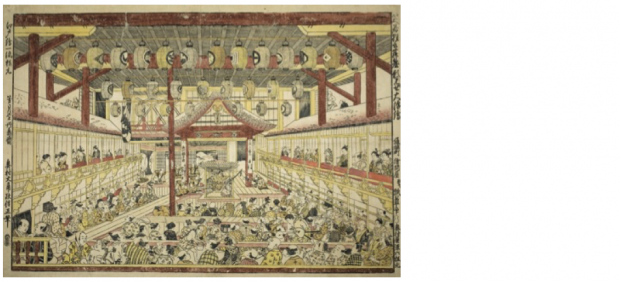 Okumura Masanobu "Theatre Kyogen Ukiyomoto" Large-size lacquer picture Hiroho 3 (1743) Year 32.4 × 45.9 cm Photo provided / Bridgeman Images (PPS News Agency)
3. The birth of "Takae" by Suzuki Harunobu
The accomplishment of Masanobu was the completion of the "Oukie", which depicts the appearance of the theater throughout using Western perspectives. Not only the actors, but also the large-screen ukiyo-e depicting the entire interior of the theater is immersive and has a reputation for appearing floating in perspective. In addition, he was also an artist who excelled at ideas, creating "pillar paintings" with beauty and actor drawings drawn on a long sheet of paper so that they could be affixed to the pillars of the room.
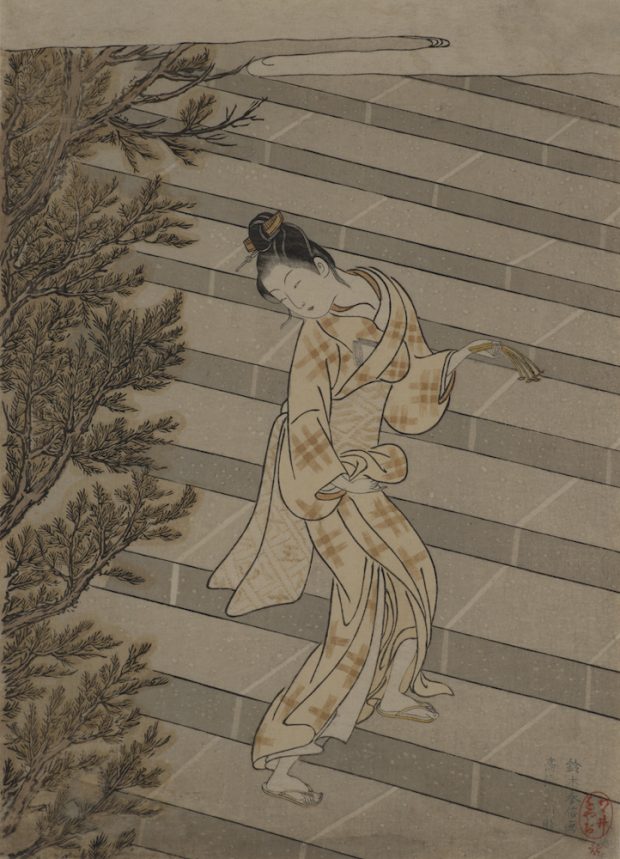 Suzuki Harunobu "Bigatsuri Sanri" Meiwa 2 (1765) year medium-sized picture © Lee E. Dirks Collection
Ukiyoe is "Tanee" colored in red from the original monochrome "Sumizukari" picture, "Kanie" using a vegetable dye, "Kanie", "Kenzuri" It will be transformed into a big change by Suzuki Harunobu (Suzuki Harunobu). That is the birth of the "Takae", which has been painted with a high degree of coloring.
4. The Beginning of the Ukiyo-e “Beautiful Painting” Era
Harunobu, who became a Ukiyo-e revolutionary child, demonstrates his genius in beauty paintings. She is good at a girl who is fine like "Samori Osen", a girl who drew a signboard girl in a teahouse, and a person attracted by the picture rushed to the teahouse to make a procession. Ukiyo-e was also the forerunner of advertising media.
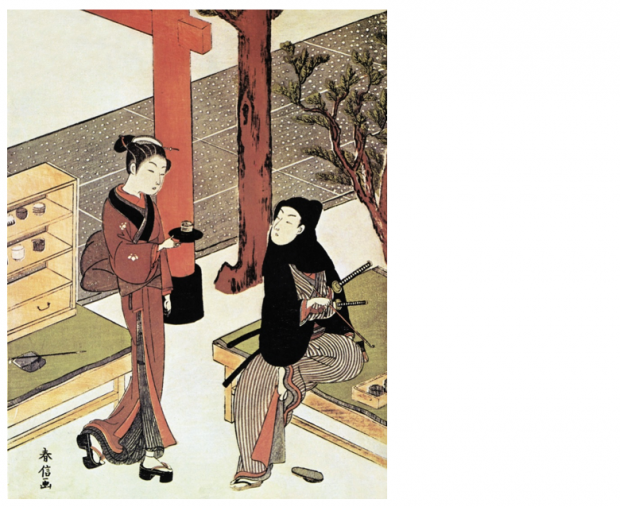 Suzuki Harunobu "Ashimori Osen" medium-sized picture 2-7 years (late 18th century) photo provided / Bridgeman Images (PPS communication company)
After Harunobu, who had been a charisma artist, the enthusiasm of Edo people for beauty paintings increased, and new painters became sought after. Torii Kiyonaga was the one who drew ground-breaking beauty in that trend. The beautiful woman's picture of Qinghou is eight slender women. Unlike the girl drawn by Harunobu, she draws lively women who work in Edo and runs up to a popular artist at once. However, in the later years, the theme changes from beauty painting to actor painting, and the star painter's seat of beauty painting is replaced by the next generation painter.
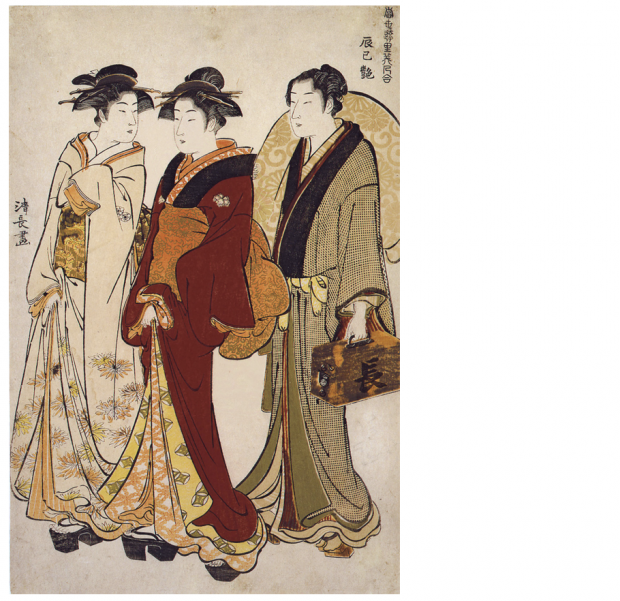 Torii Kiyonaga "Today Yusuri Bijin Gouyatsu" Large-size Makie 1 piece Tenmei 2-4 (1782-1784) Year around 38.2 x 25.1 cm Edo Tokyo Museum storehouse
5. The middle of the Edo period is the heyday of "Beautiful art"
In the middle of the Edo period, one of the new stars that appeared in the Ukiyo-e world, which reached its peak in the late 18th century, is Toshibunsai Eiichi. Eriyuki is a samurai who is from Samoto and is enamored of ukiyo-e, and he studied painting while taking private lessons with Kiyonaga. The beauty picture is drawn in a style that is even better than Kiyonaga, and in an improbable proportion. A picture that embodies the ideal for the beauty of women is called Eino Beauty and gains popularity, but in the Ukiyo-e world, another star artist, Kitakawa Kayo (Kitagawa Utamaro) You will be treated as a child.
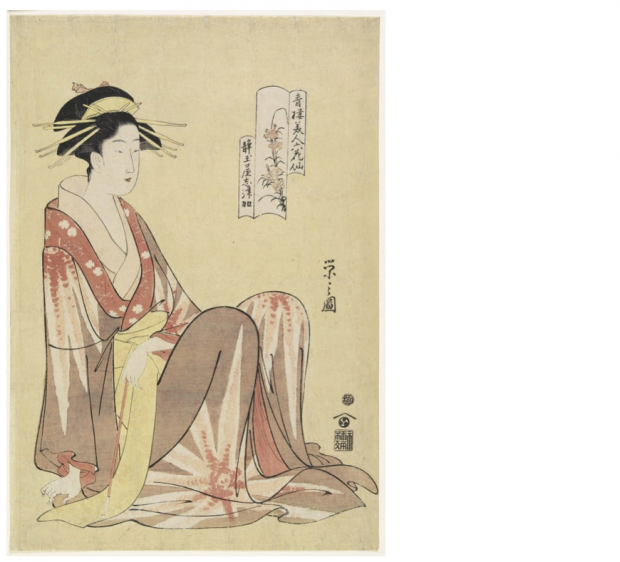 Toribunsai Eiko "" Blue Tower Beauty Rokukasen Shizutamaya Shizuka "" 1 large format picture Kansei 5 ~ 6 (1793-1794) around 37.9 × 25.4 cm Photo provided / Bridgeman Images (PPS communication company)
Nowadays, the famous song is also one of the painters whose eyes have not been seen since the young Eiko, who was young at the time. It is the publisher and the famous producer who has made an eye on such talents for songs, and it is known as Juzaburo Juzaburo. Under the chopsticks shop, Kayo creates the technique of "Obuse" and gets a lot of attention. It is a close-up of the upper body that broke the rule that the beauty picture draws the whole body. The big picture drawn beautifully from the face to the flow of hair becomes synonymous with a beautiful picture, and the song gets popular over Eriyuki. Produced by Ashiya, he made a series of masterpieces such as "Fujin Sogakujii" and reigned as a top artist for ten years, but touched the Shogunate's kinki You will be penalized by the fact that you drew the work, and you will be withdrawn from the line after disposal.
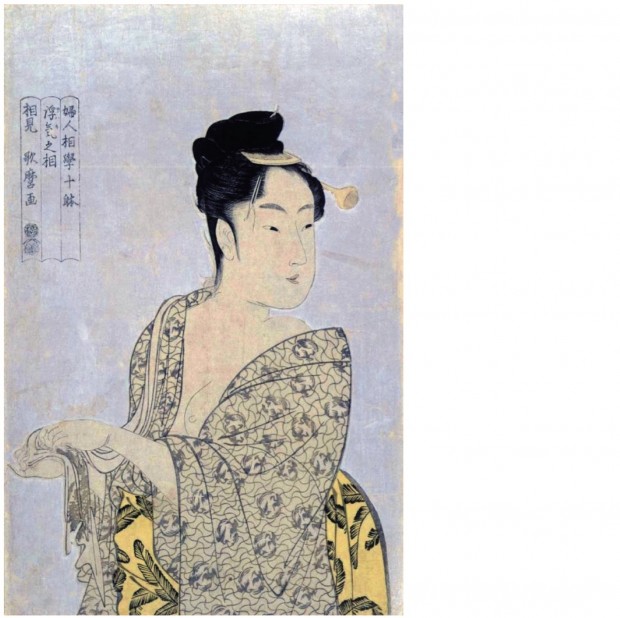 Kitakawa Kayo "Gyoto-hagakushi-Jinan-Aki-no-ha-no-ha-ha-ha-ha-ha-ha-ha-ha-ha-ha-ha-ha-ha-ha-ha-ha-ha-ha-ha-ha-ha-ha-ha-ha" One piece Hiromasa (1789-1801) 37.7 x 24.3 cm in the first half of the previous year Photo courtesy / Bridgeman Images (PPS communication company)
6. An actor's picture drawn by Sharaku
Having lost the song, Tsujiya pays attention to the kabuki world, which has been in slump, and thinks about publishing a series of actor drawings. It was the Toshusai Sharaku that was greatly selected for the project. Sharaku has long been regarded as a mysterious character, but the theory is that it is Jiro Saitoh, who was a Noh player who now lives in Edo-Hacchobori. After hearing the rumor that Jurobei drew a funny caricature of a funny actor, Tsujiya saw out the talent and sold it as a mysterious new face painter.
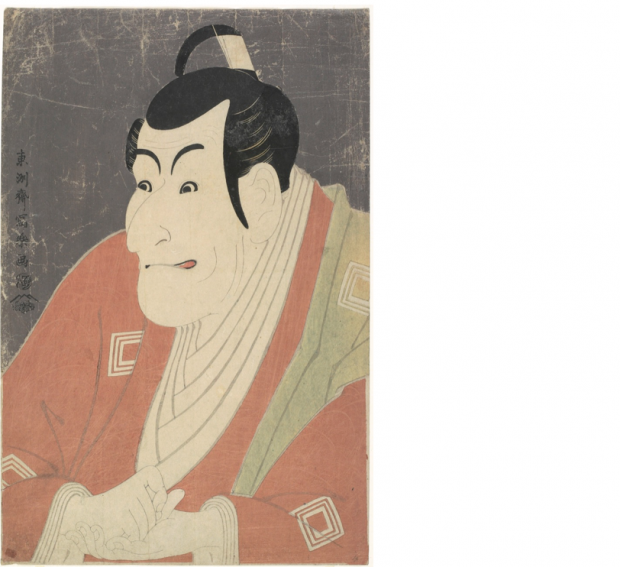 Higashi-Rakusai Sharaku "Shinsuke Takemura of Ichikawa Kinzo" Important cultural property Large-size picture 1 piece Kansei 6 (1794) 37.7 x 25 cm Photo provided / Bridgeman Images: PPS news agency
7. From Sharaku to Toyokuni Late Edo period
The character of Sharaku's actor is a deformation technique that brings out the appearance and facial expression on the front like "Ichikawa Kinzo Nobori Takemura (Shinsuke Takemura)". It is astonishing to the people of Edo who were familiar with the actor's picture, which was familiar to Bimoku Shurei, and is greatly appreciated by the strength of the impact. The caricature is so real that there are episodes that some actors do not like being drawn in Sharaku. Sharaku has been active for only about 10 months. It is said that this is because it was a contract as a sideline.
In the late Edo period, the techniques and styles accumulated by many Ukiyo-e masters mature, and Ukiyo-e finally reaches its mature stage.
It was a great faction of the Utagawa school that dominated the Ukiyo-e world of that time. Utagawa Toyokuni, who led it, was very popular because he worked extensively from beauty paintings to actors' paintings, to illustrations on yellow covers and go-rounds. A lot of painters wanted to be a disciple after traveling to such Toyokuni, and both the real and the real had formed a huge power.
8. The appearance of Hiroshige, the mainstream to "landscape"
Hiroshige Utagawa, who wanted to be a painter while being born in a samurai house, was also one of the hopes for discipleship in Toyokuni. However, Hiroshige, who was no better than an amateur, was easily refused introductory, and introducted to Toyohiro, who was a brother disciple of Toyokuni. On the contrary, Hiroshige, who was influenced by Toyohiro's quiet style, began to show interest in landscape paintings. At this time, it is the beauty picture and actor picture that are regarded as important in Ukiyo-e. Landscape painting was considered to be a side stream (Bouryu), but this judgment led to a drastic change of Hiroshige's life.
Although the first landscape painting "Toho famous place" for Hiroshige is hidden behind the success of Katsushika Hokusai (Koshishiku Hokusai) who was his predecessor, he subsequently announced "Tokaido 5 Gosanji "Is also a bible of travel for Edo commons who boomed in travel boom, recording a hit of conscience. Thanks to Hiroshige, who carefully describes the people living on the journey and living in various places, and draws the sights with the unique touch with lyricism in the realism, the landscape paintings will join the main stream of Ukiyo-e.
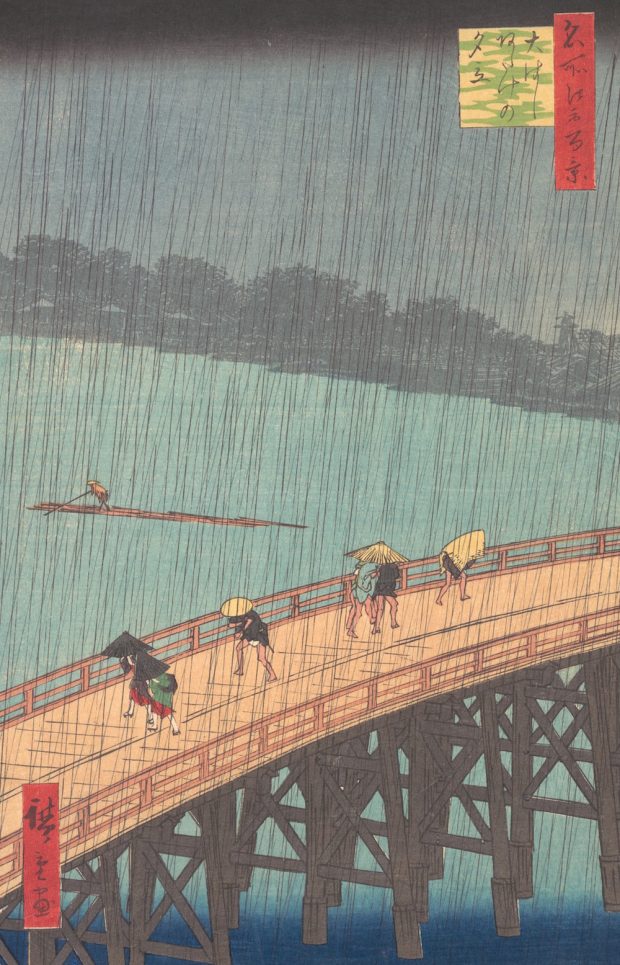 Hiroshi Utagawa "The Hundred Scenic Spots of Edo, The Great Garden of the Dawn of the Great Lakes" Large Formats Ansei 4 (1857) Metropolitan Museum of Art he Metropolitan Museum of Art, The Howard Mansfield Collection, Purchase, Rogers Fund, 1936
9. Landscape Painting by Katsushika Hokusai and Utagawa Hiroshige
The forerunner to this landscape boom is Hokusai's “Fuguru Sanrokukei” which is 37 years older than Hiroshige. A series of works by Mt. Fuji that Hokusai, who likes to draw more than anything and faces freely without relying on anyone, draws it at age 72, and is known as a masterpiece representing not only ukiyo-e but also Japanese art You However, his interest in Hokusai's paintings has not been exhausted, and after his success in landscape painting, he began to work hard on body-painting, completing his life as a painter until he died at the age of ninety.
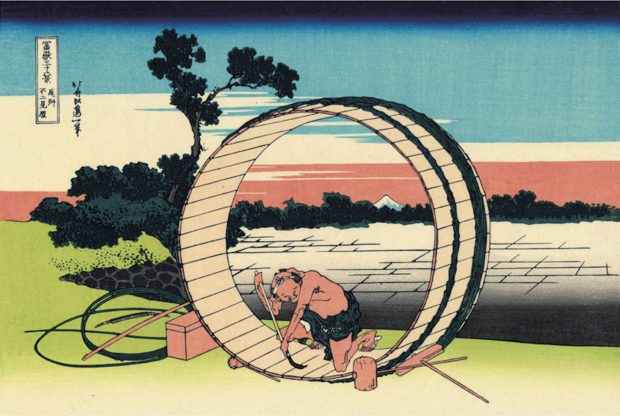 Katsushika Hokusai "冨 嶽 36 景 州 二 大 大 1 piece Tenpo 2 (1831) photo provided / Heritage Image (PPS communication company)
10. A strange idea, the emergence of Utagawa Kuniyoshi
During the ripening period of the Utagawa School, there was another painter who should not forget. That is Utagawa Kuniyoshi (Kuyoshi).
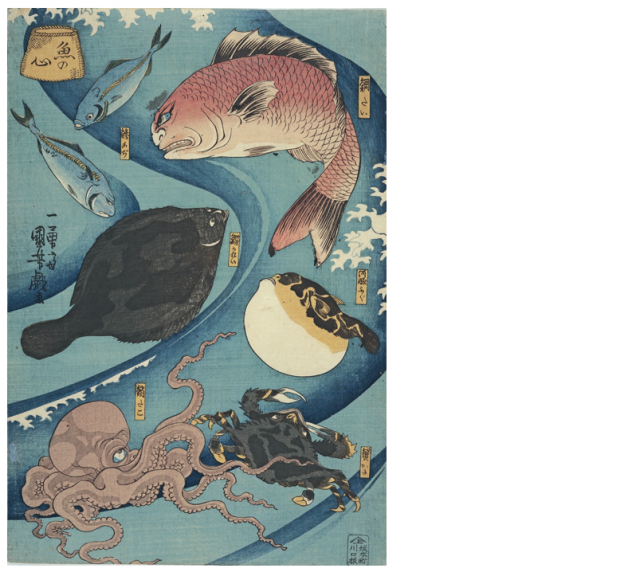 Utagawa Kuniyoshi "Fish of Heart" Large Format Makie 1 Tenpo (1830-1844) end of period Gallery Akoya
Kuniyoshi, who was the same age as Hiroshige, was admitted to Toyokuni, where Hiroshige was refused, at about the same time as the first half of his teens, and genius skin that had been recognized for his talent early. We seek original lines from the character that should be called non-reliable, and show off with humorous pictures of fish and animals, and warrior pictures depicting the heroes of "Suikonden". . The grotesquely exaggerated expression is just Kuniyoshi's single point. Over time it will be very popular. Among Kuniyoshi's disciples, there are painters who represent the Meiji period, such as Kawana Biyoshi and Tsukioka Yoshitoshi, and the Ukiyo-e tradition has been passed down over time.
Representative Ukiyo-e painter of the Edo period
We introduce representative painters (painters) who drew Ukiyo-e.
Mr. Hishikawa (Hishikawa Moronobu)
Ukiyo-e teacher who played an active part in the early Edo period. The person who established the Ukiyo-e, is called the founder of Ukiyo-e. The representative works include "Reward beauty" held at the Tokyo National Museum.
Suzuki Harunobu (Suzuki Harunobu)
Ukiyo-e teacher who played an active part in the middle of the Edo period. It was popular for its slender and delicate facial expressions. He was one of the painters who played a crucial role in the birth of Maki-e and had a great influence on the later development of Ukiyo-e. Please read the article "The charm of a genius ukiyoe artist who has started making a lacquer work, the charm of Harunnobu Suzuki " and an introduction to Japanese culture by Ms. Okon .
Toshusai Sharaku
Ukiyo-e teacher who played an active part in the middle of the Edo period. It is also known as a mysterious painter who suddenly lost his art form after printing actors etc. in a short period of about 10 months.
Utagawa Hiroshige (Utagawa Hiroshige)
Ukiyoe artist who played an active part in the late Edo period. It is said that he became a very popular painter in woodcuts depicting landscapes, and also influenced Western painters such as Gogh and Monet. "Please read the history of landscape paintings in the four masterpieces of Utagawa Hiroshige ."
Katsushika Hokusai
One of Ukiyo-e's representative of the late Edo period. In his life he presented more than 30,000 works. A painter who is famous worldwide, he is widely known overseas as "HOKUSAI". An article describing Katsushika Hokusai in more detail Katsushika Hokusai who continued to hold the brush until the age of 90. Please follow my life full of mystery .
Utagawa Kuniyoshi
One of the ukiyo-e artists who represent the late Edo period. With his innovative design, fantastic ideas and high drawing power, he has created many attractive works that go beyond the frame of Ukiyo-e. Please read the article " Utagawa Kuniyoshi Who Wanted? Representative Works and Life Summary " which explains Utagawa Kuniyoshi in more detail.
Ukiyo-e that influenced European art
Ukiyo-e moved to Europe and had a great influence on the formation of the French Impressionists. The influence is not limited to the field of paintings, and it is said that Debussy finished "Symphony Poetry Sea" and Camille Claudel produced "Wave" sculpture, drowning in the insane scene of Hokusai Katsushika .
■ The influence that Hokusai gave to Japonism. 4 mountain pictures drawn in Europe
■ What is the influence Hokusai Manga has on overseas? Impressionists and Art Nouveau!
Masterpiece of Ukiyo-e
Mr. Hishikawa's "Reward Beauty"
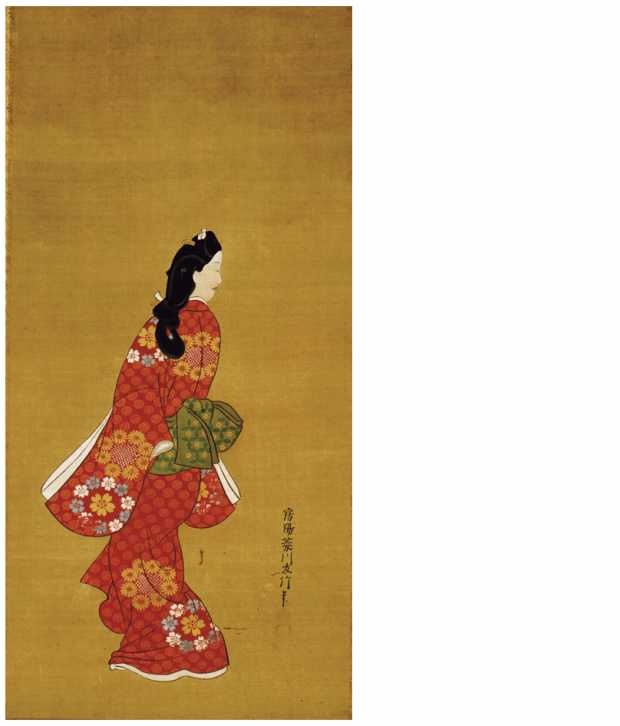 Hishikawa Hashikawa "Rewarding beauty figure" silk book coloring 1 width Motosuke (1688-1704) the first half of 63.2 × 31 cm Tokyo National Museum storehouse
On the other hand, Zenshin works on a large number of drawings made of printed books such as illustrations, landmarks and pillows. What I liked was Yusato and the play town, which was called the two major evil places at that time. It is a longing place for the common people, a world that can not easily be seen. As it can be seen in cheap prints, the ukiyo-e of Zenden captures the hearts of people in no time.
"Edo Bieber of third generation Otani Oniji" of Toeisai Sharaku
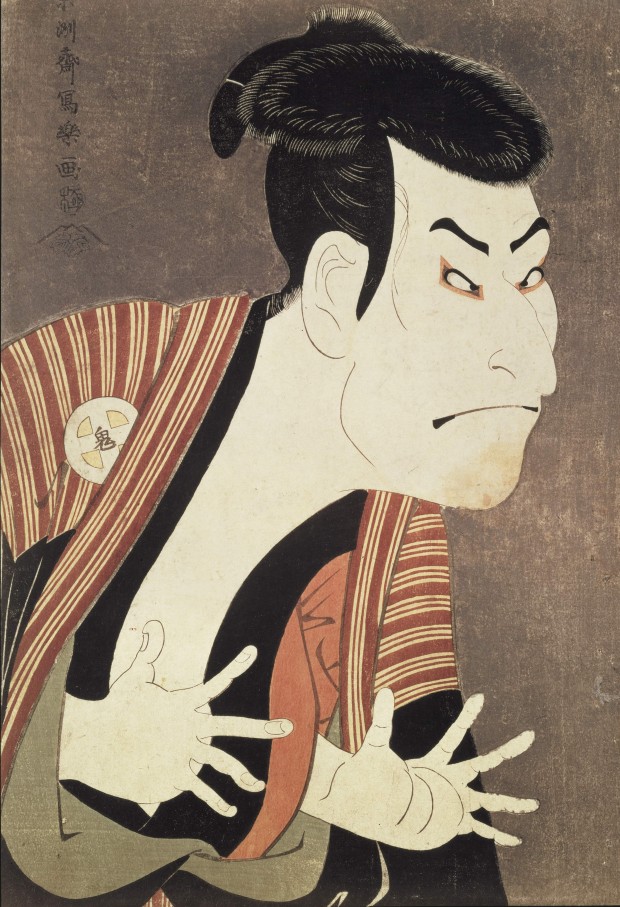 Higashitsusai Sharaku "Sakai Otani Oniji no Edo Biei" large format picture 1 piece Kansei 6 (1794) Photo provided / Bridgeman Images (PPS news agency)
An artist who specializes in Daikoku Painting, Toonsai Sharaku. The most famous piece of the work is the extreme transformation of the moment that a villain is aiming at a large amount of money and attacking the other right now, and overwhelms those who are seen in exaggerating bold and fearless expressions. Both hands taken out of the nostalgia also produce a kind of spookyness, and I just want to make a voice saying, "I'm doing this! As a feature of the Oshiku picture, there was a weakness that it was difficult to understand the scene situation of the actors because the drawing range of the picture was narrow. However, Sharaku symbolically deformed each part of the face to make it an opposite hand, and by further directing the characteristic nuance to the hand, it showed off the striking individuality.
Utagawa Hiroshige's "Tokaido Fifty Three"
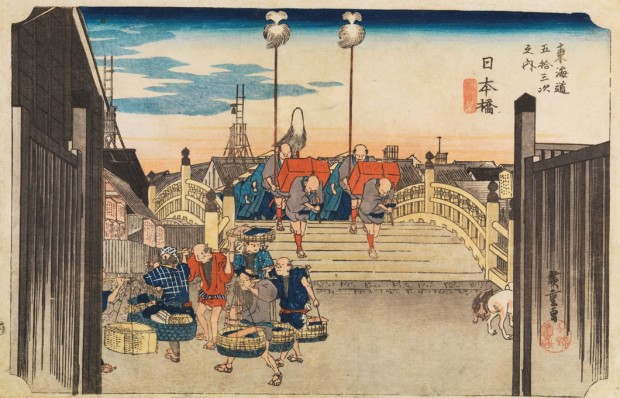 Utagawa Hiroshi "Tokaido Fifty-Third Nihombashi" (Ashinoko view) Tenpo 4-5 (1833-1834) Year Okada Museum of Art
At the time when the travel boom came, Ukiyo-e landscape paintings that made it easy to enjoy the feeling of travel gained great popularity from the people of the Edo world. And the author, Hiroshige, became as popular as Ukiyoe as Hokusai. Hiroshige has since worked on more than 20 Tokaido series in his lifetime, but the most popular one was "Toukaido Isoshiji", which was published mainly by the publisher, Hoeido (Takeuchi Sonohachi). is.
Katsushika Hokusai's "The 36th Scenery Kanagawa Offshore"
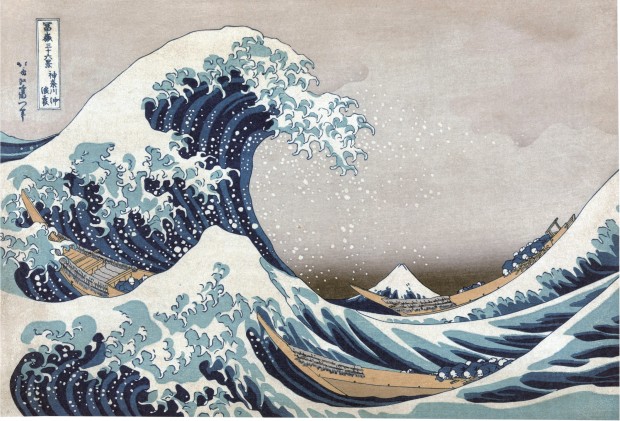 Large format picture 1 piece Tempo 2 (1831) Around photo provided / UIG (PPS communication company)
One work that can be said to be the true essence of a genius ukiyo-e artist, Katsushika Hokusai, who is known without saying. It is no exaggeration to call it the most famous Japanese painting in the world. If you look at the wave front of the splash, you can see what Hokusai is called "visual sorcerer". Hokusai may have wanted to put an awe of nature into this work. Toward the summit of Fuji, it is the part that has become a gigantic wave of the moment it breaks down. Since ancient times, the formation of waves has been drawn by various artists, but there is no wave that makes it so design-like and drifts bizarre.
Utagawa Kuniyoshi's "Otako Taro Kokukunikai, who gathers allies with Shomon's princess and Yasha magic in the back of Soma's old days, comes with him and he loses the message"
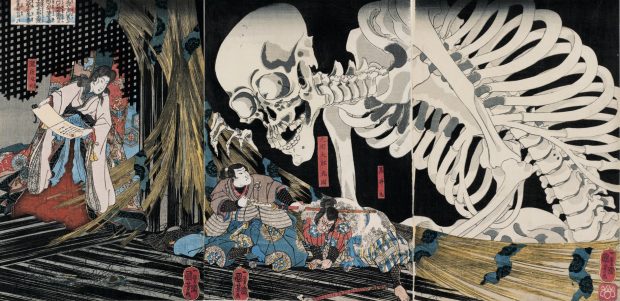 Utagawa Kuniyoshi "Otaru Taro Kokukunikai, who gathers allies with Shomon's Himeji-Yasha in the ancient times of Soma, come and try to fall in love with him." Hirokazu Gen (1844) The Boston Museum of Art
As a result of pursuing dynamism, three large-format paintings are considered as one screen, and the composition that draws motifs so large that they are likely to stick out has been followed by many painters since Kuniyoshi, and has become a new sketch expression. Until that time, it was customary to describe the continuation of large-format paintings so that they could be viewed one by one, but Kuniyoshi broke the established concept and pioneered a new front with bold ideas.
Which museums can you admire ukiyo-e?
If you want to catch the hearts of the people of Edo and admire the ukiyo-e that surprises foreign art lovers, the permanent museums and museums are recommended. Taste the flowers of Edo in the 16 museums / museums where Ukiyo-e painter places and works of famous collectors.
■ Introducing 16 recommended art museums and museums where you can enjoy a variety of Edo period art [Permanently preserved version]
※ The image in the article is a re-edited article in the past "Kazui".