









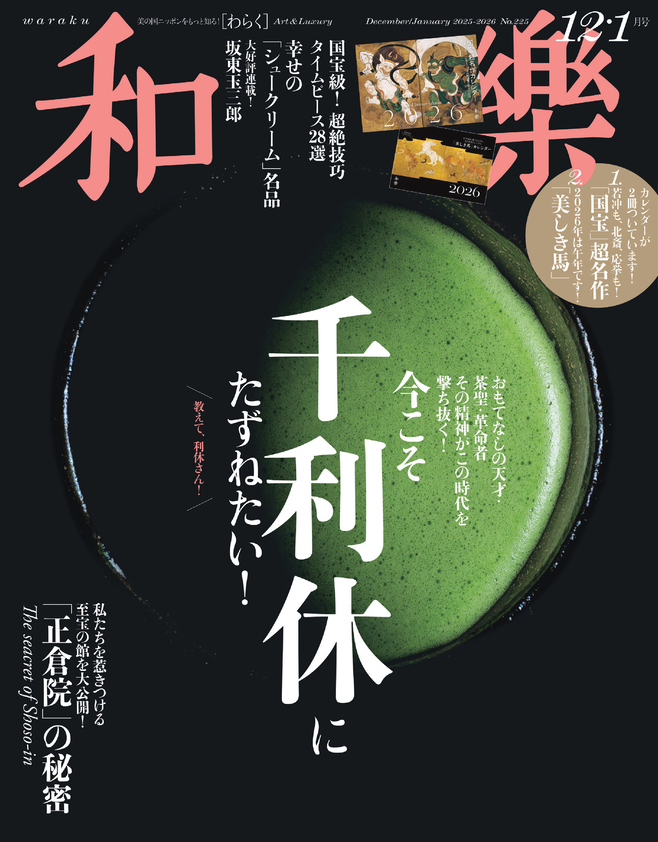




"National Treasure" which can be said to be the highest achievement point of Japanese art At Shogakkan, "Weekly published Nippon National Treasure 100" rediscovers its hidden beauty and cultural history On sale.
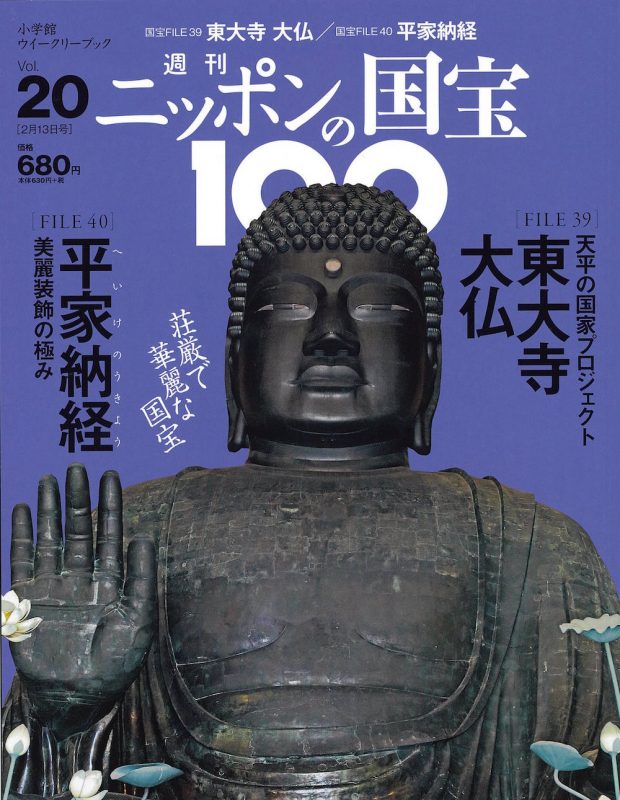
As digest of each issue, we introduce profile of famous treasure.
This time, we illuminate the whole of the universe, "Todai-ji Temple Daibutsu" and Kiyomori and the prayer of one gate, "Heike Naosuke".
Tenping's National Project "Todai-ji Temple Big Buddha"
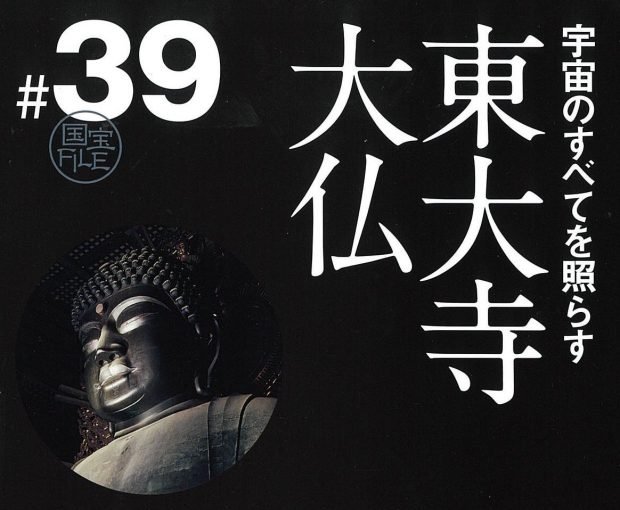
The official name of the main temple of Todai-ji Temple Kondo, commonly known as "The Great Buddha of Nara", is "Saiya Nabisu Sitting Statue". The Sanskrit kanji notation of "Viroucana" means "the Buddha of light at the sun". It is said to be the sun-like existence that sits in the center of the universe and lights up the whole world with wisdom and compassion in the “Kuonkyo” and “梵”, the highest representation of Buddhist truth itself in the form of a Buddha. It was regarded as a Buddha of the rank.
Emperor Seibu came to the power in the Kamukame first year (724) during the Nara period, but there was a succession of political turmoil, plagues, and misfortunes due to power rivalry among nobles. Therefore we wish for the state rule by Buddhism, and decide the creation of the stables Nabutsu as the center of the world ruled by Buddhist law. Tenhei 15 (743), issued the "City of the Stables Nabutsu Seiken". In the background, I saw the temples and Buddhas that people built together at the temple of knowledge in Kawachi (Osaka Prefecture), and I was deeply impressed by Emperor Seitake.
Initially, the Great Buddha was planned to be built in Shigara Shrine (Koka City, Shiga Prefecture), but in Tenhira in 19 the location was moved to the current location of Heijokyo and casting started. Tenpira Katsubou 4 years (752) On April 9, the opening of the big Buddha is openly held inviting Indian monks. About 10 years after the “Corporate Zen”, a huge gold-and-copper Buddha with an image height of about 16 meters (now about 15 meters) cast with all the copper in the country appeared.
However, the lotus position and the light back are completed after the open eye service. The lotus flower world of the stables Nabutsu is drawn by line engraving on the lotus valve of the pedestal, and the detailed and large-scale image is valuable for knowing the world view by "Kusen-kei". The center of the production was the Todaiji Temple, which was established for the construction of Todaiji Temple.
After that, he suffered war twice in the late Heian period and in the Warring States period, and suffered damage with the Great Buddha, but it was recast each time. In the Kamakura period rebirth, the heavily promoted Jigen has made an effort, and the Keio Buddhist priests also participate.
The present image, from the starboard to the front, and the legs, part of the pedestal is the original work of the Nara period. The Great Buddha, who has survived the fires of frequent fires and revived, has transmitted to the present age the grandeur of the Buddhist worldview of Emperor Emperor Takeshi over 1300 years.
National Treasure Profile
Stables of Buddha statue
Tenpira Katsuho 4 years (752) Copper-plated gold image height 14.98m Body, head re-cast / Kamakura-Edo period Todai-ji Temple Great Buddha Hall (Kindo) Nara
During the Nara period, a huge statue of a golden stable made of gold and bronze was built by the emperor of Emperor Takeshi. Tenpira Katsutoro 4 years (752), the dedication of the open eye offering to bring the soul to the point where the pupil was pointed to the Buddha image was held.
Kiyomori and a single prayer Prayer
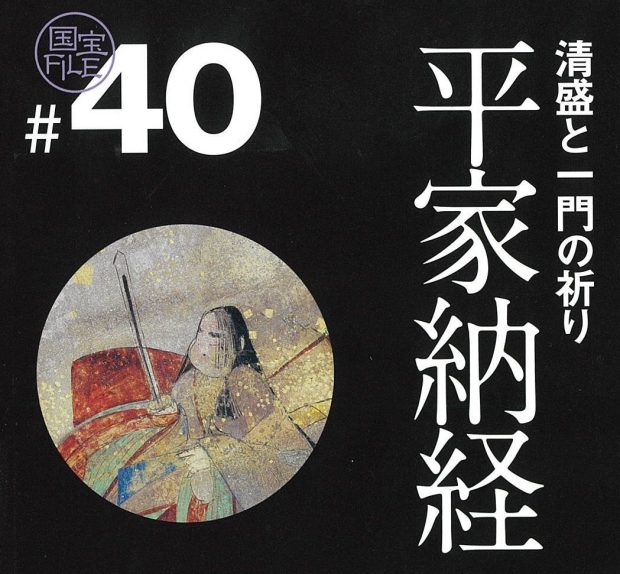
Warlord Kiyomori, who took control of the central government at the end of the Heian period, prayed for the prosperity of the Taira family in 1164, and the heiraki that he dedicated to Kashiwajima Shrine is “Heiya-naeki”.
About 20 years ago, when appointed as a guardian of Akikuni (Hiroshima Prefecture), it is said that Kiyomori began to believe in Kamojima Shrine taking advantage of the announcement of the dream of Kobo Daishi Kukai. For Kiyomori, who has gained enormous wealth from his father's generation in Japan-Thailand trade, Kashiwajima Shrine is an important base for securing maritime traffic in the Seto Inland Sea. He poured his goods freely, restructured the shrine on a large scale, and dedicated lavish armor armor and arts and crafts.
"Heikean-Nakkei" consists of a total of 33 volumes of "Houkakei" and other volumes of "Komorikei" written by men and women of the Kiyomori clan, and 33 volumes of Kiyomori's own volume of application. Each roll uses beautiful paper (paper) with gold and silver on the front and back of the dyed paper. As for Kimono, 32 family members, such as Kiyomori, Heihemori, Yorimori, Keisei, shared the principle one person one volume and one copy.
As well as the beauty of the paper, the cover and the inside picture on the inside are beautiful and elaborate. Metal fittings and strings such as scroll axes are made full use of the craftsmanship technology of those days, and luxurious decoration is given.
Such “decorative patterns” have been seen in Japan since the Nara period, but many remain after the middle of the Heian period. The reason is that the noble and fetishism prevailed among the nobles, and the epidemic fever increased. "Houka Sutra" attracted the popularity of noble women from preaching "Seikei Adult Buddha", which is a tribute to the merits of "Sakikei", and "Girl's Adult Buddha", which allows women to achieve enlightenment as well as men. . It is also one of the supported reasons that it is possible to reassign by sharing.
"Hokkaido" consists of 28 articles in total. From the middle of the Heian period to the Kamakura period, the “Shin-Ikoku Service”, in which the twenty-eight articles were shared and one volume was copied, was held to compete. The nobles, in the hope of prosperity and pleasure in one's family, made beautiful ornaments with the best of aesthetics and wealth. A variety of designs and solemnity are repeated, and the art of painting and craft is at the top. "Heiji Neenkei" is a work that can be said to be the ultimate masterpiece of such a kind of decoration.
National Treasure Profile
Heike payment
Nagahiro 2 years (1164) Paper book wearing color letters or sumi 33 volumes of each vertical 24.9-28.0 × horizontal 92.7-904.8 cm Enoshima Shrine Hiroshima
The decoration pass which Mr. Taira of the late Heian period, Taira Kiyomori dedicated to Ogishima Shrine. A total of 33 volumes of Kiyoshi Seiji's hand-written "Venus", and 32 volumes of Scripture centered on "Hokkaido". Kim Gin Zhuang Yun Long Bung Copper Crate Box and Tu-e Tang are all national treasures.
My motto is "I'm serious about being stupid", and I am having fun and having fun every day.