













Do you know the Fujita Museum of Art, an art museum specializing in Japanese art that holds nine national treasures, the highest in the country's private art museums in Japan? It is an art museum that specializes in oriental antiquities such as Japan, China, Korea, etc., located in the city of Miyakojima, Osaka, near Osaka Castle ruins.
The Fujita Museum of Art is closed for a long time until April 2022 in order to carry out large-scale repairs of the aging display facilities.
Then, at least until 2022, if you think that you will be staying with the famous items such as Buddha statues, Buddha images and tea utensils owned by the Fujita Museum of Art for a while ... ... in spring of 2019, Nara National Museum is "all" in Fujita Museum of Art. It is not an exaggeration to say that you can see the “National Treasure Hall of Fame Fujita Museum of Art Exhibition” .
National treasure · Yoyokutenme eyes including Japanese art fans must-see
It is a two-month period that you can not miss as a Japanese art fan that you can see all 9 national treasures owned by the Fujita Museum of Art and 53 important cultural properties, including the national treasure “day change heavenly eyes” printed on flyers. This must be interviewed! So, I went to see the expedition to Nara as Wajima Web. In this article, I would like to approach the highlight and attraction of the exhibition!
"National Treasure Hall of Fame" What is the Fujita Museum of Art?
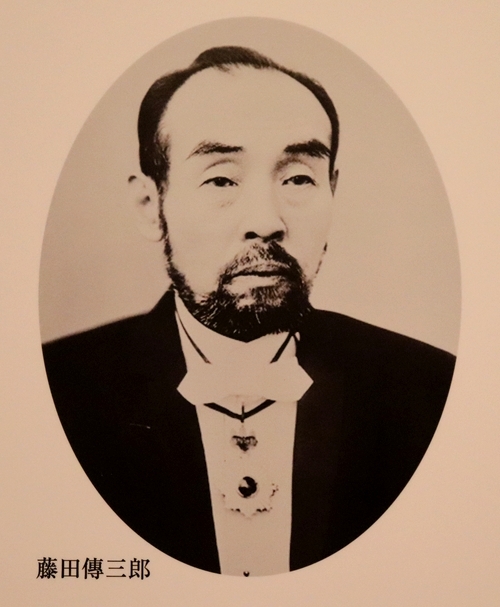
Photograph of Fujita Yuzaburo (quoted from the exhibition room commentary panel)
The Fujita Museum of Art was opened in 1954 in the network area near Osaka Castle Park, based on a collection of businessmen Fujita Denzaburou who were active in the Meiji period, and sons Hiratarou and Tokujiro. Did. An exhibition room was created in a form that used “Kazo” in the late Meiji period, which protected the Fujita family's collection until then. At present, the collection has about 2000 collections centering on tea utensils, Buddhist paintings and statues .
The museum is across the Art Museum since more than 60 years as a "warehouse", it has been loved by many art fans in the center such as tea ceremony, Buddhist, Buddha, in the long-term closed for the Museum of rebuilding June 2017 . Renovation work is in progress with the aim of reopening in April 2022.
So, during the long-term closing period, where do you think the works held by the Fujita Museum of Art are ...?
In fact, during the renovation work until the reopening, the Nara National Museum is holding all the items in the library at once. Therefore, the Nara National Museum uses this opportunity to promote works such as researching works and exhibition plans that use collections, as it is a wasteful thing to leave. One of the collections was the special exhibition "National Treasure Hall of Fame Fujita Museum of Art Exhibition".
The great point of this exhibition is that about 130 selected good items, including all 9 national treasures and 53 important cultural properties, are selected from about 2000 collections, and the exhibitions will be shown at once is. The content of the exhibition is a collection of precious ancient and medieval antiquities, tea utensils and Buddhist arts, all of which were selected with the strict aesthetics of Fujisaburo Shinsaburo.
Let's introduce the highlight immediately.
First of all, check the national treasure and the strange weather!
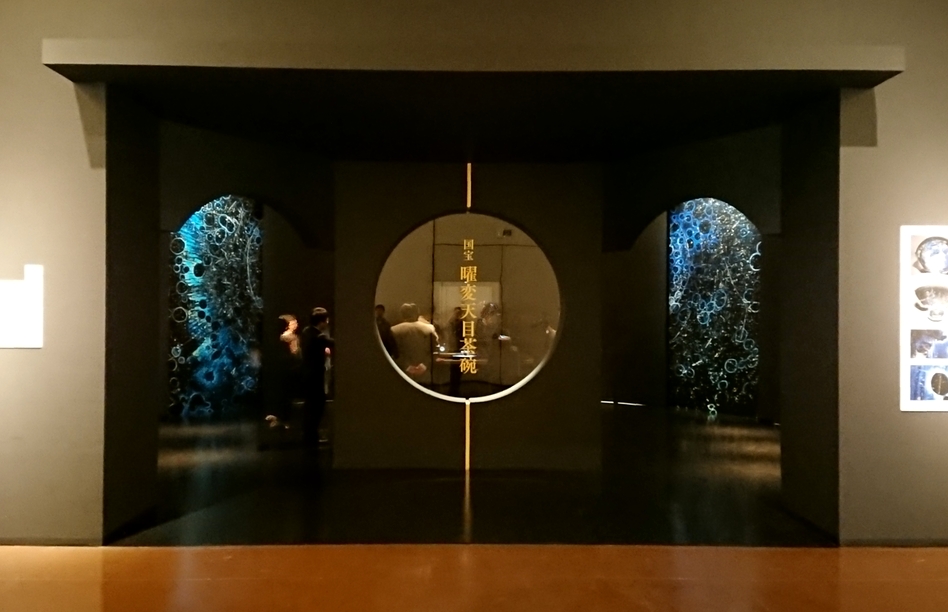
A special room with a dedicated entrance, which was set up just to see the odd weather
Speaking of the best treasures held by the Fujita Museum of Art, it is a national treasure, a day-to-day heavenly bowl that only three are in existence in the world. An elegant spot called "day change", which glows in amber when exposed to light, has fascinated people since ancient times.
The Tokugawa Ieyasu firstly holds the yoyoten Tenmoku tea bowl owned by the museum during the Edo period. After the Totogawa family Mito handed over this, it came to be stored in 1918 in the Fujita family. Aside from the fact that it was produced in China and the Nanjo period, the location of the produced kite and its detailed manufacturing methods have not yet been completely elucidated , and the mysterious one side engulfed by mystery is one factor that has become particularly popular in recent years. maybe.
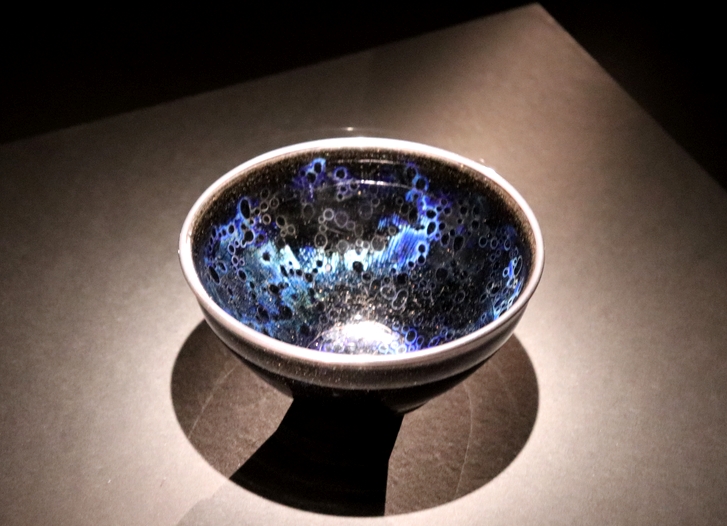
National Treasure-Yoshunten Tenme Teacup Ceramic-Chinese-Nanban (12th-13th centuries)
In this exhibition, the national treasure, Yohen Otome tea bowl is the leading role. There are special rooms in the exhibition room to watch the day-to-day change in the best environment, so you are ready to go. It is possible to view from any angle 360 degrees under the lighting which was thought out to make the day change heavenly tea bowl attractive in four sides of the special room. It is a moment of bliss for art fans.
In addition, the detailed commentary panel of the day change Tenme tea bowl is prepared at the entrance of the special room. Recently, it was also interesting to introduce fragments such as the day-to-day heavenly bowls that were discovered one after another in China .

The latest knowledge is also on the commentary panel pasted on the special corner wall!
At the tea ceremony corner, Tenmokudai, which is used to place the day-to-day heavenly tea bowl, is also displayed. There is only a set with the National Treasure Tea Bowl, and the Tenmedai, with its sparkling black lacquer and glitter work, exudes a gorgeous atmosphere. Please appreciate it while imagining the state in which the day-to-day change is set.

Tenmudai dedicated to the day-to-day heavenly bowl
There are a number of other notable exhibits besides the day change day
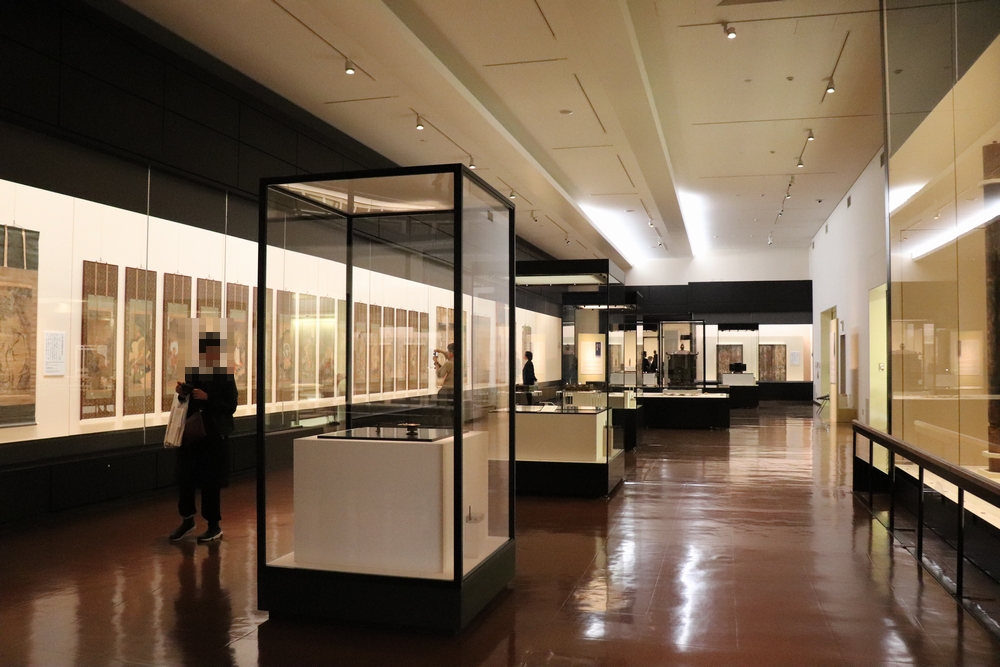
First of all, after checking the day-to-day weather, look over the large exhibition room of the Nara National Museum. A variety of excellent products are displayed closely, making full use of the two exhibition rooms in the Higashi Shinkan and Nishi Shinkan. All were great, but I will focus on some of the exhibits that I do not want to miss.
Highlights 1 Tea tools and pottery not to be selected with the aesthetics of Yuzato Fujita
The Fujita Museum of Art holds a large number of famous pottery items, including historically and formally appreciated tea tools. First, let's look at the finest product " Kikuka Tenme Cha- don" from the Japanese-made Tenmu Cha- don .

Important cultural property Kikuka Tenmoku tea pot Ceramic Muromachi period (16th century)
Yo-to-Tenyame tea bowl and oil dripped Tenme tea bowl, which were produced during the Nanjo period and imported from China. Even now, craftsmen are cutting their footsteps to reproduce the day-to-day change, but the thought is the same in Japan hundreds of years ago.
Even if you can not make exactly the same thing , variously according to the so-called "tenmoku shape", such as "Sponp's mouth" at its mouth edge, funnel-shaped form, and style that does not dare to put glaze on the bottom of the bowl. Made in Japan, the Tenmoku Tea Bowl. Among these, it is said that this chrysanthemum Tenmoku bowl is considered to be one of the finest superior products. It was recognized as a masterpiece by Kobori Enshu's high evaluation in the Edo period.
It was the old Iga's tea pot " Old Iga Hanairi Meijin " who continued to lose his eye on the deep flavor . While reflecting the beauty of the tea after Furuta Oribe in a slightly asymmetrical form on the left and right sides, very complex colors such as milky white, vermilion, tea, green and black are formulated with exquisite salt plum.
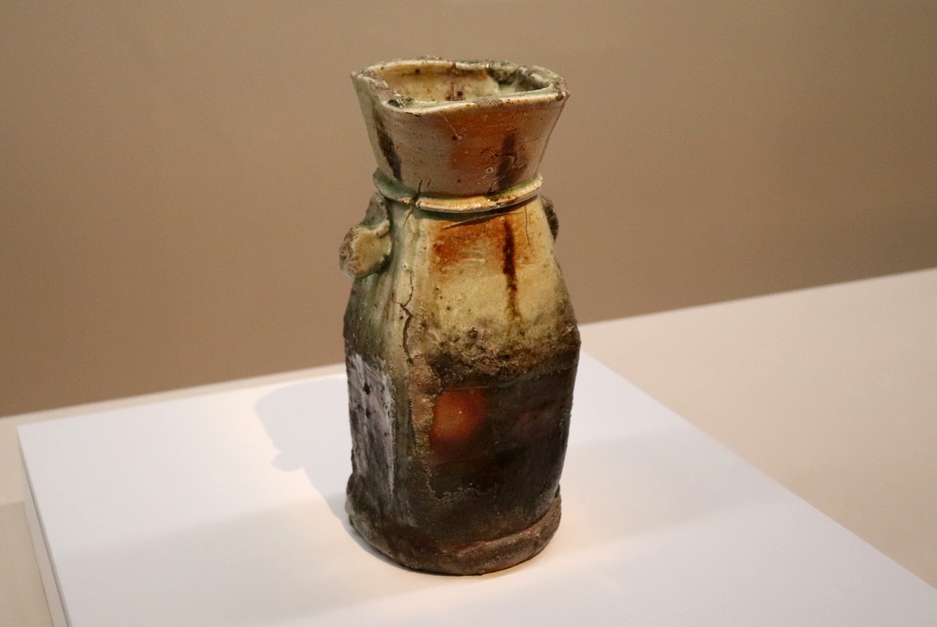
Important cultural property Old Iga flower inscription Old man ceramic made Azuchi Momoyama period (16th century-17th century)
Furu-Iga is produced without combining glazes, combining soils taken locally as in old-time Bizen. Various patterns appear on the surface of the pottery based on the original texture of the mother's body, due to the chemical change of clay when baked in a high-temperature kiln, and the change caused by the action of ash etc. from the kiln. Perhaps in the Momoyama period when this work was produced, it would have been difficult to reproduce the exact color that the craftsmen aimed for as calculated. I felt that the exhilarating beauty of this work that evokes the long head of "the old man of the auspiciousness" is God-like.
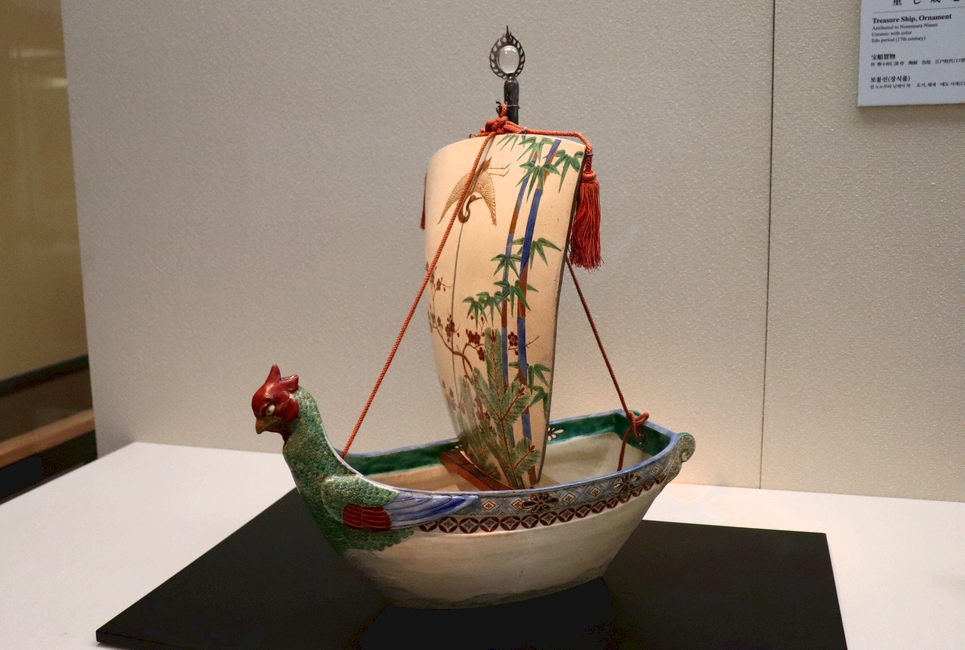
Treasure boat figurine Dennonomura Hitoshi Seisaku pottery color painting Edo period (17th century)
Next, let's look at the pottery vessel-like object “Takarabune Figure” filled with the motifs of bamboo, bamboo, and cranes, which are considered to be the studio works of Hitoshi Nonomura. Speaking of Nonomura Hitoshi, there are famously painted pots such as national treasures, colored paintings Fujika Buncha (MOA museum collection) and colored paintings Meimei teacup ( Tokyo National Museum collection) . We are also very good at three-dimensional modeling that shapes animals, such as the prefectural art museum collection. This work is a great item about 60 cm in height, about 50 cm in length and a very big impact.
The last thing I would like to see in the tea ceremony is the incense union "Koen Otome Kaukai" for tea ceremony produced in China and Ming around the 17th century. The incense that shaped this large turtle is particularly uncommon, and it is said that this is the only one that exists. 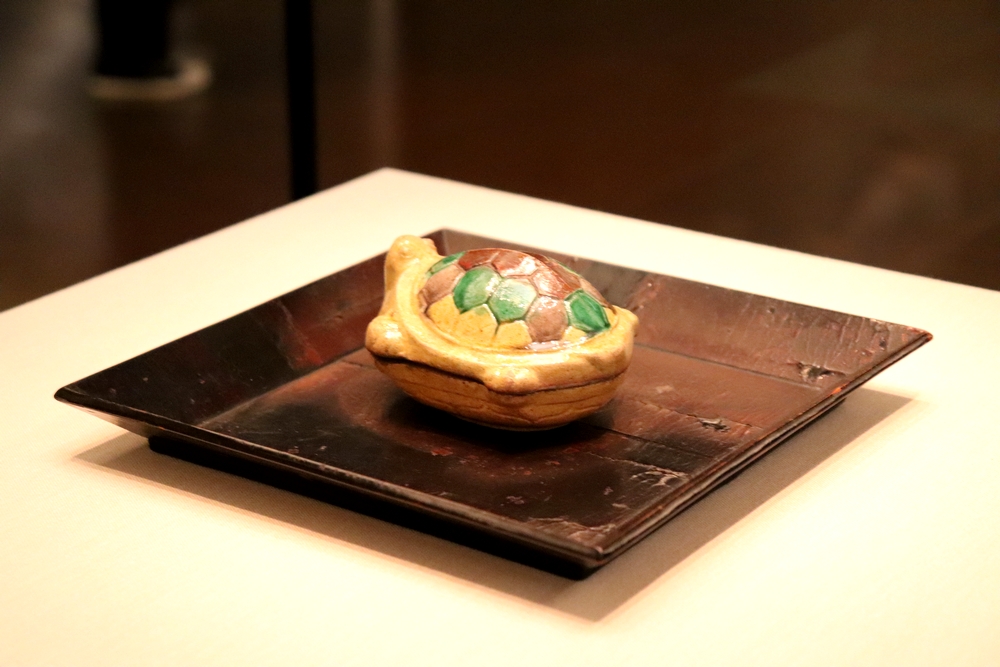
Important cultural property Exchange Omeka Kaori Ceramic China · Ming (17th century)
This work is displayed as the first work when it enters the exhibition room according to the route, but in fact this work is also famous for the work that Fujisabusa Shinsaburo collected last . It is said that when this work was made a successful bid for 90,000 yen (the amount of money at that time), Fujita Yuzaburo was already a sickbed and had passed away before the work reached the hand. However, from the episode that there was no need to collect artworks until the end of the sickbed, you can understand the first person in a row of Fujita.
Highlight 2 Good quality and excellent condition! Buddha statue ・ Buddha painting is great!
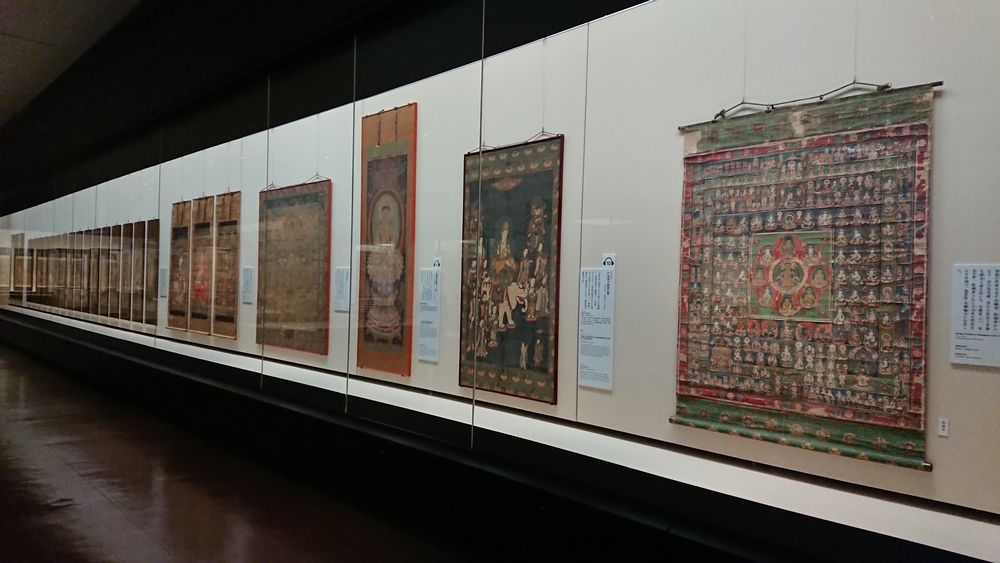
Buddhist painting corner of the masterpiece. There are many old works that are in good condition, and you can see the power of the Fujita Museum of Art well.
The next thing that drew attention was the rich collection of Buddhist paintings held by the Fujita Museum of Art. In addition to the relatively new Buddhist paintings such as Momoyama-Edo Period, it has a large collection of excellent Buddhist paintings in good condition of Heian and Kamakura period .
One of the biggest difficulties in the appreciation of Buddhist paintings from the ancient times to the middle ages is that there are many works that the screen is damaged and burnt black and what is drawn is not clear. It's really hard to watch your eyes like a plate. When I'm too tired, I tend to make a quick rush.
However, the group of Buddhist paintings owned by the Fujita Museum of Art is different! None is really in good condition! ! This was a nice surprise. The quality was high, and all works could be viewed in detail without the need for monoculars and other instruments.
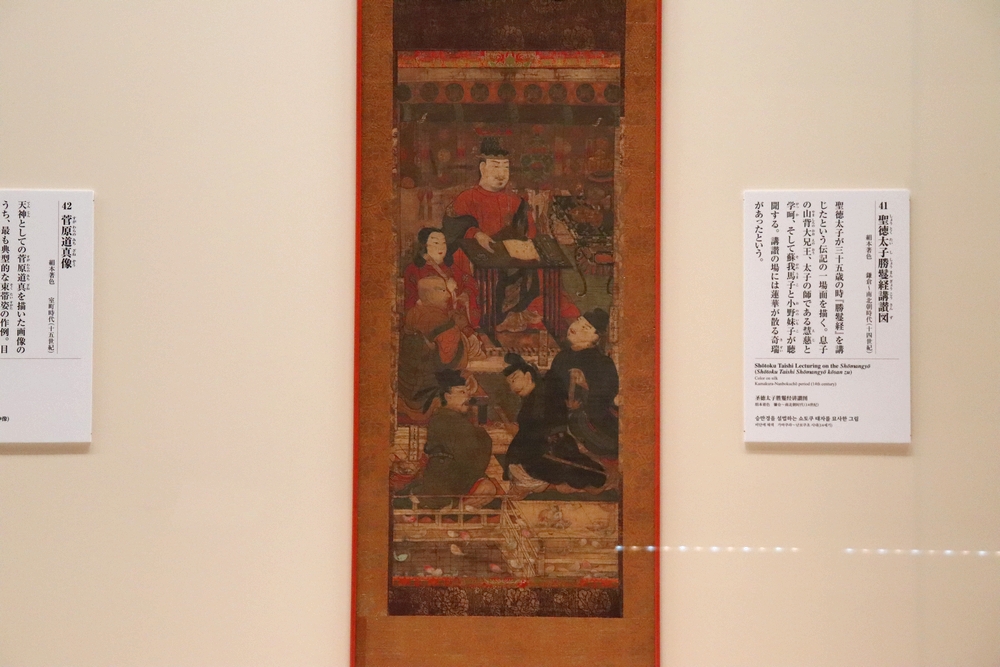
Taito Shoji Taisho Katsura lecture by lecture Kamakura-The period of the south and south morning (14th century) * The first half of the exhibition (~ May 12) / I am glad that all works are in very good condition.
Above all, I was particularly attracted by the “ 16-ga-ru-han-zu” that was painted by the Edo (Japanese- style painter) Ega, a painter from the North and South Dynasty. It is a set of 16 all in size, and depicts 16 high priests entrusted to the world after the death of the Buddha, one by one. The unique simplicity and detailed drawing of each individual Rahan, the interestingness of the expressions of animals and sansui, etc., was exquisite with its rusticity and looseness unique to the Middle Ages, and it was very eye-catching.
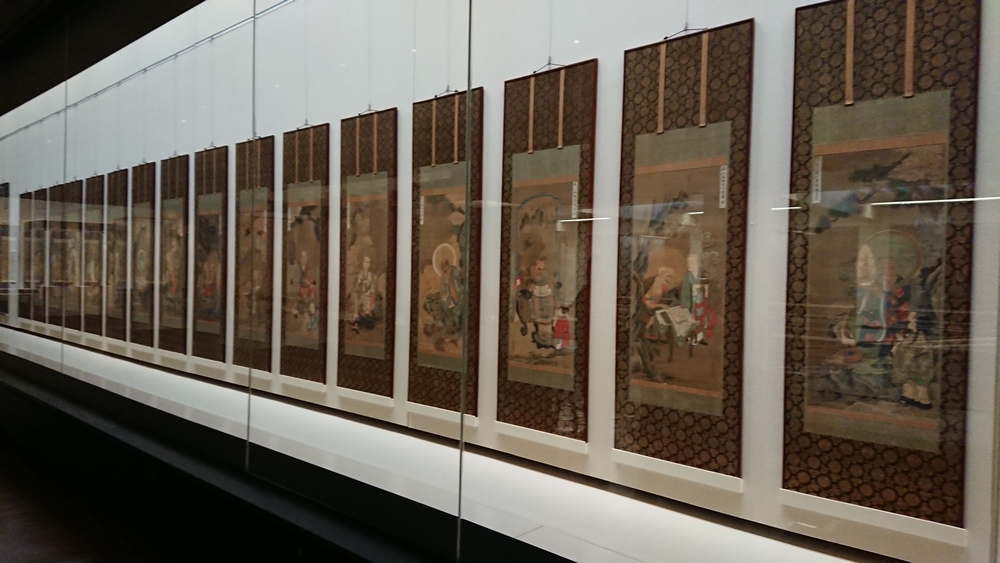
Important cultural property Juvenile Han drawing Yuma Eiga writing brushed silk book coloring South and South morning period (14th century) ※ Early period display (~ May 12)
Even though it is a work drawn in the 14th century, the beauty of this overwhelming condition! The taste was distinctly different from the modern-modern Buddha paintings of the Edo period and the Meiji period, and the facial expressions of the 16 precious people and animals drawn were drawn with a high-level look like a manga.
 Important cultural property Juvenile Han drawing Yuma Eiga writing brush partial view Silk color coloring North and South morning period (14th century) ※ Exhibition in the first half year (~ May 12)
  Important cultural property Juvenile Han drawing Yuma Eiga writing brush partial view Silk color coloring North and South morning period (14th century) ※ Exhibition in the first half year (~ May 12)
  Important cultural property Juvenile Han drawing Yuma Eiga writing brush partial view Silk color coloring North and South morning period (14th century) ※ Exhibition in the first half year (~ May 12)
Of course, many good works are exhibited not only for Buddha paintings but also for Buddha statues. We will introduce some of the large, easy-to-understand special items from that. First of all, I really want to see in the exhibition room, the “Jizobutsu statue” created by Kaikei.
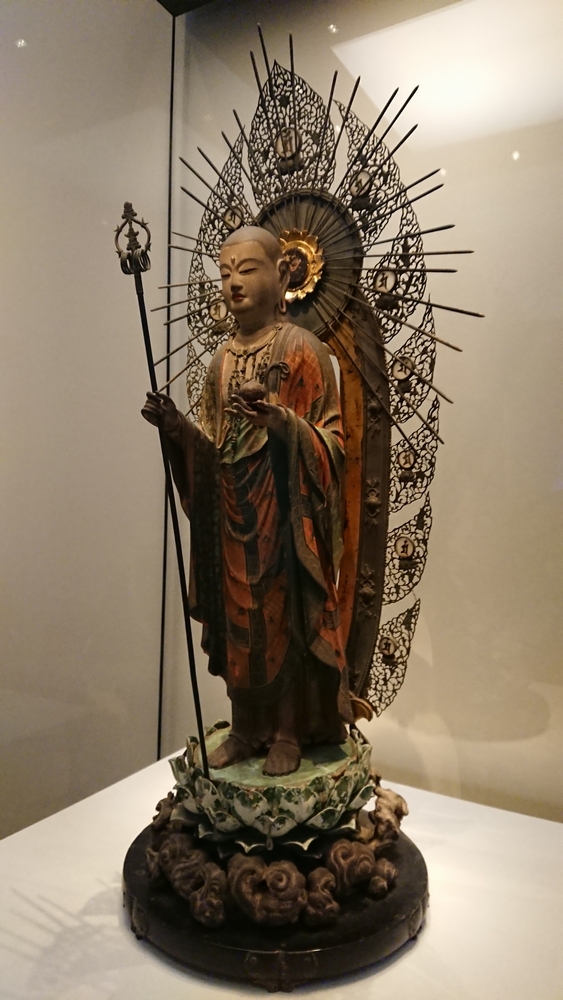
Important cultural property Jizoan standing statue Kaikei works Wooden coloration and pottery Kamakura period (13th century)
It is truly joyful that the super-surpassing technique skillfully drawn by carefully sticking to the detail from the face to the foot, including the graceful appearance of Jizo, and the delicate gold-plated gold pattern. The coloring was still quite good as a whole, and it was a fine item to understand how to wear the costume.
The next thing that drew attention was the “Kuraya Kamijin” image . Speaking of Sakuya Johito, it is famous for a sculpture that depicts how to cast "Namimu Amida Buddha" while putting out 6 "Bodied Buddha" from the mouth. Especially, I think that there are many people who have seen it, because the works created by Yukkei's four sons Yasuyasu, who belongs to Rokuharamitsusa, are also published in historical textbooks and reference materials.
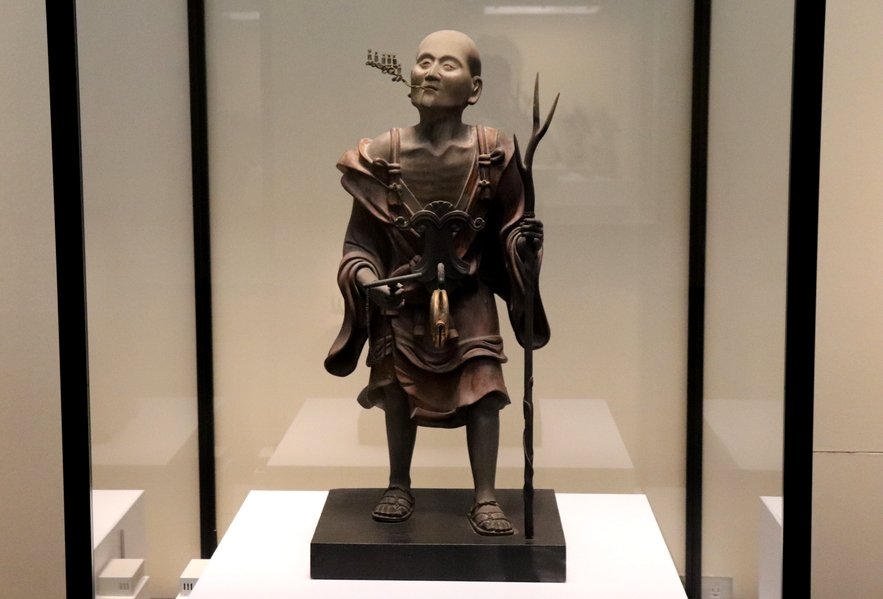
Kuyuya Kamijin Statue Wooden Coloring North-South morning-Muromachi period (14th-15th centuries)
This work is also a masterpiece carefully produced in almost the same style as the Rokuhara Mannji version, such as hanging a drum from the neck and hanging a shouko from the neck and holding a shumoki for hitting the drum on the right. And still, the line of sight naturally turns to the "mouth" of the skyman.
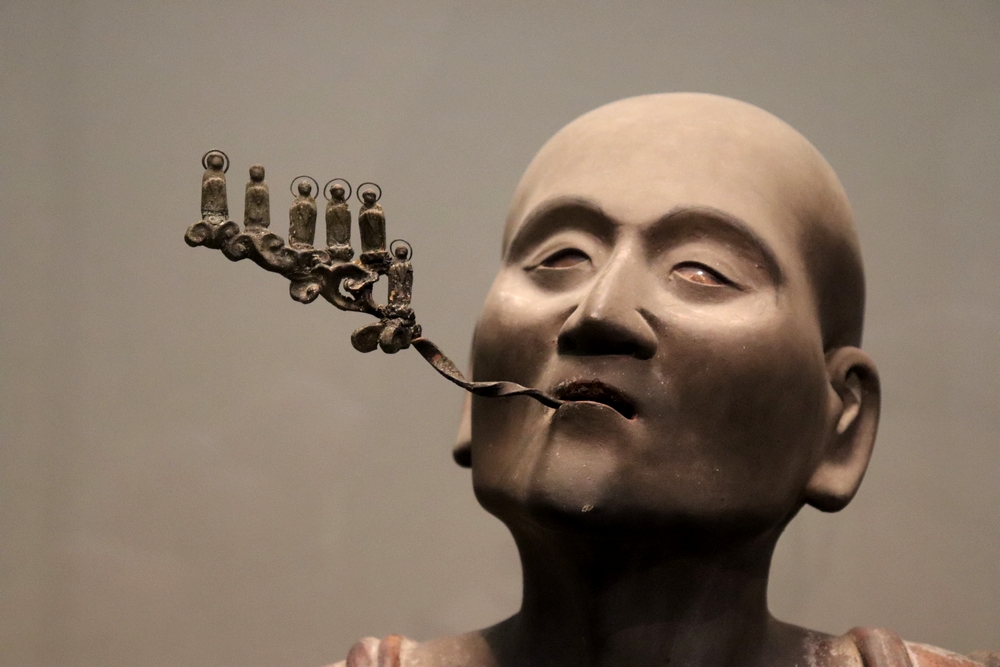 Kuyuya Ujinto Statue Head Enlargement Partial View Wooden Coloring North-South morning-Muromachi Period (14th-15th centuries)
If you look closely, a copper wire comes out of the mouth, and the six wooden wooden Buddhas that ride on the clouds are on the tip of the copper wire. It was a very polite work that was well built into the details.
And the next thing I was surprised about was the gorgeous lion " Kasuga Rinko ", produced during the Muromachi period, when deer riding white clouds were stored.
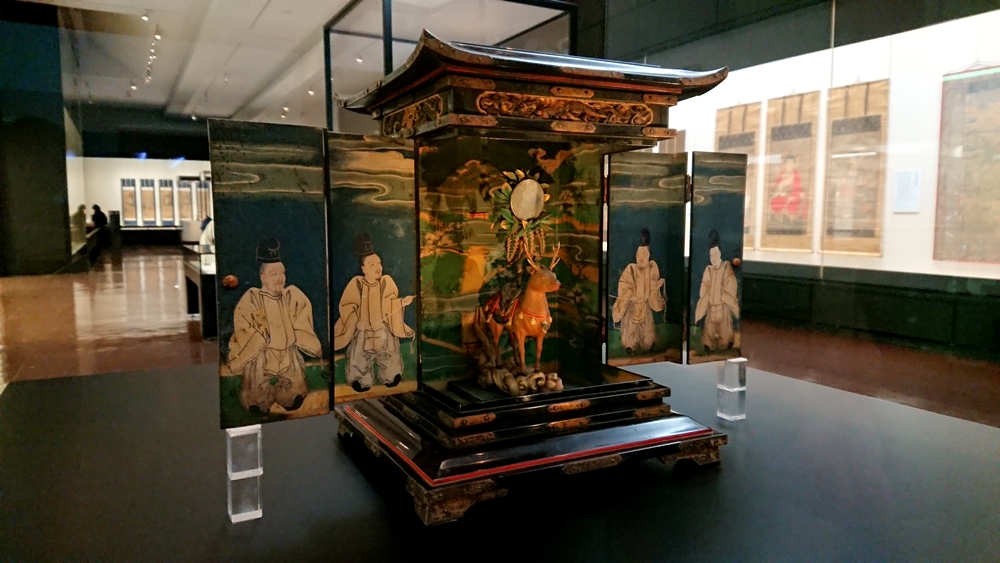
Kasuga Ayako Wooden Black Lacquered Painting Muromachi Period (15th Century) ※ Previous Period Exhibition (~ May 12)
At the Nara National Museum, there are many cases where the Kasuga Mandala depicting "Kamika" is often displayed at special exhibitions and special feature displays on the theme of Kasuga Taisha, but it was put in "Yuzu" like this work Isn't the gorgeous Kamika in 3D very rare? It is described in the pictorial record as "Thought to be called a three-dimensional mandala representing Kamika who has fallen in Kasugano , " but the impact is enormous compared to the expression on a flat surface.
The scene of Kasuga Taisha with the background of Mt. Mitaka and Mt. Kasuga drawn on the inside of a lion is also one of the highlights. The road painted with gold mud and the field in full bloom with the cherry blossoms are fantastic, and those who saw this must have been stirred up with faith. It was a work where you could experience the beauty to the details.
The highlight of the highlight 3 picture scroll is the national treasure "Xuan Zhuang Sanzoe"

National treasure ・ Xuanzhuang Sanzoe Vol. 2 Partial view Silk coloration Kamakura period (12th-13th century) ※ Early period display (~ May 12)
Of the nine national treasures held by the Fujita Museum of Art, the next thing you would like to recommend next to the day-to-day array of events is the national treasure picture scroll "Xuanzang Sanzoe" . It is an extravagant picture scroll made up of the extraordinary legends related to "Sanzo Houshi" famous for Son Goku legend, using high-grade washi paper and rock paint abundantly, but this is absolutely recommended!
Speaking of medieval picture scrolls, the story picture scrolls such as "Birds and beasts caricatures", "One time holy picture", "Egogo Rikiki picture scroll" and "Kasukunagae picture scroll" There are still works, but I have a favorite for this work. Because this "Xuanzhuang Sanzoe" is a biograph of a high priest who has a name in history, in addition to dynamic landscape beauty and fantasy colored patterns, he sees various comical expressions shown by characters. It's because the fun is transmitted straight to you.

National treasure ・ Xuanzhuang Sanzoe Vol. 1 Partial view Silk coloration Kamakura period (12th-13th centuries) / Sanzo headed to the legendary Mt. Suzuka while stepping on the lotus position paved in the rough sea, illuminated by the full moon Hoshi. Very fantastic and spectacular scenes are impressive.

National treasure ・ Xuanzhuang Sanzoe Vol. 1 Partial view Silk coloration Kamakura period (12th-13th century) ※ Early period display (~ May 12) / It occurs like the aura from the comical expression of lightning and the body of lightning There is an electrical energy (?) Drawn like a manga.
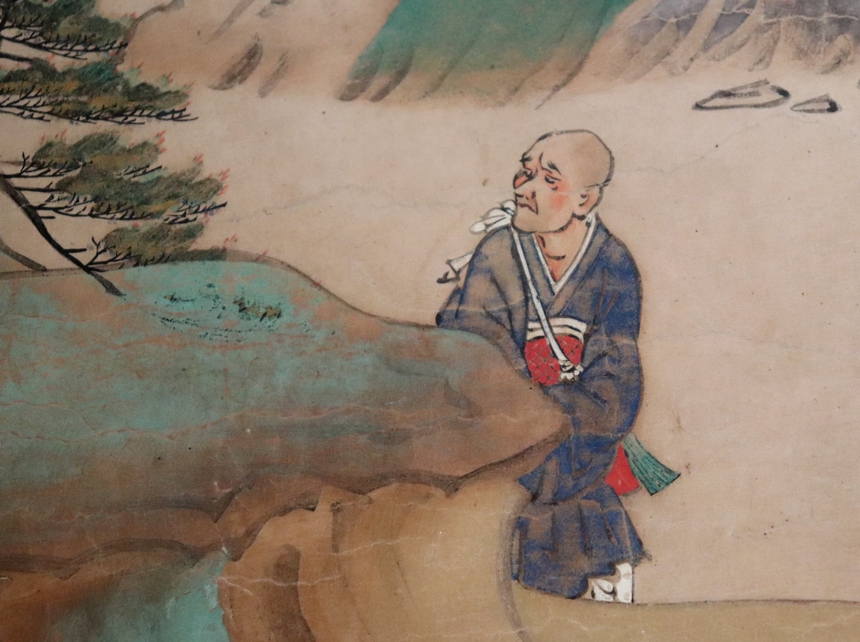
National treasure ・ Xuanzhuang Sanzoe Vol. 1 Partial view Silk coloration Kamakura period (12th-13th century) ※ Early period display (~ May 12) / It is not possible to keep up with it during the journey, it is a service to retire with bitter expression Monk of I was shocked with the expression of bitterness that I can not say anything.
Besides, the ability of the artist who drew it is wonderful, and the work has been carefully preserved, so the state is also wonderfully good so that it can not be considered as a picture scroll produced 800 years ago.
At this exhibition, you can make use of the large exhibition space of the Nara National Museum, and divide it into the first and second half, and watch "Xen-San Sanzoe" from Volume 1 to Volume 4 carefully. The captions of the commentary are also attached in detail, so you will not be at a loss when you look at the picture alone and say, "I do not know what is drawn." Please enjoy the best national treasure picture scroll drawn during the Kamakura period.
Highlights 4 You can also taste some of the amazing antiques of the day
As well as tea ceremony and Buddhist art, Fujita Shinsaburo was full of ancient art collections in the area of "archeology" before the Nara period. It is likely to be overlooked because it is placed casually in the second half of the exhibition, but the exhibits in this "archeological field" also contain very interesting things.
For example, here "clay-made pillow (HaniSei pillow)". This is a very rare earthen product "pillow", which is an excavated item from Kashiyama burial mound in Tenri City, Nara Prefecture, and is baked using the same clay as that used to make Minowa. It is a very rare archaeological material, with only a few examples from the same era.
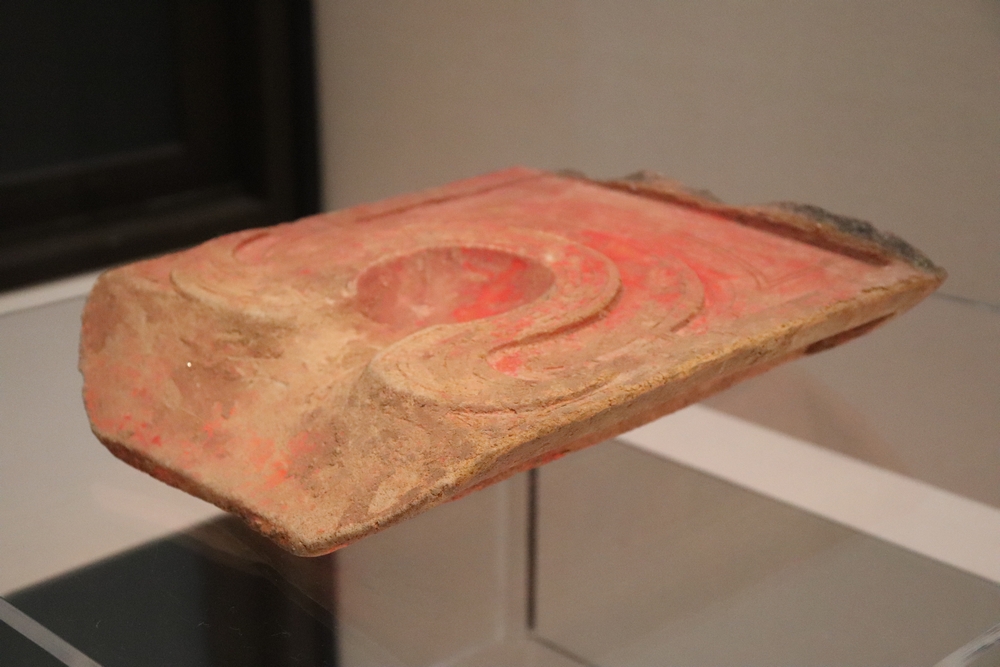
Important cultural property Smoked pillow Smoked Kofun period (4th century)
If you look closely, the technique is fine, such as an Ω-shaped depression to support the back head of the burial person, and a gentle slope on the part where the shoulder abuts, so that the shoulder fits as well. It was an exhibition where the height of the unexpected technical skills of ancient craftsmen can be read.
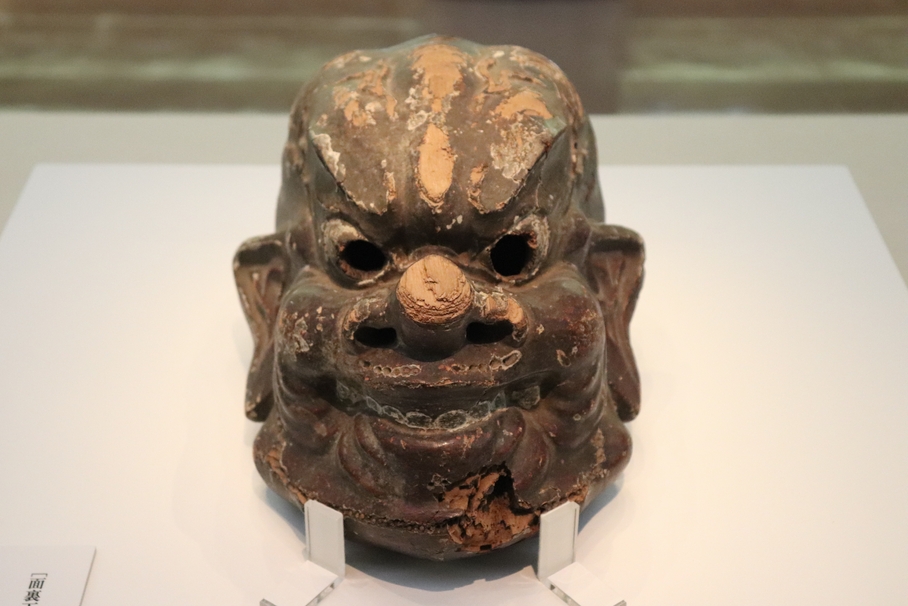
Important cultural property, Juraku-moku, wrestlers, wooden, coloring Nara period (8th century) ※ Early period display (~ May 12)
And here's the "pleasure side" . You can often see these kinds of faces at art exhibitions that feature shrines, Buddhist art, or traditional performing arts such as Noh, Kyogen, and Kabuki. However, in most exhibitions, there are many things that were produced since Momoyama-Edo-Edo period, and if things from the late Heian-Kamakura period are out, I feel that they are often "Oh, it's really old." You
However, the face that is exhibited at the Fujita Museum of Art exhibition is what is Japan's oldest class of pleasure created in the Nara period ! ! ! The back side is clearly described as "Todai-ji Temple", and it is presumed to have been used at the Opening of the Great Buddha Opening in 752, and the relation with "Kongo", which is housed in the Shokaku-in, is pointed out.
This work has been used in festivals and ceremonies many times in the past, and has been taken carelessly for about 1300 years, even though it has become quite tattered. The fish was soaring, the teeth were slightly raised, and while raising the corner, the dignified expression in which the strength of the will was felt in the mouth was felt, there was an unforgettable impact once seen. I think that at the Todai-ji Temple of the Great Hall where a large number of people attended, it would have left a strong impression even from a distance.
If you look at the pictorial record, the father of Konkei who was active as a gully of Keio Buddhist priests during the Kamakura period, Konkei , when he produced the puppets, also the description that this work was used as a reference . First-class works are protected and handed down by first-class craftsmen. You can see that it is just a legend grade pleasure.
The too ugly aesthetics of Fujisaburo Isaburo are real! I was able to enjoy the complete exhibition
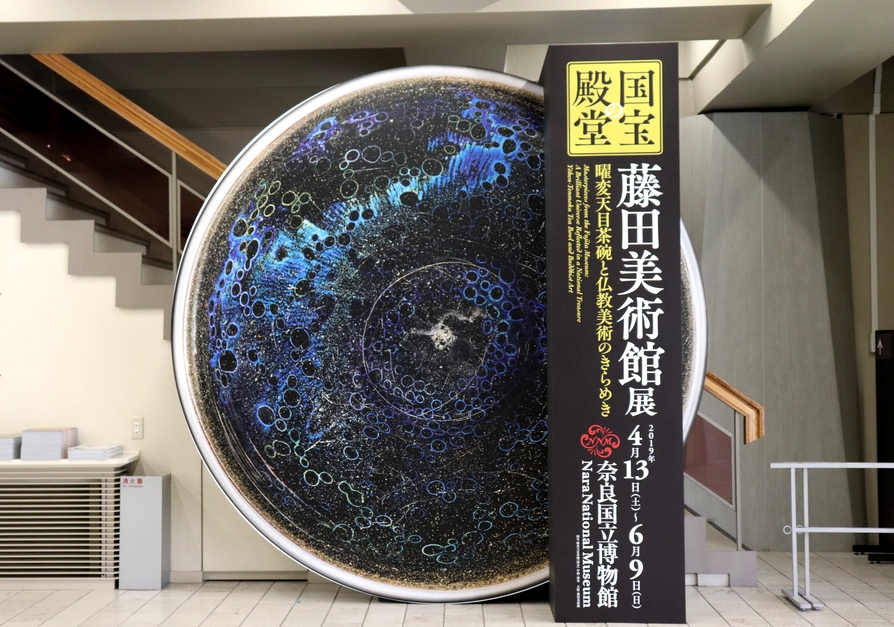
It is no exaggeration to say that this exhibition is full of the “all” attractiveness of the Fujita Museum of Art, as is described by the “National Treasure Hall of Fame” and the name of the exhibition. There are a wide variety of exhibits ranging from tea utensils, Buddhist art and archeological materials, but they are all rare and in good condition. I could not but admire the passion and enthusiasm given to the collection of old art by Suidari, Junza Fujita.
Although it is worth seeing just looking at the day-to-day changing sky in the special room, it is worth noting that the other exhibitions are unbeatable as well as the Fujita Museum of Art. It is said that if you look carefully at the good things, you will be able to train the aesthetics in the art appreciation, but by carefully looking at the collection collected over the life of one of the best collectors, Fujita Shinsaburo, your eyes will surely see your work Should be trained. Please taste the gem of the gem carefully by all means.
Exhibition information
Exhibition Name Special Exhibition "National Treasure Hall of Fame Fujita Museum of Art Exhibition"
Venue Nara National Museum Higashi Shinkan / Nishi Shinkan Period April 13 (Sat)-June 9 (Sun), 2019
Official site