













Project "Museum Start Aiueno" (hereinafter referred to as "aiueno"), a project to support children's museum debut, in which nine museums in Ueno Park are associated. Last time, I sent an experience report that I participated in one of the "Aiueno" programs, "Aiue's Weather". ( Click here for the experience report)
This time, I would like to ask Mr. Tatsuya Ito, Project Manager of the management team and Associate Professor of the Faculty of Fine Arts, Tokyo University of the Arts "What is the merit of children going to art museums and museums?" I would like to talk about "children and museums" such as "What is the biggest tip to let you do?"
The interviews that have become a great deal of learning and surprises are not limited to just watching the art with the children, and the teaching tips are also packed with content that encourages you to go to the museum with children!
Ask the project manager Mr. Ito. What is required of the museum now?
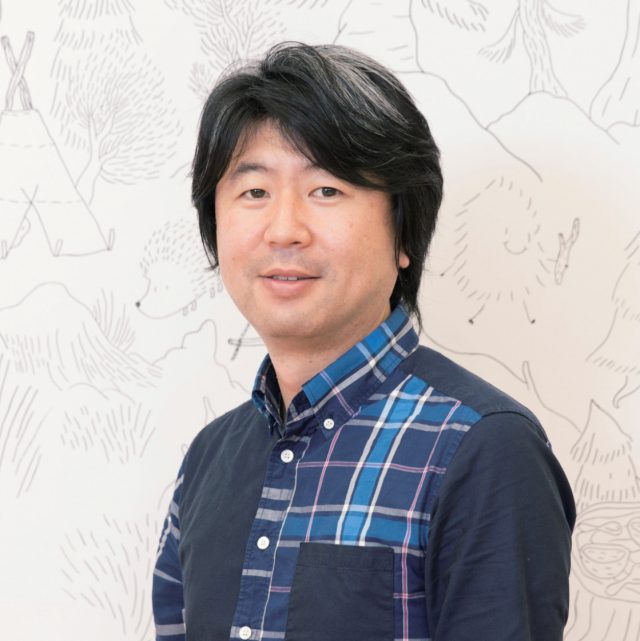
Tatsuya Ito, Associate Professor, Faculty of Fine Arts, Tokyo University of the Arts, who asked for a story
―― I participated in the program of "Museum Start Ainoeno". I felt that there are a lot of lower grades to middle grades in elementary school. Is there a feature in the age group of the program participants?
Italy "of Ayuue" is basically to the program from the first year of elementary school until the third year of high school. "Aiue's weather", which supports museum debuts with children, is often referred to as "debuts", and there are many elementary school students in the first, second, third, or seventh grade. There are various other programs, and there are programs for middle to upper grades.
-Like Ueno, a place where nine museums gather in one area is unusual on a global basis?
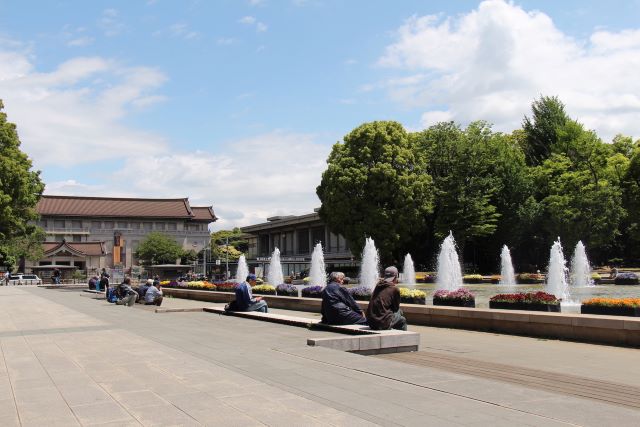
Ueno Enshi Park with nine museums, Image courtesy of: Museum Start Aiueno
There are places where the I Art Museum etc. are gathered, but places that are concentrated in one area such as zoos, libraries, music halls and universities can not be confirmed except Ueno even if you look at the world so far Ne. It is quite unusual that there are such cultural facilities within the range where you can walk around, so I think that if you take advantage of the benefits of this environment, you will have a very fulfilling museum experience.
――There are many opportunities for children to experience art, such as workshops and events that use art in various places, but what do you think is the experience that can be achieved only by the museum now?
If, for example, the education of the current generation's parent generation is "the education to answer and get there", I think that the current children need "the education to find the answer" Hm.
"The ability to find a conviction" refers to the spread of the Internet, global values, diverse religions and cultures, etc. It means the ability to find a solution that everyone can understand.
Knowing that children have different perspectives in order to be able to find convincing solutions, and knowing the diversity that one's commonplace is not the commonplace of everyone, even if differences are created I think it will be important to understand and interact with the difference rather than deny it.
And the places where you can experience them are the museums, such as art museums and museums.
Because the museum is not a place to check correct or incorrect answers, for example, it is important to recognize people who have an opinion that is different from that of many people.
It's also a place where you can share what you see and feel with others. In other words, the experience at the museum can be made equal to everyone, without any barriers such as position, age and race.
――You can experience at the museum that there are many ideas and cultures beyond nationality and gender.
Well Italy. Children will meet more people from now on and the more they communicate, the more their values will be updated. Whether or not the child has the ability to affirm and accept different environments and values while communicating with diverse people is very important for living in society in the future I think that it will become an important force.
What is the benefit of going to art museums for children?
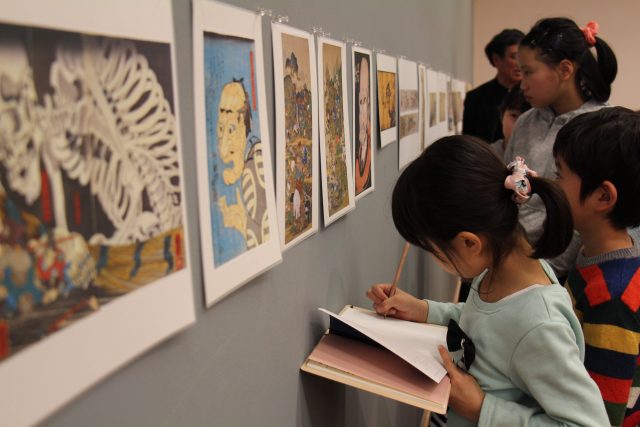
Image courtesy of Museum Start Aiueno
-For children, what do you think are the benefits of going to museums and museums?
Speaking to the extreme, the body is made of what you eat and drink. I think that's the same as that.
The way of thinking and mind are also made by seeing and hearing. What do you see, what do you listen to, what kind of communication do you do?
As well as eating well, I listen to music, meet people in various environments and see and listen to various things without bias. Art is also one of the important nutrients in it.
What various people think, form, and leave has meaning. There is still a desire to tell someone something. Touch those parts and, if possible, talk with adults if you feel, "What does that mean?" And sharing and affirming what you saw and felt with your child, saying, “I see that way,” for adults. In such communication, children's self-esteem is nurtured. That is why the museum is recommended as a place for flat communication between parents and children.
Art museums that go to baby time, art museums that go to elementary school students, and art museums that go to adults alone can experience different things depending on the occasion, even if the pictures on them are the same. Going to the museum with your parents and family when you are a child may be the most important nutrition to create a foot of communication.
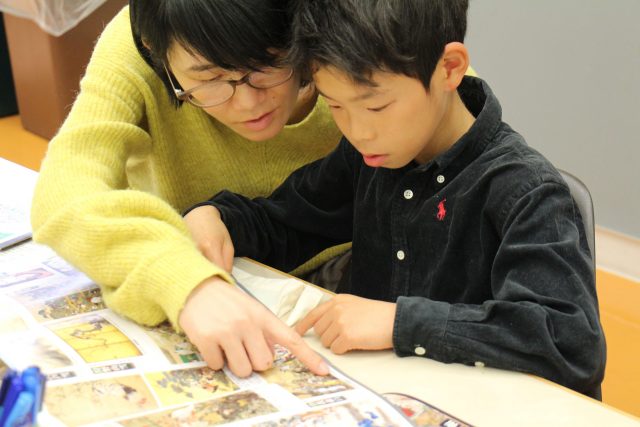
Image courtesy of Museum Start Aiueno
―― I think it would be better to visit the museum as a parent and child, just by listening to the story.
Please eat with Italian food by force! If it is said that the child will want to detect and refuse (laughs).
-I wish the parents were able to guide you well.
Italy Well, it may be raised by skillfully "escort". In other words, it is important for parents to have fun with their children.
"Museum Start / Museum Start"
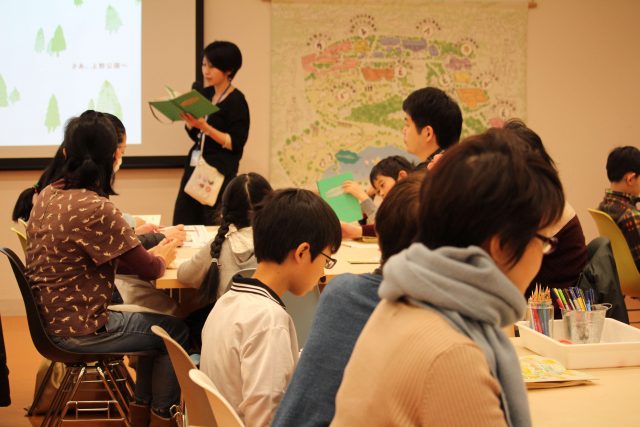
Image courtesy of Museum Start Aiueno
―― I thought that "Aiueno", which gives me a chance to make a museum debut, would be perfect for parents who are concerned about whether they can expand their children's interest as well as me.
I think that there are many people who don't know how to enjoy the I- Museum with their children. "I will go to the art museum because there is a repeater program of Aiueo on this day!" Or invite me to participate in the program and return home with "Hint", "If you look at this you can do it with your family." I think that the museum experience in parent and child will become more fun if it is given.
In fact, the word "Museum Start" in front of "Aiueno" has a desire to make it debut as Aiuei and have parents and children enjoy the museum more and more.
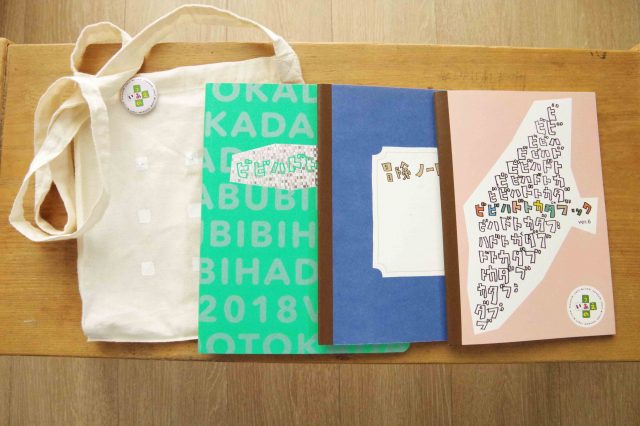 A museum start pack that will be enjoyed when visiting museums, which will be distributed when participating in "Museum Start Aiouino"
"Museum Start" is inspired by "Book Start". A book start is an activity that presents a "picture book" and a fun "experience" to open a picture book at the time of infant checkup.
The bookstart website says "books with your baby!" It is not a "read book" that reads a picture book with a baby, but a "share book" that means to be together. The word "Museum Start" was added because it wanted to deliver the experience of the museum to all the children like this book start activity.
70% will be decided at the preparation stage
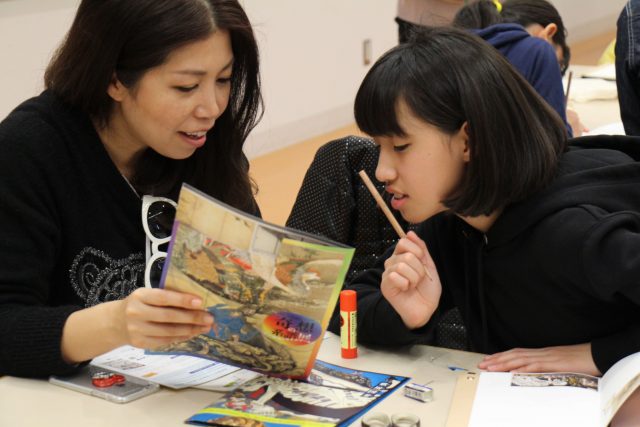
Image courtesy of Museum Start Aiueno
-Actually, I think that when you go to the museum there is something like the role of a parent. Do you have any tips or advice for calling with your child?
Italian first "from beginning to end, not look all at the same pace" or would be that.
Adults seem to see a lot of people one by one from the entrance to the exit. But children are tired when they see everything. It is because not all are interested.
I think this can also be used when visiting as a family, but when children come to the art museum in the "Aiueno" school program, they will walk from the beginning to the end of the room all at once. This is to check with the children how many works there are and how large the exhibition room is. At the same time, while walking, "Oh, there was something I wanted to see!"
And after that, I'm going back to the work that the child was most interested in. The point is to choose "a picture that you wanted to see, something you wanted to meet, a work that you care about" and have a closer look.
-I see, I wonder if I can not see the end, but how long will it last? There are times when I feel even with adults.
Ino , if you enjoy one or two works without looking at it all, that is enough. That should be enough for the children's mind.
And one more important thing is the time spent by parents and children before coming to the museum. It is about 70% of the degree of fulfillment on the day that it is time to talk with a child that "I will go to see this kind of work at the Sakai Art Museum next Sunday!".
--Huh! I thought it would be better to show it in a white condition. It is important to emphasize the impression when you first met your work.
I 'm not so. It is important to prepare in advance. It's the same as traveling, it's time to discuss and decide your destination together and take a closer look at what you want to see, enriching the day.
Transfer the tips to further enhance the day!
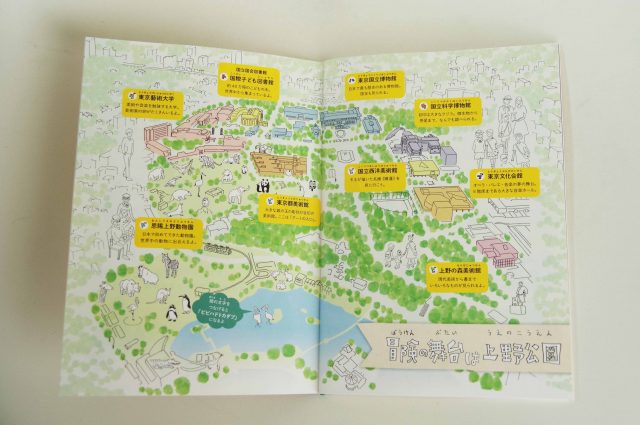
A map of Ueno Park and "Bibihad Tokada Book" packed with the highlights of each museum
There is that Italy, for example, is distributed in the "Ayuue of" program "Bibi Had solved da book". The highlight of the museum and the map of Ueno are published, but I think it is good to watch those things carefully in advance with the parents and children on the day of the day.
In addition, a lot of information comes out when you search the website about the exhibitions and exhibits that you visit. If you look at such things together and say something like “This work seems to be drawn in the Edo period,” you can, for example, get the interest of a schoolboy who likes history. In the lower grades, I would like to expand my interest by introducing things related to my work, saying, "In this exhibition, it looks like youkai."
The more exciting the children are in these conversations and the more they wait for the day, the more the experience on the day of visiting the museum will be more fulfilling. It's totally different whether you're looking forward to going to the museum.
Then, on the day, when you enter the museum, walk to check the size of the exhibition room as I mentioned earlier, and search for your favorite works found on the most interesting things and websites, etc. I will start from the beginning.
--- Is it sudden?
It is Iiki. If you keep walking behind your parents at the entrance of the exhibition room at your own unintended pace, and see the picture as "next-yes-next", the children will get really tired. Aim for the picture you want, and it's good to go there first.
Or, for example, in the upper grades, it is interesting to look at and introduce favorites one by one in parent and child. Please tell me if you have a favorite picture in lower grades! Then, when I was given a picture, I asked, "Why did you bother with this?"
It is one of the important points to make sure that the children do not have the feeling of being brought to the museum.
Use the viewing tool to taste the work thoroughly
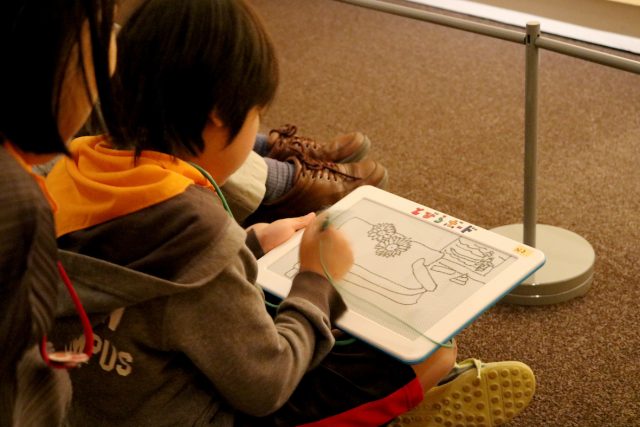
Image courtesy of Museum Start Aiueno
-For example, there is a viewing tool called "Tobira board", which is lent out at the entrance to the Tokyo Metropolitan Art Museum. It is a magnetic drawing board that can be erased and drawn freely, but I felt that children's eating habits were different even with such a viewing tool.
If it is a long child, it takes about 30 minutes and draws it. It doesn't take so many minutes for adults to look at a piece of work over 30 minutes, but with such tools, children can face the work for a long time.
-At that time, is it better to watch the parents?
It is still important to follow the children's interest at Ikin's pace. It is not possible to draw more than what you see, so everything that you draw is your child's language. Please watch closely until the picture is drawn up, that is, until the child has finished interacting with the work.
Parents are hard though (laughs).
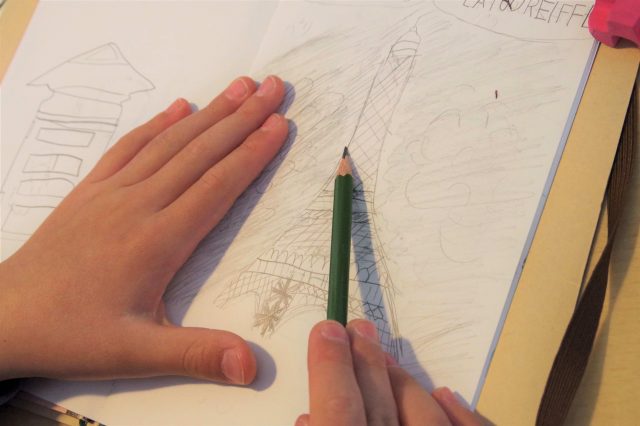
"Adventure Notes" distributed in "Aiueno"
―― In the "Aiueno" program, we received "Adventure Notes" where you can freely write your impressions and replicas. If you leave Ueno and go to other art museums and museums, it will seem different in how you face the work if there are notes.
In the Italian exhibition room, a child who likes to draw may be a notebook, and if it is a child who likes to talk, I would like to have parents and children talk in front of the picture while paying attention to manners.
In addition, I think that I will leave an important day for the child when I look back after a long time, even if I write down the notes or just put a ticket after returning home.
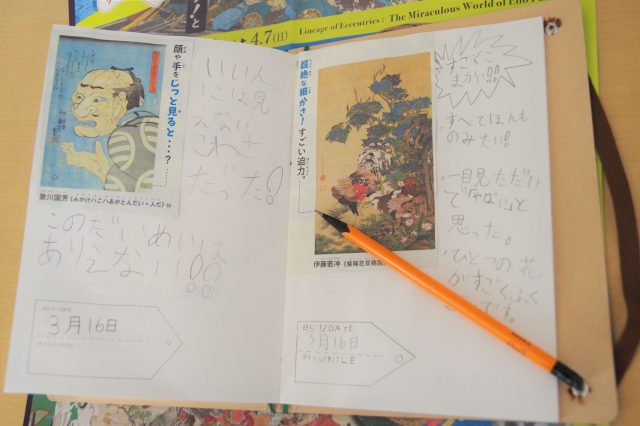
――Aiueno has a mechanism to show adventure notes on the website. Have you seen a lot of notes until now and do you have any suggestions for writing?
I think it would be fun to cut and paste the flyers of the I exhibition, etc., but everyone is really unique, and I think that the way of use of each child is the best rather than the recommended writing method.
Every kid is watching the work well, but it is just really amazing! I think. When I was looking at a notebook, I felt that it was fun to see the picture and draw a note, and that it would have been very enjoyable, and I feel that this day probably remains as a good memory .
--- There was a person who just came! And my parents will be happy.
After the debut, the point is accompanied by a parent
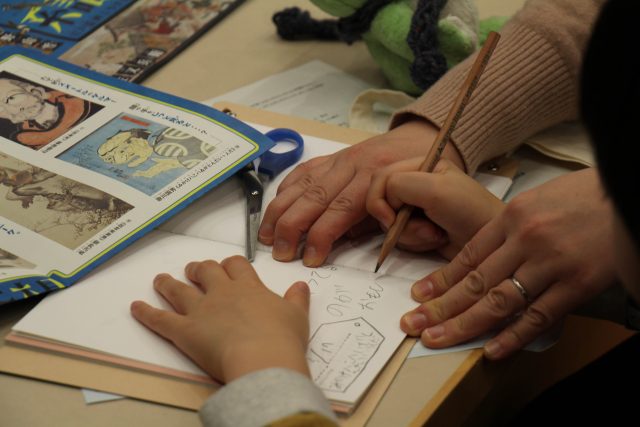
Image courtesy of Museum Start Aiueno
-Last but not least, there is a page on the "Ai Ueno" website that introduces the "after" of past participants. Are there any important things or tips to keep going around the museum?
After all, it is parent companion to be the key. It is not easy to come to the museum just with the children's motivation.
In that case, one day is a day for children and for parents as well, and it is not a relationship of "teaching side, teaching side" but that "adults can learn together", and to the museum You may not be able to continue going out.
"Museum Start Aiueno" that there are many applications every time. The program will be renewed in 2019. I would like to tell more children the fun of the museum experience. Thank you very much for your very valuable talk.
【Itou Tatsuya】
Specially appointed associate professor at Tokyo University of the Arts. Born in 1975. Graduated from the Tokyo University of the Arts, Graduate School of Arts and Art Education. He works as a project manager in the Learning Design Project “Museum Start Aiueno” and “Tobira Project” in which nine cultural facilities accumulated in Ueno Park are linked. In addition, we act as adviser of various cultural programs about citizen participation and education in cultural facilities of the whole country. Co-authored "Social design project created by museums, universities and citizens" (blue hall).
【Overview of Museum Start Aiue】
Museum Start Aiue's management team (Tokyo Metropolitan Art Museum × Tokyo University of the Arts)
Organized by: Tokyo, Tokyo Metropolitan Art Museum, Arts Council Tokyo, Tokyo University of the Arts
Co-sponsored by: Ueno no Mori Art Museum, Onmy Ueno Zoo, National Science Museum, National Diet Library International Children's Library, National Western Art Museum, Tokyo National Museum, Tokyo Culture Hall (in order of the Japanese alphabet)
Photograph / Ikumi Kimura