













"Wow, Japanese People! Wow ?!"
Do you know a comedian called "Jason David Danielson" who is famous for his lines?
As he says, those who learn Japanese as a foreign language are likely to have many hardships and questions that we may not notice.
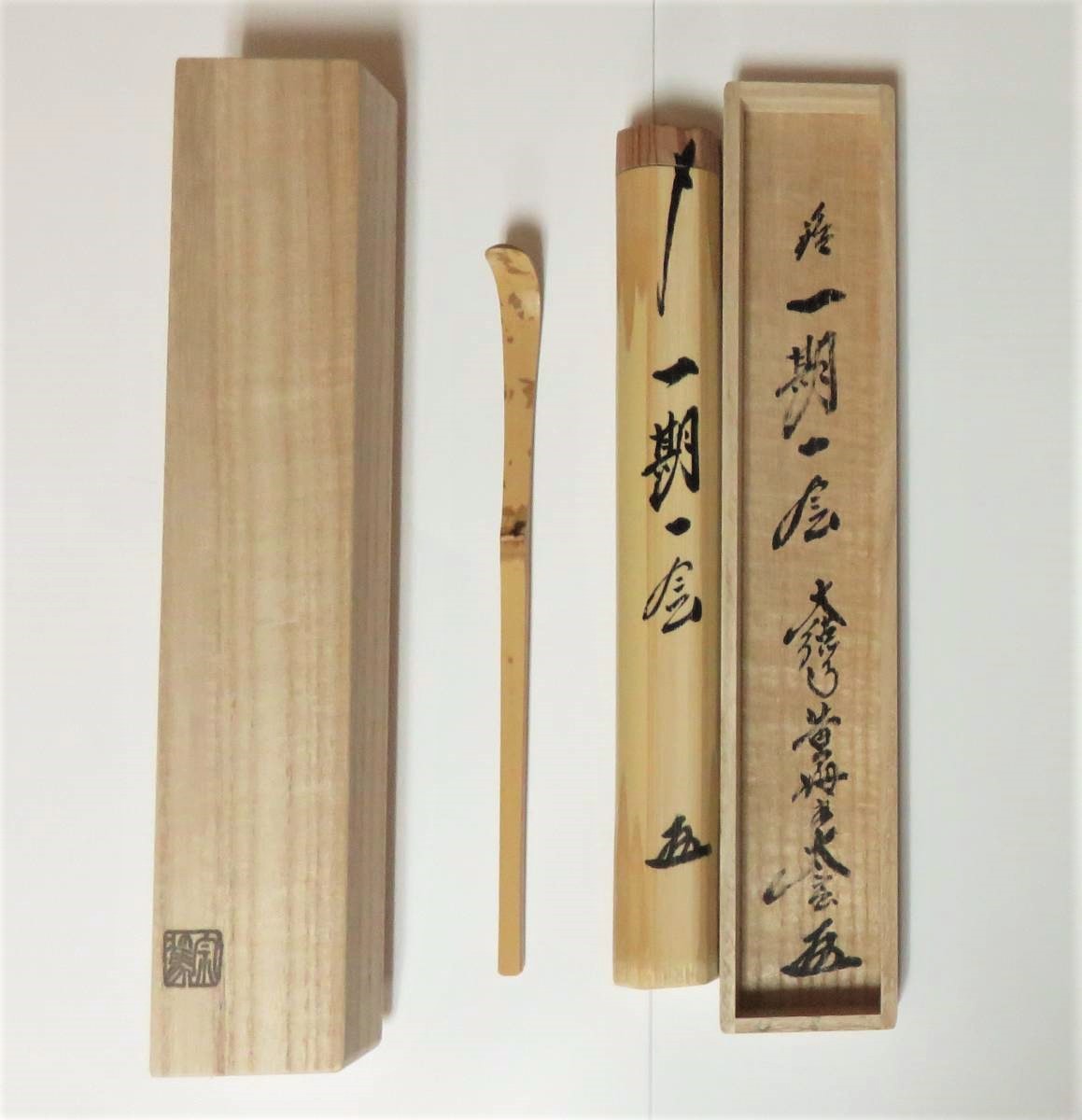
As I mentioned earlier in the story of "Mei", when practicing tea, "What is the name of this chashaku?" "It's a dew ball (mainly seasonal words)." In addition, there is practice of receiving and answering with both the main customer.
When acting as a guest, the side asking for the inscription. When you are doing the point, you will be the answerer of the inscription and will experience both roles in the lesson.
However, it seems more difficult for local people who are not good at Japanese to know the inscription of the tea ceremony than to learn general Japanese.
This time, we talked a little more about "English, Japanese and inscription".
Let's ask Mrs. Ono, the tea master who had been learning the tea ceremony for about two and a half years when her eldest son Liam was young, based on her experience.
Tea Ceremony Term, Opinion & Sound Problems
Sentences and photos / Akiko Ono
I think everyone has heard the word "Ichigo Ichie".
〝This moment will never come again. Even if you have a tea ceremony with the same friends, the same tools, the same place, and the same time, it is impossible to repeat the same time with exactly the same conditions and feelings, so this moment It is a teaching with the thought of valuing.
This word is often used in the inscription of chashaku. Because it doesn't matter the season, it's a little different from the hard Zen language. "Ichi-go-ichi-kai" is a word that has gone beyond the world of Zen and tea and is now known to many people.
However, it is not easy for English-speaking people to remember this four-character idiom, which is easy for Japanese-speaking people to remember.
So, the first thing I tried was to have people remember the sounds as "1, 5, 1, 8 (Ichi Go Ichi Eight)" in relation to the numbers.
Words are difficult to remember unless meaning and sound are connected.
First, explain the meaning properly, and then have them actually pronounce it. After practicing many times, "Ichi Go Ichi Eight" becomes "Ichigo Ichie" and becomes "Ichigo Ichie".
Even if you don't learn Japanese, English-speaking people who are interested in Japanese culture often know simple Japanese words and words. For example, "Hello", "Thank you", "Goodbye", and "Nintendo", "Sushi", "karaoke", "cartoon", "Abeshinzo" .... I also remember the numbers from 1 to 10.
Among them, the inscription of the tea ceremony is taken from the seasonal words of Japanese poems and haiku, the verses and titles of Noh, and Zen words, so the heartbeat of Japanese culture is among the old words that are small, gentle, and full of poetry. There is.
The problem is how to get them to remember it.
Ah, it ’s tea.
Was it around the end of April as soon as I started attending the University of Hawaii? There was something like this when interacting with the students.
When I asked a student for his inscription,
"Fuyukodachi"
"Eh? Even though it's spring, Fuyukodachi (winter grove) ???"
Couscous and the students are laughing at me astonished. However, he was very serious.
It turns out that it would be strange for Japanese people to choose the winter inscription in the spring season. However, in a foreign country where Japanese hurdles are high, the existence of an inscription is difficult in the first place.
If it is an inscription that does not matter the season, such as "Ichigo Ichikai," once you remember it, you can use it anytime. But that alone is boring.
Therefore, in practice, we practice saying different "inscriptions" every time.
If you know the inscription and become aware of the changing seasons, you will naturally deepen your understanding and will be able to choose words properly.
That's why the University of Hawaii's Mizuya wall lists monthly representative inscriptions, with seniors teaching juniors or students who can read Japanese to students who can't.
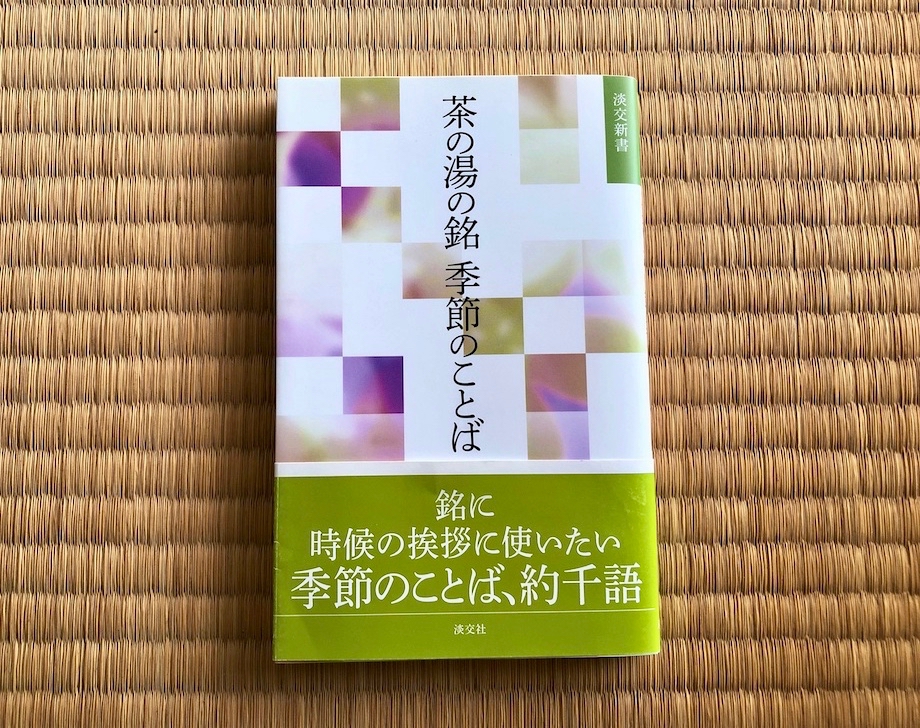
Another thing I would like to touch on is the difference in feeling between English and Japanese.
When the tea ceremony jumped out of Japan, various languages began to come and go in the tea ceremony.
Lessons in English-speaking Hawaii are no longer required in Japanese.
However, the power of Japanese words and idioms is "unique," and even if you say the same thing in English, the impression you get is quite different. I feel that the tea ceremony conversations can be exchanged in English, but I have a slightly different impression of the "inscription".
"What is the name of the chashaku?" And "What is the Name of the Chashaku?"
In English, the inscription is lumped with Name.
However, the inscription is rather an "expression" and emphasizes the "meaning of itself". On the other hand, the name "Name" is the name of how to call the object.
Therefore, these questions and answers are deeper in Japanese. This is because when you respond in Japanese, the outline of Japanese culture emerges in beautiful Japanese along with its deep "meaning".
When I look straight into the other person's eyes and see the students interacting in the Japanese they have learned, I feel "Ah, it's tea."
Dongfeng is "Come Here" ?!
One of the inscriptions suitable for July to August is "Aogochi".
Known as "Day of the Ox", which is a habit of eating eels, there are actually four times a year.
In the summer, it takes about 18 days before the fall, and this year it is from July 20th to August 7th.
The wind that blows from the east at that time is called "blue eastern wind". Originally, the wind that blows from the east in early spring was called "Eastern wind", and this season it was called "Blue eastern wind" because it blows through the green leaves in summer.
When my son was still in elementary school, I had been learning tea for about two years, probably because of my appearance.
He was only educated in English and couldn't speak Japanese at that time.
I know that there is always an inscription question in the lesson, so I decided to give the answer in advance. Our parents and children were practicing in advance in the car heading to the rehearsal hall in a "weekly routine" rather than a "daily routine".
What kind of inscription to teach ... A word that even children can understand and easily remember. And the inscription that suits the season.
It was around the time the plum blossoms were in bloom, so I chose the word "eastern wind".
First, I explained the meaning of the words to my son and told him good.
"'Eastern wind' means the wind that blows from the east in early spring. You see, mom always calls you here and there? (Beckoning gesture) I'll call it short.'Here' Okay? "
"OK!"
Then, at the rehearsal hall, it was time to make an inscription.
"What is the name of the chashaku?"
"" Here "... Degozaimasu ..."
"Oh, that's a good name! What does that mean?"
"... (silent) ..." Come Here "... Degozaimasu ..."
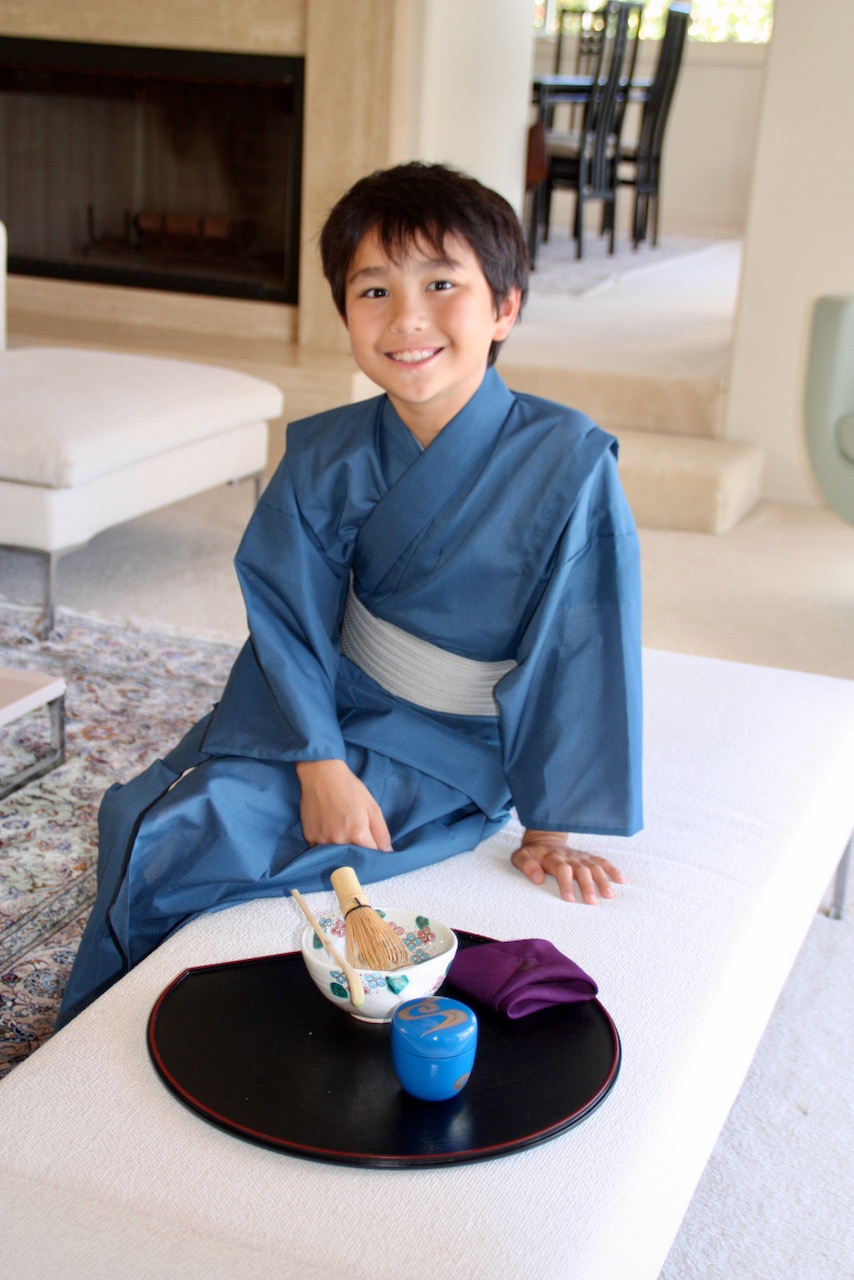
I sweated a lot.
I explained the meaning properly at the beginning, but I had to say the important words in the car many times, and it was completely lost.
But that is also a good memory now.
At that time, I thought that it was a "one-on-one meeting", and had my son's tea as a guest.
I don't know when to say "I want to stop practicing" about young children. "This puff today may be the last." With that in mind, I had a small hand pressed the light tea and drank it.
This was very, very grateful as a mother.
That tea is no longer in my body.
But the memories still bring me a smile and warm my heart. And it is also a vital force for me to make tea.
I am still very grateful to Dr. M for enthusiastically instructing my son.
(Continue)
Read from the beginning → What is the tea ceremony to enjoy in Hawaii, the island of everlasting summer? [Hawaii news from the once-in-a-lifetime meeting 1]
2nd → Color the tea ceremony with Aloha spirit and ingenuity [Hawaii news from the once-in-a-lifetime meeting 2]
3rd → What is the situation of Hawaiian tea masters' kimono? [Hawaii news from the once-in-a-lifetime meeting 3]
Ono Akiko
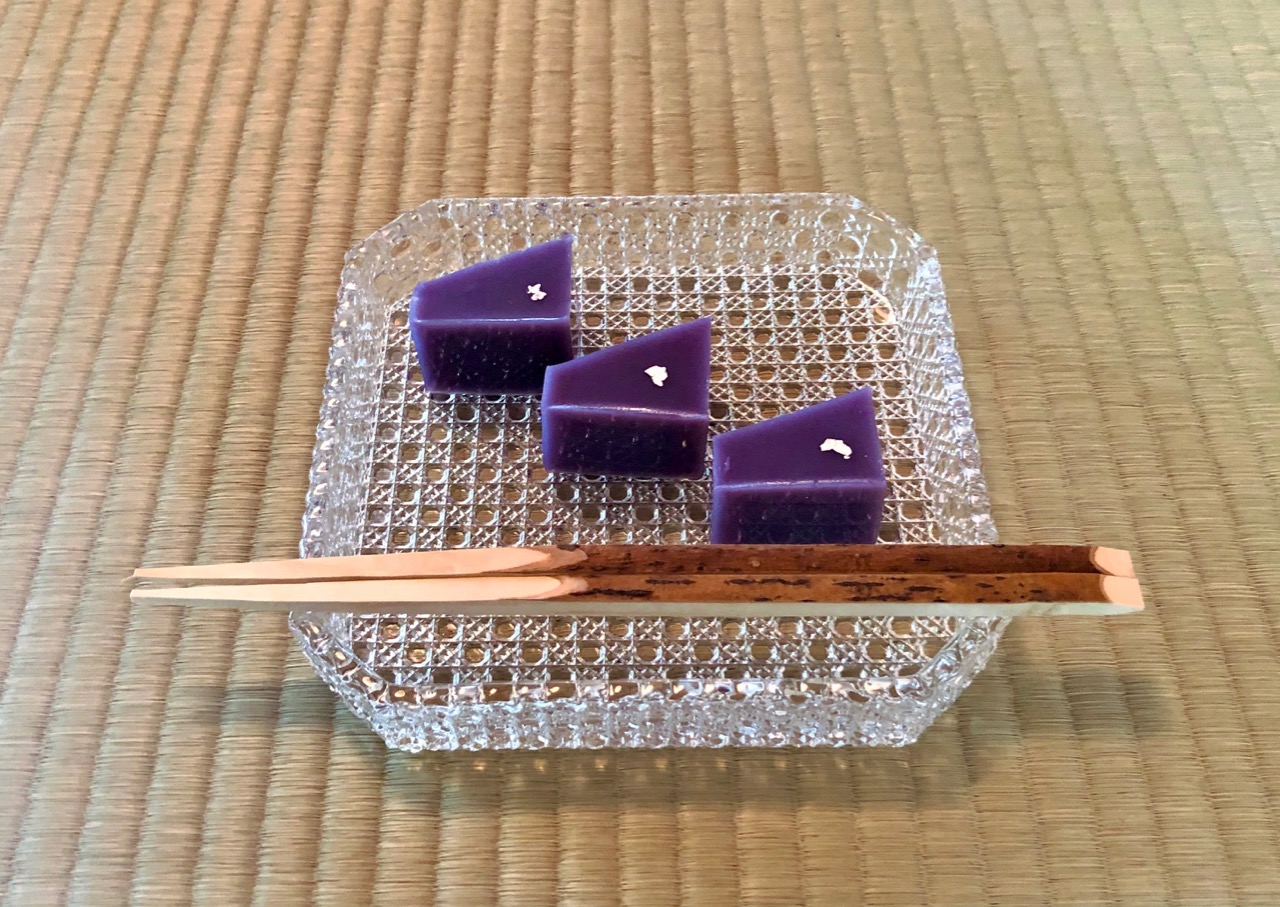
Born in 1965. After graduating from International Christian University, after working for Morgan Stanley Japan Limited Securities Company, obtained an architectural interior design qualification from the Inchbold School of Design in London. He moved to Hawaii in 2007 and is currently a lecturer at the University of Hawaii at Urasenke Tea Ceremony. Focusing on the tea ceremony in Hawaii, he returns to Japan several times a year and enjoys Japanese culture globally.
(Sentence and photo: Akiko Ono / Composition: Itsuko Ueda)