






The Roots of Sara Soba Date Back to the Edo Period
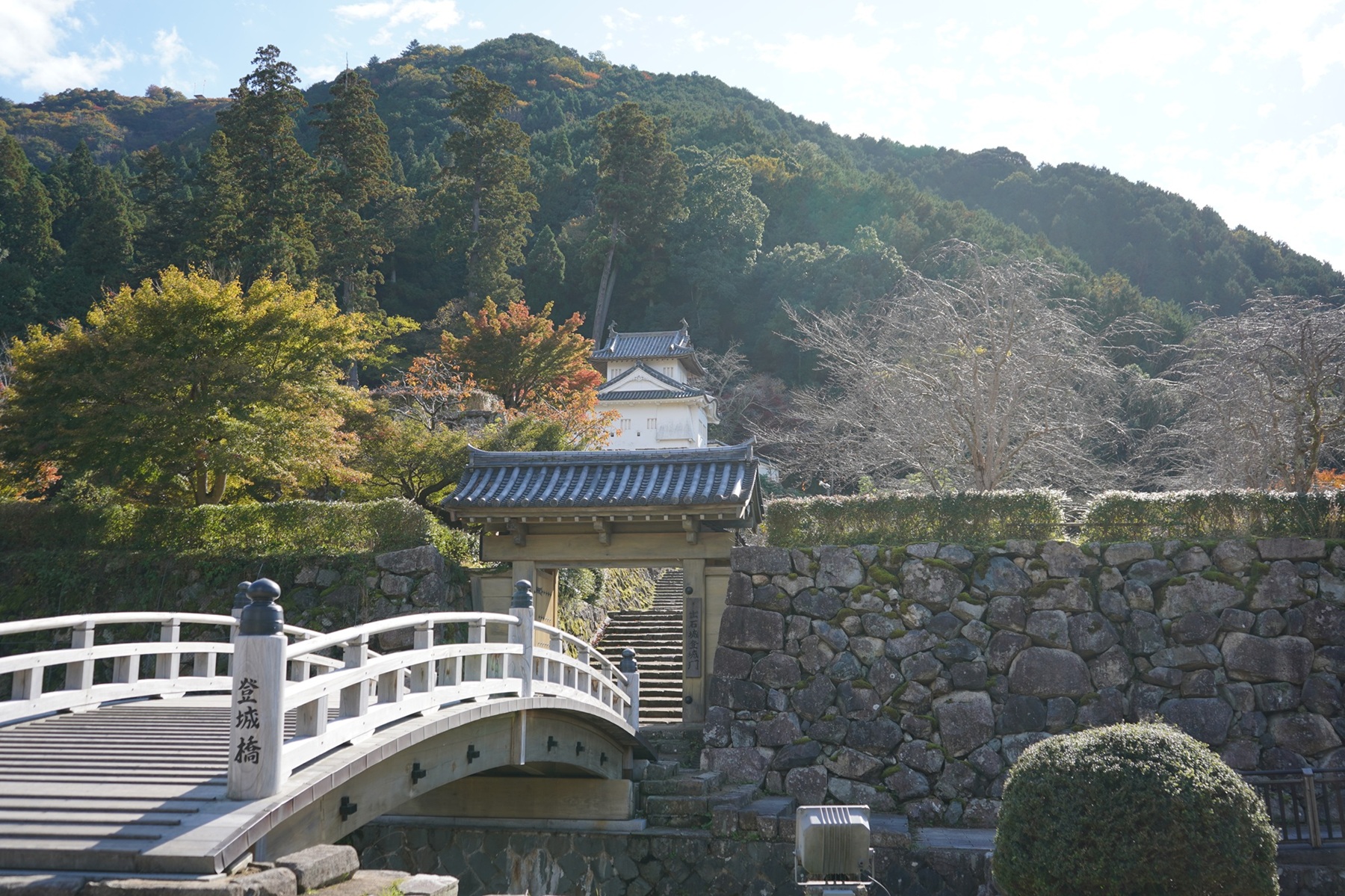
Izushi, often called the ‘Little Kyoto of Tajima (但馬),’ is rich in atmosphere. The streets feature shops with retro signs, giving the impression that time flows slowly here… It is also blessed by nature, and if one is lucky, they may encounter the Oriental White Stork (konotori)*1.
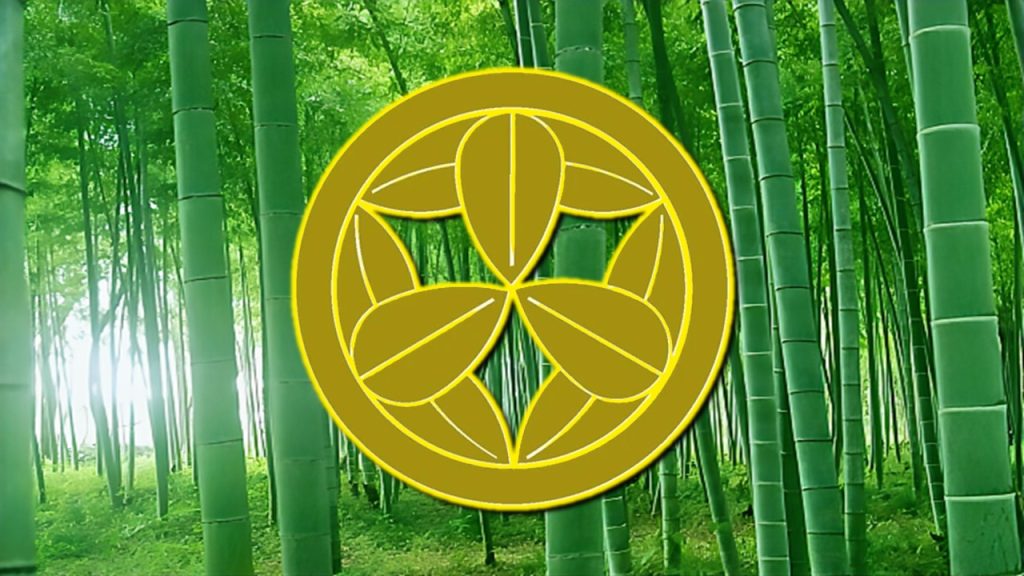
The connection between Izushi Town and soba began in the mid-Edo period when the Matsudaira (松平) clan of the Izushi Domain and the Sengoku (仙石) clan of the Shinshu Ueda (信州上田) Domain were relocated through a land exchange. Since the Sengoku clan brought soba artisans with them, their techniques were passed on, leading to the birth of Izushi Soba.
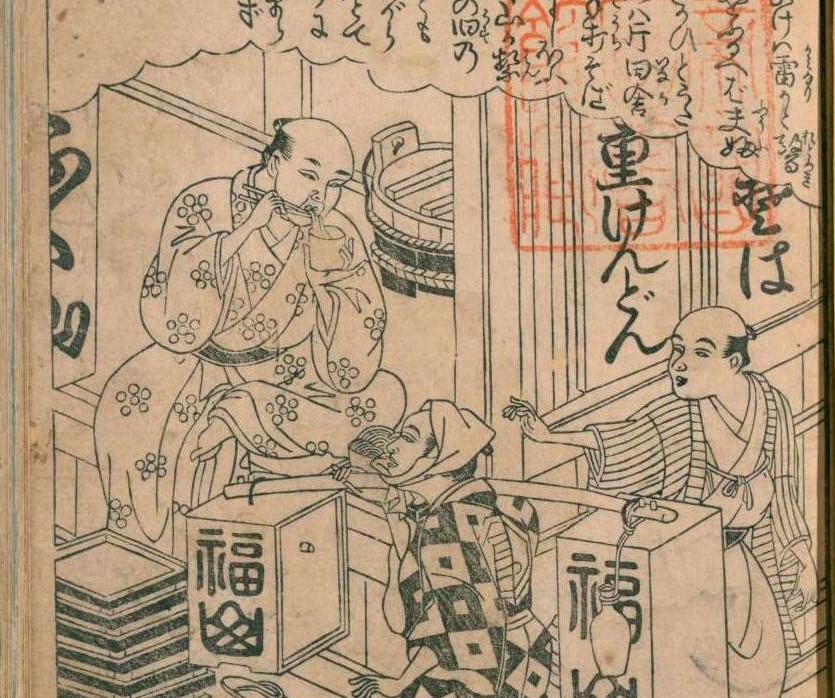
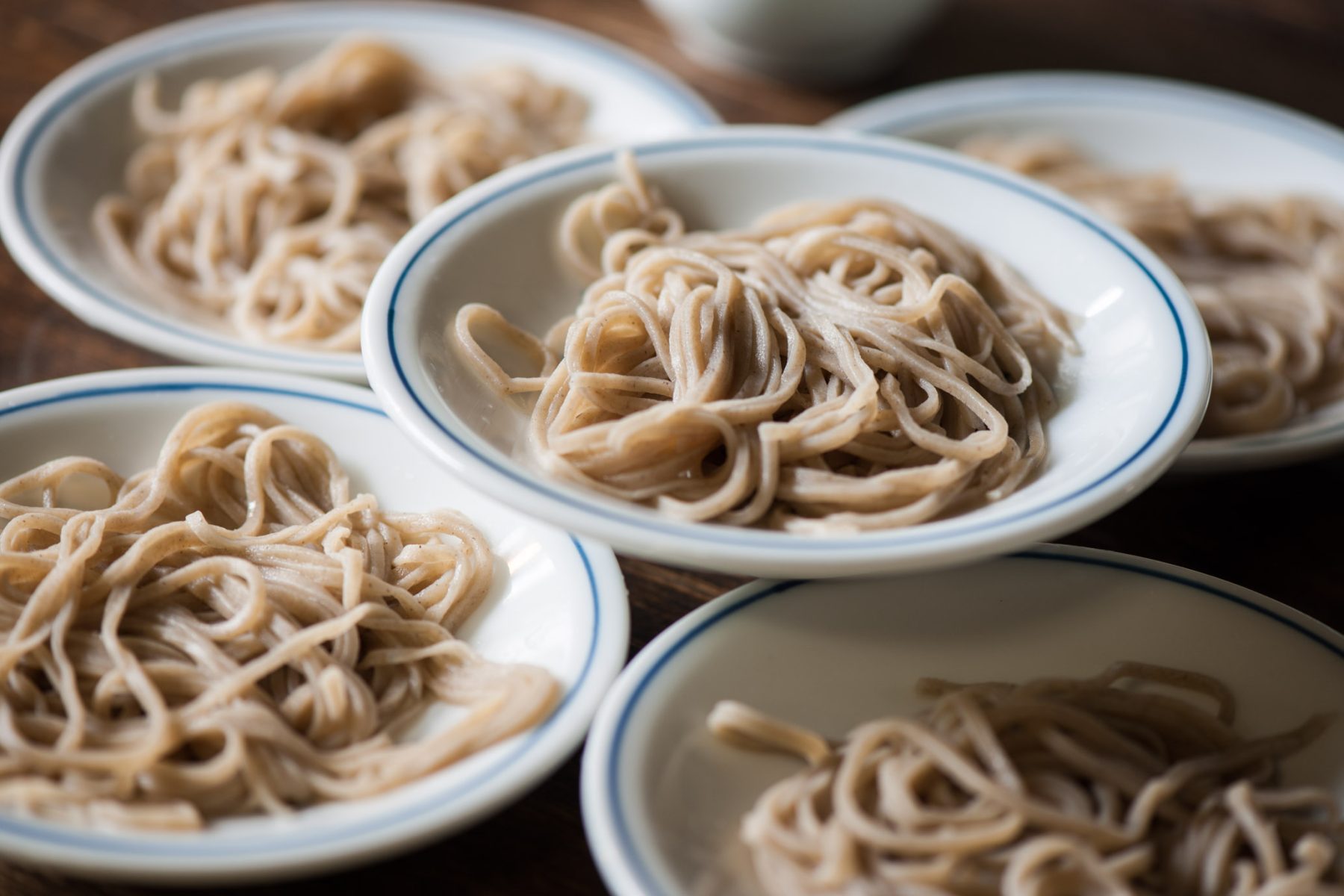
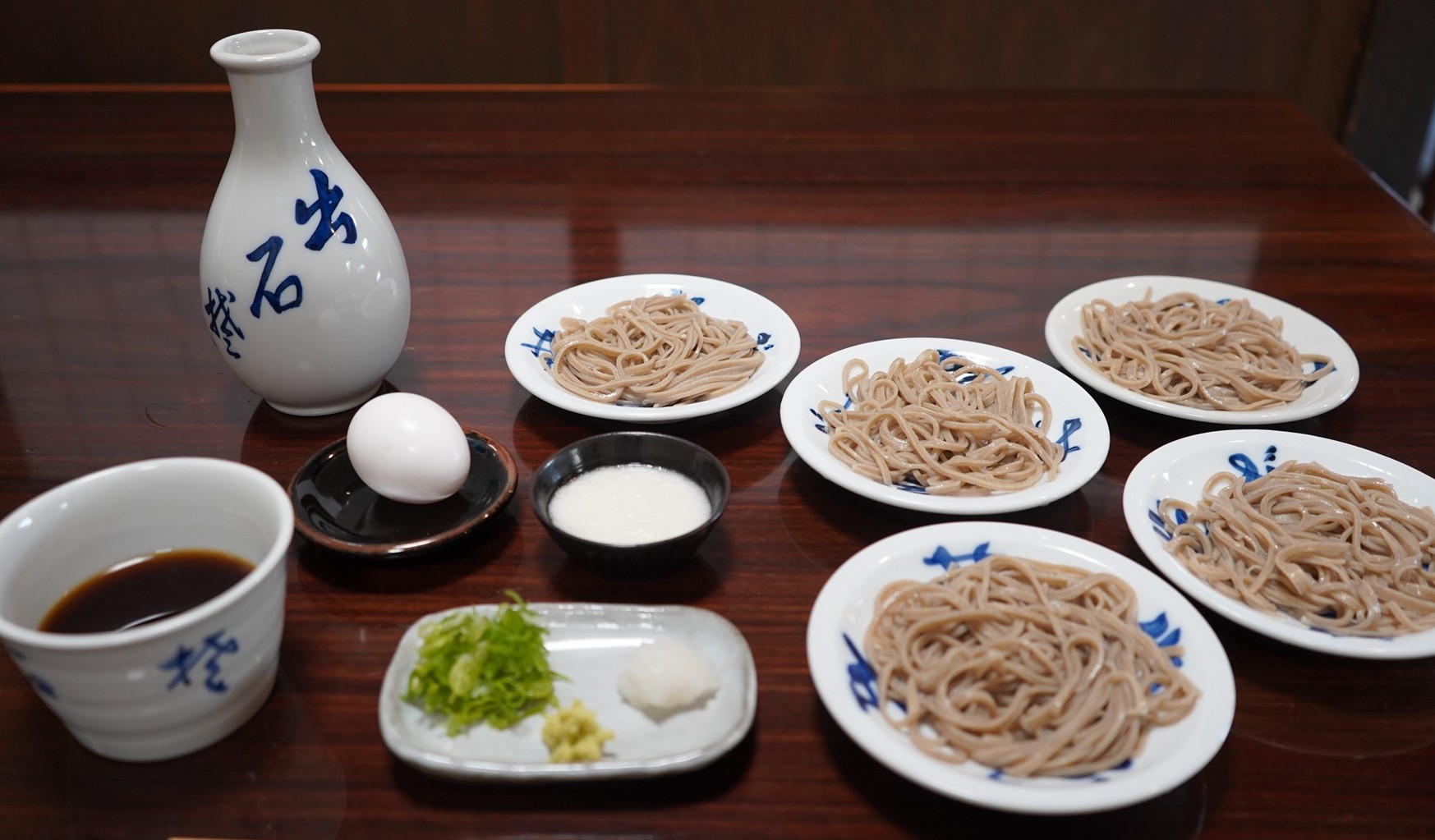
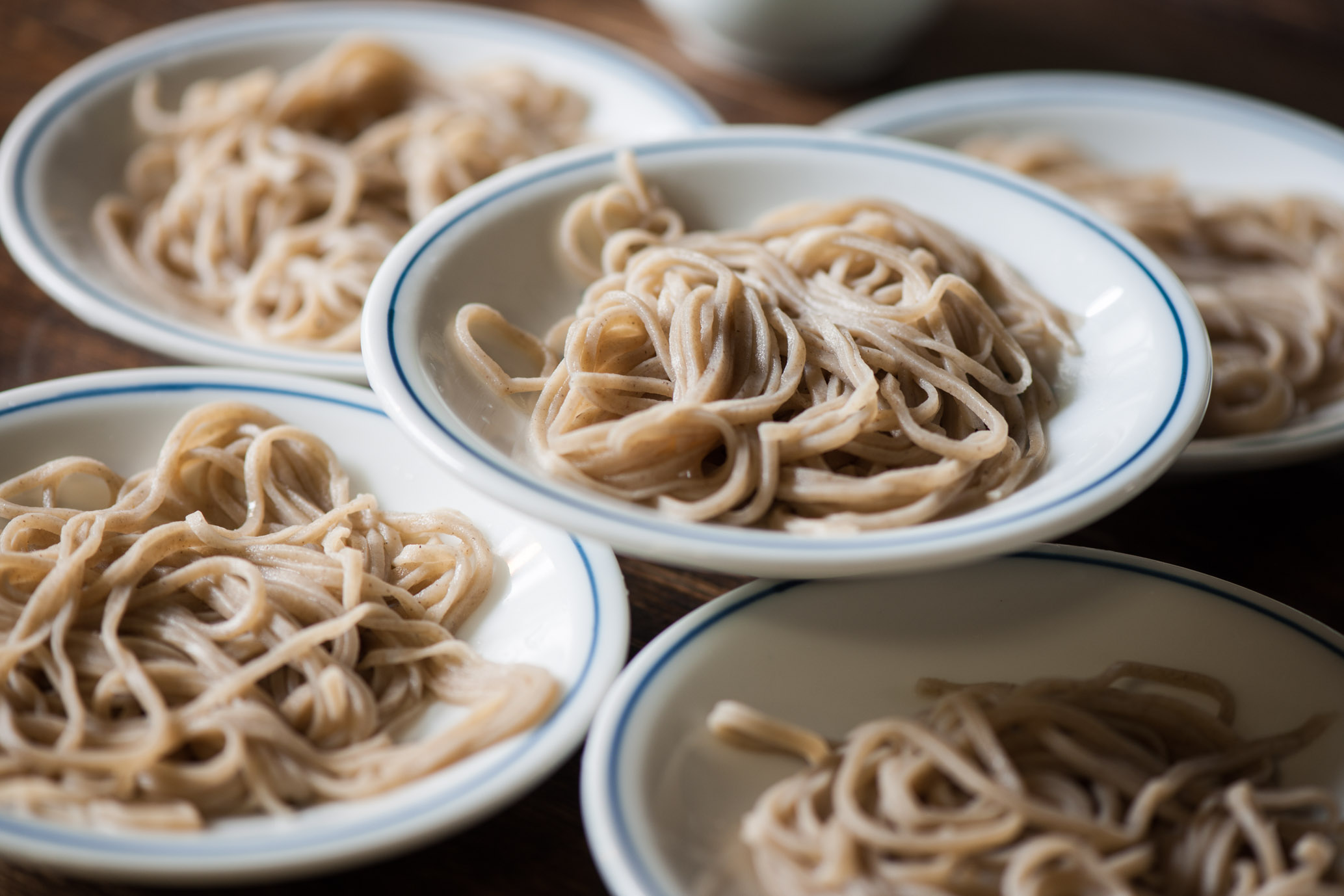
Towards the end of the Edo period, the innovative idea emerged to serve the soba on small porcelain plates (deshozara, 天塩皿), which were easy to carry when serving from street stalls. This is believed to have led to the unique style of dividing a single serving of soba across five small plates.
Exquisite Soba, Elevated with a Variety of Toppings
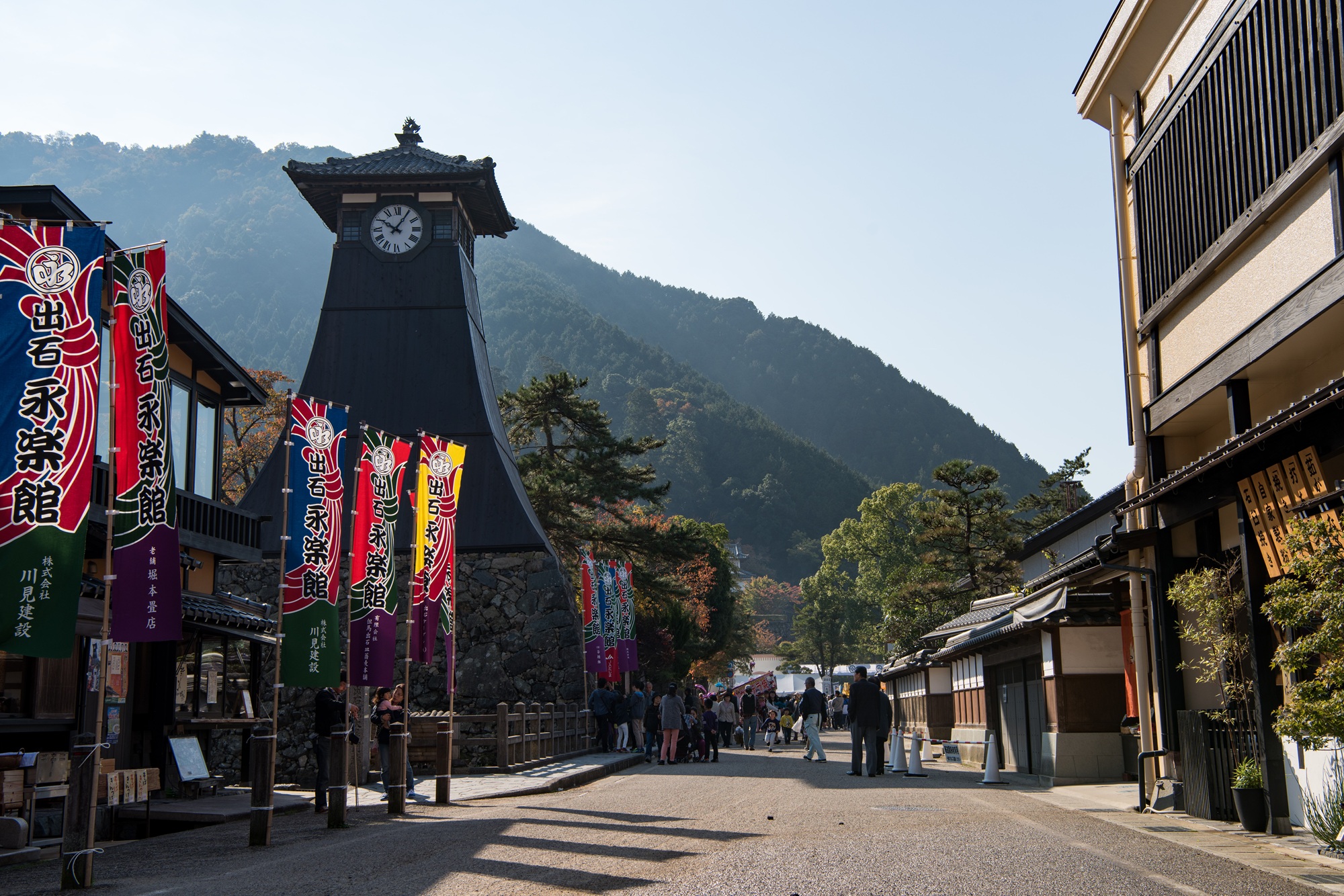
From the Shinkoro (辰鼓楼)*2, a beloved symbolic clock tower, I proceeded north along Otemae-dori street (大手前通り), turning right to reach Sobasho (そば庄) in approximately five minutes on foot.
The plates of glistening soba layed before me looked simply irresistible. The accompaniments included the soba dipping broth (tsuyu) in a carafe (tokkuri, 徳利), and condiments such as chopped spring onions, grated daikon radish, wasabi, grated tororo (mountain yam), and a raw chicken egg. As I pondered how to begin eating, a member of the staff kindly offered, “Please feel free to enjoy it exactly as you like. Just enjoy your soba!”
I first dipped the soba into the tsuyu and slurped it up. The texture was smooth and easy to swallow; I felt I could eat any number of plates. Changing the flavour by adding different condiments or the tororo was also enjoyable. Since extra servings are permitted, many strong-willed customers were apparently stacking up numerous small plates. I recalled the taxi driver mentioning that he could eat many plates himself.
A Community United by Izushi Soba
It is highly unusual to see 40 soba restaurants clustered together in a large city. Izushi Town, by contrast, offers the luxury of choosing between establishments or even enjoying a soba restaurant ‘crawl’.
Sobasho (そば庄), a renowned restaurant cherished by both locals and tourists, is currently managed by Kawahara Ichiro, the third generation of the family. The founder, his great-grandfather Shotaro, was originally a farmer but started the restaurant as the town’s first business to operate year-round. At the time, there were two other soba shops in Izushi, but both used soba harvested in the autumn and closed once their stock ran out, making them seasonal only. Subsequently, his father, Chihiro, who took over as the second generation, served as the founding representative of the Izushi Sara Soba Cooperative Association, dedicating himself to the development of Izushi Soba. Furthermore, Ichiro-san himself opened the Izushi Sobagakukan (出石蕎学館), a training school for professional soba artisans, two years ago, working hard to spread the technique to a wider audience.
Witnessing their commitment to building a network of collaborators rather than rivals, I sensed that the entire Izushi Town was thriving as a destination for soba.
Restaurant Information
Sobasho (そば庄)
27-13 Teppo, Izushi-cho, Toyooka City
Official Website
https://www.sobasho.com/
This article is translated from https://intojapanwaraku.com/travel/289398/