The behind-the-scenes story of 'BONJI,' double award winner at the Monaco International Film Festival
Culture
2025.08.10
The behind-the-scenes story of ‘BONJI,’ double award winner at the Monaco International Film Festival
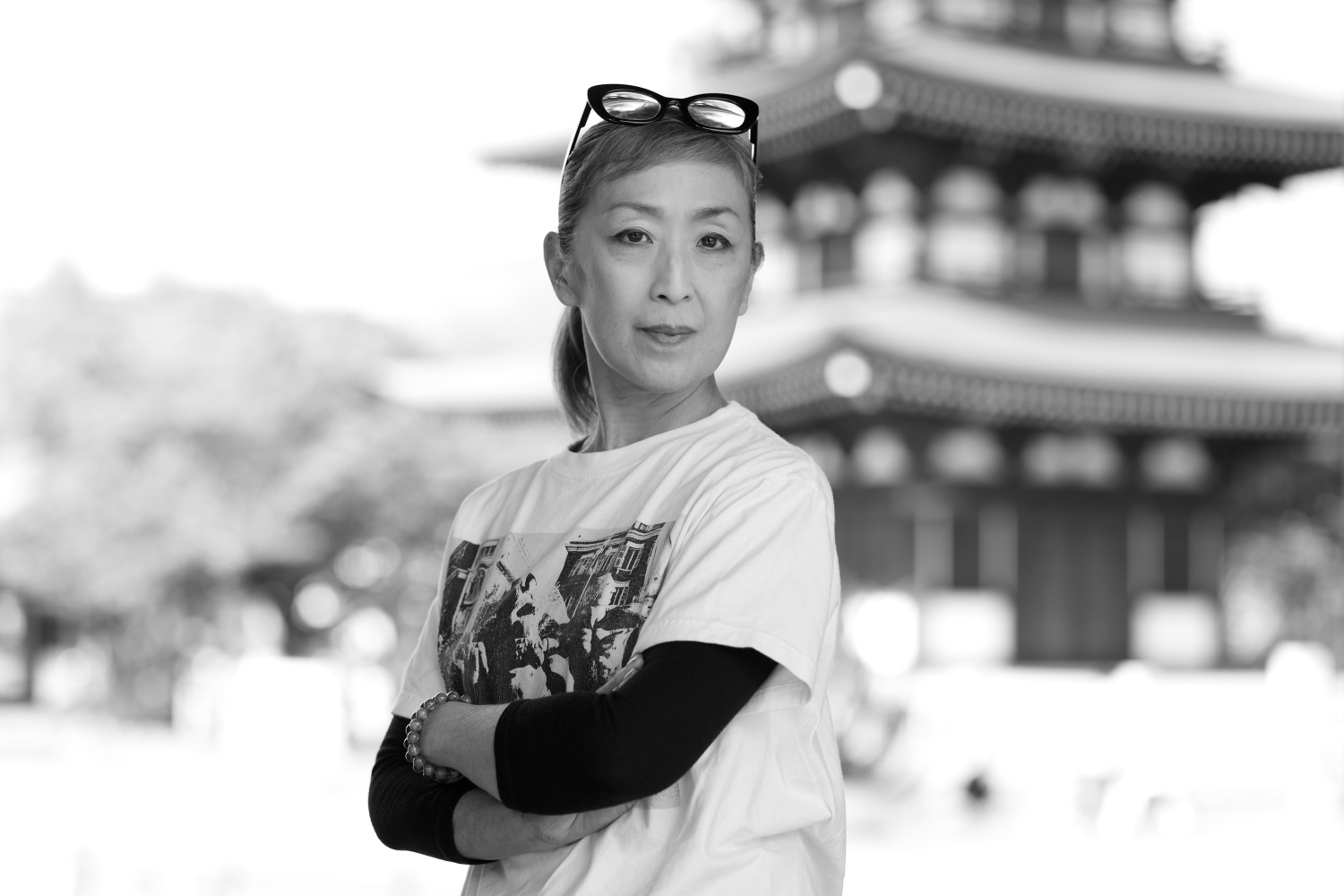
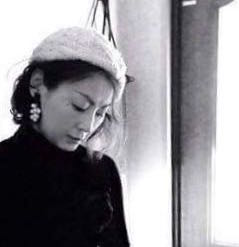
When I was a child, watching TV or reading picture books, there were always terrifying folk tales that made my body tremble. Yet, there was also an irresistible urge to peek through my fingers, a fascination with the frightening. The short film 'BONJI,' directed by photographer Ukibe Naoko (浮辺奈生子), perfectly evoked that very sensation from my childhood.
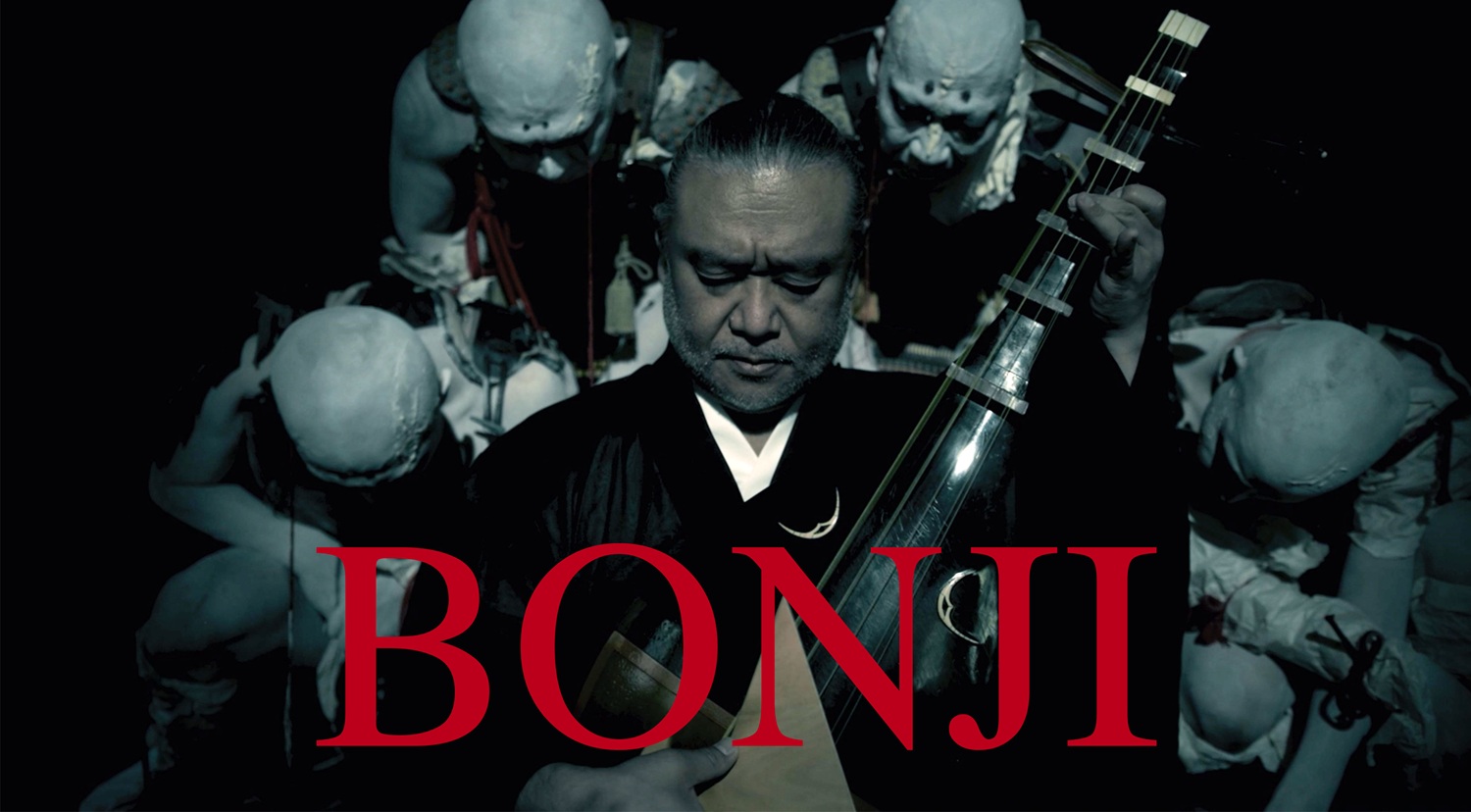
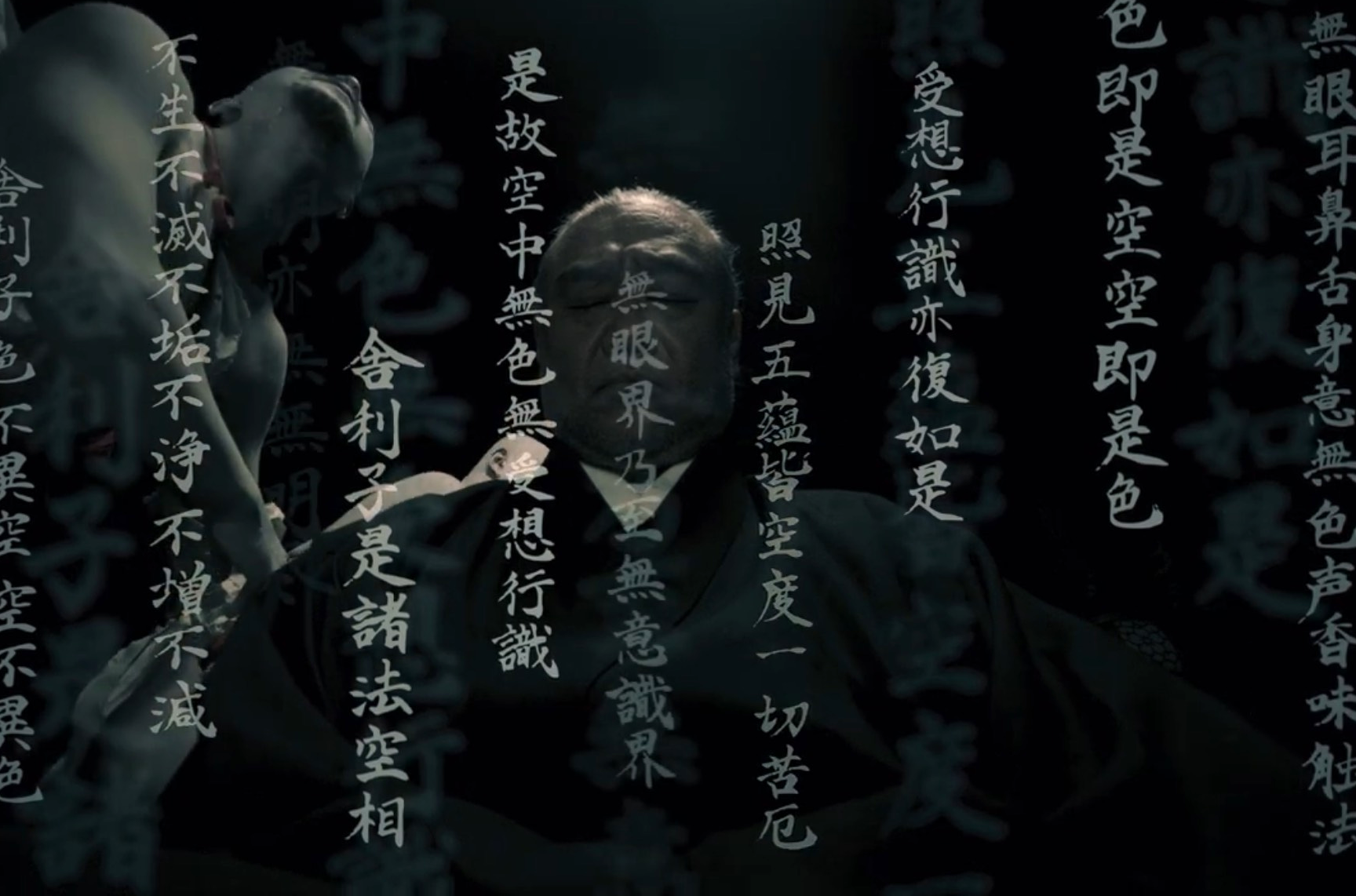
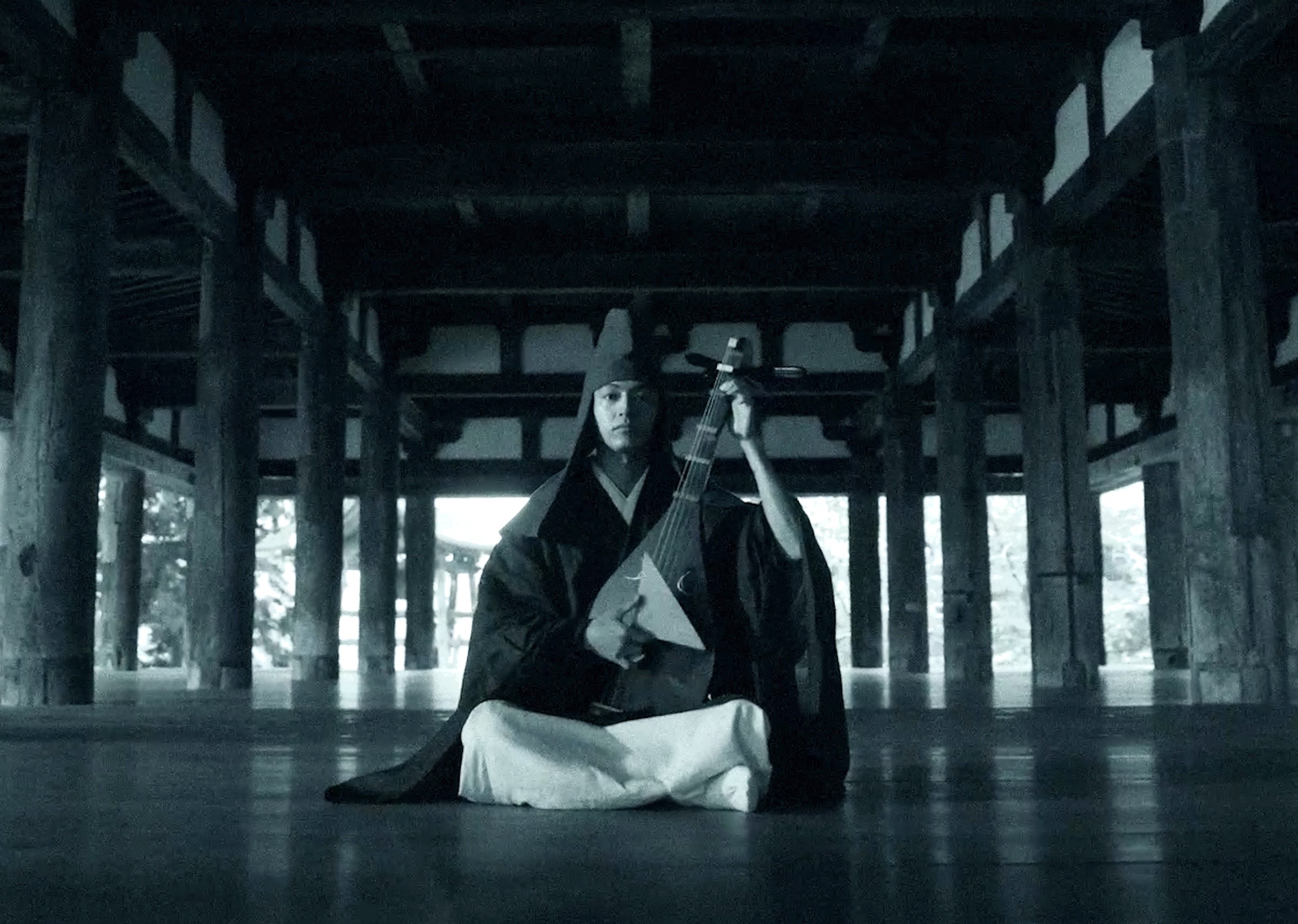
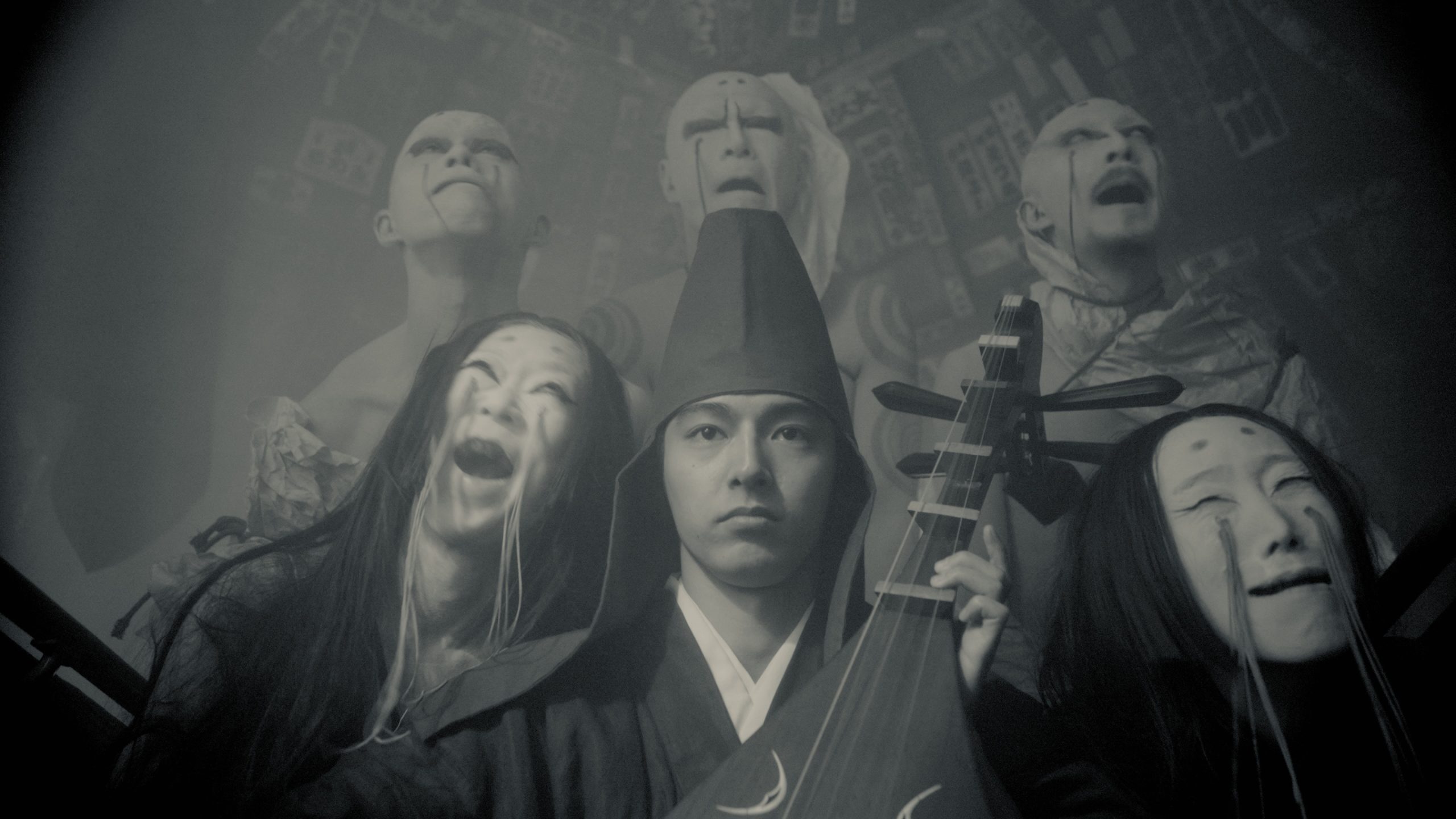
‘BONJI,’ Ukibe Naoko’s debut directorial work, achieved the remarkable feat of winning two awards at the 2023 Monaco International Film Festival: ‘The Best Arthouse Award’ and ‘The Best Sound Edit Award.’ The film, we are told, was inspired by the Japanese folk tale ‘Hoichi the Earless,’ which had a profound impact on Director Ukibe herself in her childhood.
Utilising classical techniques such as monochrome and silent film, the work masterfully portrays ancient Japanese philosophies, customs, and the Japanese view of life and death with a unique sensibility, garnering attention both domestically and internationally. Learning that a feature film, ‘BONJI INFINITY,’ is currently in production as its sequel and conclusion, we decided to conduct an impromptu interview with Director Ukibe.
Mystical beauty praised overseas
- As a first-time director, you immediately won an award at an international film festival. How did that feel?
Ukibe: The moment I decided to use Japanese classical folk tales as my subject, I had an intuition that “this would be well-received by international audiences.” As a child, I personally loved the ghost stories and scary tales I saw on TV, but it was the visuals, more than the storyline, that were seared into my mind. So, while making the film, I thought it might appeal to people overseas even if they didn’t understand the language or the background. I actually submitted it to several international film festivals and felt it resonated well.
Hoichi the Earless
A blind biwa hoshi (琵琶法師, Japanese lute -playing monk) living in Akamagasekishi (赤間関, present-day Shimonoseki City), Nagato (長門), is invited by the vengeful spirits of the Heike (平家) to perform the Battle of Dan-no-ura (壇ノ浦の戦い) every night before Emperor Antoku (安徳天皇)’s tomb. When the head priest learns of this, he has sutras written all over Hoichi’s body to hide him from the vengeful spirits, but his ears are overlooked and subsequently torn off by the spirits. From then on, he becomes known as Hoichi the Earless, rising to fame as a biwa player.
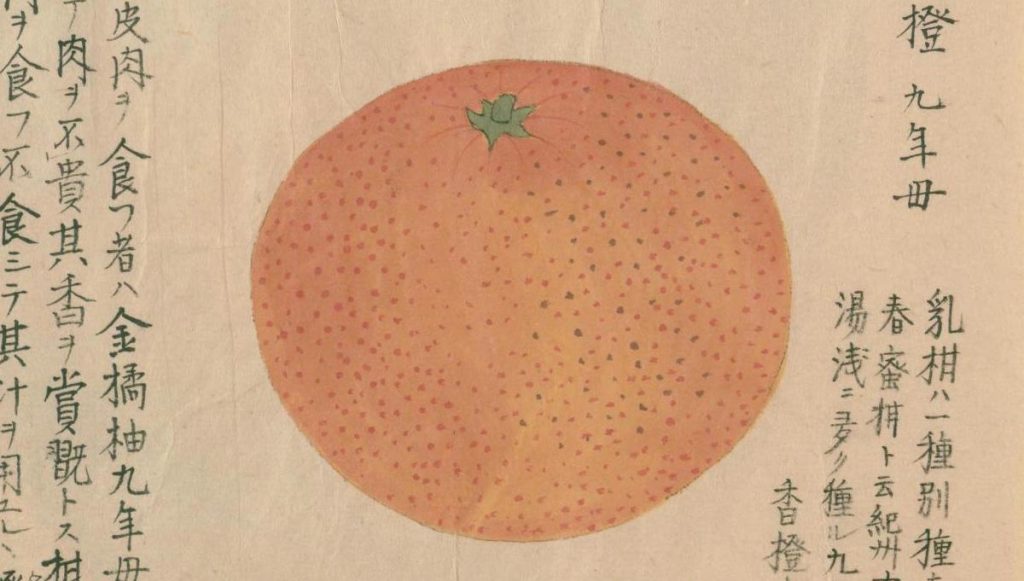
The source is believed to be ‘biwa no kyoku yurei wo nakashimu (琵琶曲泣幽霊)’ from Volume 2 of ‘Gayu Kidan (臥遊奇談),’ published in 1782. Lafcadio Hearn (Koizumi Yakumo, 小泉八雲), a Greek-born writer who became a naturalised Japanese citizen, published a collection of his own works based on classics and folk tales titled ‘Kwaidan (怪談).’ — From Japanese Names Dictionary.
-Why did you choose ‘BONJI’ as the film’s title, instead of ‘Hoichi the Earless’?
Ukibe: When considering submitting the film overseas, I wanted a word that was easier to pronounce and more memorable. As I researched, I found ‘Bonji,’ which is Sanskrit for sutra, and I had an “aha!” moment.
-So your intuition was spot on. What kind of feedback did you receive from overseas?
Ukibe: What everyone often said was, “Your film is beautiful,” and “Watching your film reminds me of Kurosawa (黒澤) ‘s films.” I also received comments like, “I can’t believe this is your first film. Why don’t you make more?” They were also surprised that it was shot in a single day. And I was delighted to receive the sound award, especially since we had no budget for sound, so I used only royalty-free audio. I was thrilled that they were praising my taste in music selection.
The feeling of stagnation during the pandemic became energy to pursue what I wanted
-What initially inspired you to make a film?
Ukibe: The impetus to make a film was that my work came to a halt during the COVID-19 pandemic, and I didn’t know what to do. Society as a whole felt stagnant and gloomy. At that time, I re-realised that “life is finite,” and I started thinking, “I have to do what I’ve always wanted to do while I still can.” I also received a government grant, and an acquaintance told me that a short film could be made for about 1.5 million yen, so I decided to allocate that as production costs. However, due to the low budget, we only had one day for filming. I also asked friends and acquaintances to act in the film. My husband, Nishikawa Kazumasa (西川千雅), the head of the Nishikawa-school (西川流), even appears as the priest (laughs).
- I felt that your amazing quality lies in that straightforwardness and decisive nature, aiming to shoot something that could be done in one day. As a result, the entire film feels stripped down, stoic even, without any superfluous elements. Why did you intentionally avoid having the actors speak dialogue?
Ukibe: Dialogue is just so difficult. A single line of dialogue can change the entire atmosphere, can’t it? I wanted to simply portray that world visually, so rather than having direct words enter through the ears, I wanted viewers to concentrate on the visual world. That’s why I didn’t even write a script. Also, when I watch recent foreign films, there are many actors, a lot of dialogue, rapid scene changes, and you have to engage your sight and hearing fully, constantly following the story. I also felt a bit exhausted by that. I really wanted to show just the visuals more slowly. I’ve always liked distinctive visuals; I was engrossed in Tarkovsky’s ‘Stalker,’ a film from the Soviet era that was about four hours long, and among Japanese films, I loved those that left visuals etched in my mind, like Ichikawa Kon (市川崑) ‘s ‘The Inugami Family (犬神家の一族).’
Filmed in a Historic Temple for Just One Day — Unique Scenes Born from Pursuing Perfection
-’BONJI’ was filmed only in the main hall, precincts, and garden bridge of a temple, wasn’t it? I felt that this, in turn, created symbolic scenes.
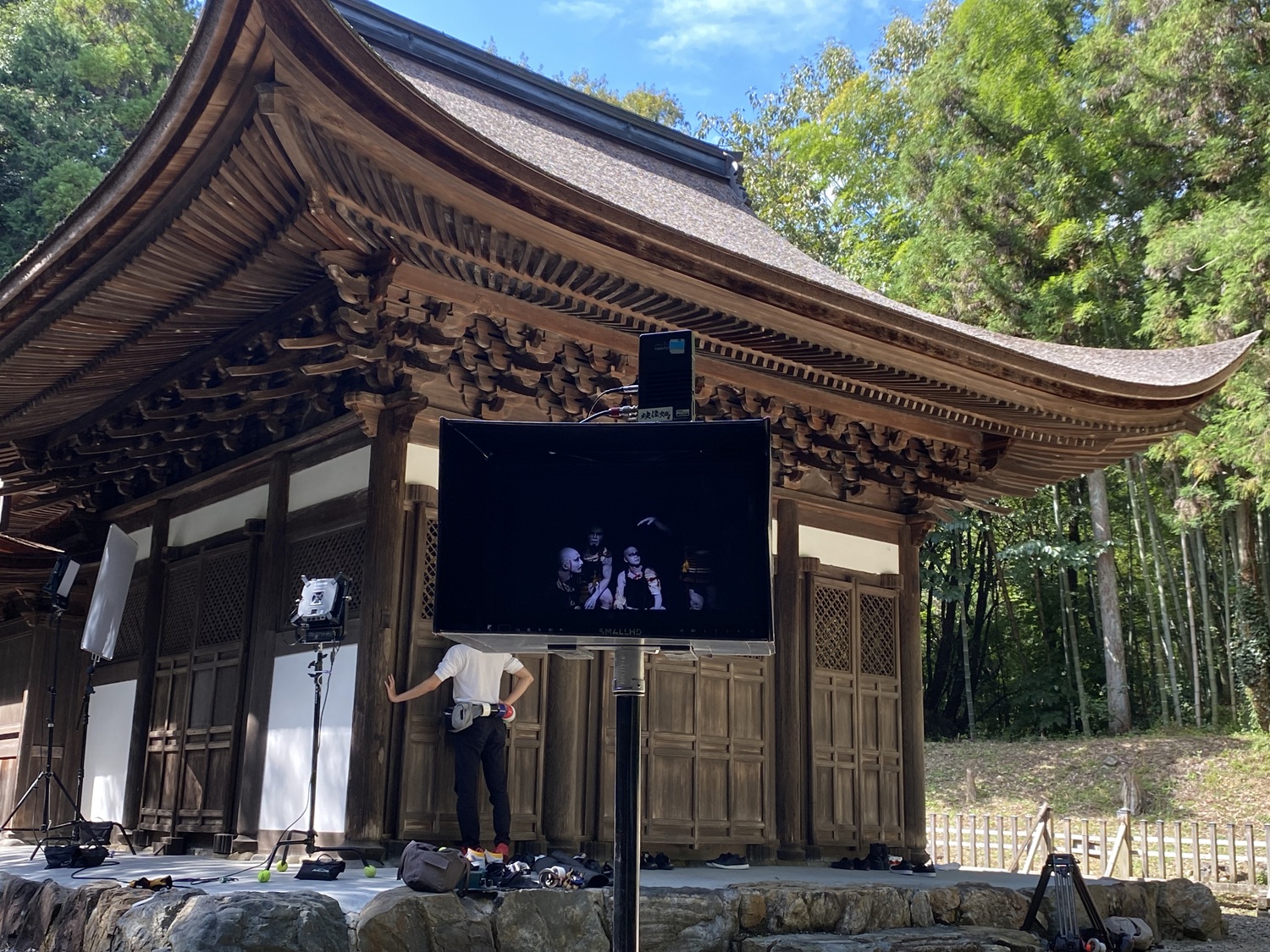
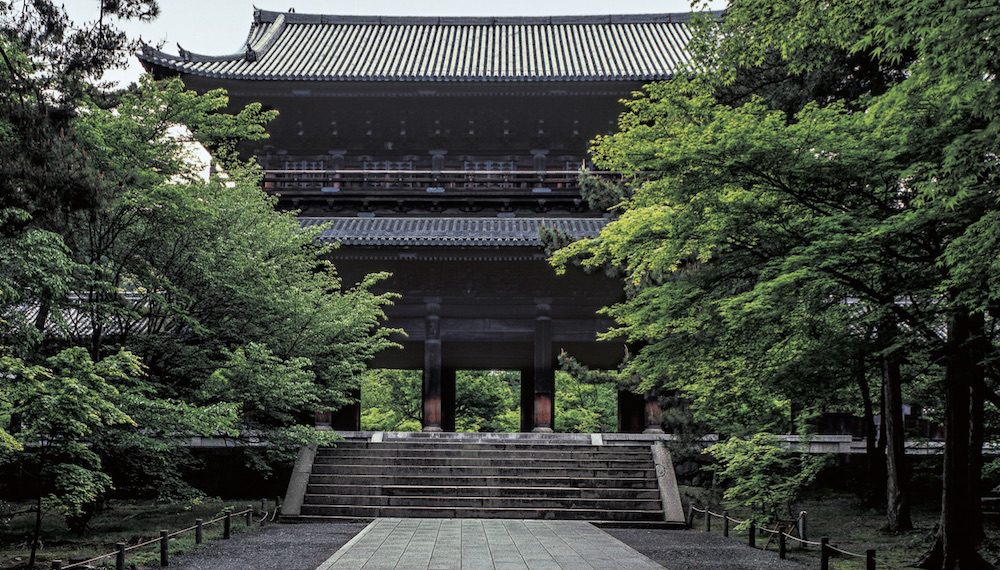
Ukibe: An acquaintance advised me that since ‘Hoichi the Earless’ is a story about the vengeful spirits of the Heike, it would definitely be better to film it at a proper temple. That person arranged for us to film at Kokeizan Eihoji (虎渓山永保寺) Temple in Tajimi City, Gifu Prefecture. It’s a venerable and beautiful temple with a National Treasure, the Kannondo (観音堂), so we were able to capture scenes of silence and awe. However, since we only had one day of filming, we had to shoot evening scenes during the day, which made editing quite challenging. We changed the colours, but there are still some inconsistencies.
Filming scene at Kannondo. Kokeizan Eihoji Temple, founded in 1313, is an ancient temple where the extant Kaisando and Kannondo are designated National Treasures
-The cast members are all quite unique. How did you choose them?
Ukibe: Actually, Tomoyoshi Kakushin (友吉鶴心) -san, the biwa player*1, has been a friend for 20 years. Firstly, the fortunate fact that my friend was a biwa player is why this film came to be. Since 2012, he’s been responsible for the performing arts historical research for all NHK Taiga (大河) Dramas, which was a tremendous help during the filming of the feature-length movie.
*1 Born in Asakusa (浅草), Tokyo, as the grandson of Satsuma (薩摩) biwa players Yamaguchi Hayami (山口速水) and Tomoyoshi Kakushin. Though raised in an environment rich in traditional Japanese culture and performing arts from a young age, he had no interest in biwa music. He began Japanese dance at age 3 and has since studied various traditional performing arts. Currently, he serves as a historical consultant for traditional performing arts, including the Taiga Dramas. He continues a wide range of activities as a biwa player, with numerous performances both domestically and internationally, and television appearances.
-That was the first time I’d heard such powerful biwa music.
Ukibe: Biwa is wonderful; the sound is deep, weighty, if you will. I love it because it evokes a narrative. The low ‘be-be-ben, be-ben’ sounds like a bass, combined with intense electric-like tones, and when the chanting of ‘The Tale of the Heike’ is added, it becomes incredibly powerful.
―Furthermore, the dance that appears as the vengeful spirits of the Heike amplified the ‘unspeakable terror,’ didn’t it?
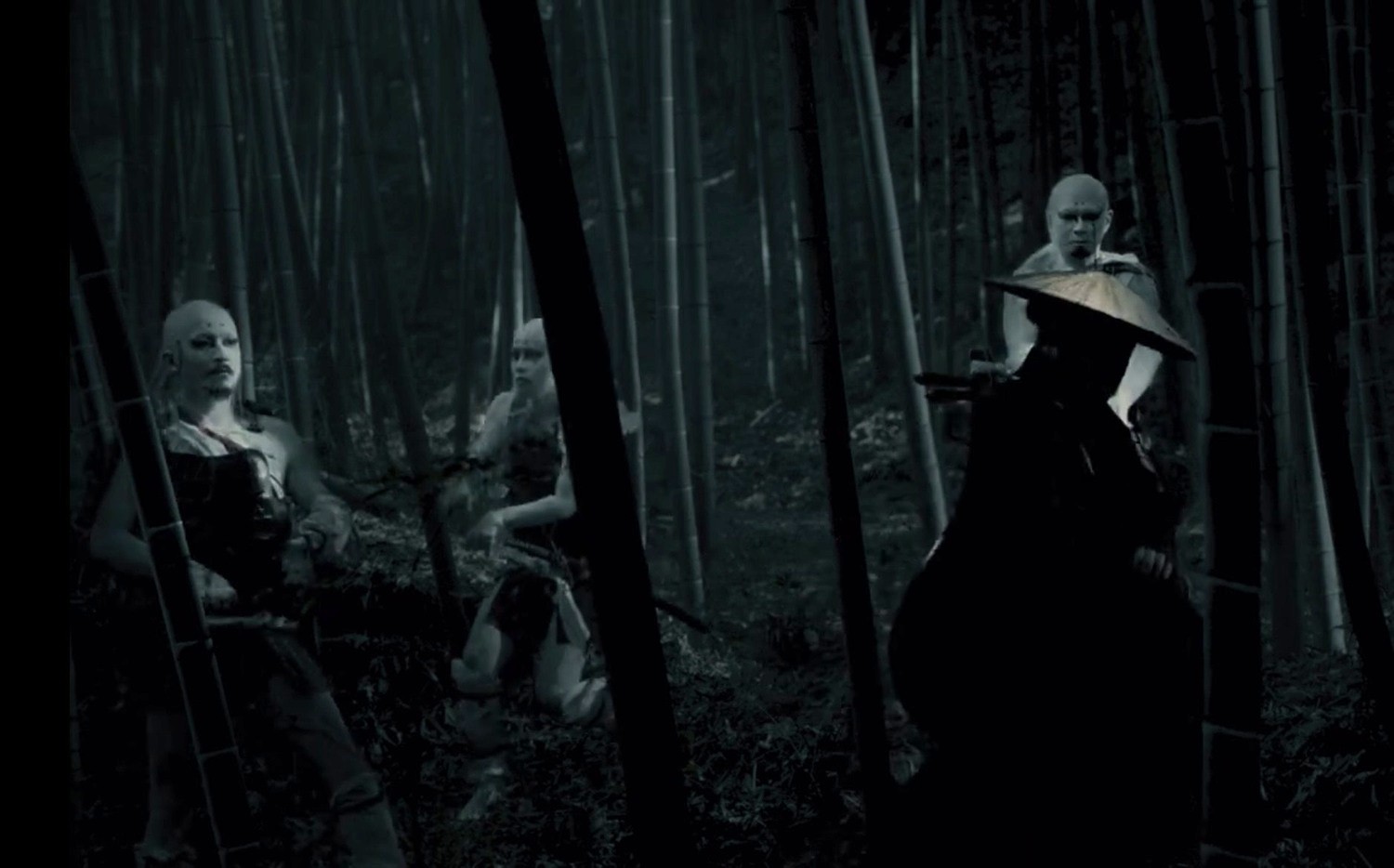
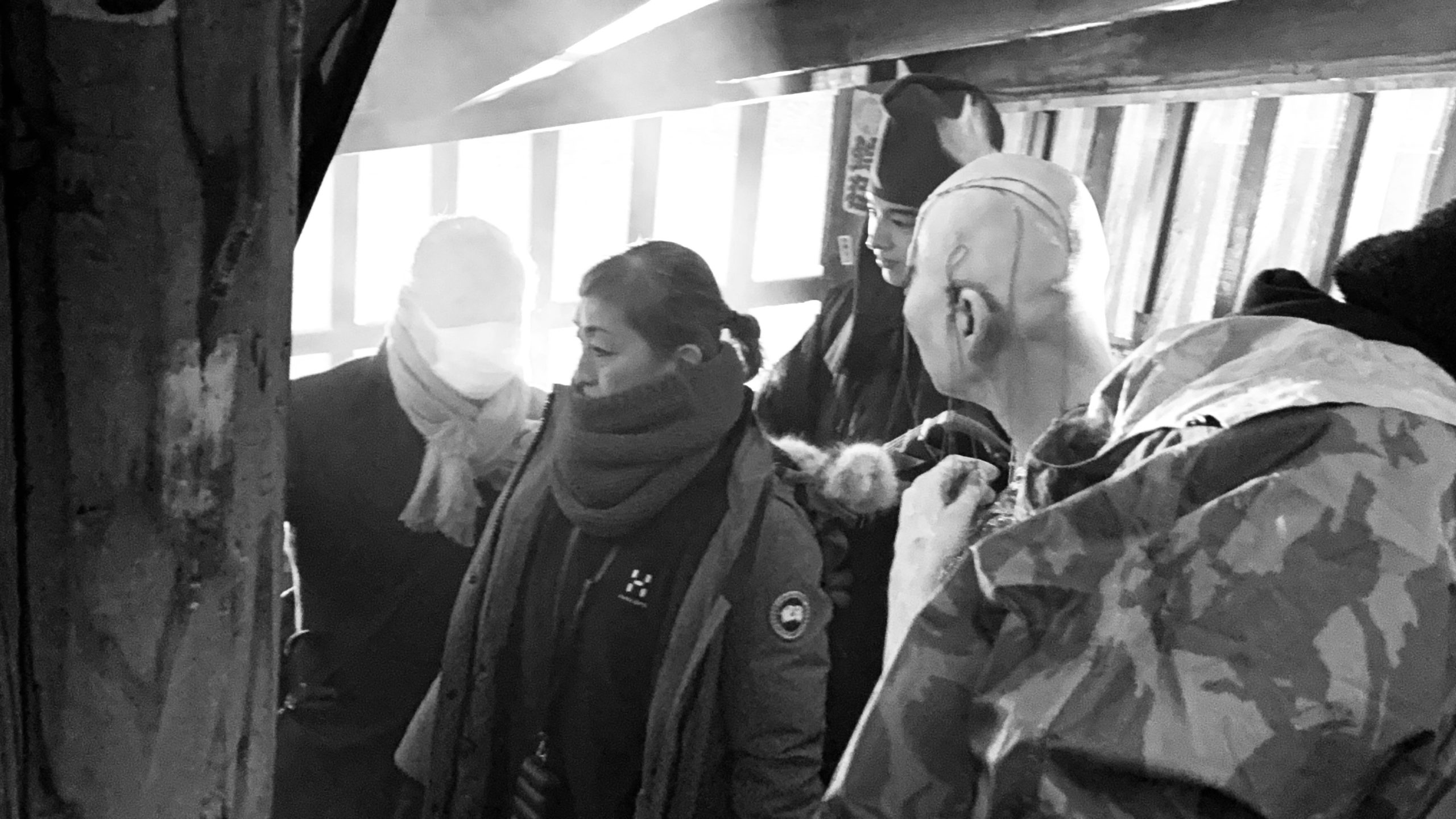
Ukibe: For the role of the Heike ghosts, only Dairakudakan (大駱駝艦)*2 came to mind. I first encountered Butoh when Dairakudakan performed with Watanabe Eri (渡辺えり), whose stage photography I had been taking for many years. I still vividly remember being speechless at the wonderful expressiveness of Dairakudakan. Muramatsu Takuya (村松卓矢), one of their members, told me, “This is the first successful film thanks to Dairakudakan’s appearance,” and I was truly delighted.
*2 Dairakudakan is a Butoh (舞踏) group founded by Maro Akaji (麿赤兒) in 1972. They have gained popularity in overseas performances and were the perfect choice for the ghost roles. Indeed, their unique movements in the film brilliantly express the world of vengeful spirits.
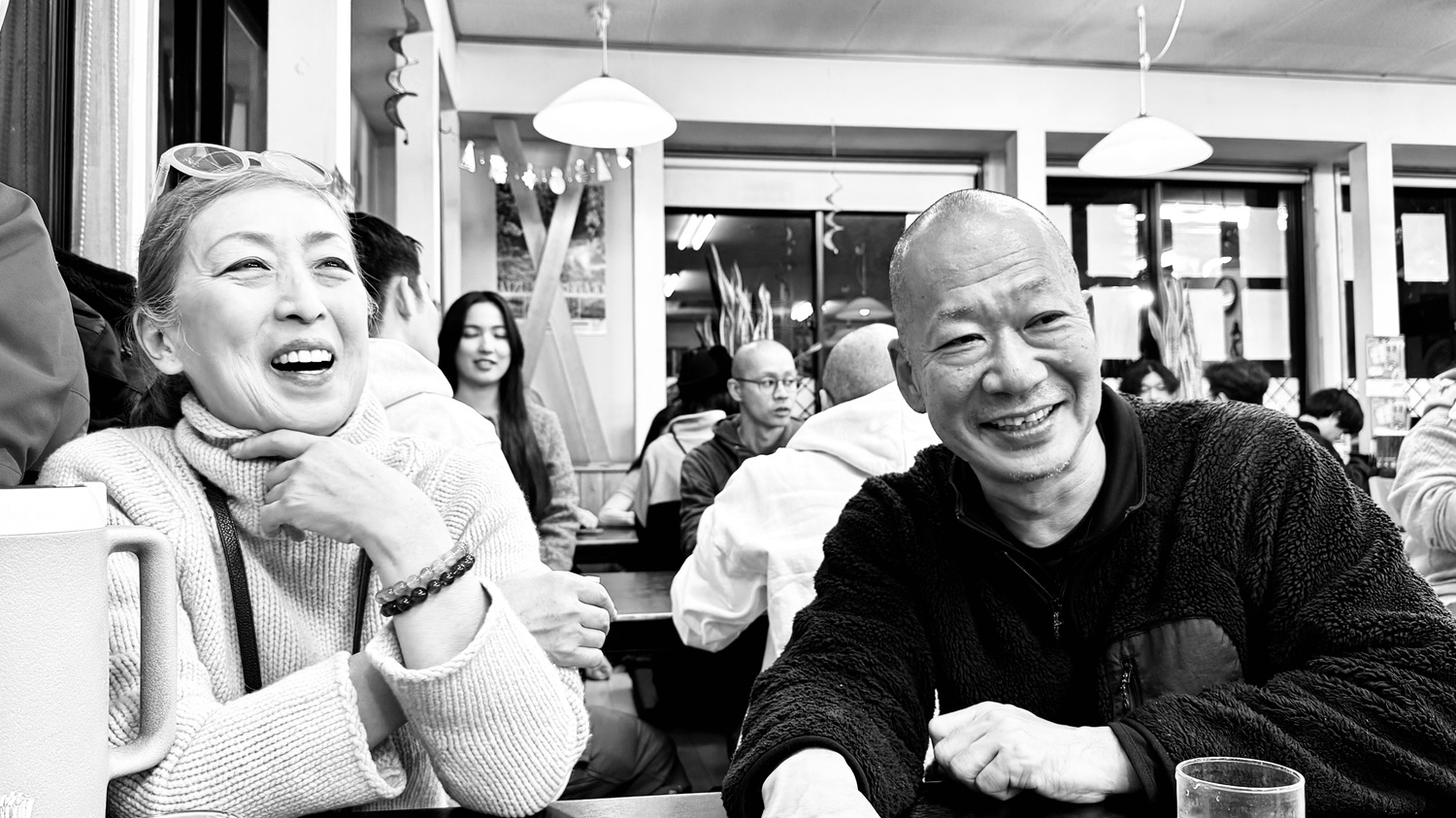
Director Ukibe Naoko (left) and Muramatsu Takuya of Dairakudakan (right)
My student days were a journey full of twists and turns before I finally arrived at the photography and videography I truly loved
-Were you originally interested in photography and film?
Ukibe: My mother told me this, but apparently, I was good at drawing from a young age, and I started learning oil painting when I was four or five. So, even in primary and secondary school, art was my strong suit. However, after I went to a private girls’ high school, I joined the basketball club and lived a life unrelated to art. My parents thought I would continue straight to university through their affiliated system. But at that time, I felt that if I accepted the recommendation and studied something I wasn’t passionate about at university, I would ruin myself. So, despite their opposition, I went on to a vocational school in Nagoya to study graphic design. However, that wasn’t a good fit either, and I ended up quitting, which led to a big argument with my father.
-It sounds like you had quite a turbulent adolescence.
浮辺:Ukibe: Yes, you could say that. So, an acquaintance of my father’s ran a company in Tokyo, and I moved to Tokyo on the condition that I would work part-time for him. At the same time, I attended Suidobata Art Academy, a preparatory school for art and design, and after graduating, I started studying at Kuwasawa (桑沢) Design School. I initially started with graphic design, but I found the photography classes interesting. What I particularly enjoyed was developing photos in the darkroom; I realised I really liked that dark world. In the darkroom, dipping the photographic paper into the developing solution, hearing the gentle sound of dripping, followed by the thrill of the image appearing as if by magic! — that moment moved me so much, and I thought, ‘This is my calling.’ From there, I decided to pursue photography. So, I don’t rely on theory; it’s all visual for me. Even during film shoots, my instructions aren’t “I want you to act this way,” but rather, “I want this kind of shot, so please move like this.” I constantly thought and communicated through visuals.
Conveying the beauty of vanishing Japanese culture through film
―After that, you married into a family of traditional performing arts and became the wife of a grand master who carries on the tradition. How was it suddenly entering the world of Japanese culture?
Ukibe: Before I got married, I had very little involvement with Japanese culture. I married into the family without knowing anything about traditional performing arts. I had never done tea ceremony or flower arrangement. I’d never lived a life wearing kimonos, so at first, I really didn’t understand anything. However, I did like seeing things like the white makeup on stage and the costumes; I loved oiran (花魁, courtesans) too, and so already had a slight sense of admiration for it all.
―In Japan, it’s often said that traditional performing arts are gradually declining. Do you feel a sense of crisis about that?
Ukibe: My husband graduated from an international school and studied contemporary art at an art university in America, so I think we had a lot in common in terms of sensibility. Both of us felt that simply inheriting the tradition wouldn’t ensure its survival in 10 years, so we constantly thought about what we could do to keep it going. Unless there are audiences who find it interesting and come to watch 10 or 20 years from now, Japanese traditional performing arts won’t continue. That’s why we started collaborating with artists from different genres, not just dance. We’ve even had His Excellency Demon Kogure (デーモン小暮閣下) appear on stage, and more recently, we launched ‘Nagoya Odori NEO Kabukimono (名古屋をどりNEO傾奇者),’ trying out a wide range of dance dramas, with actresses, TV personalities, and even members of the OSK Japanese Opera Company participating.
―So you’ve been working consistently as the wife of a traditional performing arts grand master?
Ukibe: That’s right. I’ve been doing production work, with support from sponsors and patrons, so I’ve never been in the public eye. I hardly did any photography work for myself; I was thoroughly involved behind the scenes, such as taking stage photos for ‘Nagoya Odori.’
―Having worked behind the scenes for so long, did that strengthen your desire to make your own film? What were the reactions of those around you?
Ukibe: I hope that people can come to know the beauty of Japan and the splendour of its culture in various ways, and become interested in it. Film was one of those ways. Since winning the award, I’ve had many opportunities to speak, and I often hear women, in particular, say they felt “courage.” Many women, especially in their 30s and 40s, are so preoccupied with their children and families that they can’t find time for themselves, and then they finally have free time in their 50s. Many seem to wonder, “What can I do now?” In that context, they told me that making a film in my 50s and winning an international award was encouraging.
A strong desire to make a feature film in her 50s moves those around her
―What made you decide to shoot a feature film this time?
Ukibe: I felt I had to shoot a feature film while I still had the physical strength in my 50s. The catalyst for shooting it was seeing the Sazaedo (さざえ堂) in Aizu Wakamatsu (会津若松), Fukushima (福島). When I saw that building, I knew I wanted to film there. However, making a feature film requires a much larger budget, and I received various advice from people. A feature film is over 60 minutes long, and people can’t watch an art film for that long. I was told, “When it comes to a feature film, you need a story,” so I decided to create one, collaborating with Mr. Tomoyoshi on the script.
―The theme is still ‘Hoichi the Earless,’ isn’t it?
Ukibe: Initially, since the story is set in Fukushima, I considered making ‘Byakkotai (白虎隊)’ the theme, but it’s a very important story for the people of Fukushima, and I felt it wasn’t a theme I could handle. While I was worried, Director Shiraishi Kazuya (白石和彌) advised me, “Why don’t you shoot the short film’s theme as a feature?” Since I myself was curious about Hoichi after losing his ears, the story follows Hoichi afterward. He’s not only blind but also deaf, yet he still plays the biwa. When I considered how he would communicate, I arrived at ‘writing.’ Hoichi is played by Asatatsumi (阿佐辰美), who appeared in the NHK Taiga Drama ‘Dear Radiance (光る君へ)’. It was also Mr. Tomoyoshi, who handled the performing arts research for ‘Dear Radiance’, who introduced him to me. Mr. Asatatsumi even trained in biwa for this film. Hoichi makes a significantly younger appearance (laughs).
This time, Asatatsumi, who plays Hoichi, was depicted as Prince Atsuakira (敦明親王), the son of Emperor Sanjo (三条天皇, played by Kimura Tatsunari, 木村達成), and later as Koichijo-in (小一条院), in the NHK Taiga Drama ‘Dear Radiance’.
- Furthermore, the world-renowned taiko drummer, Hayashi Eitetsu (林英哲), is in charge of the music this time, aren’t they? Did you offer them the role, Director Ukibe?
Ukibe: This was also a very unexpected connection. I went to see a stage performance called ‘THE GHOST’ and was deeply moved by the sound that Hayashi Eitetsu created. So I asked Yoshida Tomoaki, who was directing it, to introduce me to Mr. Hayashi, and boldly sent a letter saying, “I have no money and I’m not yet known as a director, but I absolutely want to ask Mr. Hayashi to do the film’s music.” As it happened, Mr. Hayashi had connections with both Mr. Yoshida and Mr. Tomoyoshi, so I received a reply. When he readily agreed, he said, “You and I have something in common,” and I kept thinking about it. When I met him without knowing the answer, I was surprised to find that Mr. Hayashi had also attended Suidobata Art Academy! This commonality might have led to his involvement in the film’s production. It’s truly fate, isn’t it? Such things happen, it’s like being given something, or being moved by something invisible. I’m truly grateful.
The beauty of Japanese culture lies in unspoken understanding and consideration for others
-Was one of the things you wanted to convey through the film also about Japanese characteristics like gratitude and ‘en (縁)’ (fate/connection)?
Ukibe: I’ve really come to fully appreciate how well-made Japanese folk tales are. They teach that if you do certain things as a person, you’ll be punished, or, as in ‘The Crane’s Return of a Favour,’ if you break a promise, you lose everything. Folk tales not only have strength as narratives but also what you might call the depth of the Japanese spirit. They remain as lessons in a child’s heart. So, I think that when you watch stories you saw as a child again as an adult, you might feel them differently in other ways.
-What do you think is the beauty of Japanese culture?
Ukibe: It’s the depth of the spirit, I suppose; there are so many things that aren’t expressed in words. There’s a word, ‘sassuru’ (察する, to comprehend by sensing/reading/inferring the situation), which is about understanding people’s feelings, manners, and considering others by inferring. I think that’s the wonderful thing about Japan. I hope to be able to express such inexpressible things through film.
Amidst a declining interest in traditional Japanese culture and performing arts, it’s ironic that its merits are being re-evaluated by people overseas. Watching ‘BONJI,’ I was reminded anew that this stems from the Japanese people’s harmonious relationship with nature and their rich sensibility forged by coexisting with the unseen. This film, where the beauty of Japan can be felt through people’s deportment, gardens, and architecture, I believe, could lead to a rediscovery of the profoundness of Japanese culture. It is a film I sincerely hope many people will see.