







The Tachibana Family’s 400-Year History Rooted in Yanagawa
The Tachibana family first established itself in the land of Yanagawa, Fukuoka (福岡) Prefecture, approximately 400 years ago. Since Tachibana Muneshige (立花宗茂)*, became the Lord of the Yanagawa Domain, the family has continuously woven its history into this very place.
The current Ohana originated in the Edo period when the 5th Lord, Tachibana Sadayoshi (貞俶), designated this location near Yanagawa Castle as the Tachibana family’s private residence for his concubines and children. Because the grounds were beautifully adorned with seasonal flowers, it became affectionately known as ‘Ohanabatake’ (御花畠; Flower Garden), which eventually inspired the name and trade name, ‘Ohana
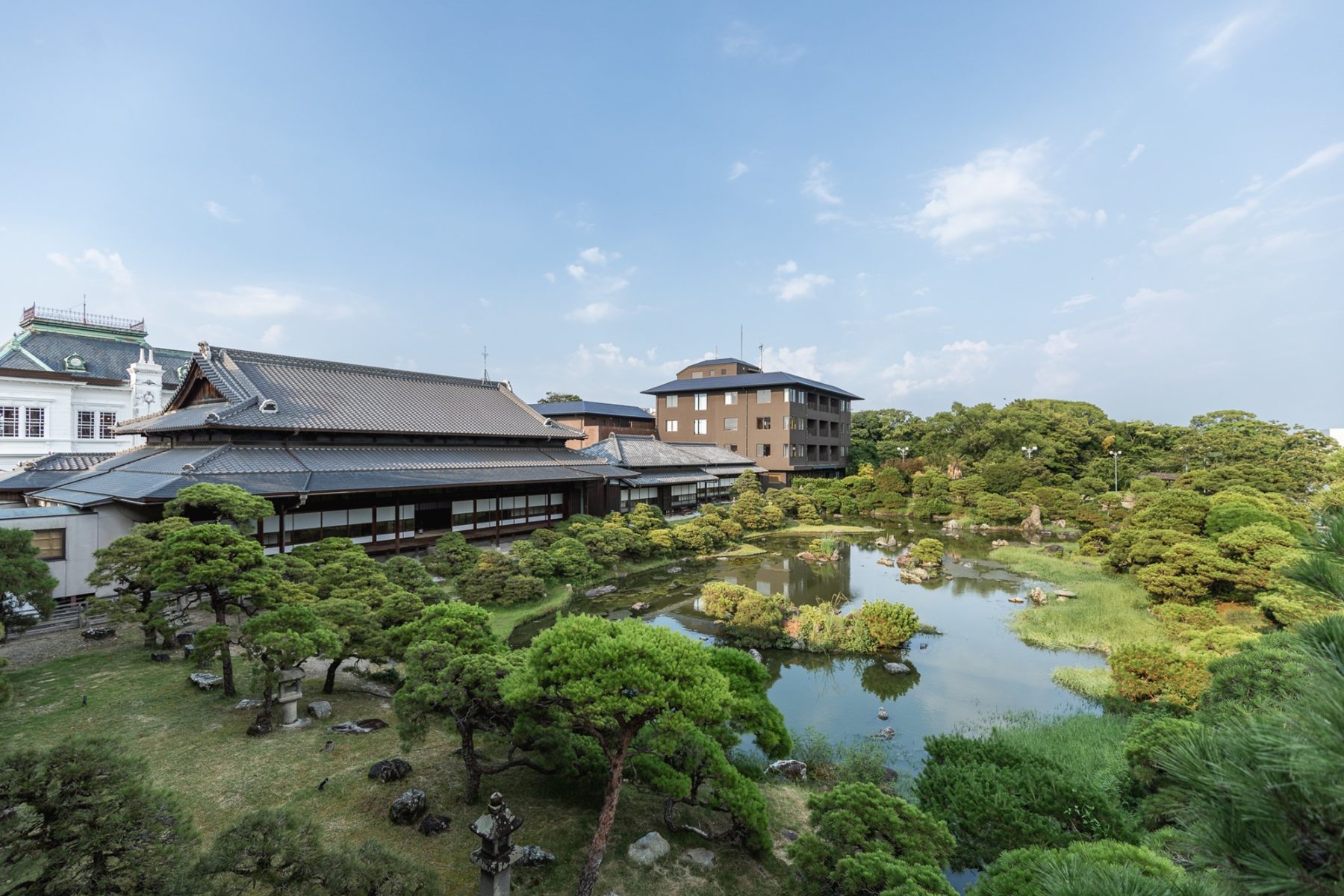
In the Meiji era, the family was granted the title of count. The current buildings and gardens were constructed by the 14th head of the family, Count Tachibana Tomoharu (寛治). After navigating the tumultuous years of the war and post-war period, the 16th heads of the family, Kazuo (和雄) and Ayako (文子), made the bold decision to transform the estate into a Ryotei inn to preserve its cultural assets. Today, the estate continues to be managed by the Tachibana family, the descendants of the Yanagawa Clan Lords. The entire 7,000 tsubo (坪; approx. 23,140 square metres) property, which includes the residence and gardens from the count era, is designated as a National Place of Scenic Beauty.
Popular Cultural Asset Tours Led by the Staff
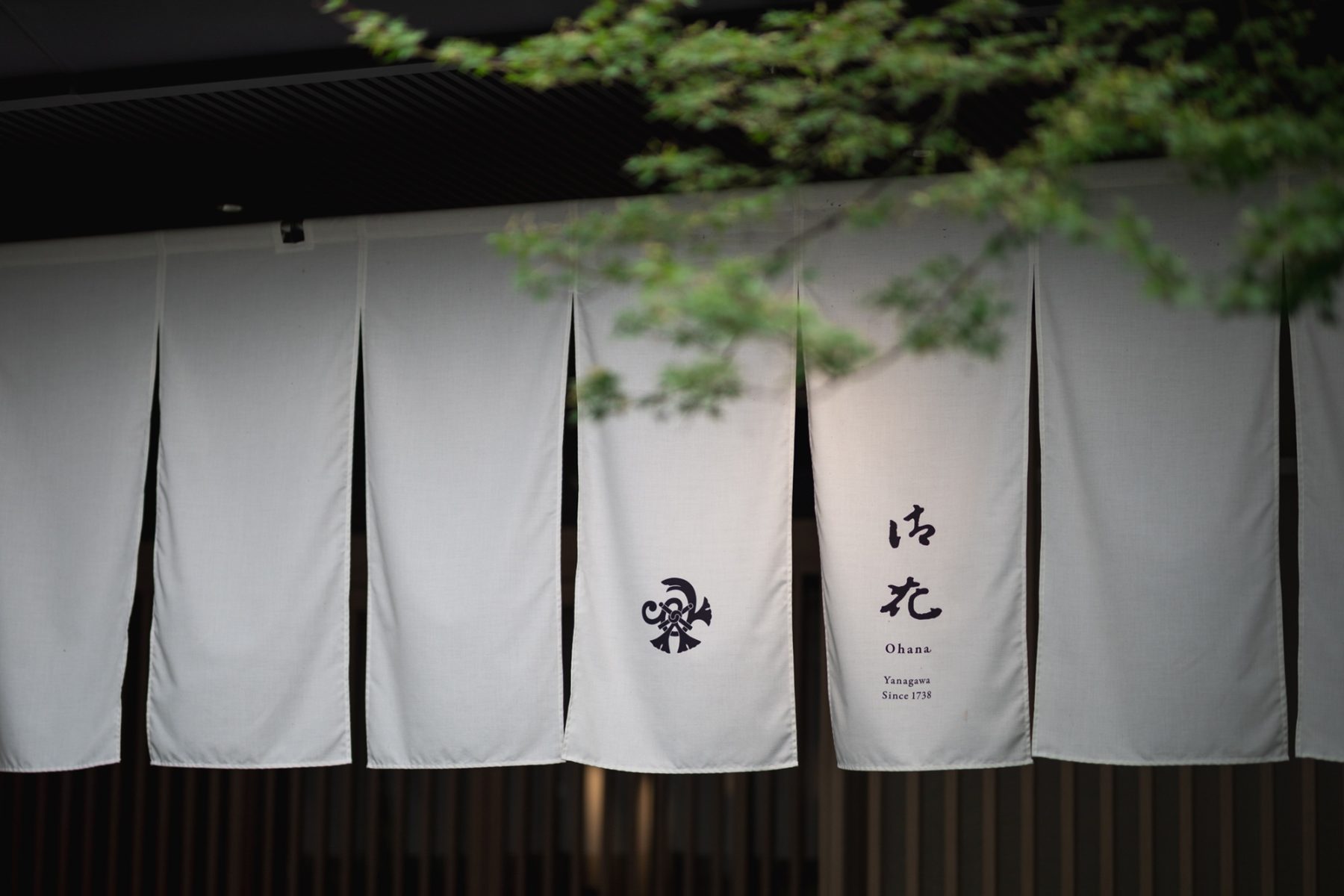
Passing through the chic and stylish noren curtains, I stepped inside the atmospheric building. Ohana celebrated its 75th anniversary in January 2025 with the refurbishment of all guest rooms, the lobby, the lounge, and other areas of the accommodation wing. The lobby’s wallpaper and flooring were updated to a subdued colour palette, creating a sense of unity with the area housing the generational cultural assets. The facility has been reborn, making the charm of this Ryotei inn—the only Nationally Designated Place of Scenic Beauty in Japan where you can stay—even more palpable.
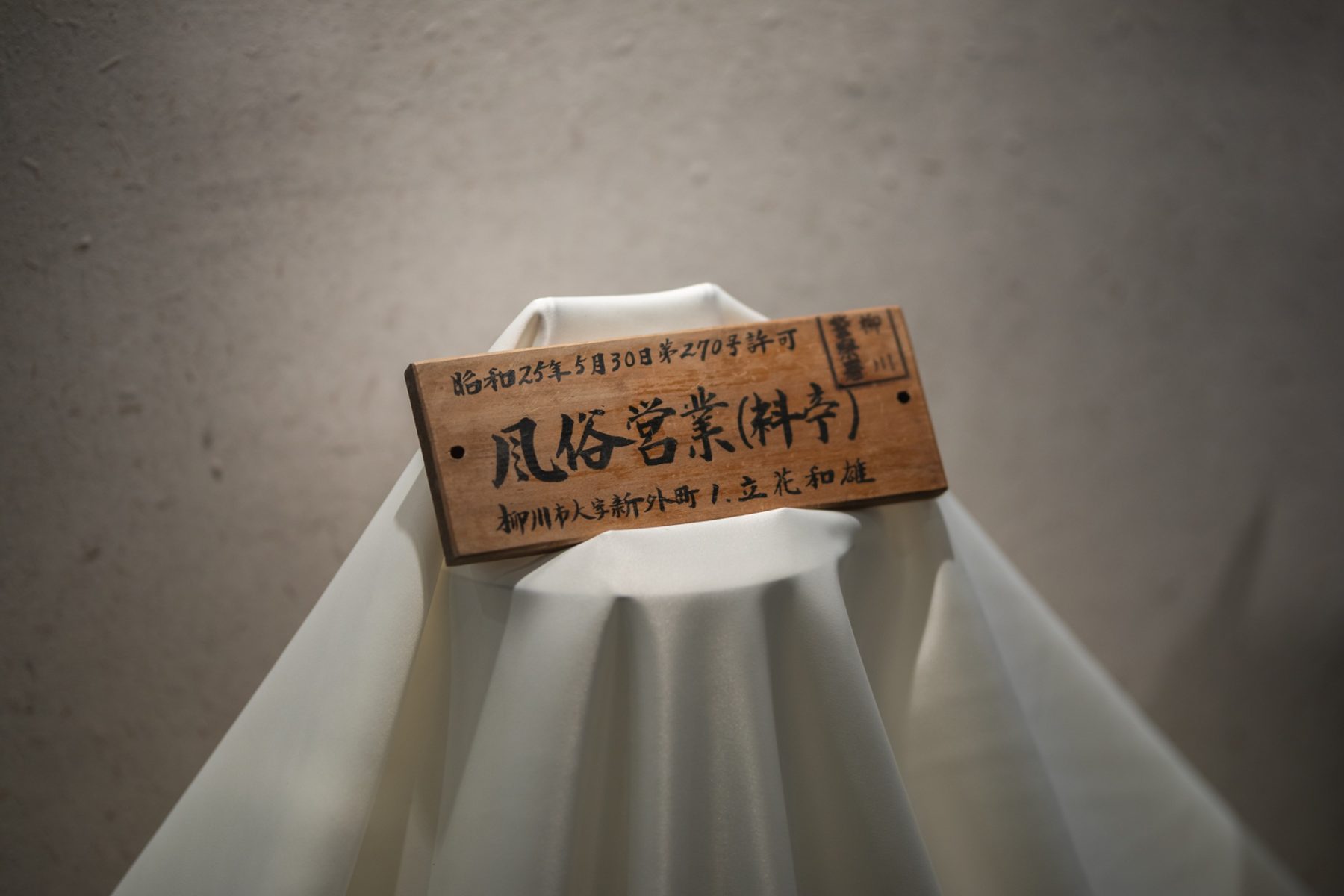
I heard that the guided cultural asset tour, led by the staff, is very popular, so I jumped at the chance to experience it for myself. The tour not only covers the standard features but also includes entertaining anecdotes from the staff, making it so engaging that some guests return just to experience it again. A framed plaque in the lobby caught my eye, and when I asked Marketing Manager Kanehara Rina about it, she explained it was the original business licence from when the Ryotei inn first opened.
Walking along the corridor of the residence, I saw a row of helmets displayed above the nageshi (⾧押; lintel). “Some date back over 400 years, from the Azuchi-Momoyama period,” Ms. Kanehara informed me. “They are believed to have been worn by a unit of Muneshige’s subordinates.” It is striking to think that he prepared such innovative, golden, shining helmets for his men—a testament to Muneshige’s character as a benevolent lord. Each helmet is a different size, and upon closer inspection, some have distinguishing marks. I never imagined I would be able to view these historic helmets so closely, not behind a glass case.
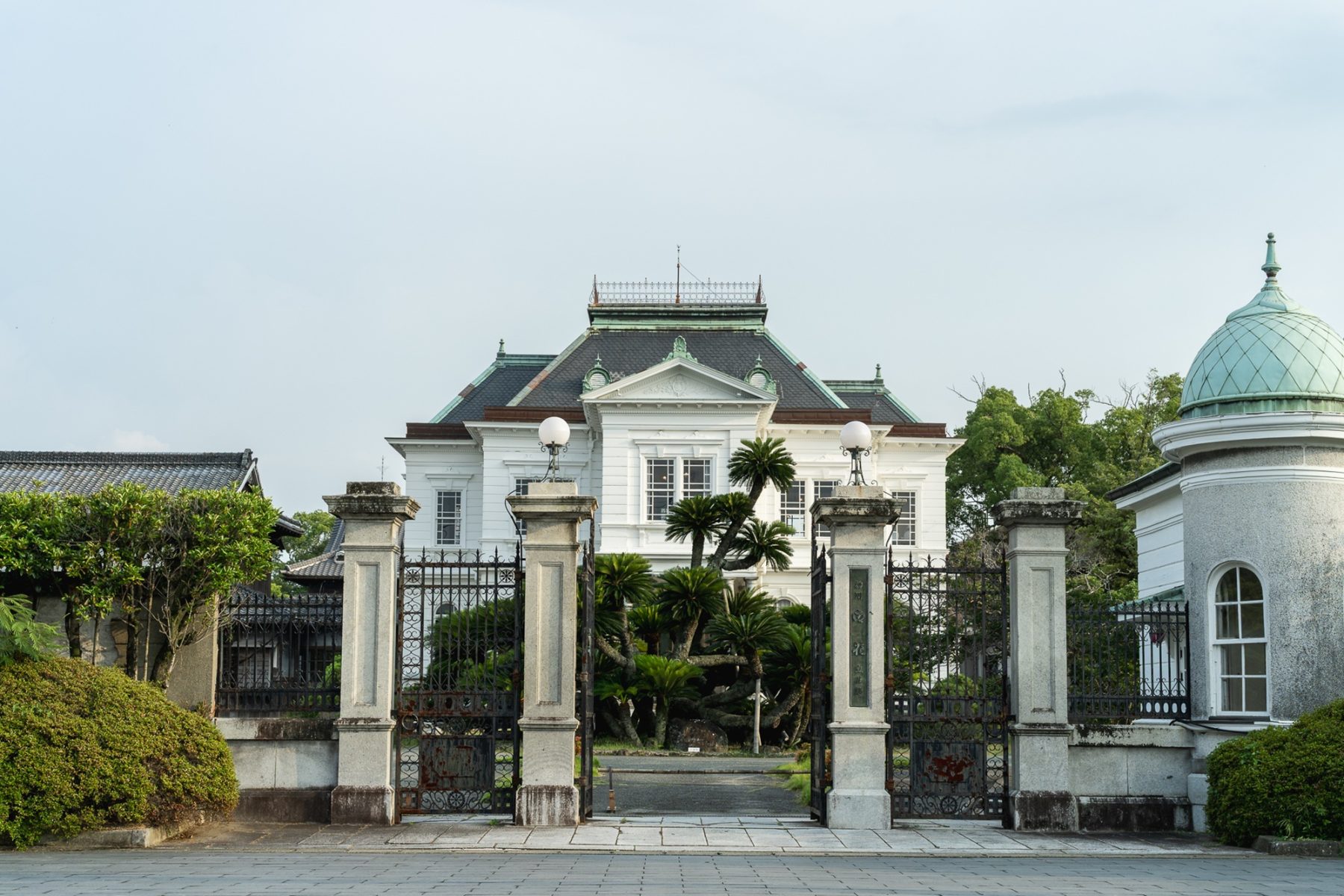
In the Western-style building, a portrait of Count Tomoharu, the 14th head who created the residence and gardens, is displayed. I learned that he established Japan’s first privately-run agricultural testing station, developed various crops like takana (高菜; mustard greens), and worked for the prosperity of Yanagawa. Furthermore, the Fukagawa Seiji (深川製磁) tea set exhibited in the accommodation wing was actually used by the Tachibana family, and includes fascinating details like the family crest (Gion Mamori-mon; 祇園守紋). I understood why guests would want to come back again.
A Guest Room Where You Can Monopolise the Beautiful Scenery
Upon entering my guest room, I found the bed centrally positioned. This is the special ‘Kuromatsu (黒松; Black Pine)’ suite, and this layout has been in place since the refurbishment, reflecting the desire for guests to wake up and immediately enjoy the beautiful view outside.
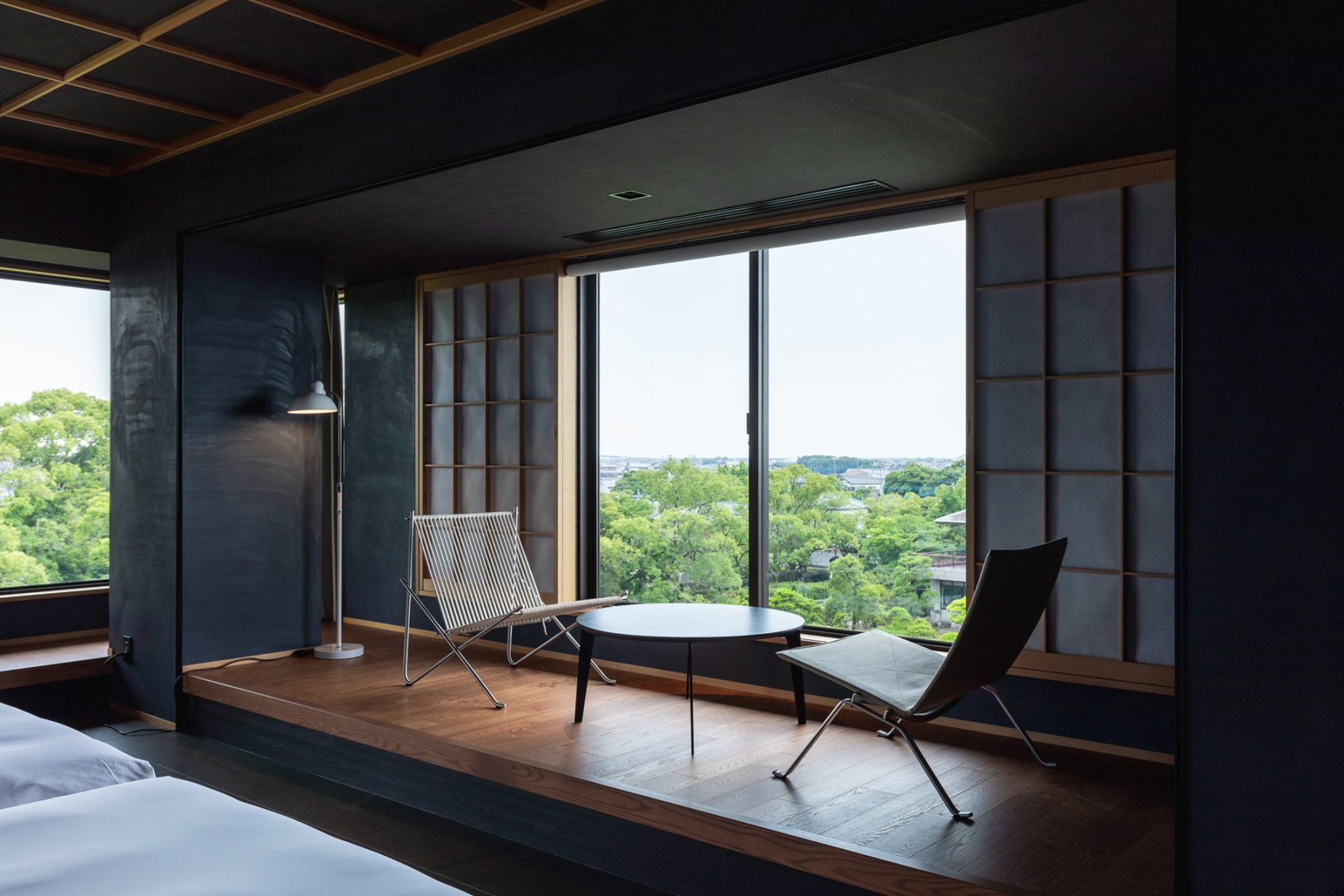
As the cultural asset landscape streams in through the window, the room truly allows you to experience staying within a Nationally Designated Place of Scenic Beauty. This is a top-floor corner room that commands a view of the precious historical landscape, including the Shotoen (松檮園) Japanese garden, the Western-style building, and the Grand Hall. Named after the numerous black pine trees in the Shotoen garden, the pine symbolises eternity and is also the tree that represents Ohana.
From the window, you can also watch the river cruises navigating the Yanagawa moats, and if you are lucky, you might even see a ‘Bride’s Boat’ carrying a newly married couple. Since the outdoor scenery can also be enjoyed from the bath, you can look forward to a relaxing soak.
Local Cuisine Featuring Ingredients from the Ariake Sea
The much-anticipated dinner began with visually appealing appetisers. The deep-fried etsu (エツ; a type of herring), caught from May to July, was notable for its refined flavour and texture. The presentation, using a bamboo boat to represent the Yanagawa river cruise, was a delightful touch. Osajima Toshihiro (筬島稔尋), the head chef who was born and raised in Yanagawa, shared his philosophy: “I personally select and prepare seasonal ingredients caught in the Ariake (有明) Sea and local vegetables every day. Our goal at Ohana is to create dishes that can be passed down for 100 years.”
The Yanagawa ‘Biton (美豚)’ pork, the main course, was melt-in-the-mouth tender. Mr. Osajima revealed that it is simmered for four hours in ‘Hakushaku (伯爵) Ale’. This craft beer was developed using citrus fruits grown at the Tachibana Count Family Farm, Kikkoen (橘香園), which inherited the legacy of Count Tomoharu’s agricultural testing station. With its refreshing sweetness and acidity, the ale was a perfect accompaniment to the meal.
I also enjoyed the essential Yanagawa dish: Eel steamed in a mini bamboo basket. The harmony of the soft, fluffy steamed eel with the rice, which has soaked up the rich flavour of the eel and the sweet local Kyushu soy sauce, was exquisite. I savoured the deliciousness of each ingredient in the relaxed atmosphere.
Seeking the Essence of Ohana’s Appeal and Finding the Answer
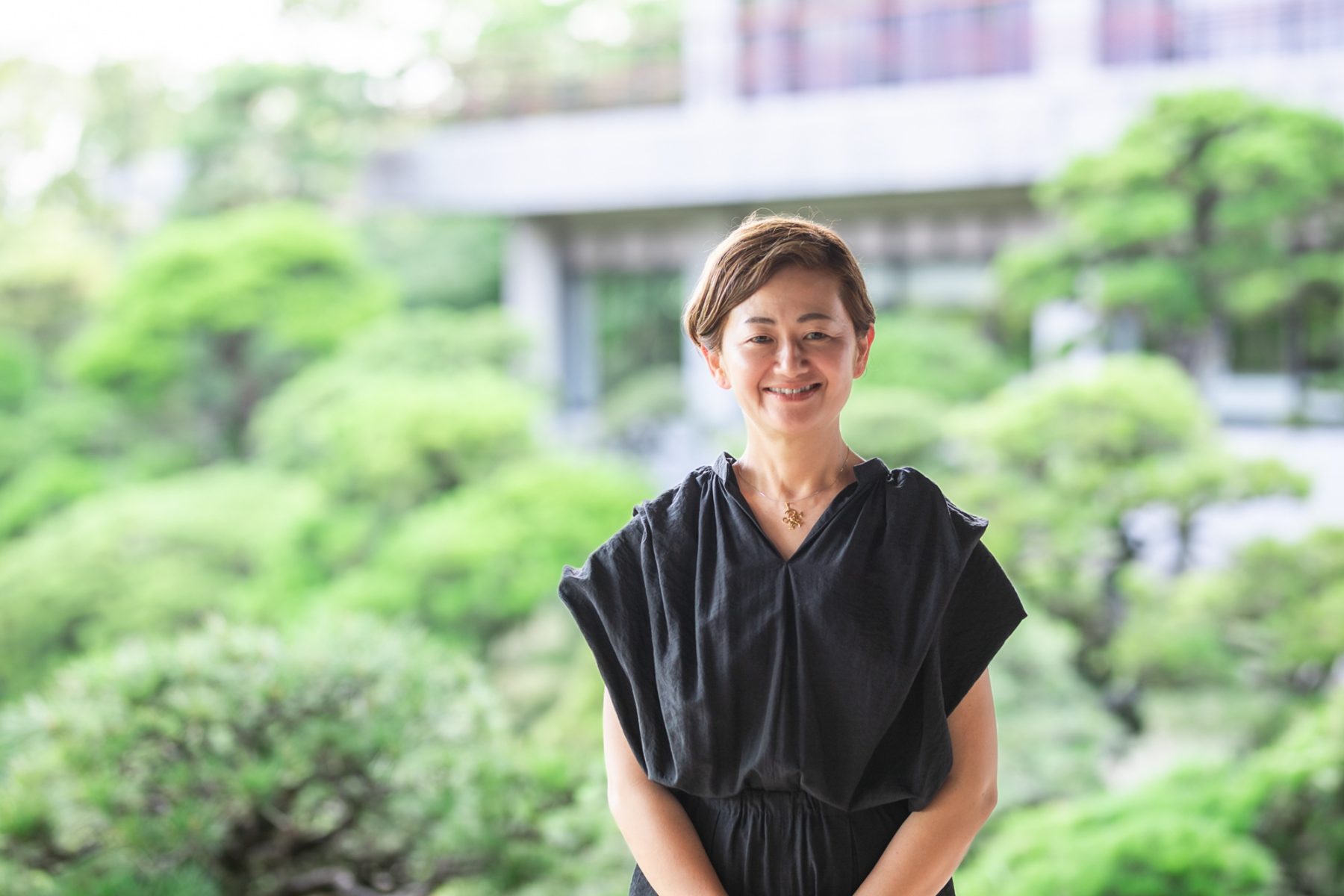
I had the opportunity to speak with Tachibana Chizuka (立花千月香), the 18th head of the family and CEO of Ohana. When I honestly told her, “I was nervous at first because it’s a cultural asset, but contrary to my expectation, it’s incredibly comfortable,” she responded:
“Before it was a hotel, we actually lived here; the far end of the continuous single-story structure was our family’s living room. So, even now, I feel like I’m welcoming guests into my home, and it makes me happy when they can relax.” She continued, “About a hundred years ago, when the Count’s residence was built, there was a day once a year when the house was opened to the public.” Residents of Yanagawa would wear their best clothes and flock to visit. This suggests that the family was open and engaged with the local community even before starting the Ryotei inn.

However, she shared that there were twists and turns before Ohana evolved into its current style. “During the Showa tourism bubble, tour buses lined up, but they didn’t take the time to stop at Ohana; they would simply eat the famous Yanagawa eel and move on to the next sightseeing spot.” She struggled with the internal conflict of needing to make a change until a customer who understood Ohana’s value commented, “What a waste.” “It was so frustrating and disappointing. I wondered what to do, and then the COVID-19 pandemic brought everything to a standstill.”
When she considered giving up, she realised that if she let go of the business now without having truly pursued what she wanted to do, she would regret it forever, leading her to the decision to continue operating. “This building has been here since I was born, and my ancestors worked hard to preserve it. I know the post-war period must have been particularly difficult. Once it’s lost, it can never be recovered or reproduced. I decided this was not the time to be discouraged, and I summoned all my resolve.”
Ms. Chizuka, who answered the interview with a smile, surprisingly revealed that she previously disliked being in the spotlight and avoided interviews. “When the pandemic forced us to pause, a staff member suggested, ‘Isn’t the fact that the descendant is still here the interesting part?’ I realised that telling international visitors I was the 18th generation sparked their interest. Since then, I’ve been playfully leaning into the whole ‘descendant’ thing (laughs).”
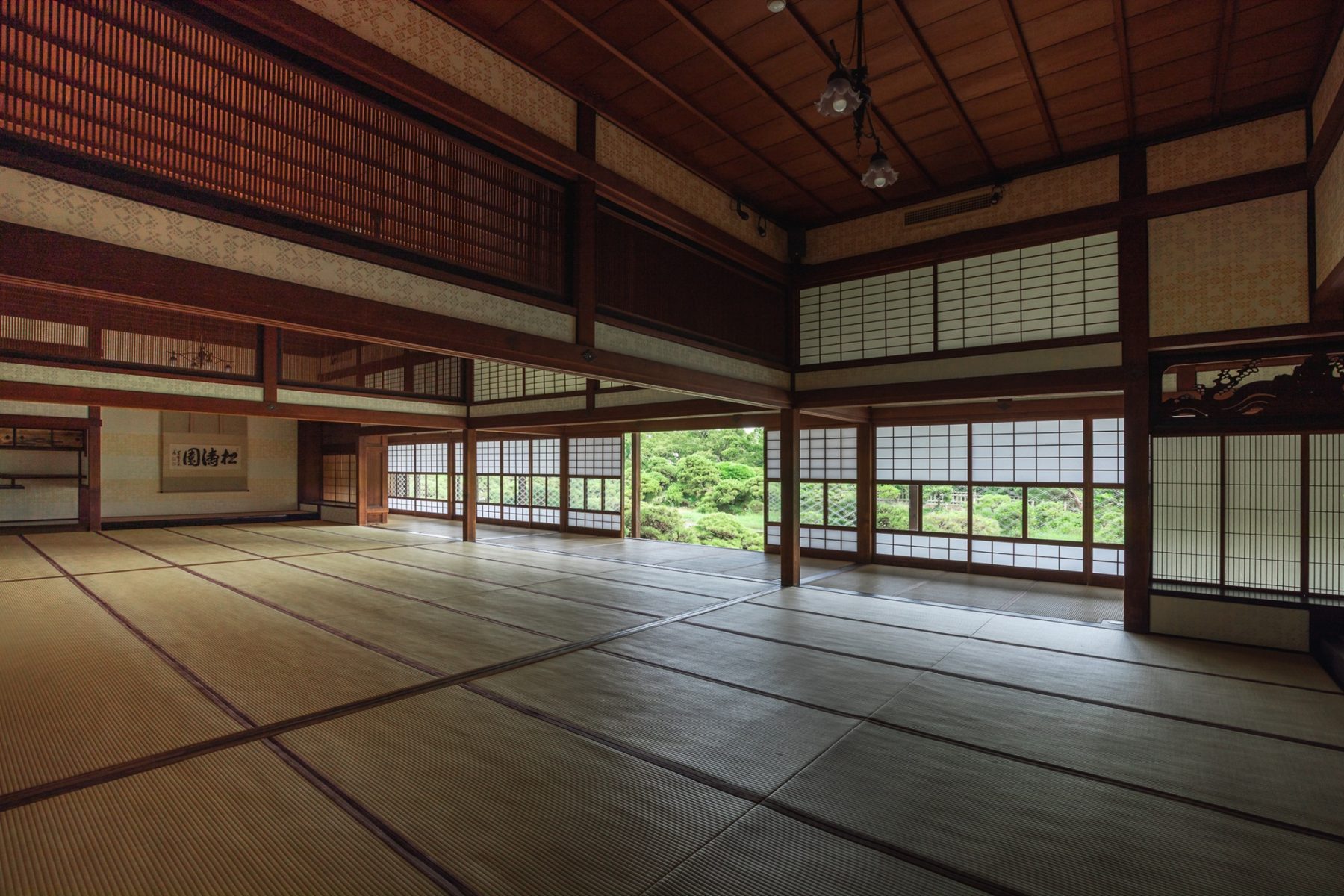
The magnificent 100-mat Grand Hall has a secret: when the tatami mats are removed, a wooden Noh stage structure lies beneath. “Such Noh (能) stages were common in old daimyo residences. Recognising this precious value, we have revived the Noh performances, which had ceased for a while. The Tachibana family historically patronised the Kita (喜多) school of Noh. The nearby Arima family of Kurume (久留米) did the same, so three years ago, we realised a joint performance with the Arima (有馬) family’s Noh and a dialogue between the current heads of both families.” The performances are held with the Grand Hall opened up to the garden. “Once, a white heron in the garden even took flight at a crucial moment. We want people who aren’t familiar with Noh to enjoy it, so we provide an explanation beforehand and perform a digest version.”
Ms. Chizuka stated, “Now that I’ve been able to discover the essential value of Ohana, my core mission is unshakeable.” She mentioned a quote highly valued by Muneshige: “The happiness of the people in the domain must be the foremost priority.” “My father rephrased that for me: ‘If you want happiness, first care about the happiness of the people around you.’ Keeping that saying close to my heart, I always ask my staff, ‘Are you okay?’ and ‘Are you feeling well today?’ I believe that if everyone is happy in their work, our guests will feel that and be happy too.”
Enjoying the Changing Atmosphere at Night
One of Ohana’s charms is the changing ambience at night. The Yame Chochin (八女提灯) hung in the lobby illuminate with a fantastical glow. These lanterns were created by Ito Hiroki (伊藤博紀), the 8th head of Ito Kenjiro Shoten (伊藤健次郎商店), a company that has been making lanterns for temples, shrines, and festival decorations for over 200 years. They also collaborate every summer for an event called Kikai Yako (奇怪夜行), and Mr. Ito’s yokai Chochin (妖怪提灯) are a must-see.
The Grand Hall also changes its setting and is available for guests to use freely from 4 p.m. to 11 p.m. It is a pleasure to relax as if you were in your own home. You can even take drinks from the counter in the 1st-floor lounge in a basket to enjoy while gazing at the illuminated garden.
Breakfast on a Yanagawa River Cruise
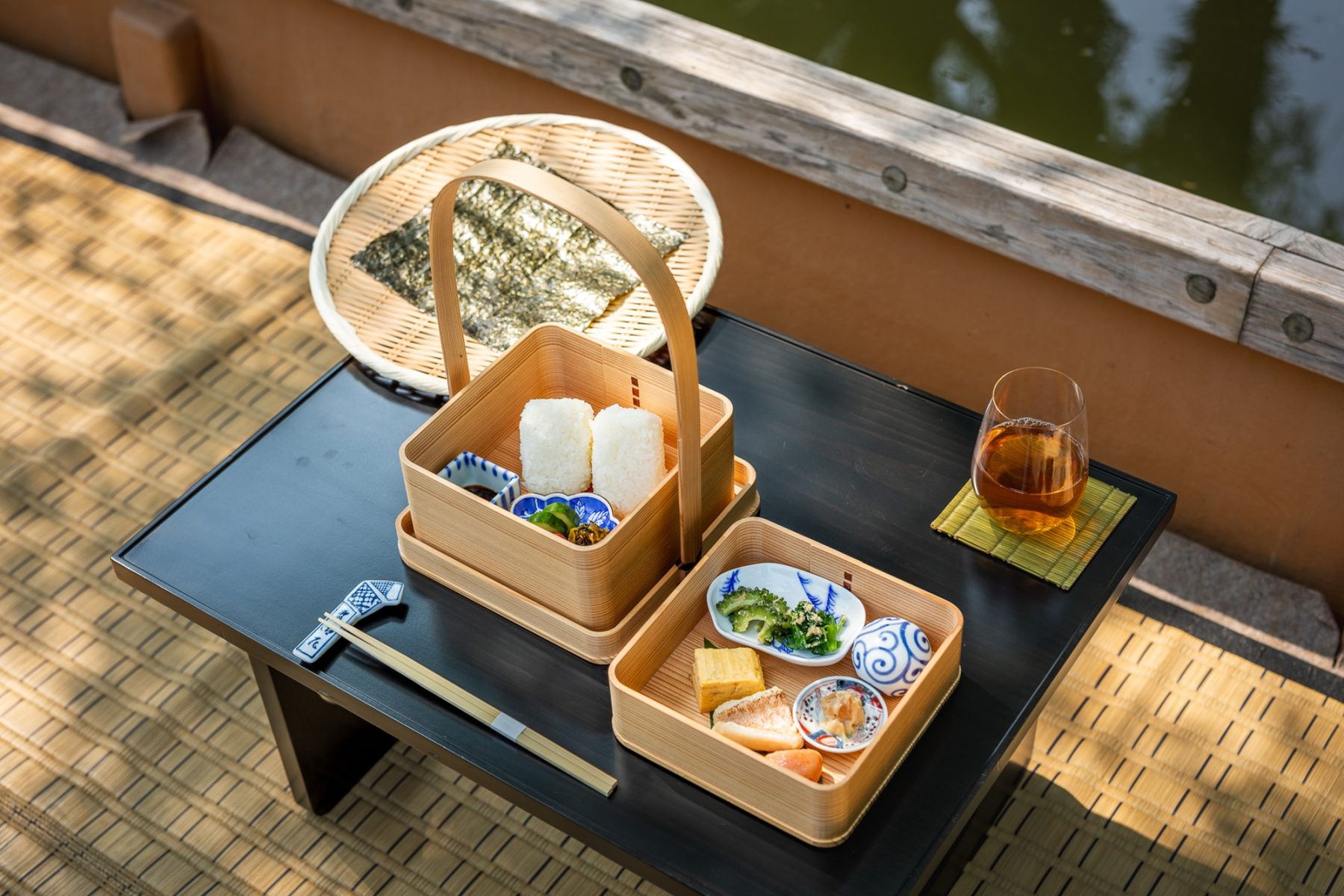
Ohana offers the “Breakfast on a Boat Plan” experience. Boarding a boat from the private pier adjacent to the estate, the time spent enjoying the morning scenery of Yanagawa makes you truly feel like a feudal lord.
The moats are vital to the town of Yanagawa; without them, the ground is susceptible to subsidence. Originally close to the sea with many wetlands and reclaimed lands, digging would often bring up seawater. The moats were thus created to draw water from rivers and store rainwater. Their origins date back to the Yayoi (弥生) period, and by the Edo period, they had taken on nearly their current form and have been maintained ever since. The presence of the moats also helps to counteract the loose ground.
From the boat, you can see private homes built right along the moat, underscoring the co-existence between the residents and the waterways. Moving slowly and leisurely while watching the boatman’s skill in navigating with a single pole (sao, 竿) is a unique experience. I would love to try it again, as the scenery changes with the seasons.
Basic Information
Fukuoka Prefecture, Yanagawa City, Shin-machi 1
Official Website
https://ohana.co.jp/
Photography by Nemoto Kayoko (根本佳代子)
This article is translated from https://intojapanwaraku.com/travel/282032/