






Were Pillows in the Kofun Period Tools for Funerals?
Surprisingly, it seems ancient Japanese people also used pillows, as artefacts such as stone pillows and wooden pillows have been excavated from ruins of the Kofun (古墳) period. However, at that time, they were apparently not for the living, but rather tools for laying the dead to rest within a coffin. It seems they played an important role in funeral rituals.
What is the Oldest Extant Pillow in Japan?
As for pillows as everyday items, grass pillows and wooden pillows are composed in poems in the ‘Manyoshu‘ (万葉集), which suggests that pillows were indeed in use. In the Shosoin (正倉院)※1 in Nara Prefecture, the ‘Shiro neri aya no omakura’ (白練綾大枕) is preserved, and among those existing today, this is said to be the oldest in Japan. Its shape consists of gathered grass formed into a square, wrapped in high-quality silk cloth, making it a precious pillow that allows us to understand the aristocratic culture of that time.
Pillows Changing with the Times
Entering the Muromachi (室町) period, practicality became required, and buckwheat husk pillows, which are still used today, made their appearance. During the Edo period, the kukuri-makura (くくり枕)—made by stuffing a cloth bag and tying both ends with strings—also became widespread. For the filling, breathable materials such as buckwheat husks and rice husks seem to have been used. Ceramic pillows introduced from China were hollow inside with a cool surface, so it is said they were favoured by the upper classes as a luxury item for the summer.
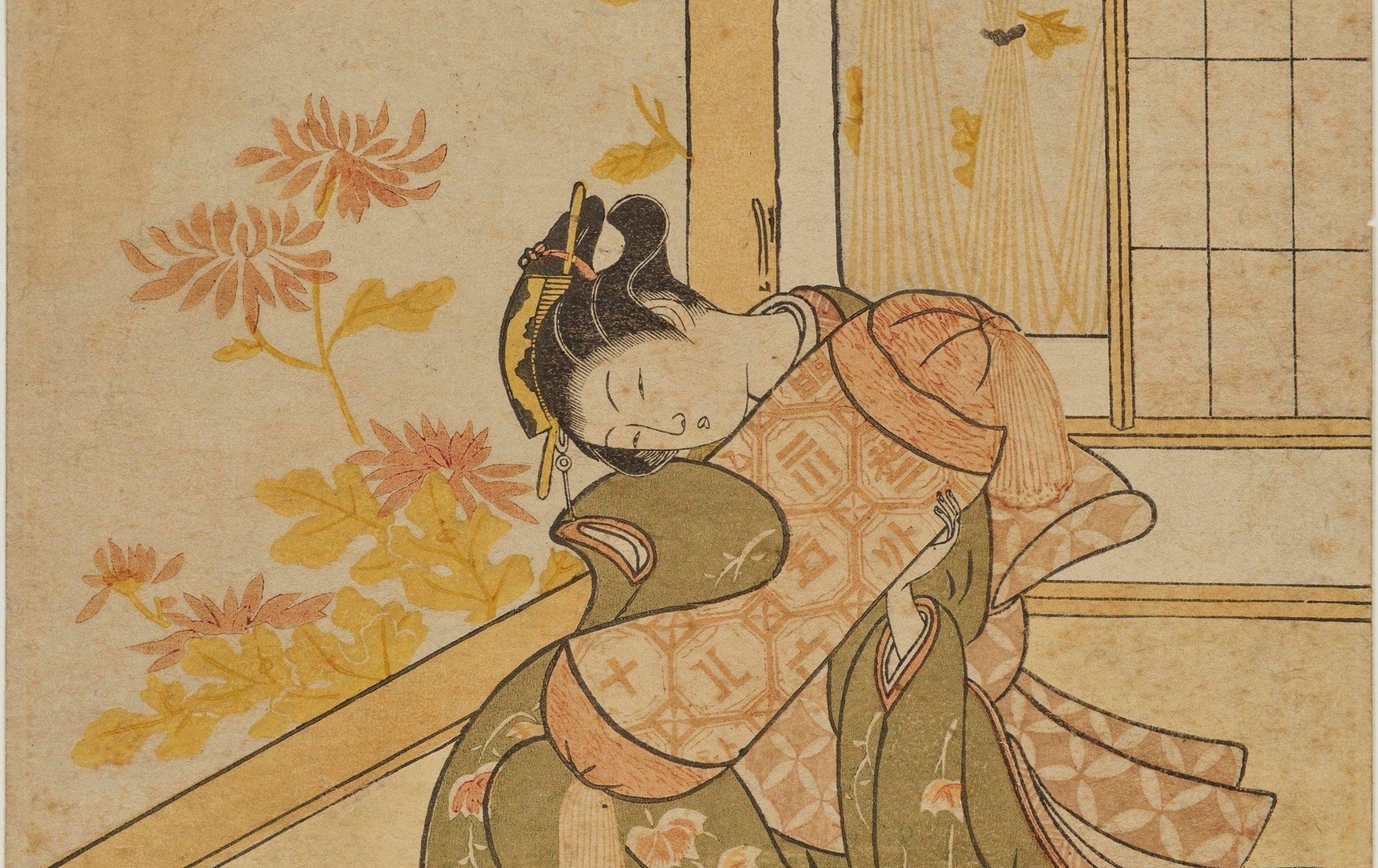
Then, as both men and women began to tie their hair in complex mage (髷)※2, pillows changed to suit this. They took the shape of a small kukurimakura stuffed with cotton or rice husks placed on top of a box-shaped pedestal made of wood, and were called hako-makura (箱枕). It seems they were used by resting the base of the neck upon them, with the aim of preventing the hairstyle from collapsing whilst sleeping. It does make you wonder if anyone could sleep soundly like this. I suppose it beat ruining your hairstyle.
Flat Pillows Only Appeared in the Showa Era
Around the beginning of the Showa era, there was a shift towards Western-style flat pillows. Towards the middle of the era, pillows using familiar materials such as buckwheat husks and cotton became staples in households. Through the Showa era, they evolved into tools for sleeping comfortably, and various functional pillows have been developed, such as those made of low-resilience or high-resilience urethane or latex materials, and even custom-made pillows. It’s a reminder of just how deeply woven the pillow has always been into the fabric of daily life in Japan.
References: ‘Sekai Daihyakka‘ (世界大百科) by Heibonsha (平凡社), ‘Nihon Daihyakka Zenshu‘ (日本大百科全集) by Shogakukan (小学館)
Header image: ‘Kukuri makura Moteru Bijin‘ (括り枕持てる美人) painted by Suzuki Harunobu (鈴木春信) colbase
This article is translated from https://intojapanwaraku.com/lifestyle/310202/