






Repeated Destruction by Fire and Reconstruction
The construction of Shurijo is estimated to have been around the end of the 14th century, and initially, it functioned as the royal castle of Chuzan (中山), one of the Sanzan (三山) (Chuzan, Hokuzan (北山), and Nanzan (南山)) of Ryukyu. In 1429, when Sho Hashi (尚巴志) unified the Sanzan and established the Ryukyu Okoku, Shurijo came to play an important role as its royal palace, as well as the religious centre for conducting national rituals. For the Ryukyu Okoku, which nurtured its unique culture through tributary trade with the Ming (明) and Qing (清) dynasties and commerce with Japan and various Southeast Asian countries, Shurijo was truly the symbol of its prosperity. The castle’s architecture fuses both Chinese and Japanese architectural styles, and the vermilion-coloured exterior of the Seiden (正殿), along with the dragon motifs adorned throughout its decorations, conveys the unique aesthetic sense of Ryukyu to this day.
Following the Ryukyu Shobun (琉球処分) in 1879, when Sho Tai O (尚泰王) departed from Shurijo, the 450-year history of the Ryukyu Okoku was brought to a close. Later, during the Okinawasen (沖縄戦) in 1945, Shurijo suffered devastating damage. Even prior to the Okinawasen, despite experiencing repeated destruction by fire, the principal buildings, including the Seiden, had been restored.
However, on 31st October 2019, the main structures, including the Seiden, were once again lost to fire. This tragic fire caused a profound shock both domestically and internationally, and immediately afterwards, numerous voices desiring its reconstruction and donations poured in from at home and abroad.
The Ongoing Reconstruction
Currently, the reconstruction of the Shurijo Seiden is progressing under the theme of ‘Miseru Fukko’ (見せる復興), making the restoration process itself open to the public as a tourism resource. In October 2025, the temporary scaffolding roof covering the Seiden was removed, revealing the vibrant vermilion exterior of the Seiden for the first time in approximately six years. Presently, it has entered the final finishing stages that require traditional techniques, such as the interior lacquering and colouring.
The restoration completion ceremony for the Seiden is scheduled for 22nd November 2026, with public viewing planned from the following day, the 23rd (as of August 2026).
Highlights of Shurijo
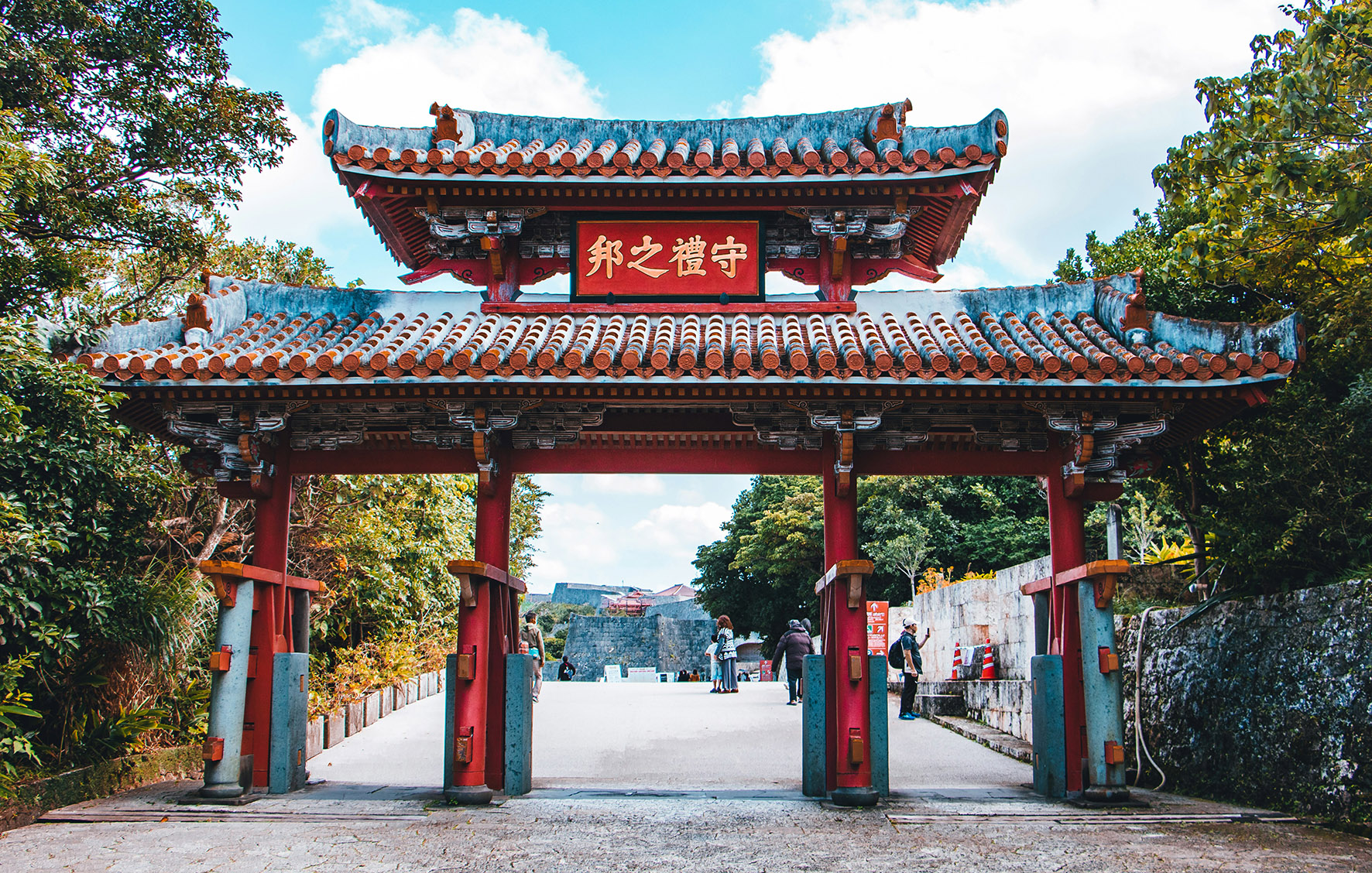
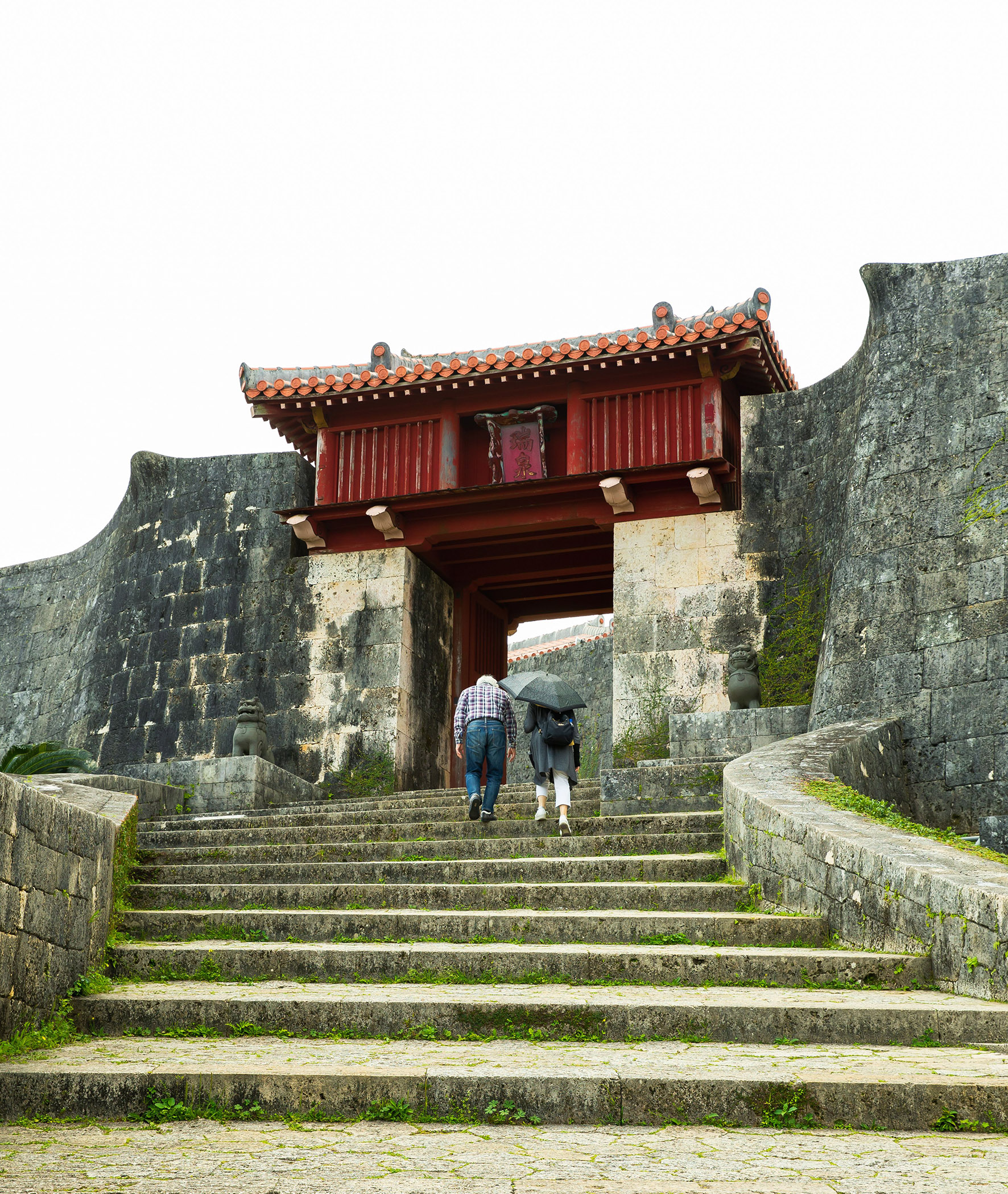
The beautiful castle gates such as Shureimon (守礼門) and Kankaimon (歓会門), the castle walls possessing a distinctive curved beauty, and the spectacular views overlooking the streets of Naha City and the sea below are truly enchanting. A visit during this precious period, where one can observe the reconstruction process up close, transcends mere sightseeing and will undoubtedly become a special experience to witness the inheritance of the Ryukyu Okoku’s architectural culture.
Shurijo Facility Overview
Opening Hours: Hours vary depending on the season.
April – November: Free Area 8:00 – 19:30 / Paid Area 8:30 – 19:00 (Last admission 18:30)
December – March: Free Area 8:00 – 18:30 / Paid Area 8:30 – 18:00 (Last admission 17:30)
Admission Fee: (Paid Area) Adults: 400 yen
Senior High School Students: 300 yen
Primary and Junior High School Students: 160 yen
Children under 6: Free
Access and Car Parks: Public Transport: Approximately a 15-minute walk from Yui Reru (ゆいレール) Shuri Eki (首里駅). Alternatively, take a local bus from Shuri Eki, alight at the ‘Shurijomae’ (首里城前) bus stop, and it is an approximately 1-minute walk.
Access by Car: Approximately 40 minutes from Naha Kuko (那覇空港). A paid car park is available on the premises at the ‘Suimuikan’ (首里杜館).
This article is translated from https://intojapanwaraku.com/culture/311034/