





Where Does the Kanji for Tatami Come From?
If you look up tatami in the dictionary, it is defined as ‘to fold’. The prototype of tatami was a rug laid on a wooden floor, and it is said that it could be rolled up softly and put away. I see, so that is why this Chinese character came to be used.
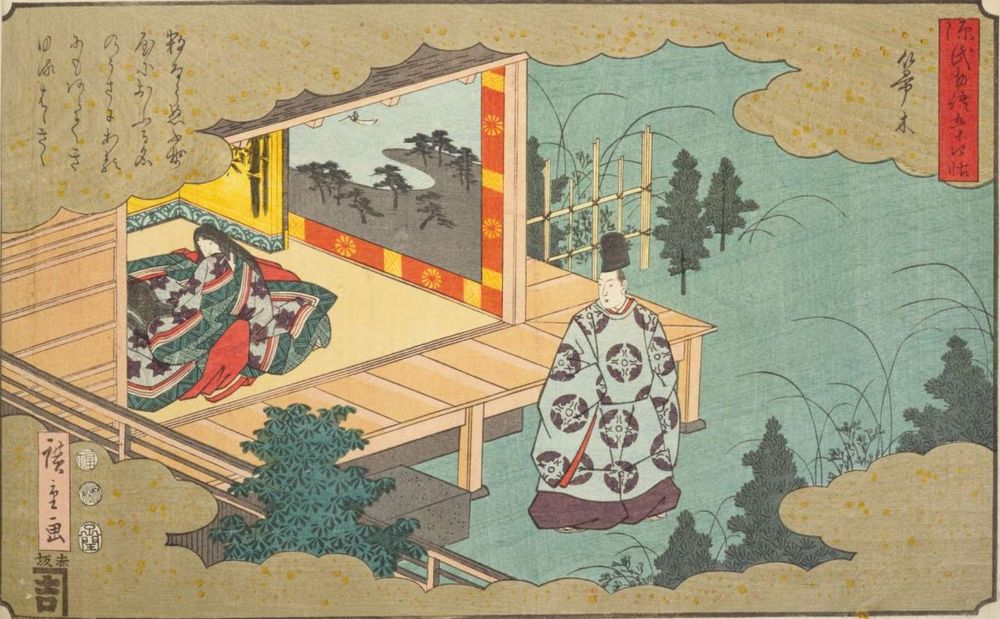
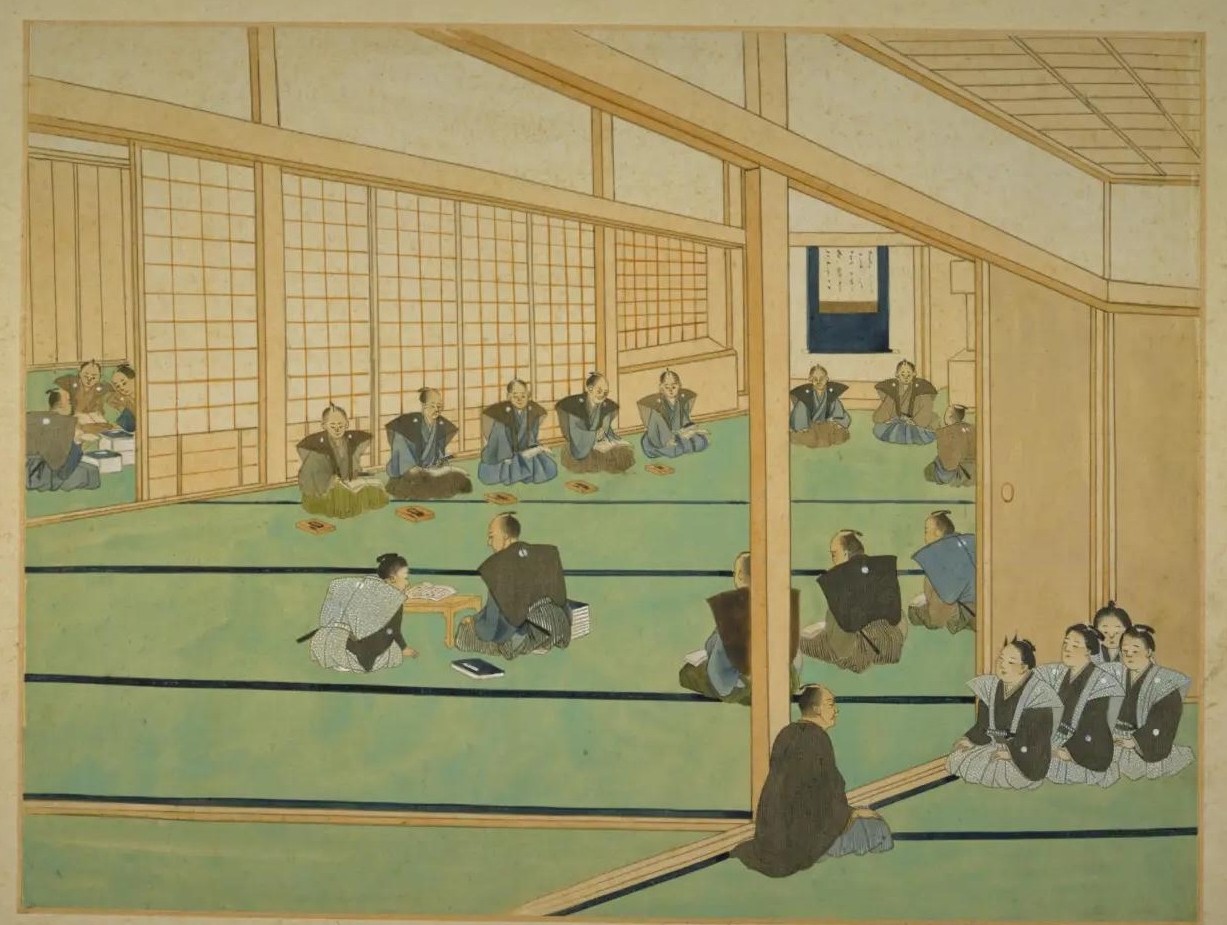
By the Heian (平安) period, tatami appeared not as the type that covers the entire room, but as ‘movable furniture (cushions)’ laid out only where necessary. Characters were using them in the Taiga (大河) drama ‘Hikaru Kimi e‘ (光る君へ), weren’t they? It seems that it was in the Muromachi (室町) period, with the shoindzukuri (書院造) *1 architectural style, that tatami came to be laid across the entire room.
Then Why Must You Not Step on the Edge of the Tatami?
Tatami was a special item that only aristocrats sat on during the Heian period. There were strict rules for the heri (formal name: tatamiberi (畳縁)) attached to the edges of the tatami, and the higher one’s social status, the more luxurious the pattern. The heri of the tatami was an important boundary line indicating the hierarchy of social standing! Therefore, stepping on the heri of a superior’s tatami was considered extremely rude, which is why it is thought to have been passed down as etiquette, not to stand on it.
Surprisingly, Was It Also to Protect One’s Life?
As another theory, during the Sengoku (戦国) period, samurai avoided stepping on the heri because of the danger of ninja hiding under the floorboards to attack them. They protected their lives by anticipating being thrust with a blade from between the tatami mats. The remnants of this wisdom may have been passed down even to the present day.
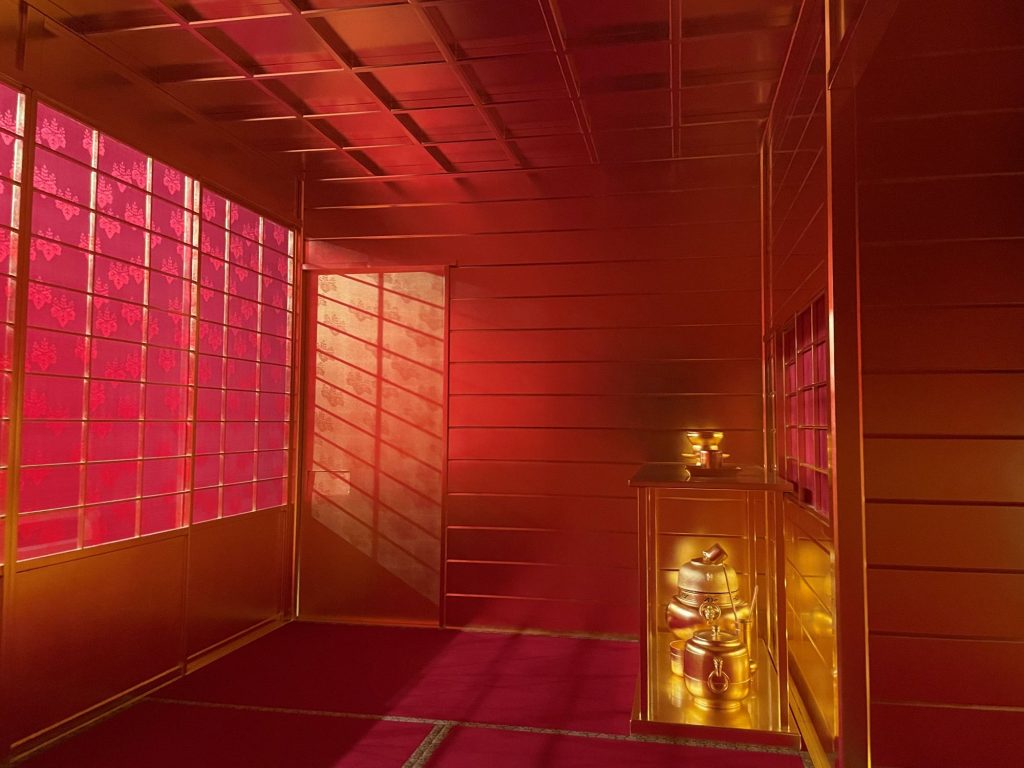
In the world of tea ceremony, the heri of the tatami is a barrier separating the everyday ‘secular world’ from the extraordinary ‘sacred ground’. It also serves as a boundary line dividing the teishu (亭主) *2 and the guests. For this reason, it is said that stepping on that boundary is unforgivable. Upon investigating the reason behind “do not step on the edge of the tatami”, I found that it is an etiquette passed down through a long history.
References: ‘Murasakishikibu to Genjimonogatari‘ (紫式部と源氏物語) by Kabushikigaisha Mediasofuto (株式会社メディアソフト), ‘Sekaidaihyakka‘ (世界大百科) by Heibonsha (平凡社), ‘Nihon daihyakka zenshu‘ (日本大百科全集) by Shogakukan (小学館)
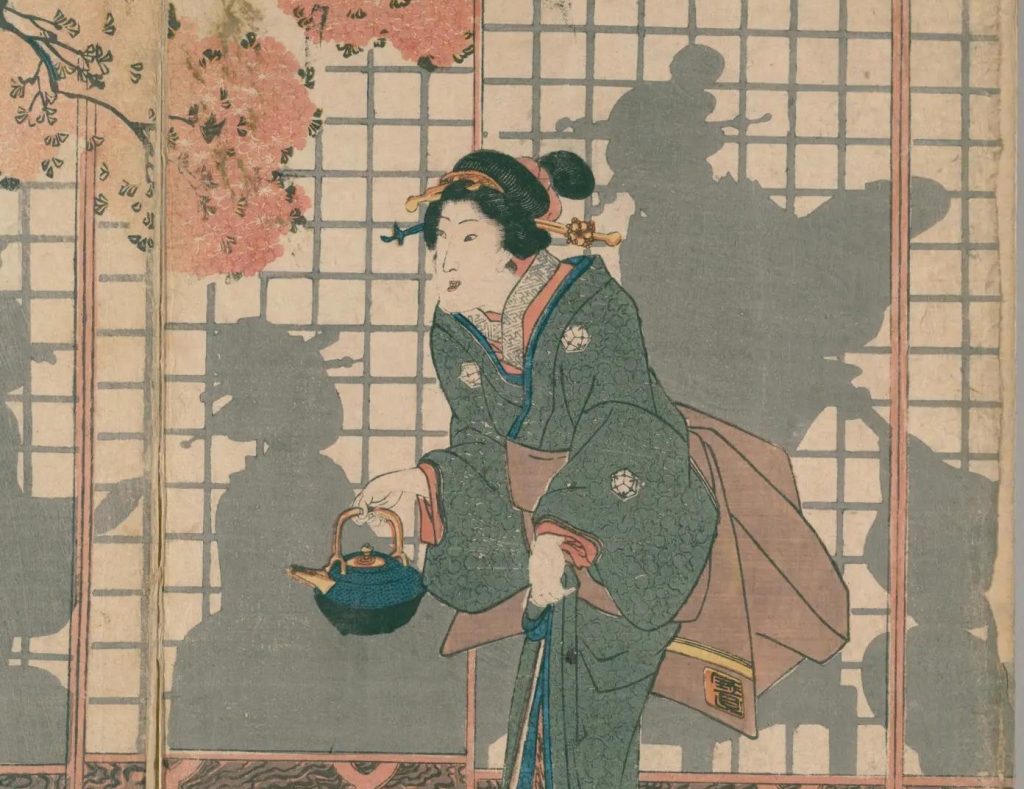
Header image: ‘Bakufunenjugyoji‘ (幕府年中行事), Kokuritsukokkaitoshokan Dijitaru Korekushon (国立国会図書館デジタルコレクション)
This article is translated from https://intojapanwaraku.com/lifestyle/308473/