









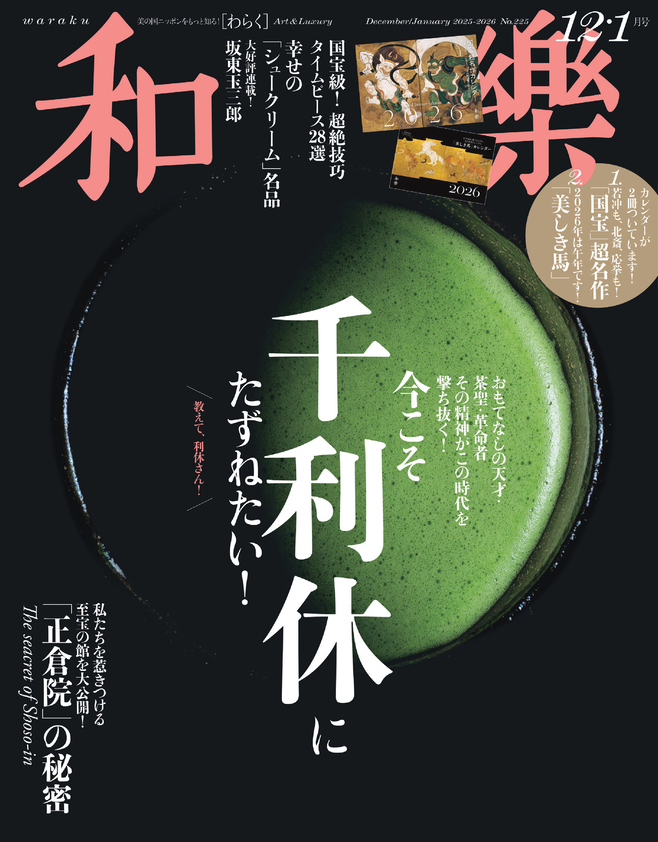




"National treasure" which can be said to be the highest achievement point of Japanese art. 2017 is 120 years since the word "national treasure" was born. At Shogakkan, "Weekly published Nippon National Treasure 100" rediscovers its hidden beauty and cultural history On sale.
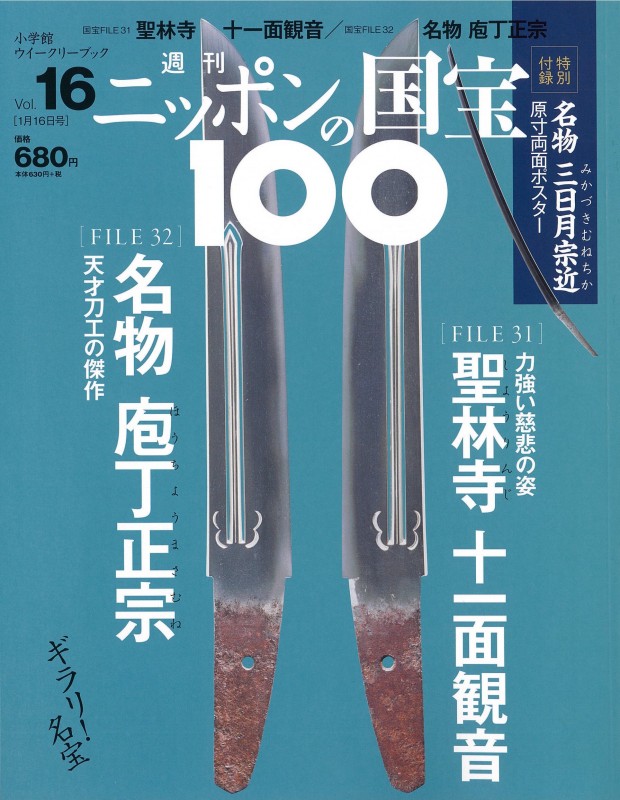
As digest of each issue, we introduce profile of famous treasure.
This time, it is the beautiful Buddha of Tenping that has not been destroyed, "Seven Linji Eleven Kannon" and the famous Tokugawa swordsman, "Kincho Masamune".
Figure of strong mercy "Jolin's 11th Kannon"
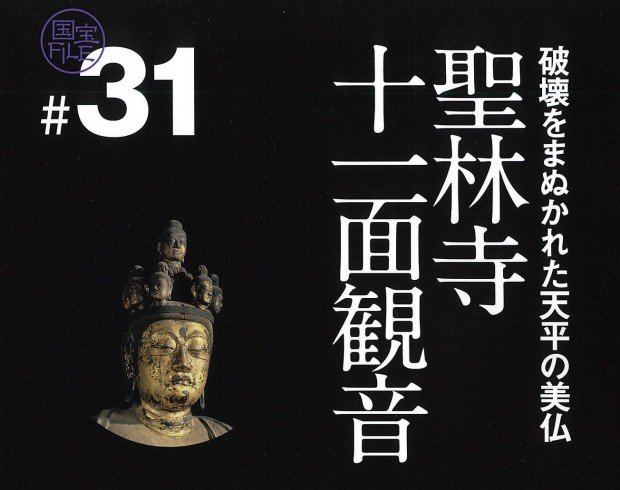
The eleven-faced Kannon is a kind of transformational Kannon that the mercy Buddha, which transforms to save sentient beings, has eleven faces above its head. Since the Nara period, it has been worshiped as a Buddha with the benefit of desolation.
The “11-sided Kannon Zen statue” of Shorinji Temple in Sakurai City, Nara Prefecture, is a Buddhist image enshrined in the shrine's Jinguji Temple and Ojinji Temple, which is located in the same city. Jinguji is a temple built to accompany a shrine. Ojin-ji Temple was already present in the Nara period, and in the late Kamakura period, the temple temple was changed to Oyori-ji Temple, and the eleven-faced Kannon image was the main honor.
By the Shinto-Buddha separation order of Keio 4 (1868), a storm of abolition of Buddha Buddha and destruction of Buddha statues and Buddhist instruments occur, and the Great Temple of Oyoda becomes an abandoned temple. Luckily, the statue was transferred to Shorinji and escaped the destruction and spillage. The “11-faced Kannon Zen Standing Statue” of Shorin-ji Temple is a representative example of the Tenhira-style Buddha statue in the wooden heart that has been used in the late Nara and early Heian period. The well-balanced figure, the natural curves of the clothes, and the slightly altered hand expressions are expressions unique to this technique.
It is surmised that the person who was at the center of the country was related to the image from the fact that it is a wooden heart dry-painted Buddha statue that requires expensive lacquer and advanced technology and that the statue at Todaiji Temple is a Buddhist temple. It is believed to have been built. Todai-ji Temple's Buddhist temple is a government-run studio for the creation of Buddha statues, organized under "San Todai-ji" which was established for the construction of Todai-ji Temple. Here, select Buddhists with high technology level were gathered, and many excellent Buddha statues were made.
The names of the Tenbu Emperor's grandson and Bunjo Jozo are listed as persons involved in the image creation. Jozo is a person who is heavily used by Emperor Seitake and others, and who is in a key position at Todai-ji Temple, who seems to have had an influence on the formation of Otoji. Around six years in Tenpyo (Joly), Josan lectures the scripture at Ojinji Temple, and there is also a theory that the statuette of this statue is around this time.
A well-groomed face, a thick chested waist, a seductive fingertip, a “11-faced Kannon statue” of the holy forest temple that fascinates the viewer, is built by the hands of elite buds of the Tenping period It is
National Treasure Profile
Eleven Kannon Zen Standing Statue
In the second half of the 8th century Kishin Dry Lacquer lacquer foil Image height 209.1 cm Shorinji Temple Nara photo / Asukaen
A 11-in-a-day statue of Kannon made in the Tenshin period using the technique of wooden heart dry lacquer. Until the Edo period, they were introduced to Omiya Shrine's Jinguji Temple and Ojinji Temple (Oyori-ji Temple), but they were transferred to Shorinji Temple under the influence of the Abolition of Buddha in the Meiji Era. It is estimated to be a work of a government-run studio from the excellent degree of completion.
Masterpiece of Genius Swordsman "Kenting Masamune"
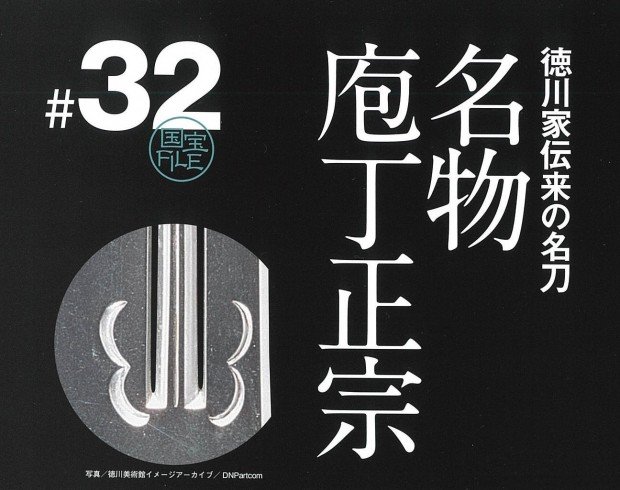
Shomune, which has become synonymous with the Japanese sword, is a swordsman who has been active in Sagamikuni (Kanagawa) Kamakura from the end of the Kamakura period to the beginning of the North and South morning. He is a disciple of Kamakura blacksmith's founder, Shinto Gokomitsu, and is a child of the swordsman of the area, Fujisaburo Yukimitsu, and the death year is unknown. We established the style of the sword "Saishu Den" made in Sagami country.
Of the 9 swords of the Masamune designated as national treasures, 5 are shorts, but 3 of them (Tokugawa Museum of Art, Eisei Bunko, corporation collection) are called by the same name "Kincho Masamune" You It has this name because it is extremely wide and looks similar to a kitchen knife. The subject of this issue is Kenting Masamune, owned by Tokugawa Ieyasu, and given to the Owari Tokugawa family after his death.
In the Heian era swords were mainly elegant and elegant swords (Baby swords), but in the middle of the Kamakura Middle Ages role of Bunmonaga / Hiroyasu, the more suitable battle swords for actual battles, for close combat It moved to the Dagger of A dagger refers to a sword less than 1 bar (about 30 cm). It is also known as a samurai sword, and warriors wear for self-defense as well as during wartime.
The main feature of the Masamune is that the well-trained "blue bowl" ground iron is bluish and blazing, and the loose wave-like blade statement and the clogged "ground boiling" fine particles are beautifully sparkling. In Kenting and Masamune, the true essence of the Masamune is fully demonstrated.
The evaluation of the Masamune swords rose as the times went down. During the Edo period, gift-giving of swords among masters and slaves became popular, and Masamune became the best dedication and refinement. Under Ieyasu, it is recorded that there were 18 copies of Masamune, including those presented by various daimyos. A list of the famous swords that the 8th Shogun Tokugawa Yoshimune had created by the Hon Amaya with the sword appraisal "Kyoho Name Book" describes about 250 famous swords, but the Masamune The number is 59 (41 existing), and it shows how high Masamune was valued. In addition, swords listed in this "Kyoho special item book" are collectively referred to as "special products".
Masamune fostered many disciples. The style of Aishu-den that he completed was imitated by swordsmen all over the country, and had a great influence on later-generation swordsmen.
National Treasure Profile
Famous item Kenting Masamune
Kamakura period (14th century) 1 mouth Edge length 24.1 cm Original width 3.6 cm Tokugawa Art Museum Aichi
A sword craftsman who worked in Kamakura in the first half of the 14th century. Three daggers called "Kenting Masamune" are in existence. Among them, Kenting Masamune of Tokugawa Art Museum was owned by Shogun Ieyasu. It has also been called "Horinuki Masamune" because it has a sword carved into the blade.
Wadon web editorial department. My motto is "I'm seriously stupid", and I am having fun with all sorts of dread and fun every day. https://note.mu/warakumagazine