









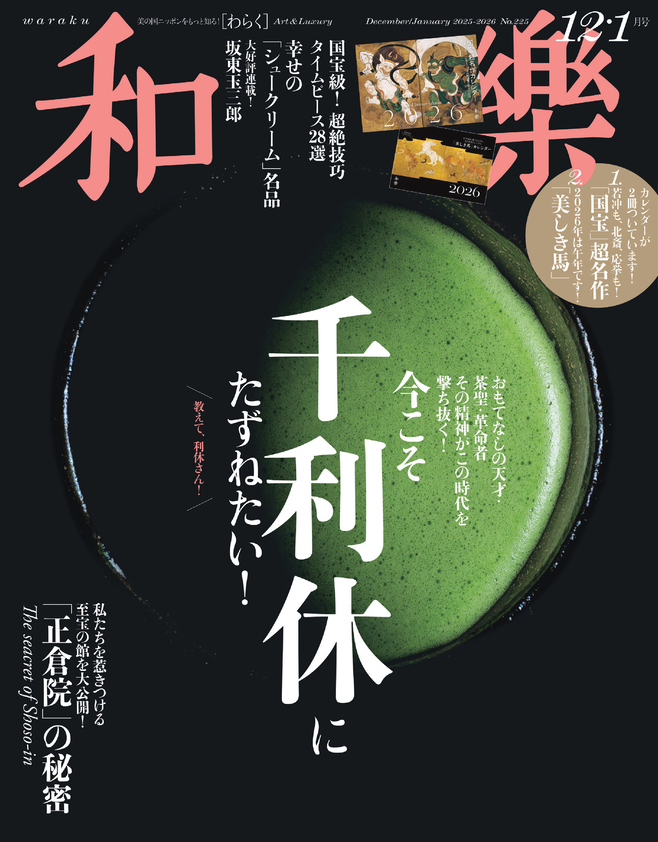




"National Treasure" which can be said to be the highest achievement point of Japanese art At Shogakkan, "Weekly published Nippon National Treasure 100" rediscovers its hidden beauty and cultural history On sale.
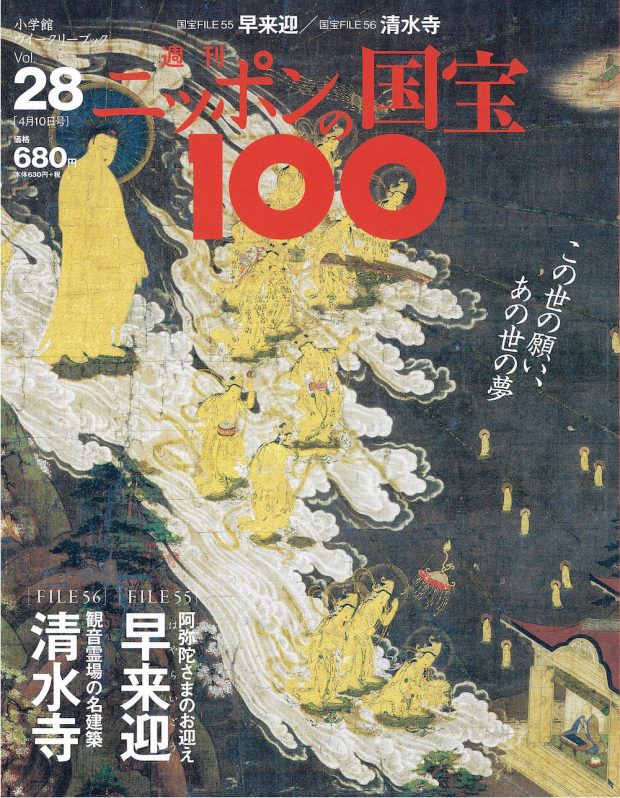
As digest of each issue, we introduce profile of famous treasure.
This time, it is "Kiyomizudera", which is a famous architecture of "Hayari Kikai" and Kannon Sacred Ground, which will come to meet with Bhun.
Amida-san welcomes "Hearing early"
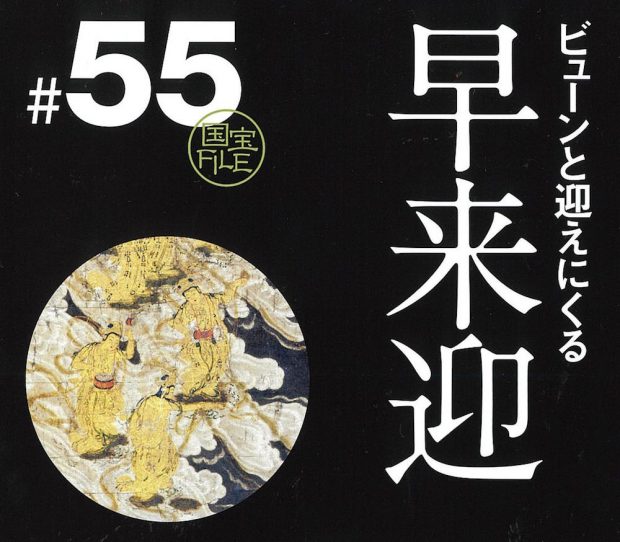
The coming-together drawing is a painting depicting a scene in which Amida Nyorai leads Kannon and Sosetsu and the holy people and welcomes the dead (people dying). Pure Land thought for paradise is brought to Japan, popular in China in the 7th century Tang. The arrival plan was drawn on a part of the "Kankei transformation phase diagram" that depicts the landscape of Amida's Pure Land in China, but eventually the coming and coming scene will be drawn independently. Such a single next-generation map is a genre that has few relics in China and Korea, and has developed independently in Japan since the Heian period.
In the middle of the Heian period, the Tendai sect's monk, Genshin, wrote the "Summer essentials" to explain the way to the paradise. Genshin, when a person dies, incarnates in six ways, including hell. In order to get out of this reindeer, I was told that there would be no choice but to go to extravagance upon receiving Amitabha's visit, and I recommended that I usually think of Amit's arrival. In some cases, the Buddhist law has fallen and the end of the world of evil has come to an end, with the spread of the "last law idea" into the world, the desire for the visit among the Heian nobles has increased, and the statue or picture representing the visit Production of is popular.
Kyoto-Chonon's “Amita 25 25 迎 迎 制作” is a production of the Kamakura period, and it is called “Hayari 迎” because of its speedy expression. It is drawn so that it crosses a large square screen almost diagonally on the cloud which descends the slope of the mountain, Amida Nyurai and twenty-fifth team who rushes to the monk who enshrines. The sense of speed that rushes from pure land to the people of the dead is depicted beautifully by the description and diagonal composition of flying clouds.
This figure depicts the top class refined and outgoing encounters among the nine ranks of the nine ranks, "9 items," written in the scripture of the Pure Land religion, "Kuan Zhou Su Jing". As a result, in addition to the best members of Amida and the 25th anniversary, it has a gorgeous view with a small Buddha-shaped statue and a palace.
It is also noteworthy that about half of the screen is used to make Japan's natural scenery rich. The highlight is not the abstract landscape of India or China, but the familiar nature of Japan with waterfalls and cherry blossoms flowing through the mountains, which enhances the reality of the miracle of coming and going.
National Treasure Profile
Early arrival
The end of the 13th century-the beginning of the 14th century Silk coloration Width 145.1 × 154.5 cm Chion-in Kyoto
The official name is "Amita 25 25. A picture from the Kamakura period depicting a scene of "coming-to-meet" (where Jyoshu reads "Laikou") when Amida Nyorai and twenty-five o'clock pick up a dying person (the dying person) from the paradise. It is commonly referred to as "early arrival" from the speed expression of the arrival.
Famous architecture "Kiyomizu-dera" of Kannon Reijo
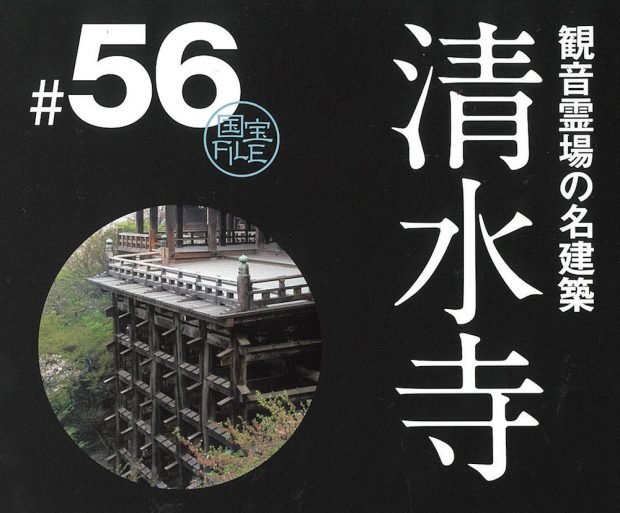
Kiyomizu Temple at the foot of Mt. Otowa, one of the thirty six peaks of Kyoto Higashiyama. It is known as the Kannon Reijo, where the 11th-faced thousand-handed Kannon is the main honor, and it is also the 16th bill office in 33 places in West Country.
The opening of Kiyomizu-dera is said to be the last year of the Nara period, the 7 th year of the 7 th year of the 7th year of the Bao Tortoise. A monk, Yanzenji of Kojima-dera in Yamatokuni (Nara prefecture) was guided by a dream, and it was the beginning that I found a waterfall (Otowa waterfall) where pure water springs up by tracing a line of golden water. Yanzun tied a pot and laid down a 11-hand 1000-handed Kannon. Sakauedamura Maro, a military commander who met Yanzen two years later, builds a temple.
It is a Buddha that gathers the faith of the interests of the present world, saying that it will change to the 33 form and save all the people if you think of the name as a mouth and mind. Above all, Kiyomizudera Honson's eleven-faced ten-handed Kannon has acquired a wide faith among the old and young men and women beyond identity as a Kannon with a special intrigue. In particular, the founders, Sakauedamura Maro, wished the wife's good fortune and gathered women's staff, and the Heian period Kiyoshi Osamu wrote the disapproval in "Miracho Sako" as "Sawagashimono", and the "Genji Monogatari" of the Murasaki Shikibu club The Kiyomizu-dera temple is also drawn on the scrolls and so on.
The main hall in the center of Kiyomizu-dera is a national treasure built in the early Edo period. A hall for worship is set up in front of the main hall of the inner team who worships the secret Buddha's main shrine, and a large stage is set up in front of it.
Its characteristic features are that it is a suspended building with a good stage with a view over the cliff, a reminiscent of the Heian period early secular architecture and the style of houses, and its huge roof , It is to have a beautiful curve by the bark of mulberry bark.
A suspended structure is a building where a part of the building is set off on a steep slope and long pillars are formed below the floor to make it go through. It is also called cliff construction or stage construction. It is known as the architectural style that is often found in the Kannon Hall, which plays the Kannon temple. It is said that the main hall of this kind of construction was at the end of the Heian period, but the present main hall is the life of the 3rd Shogun Tokugawa Iemitsu after the great fire in 1613 (1633) which was in the early Edo period. Rebuilt. Boasting of magnificent scale and beauty of form among the existing permanent constructions, it is a famous architecture that occupies a special position in the history of Japanese architecture.
National Treasure Profile
Kiyomizu Temple main hall
Kanaga 10 years (1633) 9 rows of girder 7 spaces of gion 7
The main hall of Kiyomizu-dera has been affected many times, and the current main hall is rebuilt in the early Edo period. There is a ceremonial hall and a stage in front of the main hall of the main hall, and the front part is built on the cliff with a construction (stage construction).
・ Kiyomizu-dera is currently being restored (but you can see it as usual). All photos in this magazine are from before restoration work.

My motto is "I'm serious about being stupid", and I am having fun and having fun every day.