






The Hidden Narratives Within Kyoto’s Wagashi Confectionary
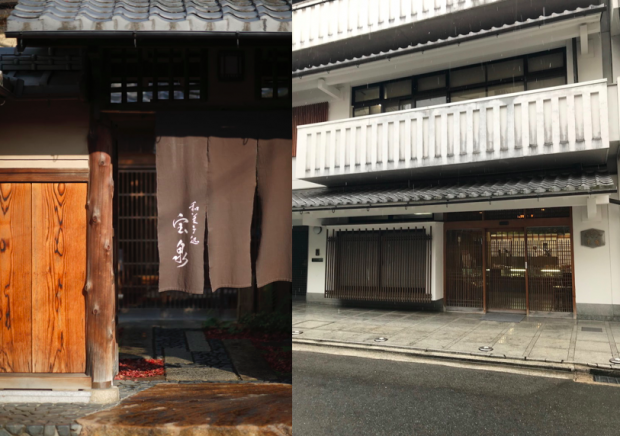
Located in a quiet residential corner slightly away from the city centre is Saryo Hosen (茶寮宝泉). I visited them in early December. For our photoshoot, they kindly prepared a spring sweet ahead of the season: a Jomonogashi (上生菓子) shaped like a cherry blossom.
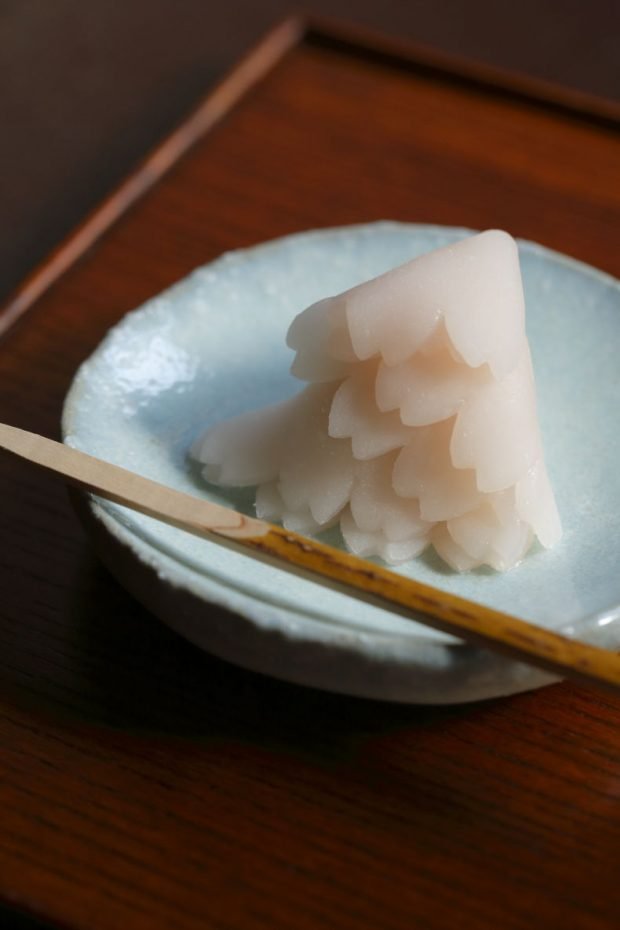
Shaped in the image of cherry blossoms, this wagashi from Saryo Hosen features tender gyuhi (sweet rice cake) wrapped around smooth white bean paste. A moment of sublime beauty.
What truly made me gasp with amazement was when I heard the name of this sweet. It is called ‘Nakaragi’ (Nakaragi 半木).
“When I asked about the meaning behind the name”
I was told:
“In Kyoto, as you follow the Kamogawa river (鴨川) upstream, it eventually splits into two further rivers, the Kamogawa (賀茂川) and the Takanogawa (高野川). Between Kitaoji (北大路) and Kitayama (北山) along the Kamogawa lies a path called ‘Nakaragi no Michi’ (半木の道). It is a walking trail famous for its beautiful cherry blossoms. This sweet is named in its honour.”
Despite it being winter, for a fleeting moment, I felt as though I were strolling along the spring-blossom-lined Nakaragi no Michi. My heart was completely captivated.
“How delightful!”
Another fascinating example of how Wagashi are named is a sweet called ‘Karagoromo’ (唐衣).
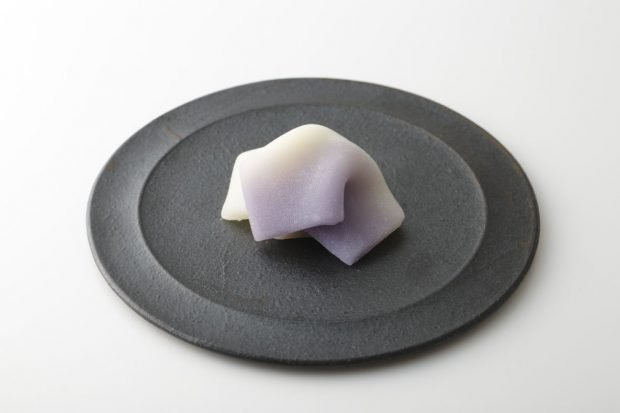
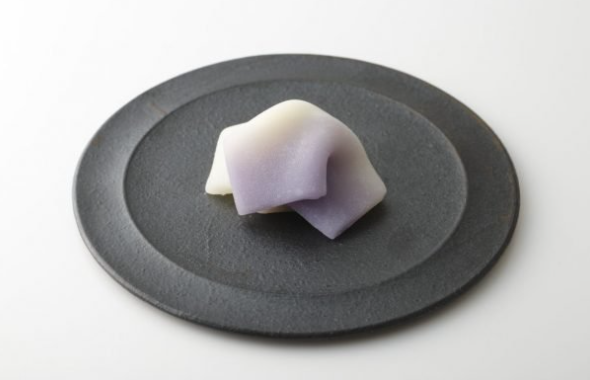
In May 1975, when Queen Elizabeth II visited Japan, she was hosted at a tea ceremony at the Katsura Rikyu (Katsura Rikyu 桂離宮). It is said that Suetomi (末富)’s ‘Karagoromo’ was the sweet served to her on that occasion.
Suetomi is renowned as a premier purveyor of sweets for the tea ceremony. In the world of Chanoyu (茶の湯), ‘Karagoromo’ is an exceptionally famous Wagashi.
The name originates from a poem by Ariwara Narihira (在原業平) found in Ise Monogatari (伊勢物語): “Kara koromo / Kitsutsu narenishi / Tsuma shi areba / Harubaru kinuru / Tabi o shizo omou (から衣 きつつなれにし つましあれば はるばるきぬる 旅をしぞ思ふ).” Karagoromo refers to Chinese-style clothing and functions as a Makurakotoba (枕詞), or ‘pillow word’, associated with the verb ‘to wear’.The poem translates to: “I have a wife back in the capital with whom I have grown as close as a well-worn robe, yet I find myself having travelled so very far away to the East.” Interestingly, when you take the first syllable of each line, they spell out Ka-ki-tsu-ba-ta (the Japanese iris).
A piece of Wagashi is a tiny thing, weighing less than 50 grams. Yet, within its elegant form and delicate flavour, there is always a precious story to be found.
In a modern age where we often demand things to be simple and easy to understand, the Wagashi craftsmen of Kyoto are sending us a message: “It is not just about appearances. Behind this form and this name lies a profound story. Please take a moment to notice it. Please discover them.” To me, that represents the true ‘depth’ of Kyoto.
Click here for the Saryo Hosen website
Click here for the Suetomi website
This article is translated from https://intojapanwaraku.com/rock/travel-rock/1850/