






The Comforting, Mindful Time of Hand-Braiding with Wooden Tools [Showen kumihimo (昇苑くみひも)]
Kyokumihimo (京組紐) is well-known for items like Obi-jime on kimonos (帯締め). You can enjoy a hands-on introduction to the process of hand-braiding silk threads to create a cord.
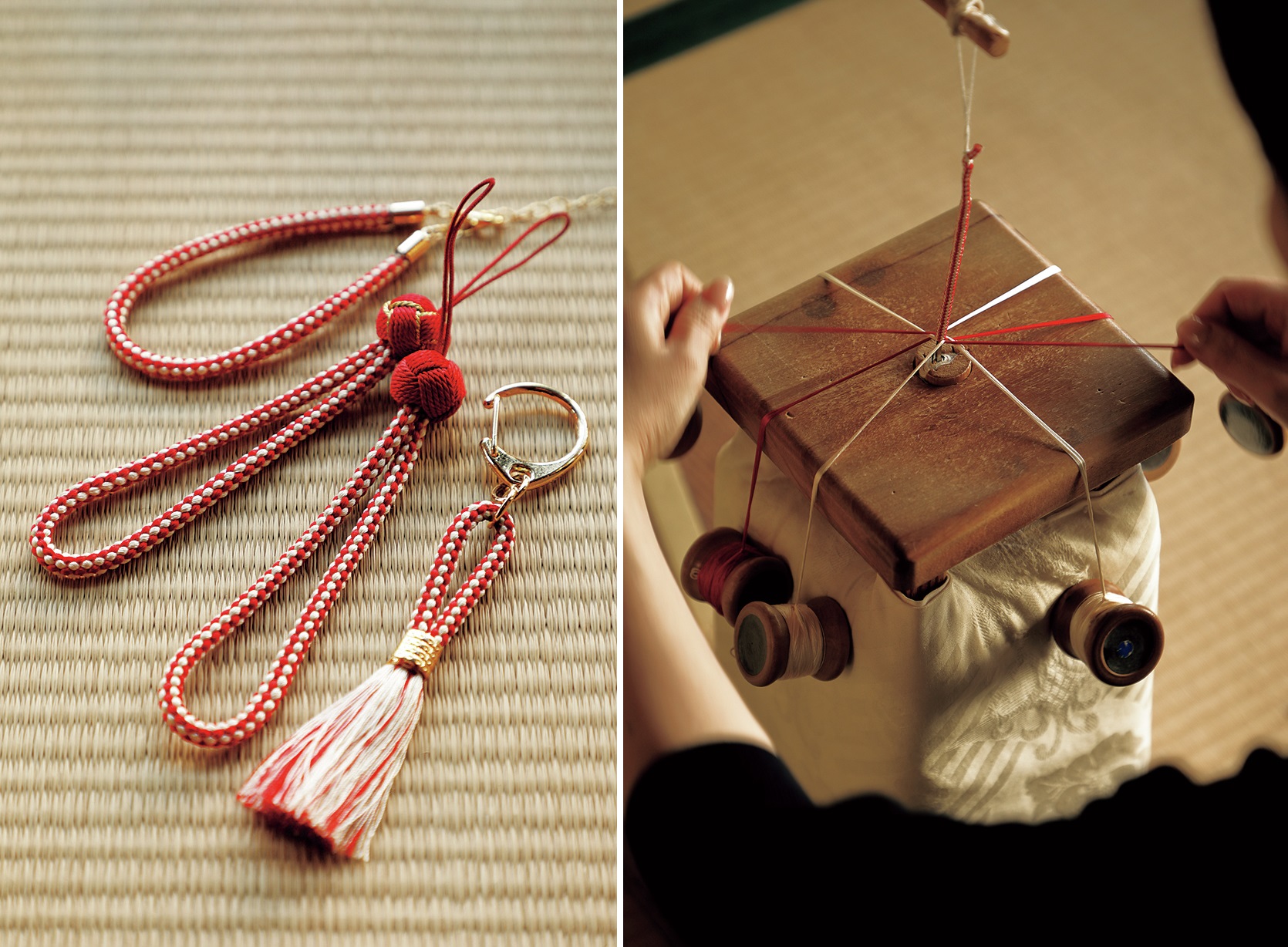
You will be introduced to a technique called Yatsugumi (八つ組), which involves braiding eight bundles of thread using a square tool known as a Kakudai (角台). By moving the threads wound around wooden bobbins in a regular pattern, the cord is braided together at the centre of the stand. If you lose focus, you might forget how to braid, so a moderate amount of concentration is required.
The sound of the wooden bobbins clacking together and the sensation of the silk threads pulling tight are truly soothing, allowing you to spend an hour lost in a quiet, meditative flow.
Be careful not to get the braiding order wrong…
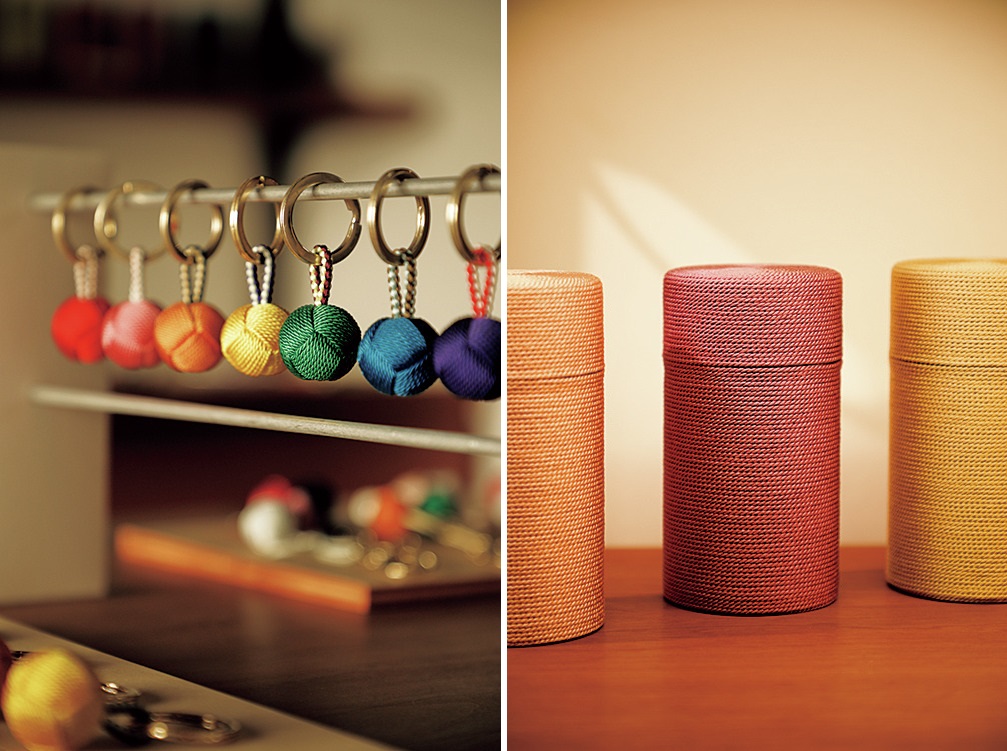
So many colours to choose from, you will be spoilt for choice!
●Showenkumihimo Shop Info
Address: 146-2 Ujimyoraku, Uji, Kyoto
Telephone: 0774-66-3535
Opening Hours: 10:00 – 17:00
Closed: Open all year round
Official Website: https://www.showen.co.jp/
*The hand-braiding experience requires booking at least one week in advance. 3,850 yen per person (Capacity: 4 people). Duration is approximately 1 hour.
Learn the Kyoyuzen Technique of Suribitta from an Active Artisan [Kitamoto sengei (北本染芸)]
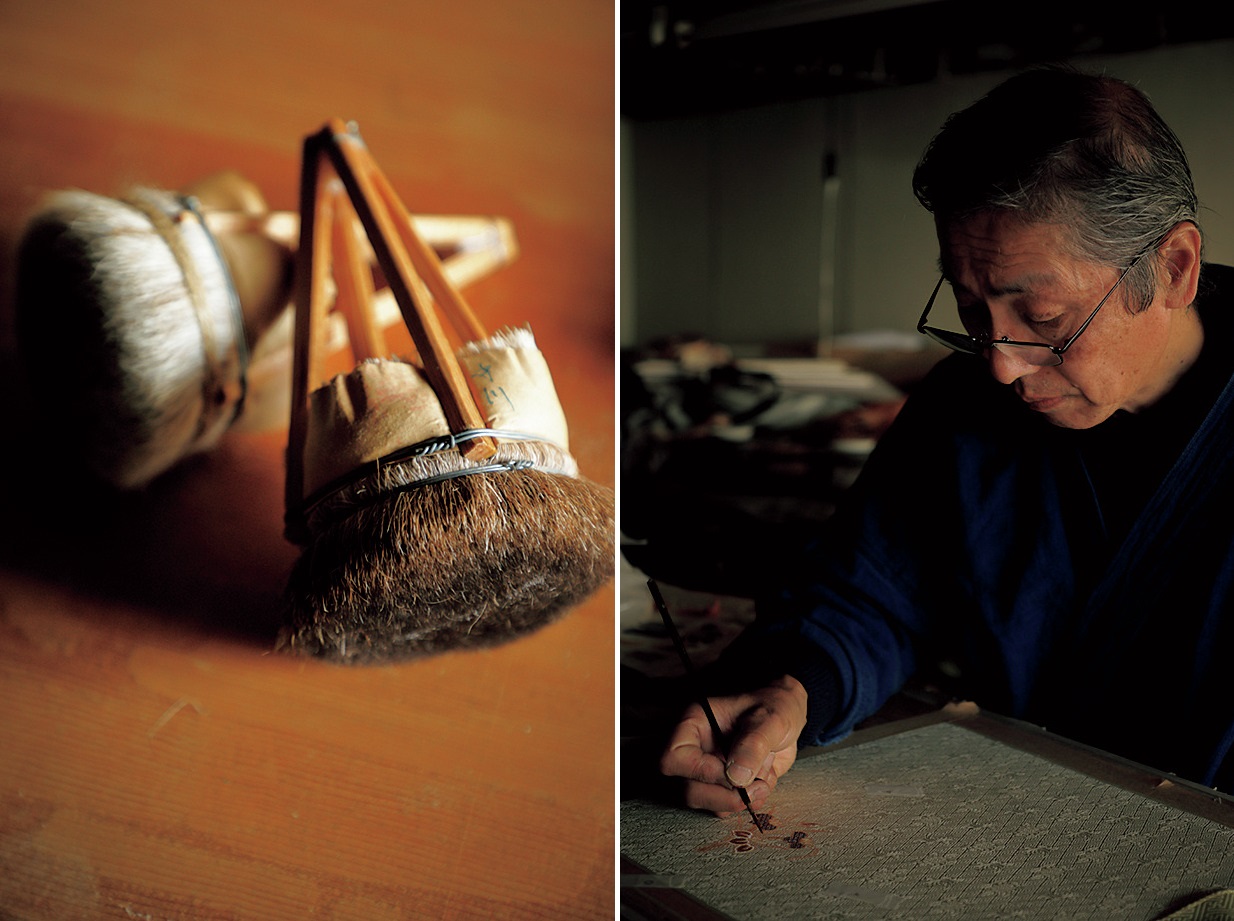
A specialist Katazome shop of Kyoyuzen (京友禅) with a history spanning over 100 years. Here, valuable workshops are held where the third-generation head artisan personally teaches authentic Edo period Katazome using his favoured materials and tools.
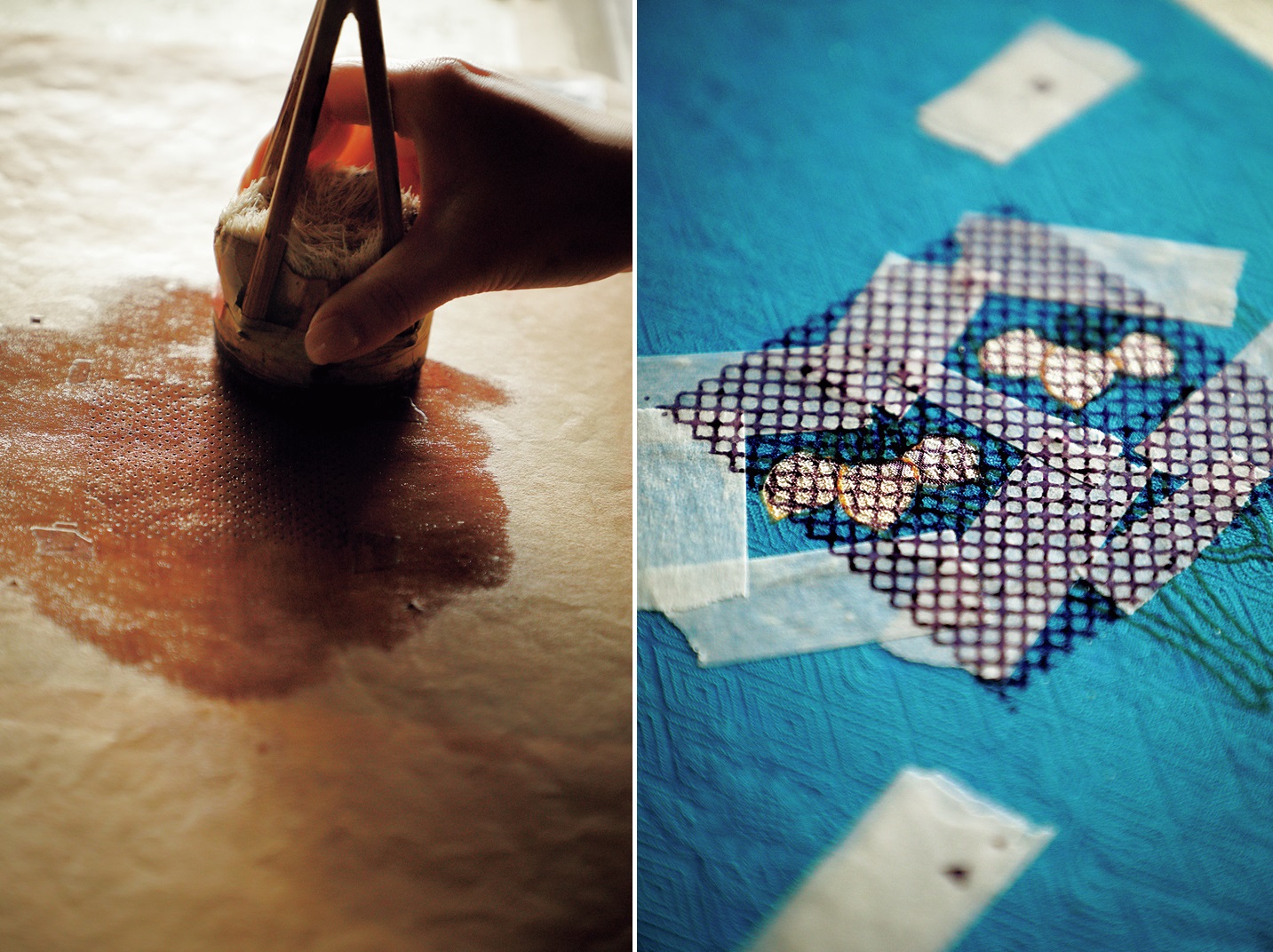
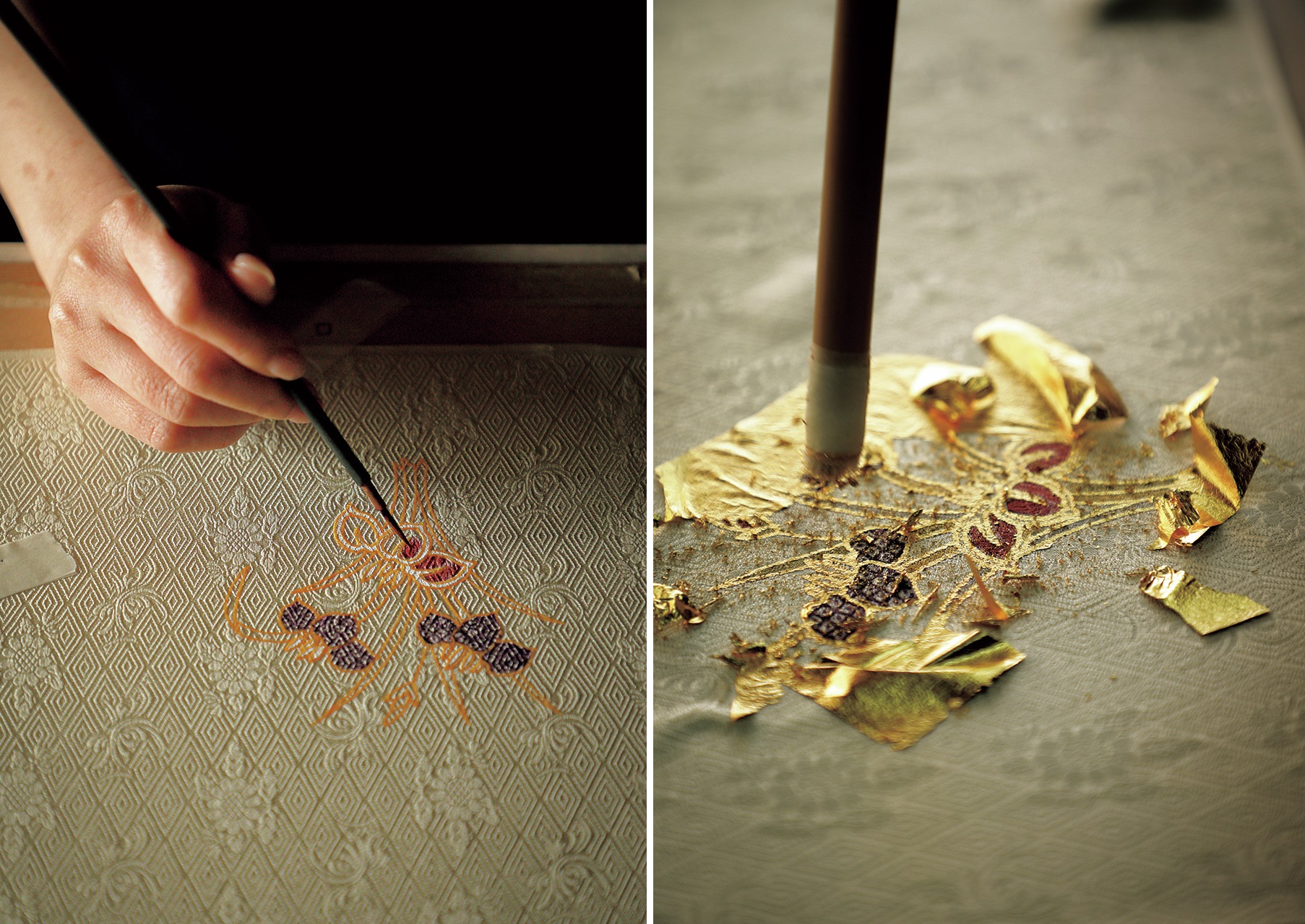
The process involves various steps, but a rare one is Suribitta (摺り疋田), a type of Katazome. This is a technique that replicates a pattern similar to Kanoko (鹿の子) tie-dyeing. By using three dedicated stencils and rubbing the dye in with a brush, detailed patterns are brought to life.
It is highly recommended for those who wish to take their time and experience the meticulousness of Kyoto craftsmanship.
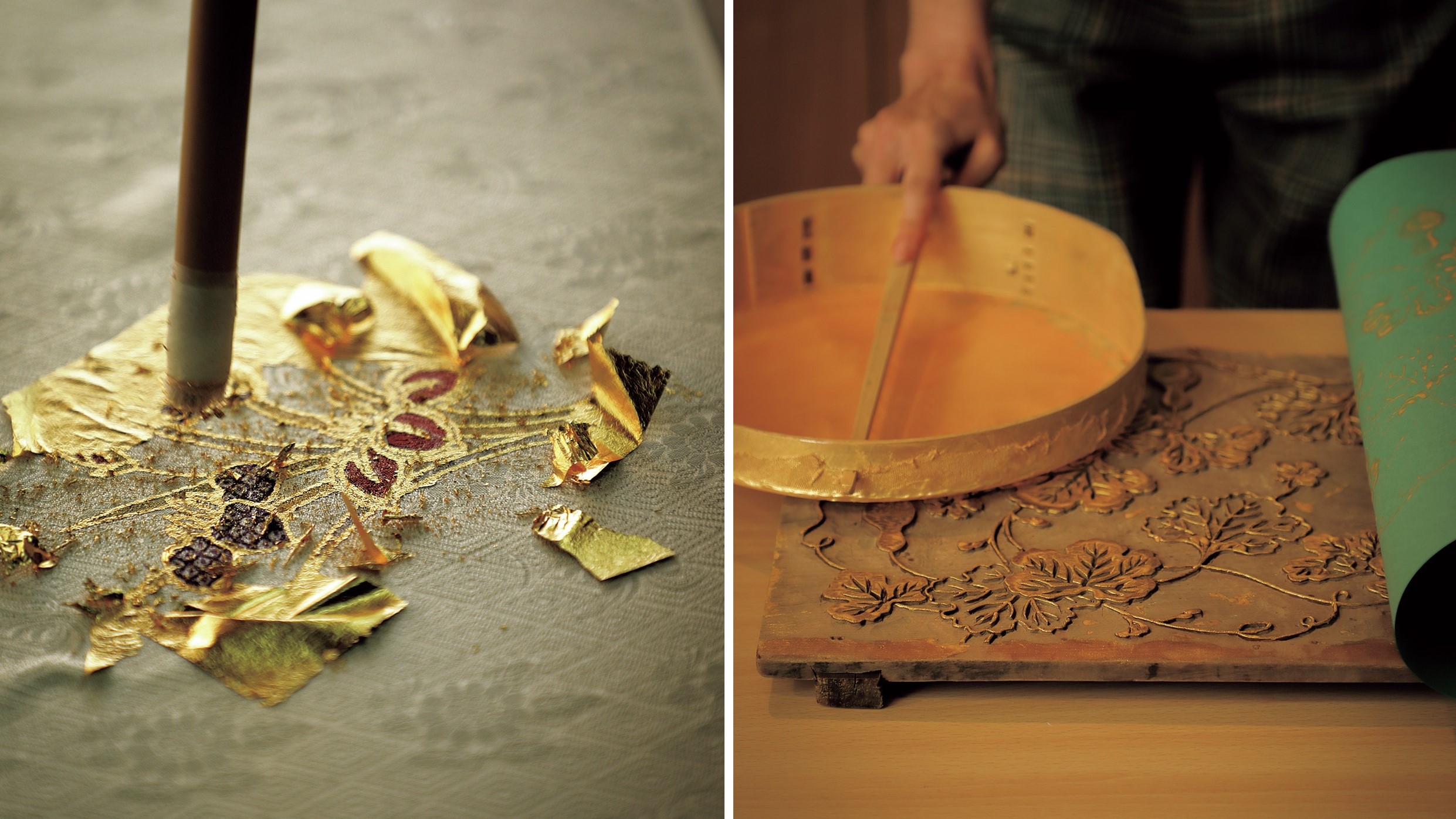
Deftly sweeping the brush to infuse the fabric with color.
Applying gold leaf instantly makes it look magnificent.
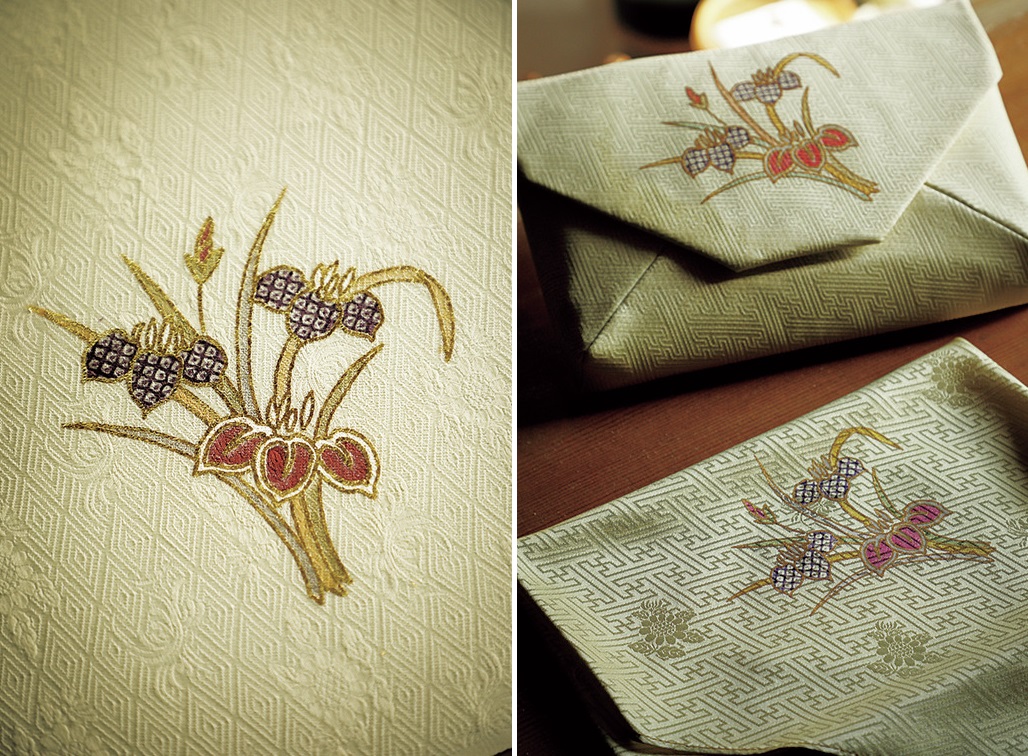
Here is the completed Kakitsubata!
●Kitamotosengei Shop Info
Address: 539 Monzencho, Oikedori omiyanishiiru agaru, Nakagyoku, Kyoto
Telephone: 080-6192-2710
Opening Hours: 09:00 – 17:00
Closed: Irregular holidays
Official Website: https://kitamotosengei.jimdofree.com/
※京友禅型染め体験は3日前までに要予約。1名7,000円~(定員4名)。所要時間は約2時間。
Bringing Kyoto Decor Closer to Home! A Hub Conveying the Charm of Karakami [Kyokarakamino Taikenkobo to Shoppu Karamaru (京からかみの体験工房とショップ 唐丸)]
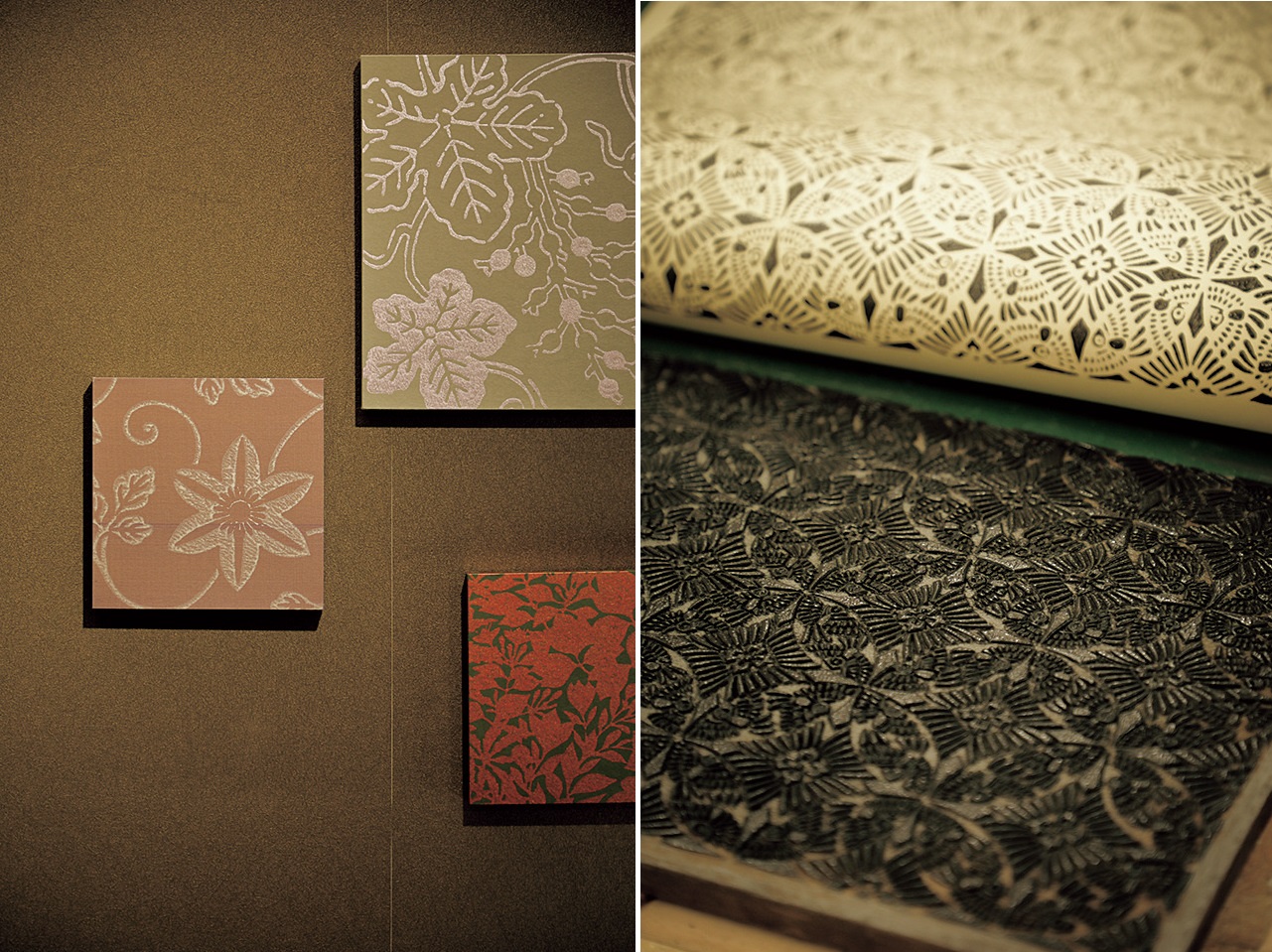
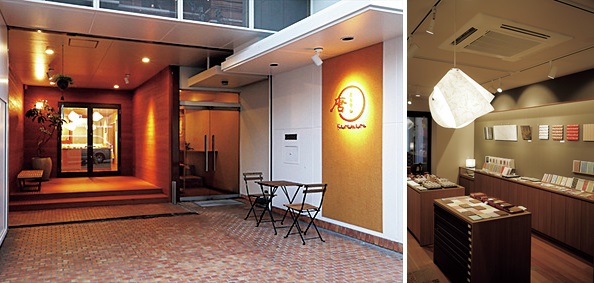
Opened as a Kyohyogushi (京表具師) during the Meiji era. Now, the manufacturer Maruni (丸二), which has its own Kyokarakami workshop and produces and installs sliding door paper and wallpaper for temples, shrines, tea rooms, and hotels, has created this shop and experience workshop as a place to share its tradition and charm.
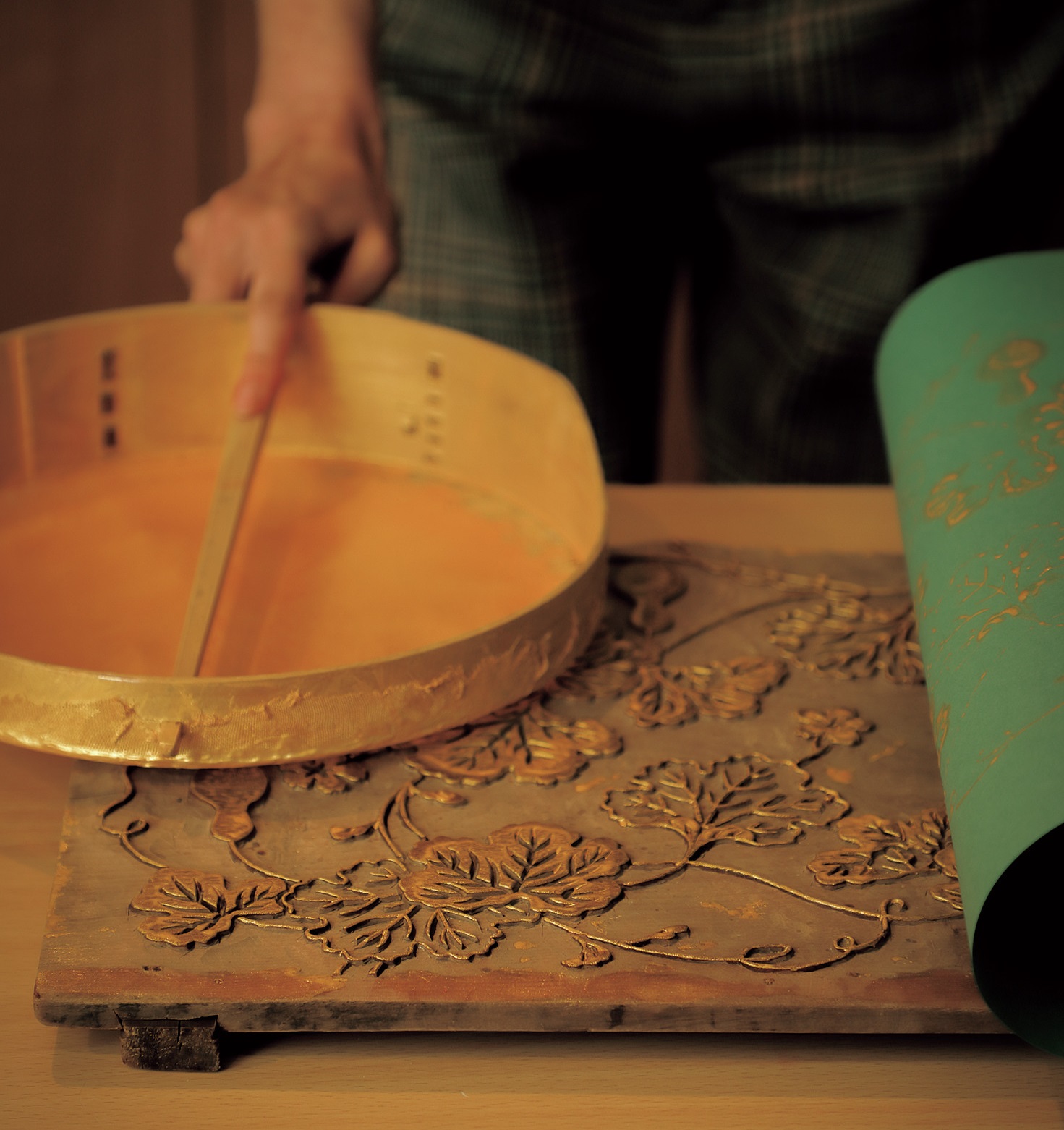
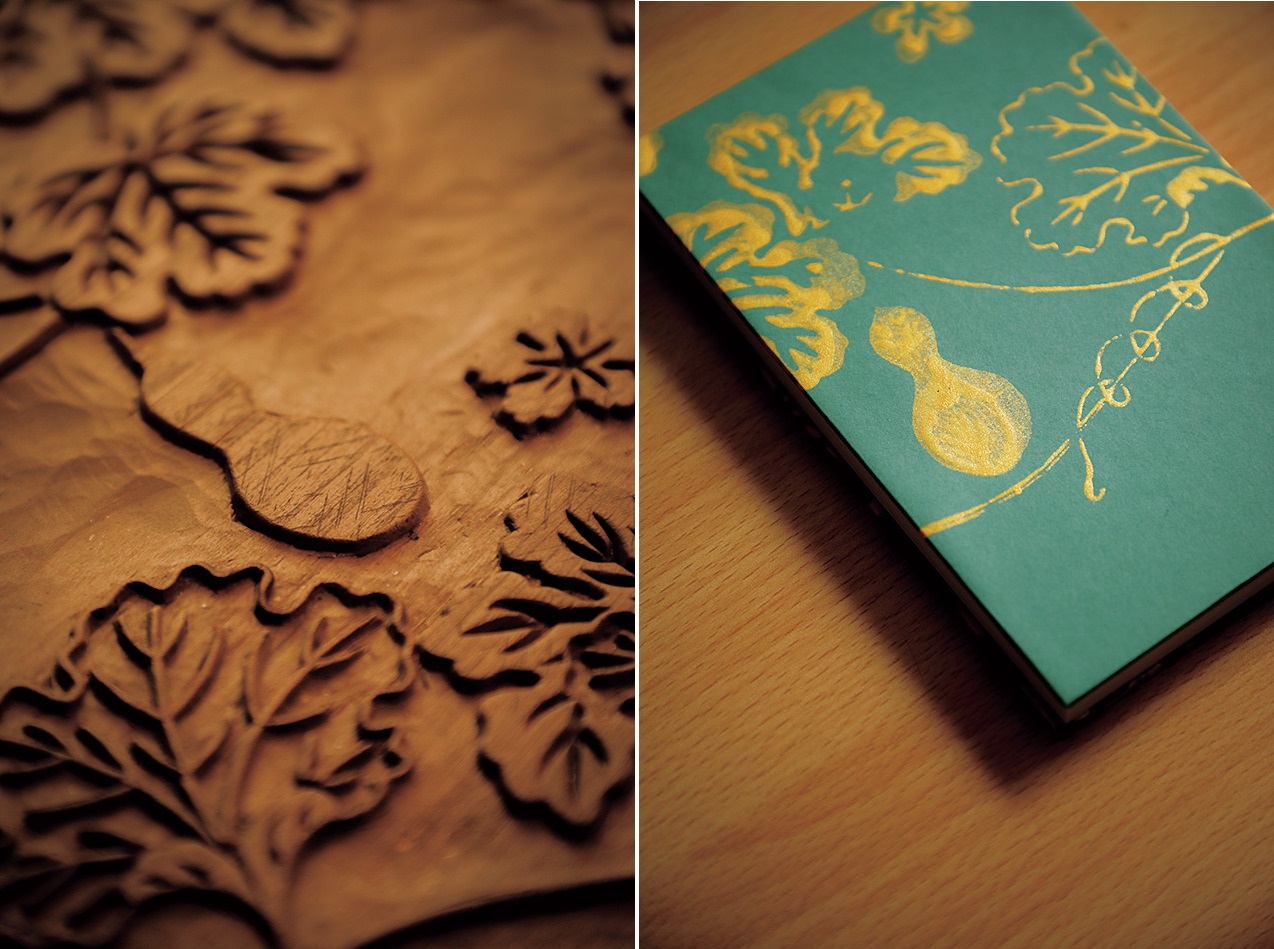
Hands on courses, such as making a Goshuincho (御朱印帳), allow you to learn about the history of Karakami while actually using woodblocks crafted over 100 years ago. The process of printing vibrant, auspicious patterns onto Washi (和紙) will fill you with a sense of pure happiness.
Applying paint to the woodblock with a ‘Furui’
It would look incredibly stylish decorating a room!
●Karamaru shop and Kyo-karakami experience workshop info
Address: 460 Senshojicho, Shimogyoku, Kyoto
Telephone: 075-361-1324
Opening Hours: 10:00 – 17:30
Closed: Wednesdays, Obon, and New Year holidays. Irregular closures on Sundays and public holidays.
Official Website: https://karamaru.kyoto/
*The Kyokarakami experience requires booking by 15:00 the day before. Held twice a day at 10:30 and 14:00 from Monday to Friday (excluding Wednesdays and public holidays), and on Saturdays (irregular). The Goshuincho making experience is 6,000 yen per person (Capacity: 6 people). Duration is between 1 hour and 1.5 hours.
This article is translated from https://intojapanwaraku.com/craftsmanship/304031/